
Battle of Lepanto
1571
The major naval battle fought in the Gulf of Patras on 7 October 1571, when the Holy League defeated an Ottoman fleet and reshaped Mediterranean political memory.

- Period
- 1571
- Kind
- Political event
- Regions
- North America
- Keywords
- Lepanto · Holy League · Ottoman Empire · galleys · Mediterranean
Follow the story · Four stages
Background
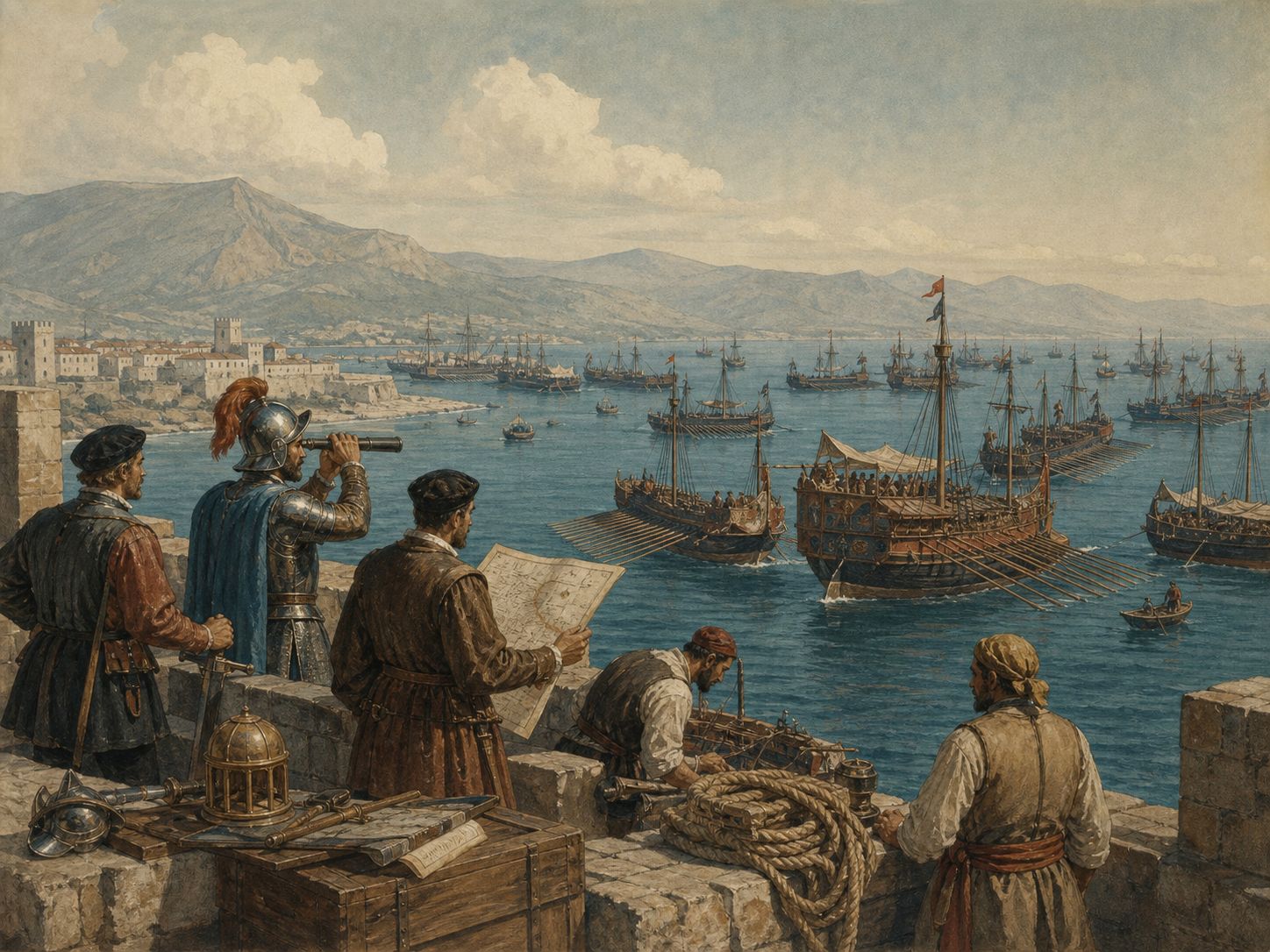
The Ottoman conquest of Cyprus and Mediterranean competition led Pope Pius V to help form the Holy League of Spain, Venice, the Papal States, and their allies.
- The Ottoman conquest of Cyprus and Mediterranean competition led Pope Pius V to help form the Holy League of Spain, Venice, the Papal States, and their allies.
- Core event: The major naval battle fought in the Gulf of Patras on 7 October 1571, when the Holy League defeated an Ottoman fleet and reshaped Mediterranean political memory.
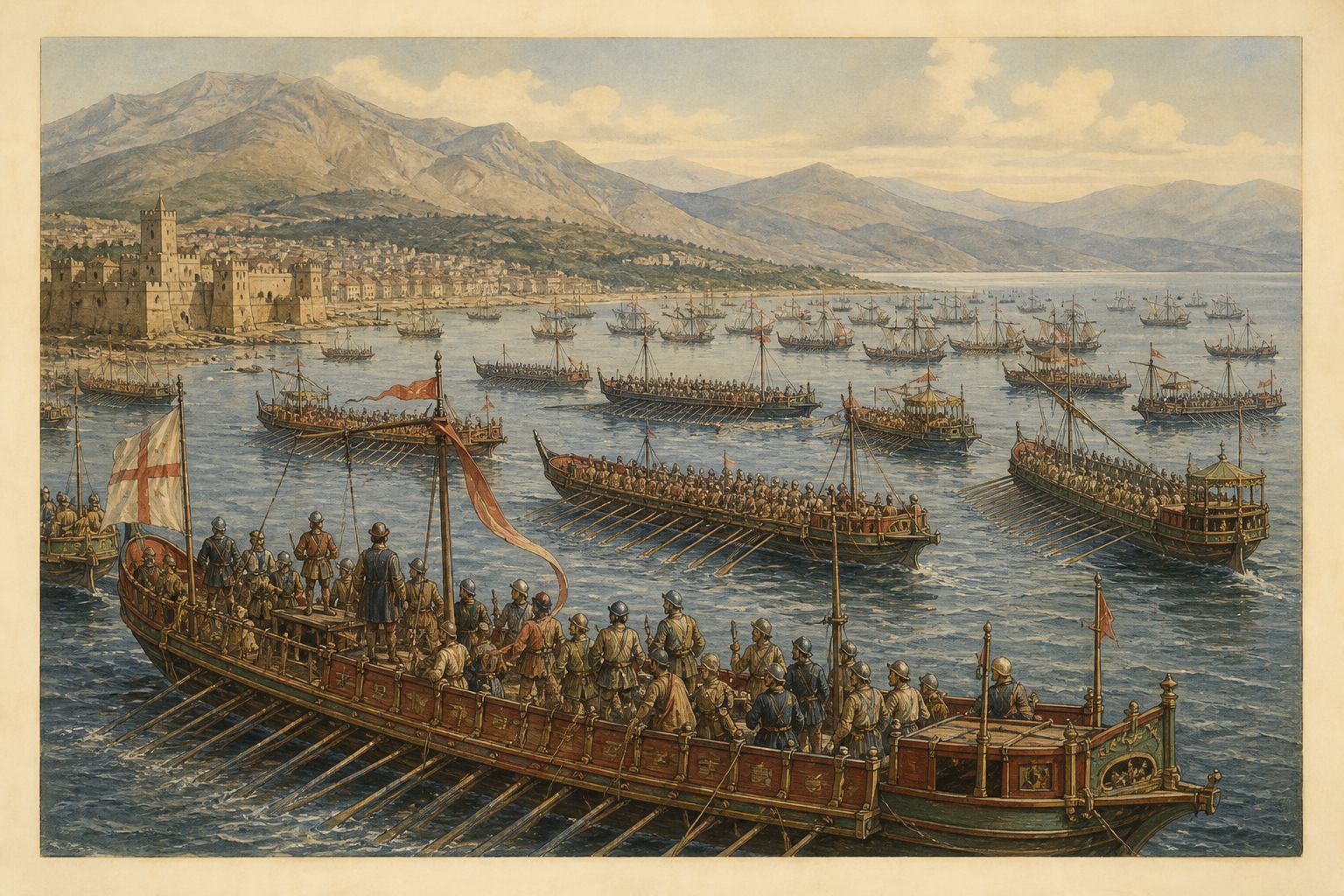
- Connection to the next stage: The League fleet assembled at Messina and sailed east. Near Naupactus, galleys and galleasses fought at close range with cannon fire and boarding actions.
Course
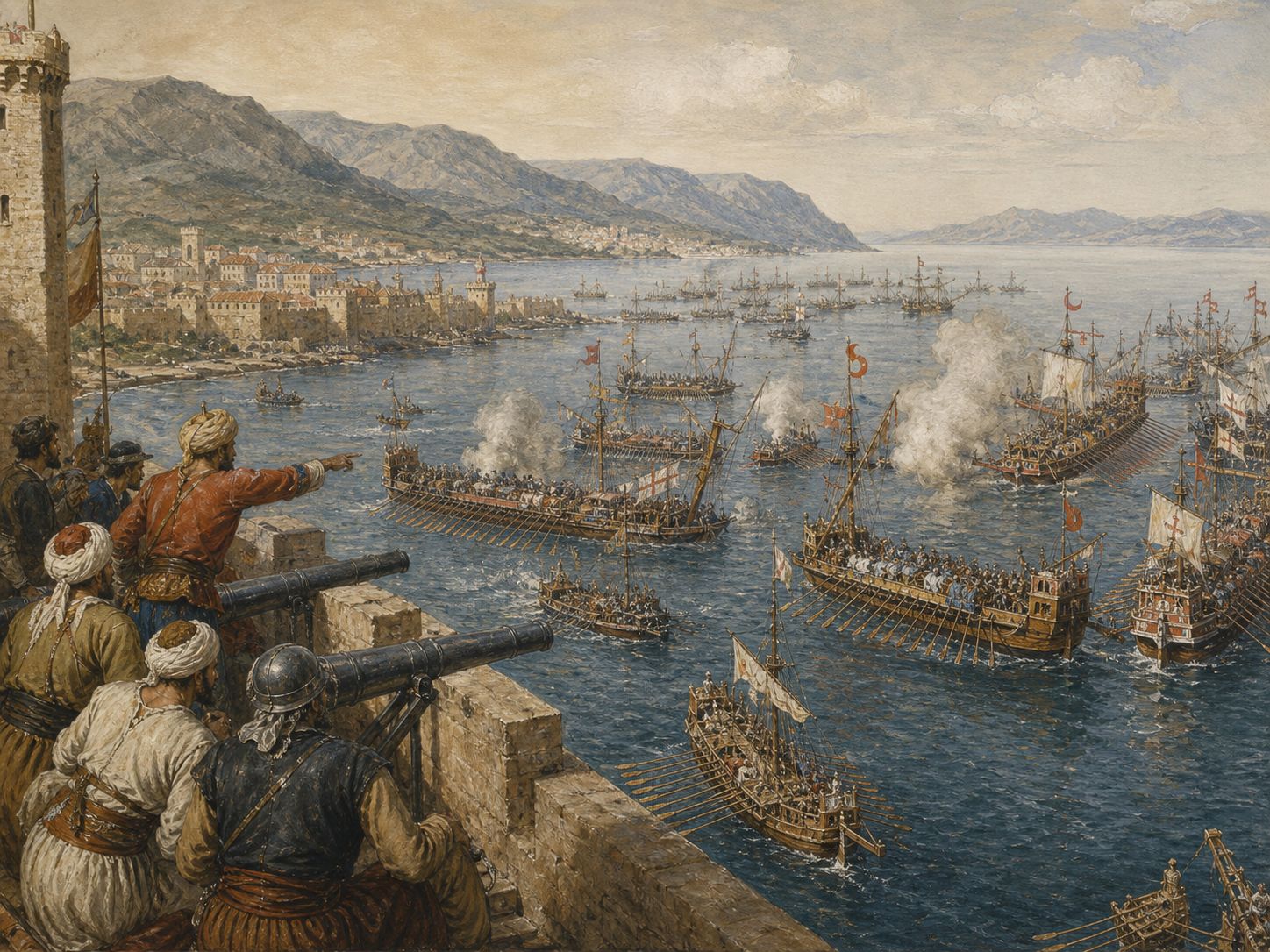
The League fleet assembled at Messina and sailed east. Near Naupactus, galleys and galleasses fought at close range with cannon fire and boarding actions.
- The League fleet assembled at Messina and sailed east.
- Near Naupactus, galleys and galleasses fought at close range with cannon fire and boarding actions.
- Conditions behind the action: The Ottoman conquest of Cyprus and Mediterranean competition led Pope Pius V to help form the Holy League of Spain, Venice, the Papal States, and their allies.
Outcome
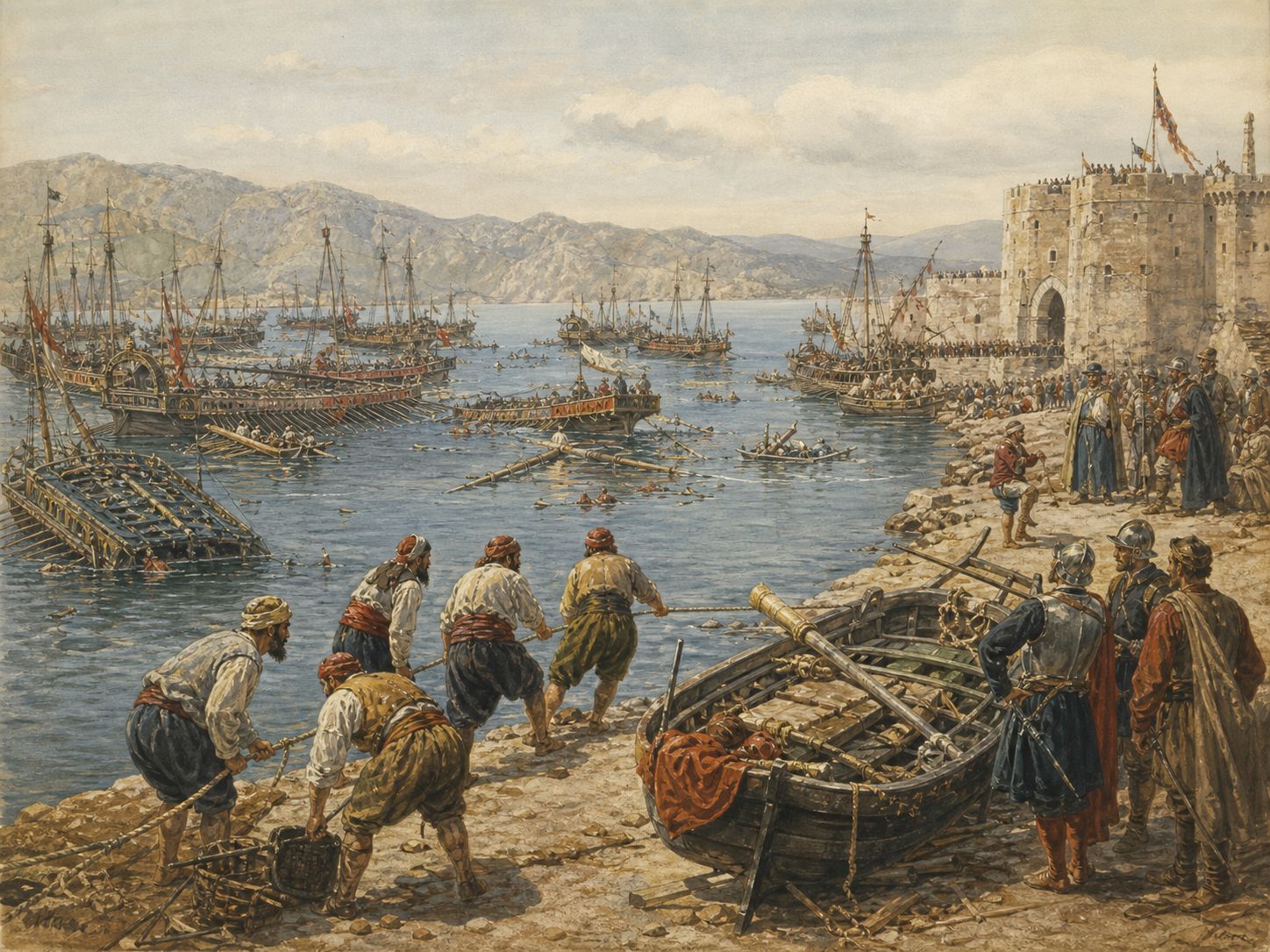
The Holy League won a major victory and the Ottoman fleet lost many vessels. The empire rebuilt its navy and continued the war, while the victory became a powerful Christian symbol.
- The Holy League won a major victory and the Ottoman fleet lost many vessels.
- The empire rebuilt its navy and continued the war, while the victory became a powerful Christian symbol.
- Process producing the result: The League fleet assembled at Messina and sailed east. Near Naupactus, galleys and galleasses fought at close range with cannon fire and boarding actions.
Historical significance
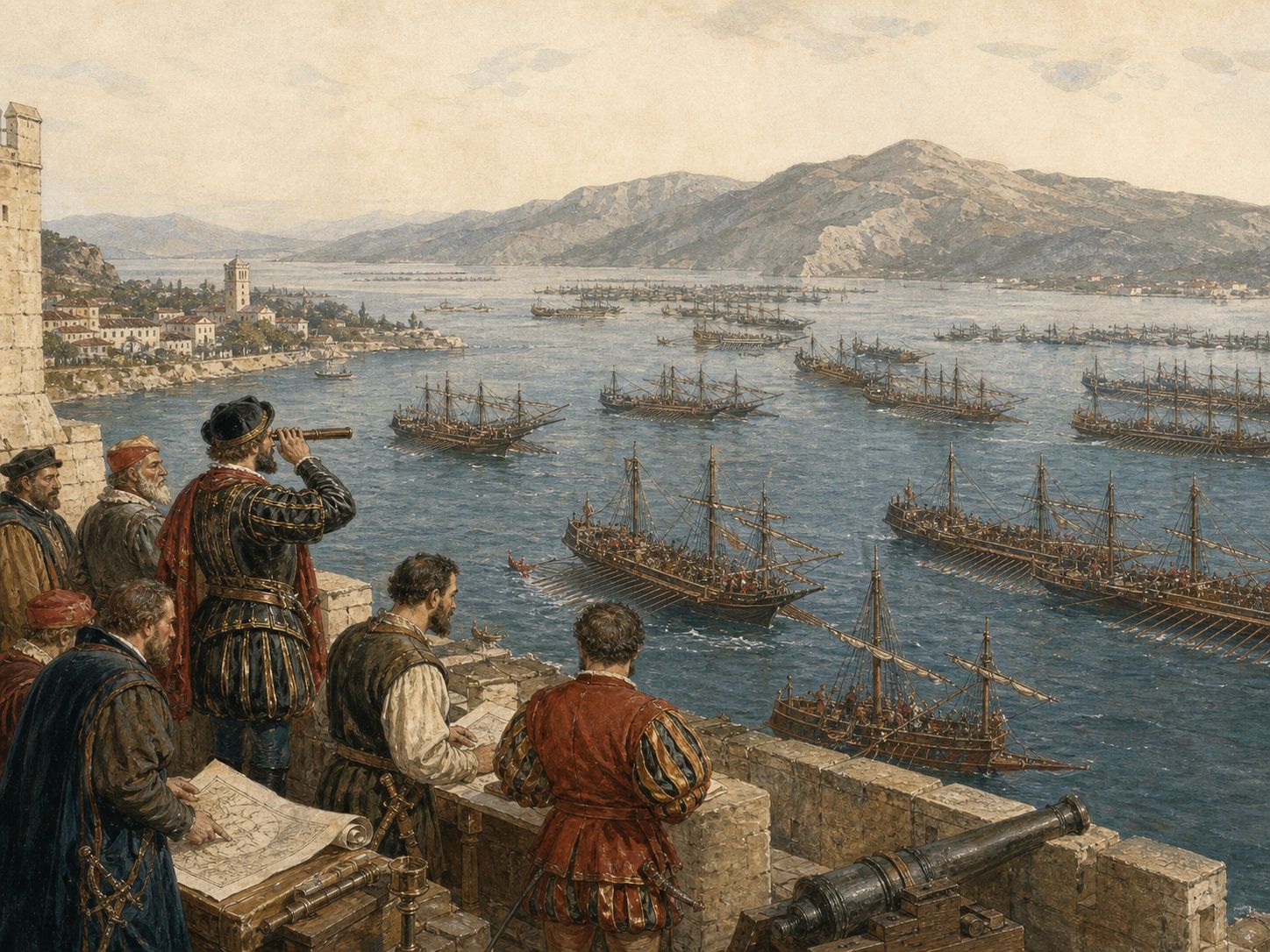
Lepanto was not the end of Ottoman naval power; it was a collision of coalition warfare, artillery, oared ships, and imperial competition whose symbolic afterlife should be separated from its strategic results.
- Lepanto was not the end of Ottoman naval power; it was a collision of coalition warfare, artillery, oared ships, and imperial competition whose symbolic afterlife should be separated from its strategic results.
- Immediate consequence: The Holy League won a major victory and the Ottoman fleet lost many vessels. The empire rebuilt its navy and continued the war, while the victory became a powerful Christian symbol.
- Historical turning point: The major naval battle fought in the Gulf of Patras on 7 October 1571, when the Holy League defeated an Ottoman fleet and reshaped Mediterranean political memory.


Related events
1570–1571
Ottoman campaign in Cyprus
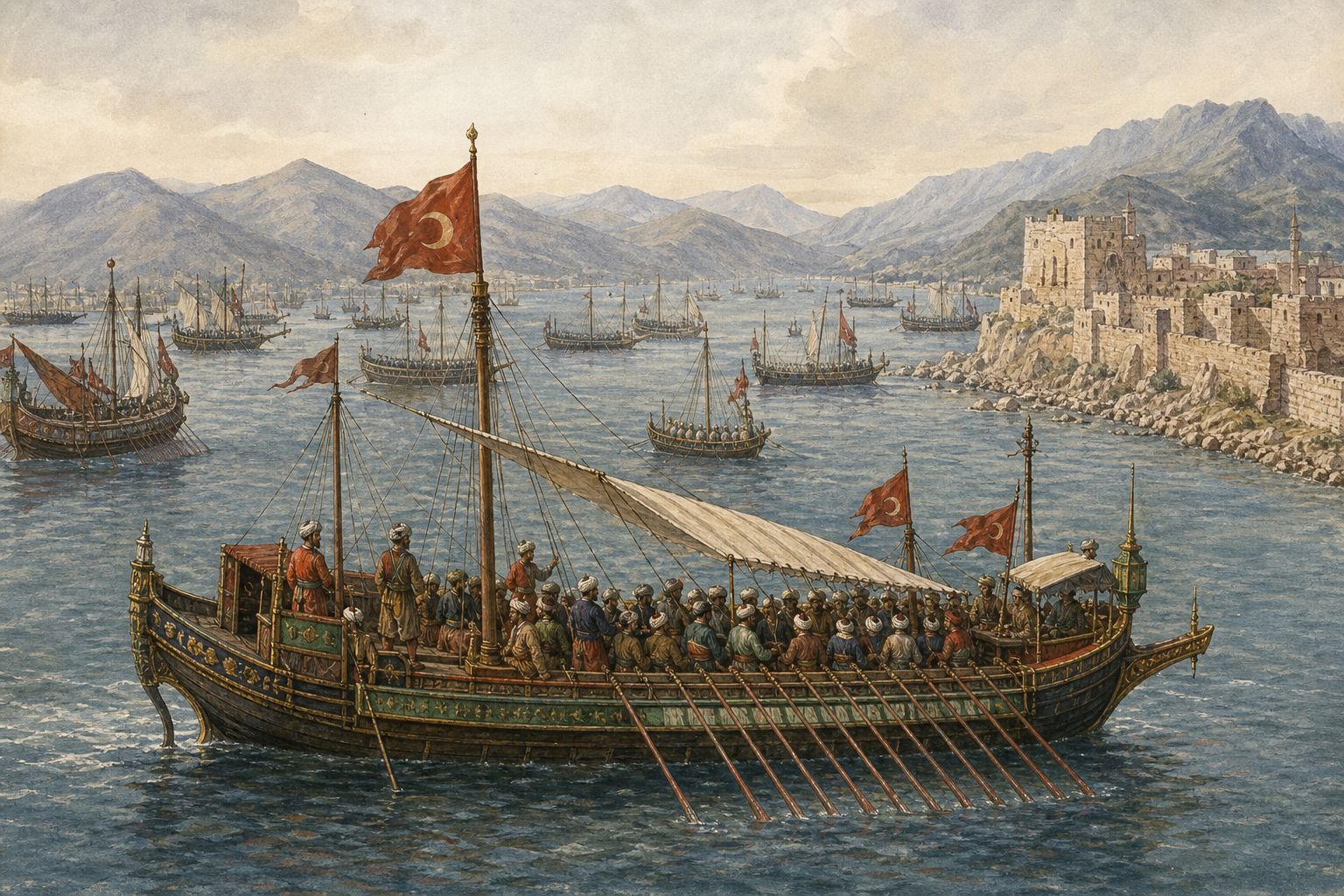
Ottoman campaign in Cyprus — Background: The Ottoman conquest of Cyprus and Mediterranean competition led Pope Pius V to help form the Holy League of Spain, Venice, the Papal States, and their allies.
1571
Formation of the Holy League
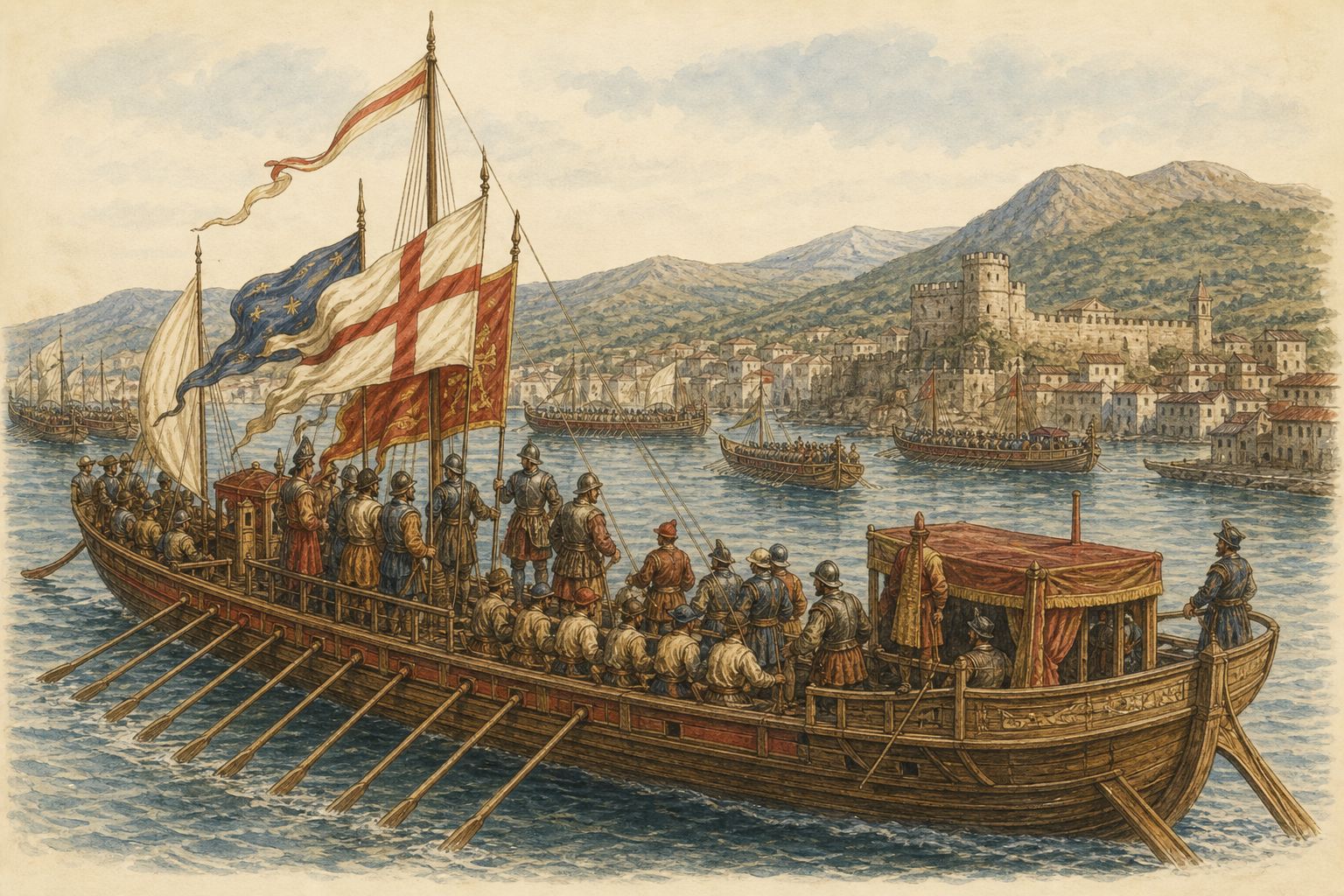
Formation of the Holy League — Background: The Ottoman conquest of Cyprus and Mediterranean competition led Pope Pius V to help form the Holy League of Spain, Venice, the Papal States, and their allies.
1571
Fleet maneuvers
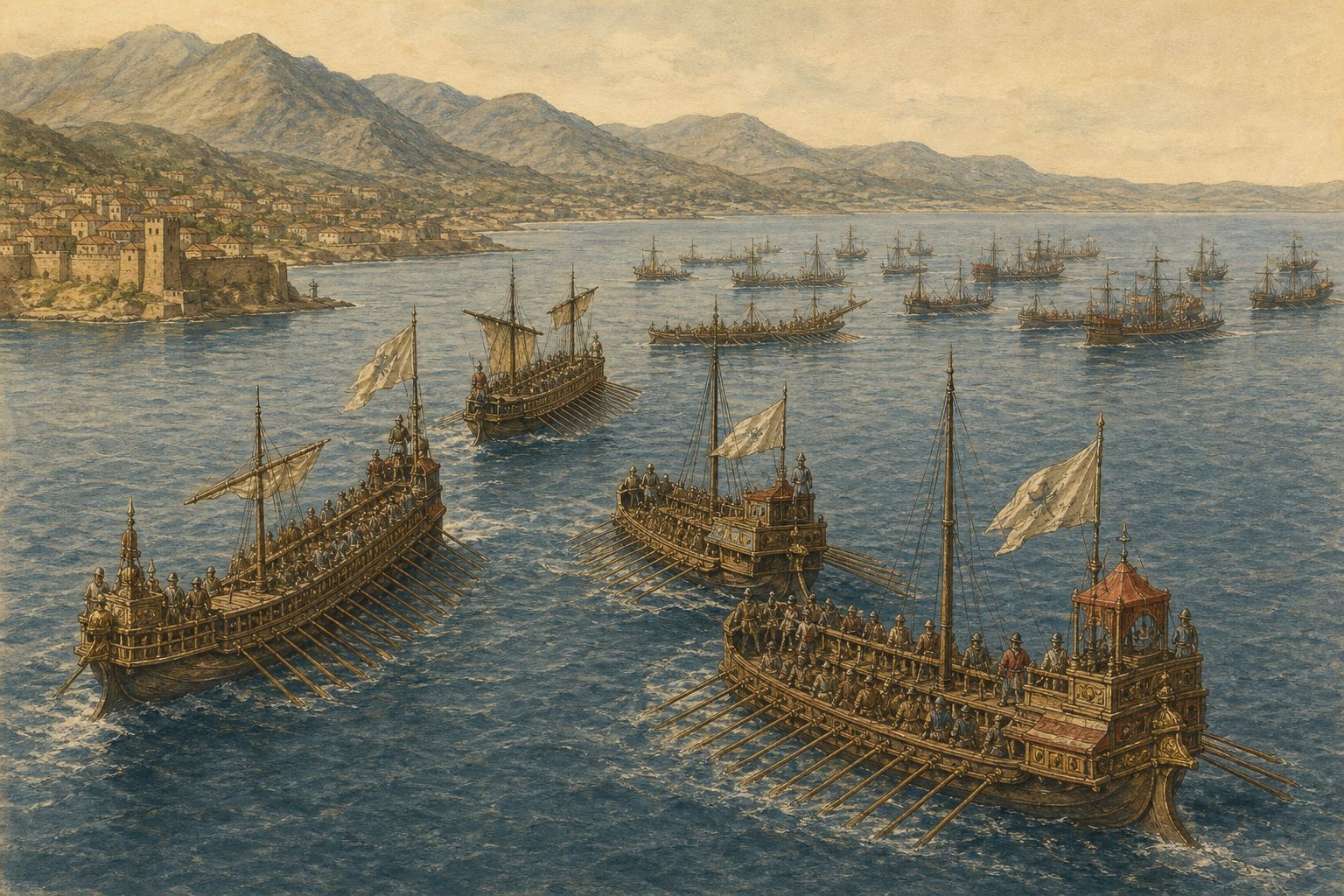
Fleet maneuvers — Build-up: The League fleet assembled at Messina and sailed east. Near Naupactus, galleys and galleasses fought at close range with cannon fire and boarding actions.
1571
The battle of 7 October 1571
Current event
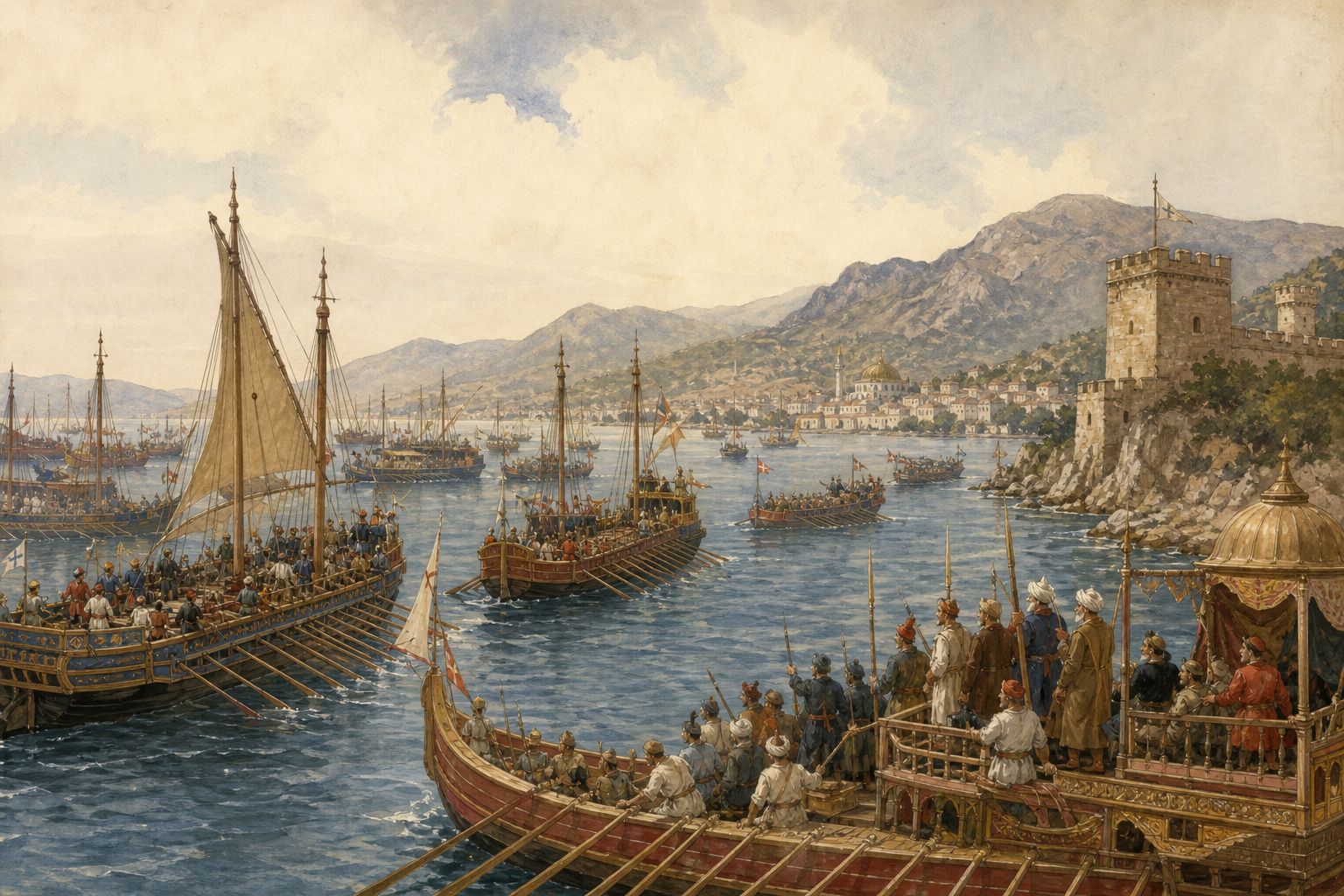
The battle of 7 October 1571 — Central transition: The major naval battle fought in the Gulf of Patras on 7 October 1571, when the Holy League defeated an Ottoman fleet and reshaped Mediterranean political memory.
c. 1571–c. 1600
Mediterranean memory
Mediterranean memory — Immediate result: The Holy League won a major victory and the Ottoman fleet lost many vessels. The empire rebuilt its navy and continued the war, while the victory became a powerful Christian symbol.


Sources
- Battle of Lepanto — Battle Of Lepanto (Encyclopaedia Britannica)www.britannica.comThis Encyclopaedia Britannica resource supports the chronology, setting, and course of Battle of Lepanto.
- Battle of Lepanto — Hd Battle Of Lepanto (The Metropolitan Museum of Art)www.metmuseum.orgThis The Metropolitan Museum of Art resource supports the chronology, setting, and course of Battle of Lepanto.
- Battle of Lepanto — Battle Of Lepanto (World History Encyclopedia)www.worldhistory.orgThis World History Encyclopedia resource supports the chronology, setting, and course of Battle of Lepanto.