Byzantine Iconoclasm
726–843
From about 726 to 843, theological and political disputes over the use and veneration of sacred images unsettled Byzantine imperial policy and church life.

- Period
- 726–843
- Kind
- Movement
- Regions
- Middle East
- Keywords
- Byzantine Iconoclasm · Iconoclasm · movement · medieval · middle east
Follow the story · Four stages
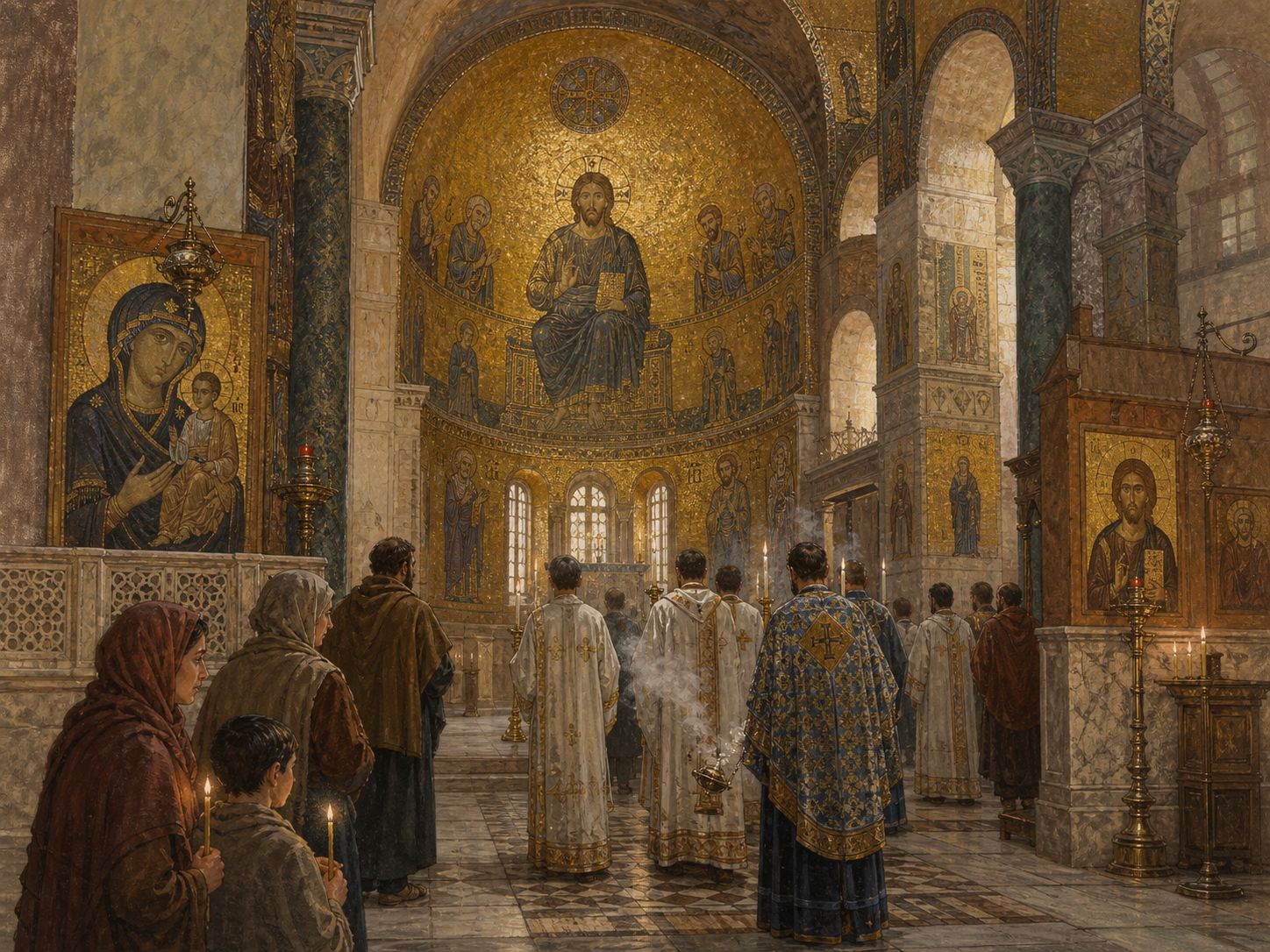
Background
Emperors, clergy, monks, and laypeople disputed whether images guided devotion or approached idolatry. The controversy also exposed competing claims about imperial and ecclesiastical authority.
- Devotional spaces filled with images
- Close ties between emperor and church
- Monastic and lay religious practice
Course
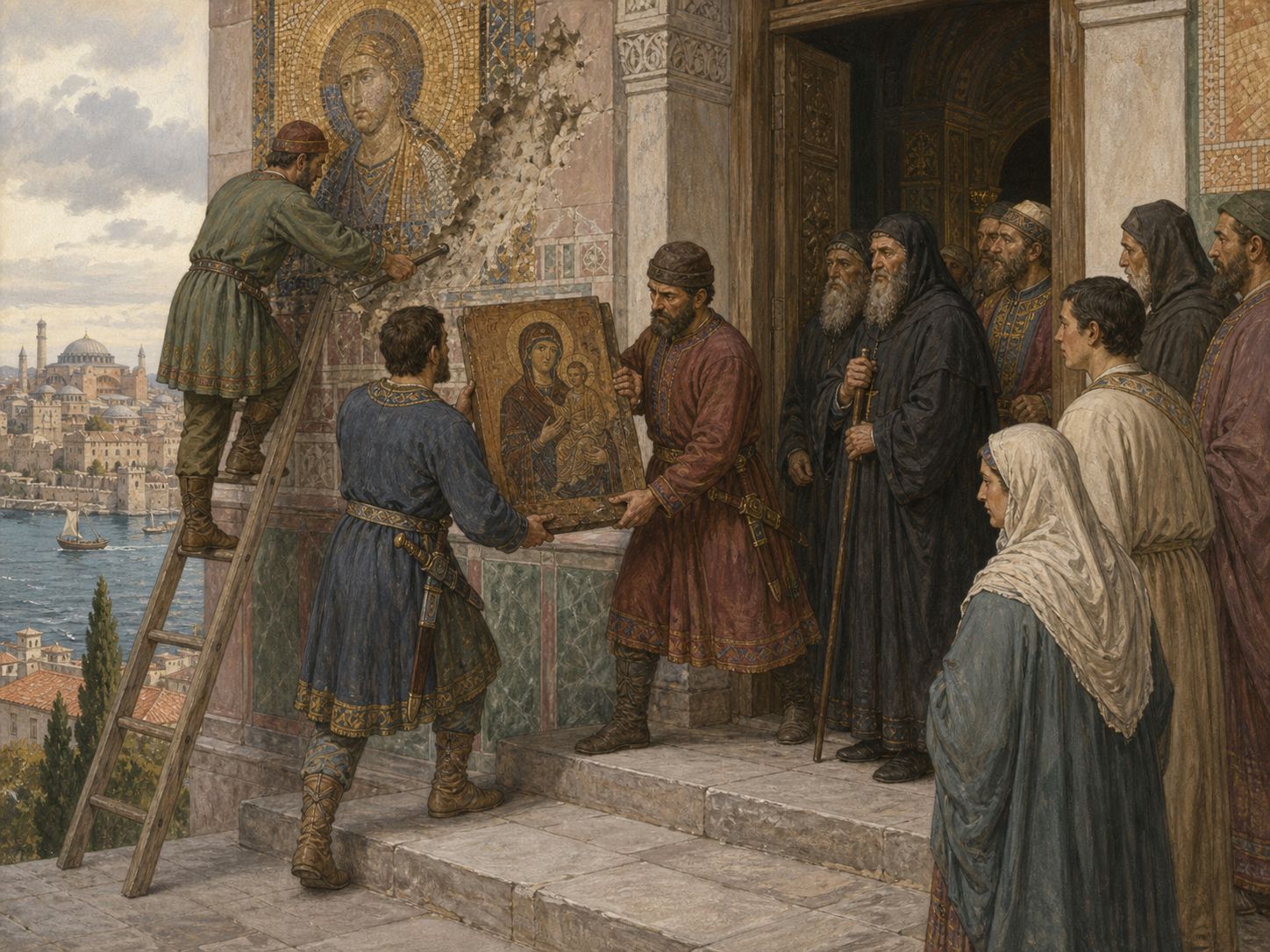
Some emperors and their supporters restricted or removed icons, while opponents defended their veneration as inherited practice. The conflict unfolded in two periods, affecting Constantinople, Nicaea, and other parts of the empire.
- Imperial policy toward sacred images
- Conflict in churches and monasteries
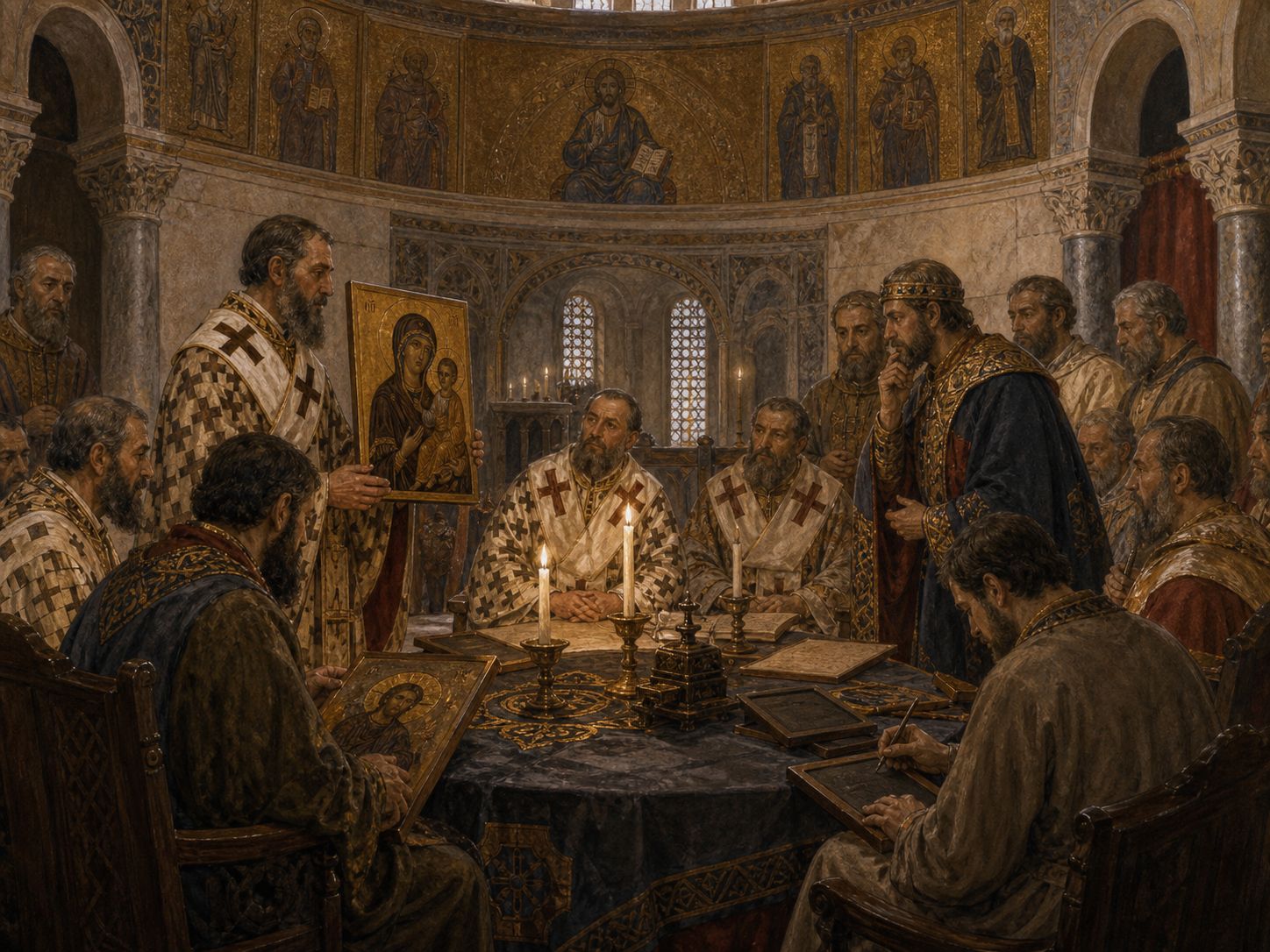
- Doctrinal clarification through councils
Outcome
Icons were restored in 843 and the event was remembered as the restoration of orthodoxy. The extent of destruction or covering varied by place and period, and political tensions did not disappear at once.
- A renewed position on sacred images
- Reorganization of ritual and art
- A controversy embedded in Orthodox memory
Historical significance
The controversy joined religious images to imperial power, monasticism, and church authority. Its resolution was a major turning point for later Byzantine art and the visual culture of Eastern Christianity.
- A lasting debate over religious images
- Tension between imperial power and church
- Long-term effects on Byzantine art
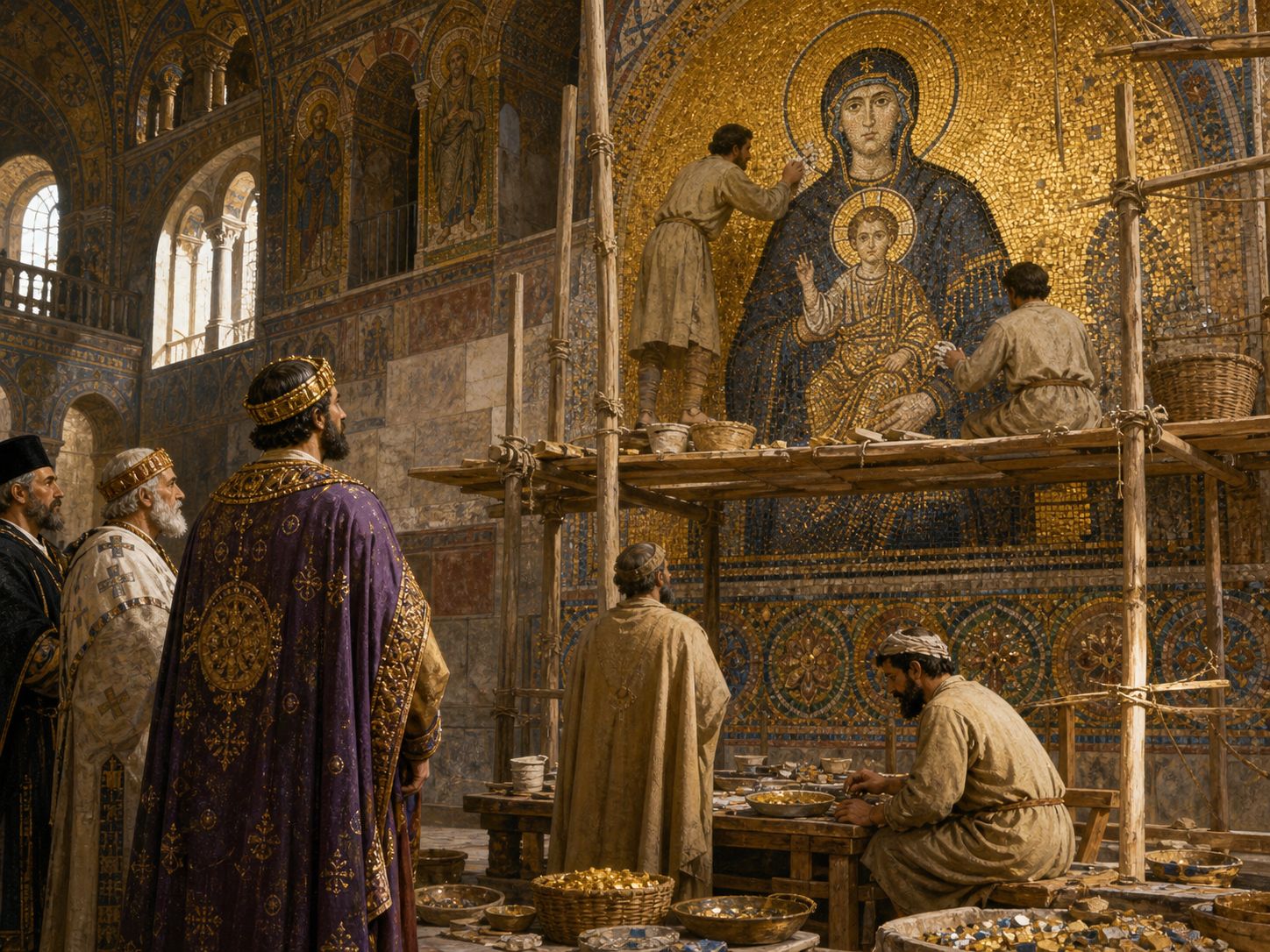


Related events
726
The spread of icon veneration
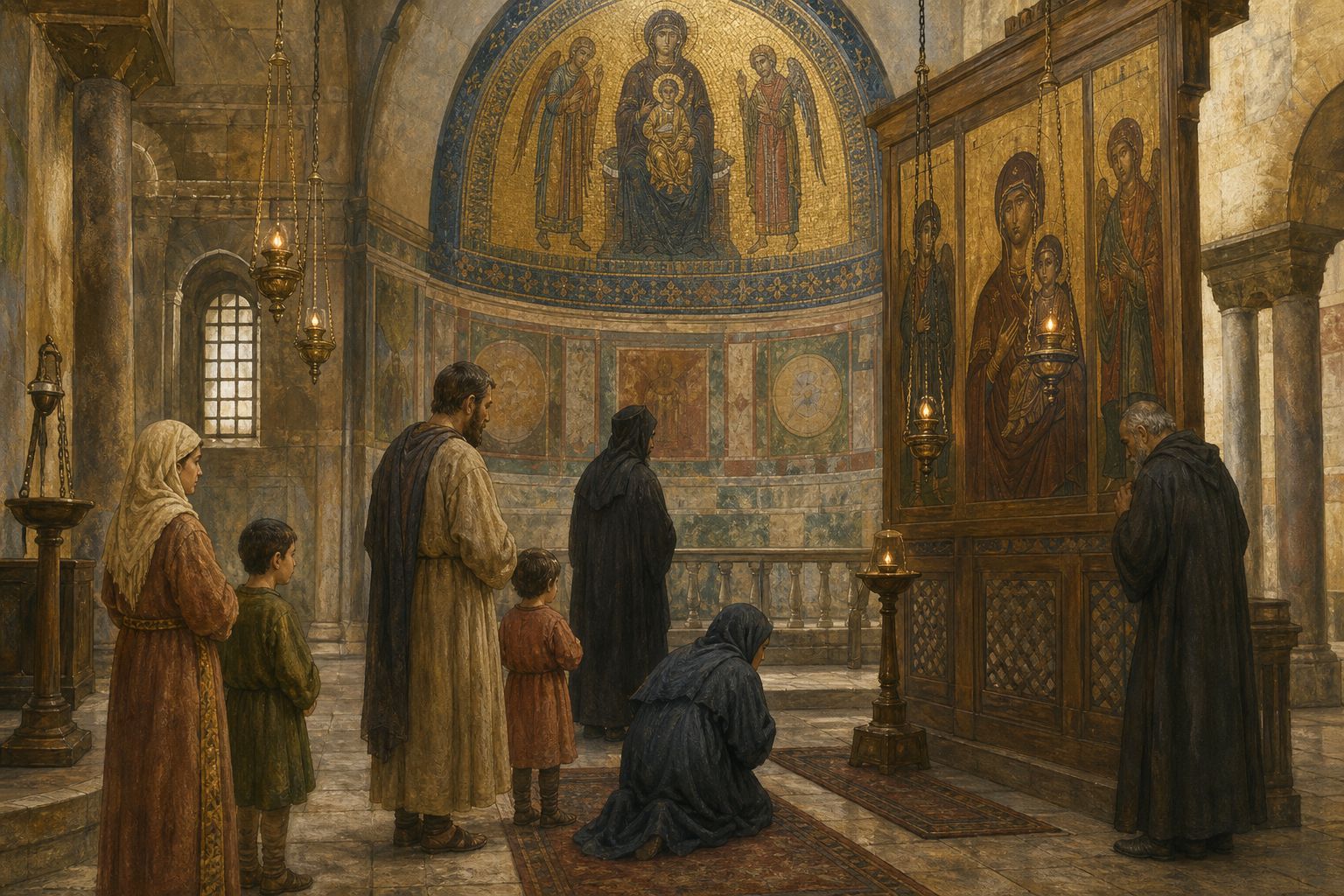
Icons had become deeply embedded in church spaces and household devotion.
730
An imperial prohibition
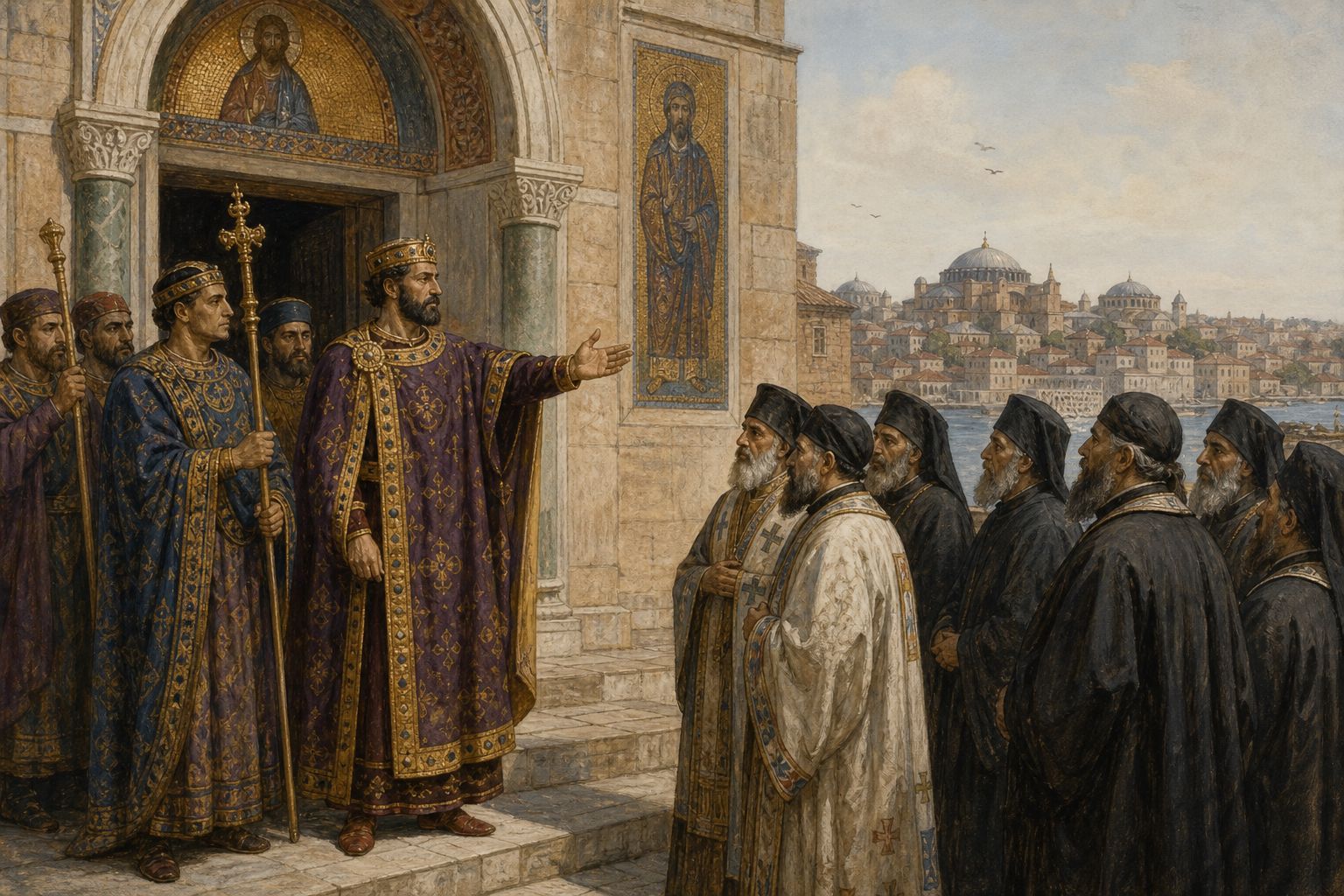
Under Emperor Leo III, imperial policy toward images moved toward public prohibition.
726–787
Imperial and ecclesiastical conflict
Current event
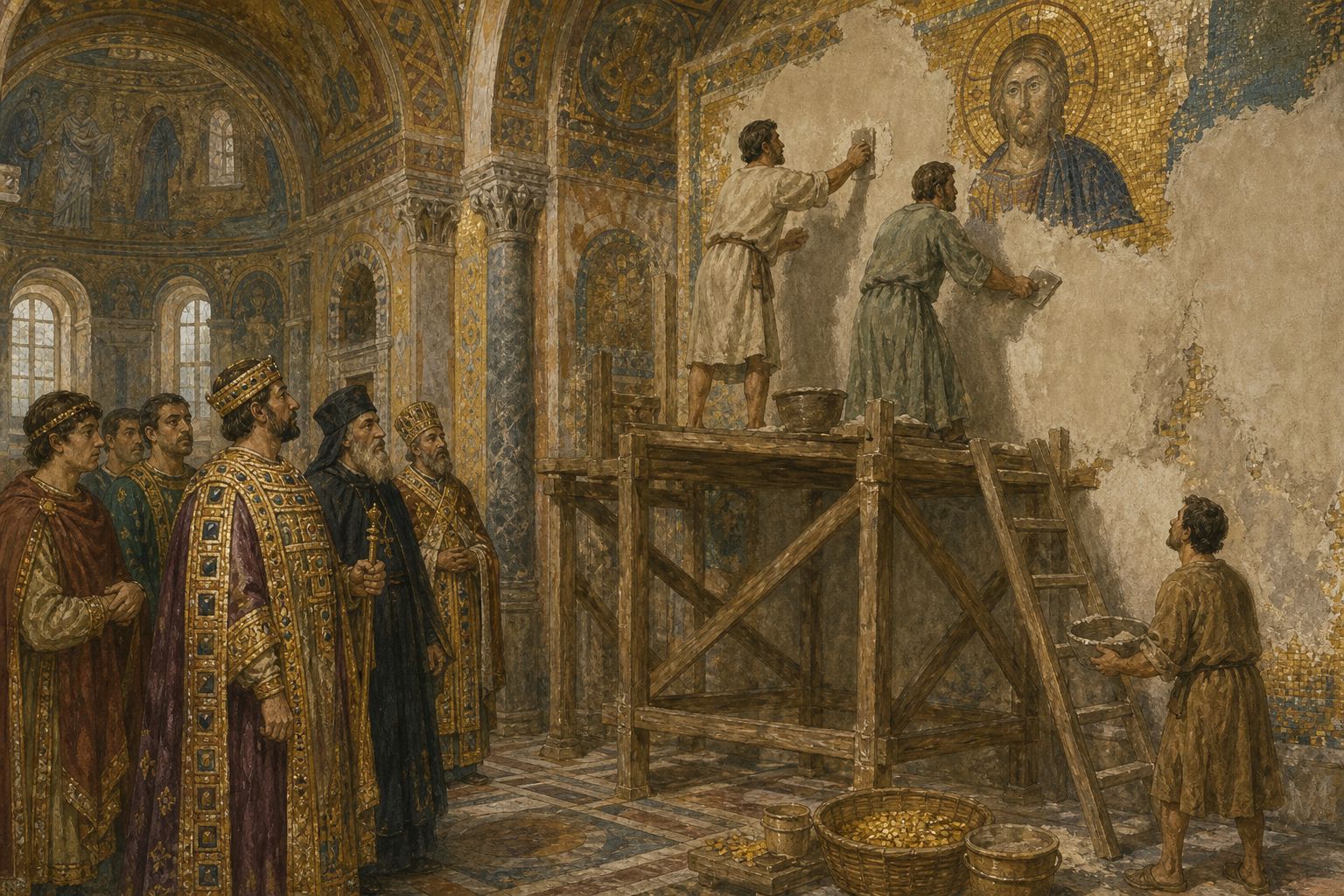
Policy toward images created conflict among emperors, clergy, monks, and worshippers.
787
The Council of Nicaea
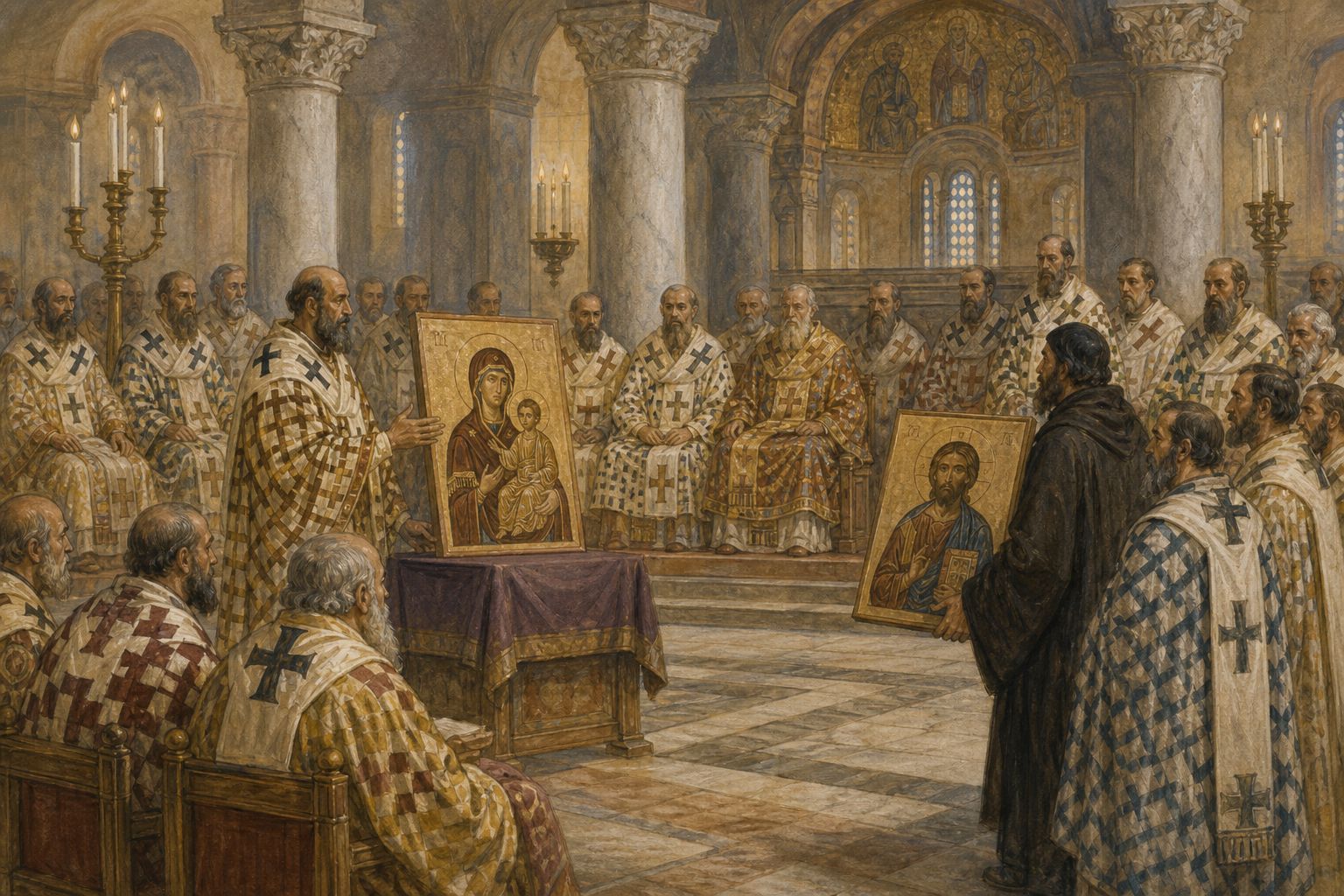
The Second Council of Nicaea clarified an orthodox position on the treatment of images.
843
The restoration of Orthodoxy
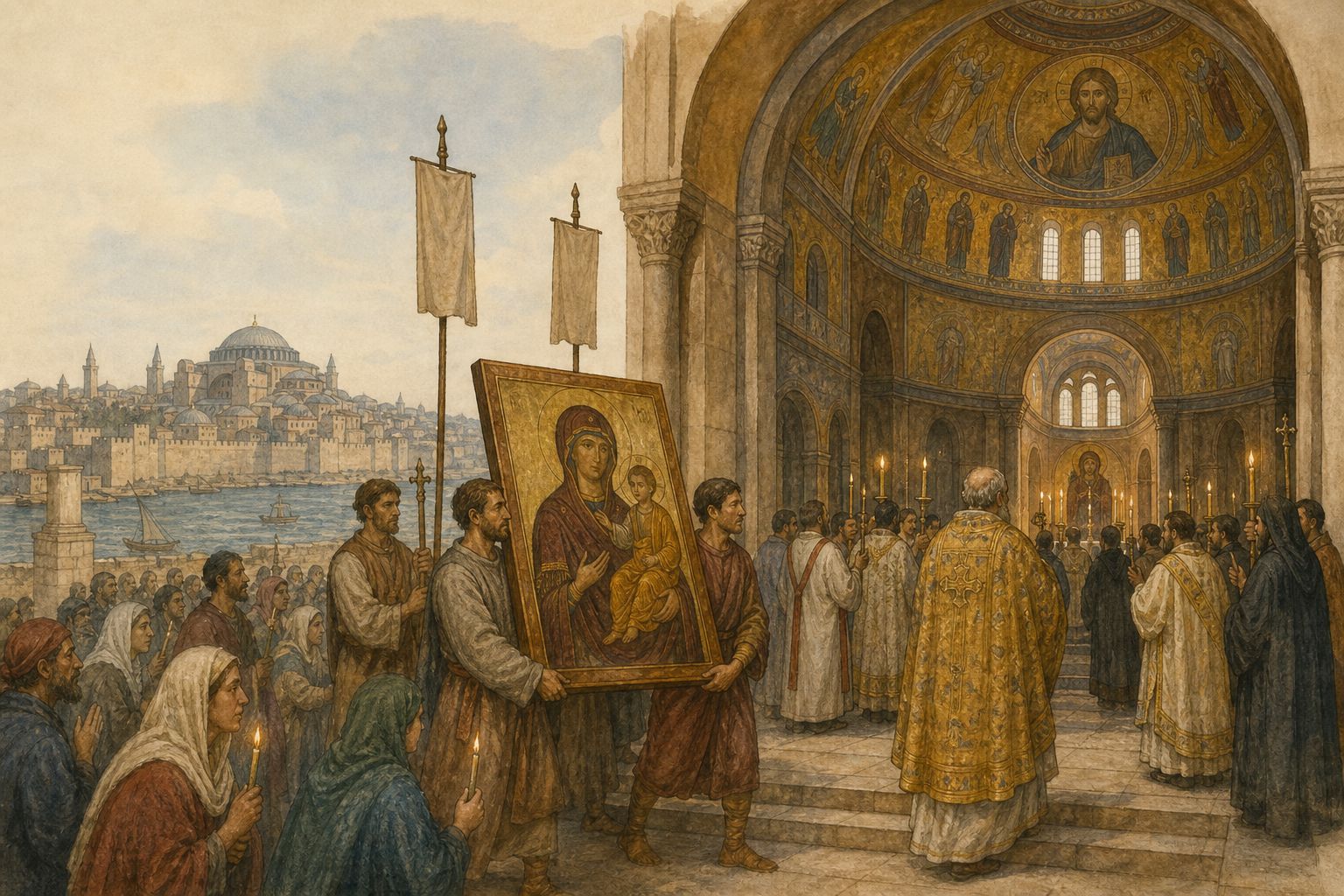
In 843, the restoration of icon veneration was reaffirmed, marking a major turning point in the controversy.


Sources
- Icons and Iconoclasm in ByzantiumThe Metropolitan Museum of ArtThis The Metropolitan Museum of Art resource supports the chronology, setting, and course of Byzantine Iconoclasm.
- IconoclasmThe Metropolitan Museum of ArtThis The Metropolitan Museum of Art resource supports the chronology, setting, and course of Byzantine Iconoclasm.
- Icon with the Virgin and ChildThe British MuseumThis British Museum resource supports the chronology, setting, and course of Byzantine Iconoclasm.