Imperial Coronation of Charlemagne
800
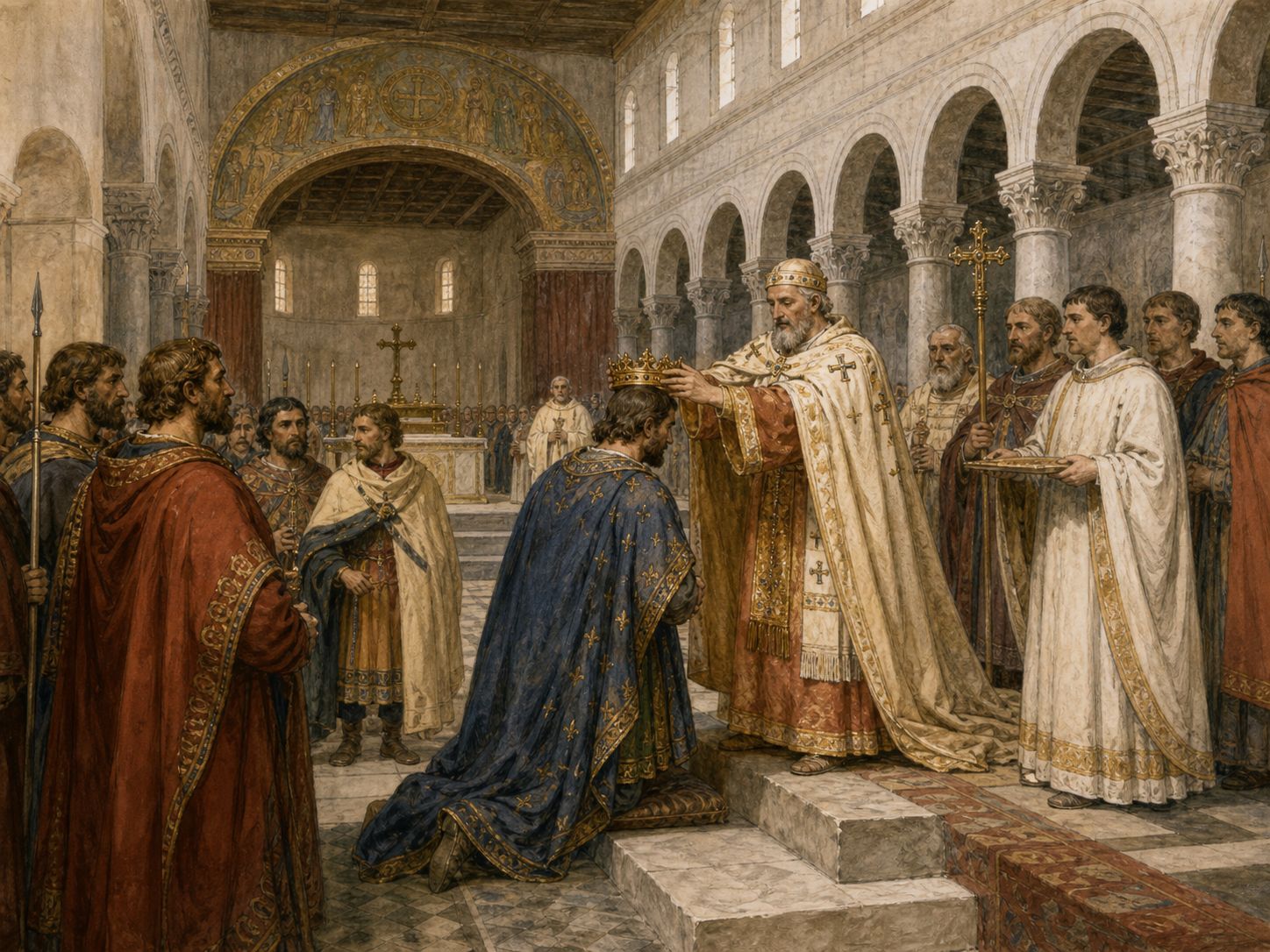
In 800, Pope Leo III crowned the Frankish king Charlemagne, dramatizing the relationship between western kingship and the Roman Church.

- Period
- 800
- Kind
- Political event
- Regions
- Europe
- Keywords
- Imperial Coronation of Charlemagne · St. Peter’s Basilica in Rome · medieval · background · turning point · impact
Follow the story · Four stages
Background
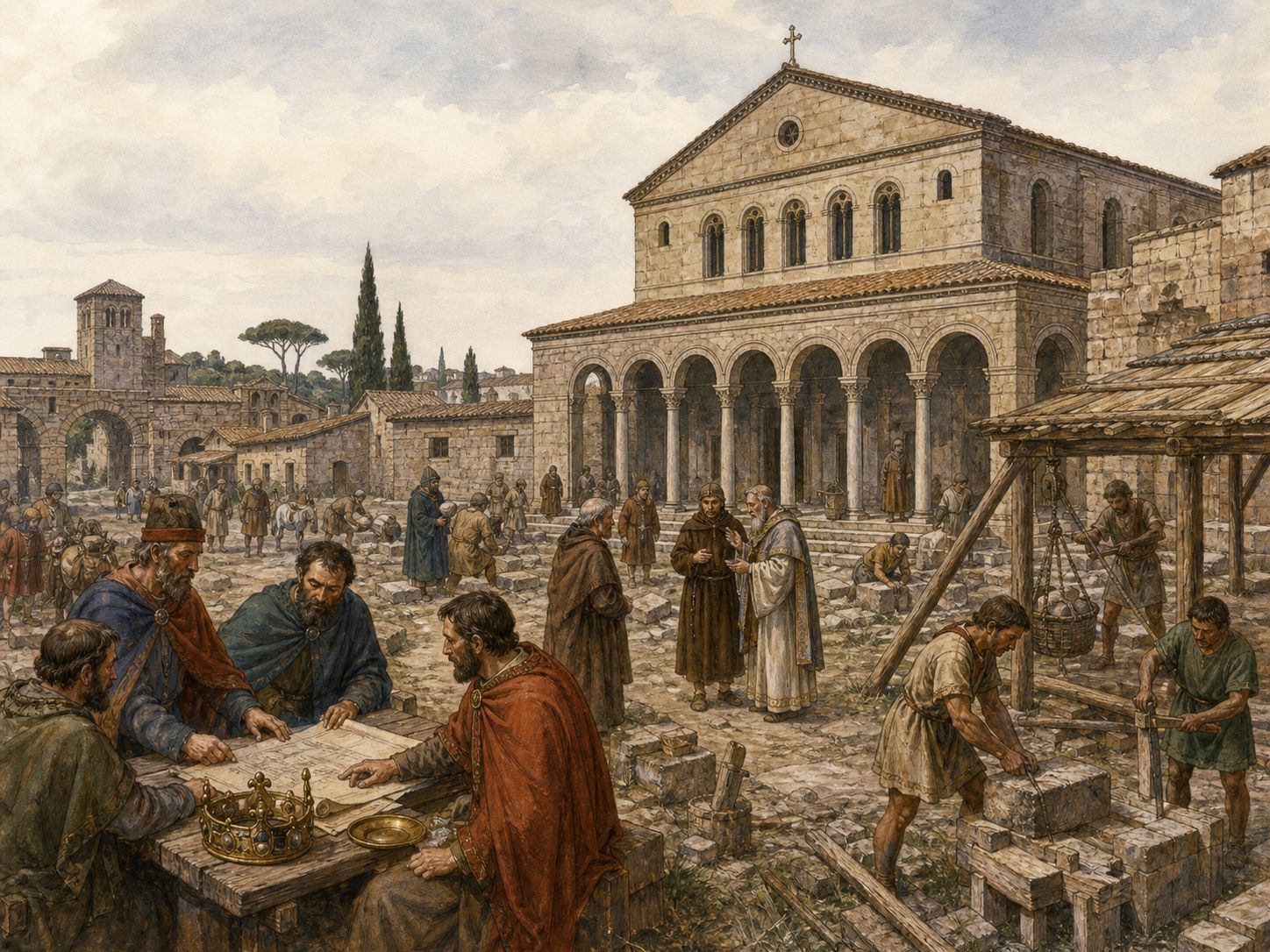
Political, social, and commercial changes around St. Peter’s Basilica in Rome formed the setting: In 800, Pope Leo III crowned the Frankish king Charlemagne, dramatizing the relationship between western kingship and the Roman Church.
- Charlemagne’s conquest of the Lombard kingdom and protection of Pope Leo III bound Frankish power closely to the Roman church before 800.
- Leo’s return to Rome under Frankish protection created the immediate setting for a new imperial coronation in St. Peter’s Basilica.
- Core event: In 800, Pope Leo III crowned the Frankish king Charlemagne, dramatizing the relationship between western kingship and the Roman Church.
Course
In 800, Pope Leo III crowned the Frankish king Charlemagne, dramatizing the relationship between western kingship and the Roman Church. The choices of the participating powers and responses of local communities shaped the course.
- In 800, Pope Leo III crowned the Frankish king Charlemagne, dramatizing the relationship between western kingship and the Roman Church.
- The change unfolded through decisions by rulers, institutions, and local communities.
- Conditions behind the action: In and around St. Peter’s Basilica in Rome, the setting took shape as In 800, Pope Leo III crowned the Frankish king Charlemagne, dramatizing the relationship between western kingship and the Roman Church.
Outcome
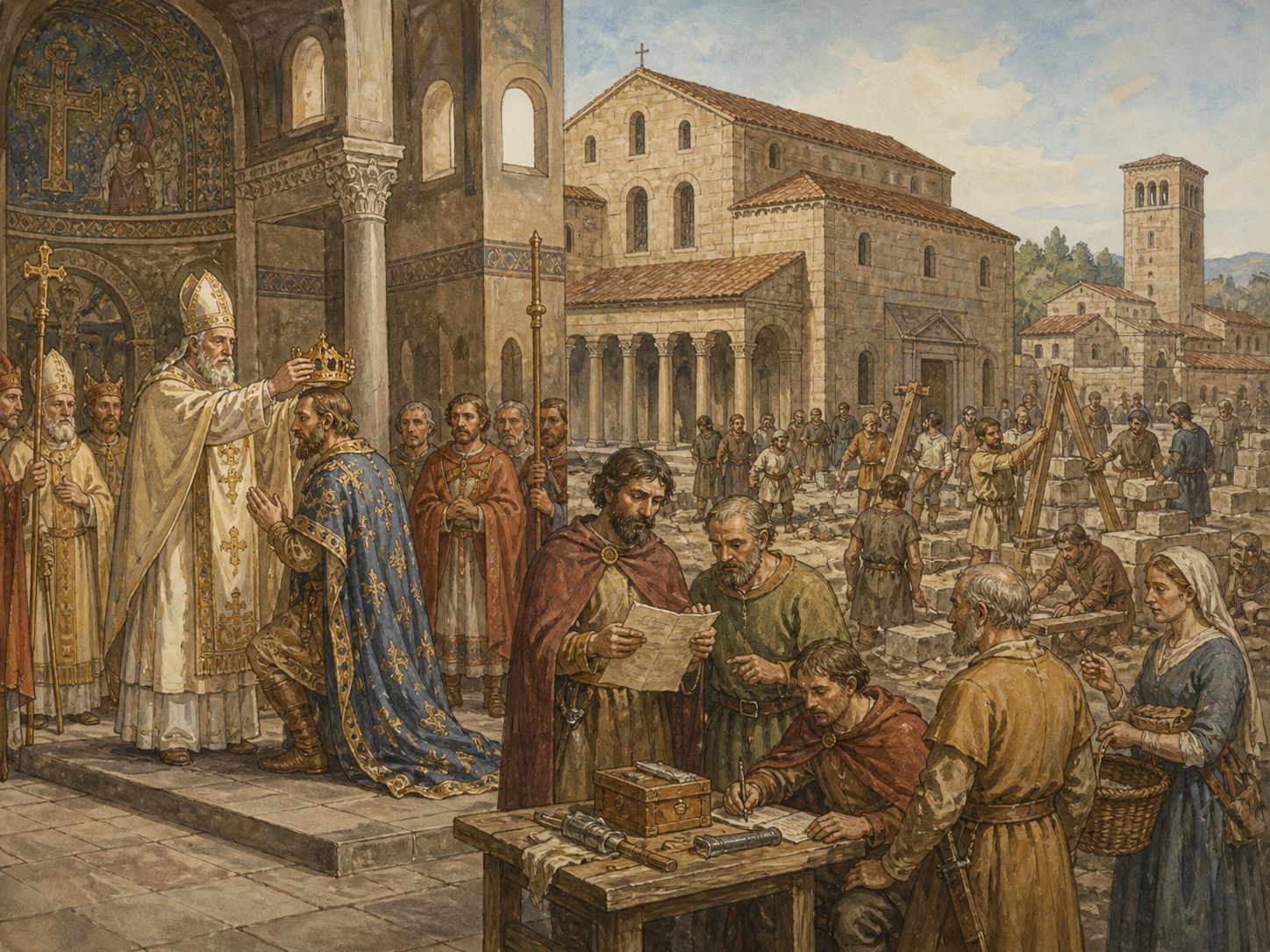
As a result, The coronation became a symbol of medieval politics surrounding western empire and papal–monarchical relations.
- The coronation became a symbol of medieval politics surrounding western empire and papal–monarchical relations.
- Process producing the result: In 800, Pope Leo III crowned the Frankish king Charlemagne, dramatizing the relationship between western kingship and the Roman Church. The change unfolded through decisions by rulers, institutions, and local communities.
- Question carried forward: In the longer term, the coronation became a symbol of medieval politics surrounding western empire and papal–monarchical relations.
Historical significance
The significance of this event lies in the fact that the coronation became a symbol of medieval politics surrounding western empire and papal–monarchical relations.
- In the longer term, the coronation became a symbol of medieval politics surrounding western empire and papal–monarchical relations.
- Immediate consequence: The coronation became a symbol of medieval politics surrounding western empire and papal–monarchical relations.
- Historical turning point: In 800, Pope Leo III crowned the Frankish king Charlemagne, dramatizing the relationship between western kingship and the Roman Church.
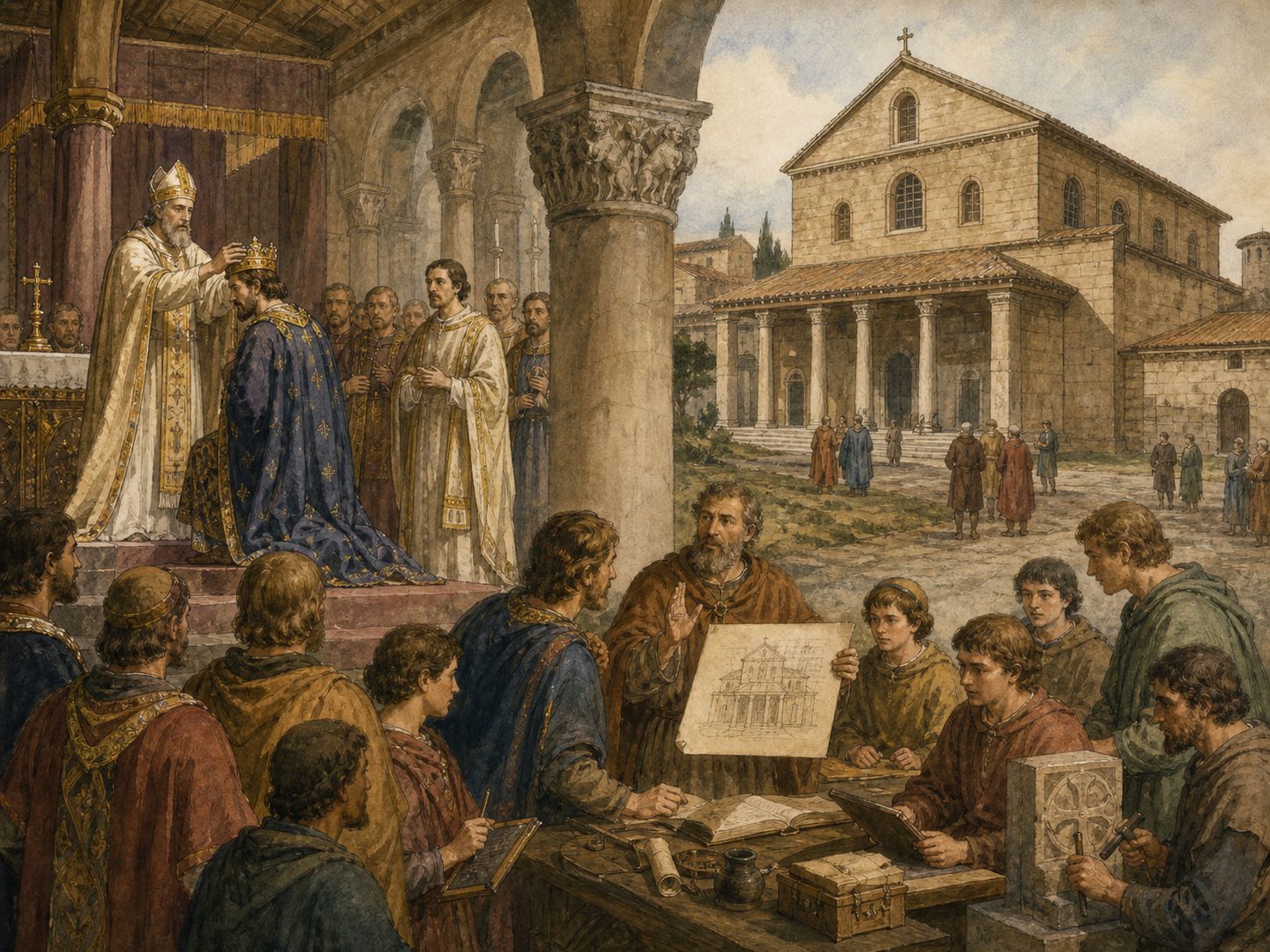


Related events
774
Charlemagne conquers the Lombard kingdom
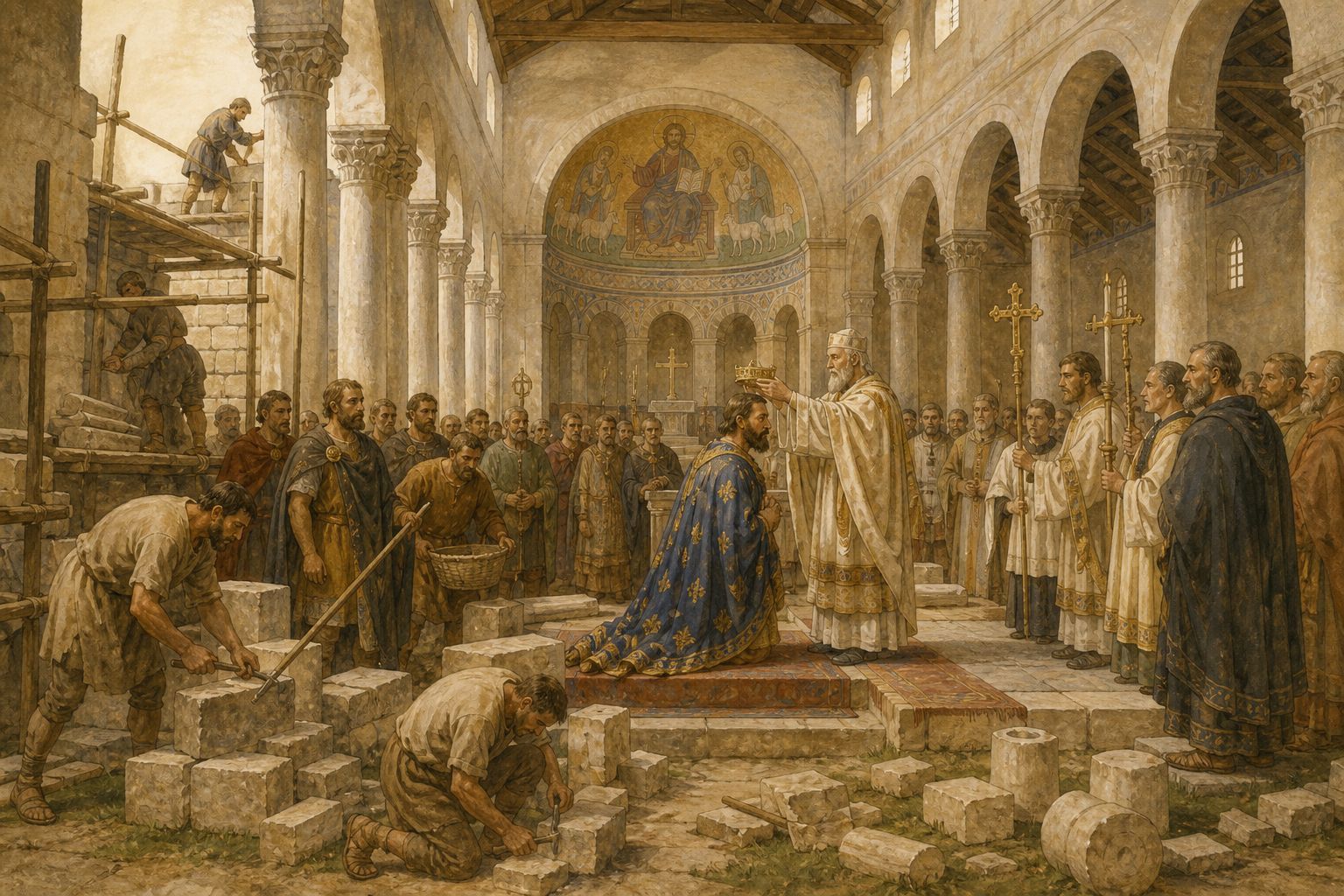
Charlemagne conquers the Lombard kingdom — In and around St. Peter’s Basilica in Rome, the setting took shape as In 800, Pope Leo III crowned the Frankish king Charlemagne, dramatizing the relationship between western kingship and the Roman Church.
799
Pope Leo III seeks Frankish protection
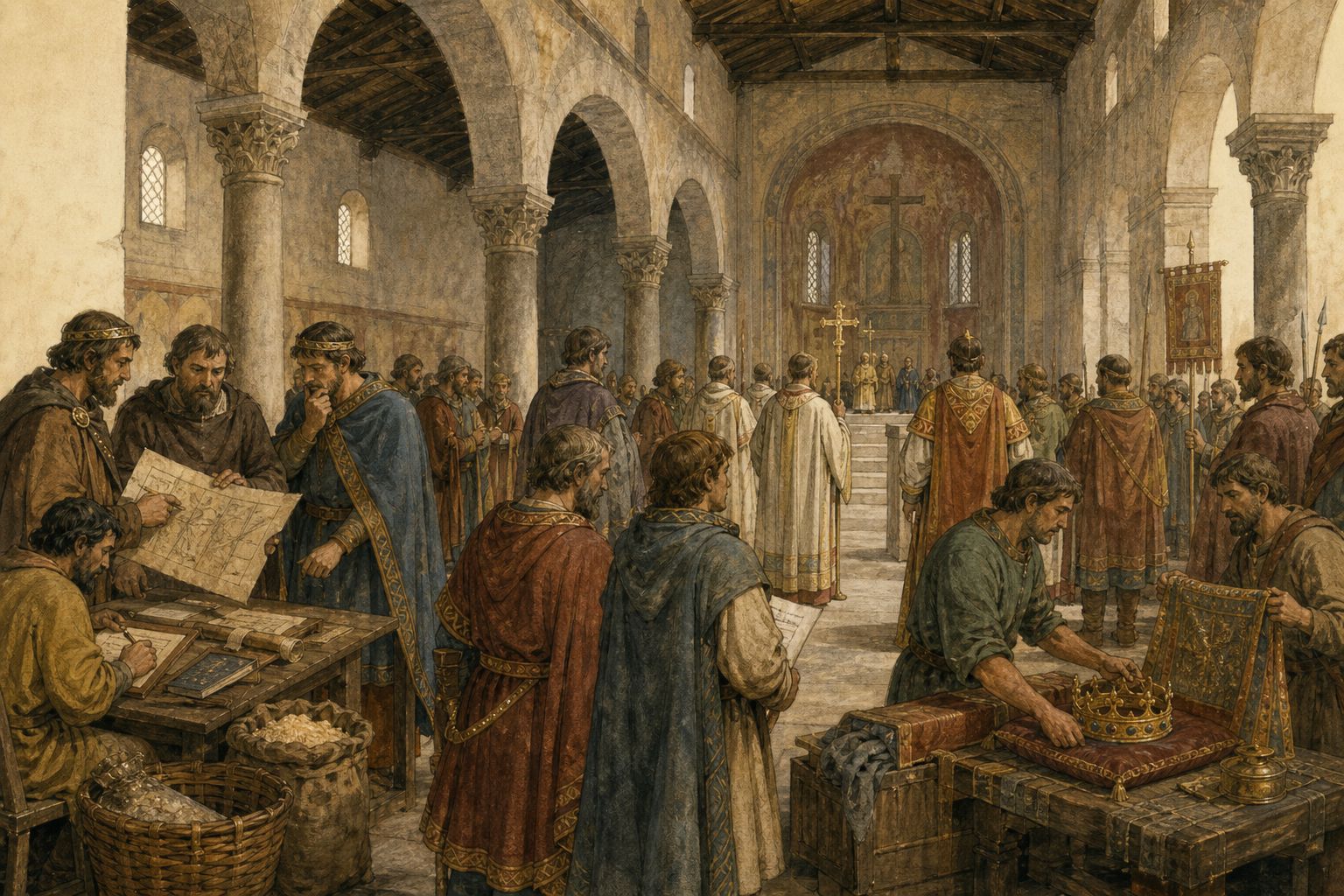
Pope Leo III seeks Frankish protection — In 800, Pope Leo III crowned the Frankish king Charlemagne, dramatizing the relationship between western kingship and the Roman Church. The change unfolded through decisions by rulers, institutions, and local communities.
800
Imperial coronation in Rome
Current event
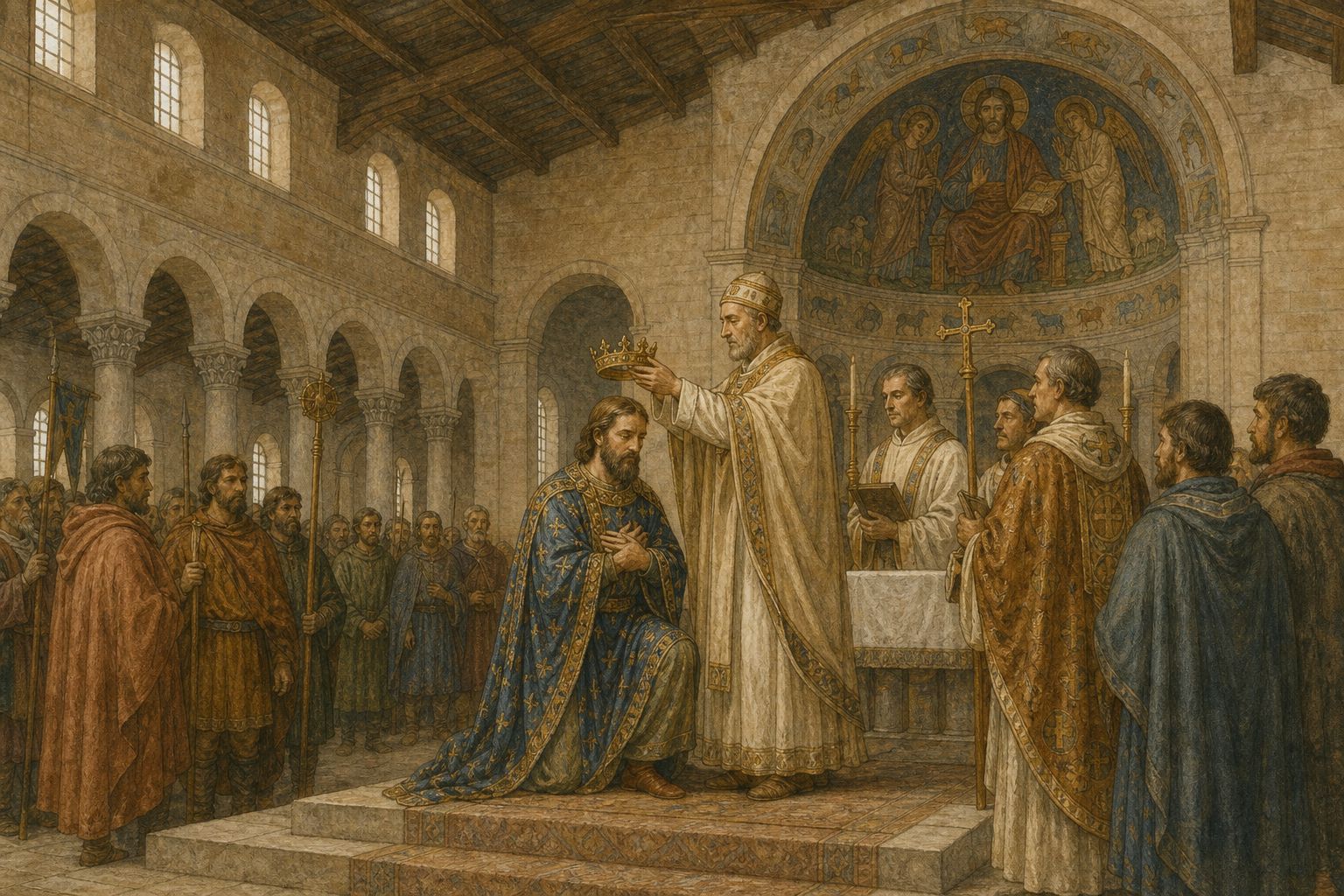
Imperial coronation in Rome — In 800, Pope Leo III crowned the Frankish king Charlemagne, dramatizing the relationship between western kingship and the Roman Church.
814
Death of Charlemagne
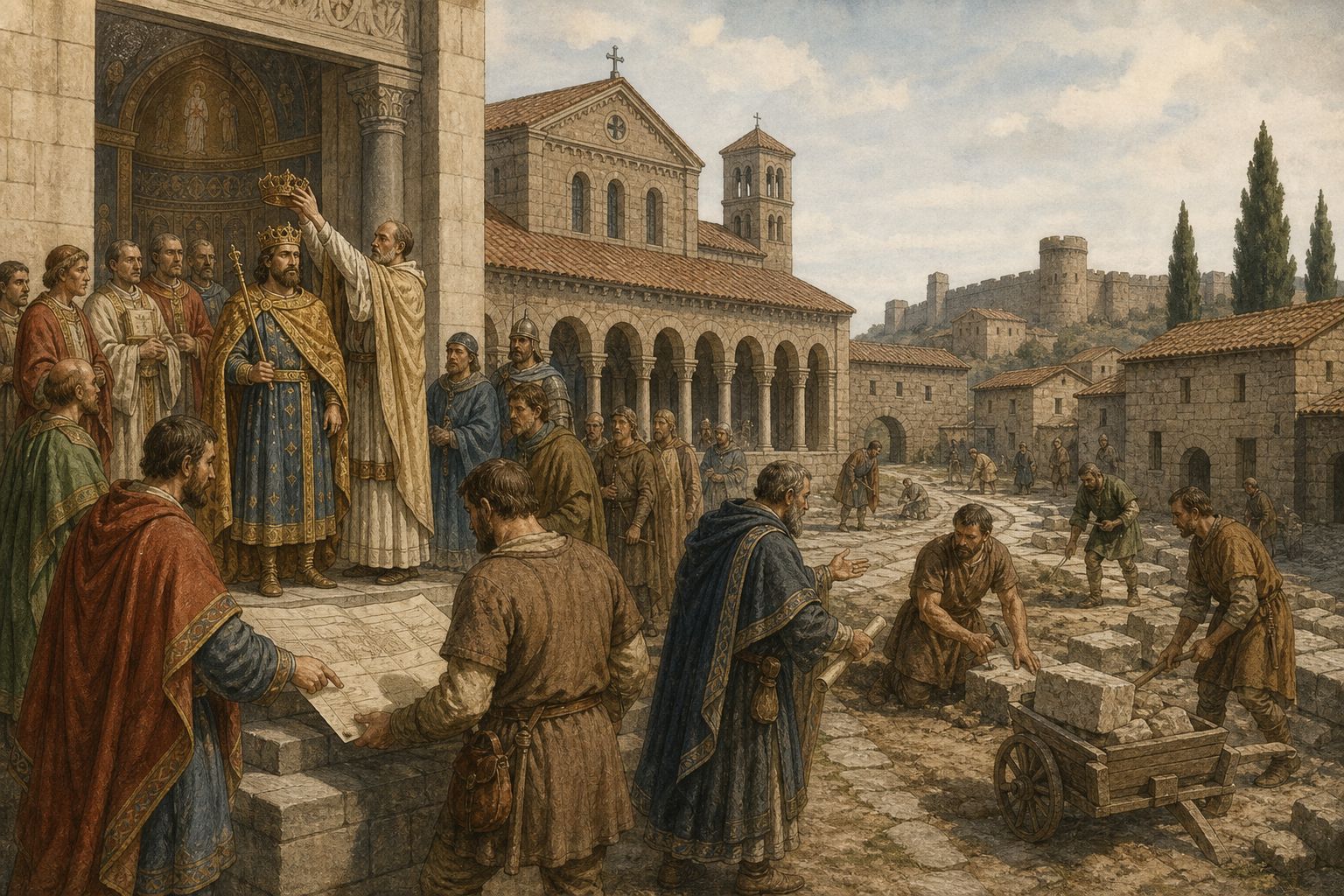
Death of Charlemagne — The coronation became a symbol of medieval politics surrounding western empire and papal–monarchical relations.
843
Treaty of Verdun divides the empire
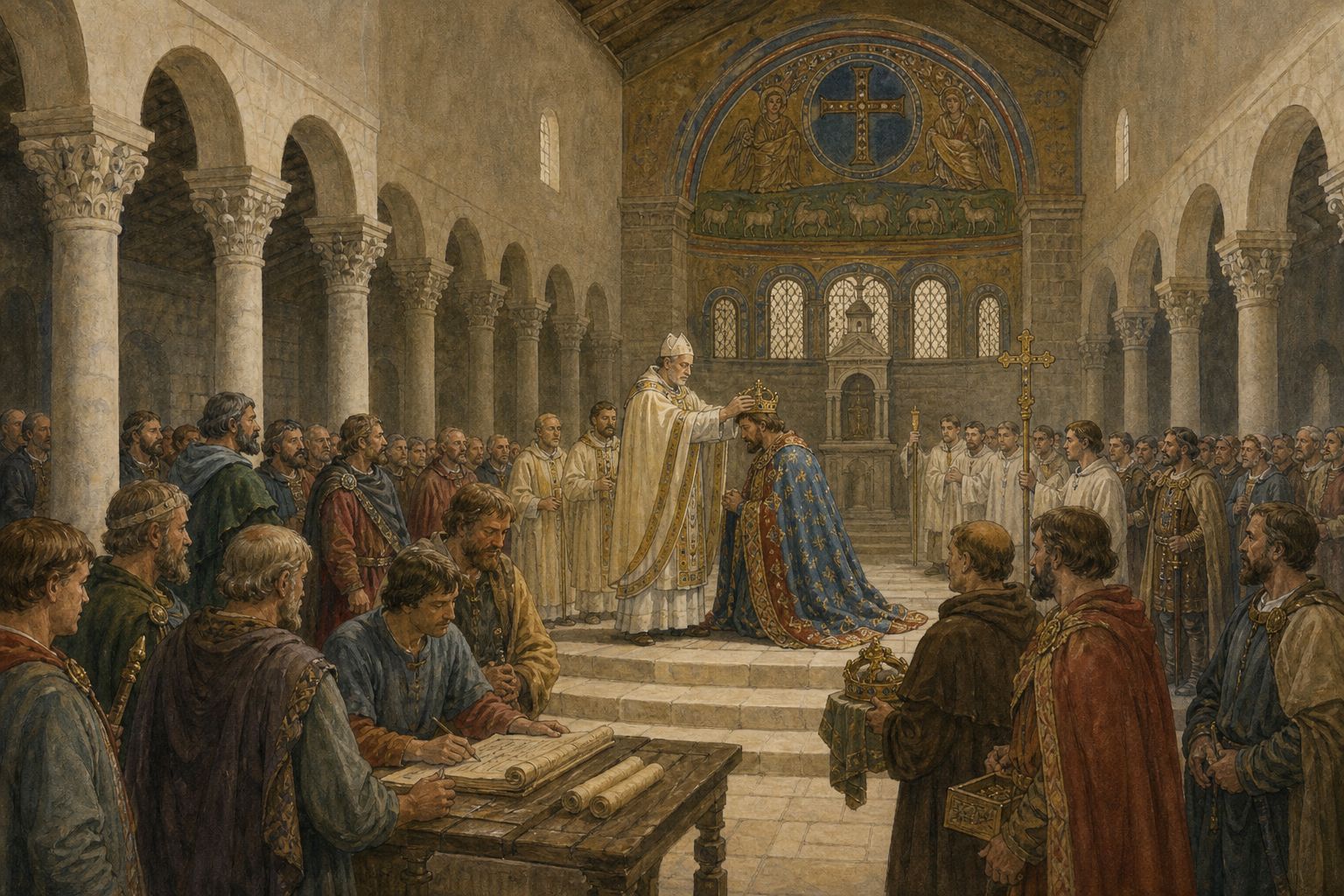
Treaty of Verdun divides the empire — In the longer term, the coronation became a symbol of medieval politics surrounding western empire and papal–monarchical relations.


Sources
- Imperial Coronation of Charlemagne — Timeline (Daiichi Gakushusha)www.daiichi-g.co.jpThis Daiichi Gakushusha resource supports the chronology, setting, and course of Imperial Coronation of Charlemagne.
- Imperial Coronation of Charlemagne — Imperial Coronation Of Charlemagne (Encyclopaedia Britannica)www.britannica.comThis Encyclopaedia Britannica resource supports the chronology, setting, and course of Imperial Coronation of Charlemagne.
- Imperial Coronation of Charlemagne — Imperial Coronation Of Charlemagne (Wikidata)www.wikidata.orgThis Wikidata resource supports the chronology, setting, and course of Imperial Coronation of Charlemagne.