Congress of Vienna
1814–1815
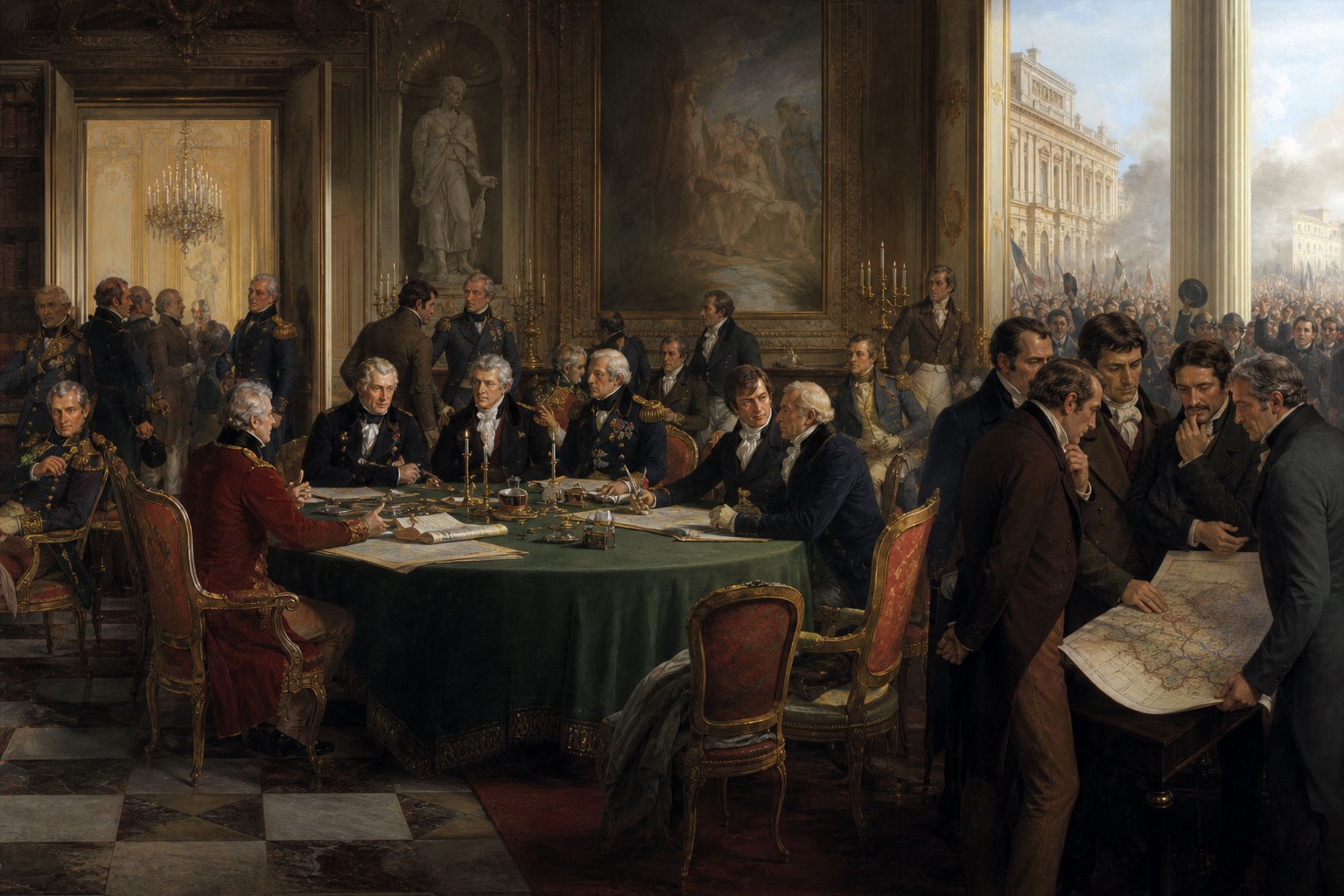
The international congress held in Vienna in 1814–1815 to reorder Europe after the Napoleonic Wars.

- Period
- 1814–1815
- Kind
- Conference
- Regions
- Europe
- Keywords
- Congress of Vienna · background · course · outcome
Follow the story · Four stages
Background
After Napoleon's defeat, European states had to settle territorial claims and rebuild a workable balance of power. The leading powers sought both restoration and safeguards against renewed domination by one state.
- After Napoleon's defeat, European states had to settle territorial claims and rebuild a workable balance of power.
- The leading powers sought both restoration and safeguards against renewed domination by one state.
- Core event: The international congress held in Vienna in 1814–1815 to reorder Europe after the Napoleonic Wars.
Course
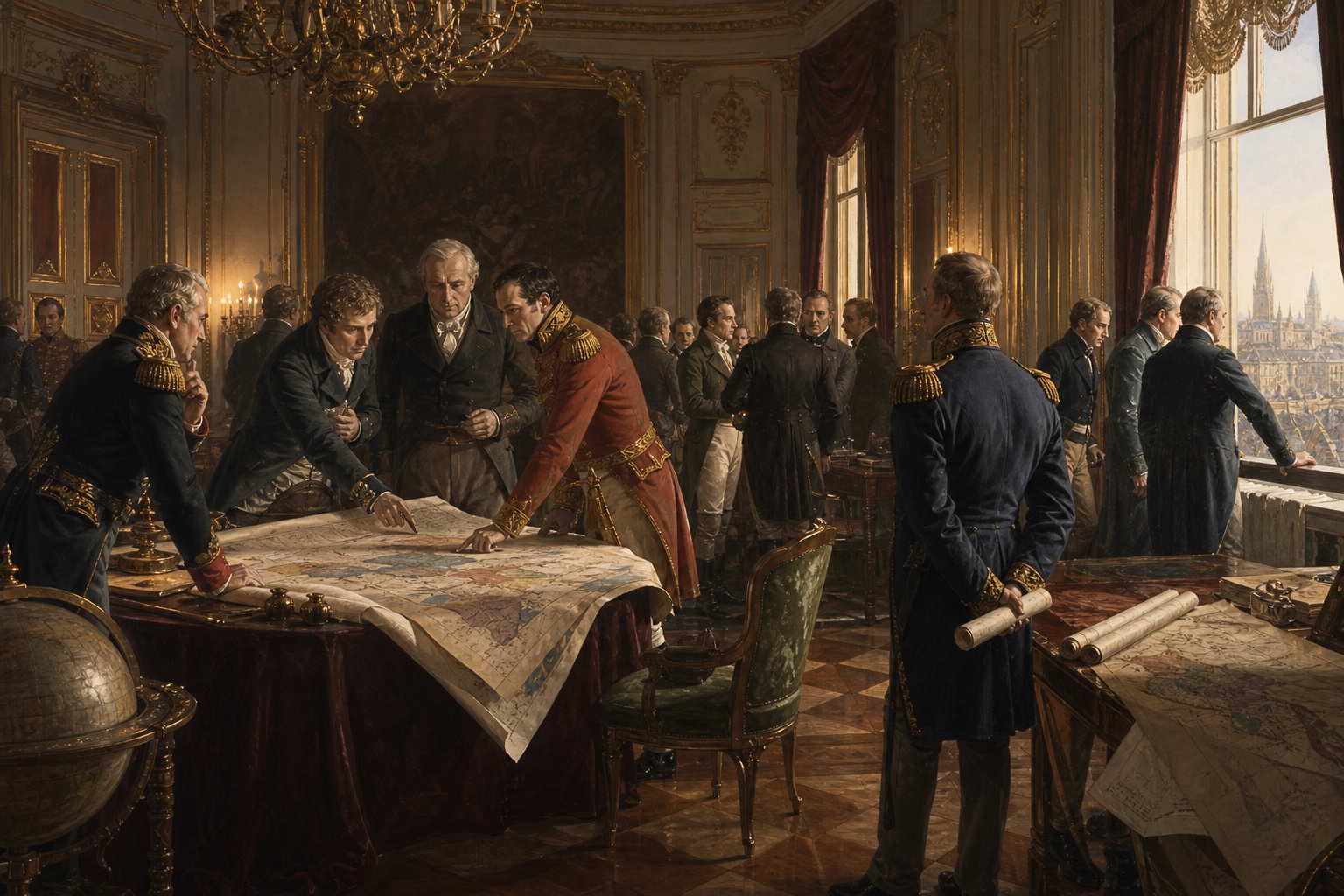
Delegates negotiated through formal committees and extensive informal diplomacy from autumn 1814. Metternich of Austria, Alexander I of Russia, and Talleyrand of France were among the central actors, while Napoleon's Hundred Days added urgency to the final settlement.
- Delegates negotiated through formal committees and extensive informal diplomacy from autumn 1814.
- Metternich of Austria, Alexander I of Russia, and Talleyrand of France were among the central actors, while Napoleon's Hundred Days added urgency to the final settlement.
- Conditions behind the action: After Napoleon's defeat, European states had to settle territorial claims and rebuild a workable balance of power. The leading powers sought both restoration and safeguards against renewed domination by one state.
Outcome
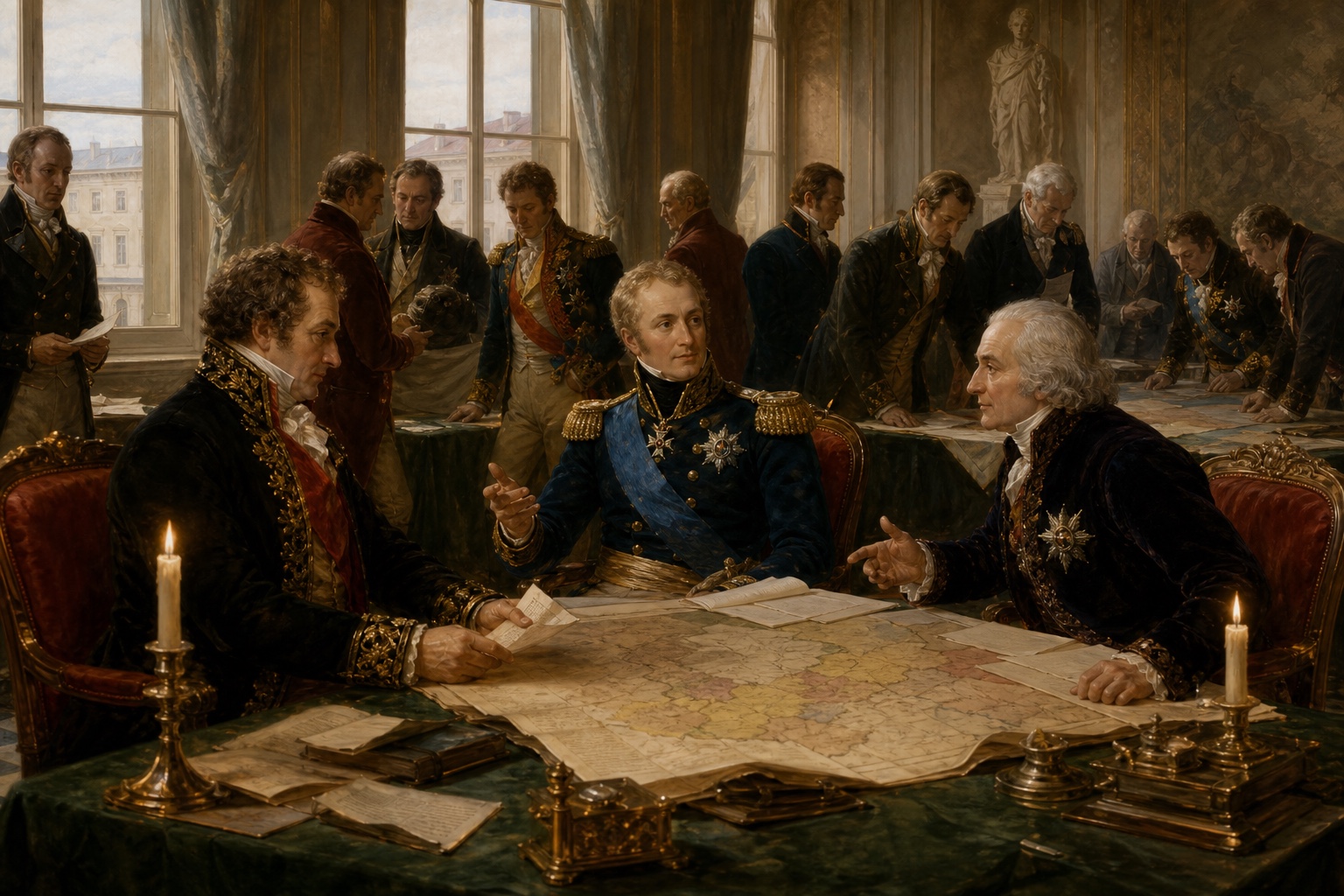
The Final Act of 9 June 1815 recorded territorial settlements, the German Confederation, Swiss neutrality, and rules for international river navigation. France returned to great-power diplomacy and a five-power balance emerged.
- The Final Act of 9 June 1815 recorded territorial settlements, the German Confederation, Swiss neutrality, and rules for international river navigation.
- France returned to great-power diplomacy and a five-power balance emerged.
- Process producing the result: Delegates negotiated through formal committees and extensive informal diplomacy from autumn 1814. Metternich of Austria, Alexander I of Russia, and Talleyrand of France were among the central actors, while Napoleon's Hundred Days added urgency to the final settlement.
Historical significance
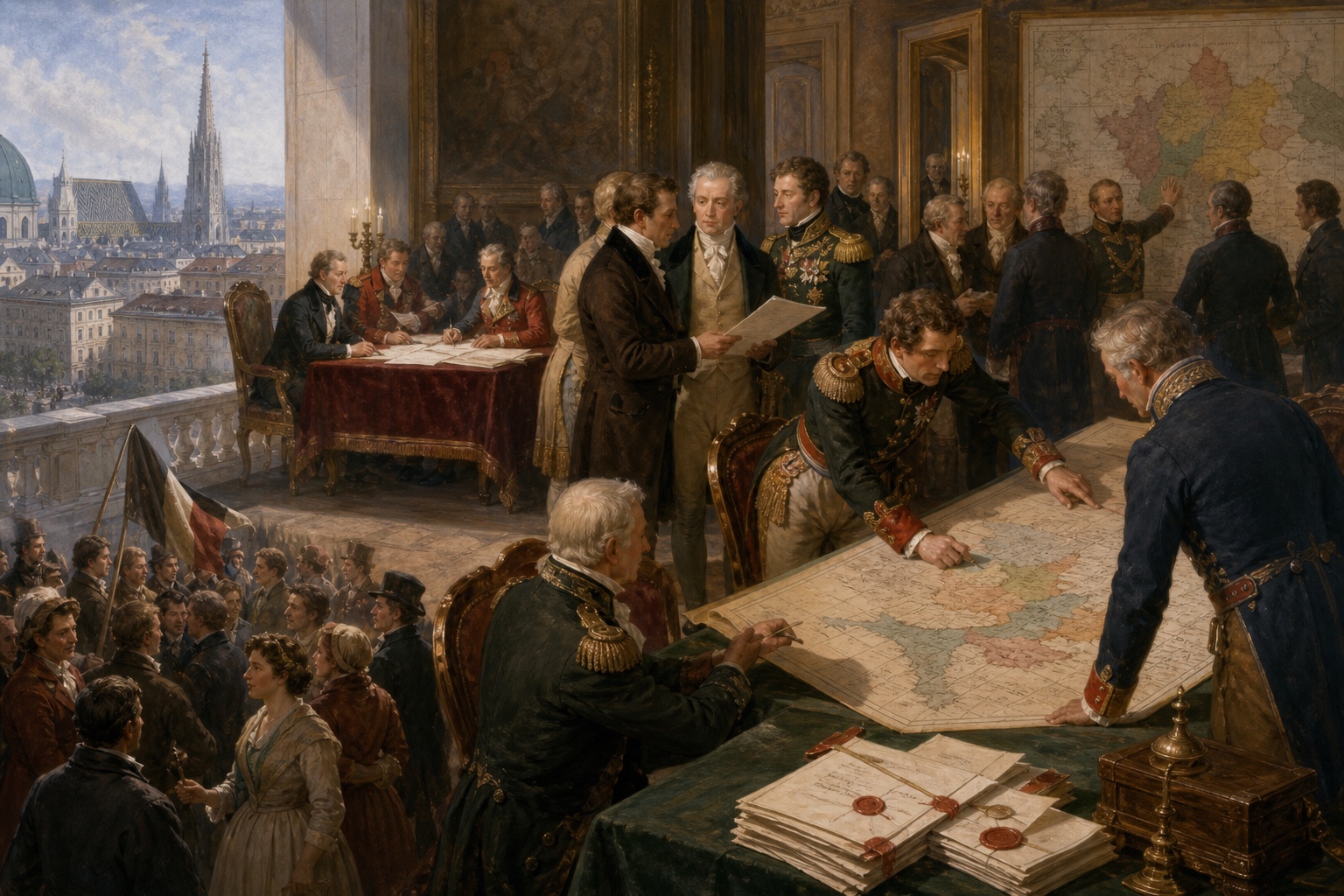
The settlement helped establish the Concert of Europe and shaped great-power relations for decades. Its emphasis on dynastic legitimacy and restoration also worked against liberal and nationalist demands, leaving tensions that later movements would challenge.
- The settlement helped establish the Concert of Europe and shaped great-power relations for decades.
- Its emphasis on dynastic legitimacy and restoration also worked against liberal and nationalist demands, leaving tensions that later movements would challenge.
- Immediate consequence: The Final Act of 9 June 1815 recorded territorial settlements, the German Confederation, Swiss neutrality, and rules for international river navigation. France returned to great-power diplomacy and a five-power balance emerged.


Related figures
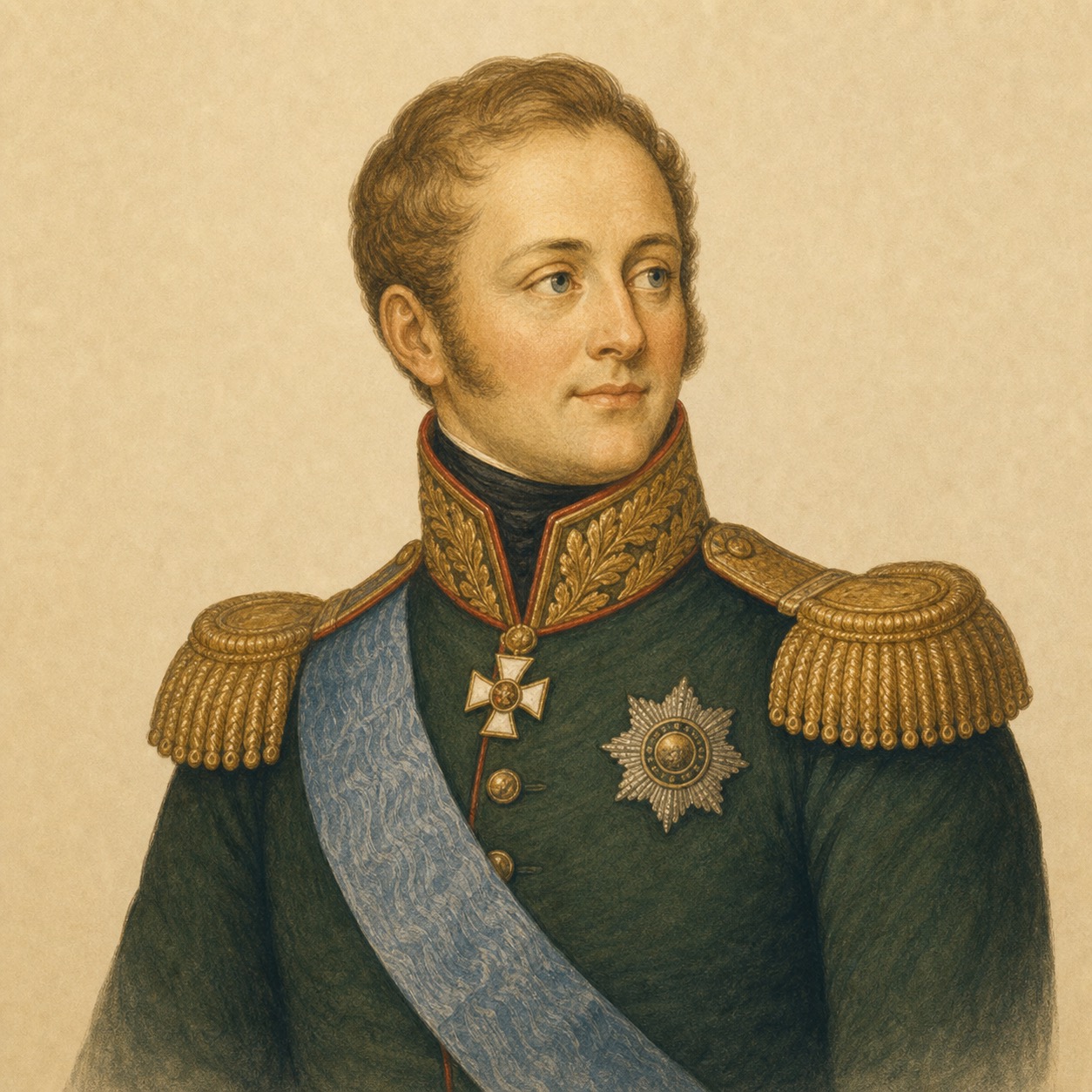
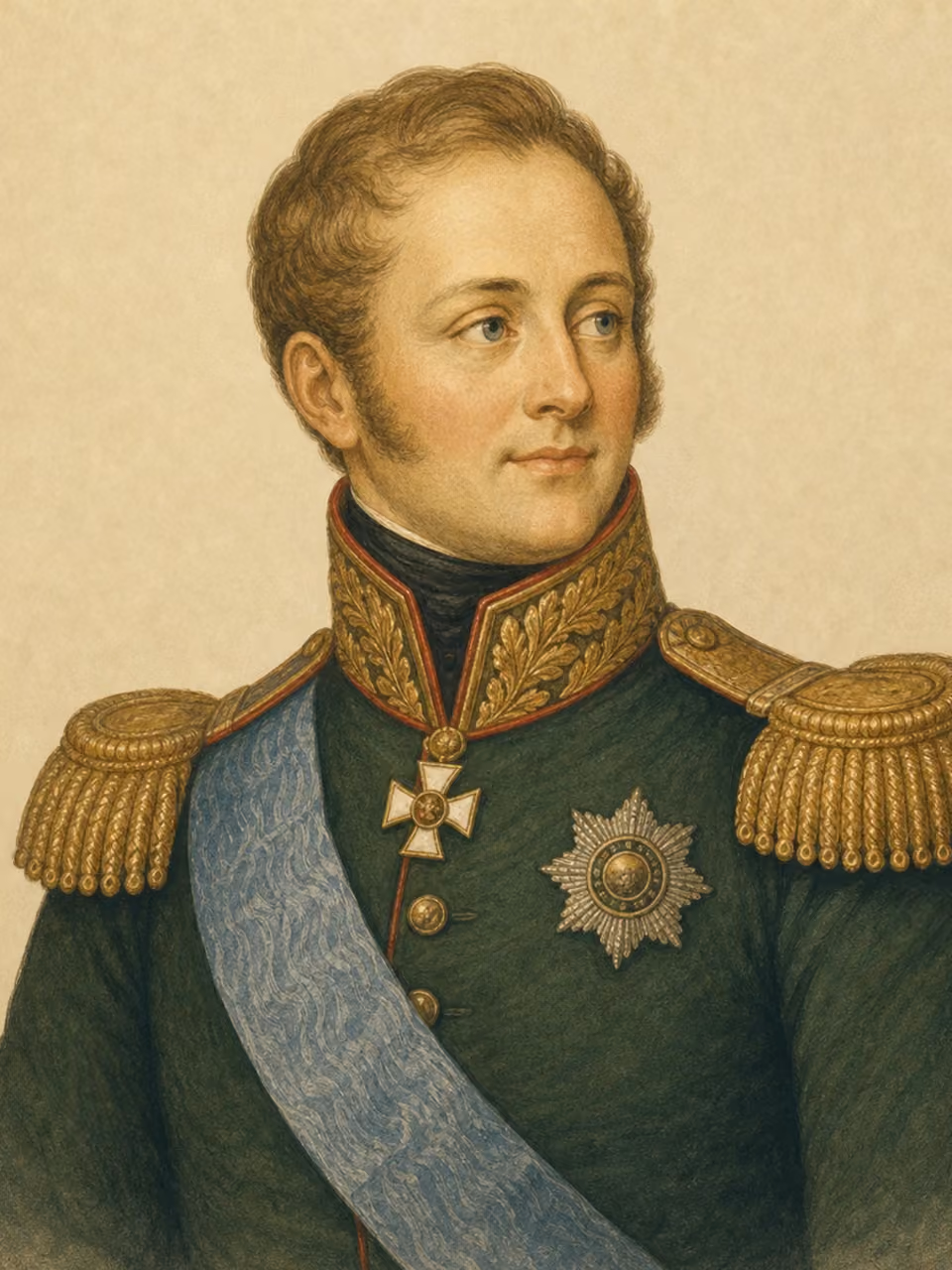
Alexander I of Russia
historical figure in context
Russian emperor. He fought against France during the Napoleonic Wars and was deeply involved in the formation of the Vienna System. He is a person who thinks about the international order of Europe in the 19th century.
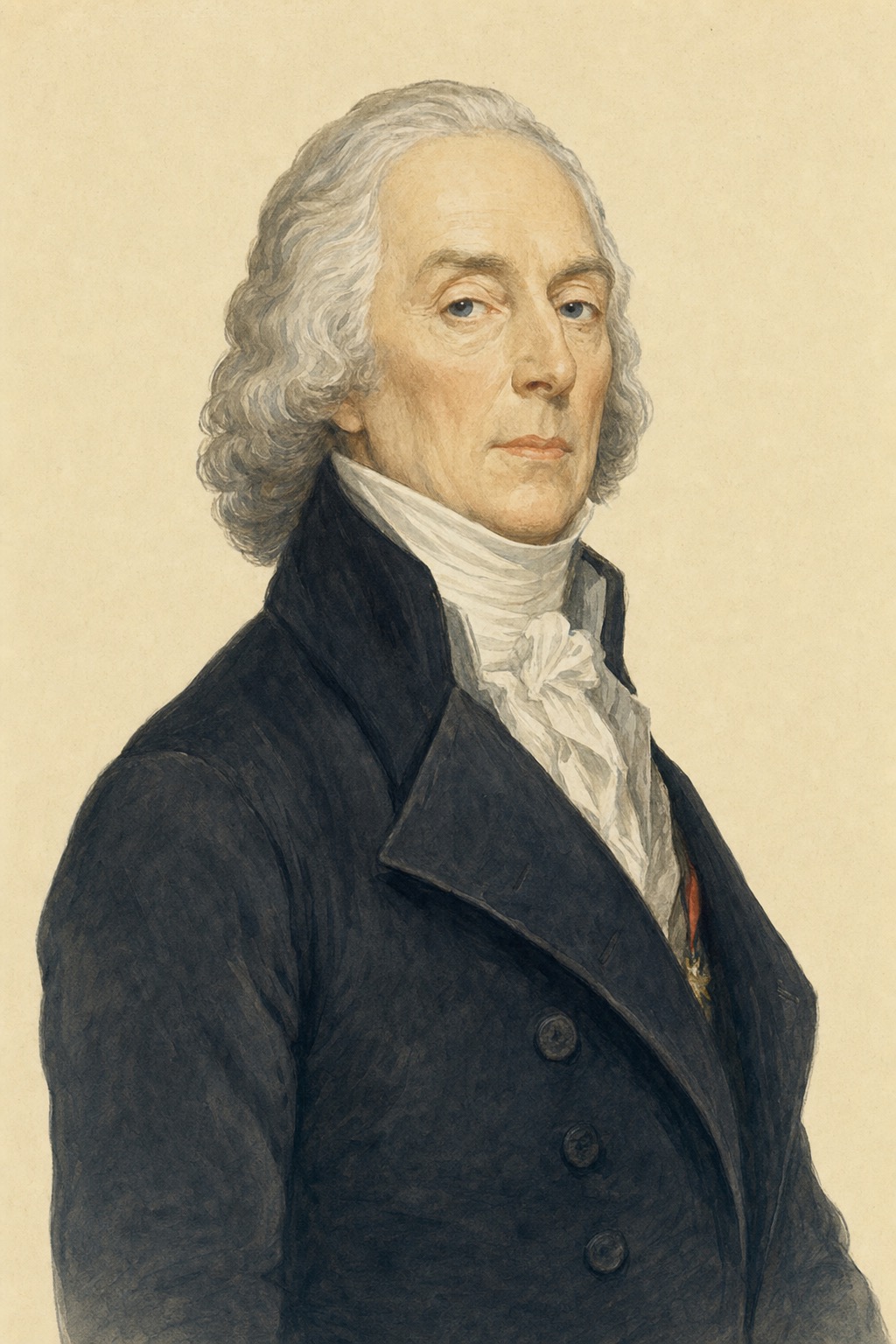
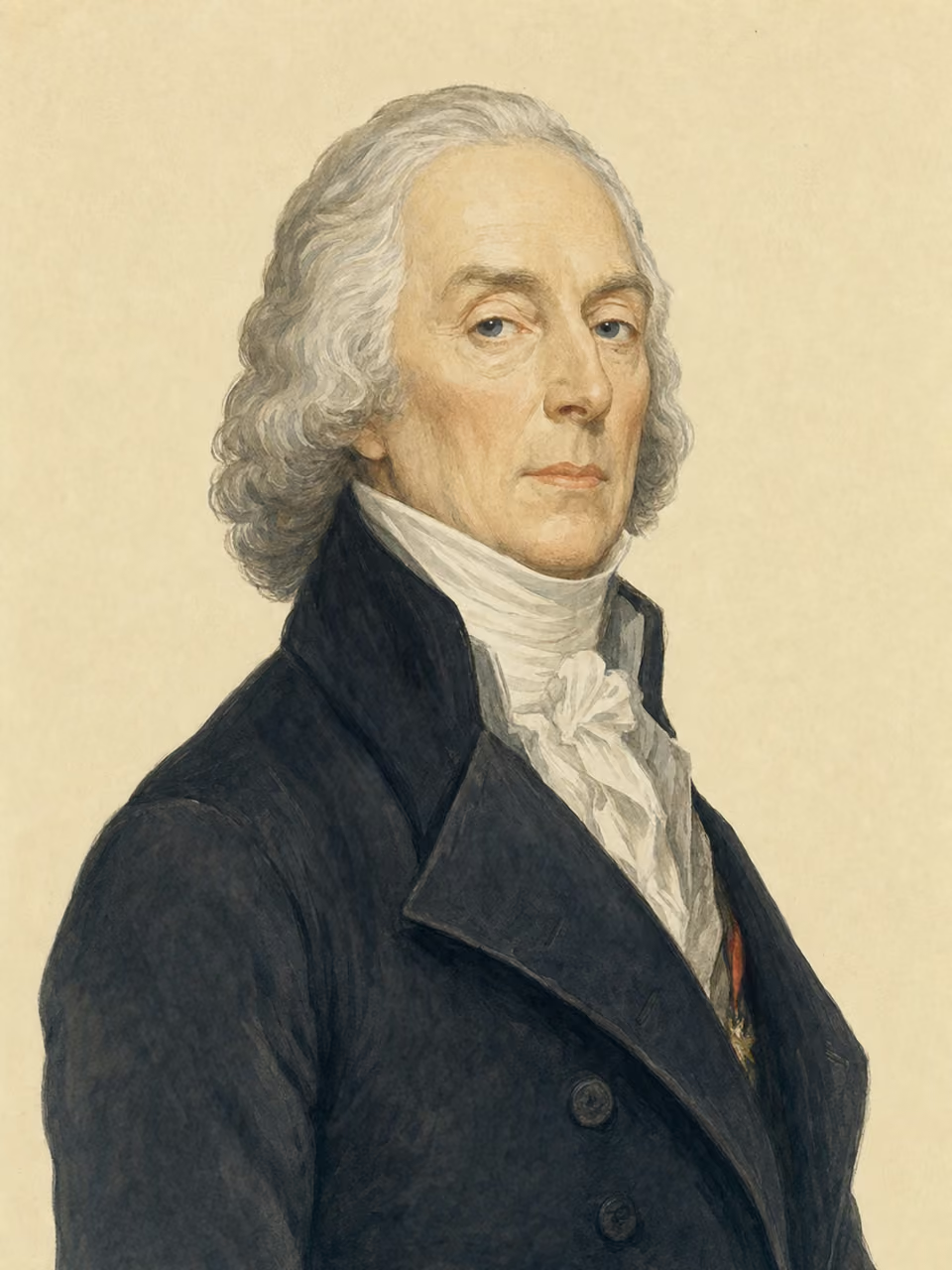
Charles Maurice de Talleyrand-Périgord
historical figure in context
A diplomat and politician who was active from the French Revolution to the Napoleonic era and the Restoration period. He survived each regime change and was involved in restoring France's status at the Congress of Vienna. He is an important figure in thinking about modern diplomacy.
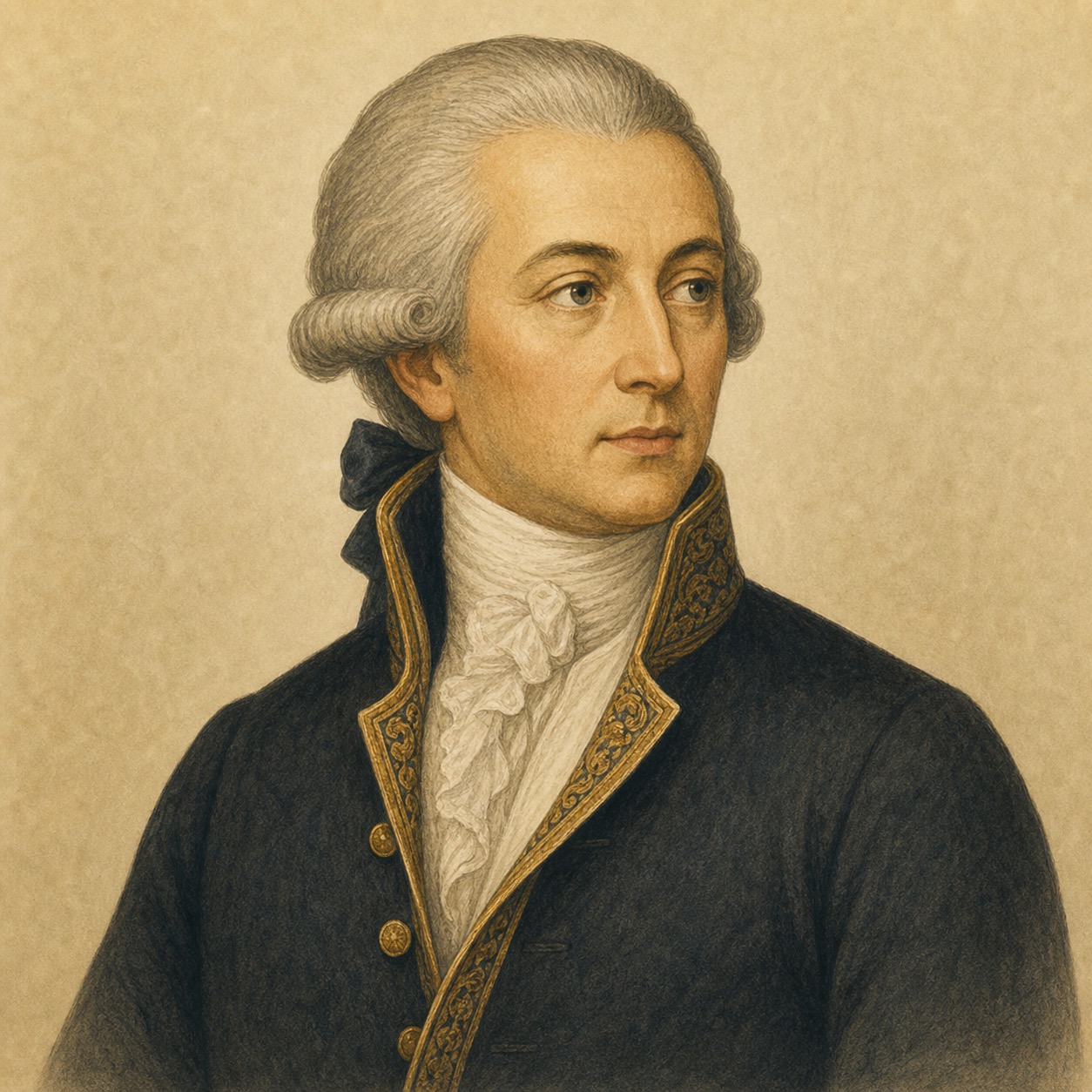
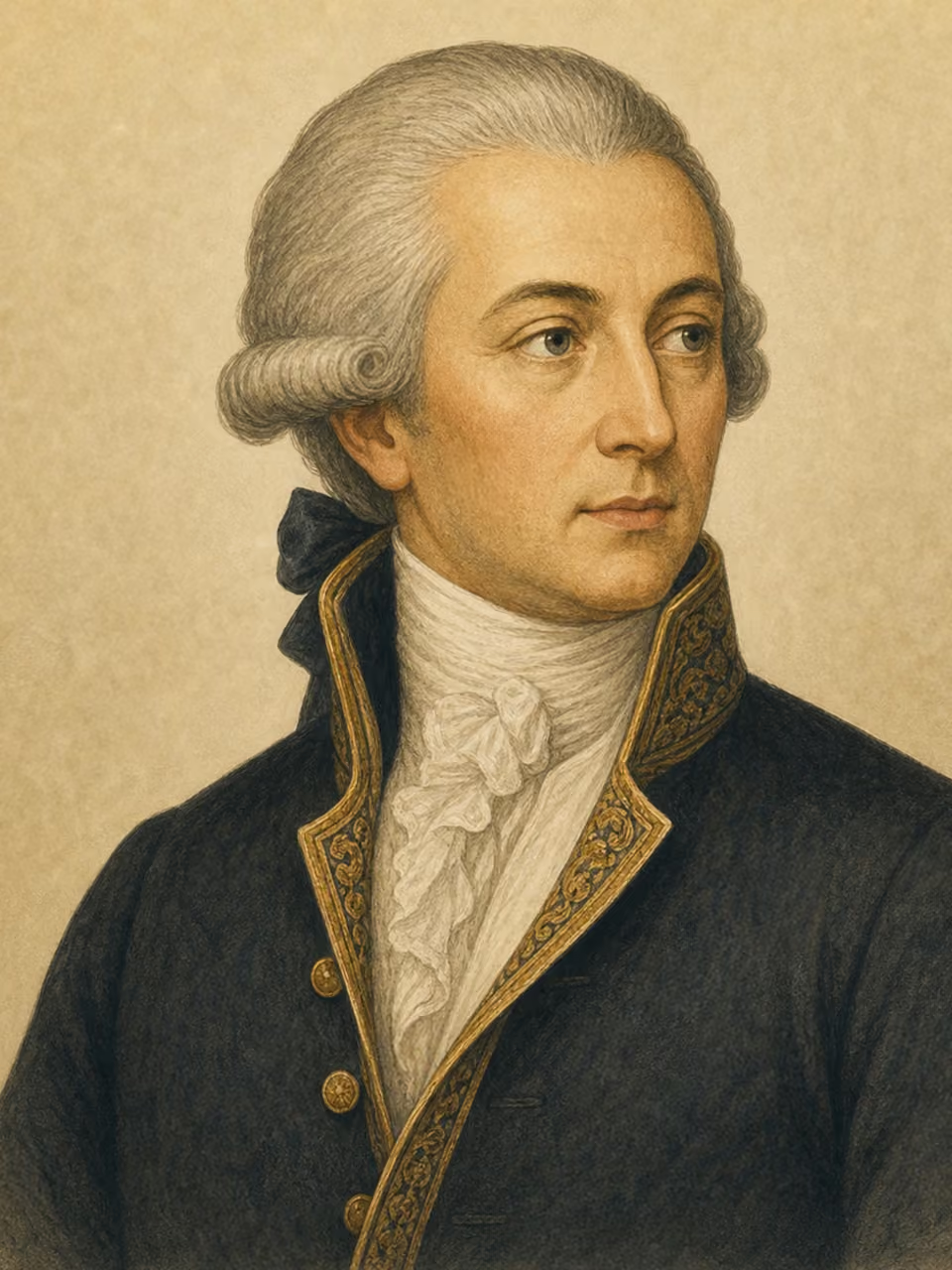
Francis II, Holy Roman Emperor
historical figure in context
Francis I, the last Holy Roman Emperor and Emperor of Austria. It faced the dissolution and reorganization of its empire during the Napoleonic Wars. He is a person who thinks about the modern European international order.
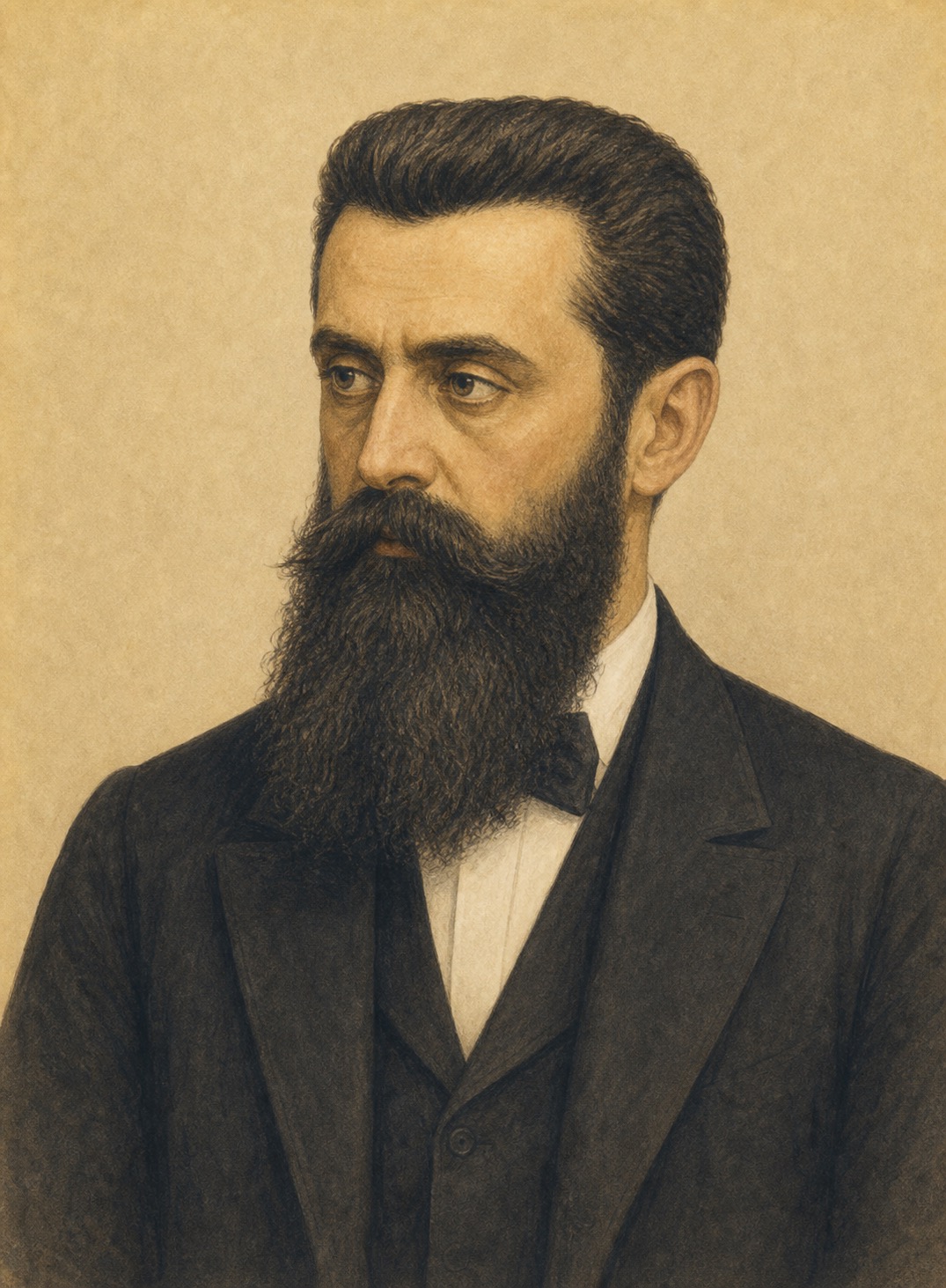
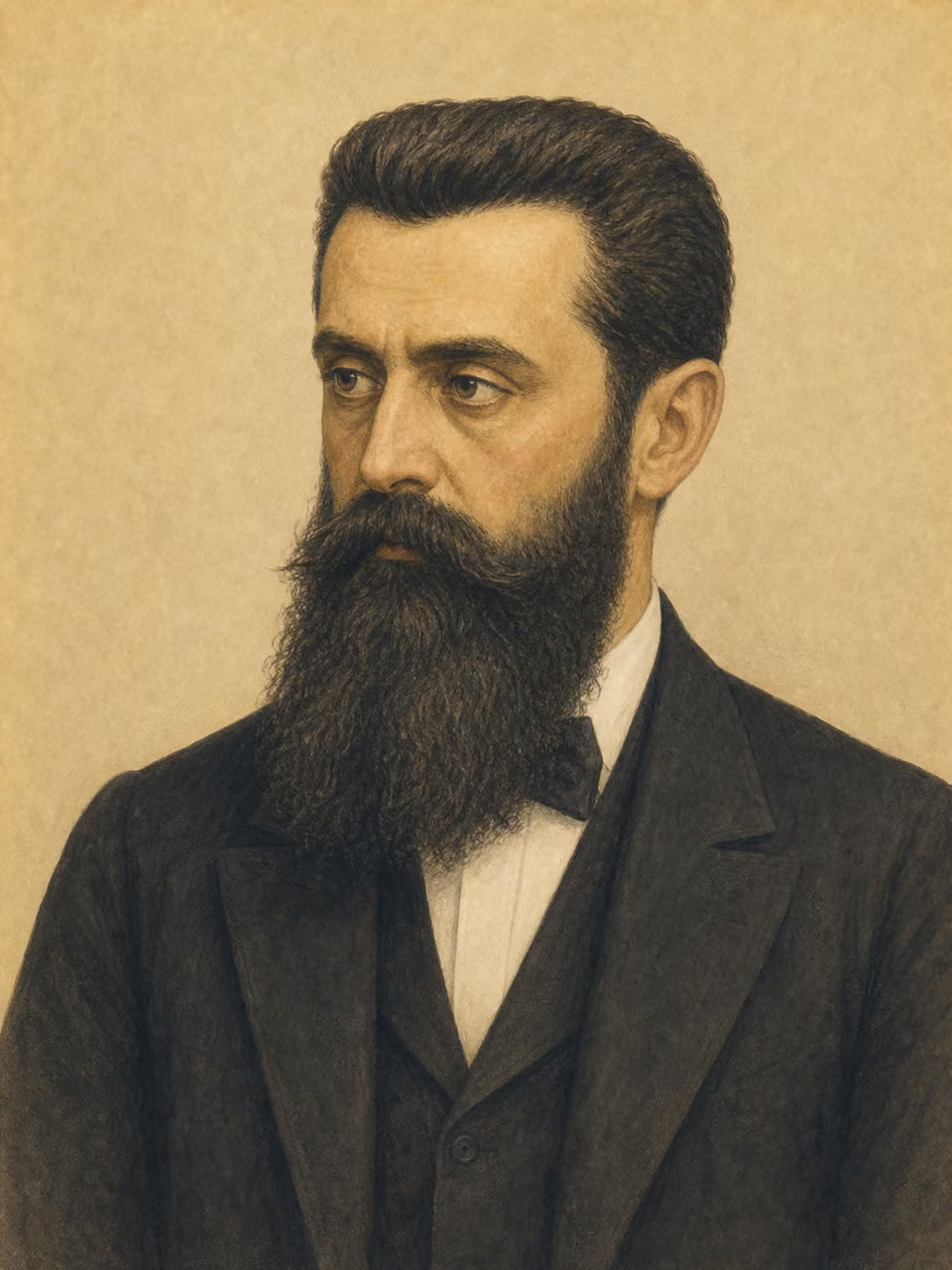
Theodor Herzl
historical figure in context
A political thinker and journalist who advocated for the creation of a Jewish state. He wrote ``The Jewish State'' and organized the Zionist movement as an international political issue. He is a central figure in thinking about modern nationalism and the Jewish issue.
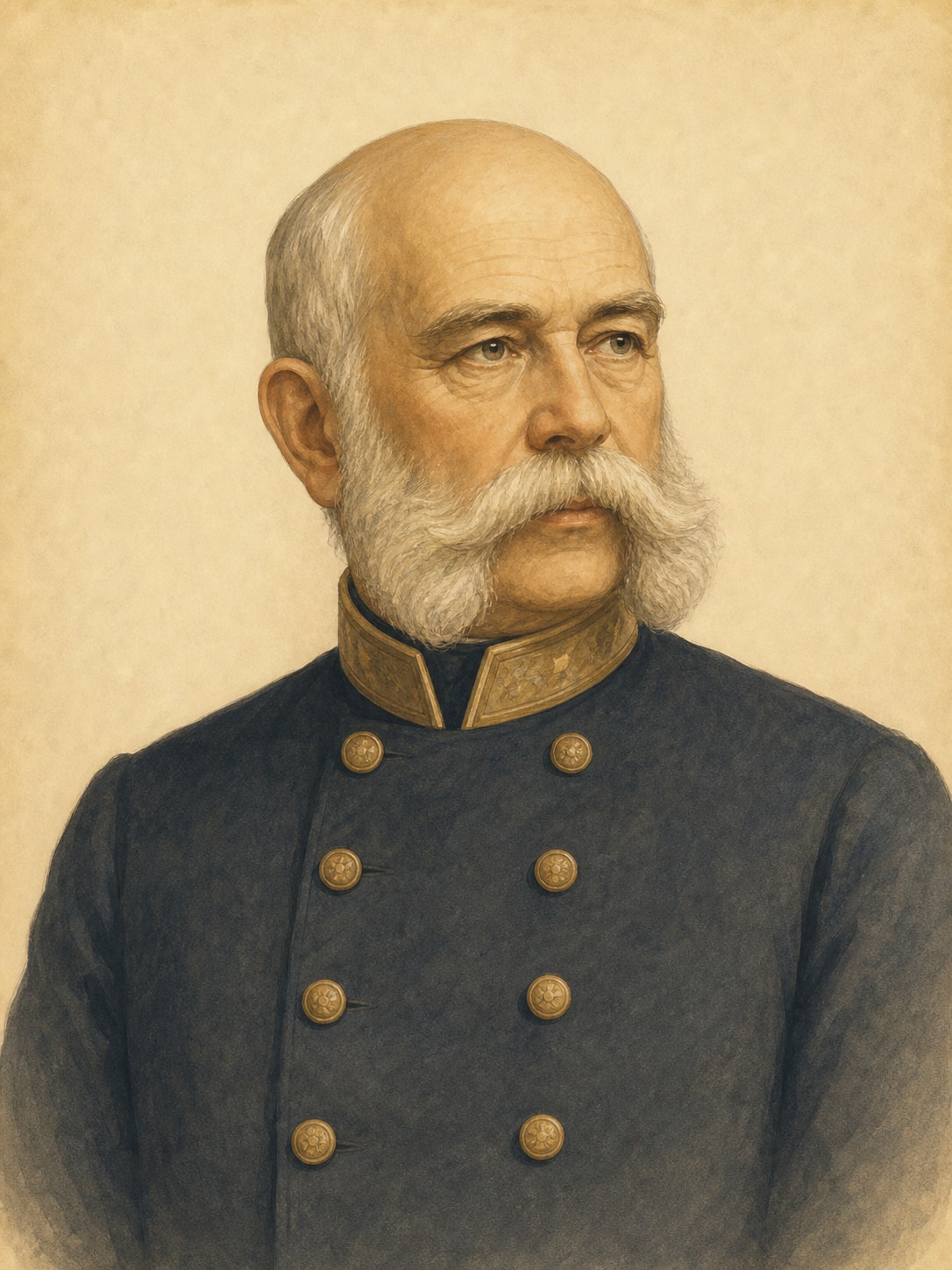
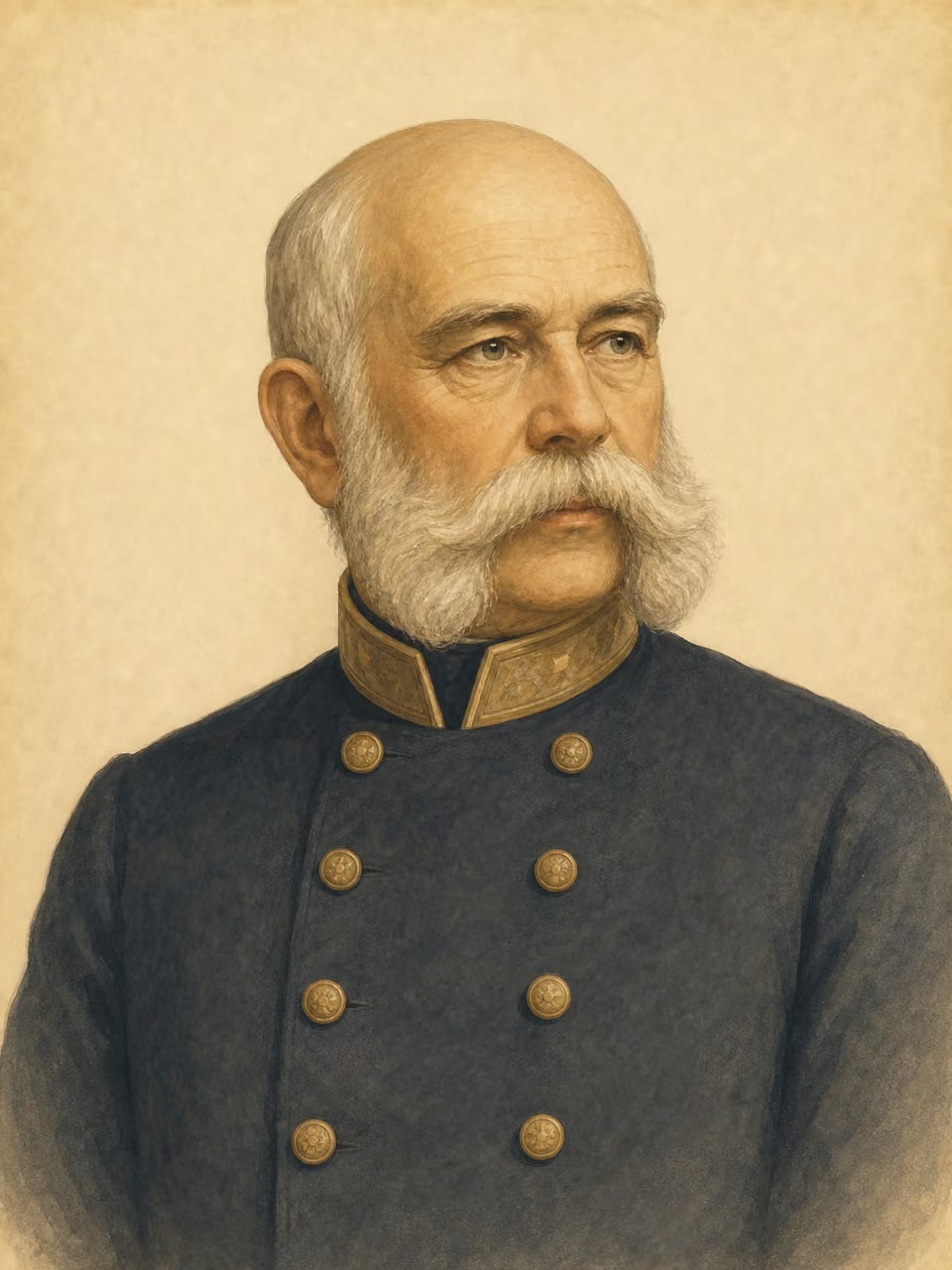
Franz Joseph I of Austria
historical figure in context
Emperor of Austria who ruled from the late 19th century until World War I. He is a monarch who symbolizes the tension between maintaining a multi-ethnic empire and modern nationalism. It provides a clue to understanding the tension between multi-ethnic empires and nationalism.
Related events
1794
Prelude
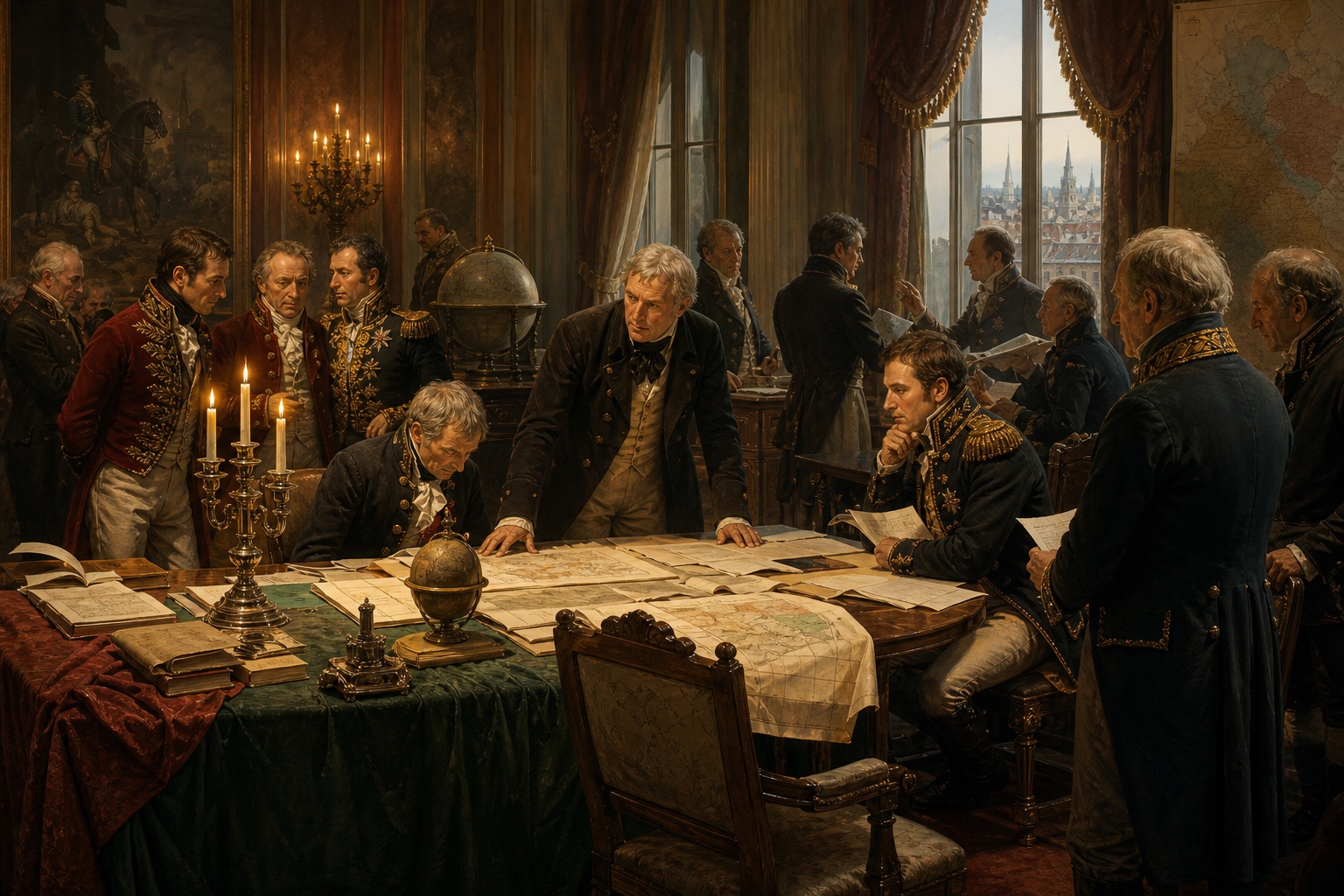
Prelude — Background: After Napoleon's defeat, European states had to settle territorial claims and rebuild a workable balance of power. The leading powers sought both restoration and safeguards against renewed domination by one state.
c. 1813
Rising tension
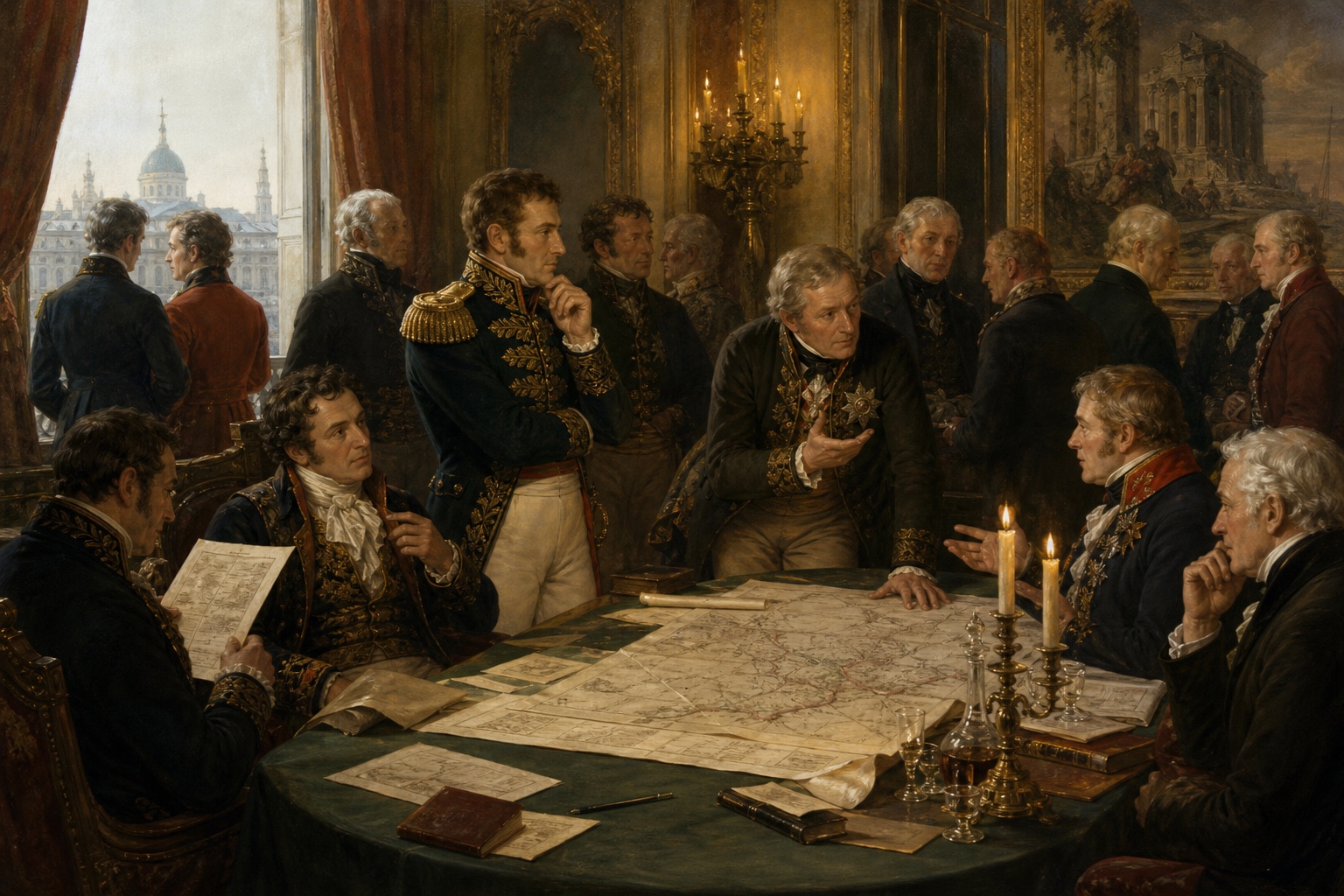
Rising tension — Build-up: Delegates negotiated through formal committees and extensive informal diplomacy from autumn 1814. Metternich of Austria, Alexander I of Russia, and Talleyrand of France were among the central actors, while Napoleon's Hundred Days added urgency to the final settlement.
1814–1815
Congress of Vienna
Current event
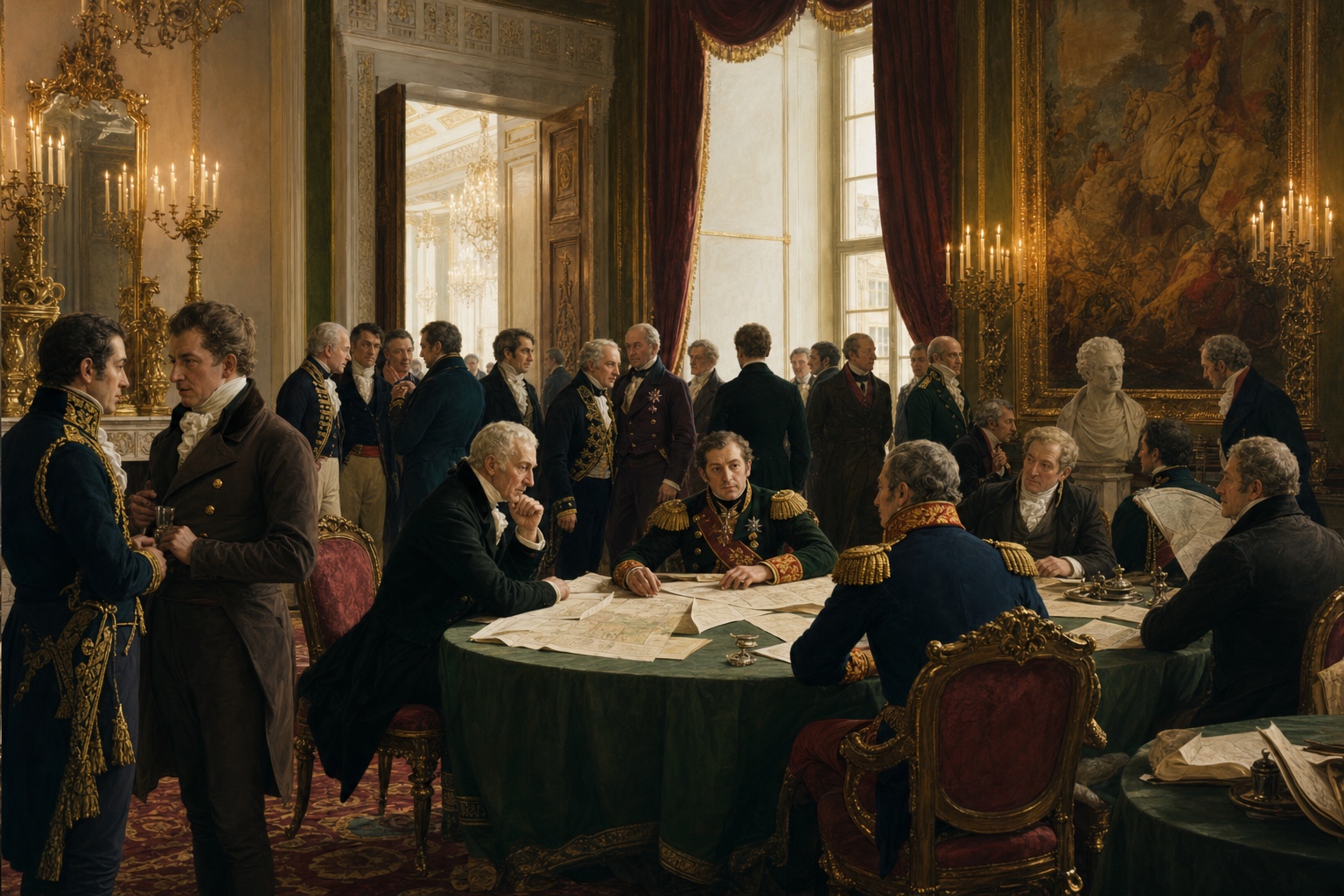
Congress of Vienna — Central transition: The international congress held in Vienna in 1814–1815 to reorder Europe after the Napoleonic Wars.
c. 1816
Immediate aftermath
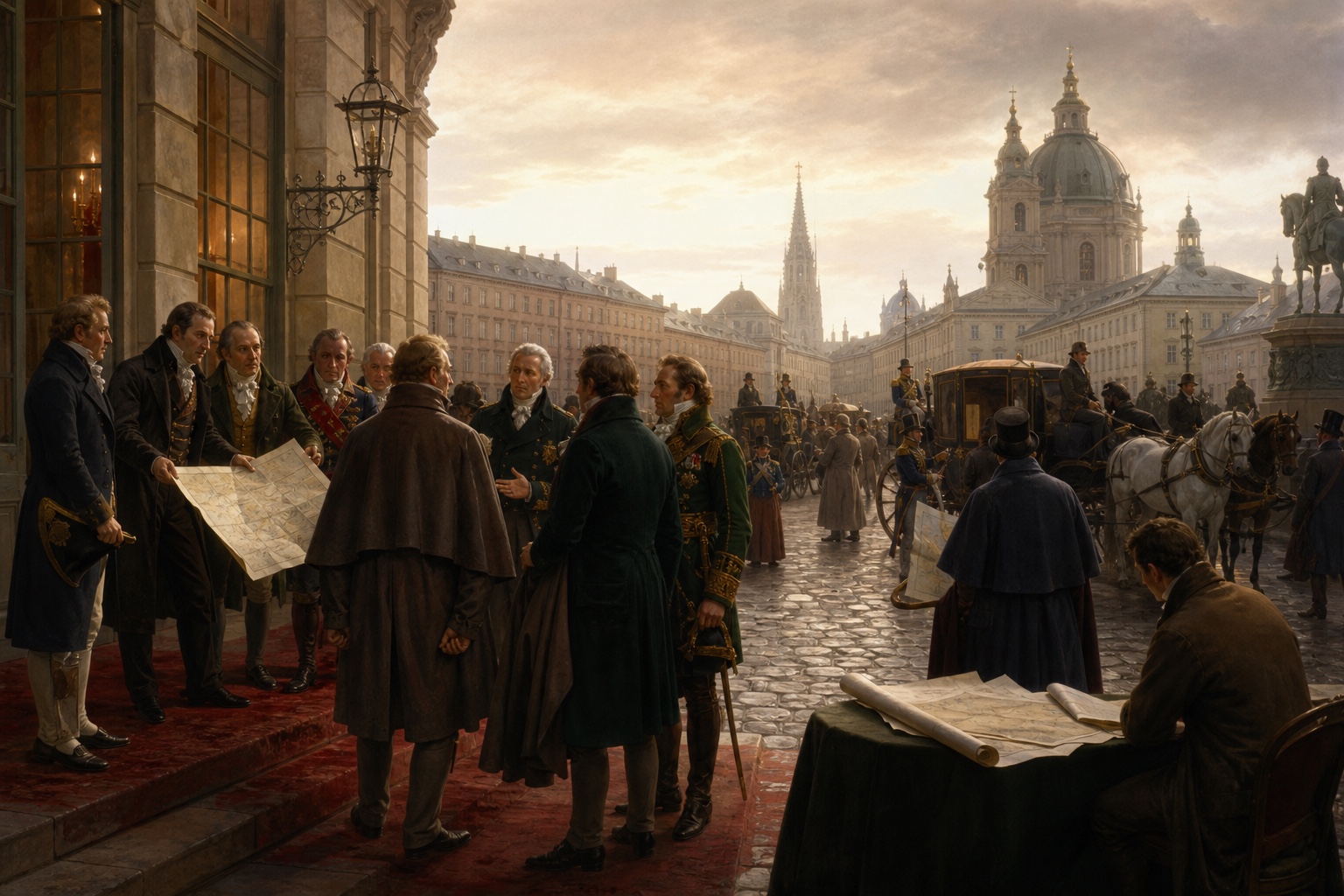
Immediate aftermath — Immediate result: The Final Act of 9 June 1815 recorded territorial settlements, the German Confederation, Swiss neutrality, and rules for international river navigation. France returned to great-power diplomacy and a five-power balance emerged.
c. 1825
Long-term significance
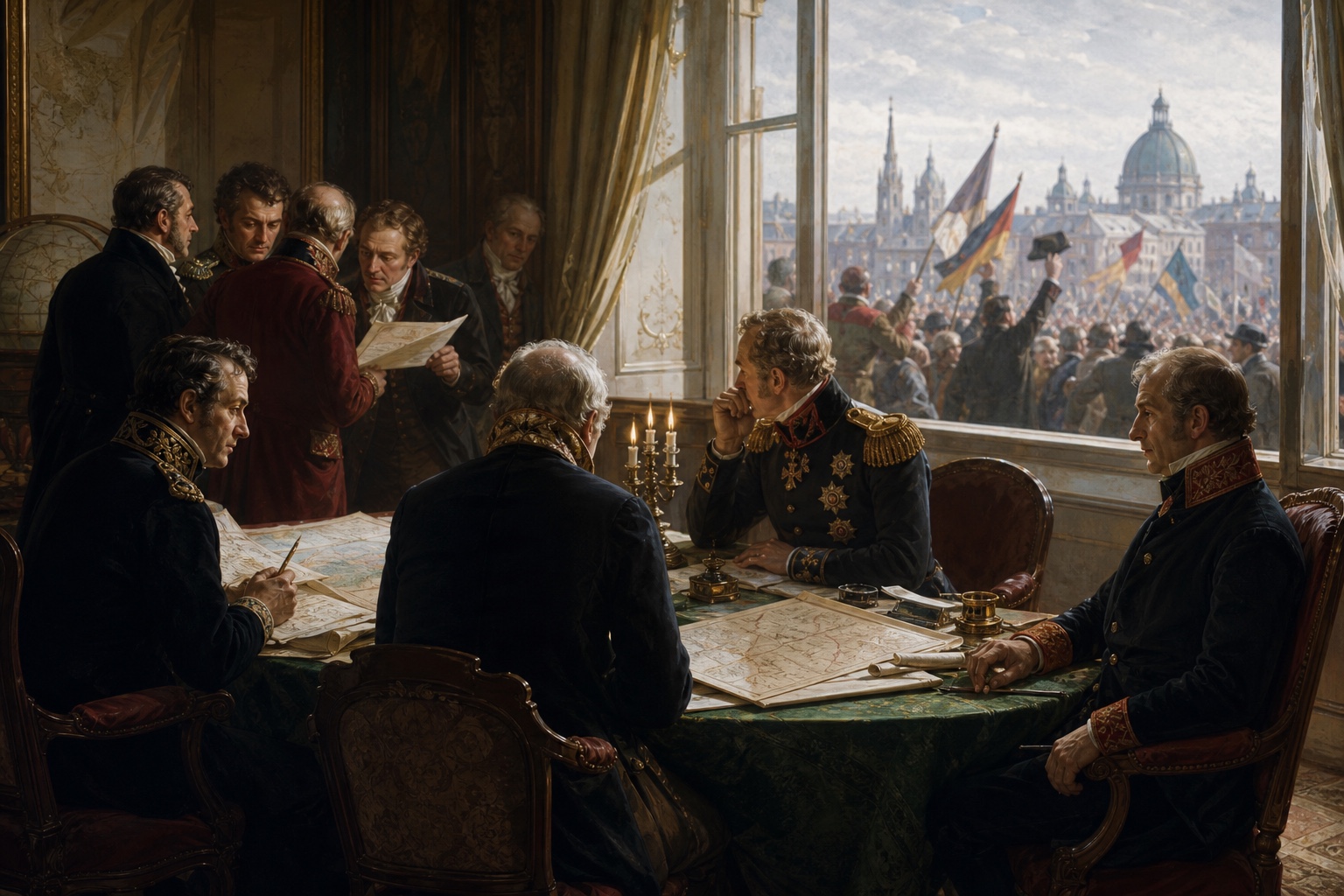
Long-term significance — Long-term significance: The settlement helped establish the Concert of Europe and shaped great-power relations for decades. Its emphasis on dynastic legitimacy and restoration also worked against liberal and nationalist demands, leaving tensions that later movements would challenge.


Sources
- Congress of Vienna — Final Document Of The Congress Of Vienna 1815 (Unesco)unesco.atThis Unesco resource supports the chronology, setting, and course of Congress of Vienna.
- Congress of Vienna — The Congress Of Vienna (Bundeskanzleramt)bundeskanzleramt.gv.atThis Bundeskanzleramt resource supports the chronology, setting, and course of Congress of Vienna.
- Congress of Vienna — 2293309 (Digital)digital.wienbibliothek.atThis Digital resource supports the chronology, setting, and course of Congress of Vienna.