
Conquest of the Aztec Empire
1519–1521
From 1519 to 1521, a Spanish expedition and Indigenous allies defeated the Mexica imperial center at Tenochtitlan amid warfare, political rivalry, and epidemic disease.

- Period
- 1519–1521
- Kind
- Political event
- Regions
- North America
- Keywords
- Aztec Empire · Mexica · Tenochtitlan · Indigenous alliances · colonization
Follow the story · Four stages
Background
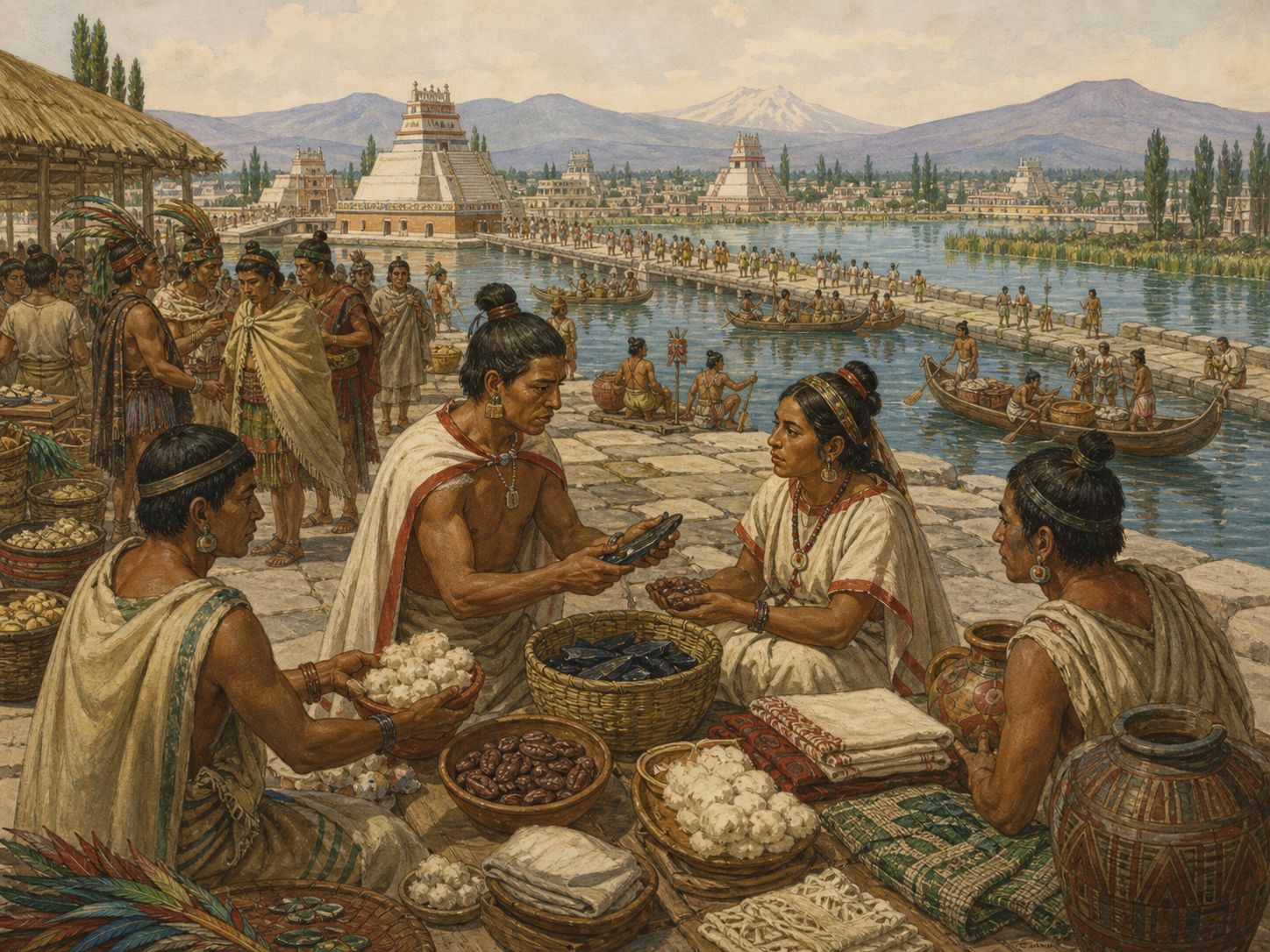
Mesoamerica contained powerful cities and competing alliances; the Mexica empire's demands and Spanish ambitions created openings for Indigenous opponents of imperial rule.
- Mesoamerica contained powerful cities, markets, tribute relations, and competing alliances
- Opposition to Mexica imperial rule gave Indigenous powers reasons to join the Spanish expedition
- Lake-city causeways, canoes, agriculture, and skilled crafts supported regional life and politics
Course
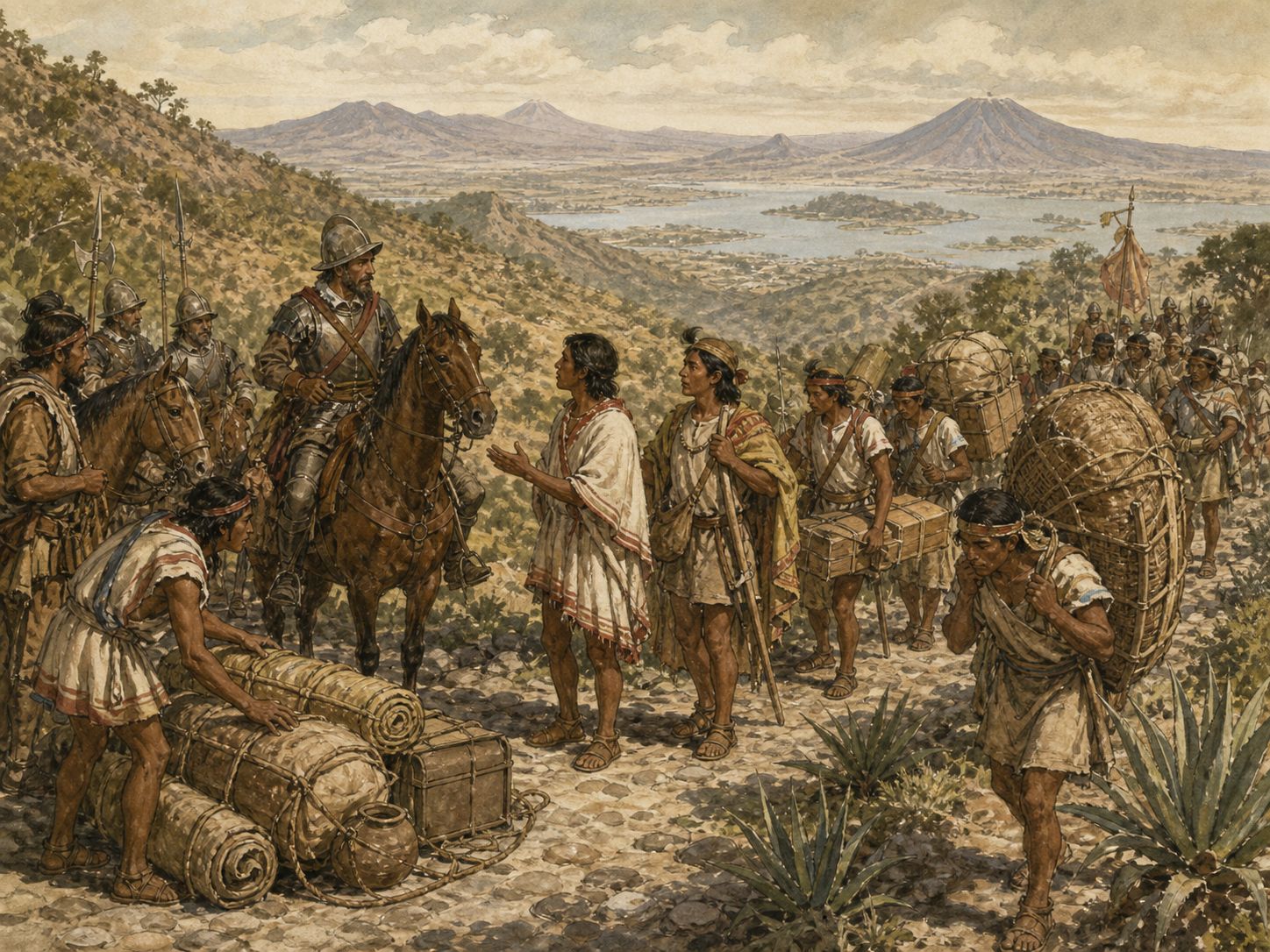
Cortés's forces moved from Veracruz through allied territories, survived the 1520 retreat, and returned with a coalition and siege force against the lake city.
- In 1519 the Spanish expedition moved inland from Veracruz while building Indigenous alliances
- The 1520 retreat, warfare, and epidemic disease changed the balance among coalitions, cities, and supplies
- Indigenous labor in canoes, carrying, translation, and provisioning shaped the siege
Outcome
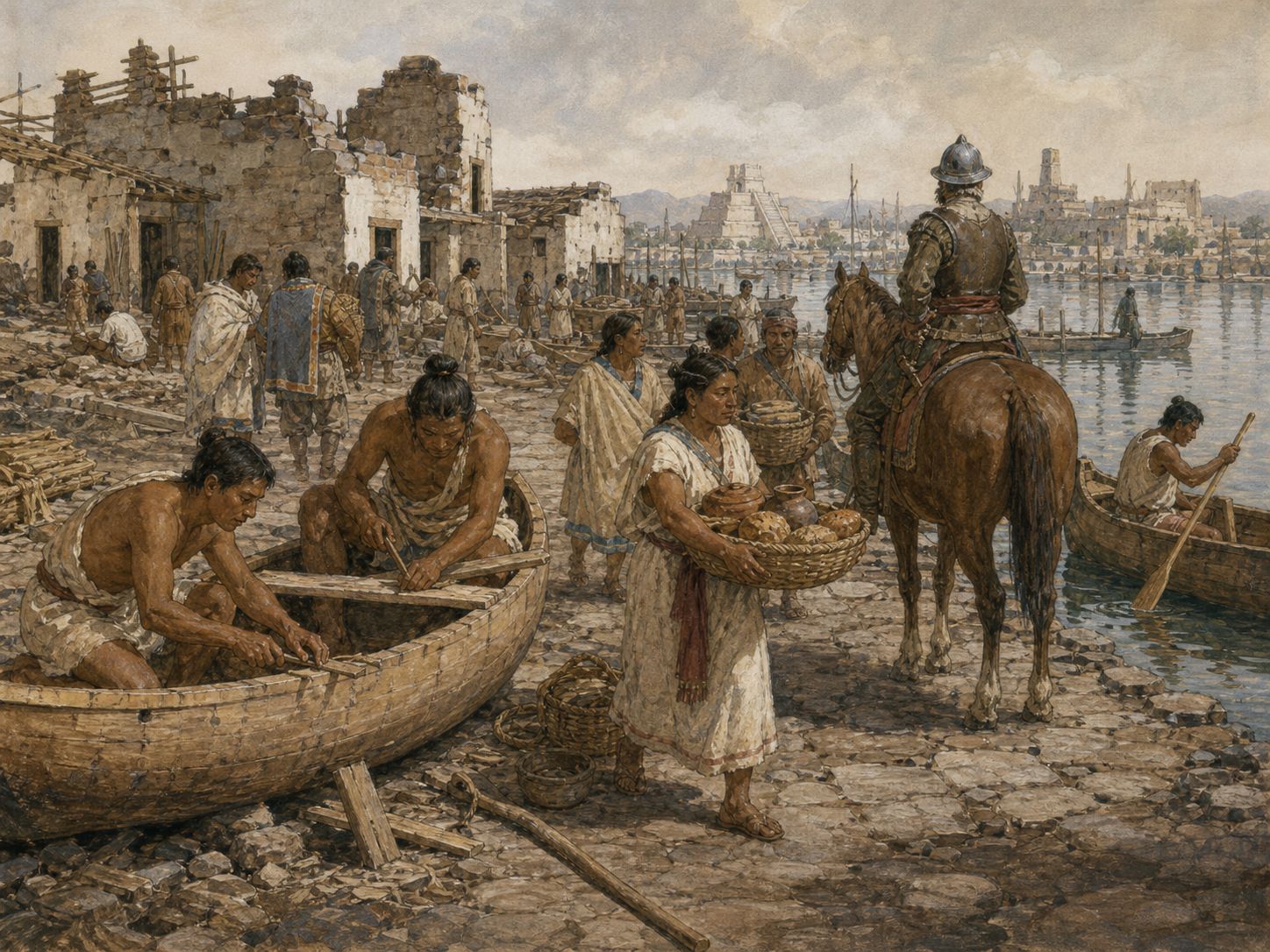
Tenochtitlan fell in 1521, after which Spanish colonial institutions expanded while Indigenous communities endured demographic loss, adaptation, resistance, and cultural continuity.
- Tenochtitlan fell in 1521, breaking the political center of the Mexica empire
- Spanish colonial institutions expanded while Indigenous communities endured demographic loss, coercion, adaptation, and resistance
- Agriculture, crafts, languages, and community practices continued in changed forms under colonial rule
Historical significance
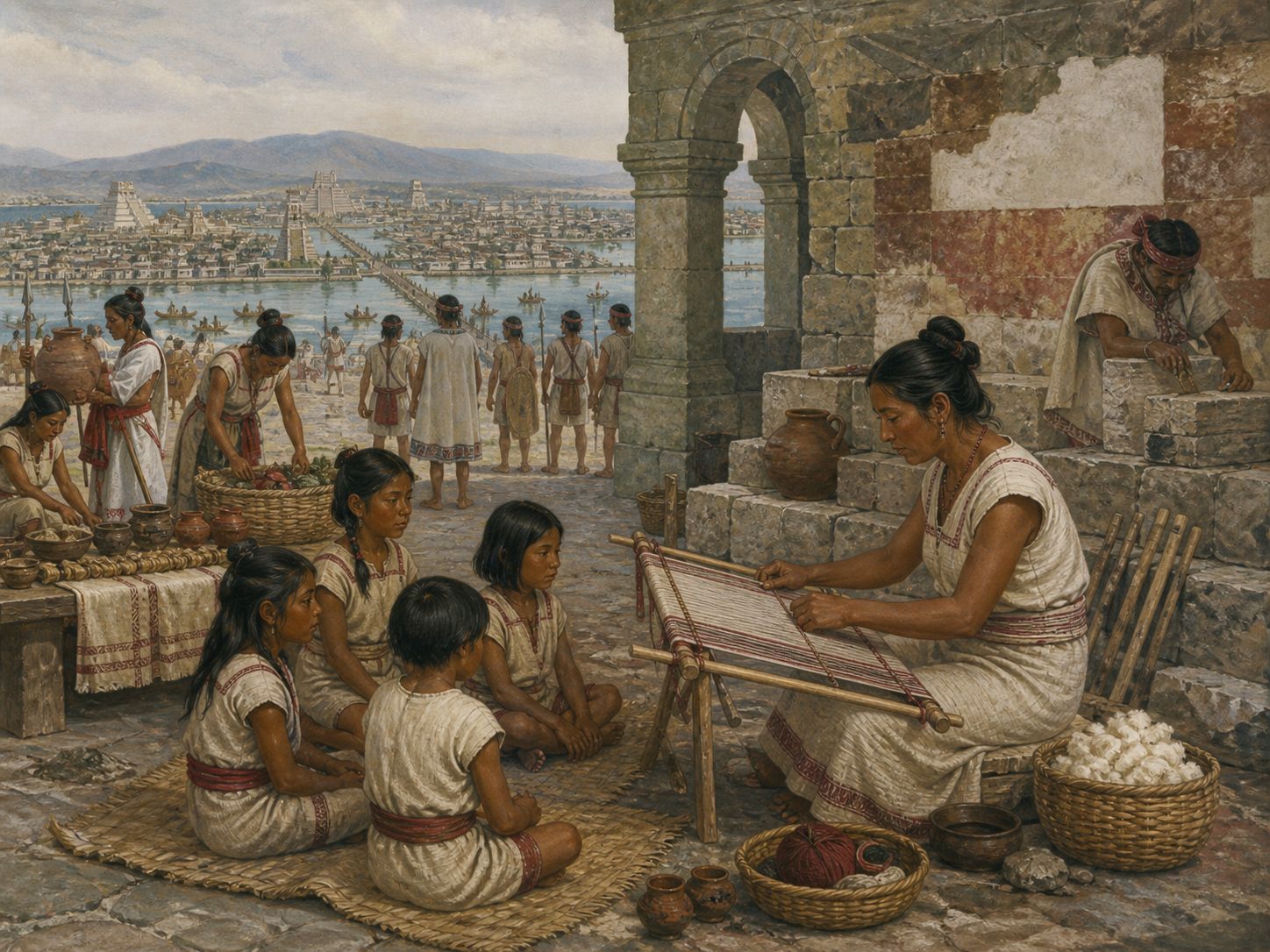
The conquest cannot be reduced to Spanish technology or a single leader: Indigenous alliances, epidemic disease, imperial politics, and colonial coercion were decisive.
- The conquest depended on Indigenous alliances, epidemic disease, and imperial politics as well as Spanish arms and leadership
- People around the lake city shaped events as allies, negotiators, conquered communities, and resisters
- Colonization can be studied through population, labor, cultural continuity, and violence, not only military victory


Related events
c. 1400–c. 1518
Mesoamerican order
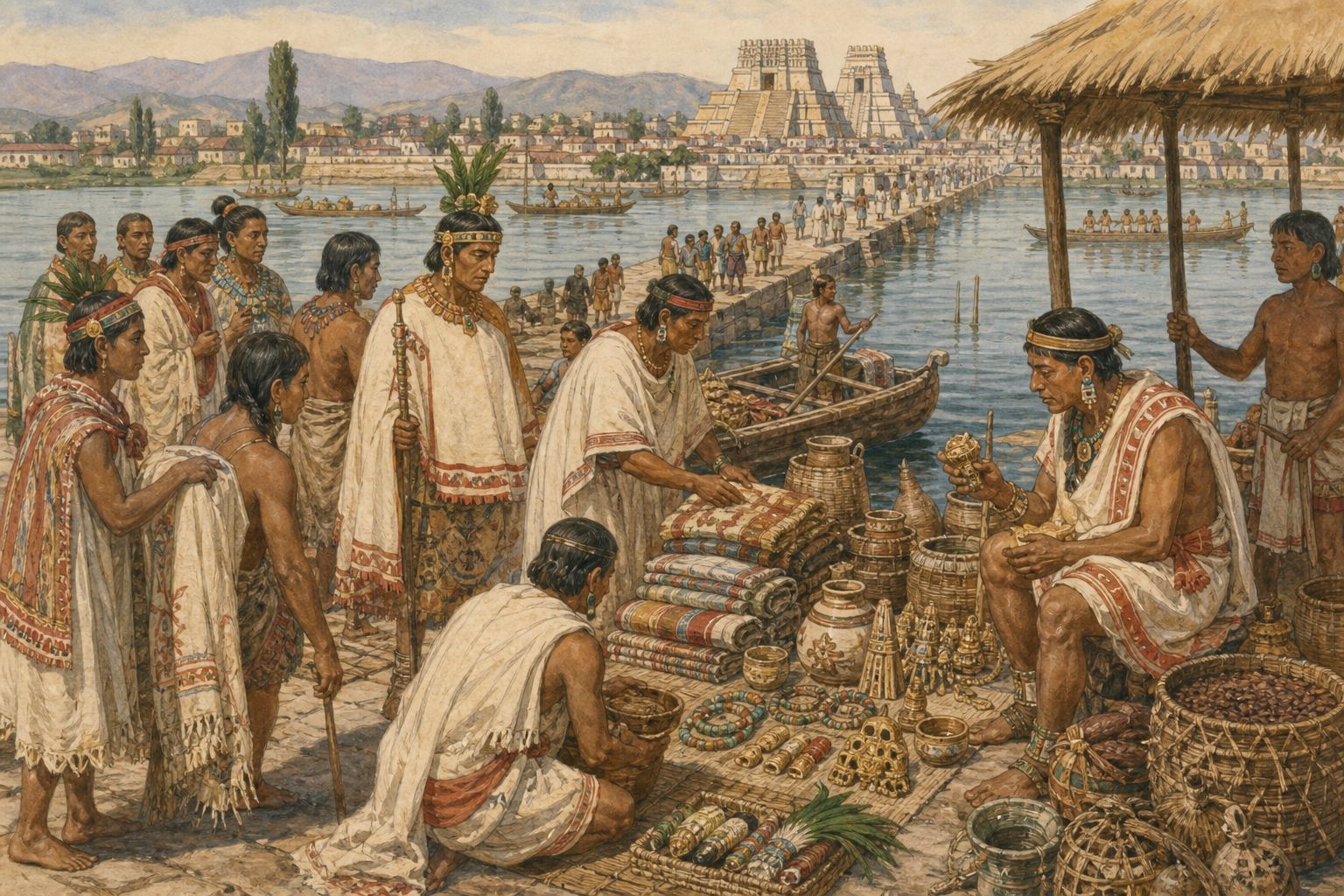
Cities, markets, lake causeways, canoes, and tribute relations shaped a competitive political world.
c. 1519
Landing and alliances
Current event
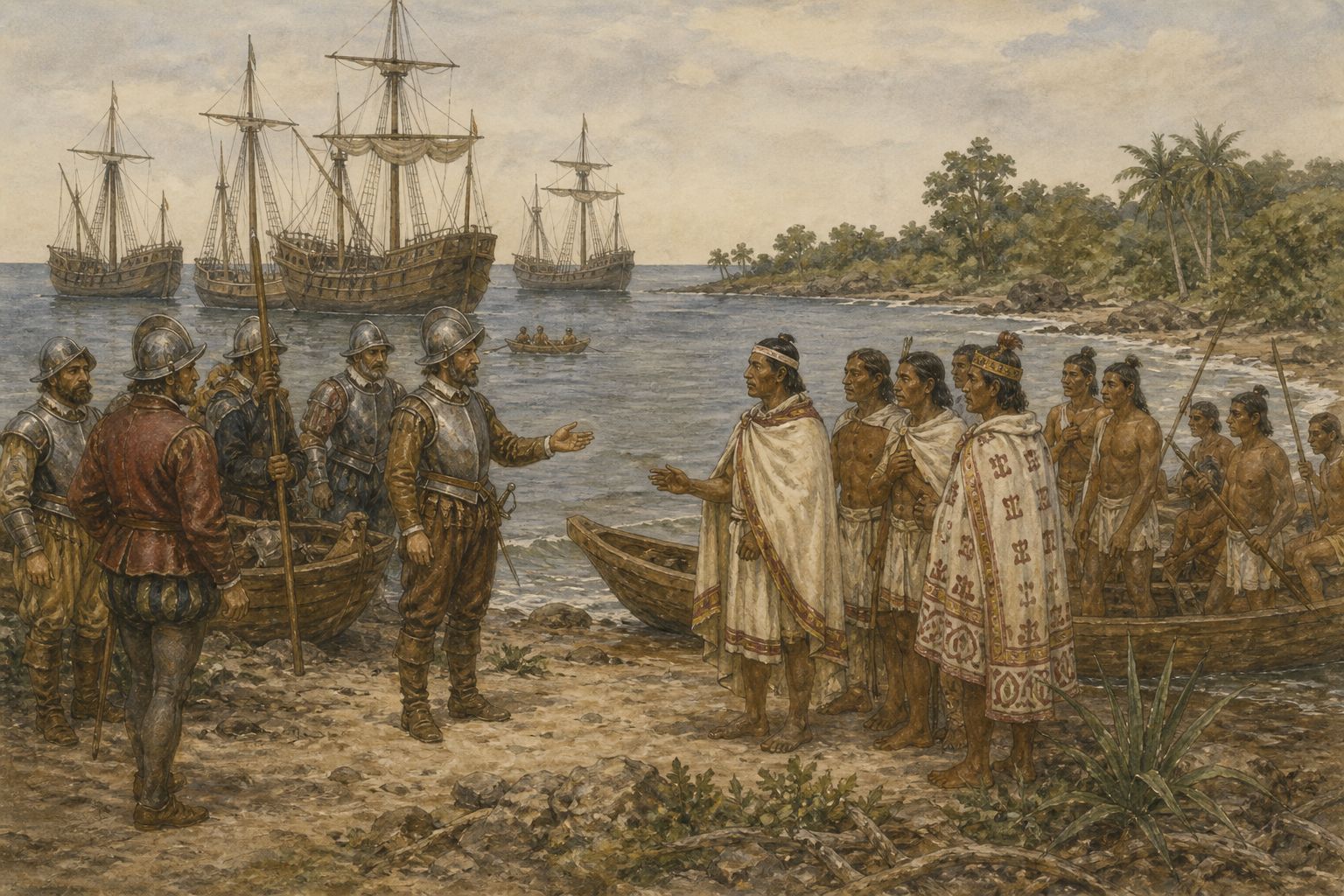
Moving inland from Veracruz, the Spanish expedition connected with Indigenous powers opposed to Mexica rule.
c. 1520
Retreat and epidemic
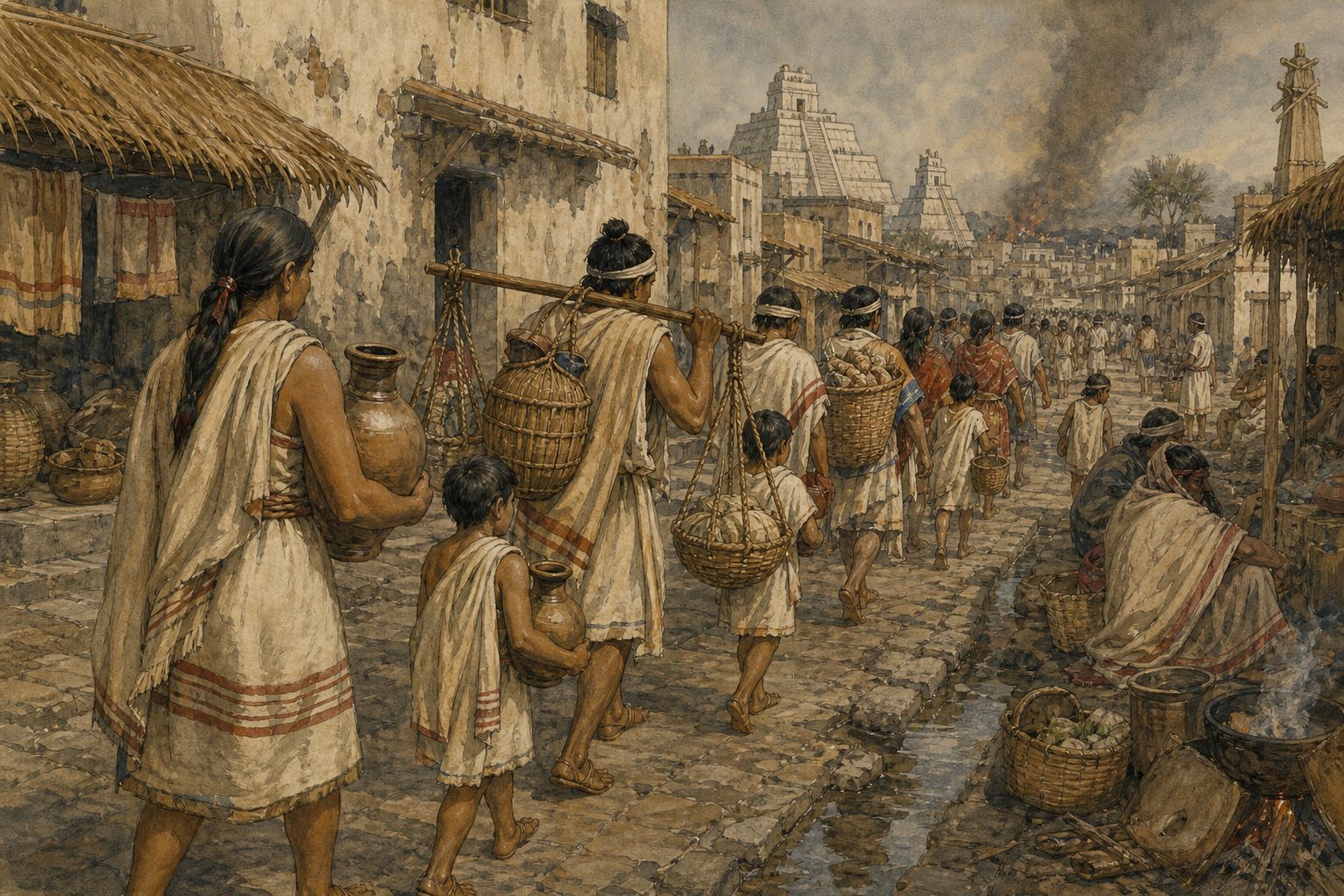
The retreat of 1520 and epidemic disease changed the balance among coalitions, cities, and supplies.
c. 1521
Siege of the lake city
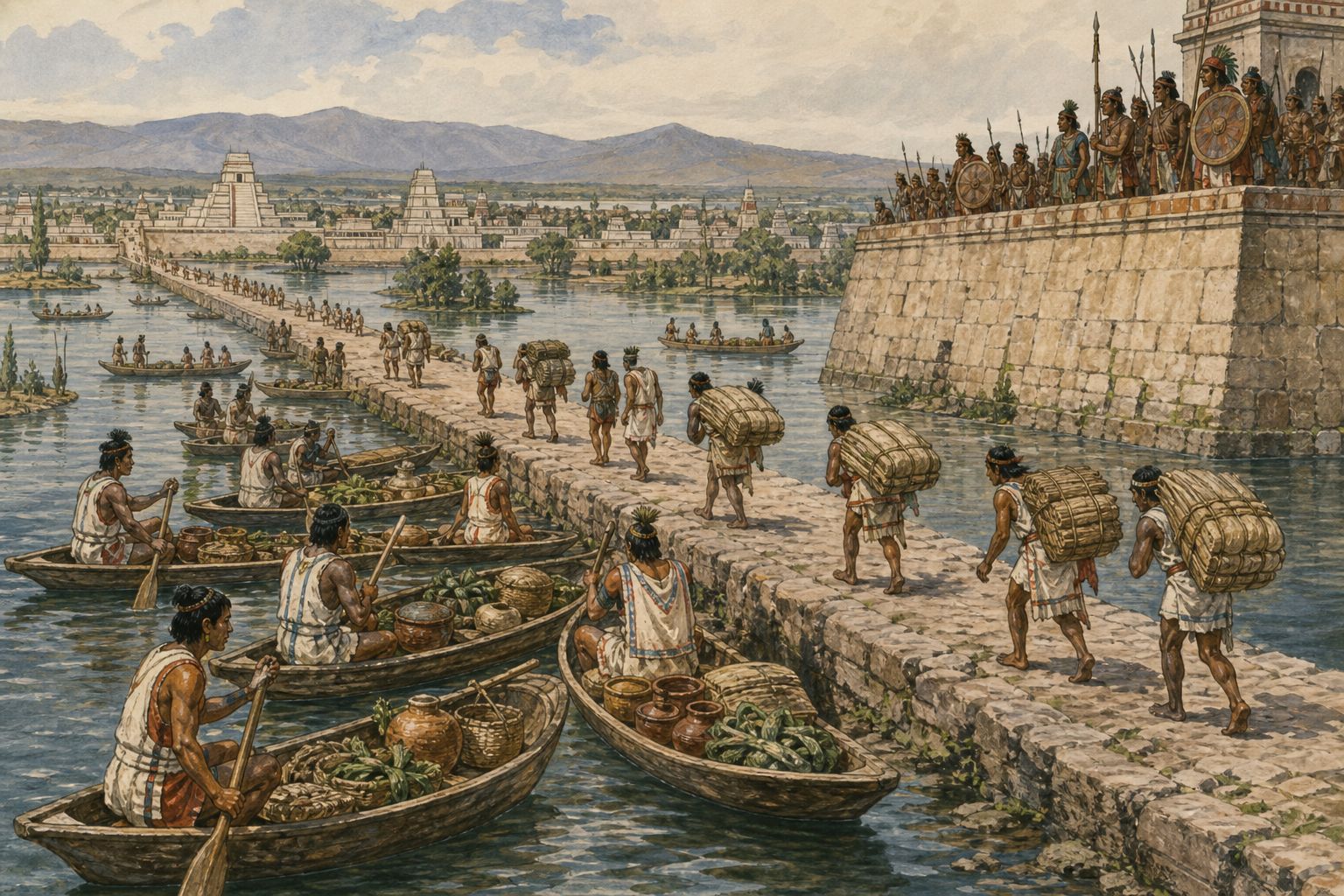
Canoes, causeways, provisioning, and combat converged in the siege of Tenochtitlan.
c. 1521–c. 1600
Colonial rule and continuity
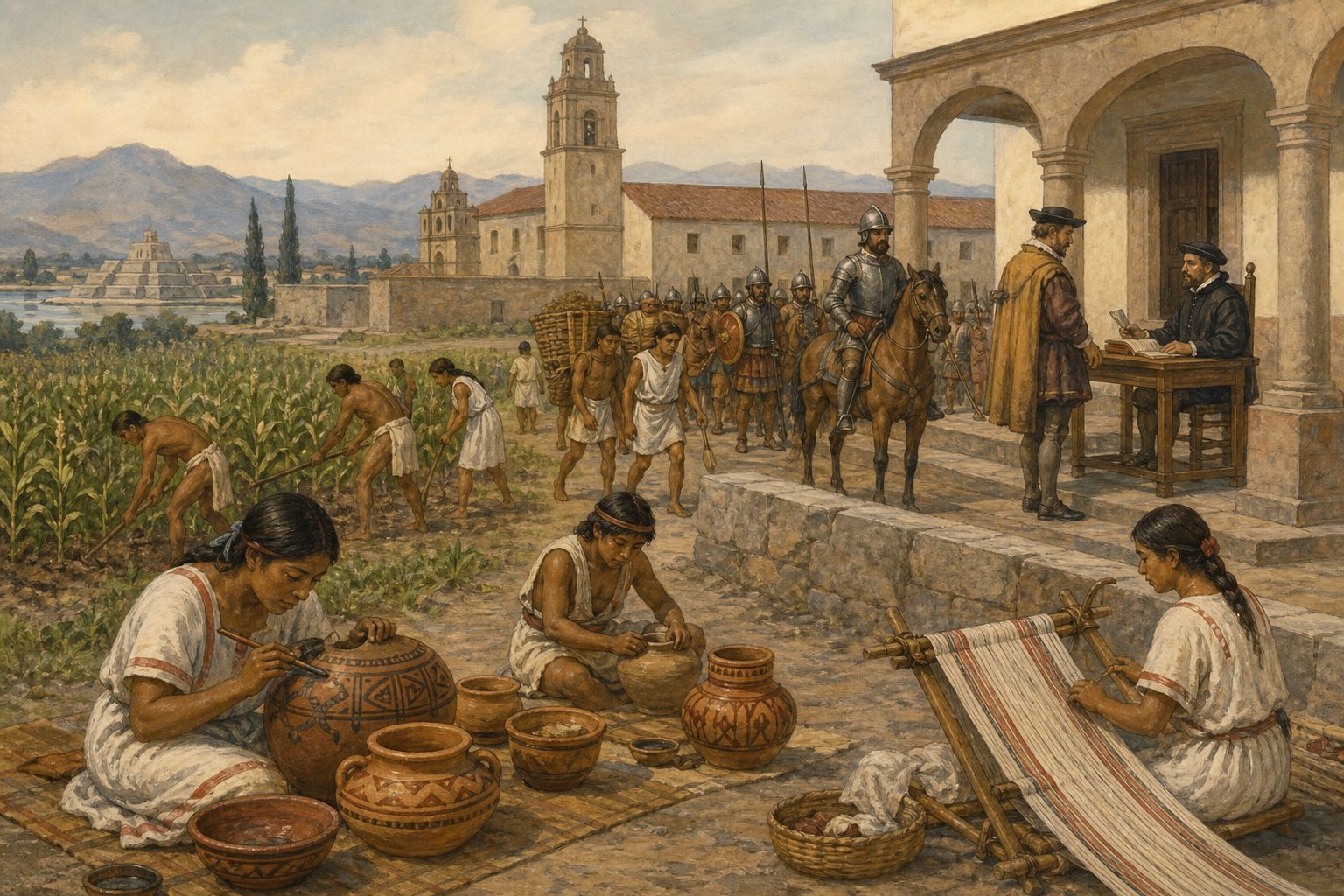
Indigenous farming, crafts, communities, and cultural practices continued in changed forms under new institutions.


Sources
- Conquest of the Aztec EmpireEncyclopaedia BritannicaAn overview of the conquest, Indigenous alliances, and the fall of Tenochtitlan.
- The Spanish Conquest of MexicoThe Metropolitan Museum of ArtContext for Mesoamerican cities, material culture, alliances, and colonization.
- Conquest of the Aztec EmpireWorld History EncyclopediaA chronological account of the 1519–1521 advance, alliances, retreat, siege, and colonial aftermath.