
Council of Trent
1545–1563
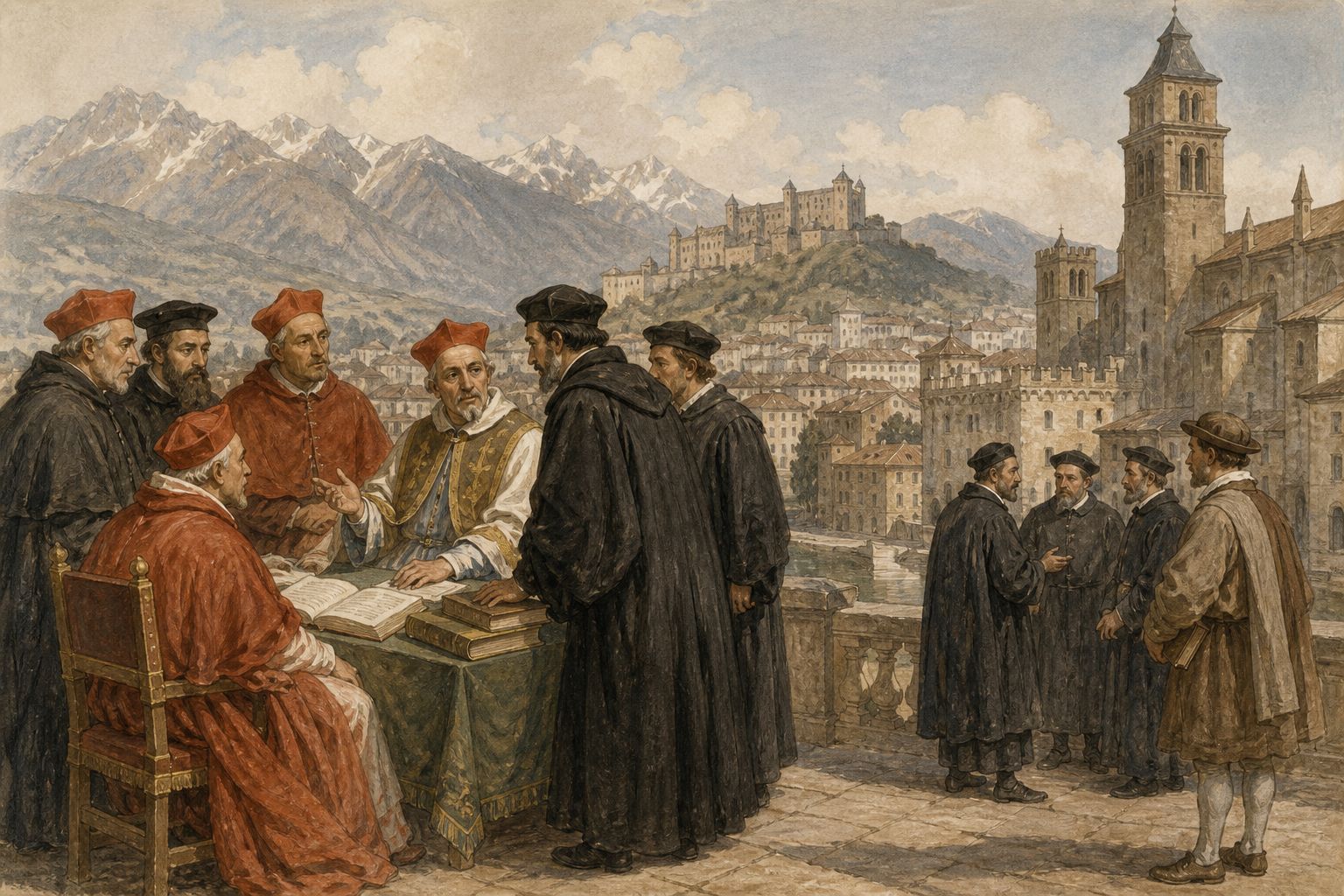
From 1545 to 1563, the Catholic Church debated doctrine, clergy, worship, and institutional reform at the Council of Trent.

- Period
- 1545–1563
- Kind
- Conference
- Regions
- Europe
- Keywords
- Council of Trent · conference · early modern · europe
Follow the story · Four stages
Background
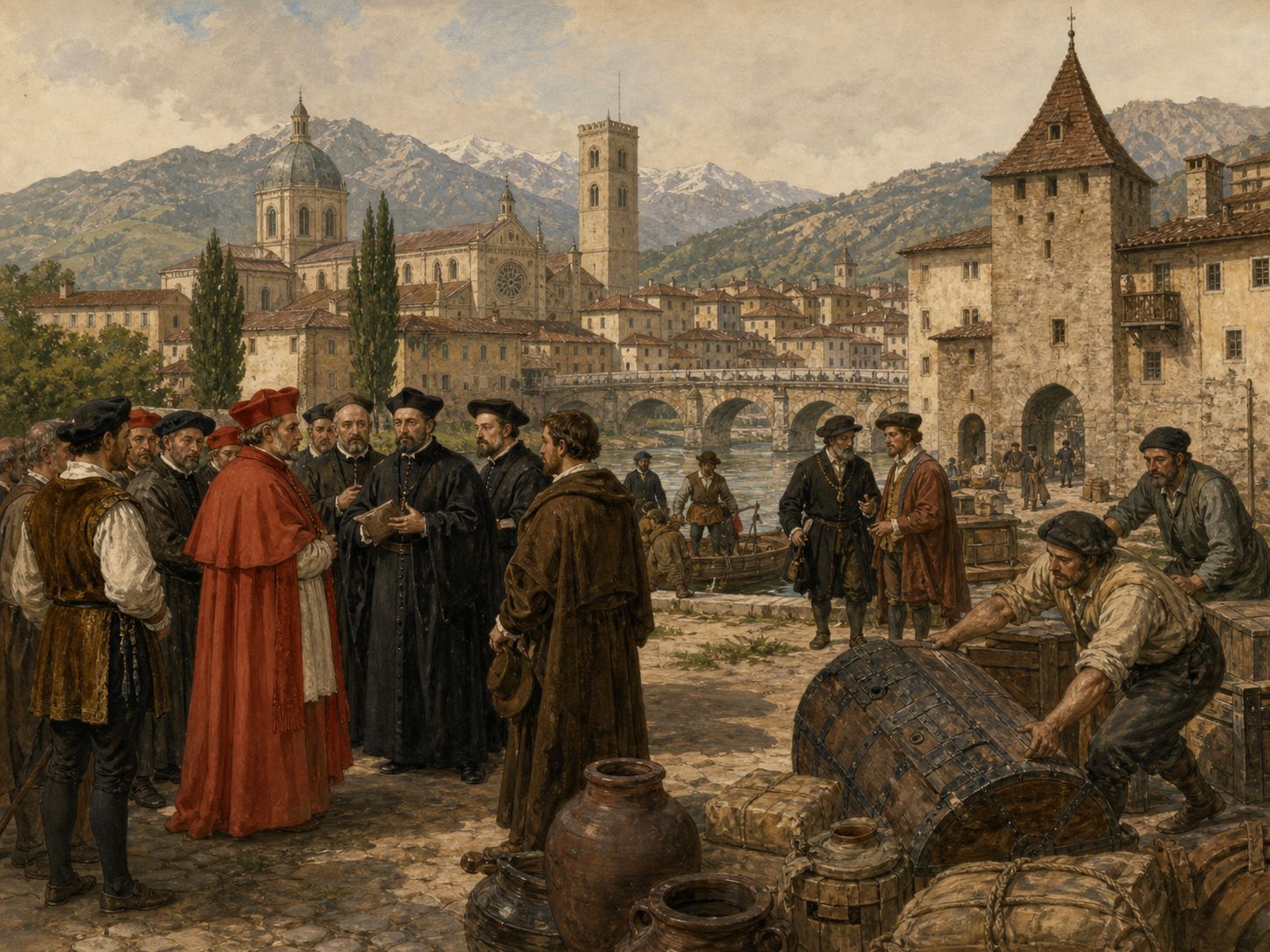
The Reformation’s divisions and criticism of clerical discipline and doctrine pressed the papacy and bishops toward reform.
- The Reformation’s divisions and criticism of clerical discipline and doctrine pressed the papacy and bishops toward reform.
- Core event: From 1545 to 1563, the Catholic Church debated doctrine, clergy, worship, and institutional reform at the Council of Trent.
- Connection to the next stage: The council was interrupted by war and politics while defining positions on justification, sacraments, clerical education, and liturgy.
Course
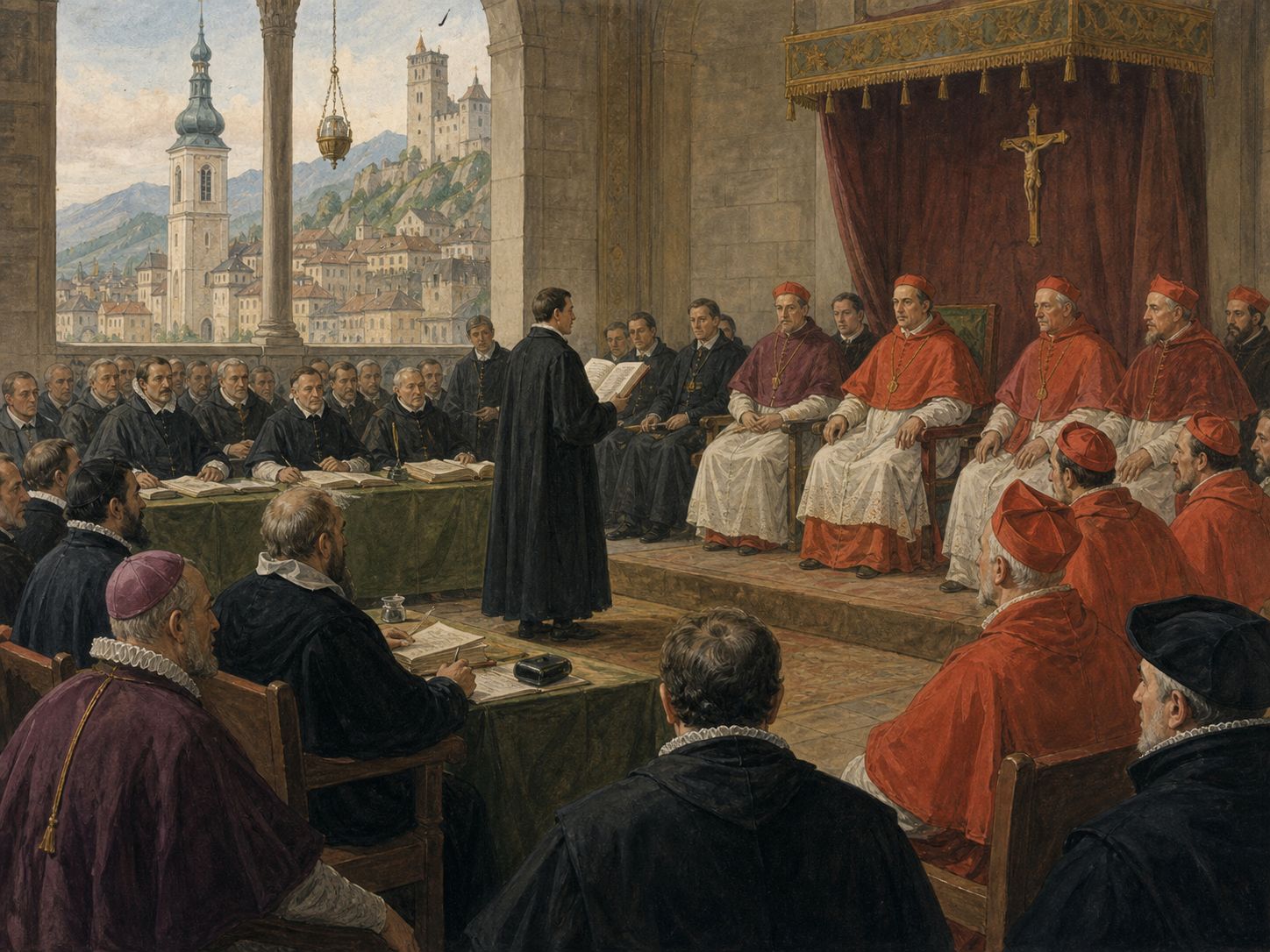
The council was interrupted by war and politics while defining positions on justification, sacraments, clerical education, and liturgy.
- The council was interrupted by war and politics while defining positions on justification, sacraments, clerical education, and liturgy.
- Conditions behind the action: The Reformation’s divisions and criticism of clerical discipline and doctrine pressed the papacy and bishops toward reform.
- Meaning of the turning point: From 1545 to 1563, the Catholic Church debated doctrine, clergy, worship, and institutional reform at the Council of Trent.
Outcome
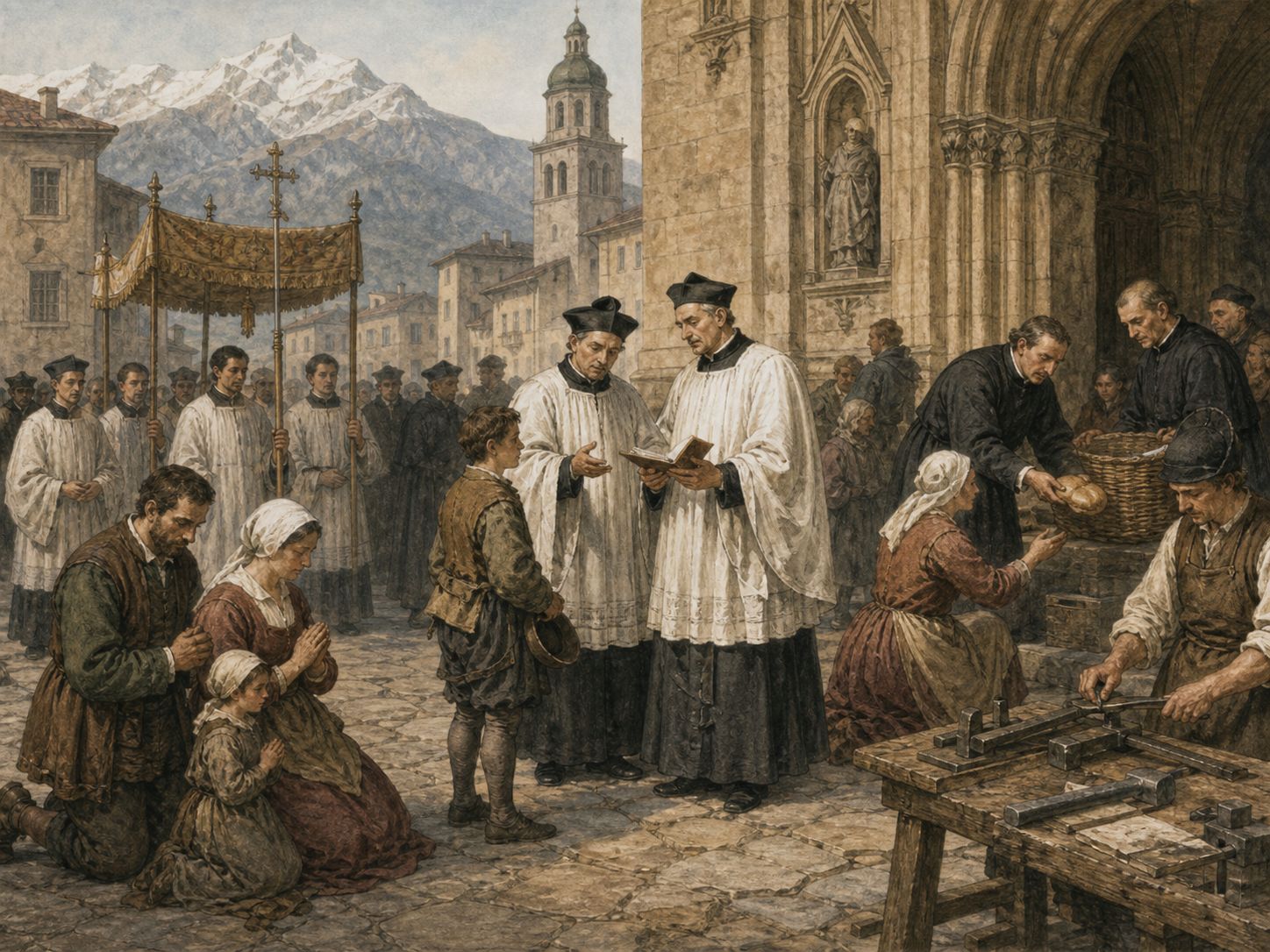
The decrees received papal approval and encouraged institutionalization of episcopal residence, seminaries, and catechetical education.
- The decrees received papal approval and encouraged institutionalization of episcopal residence, seminaries, and catechetical education.
- Process producing the result: The council was interrupted by war and politics while defining positions on justification, sacraments, clerical education, and liturgy.
- Question carried forward: The council was central to the Catholic response while also expressing internal institutional reform rather than mere reaction.
Historical significance
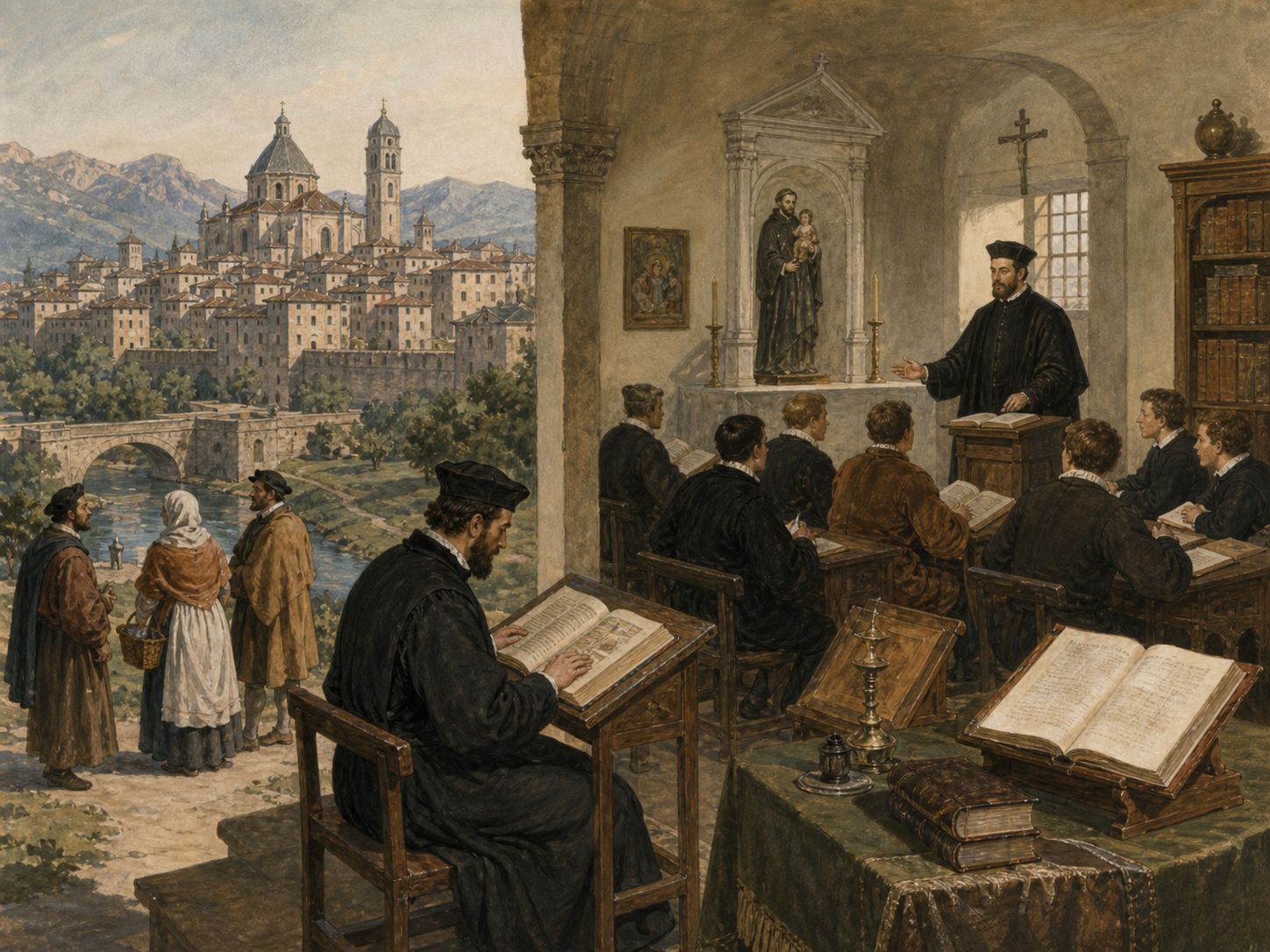
The council was central to the Catholic response while also expressing internal institutional reform rather than mere reaction.
- The council was central to the Catholic response while also expressing internal institutional reform rather than mere reaction.
- Immediate consequence: The decrees received papal approval and encouraged institutionalization of episcopal residence, seminaries, and catechetical education.
- Historical turning point: From 1545 to 1563, the Catholic Church debated doctrine, clergy, worship, and institutional reform at the Council of Trent.


Related events
c. 1545
Prelude
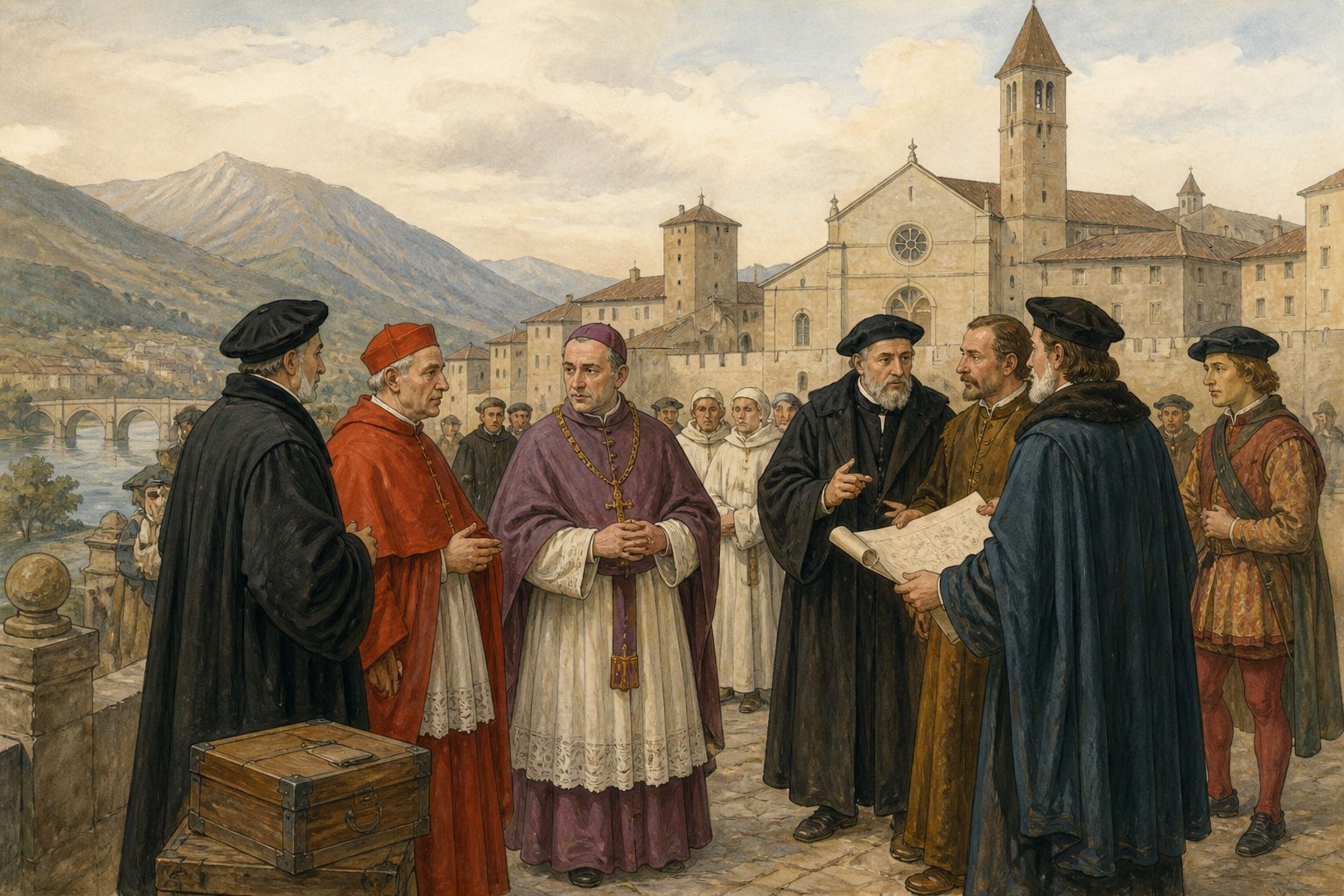
Prelude — Background: The Reformation’s divisions and criticism of clerical discipline and doctrine pressed the papacy and bishops toward reform.
c. 1545
Turning point
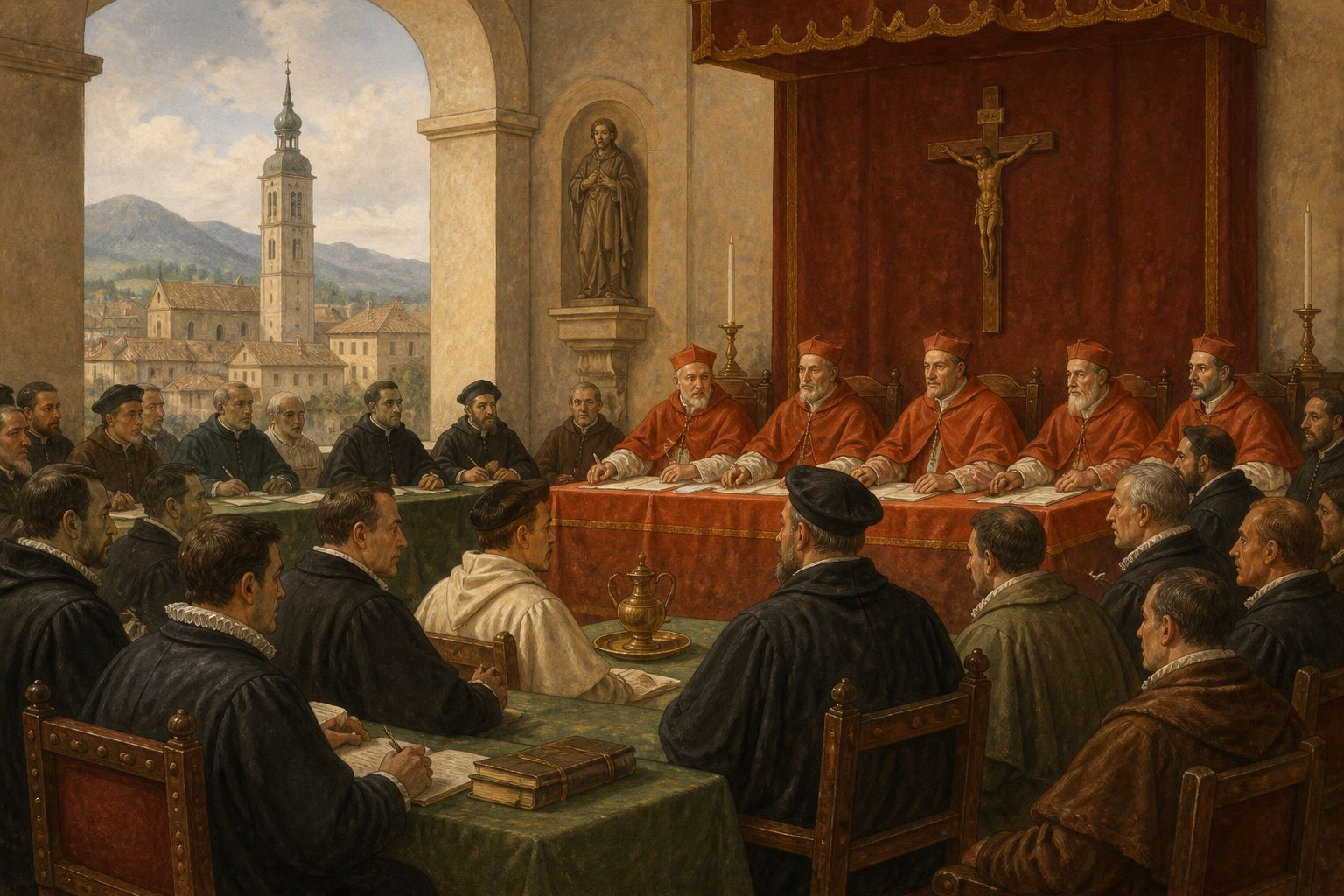
Turning point — Build-up: The council was interrupted by war and politics while defining positions on justification, sacraments, clerical education, and liturgy.
1545–1563
Current phase
Current event
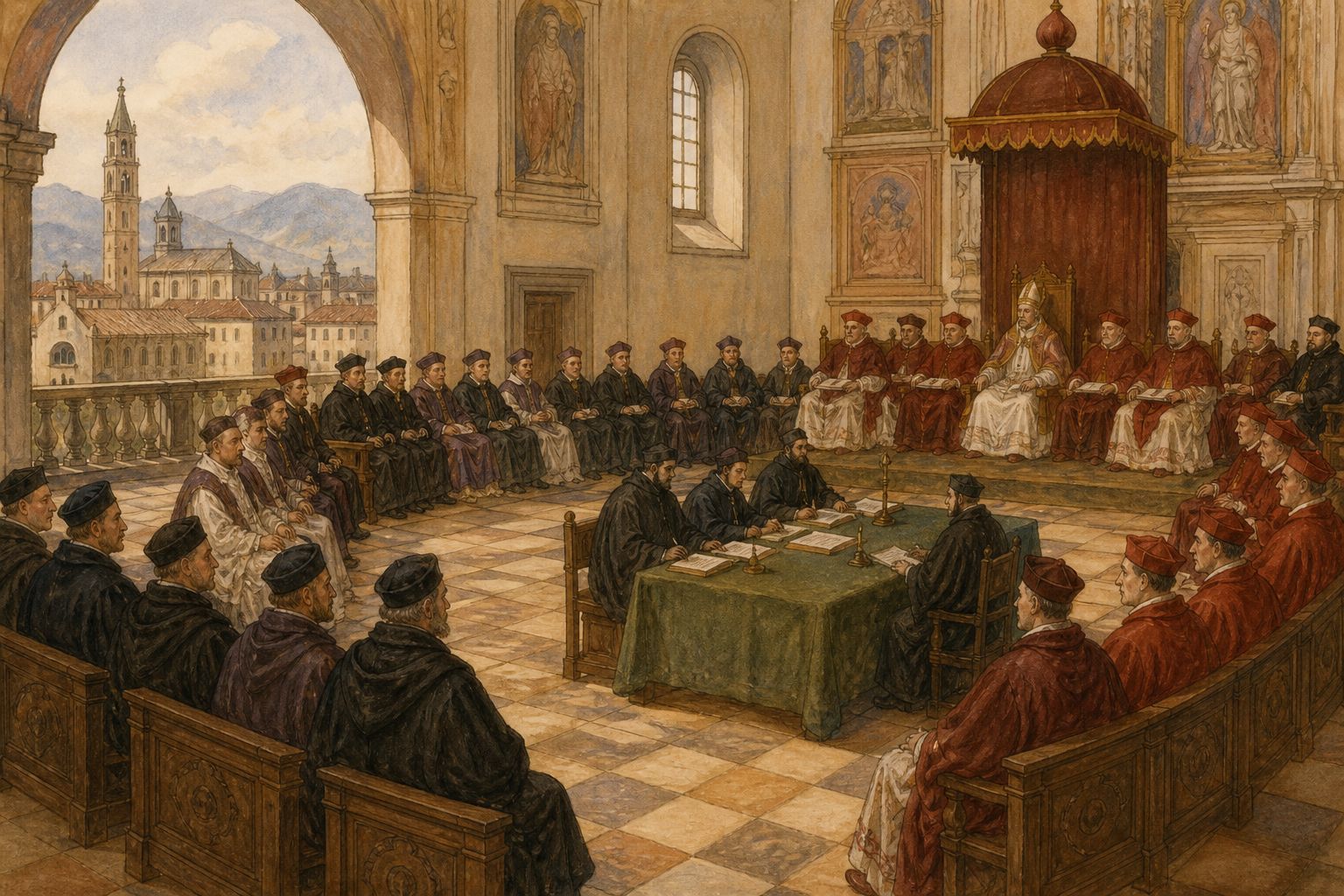
Current phase — Central transition: From 1545 to 1563, the Catholic Church debated doctrine, clergy, worship, and institutional reform at the Council of Trent.
c. 1564
Immediate aftermath
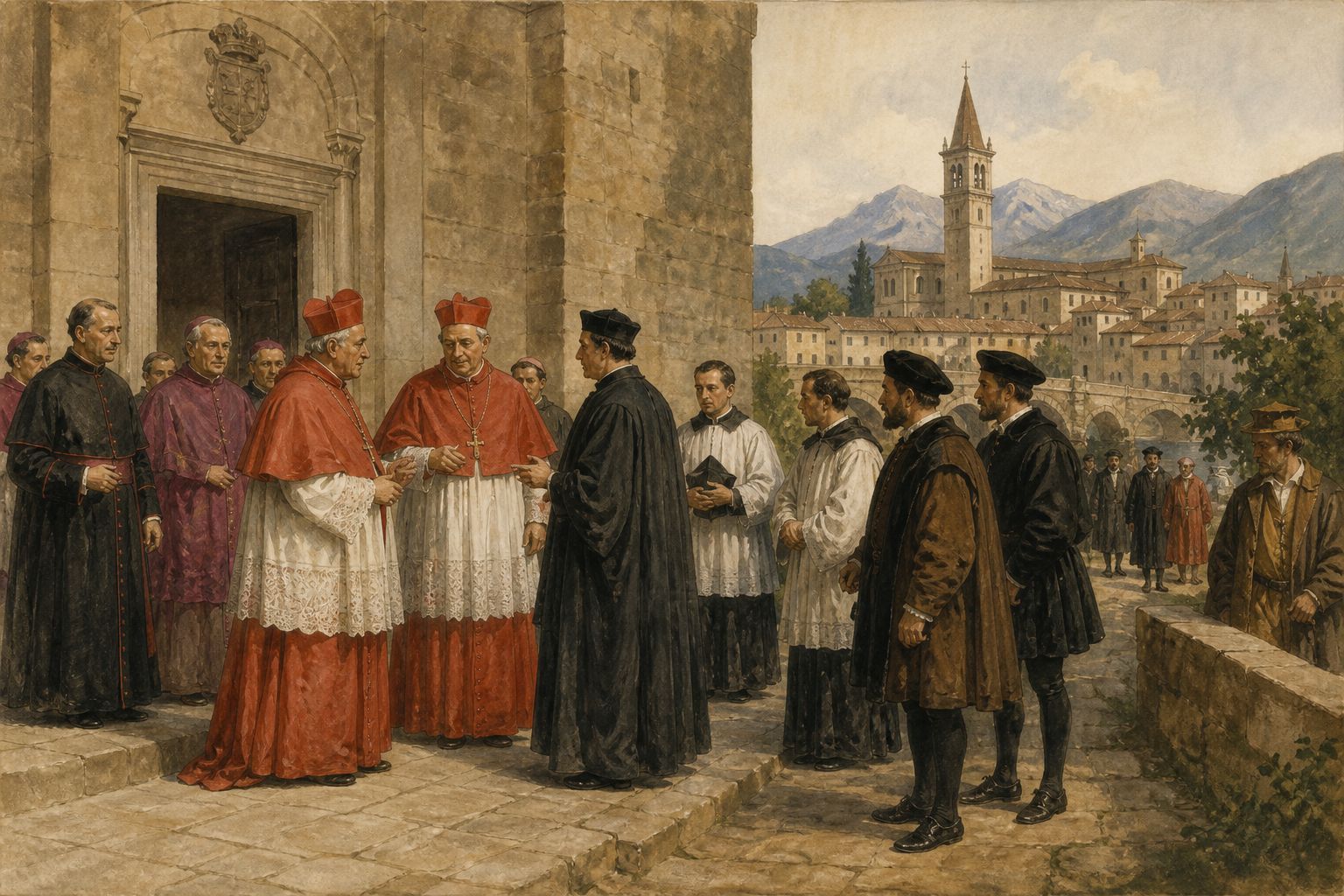
Immediate aftermath — Immediate result: The decrees received papal approval and encouraged institutionalization of episcopal residence, seminaries, and catechetical education.
c. 1573
Long-term significance
Long-term significance — Long-term significance: The council was central to the Catholic response while also expressing internal institutional reform rather than mere reaction.


Sources
- Council of Trent — Council Of Trent (Encyclopaedia Britannica)britannica.comThis Encyclopaedia Britannica resource supports the chronology, setting, and course of Council of Trent.
- Council of Trent — Hf Jp Ii Let 19950126 Concilio Trento (Vatican)vatican.vaThis Vatican resource supports the chronology, setting, and course of Council of Trent.
- Council of Trent — Counter Reformation (Encyclopaedia Britannica)britannica.comThis Encyclopaedia Britannica resource supports the chronology, setting, and course of Council of Trent.