
Founding of the European Economic Community
1957
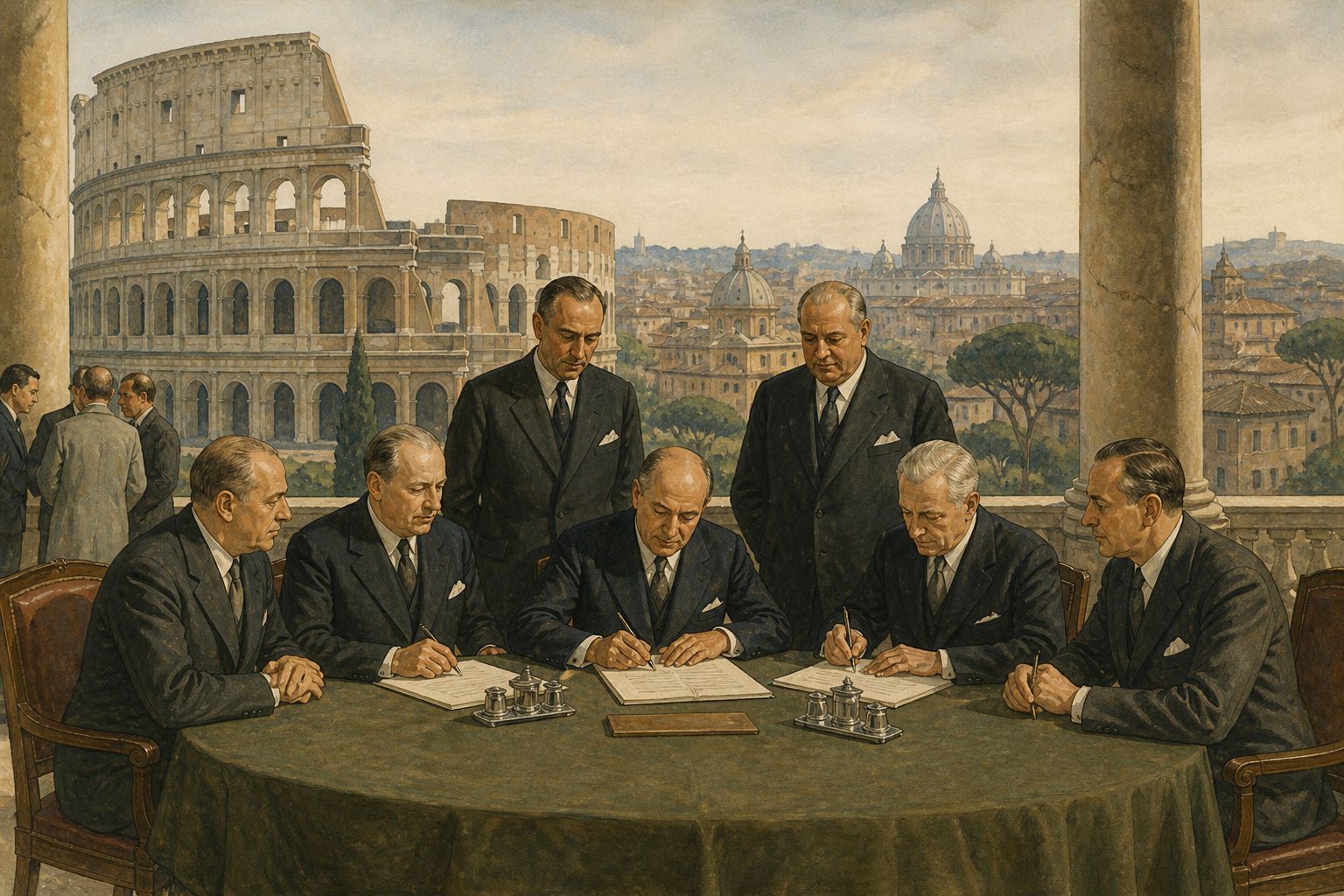
In 1957, the Treaty of Rome established the European Economic Community and advanced market integration and political cooperation in western Europe.

- Period
- 1957
- Kind
- Political event
- Regions
- Europe
- Keywords
- Founding of the European Economic Community · political event · contemporary · europe
Follow the story · Four stages
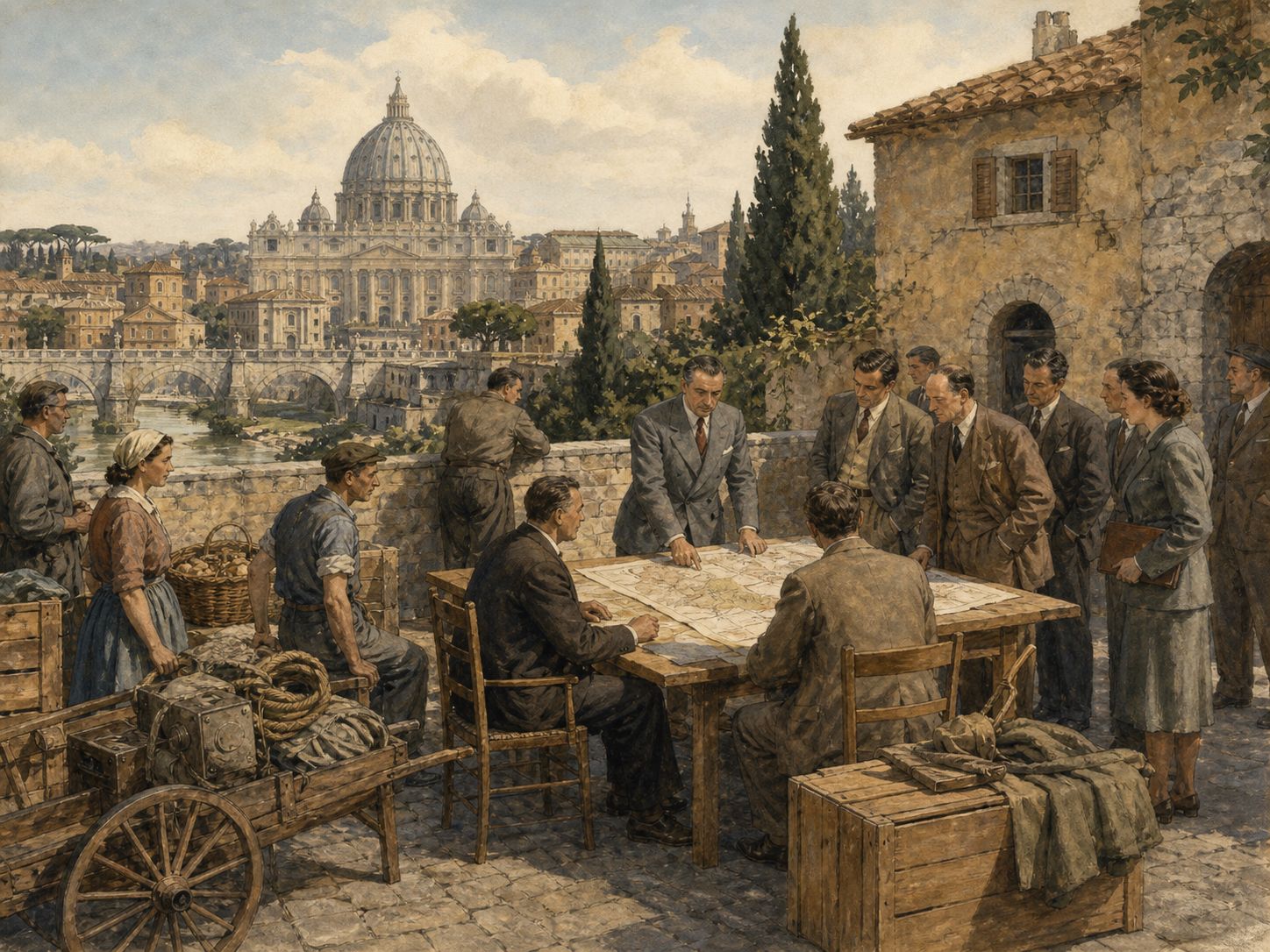
Background
After the Second World War, France, West Germany, and neighboring states sought durable cooperation beginning with coal and steel.
- After the Second World War, France, West Germany, and neighboring states sought durable cooperation beginning with coal and steel.
- Core event: In 1957, the Treaty of Rome established the European Economic Community and advanced market integration and political cooperation in western Europe.
- Connection to the next stage: Six states negotiated a common market, customs union, and shared institutions before signing the treaty in Rome.
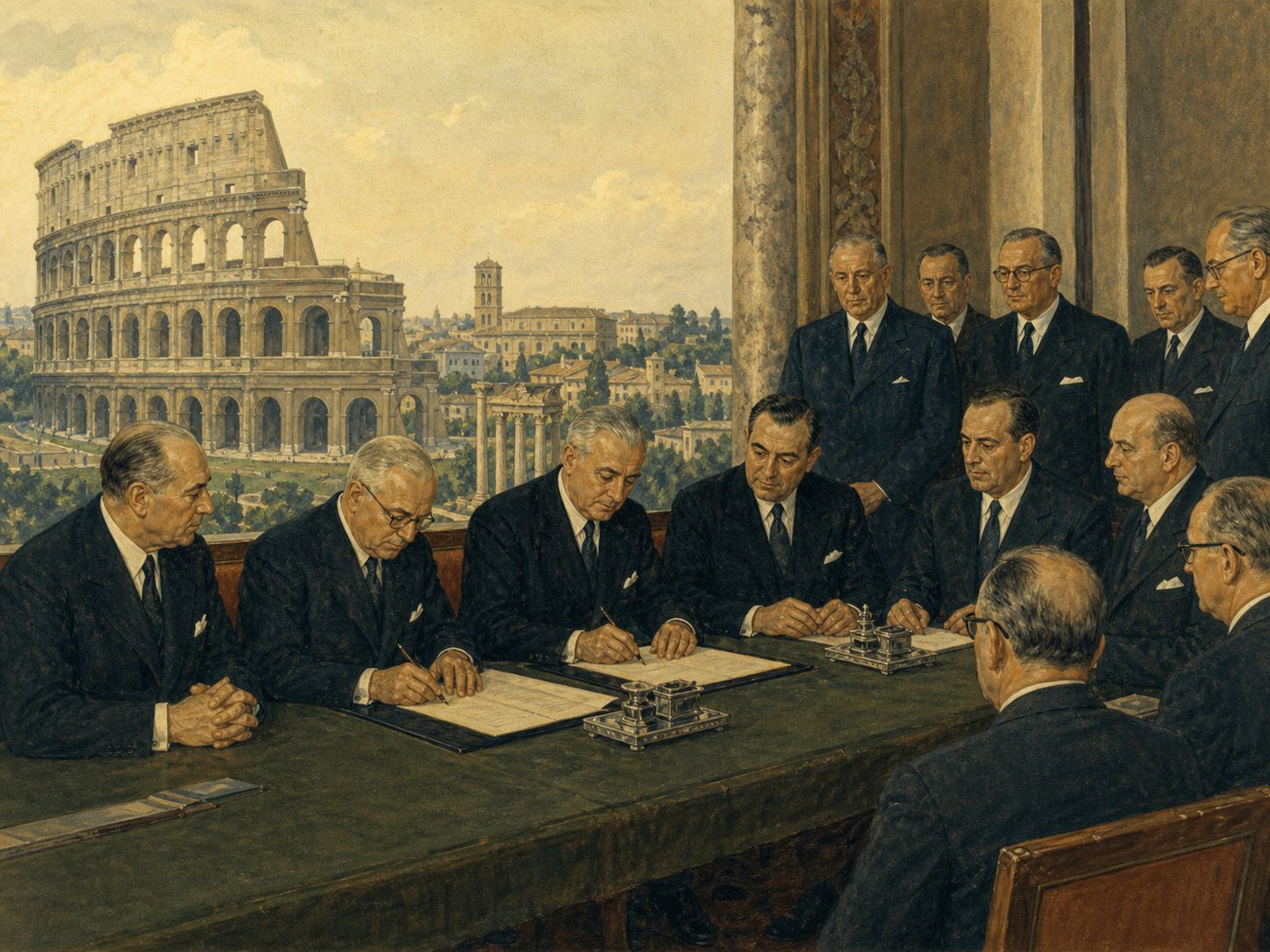
Course
Six states negotiated a common market, customs union, and shared institutions before signing the treaty in Rome.
- Six states negotiated a common market, customs union, and shared institutions before signing the treaty in Rome.
- Conditions behind the action: After the Second World War, France, West Germany, and neighboring states sought durable cooperation beginning with coal and steel.
- Meaning of the turning point: In 1957, the Treaty of Rome established the European Economic Community and advanced market integration and political cooperation in western Europe.
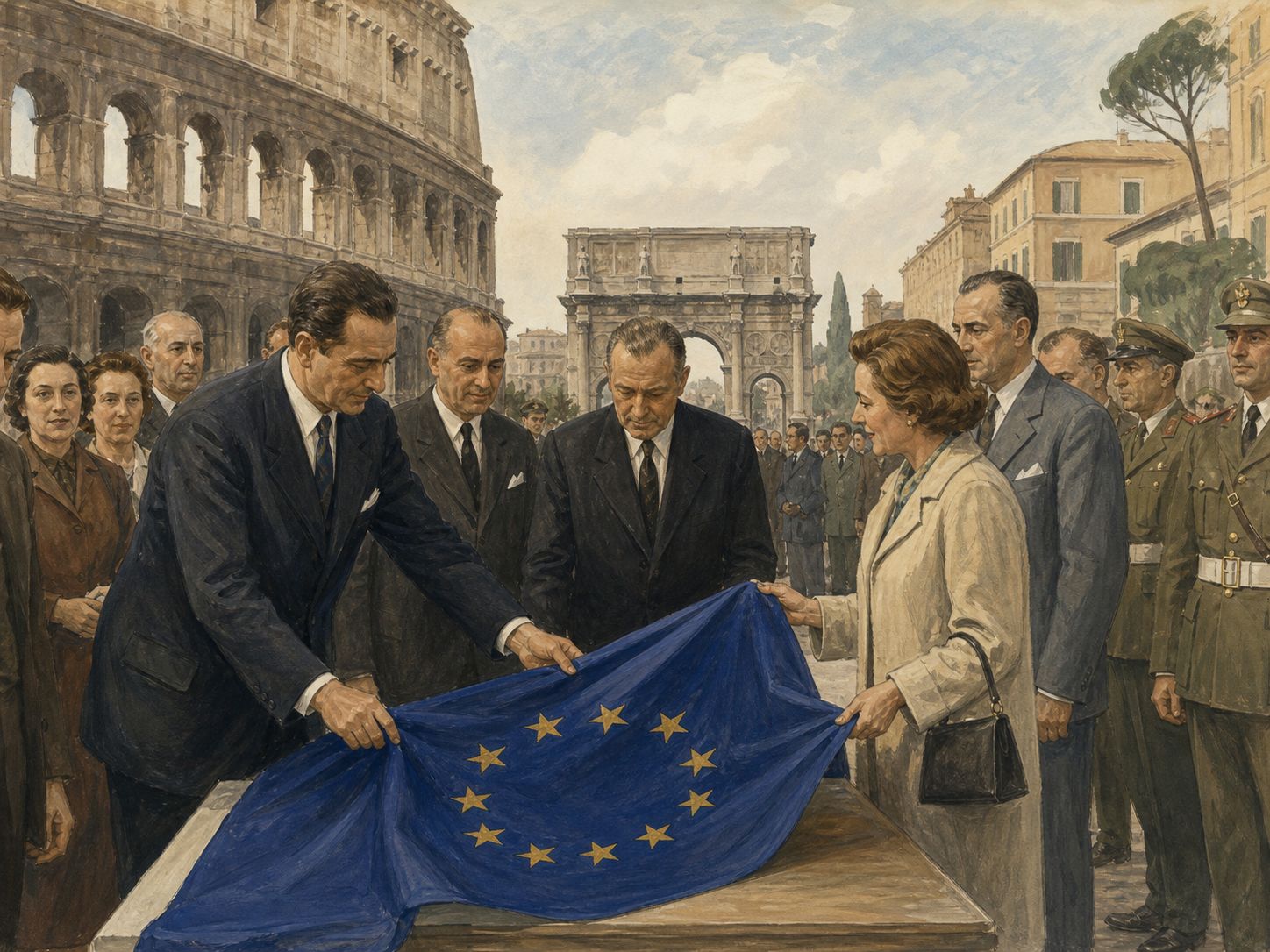
Outcome
The EEC expanded intra-European trade and policy coordination, providing an institutional base for the later European Communities and Union.
- The EEC expanded intra-European trade and policy coordination, providing an institutional base for the later European Communities and Union.
- Process producing the result: Six states negotiated a common market, customs union, and shared institutions before signing the treaty in Rome.
- Question carried forward: Integration supported peace and prosperity while inheriting debates over democratic legitimacy, borders, migration, and economic inequality.
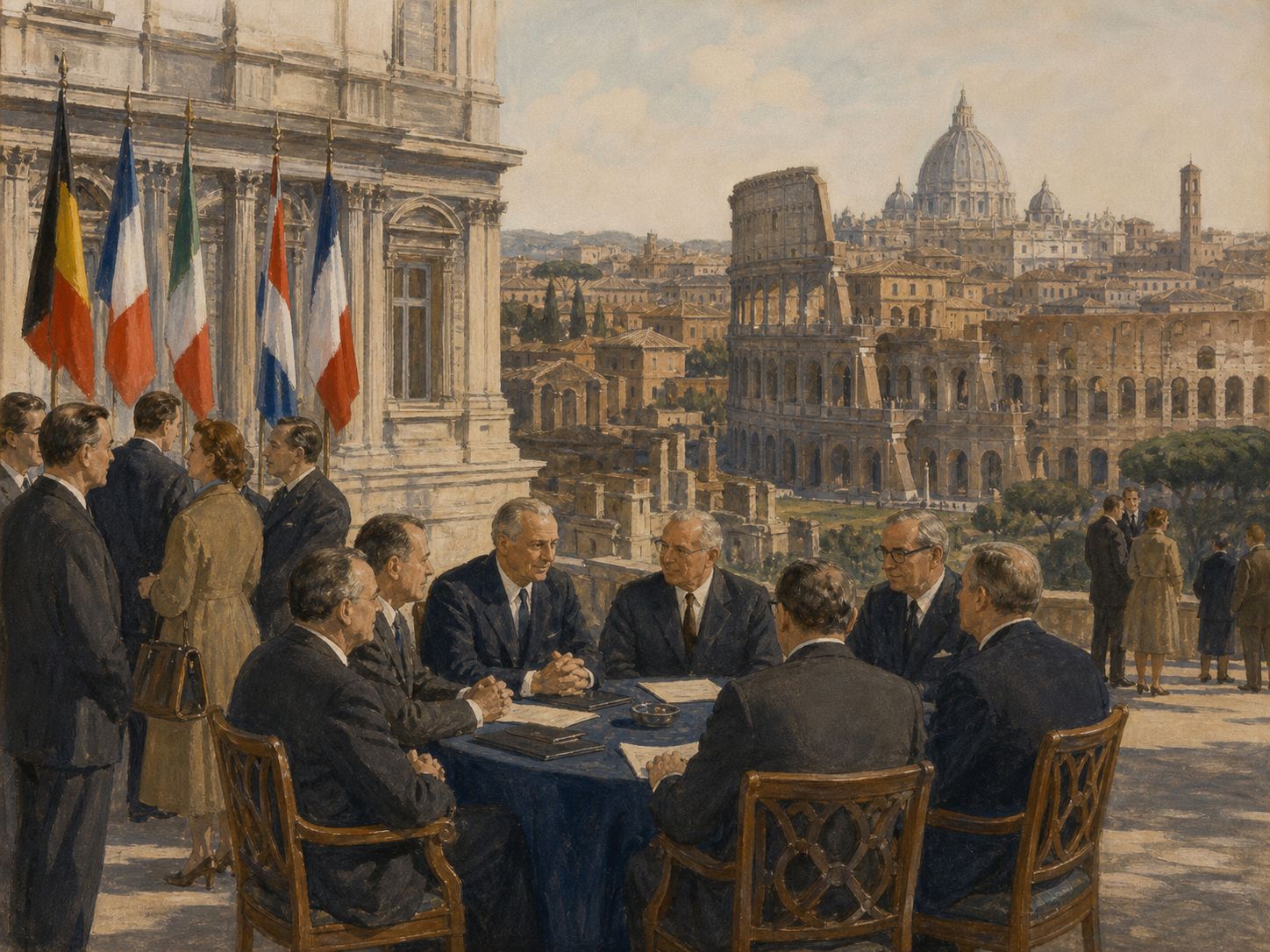
Historical significance
Integration supported peace and prosperity while inheriting debates over democratic legitimacy, borders, migration, and economic inequality.
- Integration supported peace and prosperity while inheriting debates over democratic legitimacy, borders, migration, and economic inequality.
- Immediate consequence: The EEC expanded intra-European trade and policy coordination, providing an institutional base for the later European Communities and Union.
- Historical turning point: In 1957, the Treaty of Rome established the European Economic Community and advanced market integration and political cooperation in western Europe.


Related events
c. 1957
Prelude
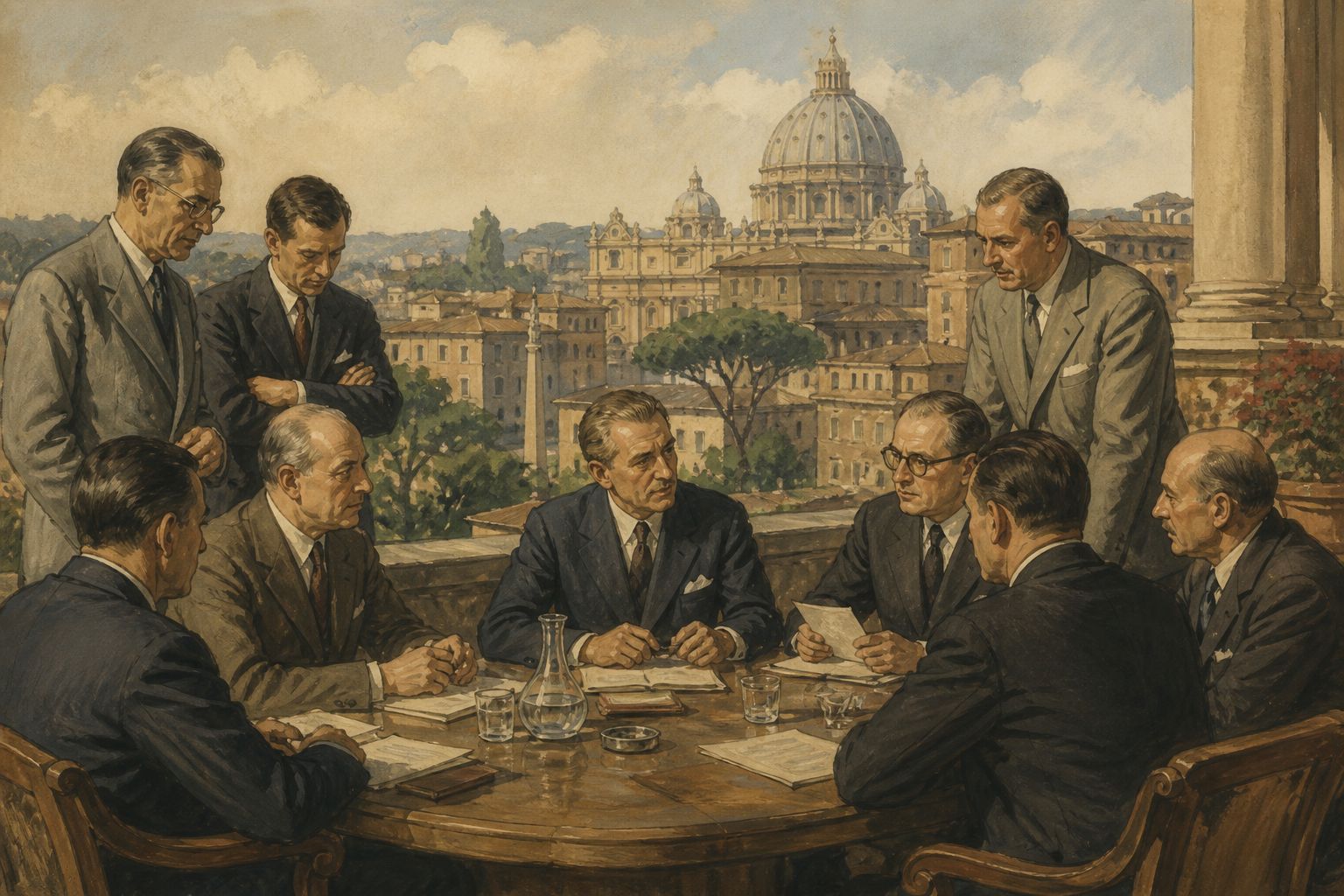
Prelude — Background: After the Second World War, France, West Germany, and neighboring states sought durable cooperation beginning with coal and steel.
c. 1957
Turning point
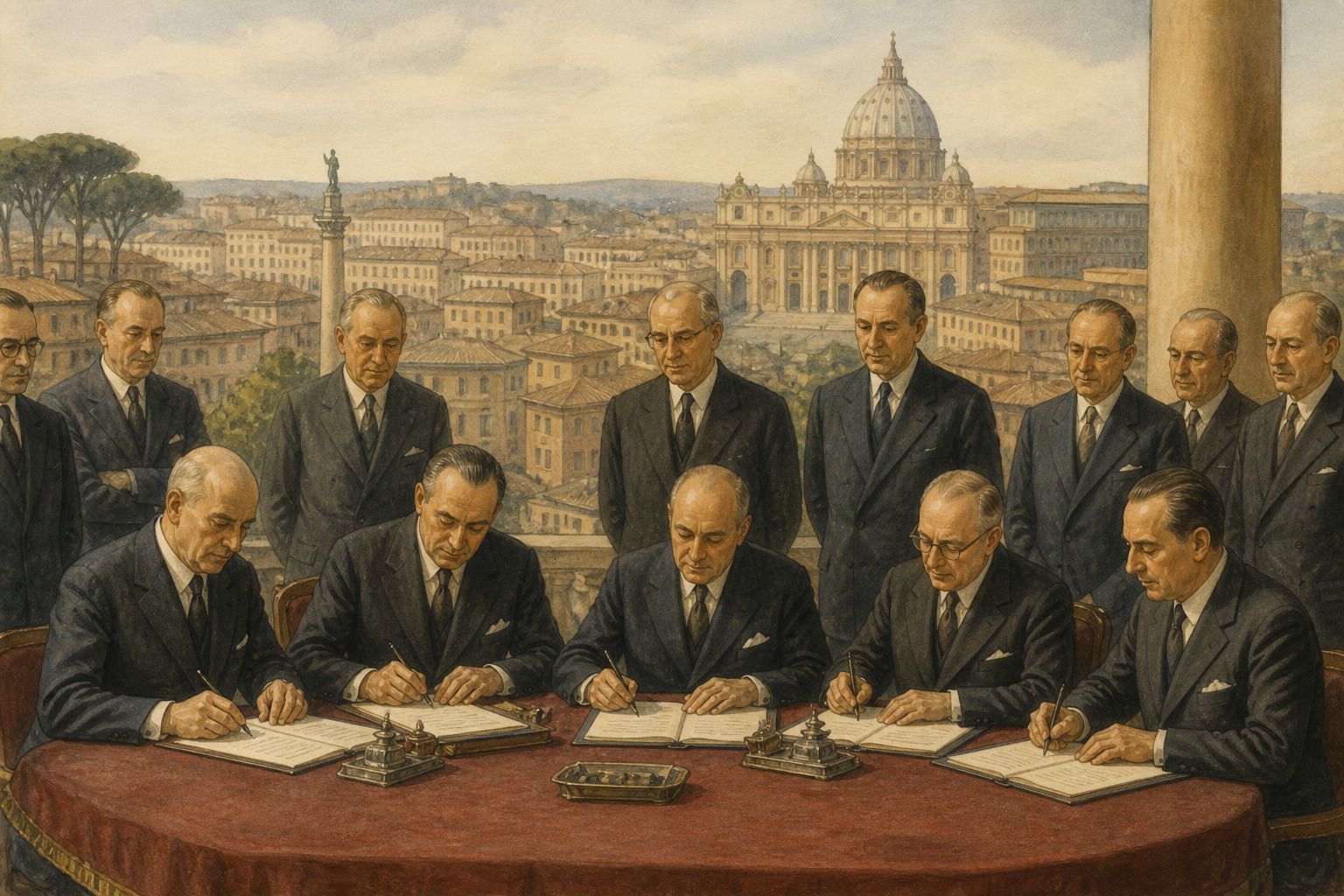
Turning point — Build-up: Six states negotiated a common market, customs union, and shared institutions before signing the treaty in Rome.
1957
Current phase
Current event
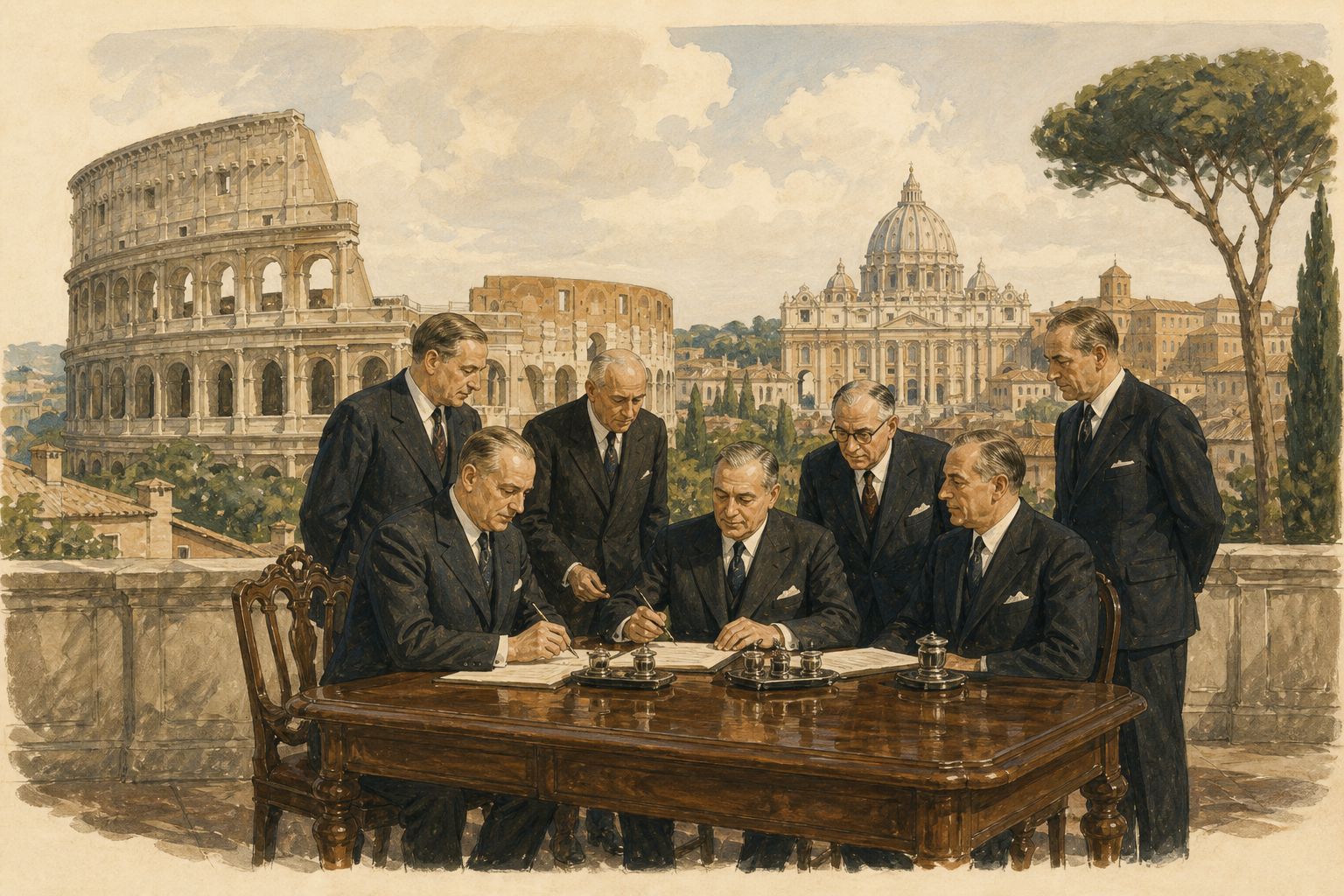
Current phase — Central transition: In 1957, the Treaty of Rome established the European Economic Community and advanced market integration and political cooperation in western Europe.
c. 1958
Immediate aftermath
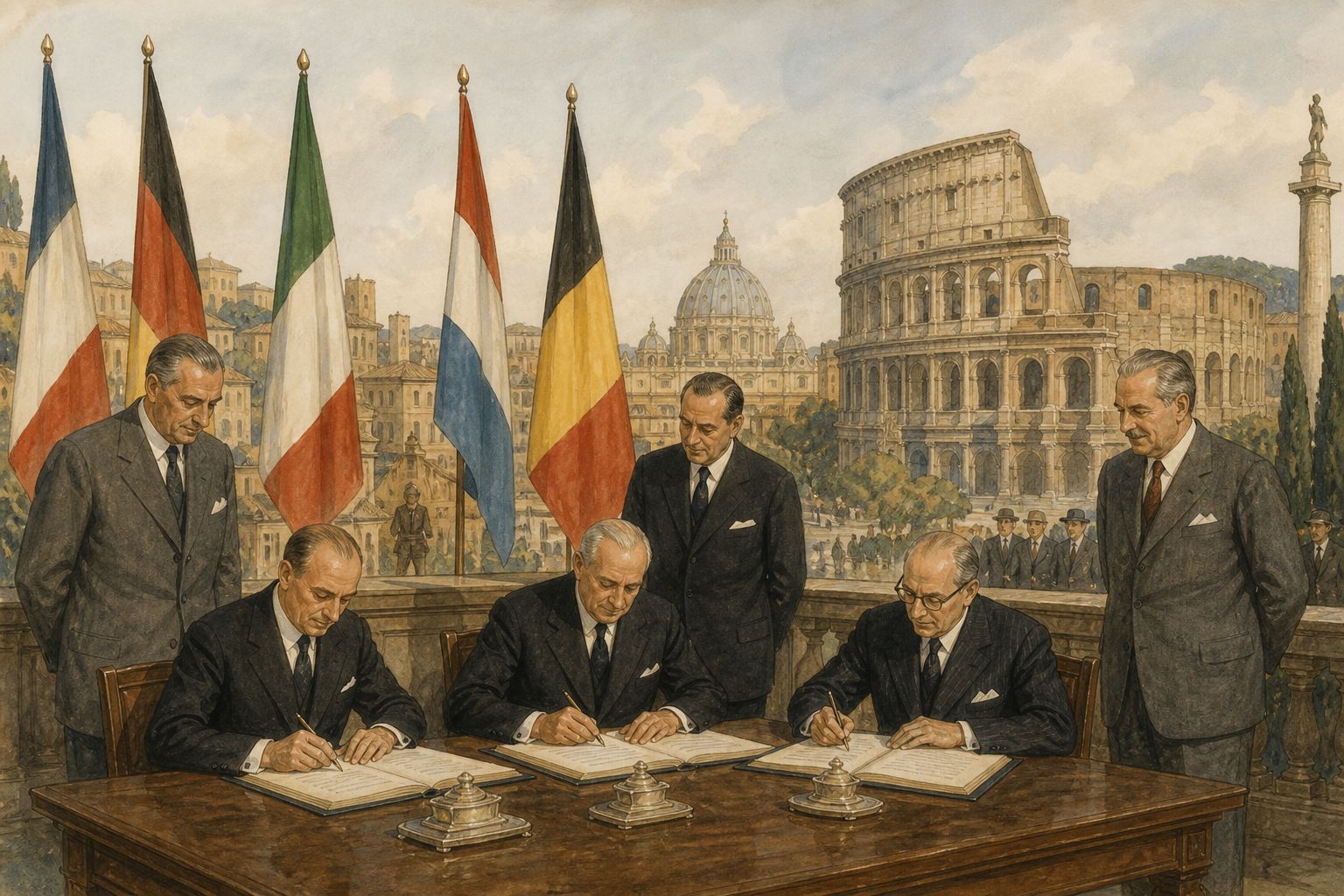
Immediate aftermath — Immediate result: The EEC expanded intra-European trade and policy coordination, providing an institutional base for the later European Communities and Union.
c. 1967
Long-term significance
Long-term significance — Long-term significance: Integration supported peace and prosperity while inheriting debates over democratic legitimacy, borders, migration, and economic inequality.


Sources
- Founding of the European Economic Community — History Eu En (European Union)european-union.europa.euThis European Union resource supports the chronology, setting, and course of Founding of the European Economic Community.
- Founding of the European Economic Community — European Community (Encyclopaedia Britannica)britannica.comThis Encyclopaedia Britannica resource supports the chronology, setting, and course of Founding of the European Economic Community.
- Founding of the European Economic Community — The History Of The European Union (European Parliament)europarl.europa.euThis European Parliament resource supports the chronology, setting, and course of Founding of the European Economic Community.