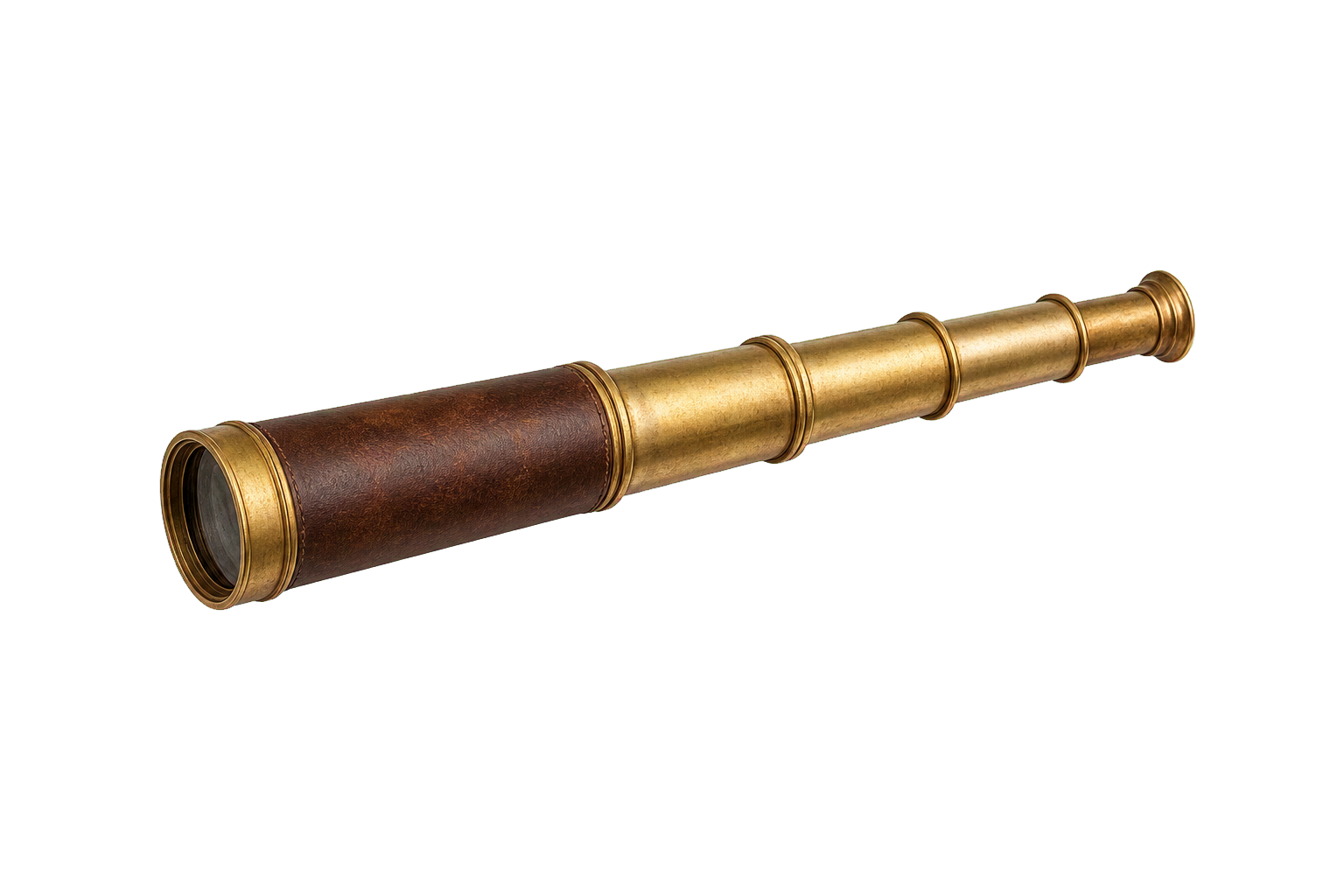
First Sino-Japanese War
c. 1894–c. 1895
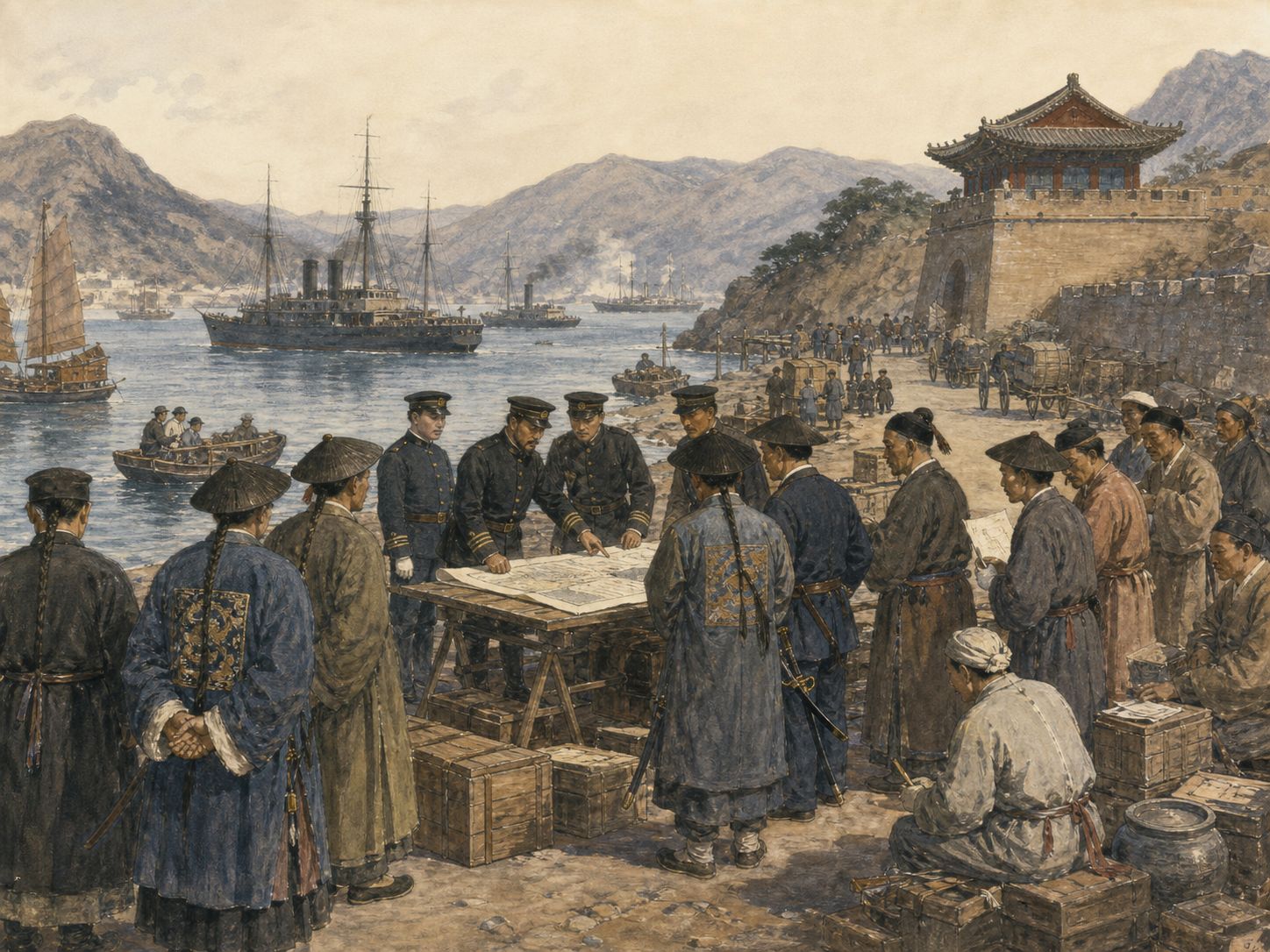
The 1894–1895 war between Qing China and Japan over intervention in Korea and the regional order, ending in Japanese victory and the Treaty of Shimonoseki.

- Period
- c. 1894–c. 1895
- Kind
- Treaty
- Regions
- Latin America
- Keywords
- First Sino-Japanese War · Korea · Yellow Sea · Shimonoseki · imperial expansion
Follow the story · Four stages
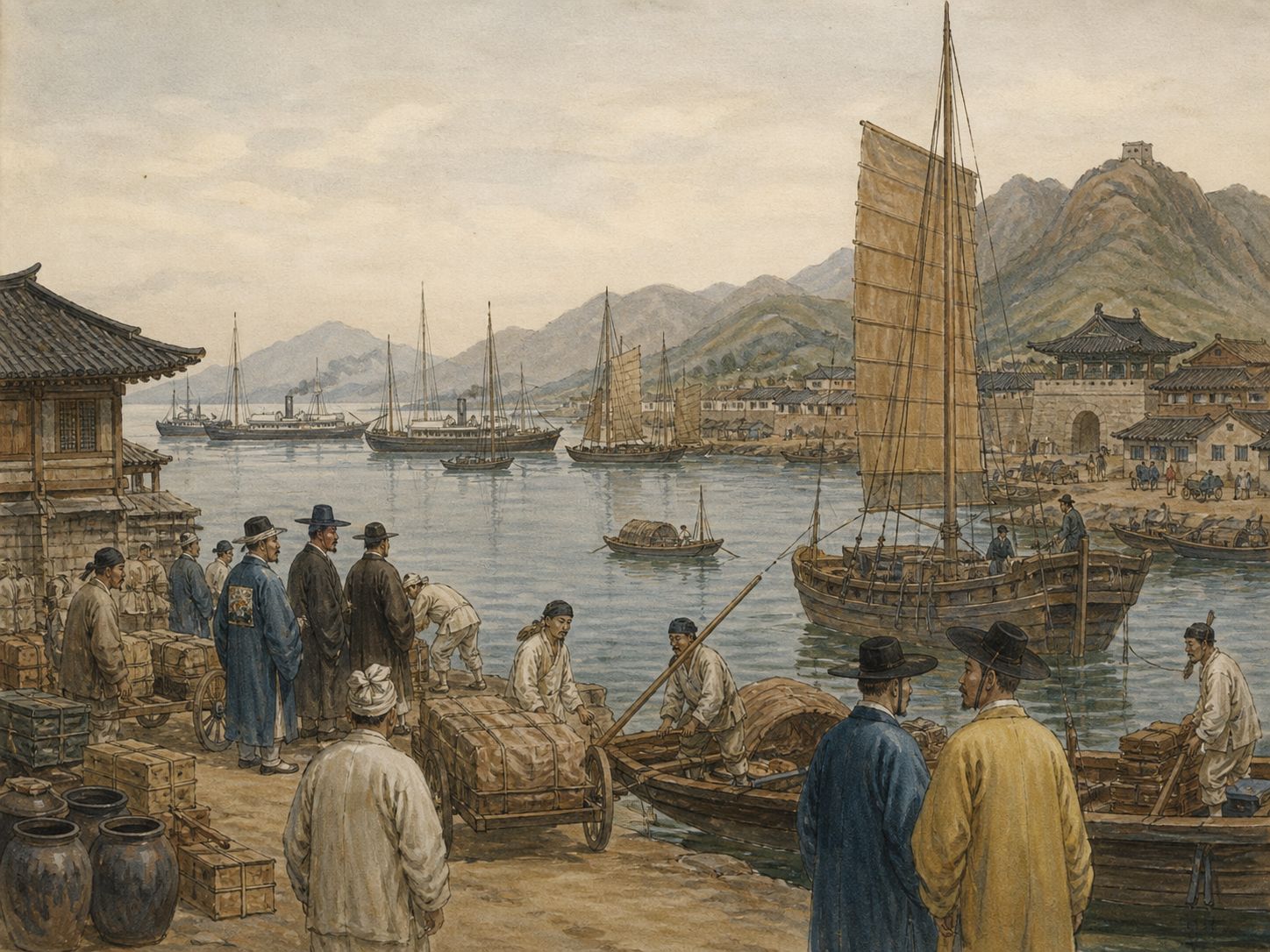
Background
Korean reform and peasant unrest, Qing suzerainty, Japan’s state-building, and Japanese expansion combined to turn competition over Korea into a crisis.
- Korean reform and peasant unrest, Qing suzerainty, Japan’s state-building, and Japanese expansion combined to turn competition over Korea into a crisis.
- Core event: The 1894–1895 war between Qing China and Japan over intervention in Korea and the regional order, ending in Japanese victory and the Treaty of Shimonoseki.
- Connection to the next stage: Qing and Japanese troops entered Korea during the Donghak uprising. Fighting spread through Asan, the Yellow Sea, Pyongyang, and Liaodong as Japanese forces gained land and naval advantages.
Course
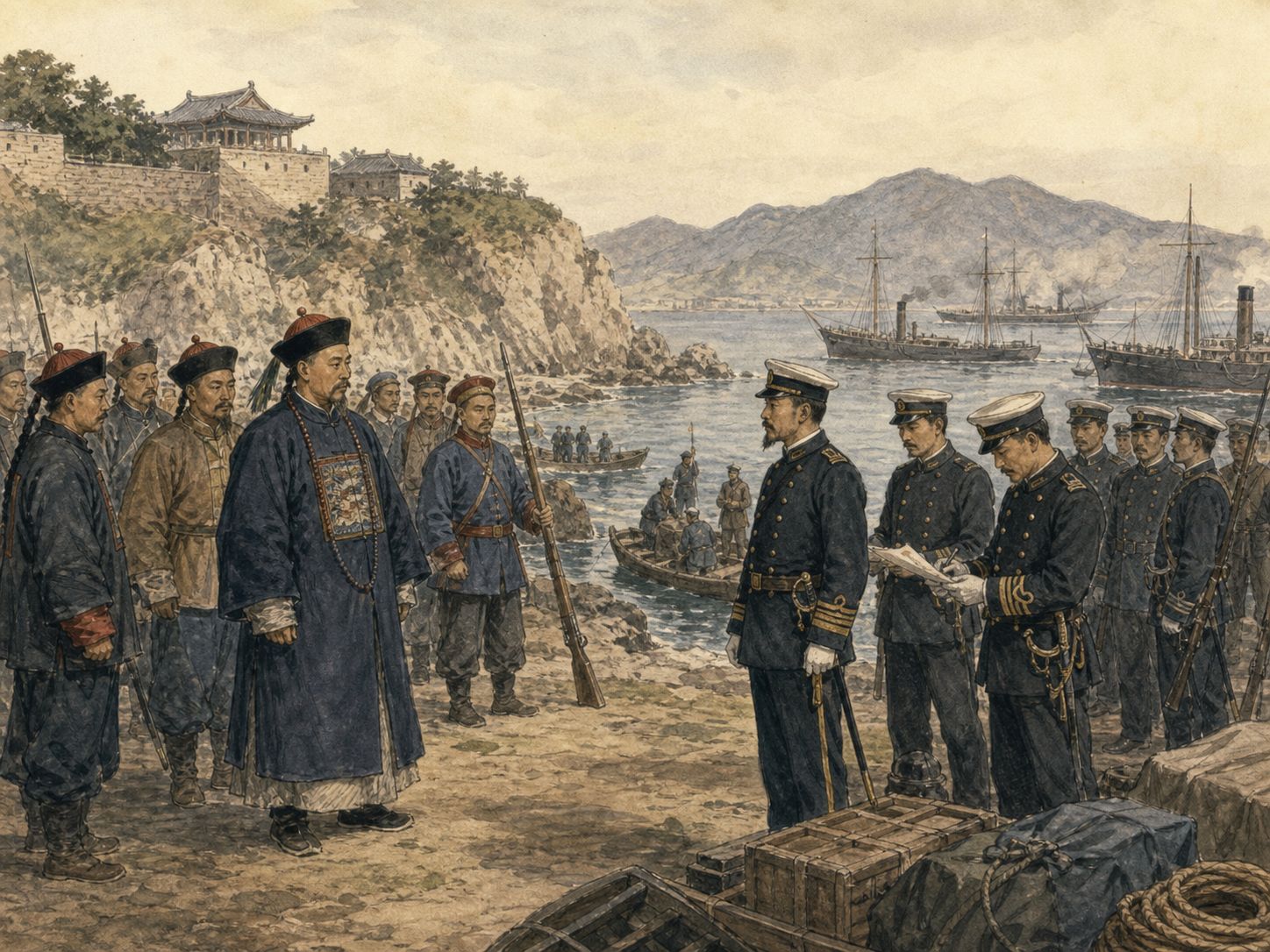
Qing and Japanese troops entered Korea during the Donghak uprising. Fighting spread through Asan, the Yellow Sea, Pyongyang, and Liaodong as Japanese forces gained land and naval advantages.
- Qing and Japanese troops entered Korea during the Donghak uprising.
- Fighting spread through Asan, the Yellow Sea, Pyongyang, and Liaodong as Japanese forces gained land and naval advantages.
- Conditions behind the action: Korean reform and peasant unrest, Qing suzerainty, Japan’s state-building, and Japanese expansion combined to turn competition over Korea into a crisis.
Outcome
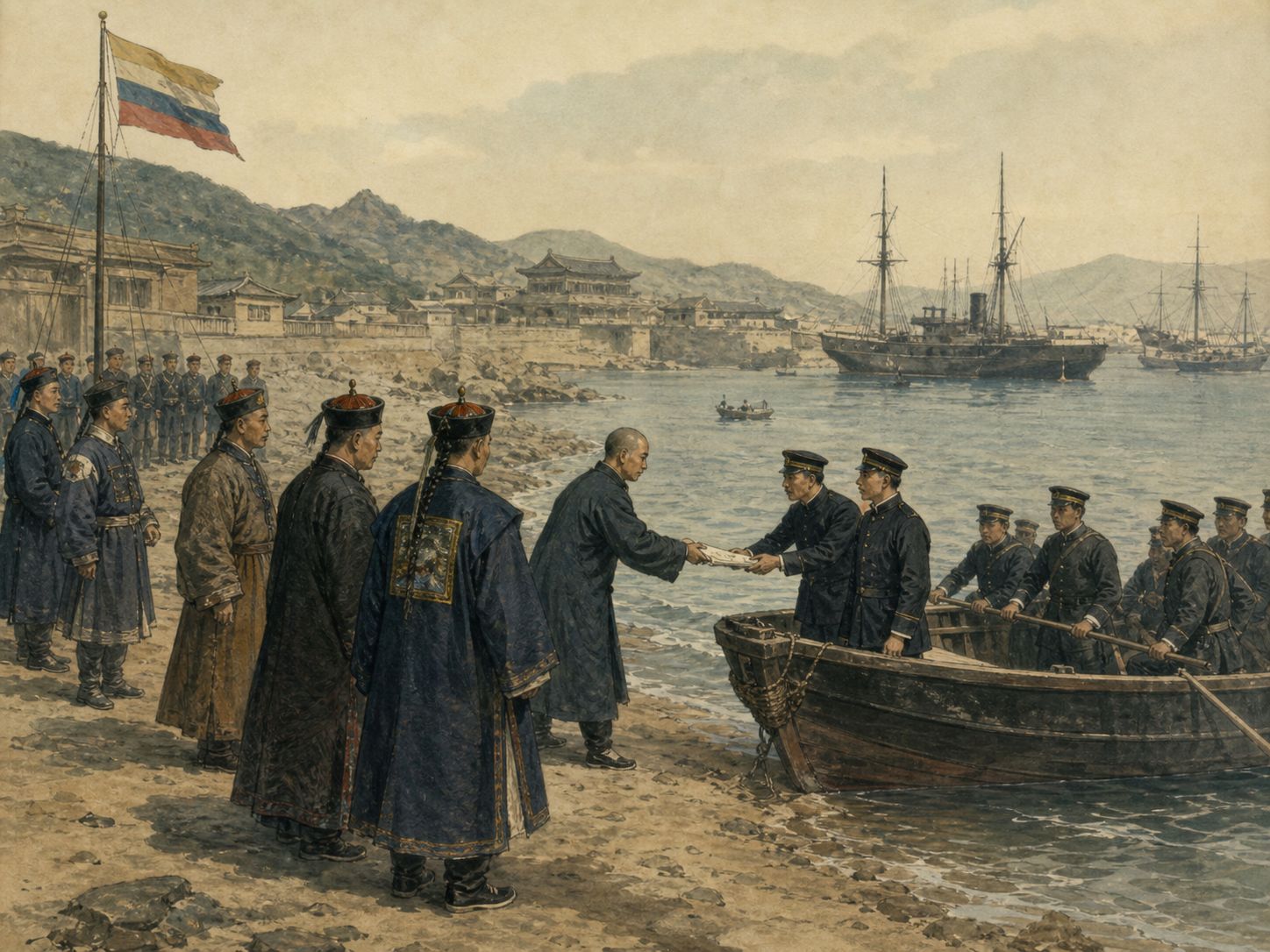
The 1895 Treaty of Shimonoseki recognized Korean independence and ceded Taiwan and the Pescadores to Japan. The Liaodong cession was returned after the Triple Intervention, intensifying imperial rivalry.
- The 1895 Treaty of Shimonoseki recognized Korean independence and ceded Taiwan and the Pescadores to Japan.
- The Liaodong cession was returned after the Triple Intervention, intensifying imperial rivalry.
- Process producing the result: Qing and Japanese troops entered Korea during the Donghak uprising. Fighting spread through Asan, the Yellow Sea, Pyongyang, and Liaodong as Japanese forces gained land and naval advantages.
Historical significance
The war was a turning point in modern East Asia linking Korean sovereignty, Qing imperial order, Japanese empire-building, and intervention by the European powers.
- The war was a turning point in modern East Asia linking Korean sovereignty, Qing imperial order, Japanese empire-building, and intervention by the European powers.
- Immediate consequence: The 1895 Treaty of Shimonoseki recognized Korean independence and ceded Taiwan and the Pescadores to Japan. The Liaodong cession was returned after the Triple Intervention, intensifying imperial rivalry.
- Historical turning point: The 1894–1895 war between Qing China and Japan over intervention in Korea and the regional order, ending in Japanese victory and the Treaty of Shimonoseki.


Related events
1894
The Korean crisis
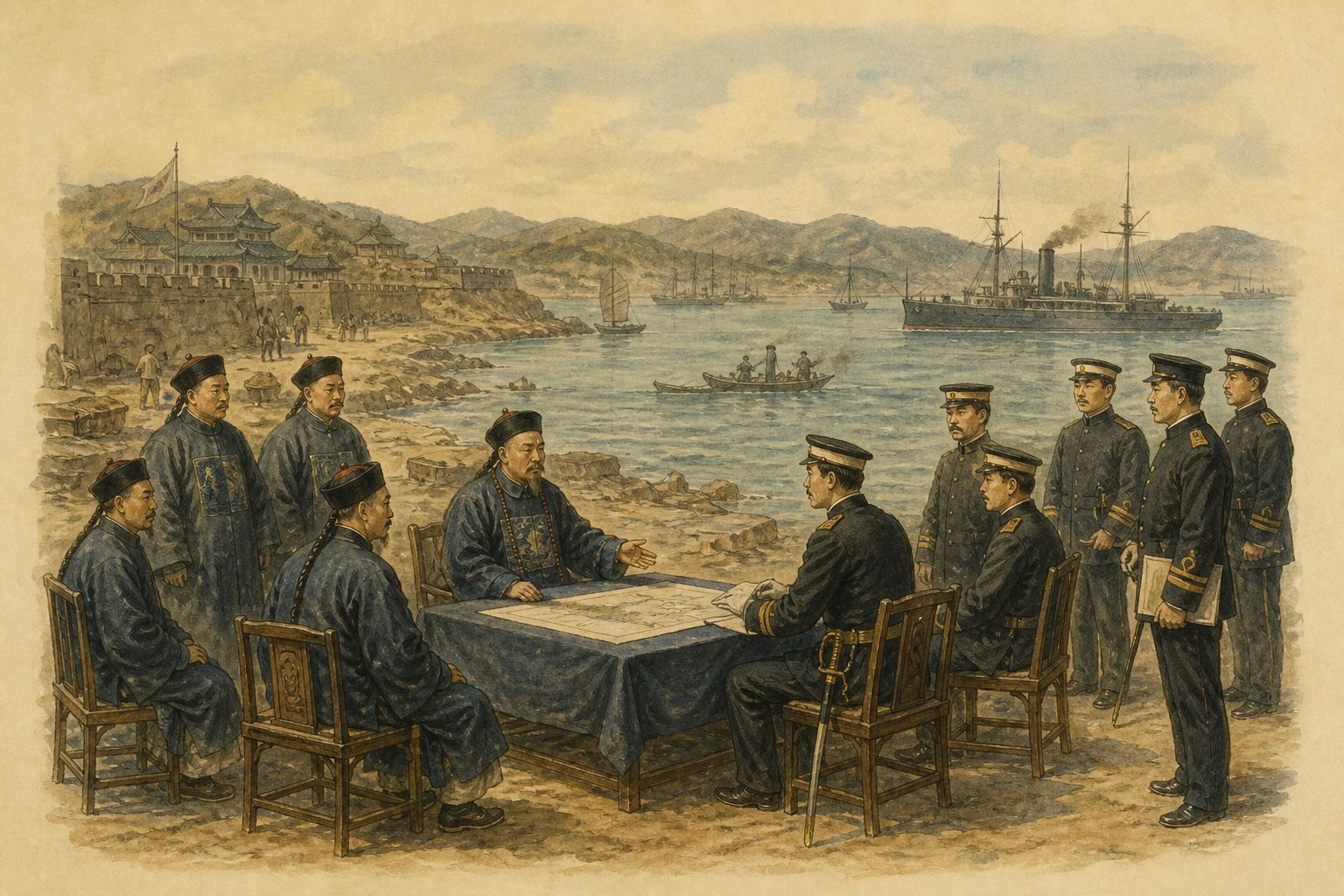
The Korean crisis — Background: Korean reform and peasant unrest, Qing suzerainty, Japan’s state-building, and Japanese expansion combined to turn competition over Korea into a crisis.
1894
Naval escalation
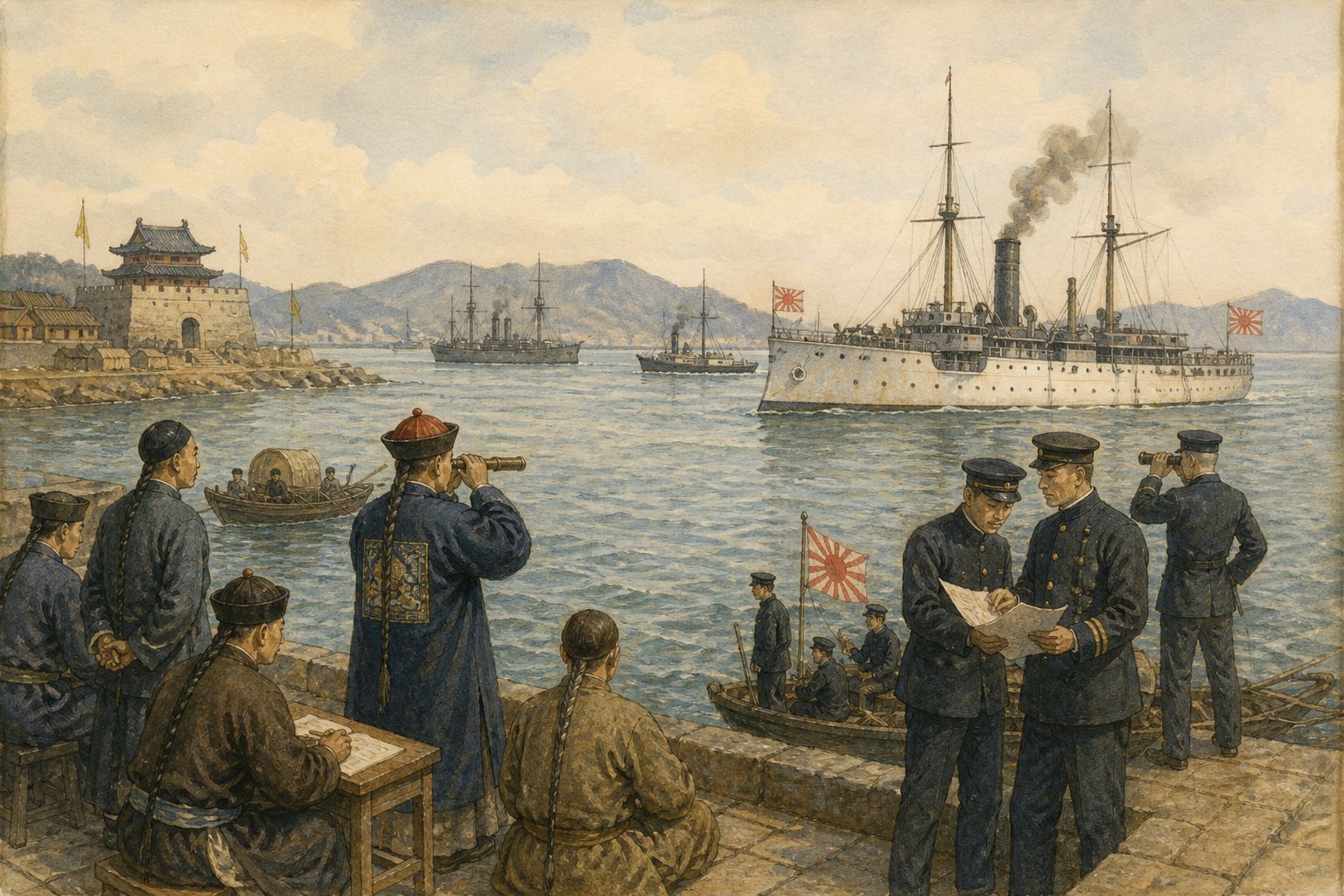
Naval escalation — Build-up: Qing and Japanese troops entered Korea during the Donghak uprising. Fighting spread through Asan, the Yellow Sea, Pyongyang, and Liaodong as Japanese forces gained land and naval advantages.
1894
Campaign in the Yellow Sea
Current event
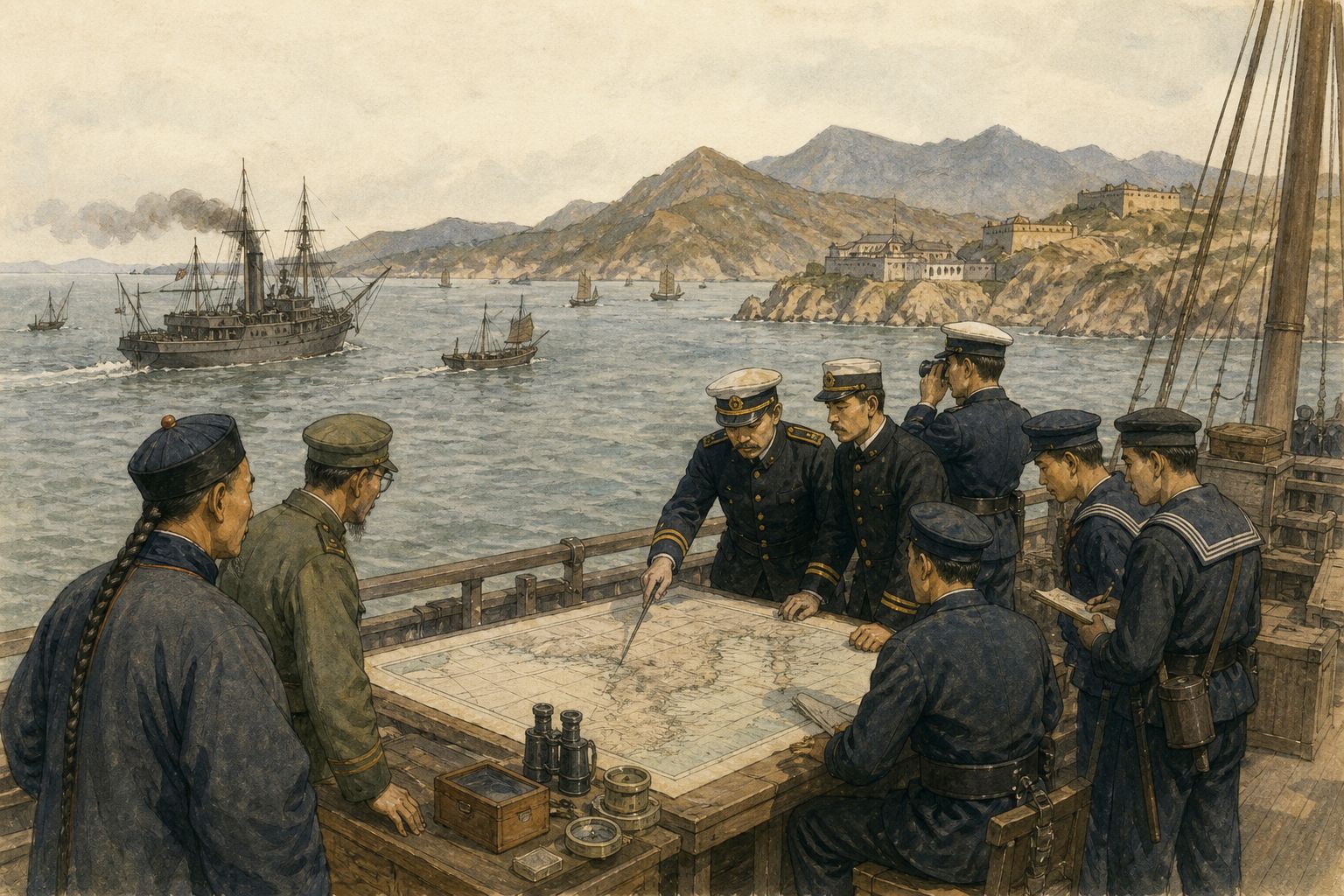
Campaign in the Yellow Sea — Central transition: The 1894–1895 war between Qing China and Japan over intervention in Korea and the regional order, ending in Japanese victory and the Treaty of Shimonoseki.
1895
Settlement at Shimonoseki
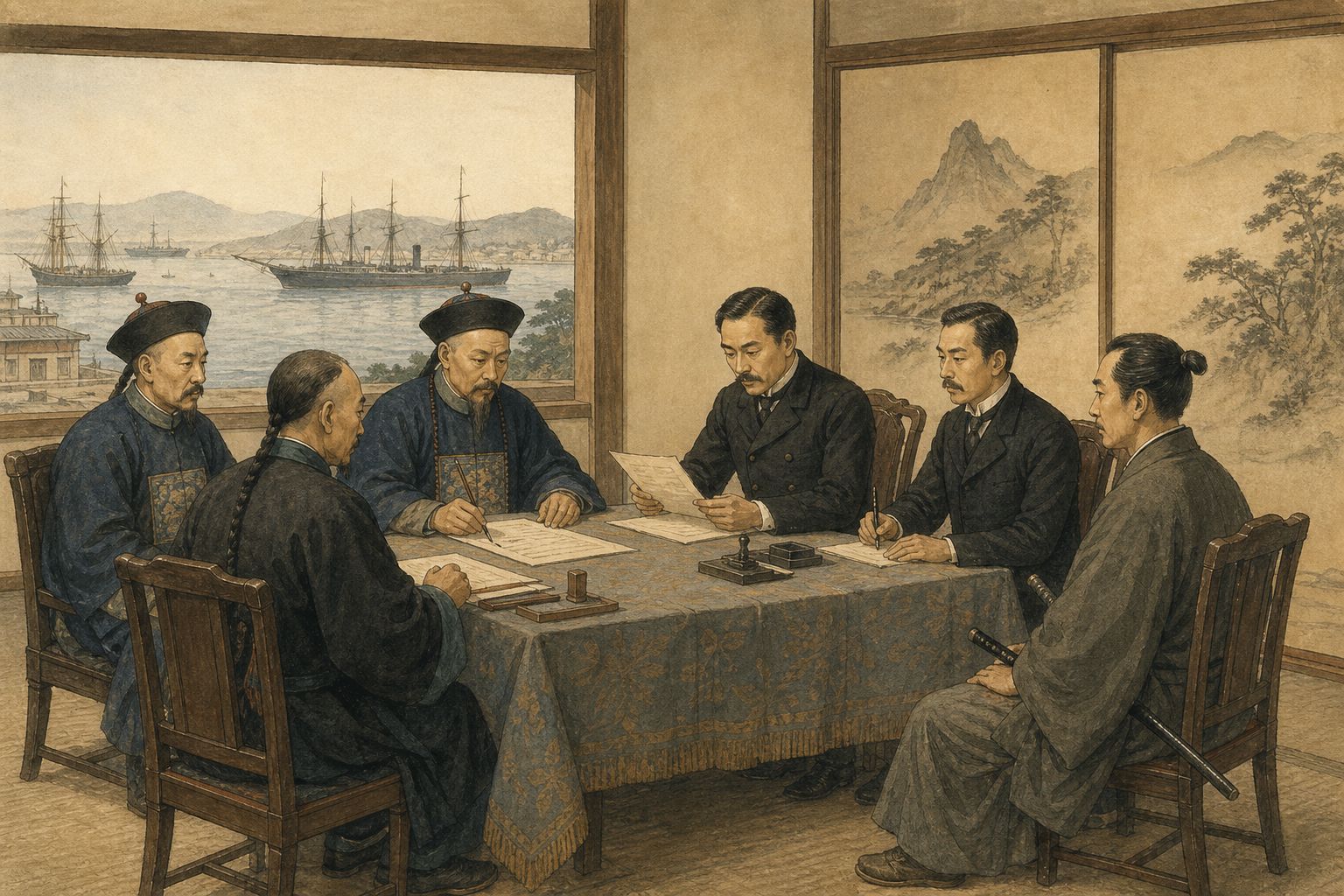
Settlement at Shimonoseki — Immediate result: The 1895 Treaty of Shimonoseki recognized Korean independence and ceded Taiwan and the Pescadores to Japan. The Liaodong cession was returned after the Triple Intervention, intensifying imperial rivalry.
c. 1895–c. 1905
Regional realignment
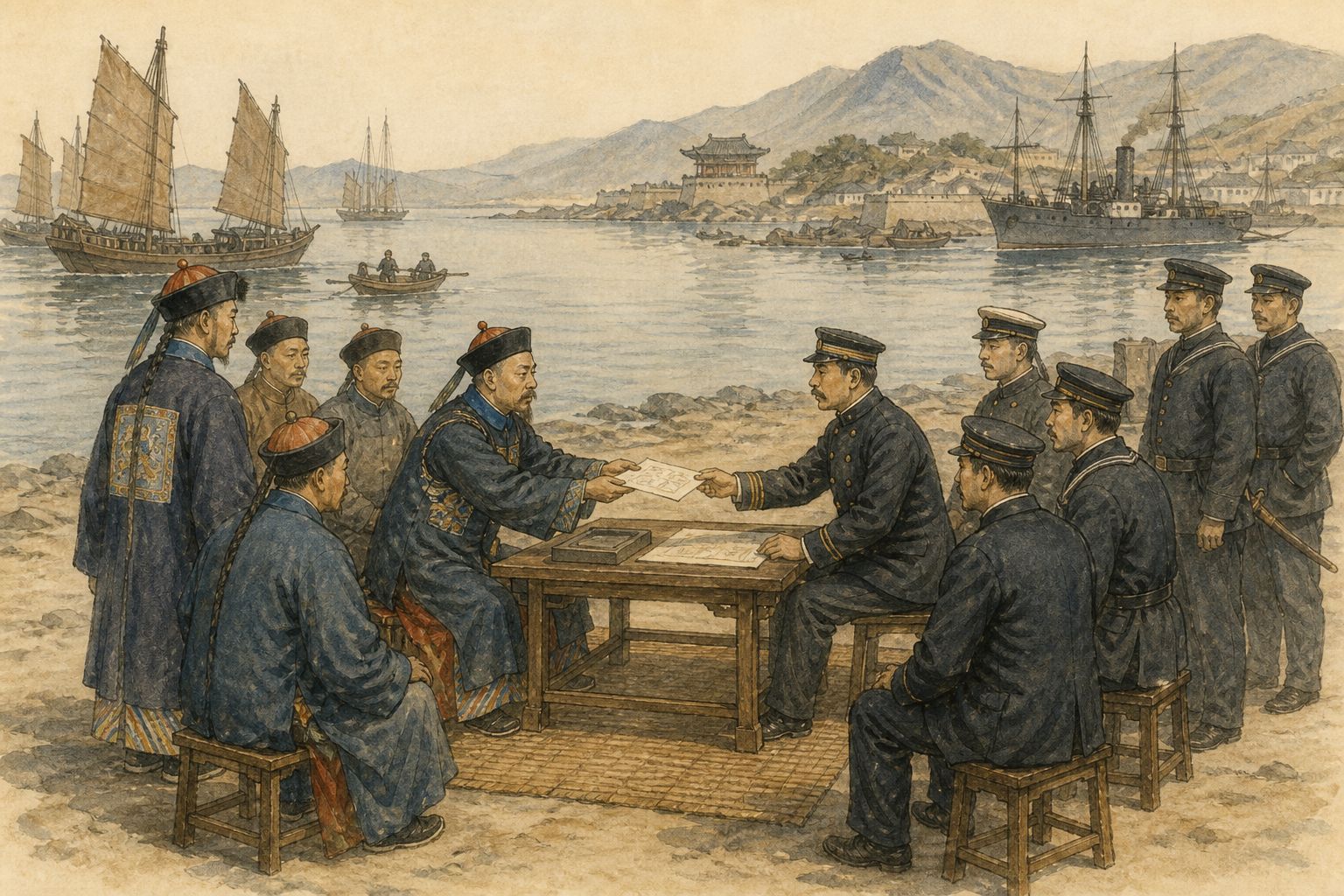
Regional realignment — Long-term significance: The war was a turning point in modern East Asia linking Korean sovereignty, Qing imperial order, Japanese empire-building, and intervention by the European powers.


Sources
- First Sino-Japanese War — First Sino Japanese War (Encyclopaedia Britannica)www.britannica.comThis Encyclopaedia Britannica resource supports the chronology, setting, and course of First Sino-Japanese War.
- First Sino-Japanese War — Hd First Sino Japanese War (The Metropolitan Museum of Art)www.metmuseum.orgThis The Metropolitan Museum of Art resource supports the chronology, setting, and course of First Sino-Japanese War.
- First Sino-Japanese War — First Sino Japanese War (World History Encyclopedia)www.worldhistory.orgThis World History Encyclopedia resource supports the chronology, setting, and course of First Sino-Japanese War.