Greco-Persian Wars
c. 499 BC–c. 449 BC
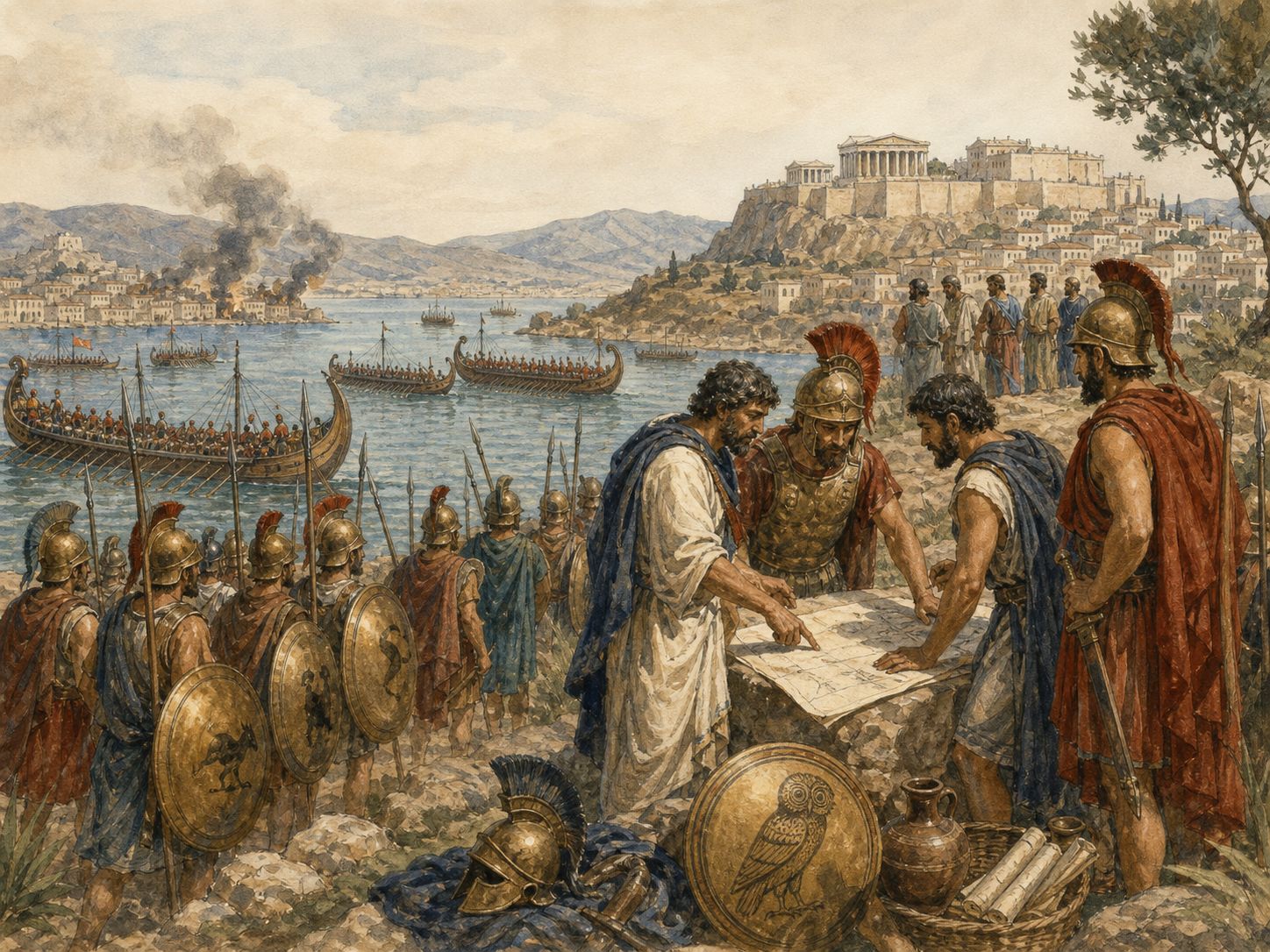
A series of conflicts from the Ionian Revolt in 499 BCE to about 449 BCE, in which Achaemenid Persia and Greek city-states and leagues contested the Aegean and eastern Mediterranean.

- Period
- c. 499 BC–c. 449 BC
- Kind
- Cultural event
- Regions
- Europe
- Keywords
- Persian Wars · Ionia · Salamis · poleis · empire
Follow the story · Four stages
Background
Persian rule in Anatolia, demands for autonomy among Ionian cities, and rivalry among Greek poleis connected revolt and expedition into a wider regional conflict.
- Persian rule in Anatolia, demands for autonomy among Ionian cities, and rivalry among Greek poleis connected revolt and expedition into a wider regional conflict.
- Core event: A series of conflicts from the Ionian Revolt in 499 BCE to about 449 BCE, in which Achaemenid Persia and Greek city-states and leagues contested the Aegean and eastern Mediterranean.
- Connection to the next stage: The Ionian Revolt, Darius’s campaigns, Marathon, Xerxes’ invasion, Thermopylae, Salamis, Plataea, and the Delian League’s counteroffensive unfolded in successive phases.
Course
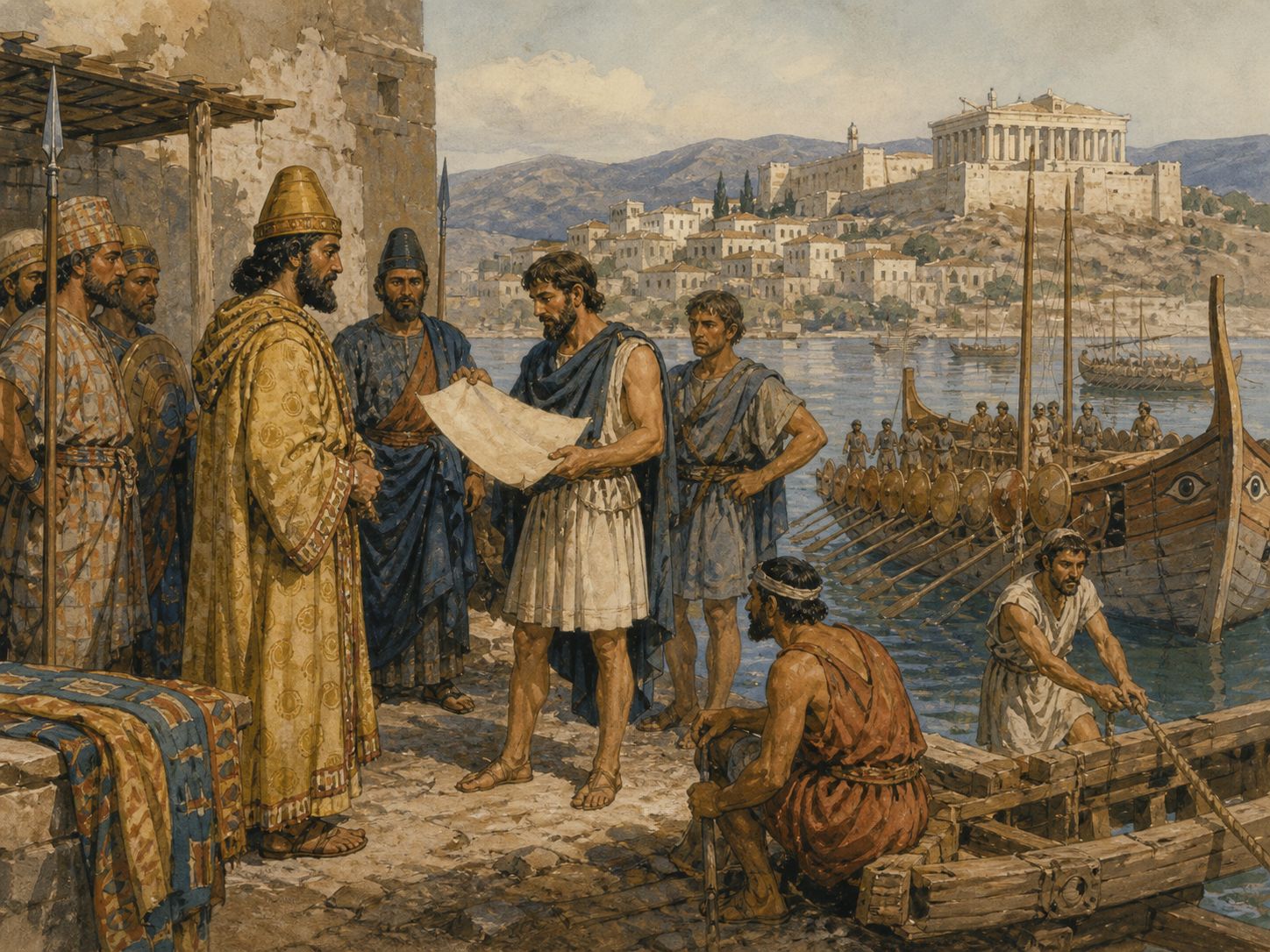
The Ionian Revolt, Darius’s campaigns, Marathon, Xerxes’ invasion, Thermopylae, Salamis, Plataea, and the Delian League’s counteroffensive unfolded in successive phases.
- The Ionian Revolt, Darius’s campaigns, Marathon, Xerxes’ invasion, Thermopylae, Salamis, Plataea, and the Delian League’s counteroffensive unfolded in successive phases.
- Conditions behind the action: Persian rule in Anatolia, demands for autonomy among Ionian cities, and rivalry among Greek poleis connected revolt and expedition into a wider regional conflict.
- Meaning of the turning point: A series of conflicts from the Ionian Revolt in 499 BCE to about 449 BCE, in which Achaemenid Persia and Greek city-states and leagues contested the Aegean and eastern Mediterranean.
Outcome
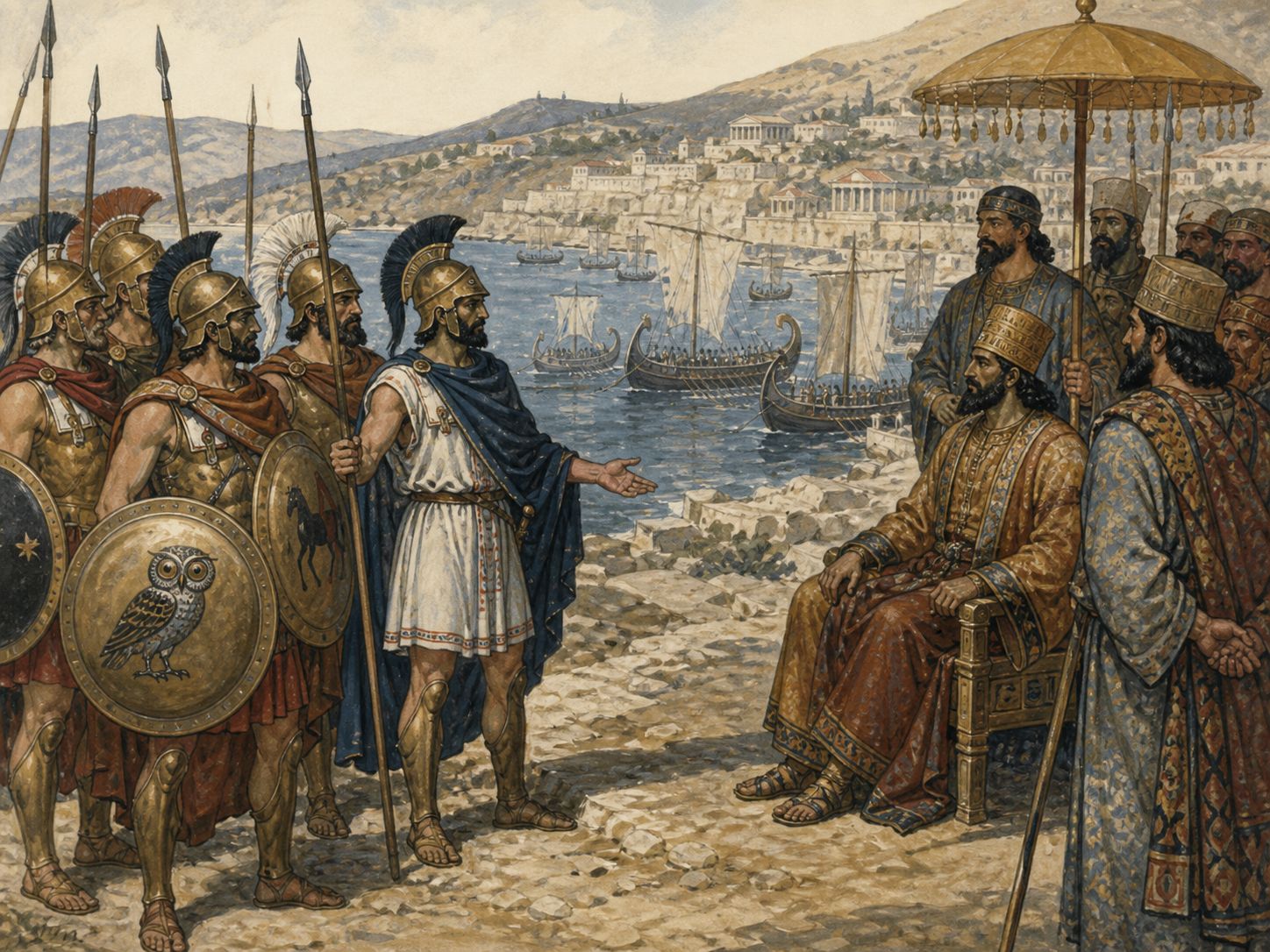
The Greek coalition prevented the conquest of mainland Greece, while Athenian maritime power expanded. A mid-fifth-century settlement ended the largest phase, though rivalry continued.
- The Greek coalition prevented the conquest of mainland Greece, while Athenian maritime power expanded.
- A mid-fifth-century settlement ended the largest phase, though rivalry continued.
- Process producing the result: The Ionian Revolt, Darius’s campaigns, Marathon, Xerxes’ invasion, Thermopylae, Salamis, Plataea, and the Delian League’s counteroffensive unfolded in successive phases.
Historical significance
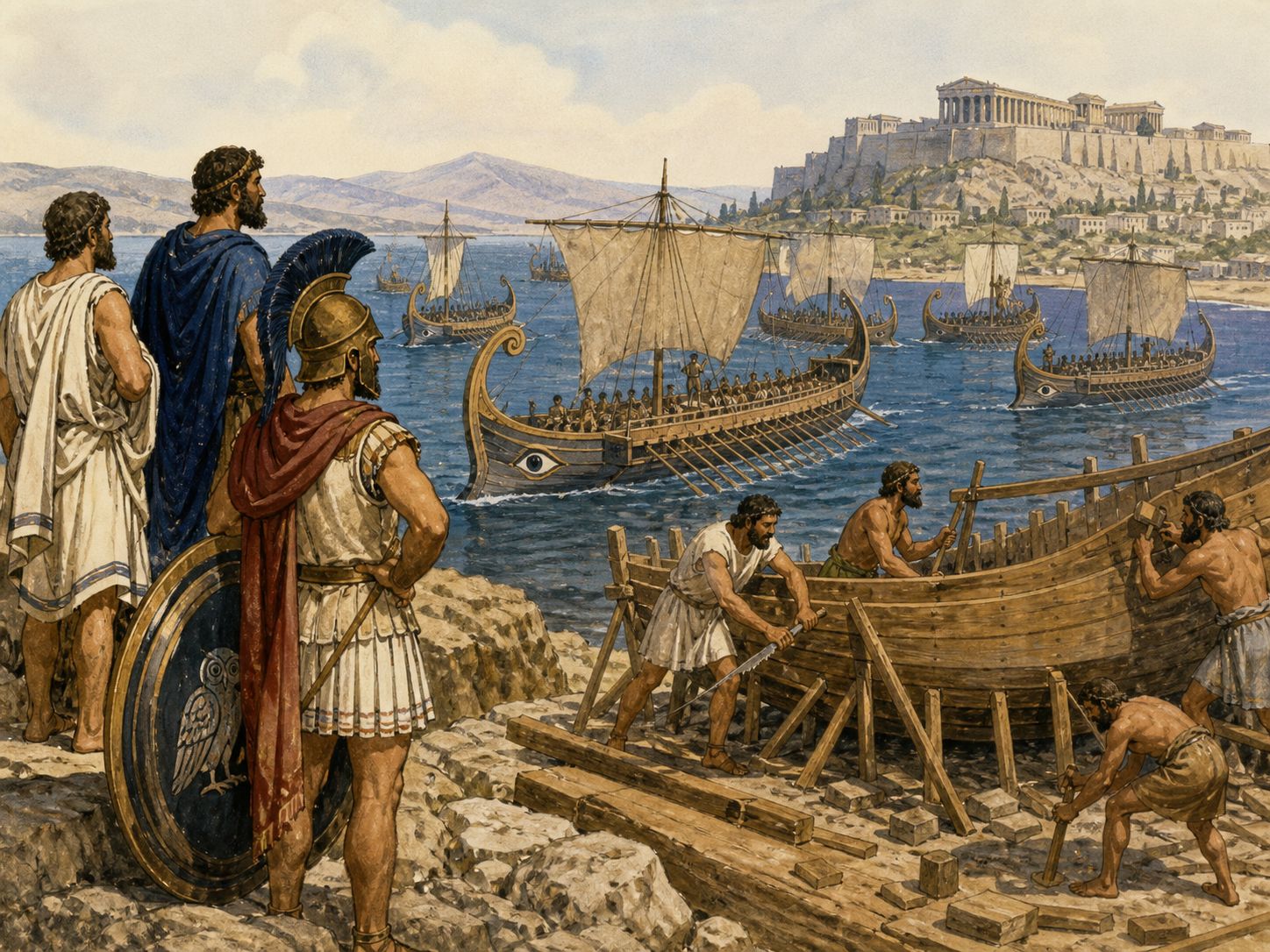
The wars were not a simple clash of East and West: imperial administration, autonomous cities, alliances, and maritime networks interacted across the ancient Mediterranean and western Asia.
- The wars were not a simple clash of East and West: imperial administration, autonomous cities, alliances, and maritime networks interacted across the ancient Mediterranean and western Asia.
- Immediate consequence: The Greek coalition prevented the conquest of mainland Greece, while Athenian maritime power expanded. A mid-fifth-century settlement ended the largest phase, though rivalry continued.
- Historical turning point: A series of conflicts from the Ionian Revolt in 499 BCE to about 449 BCE, in which Achaemenid Persia and Greek city-states and leagues contested the Aegean and eastern Mediterranean.


Related events
c. 499 BC
Ionian Revolt
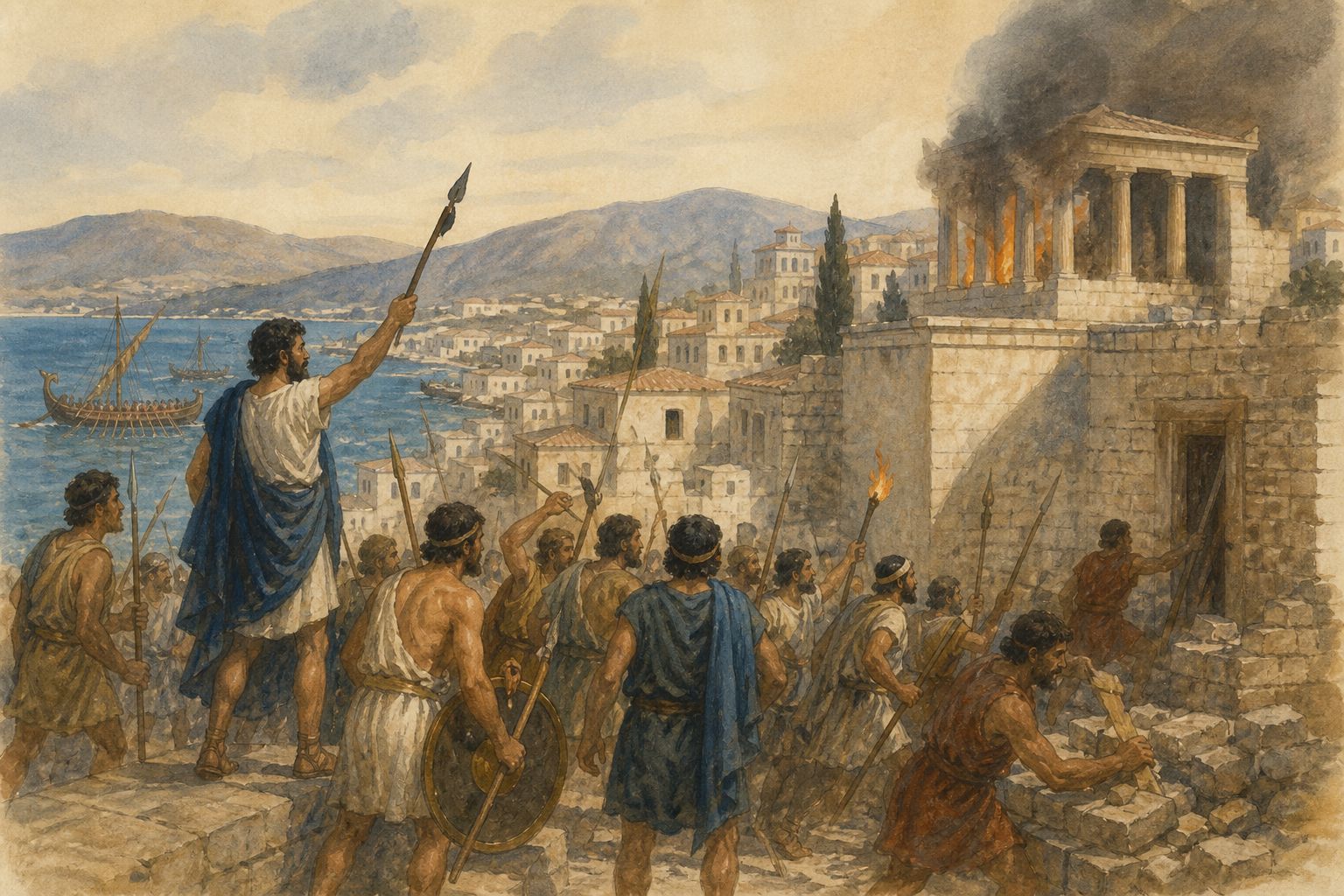
Ionian Revolt — Background: Persian rule in Anatolia, demands for autonomy among Ionian cities, and rivalry among Greek poleis connected revolt and expedition into a wider regional conflict.
490 BC
Battle of Marathon
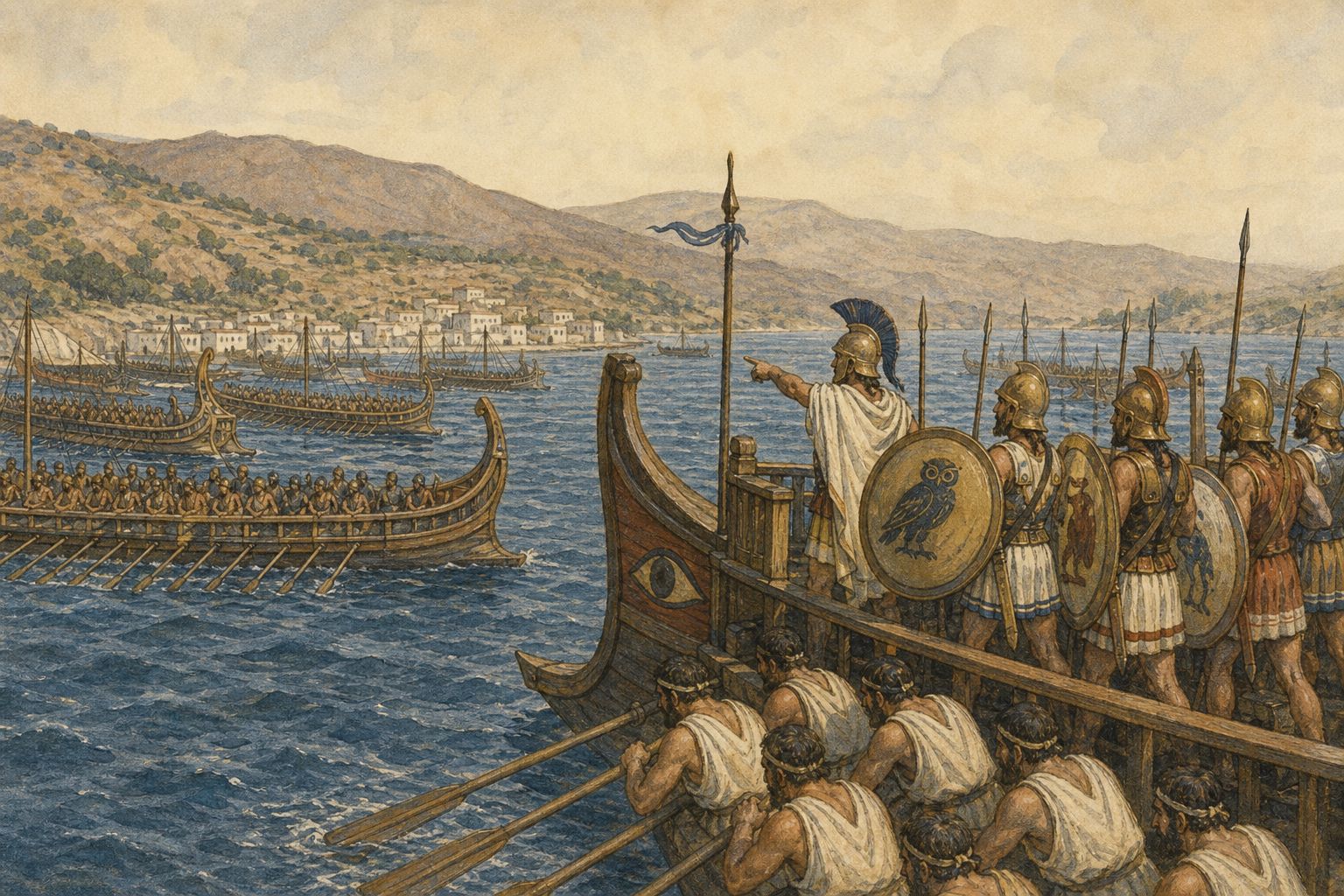
Battle of Marathon — Background: Persian rule in Anatolia, demands for autonomy among Ionian cities, and rivalry among Greek poleis connected revolt and expedition into a wider regional conflict.
480 BC
Thermopylae and Artemisium
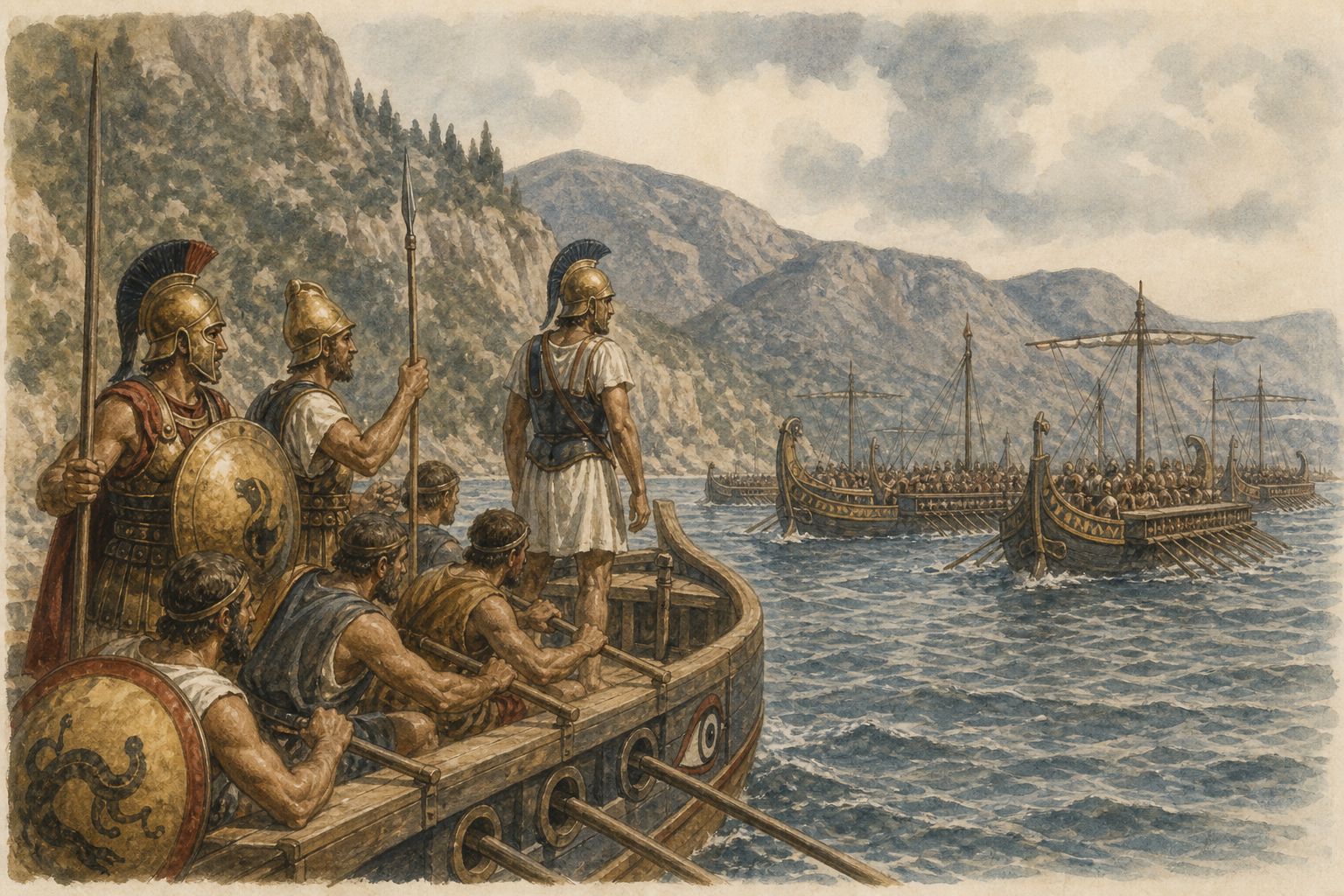
Thermopylae and Artemisium — Build-up: The Ionian Revolt, Darius’s campaigns, Marathon, Xerxes’ invasion, Thermopylae, Salamis, Plataea, and the Delian League’s counteroffensive unfolded in successive phases.
480 BC
Salamis and Plataea
Current event
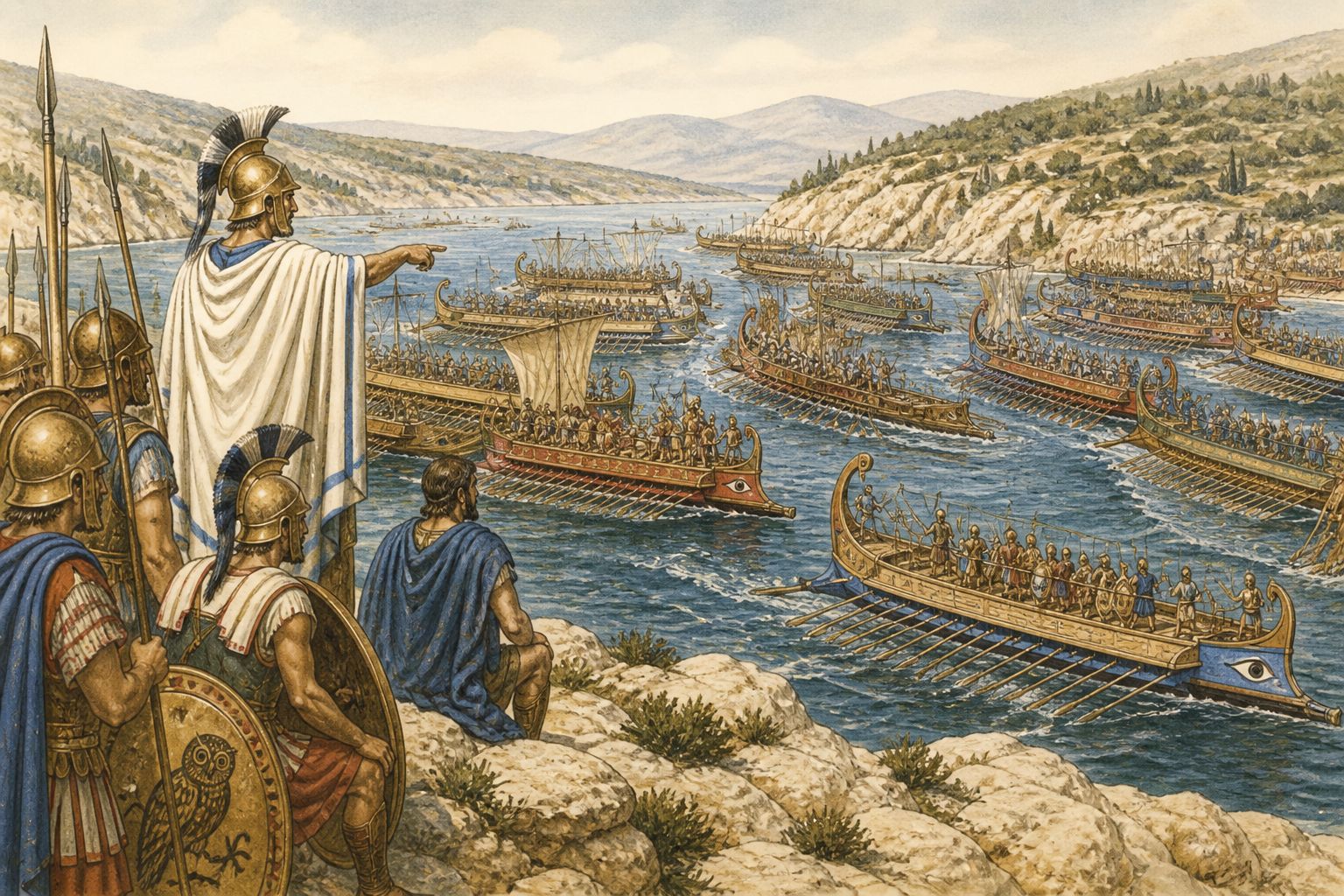
Salamis and Plataea — Central transition: A series of conflicts from the Ionian Revolt in 499 BCE to about 449 BCE, in which Achaemenid Persia and Greek city-states and leagues contested the Aegean and eastern Mediterranean.
c. 449 BC
Peace and historical memory
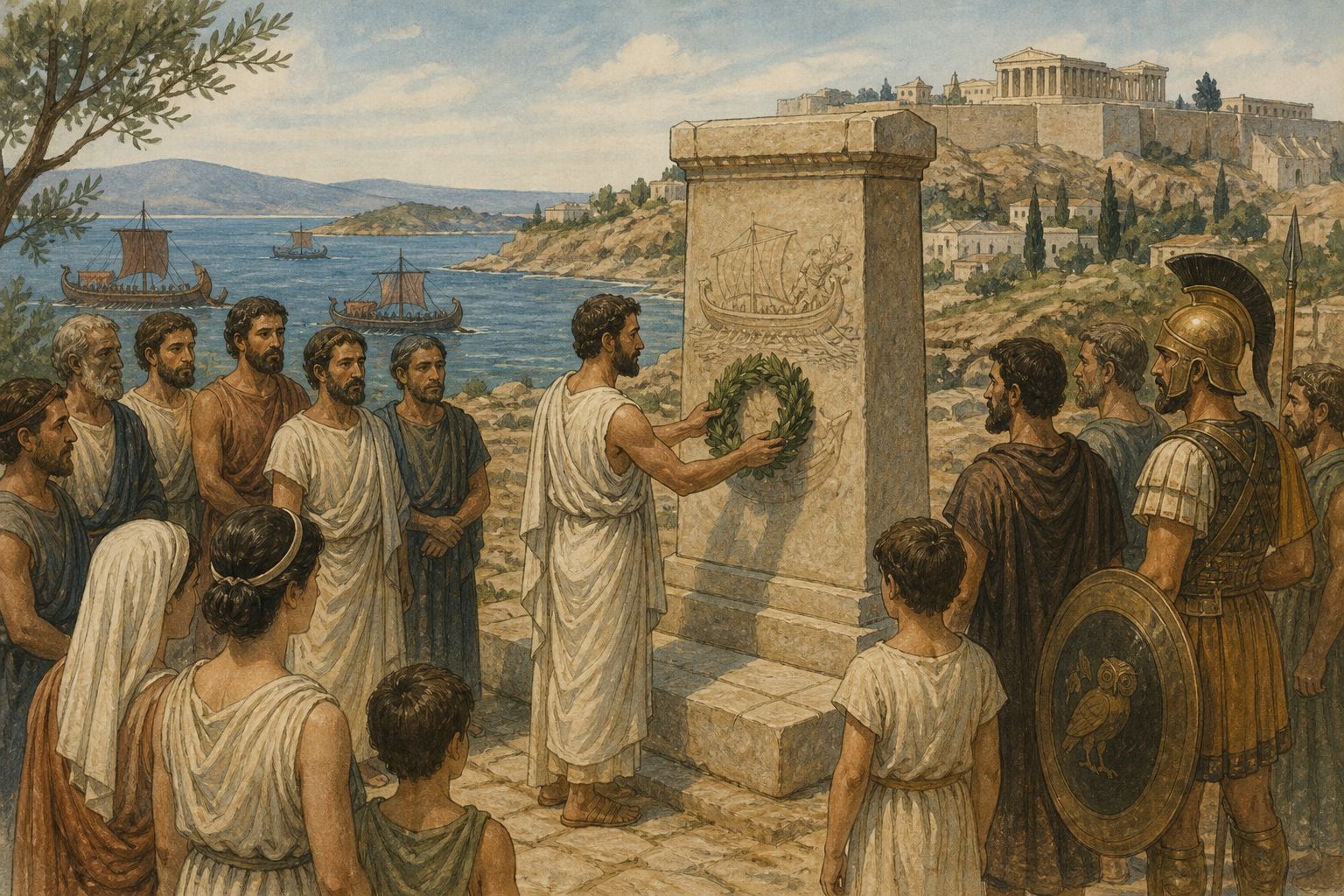
Peace and historical memory — Immediate result: The Greek coalition prevented the conquest of mainland Greece, while Athenian maritime power expanded. A mid-fifth-century settlement ended the largest phase, though rivalry continued.


Sources
- Greco-Persian Wars — Greco Persian Wars (Encyclopaedia Britannica)www.britannica.comThis Encyclopaedia Britannica resource supports the chronology, setting, and course of Greco-Persian Wars.
- Greco-Persian Wars — Hd Greco Persian Wars (The Metropolitan Museum of Art)www.metmuseum.orgThis The Metropolitan Museum of Art resource supports the chronology, setting, and course of Greco-Persian Wars.
- Greco-Persian Wars — Greco Persian Wars (World History Encyclopedia)www.worldhistory.orgThis World History Encyclopedia resource supports the chronology, setting, and course of Greco-Persian Wars.