
Foundation of the Hanseatic League
c. 1241
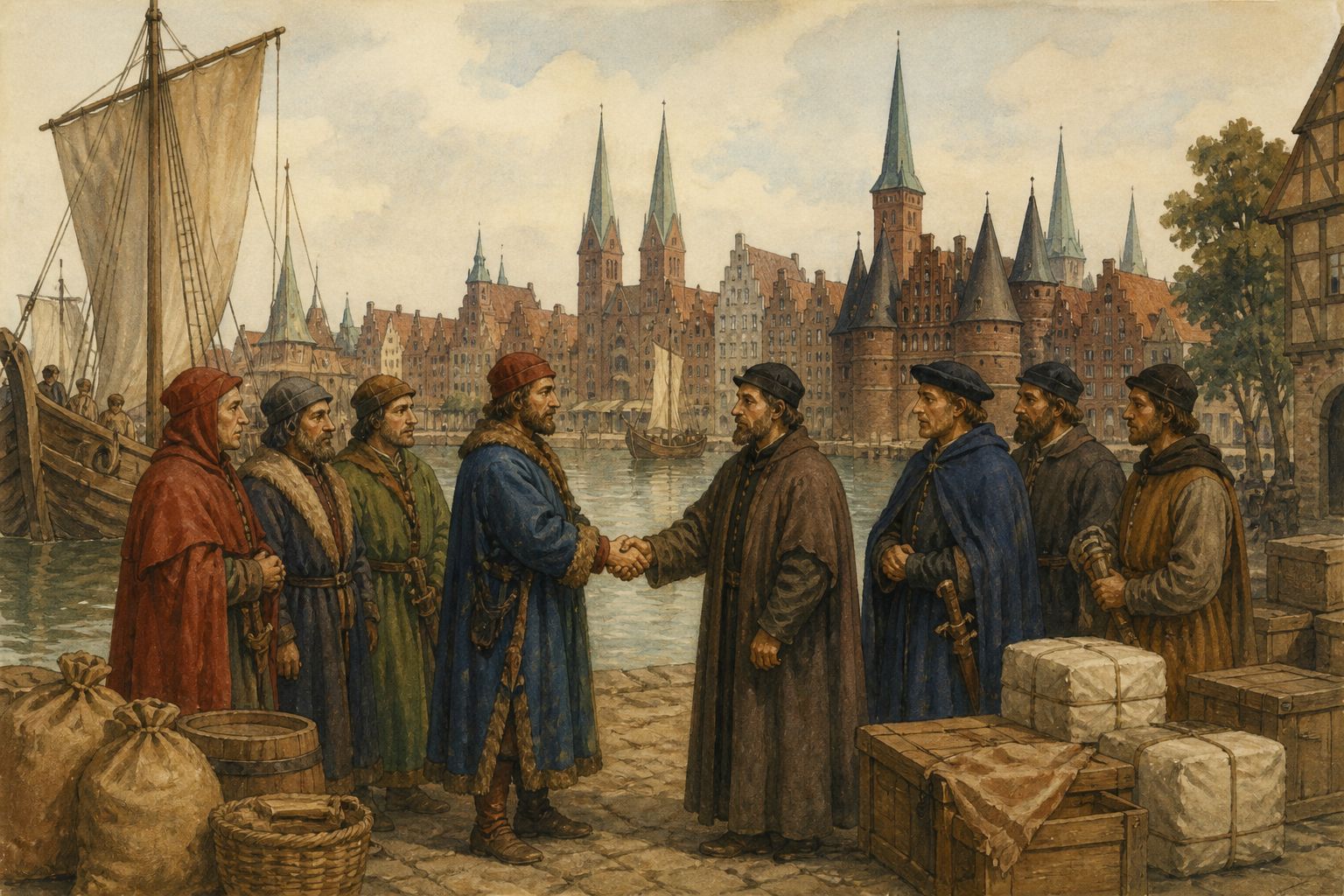
In the thirteenth century, towns and merchants around the North and Baltic Seas deepened cooperation in the trading network called the Hanseatic League.

- Period
- c. 1241
- Kind
- Political event
- Regions
- Europe
- Keywords
- Foundation of the Hanseatic League · political event · medieval · europe
Follow the story · Four stages
Background
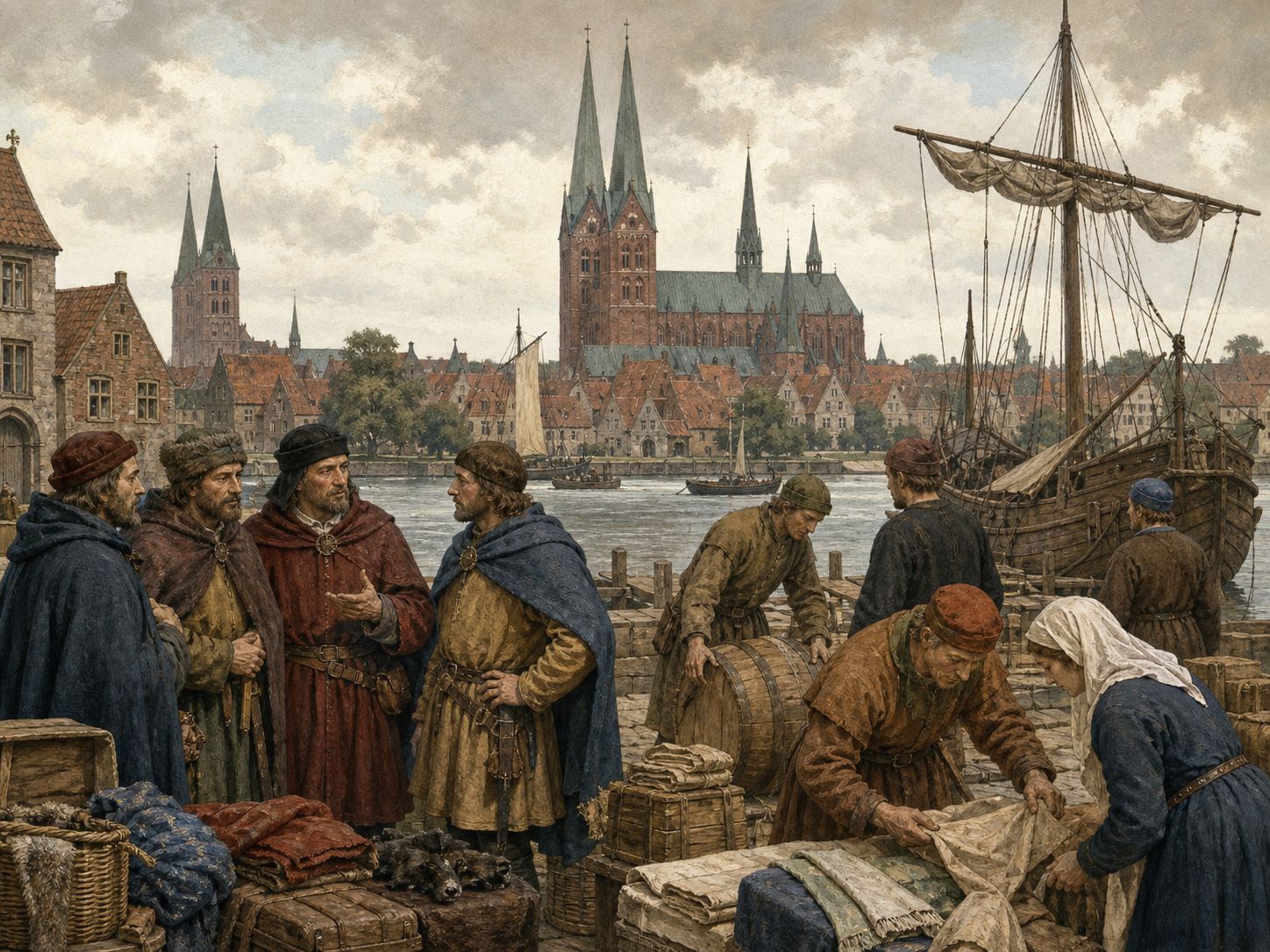
Long-distance trade faced piracy, tolls, port privileges, and seasonal hazards, limiting what individual towns could negotiate alone.
- Long-distance trade faced piracy, tolls, port privileges, and seasonal hazards, limiting what individual towns could negotiate alone.
- Core event: In the thirteenth century, towns and merchants around the North and Baltic Seas deepened cooperation in the trading network called the Hanseatic League.
- Connection to the next stage: Towns such as Lübeck and merchant groups coordinated northern routes through privileges, meetings, and dispute settlement.
Course
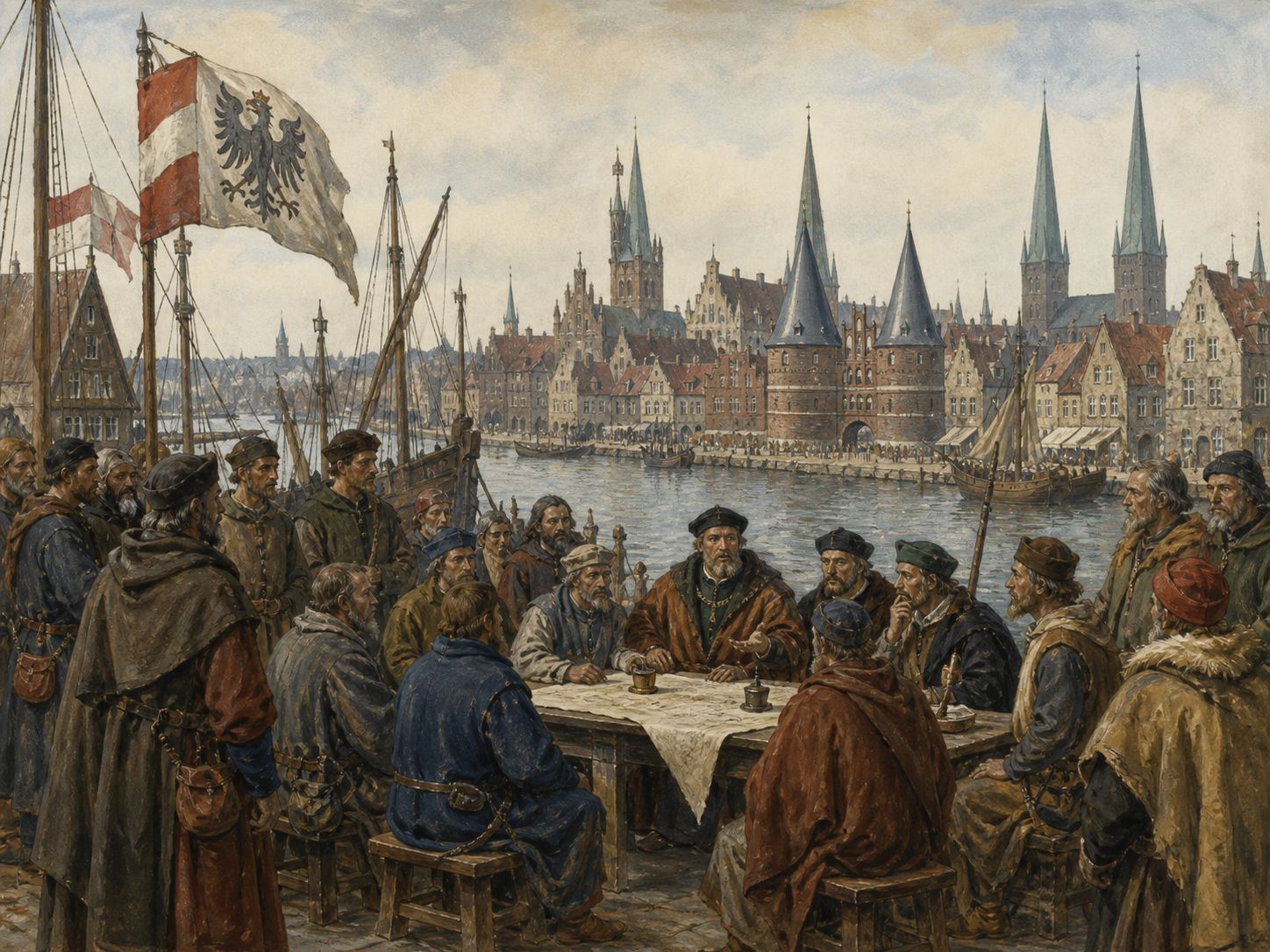
Towns such as Lübeck and merchant groups coordinated northern routes through privileges, meetings, and dispute settlement.
- Towns such as Lübeck and merchant groups coordinated northern routes through privileges, meetings, and dispute settlement.
- Conditions behind the action: Long-distance trade faced piracy, tolls, port privileges, and seasonal hazards, limiting what individual towns could negotiate alone.
- Meaning of the turning point: In the thirteenth century, towns and merchants around the North and Baltic Seas deepened cooperation in the trading network called the Hanseatic League.
Outcome
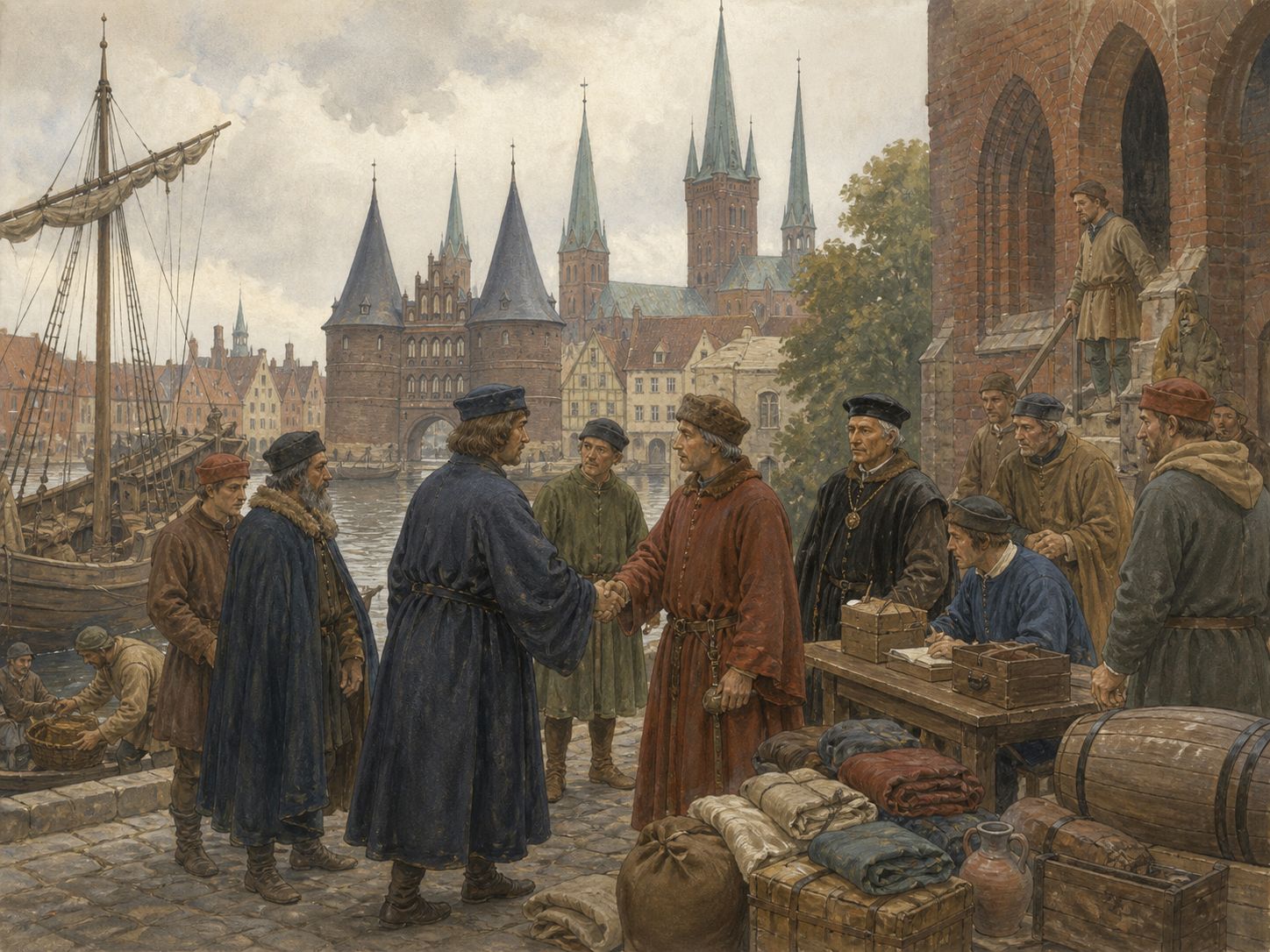
Wool, grain, timber, furs, and herring moved through ports and kontors, supporting urban wealth and autonomy.
- Wool, grain, timber, furs, and herring moved through ports and kontors, supporting urban wealth and autonomy.
- Process producing the result: Towns such as Lübeck and merchant groups coordinated northern routes through privileges, meetings, and dispute settlement.
- Question carried forward: The Hanse was not a centralized state but a flexible network maintained through negotiation among towns and merchants.
Historical significance
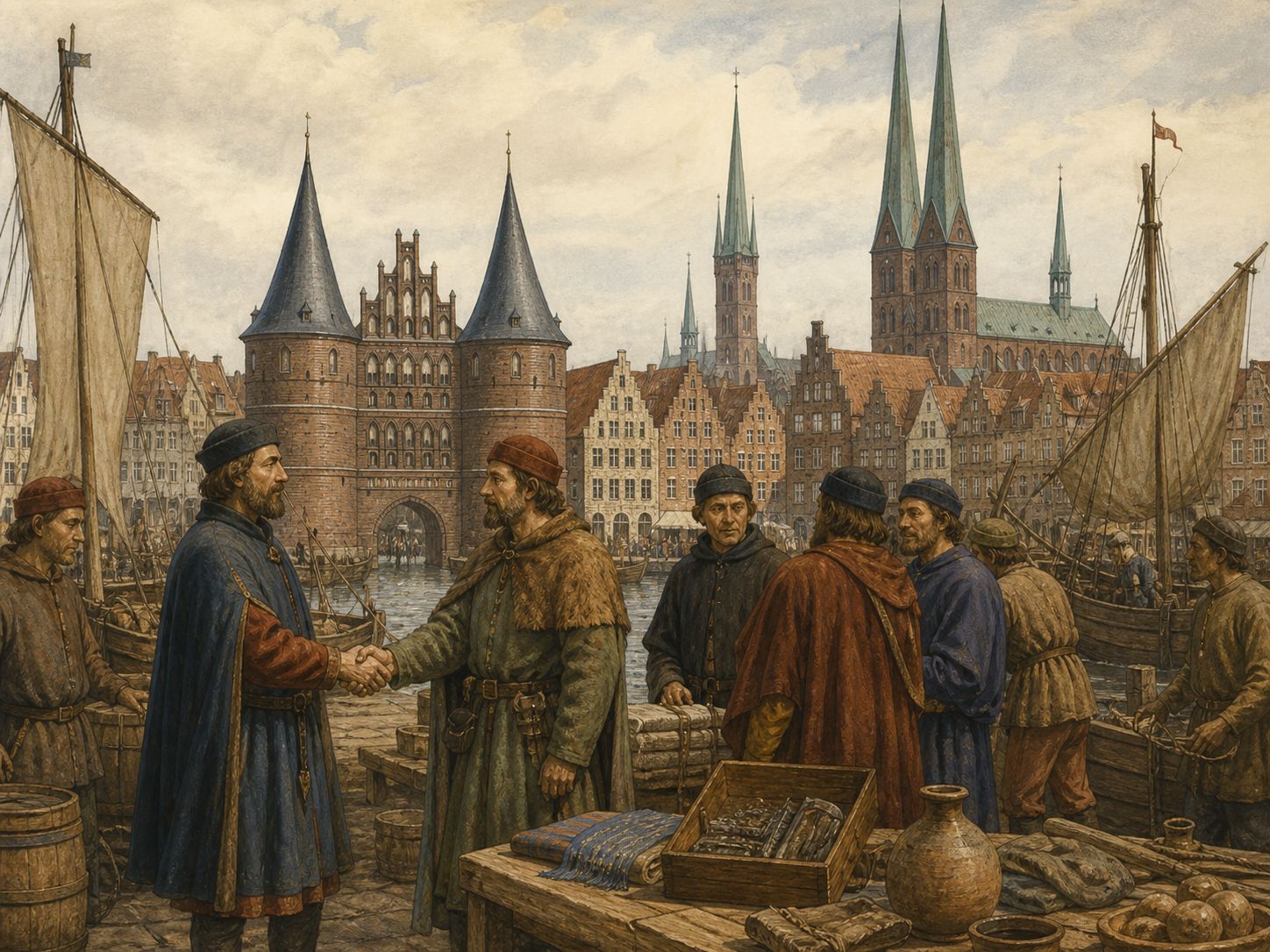
The Hanse was not a centralized state but a flexible network maintained through negotiation among towns and merchants.
- The Hanse was not a centralized state but a flexible network maintained through negotiation among towns and merchants.
- Immediate consequence: Wool, grain, timber, furs, and herring moved through ports and kontors, supporting urban wealth and autonomy.
- Historical turning point: In the thirteenth century, towns and merchants around the North and Baltic Seas deepened cooperation in the trading network called the Hanseatic League.


Related events
c. 1240
Prelude
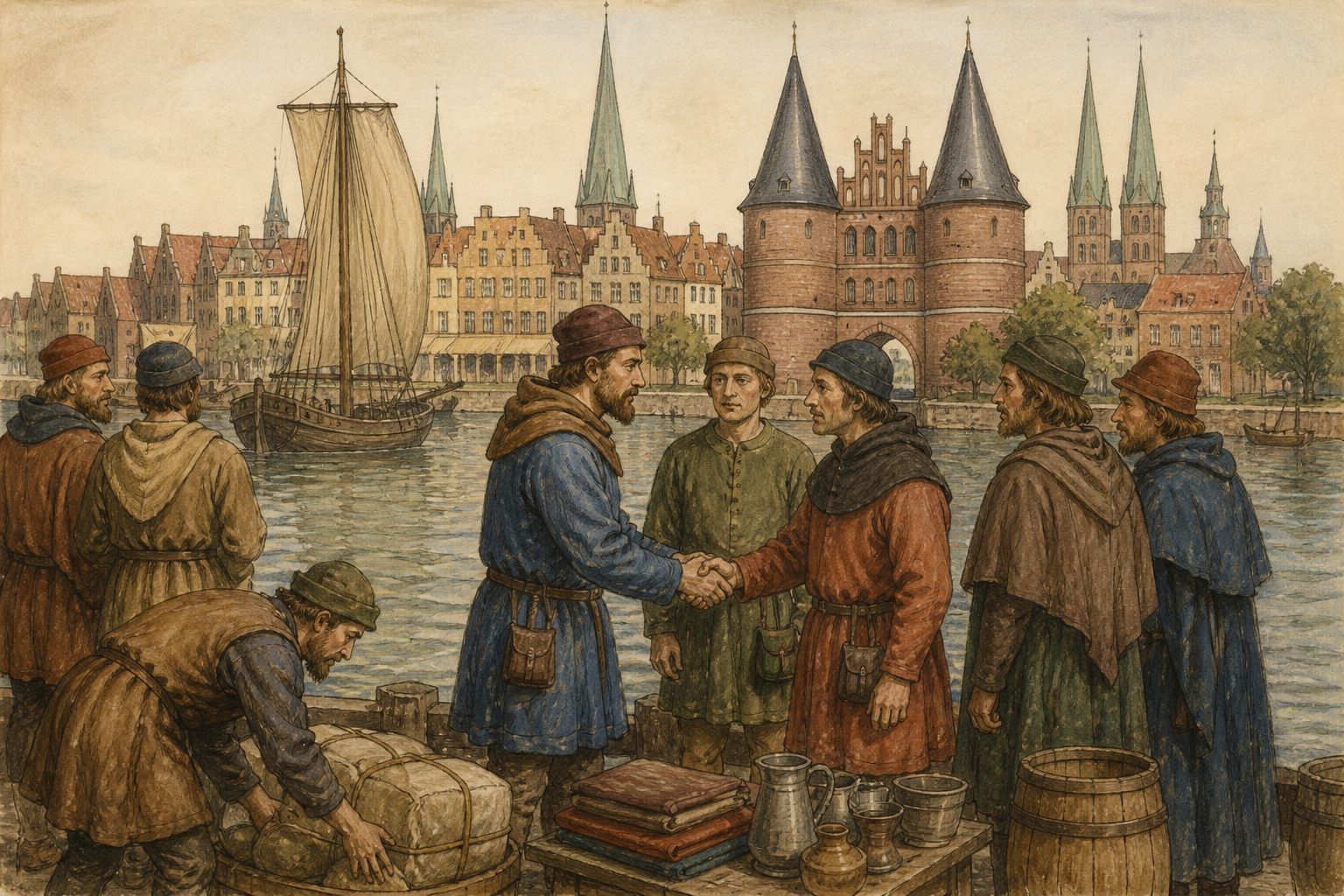
Prelude — Background: Long-distance trade faced piracy, tolls, port privileges, and seasonal hazards, limiting what individual towns could negotiate alone.
c. 1240
Turning point
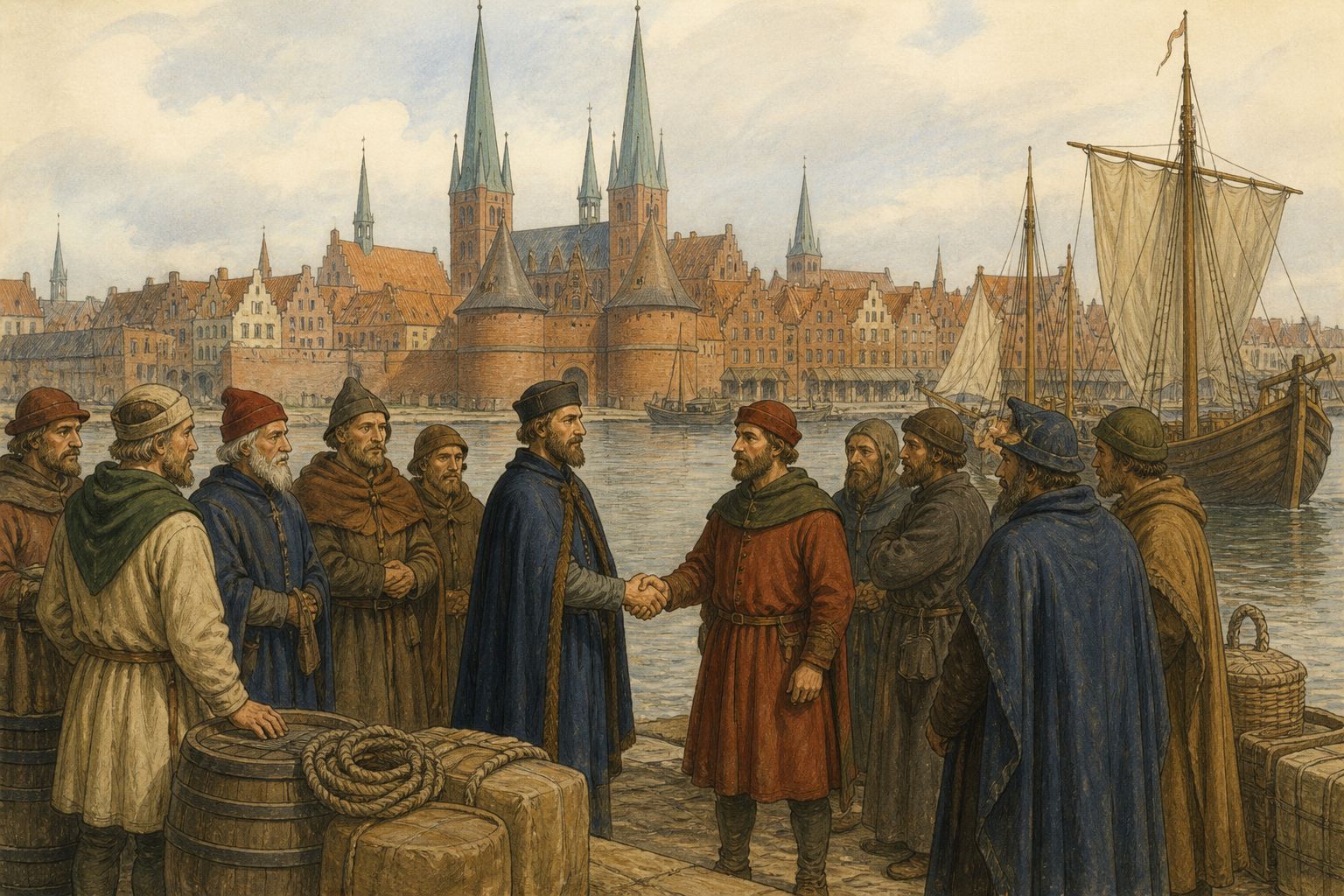
Turning point — Build-up: Towns such as Lübeck and merchant groups coordinated northern routes through privileges, meetings, and dispute settlement.
c. 1241
Foundation of the Hanseatic League
Current event
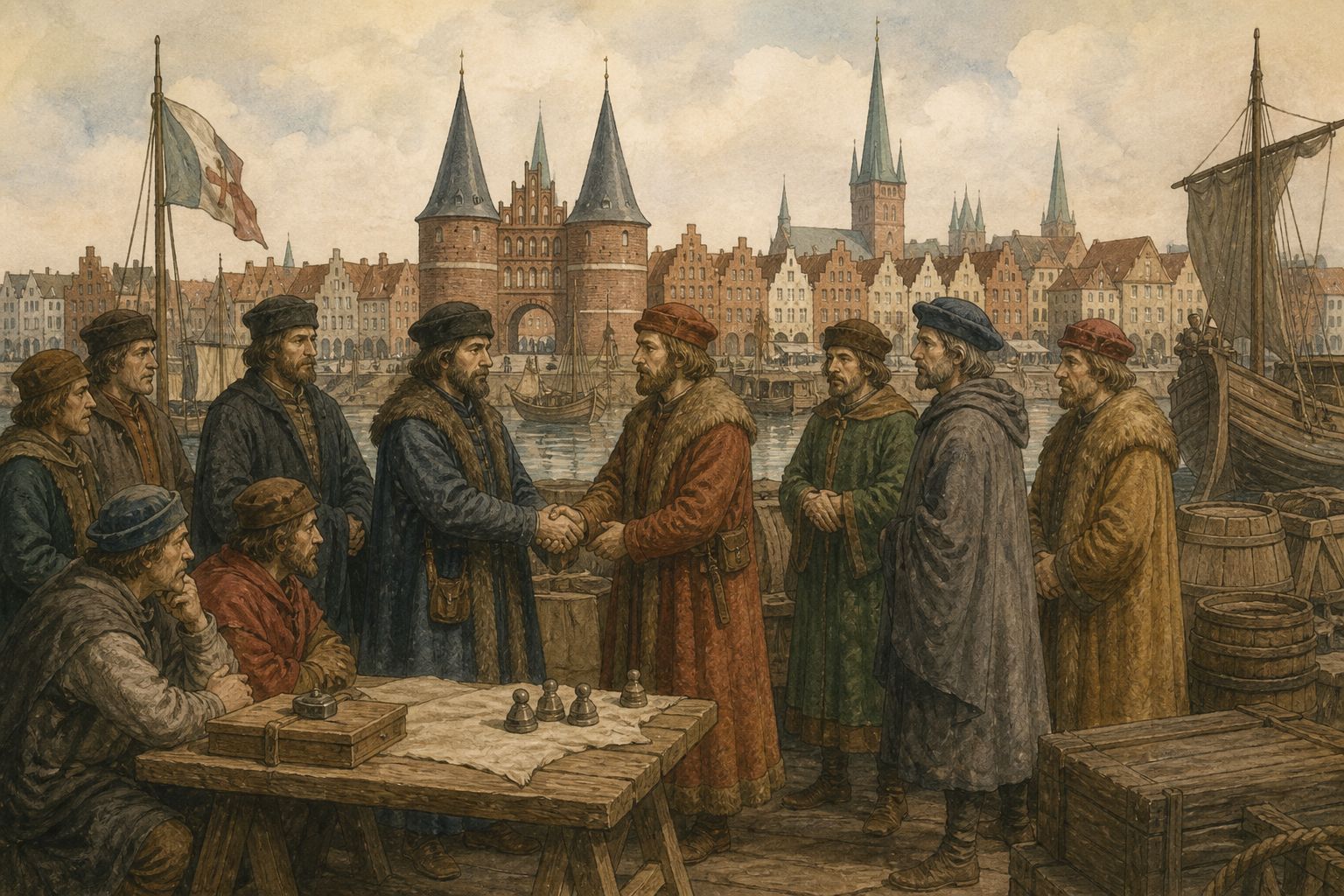
Foundation of the Hanseatic League — Central transition: In the thirteenth century, towns and merchants around the North and Baltic Seas deepened cooperation in the trading network called the Hanseatic League.
c. 1242
Immediate aftermath
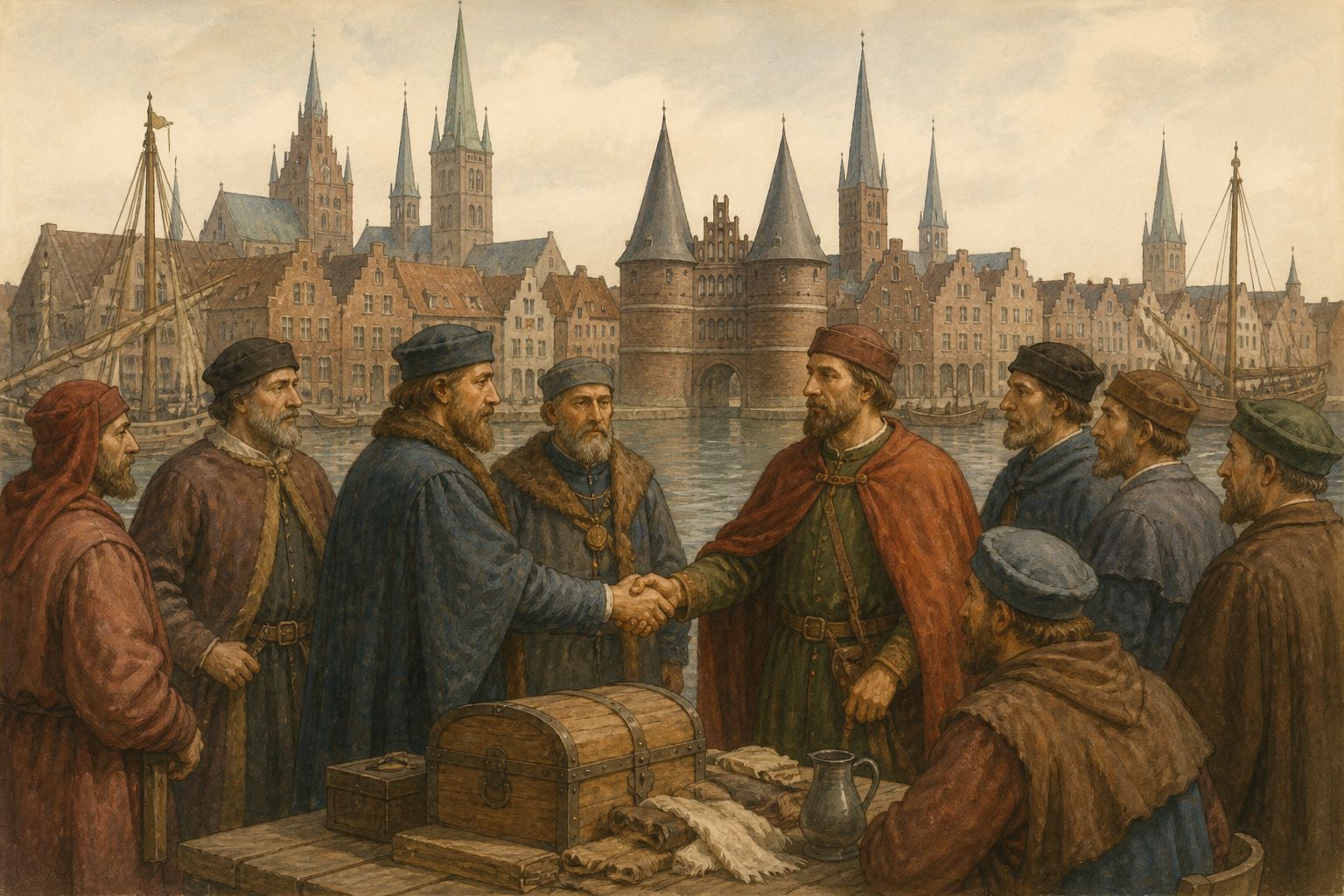
Immediate aftermath — Immediate result: Wool, grain, timber, furs, and herring moved through ports and kontors, supporting urban wealth and autonomy.
c. 1251
Long-term significance
Long-term significance — Long-term significance: The Hanse was not a centralized state but a flexible network maintained through negotiation among towns and merchants.


Sources
- Foundation of the Hanseatic League — Hanseatic League (Encyclopaedia Britannica)britannica.comThis Encyclopaedia Britannica resource supports the chronology, setting, and course of Foundation of the Hanseatic League.
- Foundation of the Hanseatic League — Hanseatic League (World History Encyclopedia)worldhistory.orgThis World History Encyclopedia resource supports the chronology, setting, and course of Foundation of the Hanseatic League.
- Foundation of the Hanseatic League — Hanseatic History (Hanse)hanse.orgThis Hanse resource supports the chronology, setting, and course of Foundation of the Hanseatic League.