
Hussite Wars
1419–1434
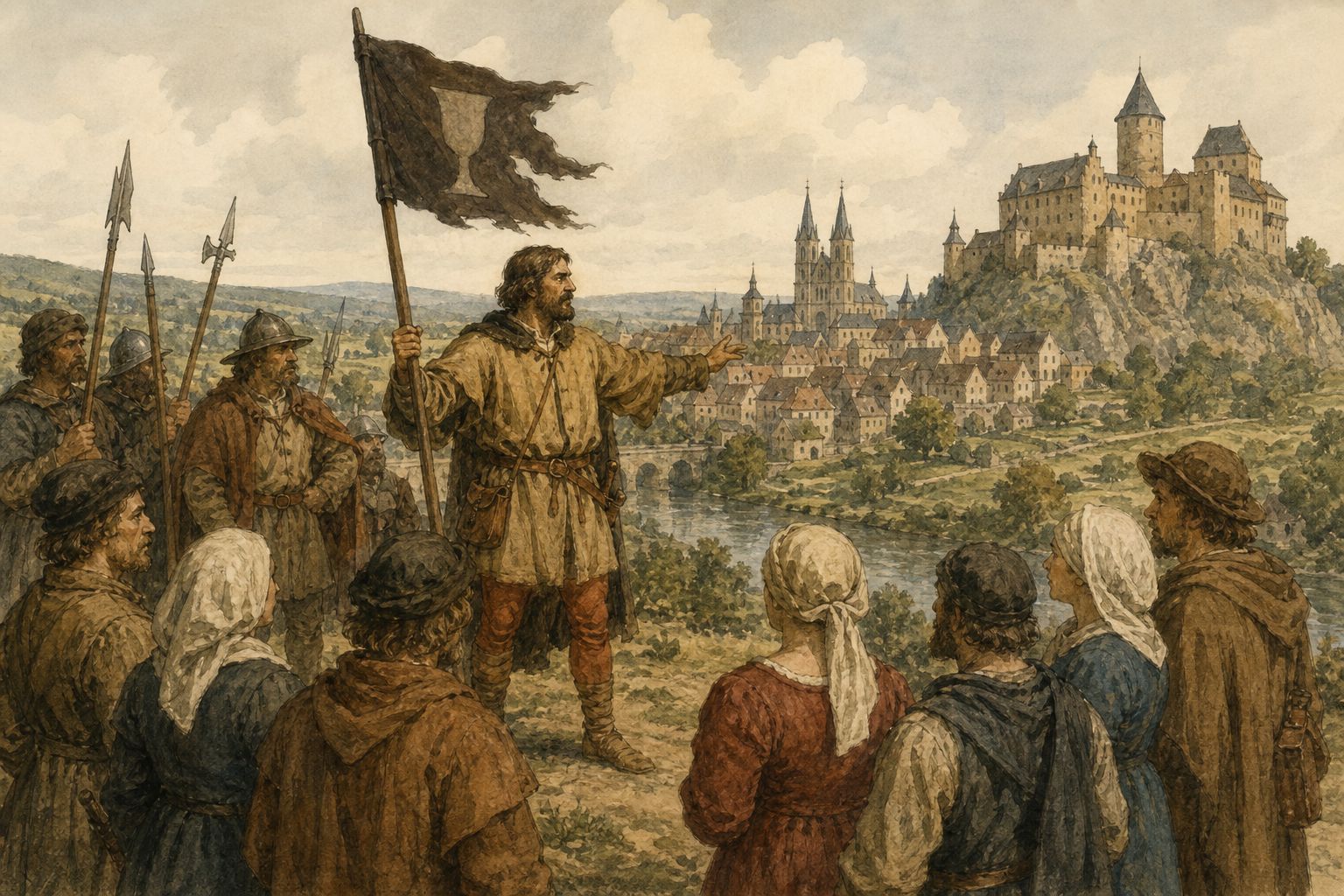
From 1419 to 1434, forces in Bohemia shaped by Jan Hus’s legacy and church reform fought imperial and papal coalitions.

- Period
- 1419–1434
- Kind
- War
- Regions
- Europe
- Keywords
- Hussite Wars · war · early modern · europe
Follow the story · Four stages
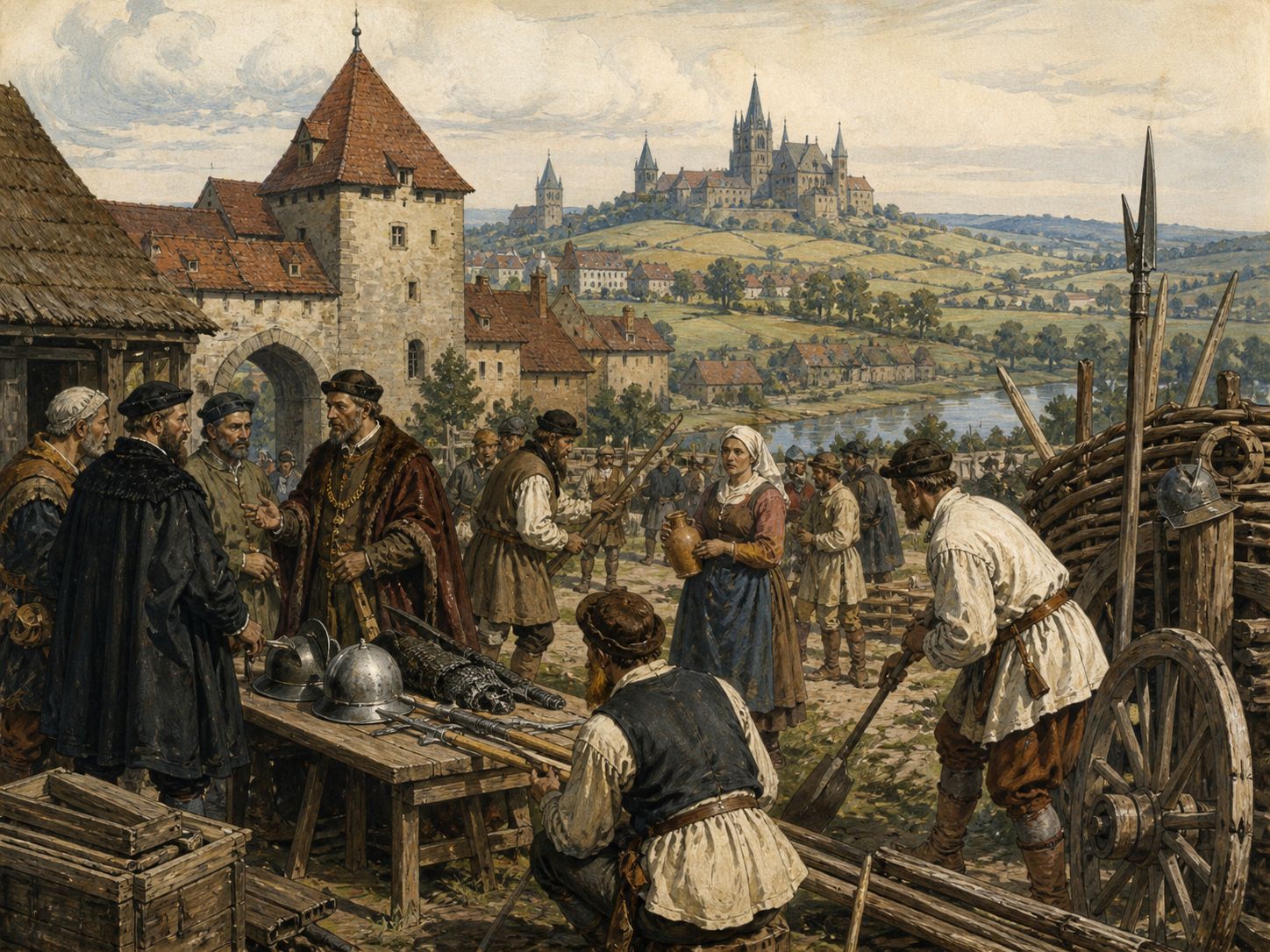
Background
After Hus’s execution, tensions grew over clerical corruption, communion, royal authority, and urban rights.
- After Hus’s execution, tensions grew over clerical corruption, communion, royal authority, and urban rights.
- Core event: From 1419 to 1434, forces in Bohemia shaped by Jan Hus’s legacy and church reform fought imperial and papal coalitions.
- Connection to the next stage: Radicals including the Taborites divided from moderates and used wagon forts and infantry to repel crusading armies.
Course
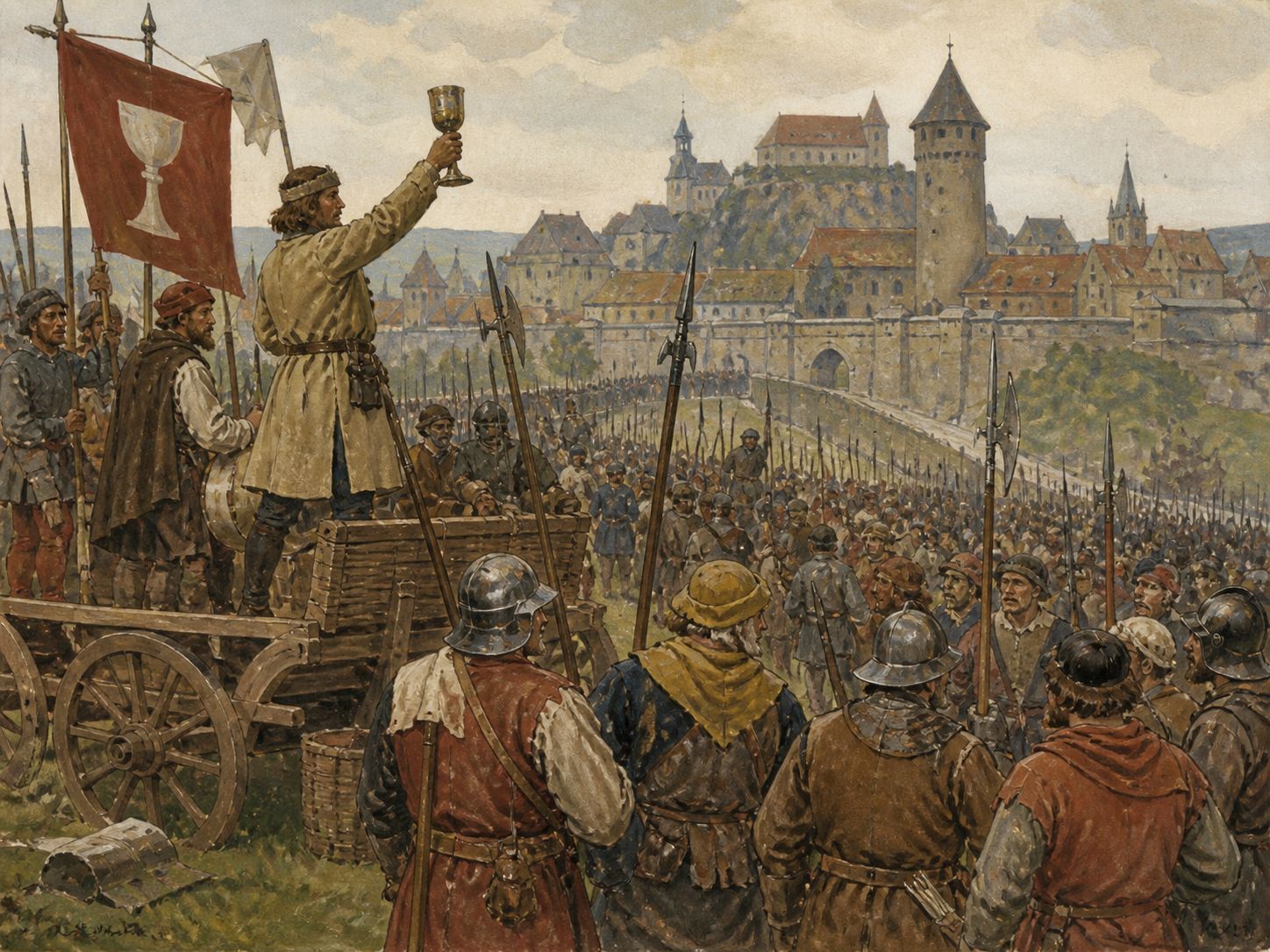
Radicals including the Taborites divided from moderates and used wagon forts and infantry to repel crusading armies.
- Radicals including the Taborites divided from moderates and used wagon forts and infantry to repel crusading armies.
- Conditions behind the action: After Hus’s execution, tensions grew over clerical corruption, communion, royal authority, and urban rights.
- Meaning of the turning point: From 1419 to 1434, forces in Bohemia shaped by Jan Hus’s legacy and church reform fought imperial and papal coalitions.
Outcome
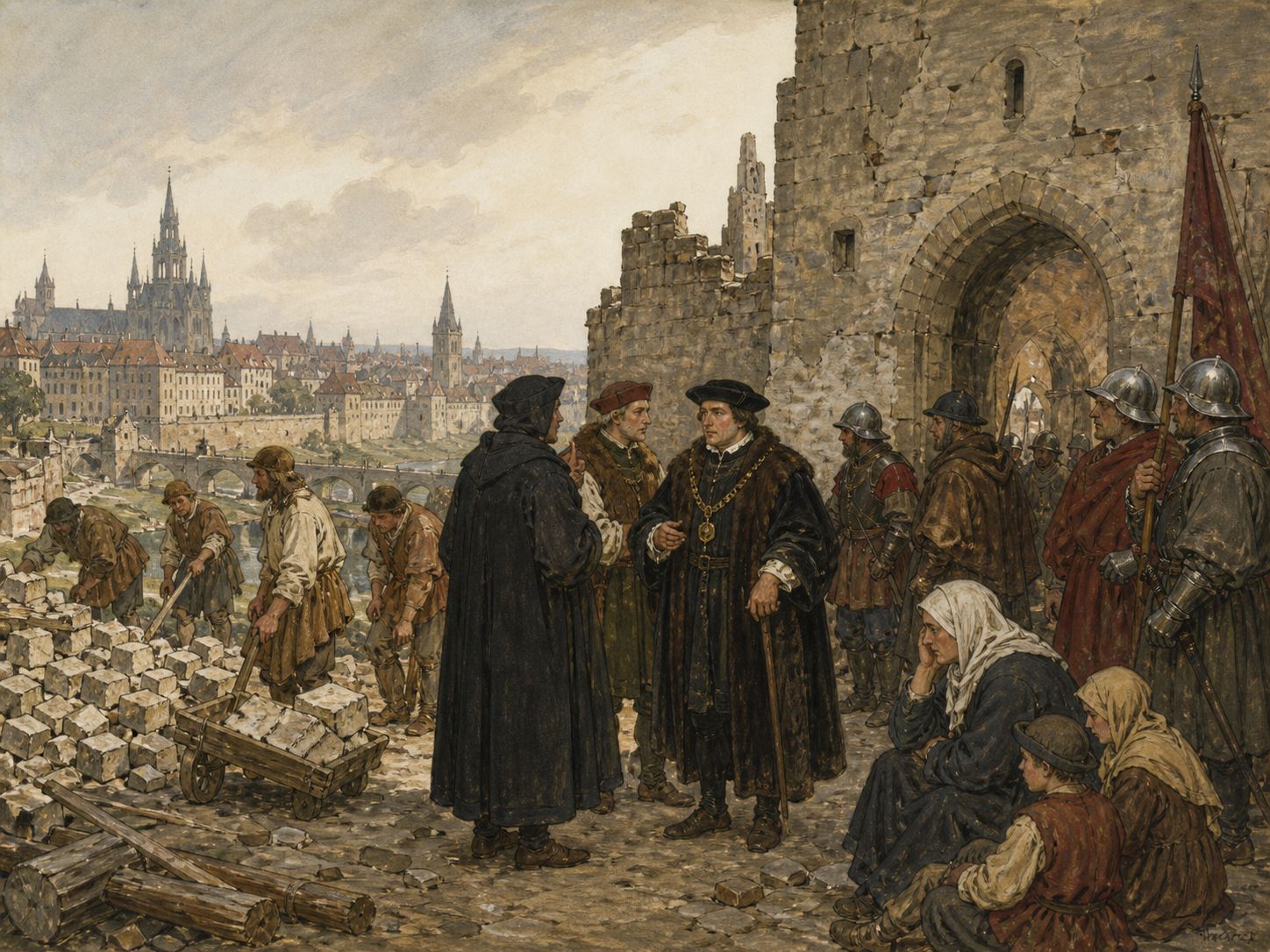
The radicals were defeated at Lipany, while limited reform was recognized through the Compactata of Basel.
- The radicals were defeated at Lipany, while limited reform was recognized through the Compactata of Basel.
- Process producing the result: Radicals including the Taborites divided from moderates and used wagon forts and infantry to repel crusading armies.
- Question carried forward: The Hussite Wars joined reform, political identity, urban autonomy, and military innovation in a late medieval crisis.
Historical significance
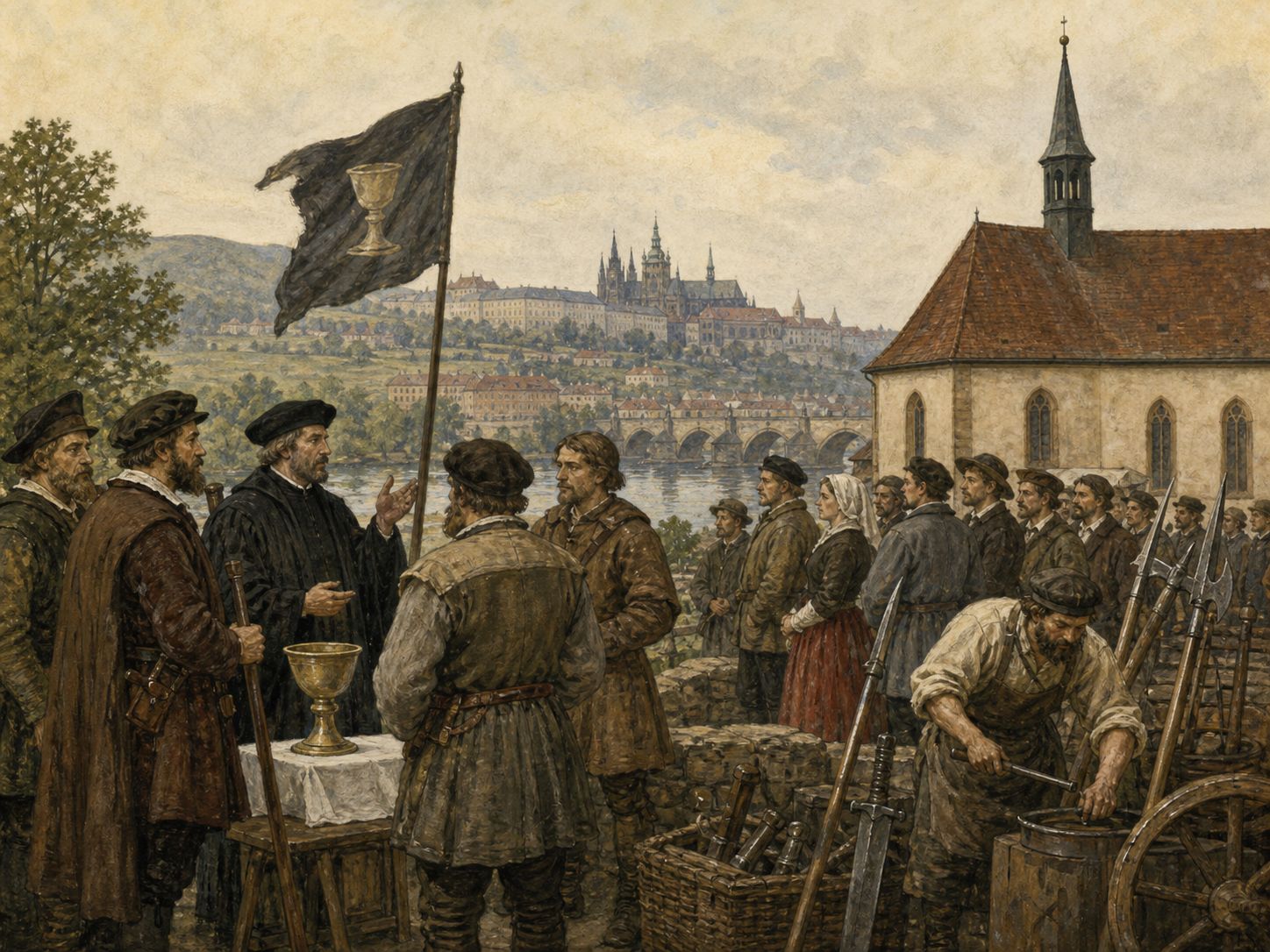
The Hussite Wars joined reform, political identity, urban autonomy, and military innovation in a late medieval crisis.
- The Hussite Wars joined reform, political identity, urban autonomy, and military innovation in a late medieval crisis.
- Immediate consequence: The radicals were defeated at Lipany, while limited reform was recognized through the Compactata of Basel.
- Historical turning point: From 1419 to 1434, forces in Bohemia shaped by Jan Hus’s legacy and church reform fought imperial and papal coalitions.


Related events
c. 1419
Prelude
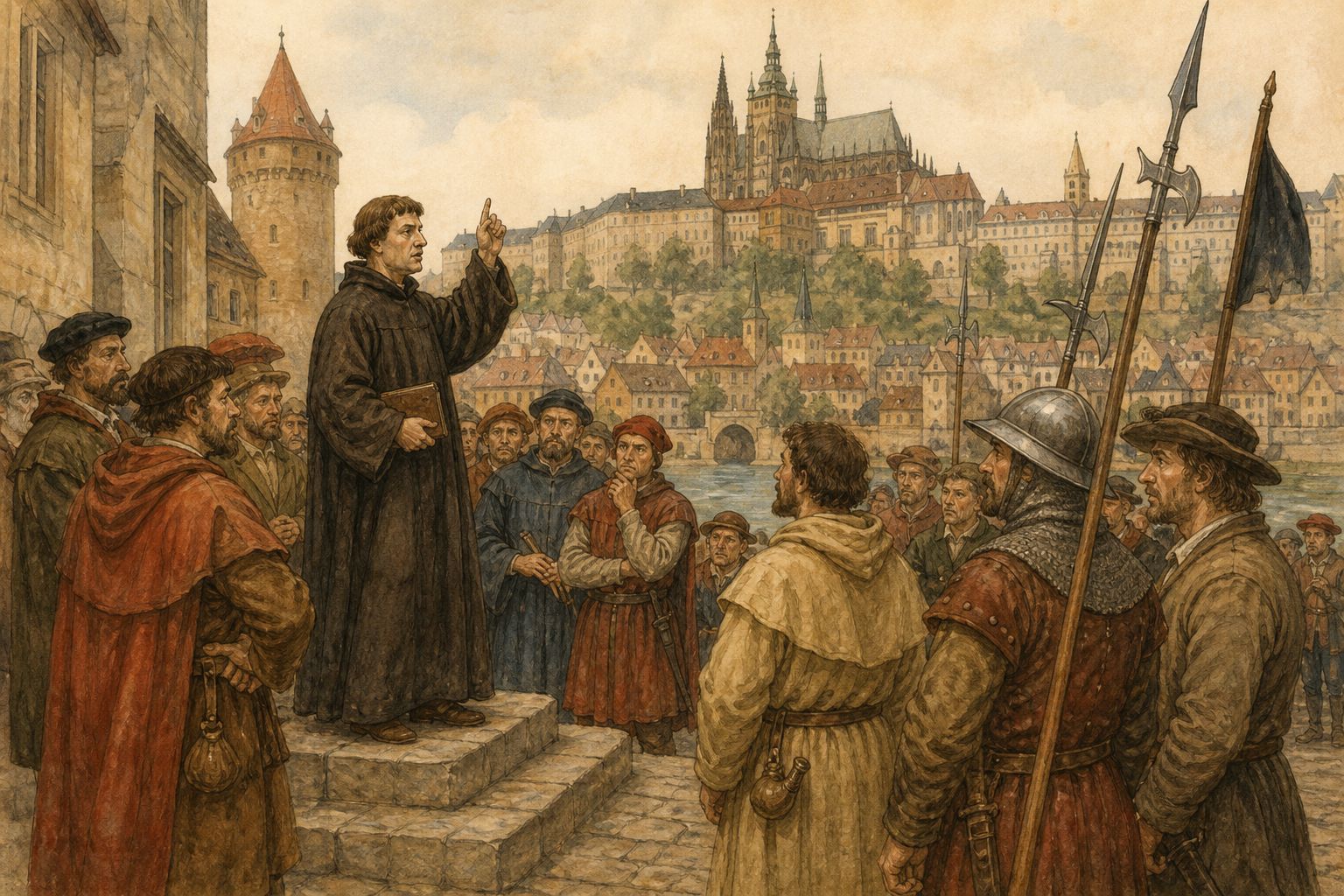
Prelude — Background: After Hus’s execution, tensions grew over clerical corruption, communion, royal authority, and urban rights.
c. 1419
Turning point
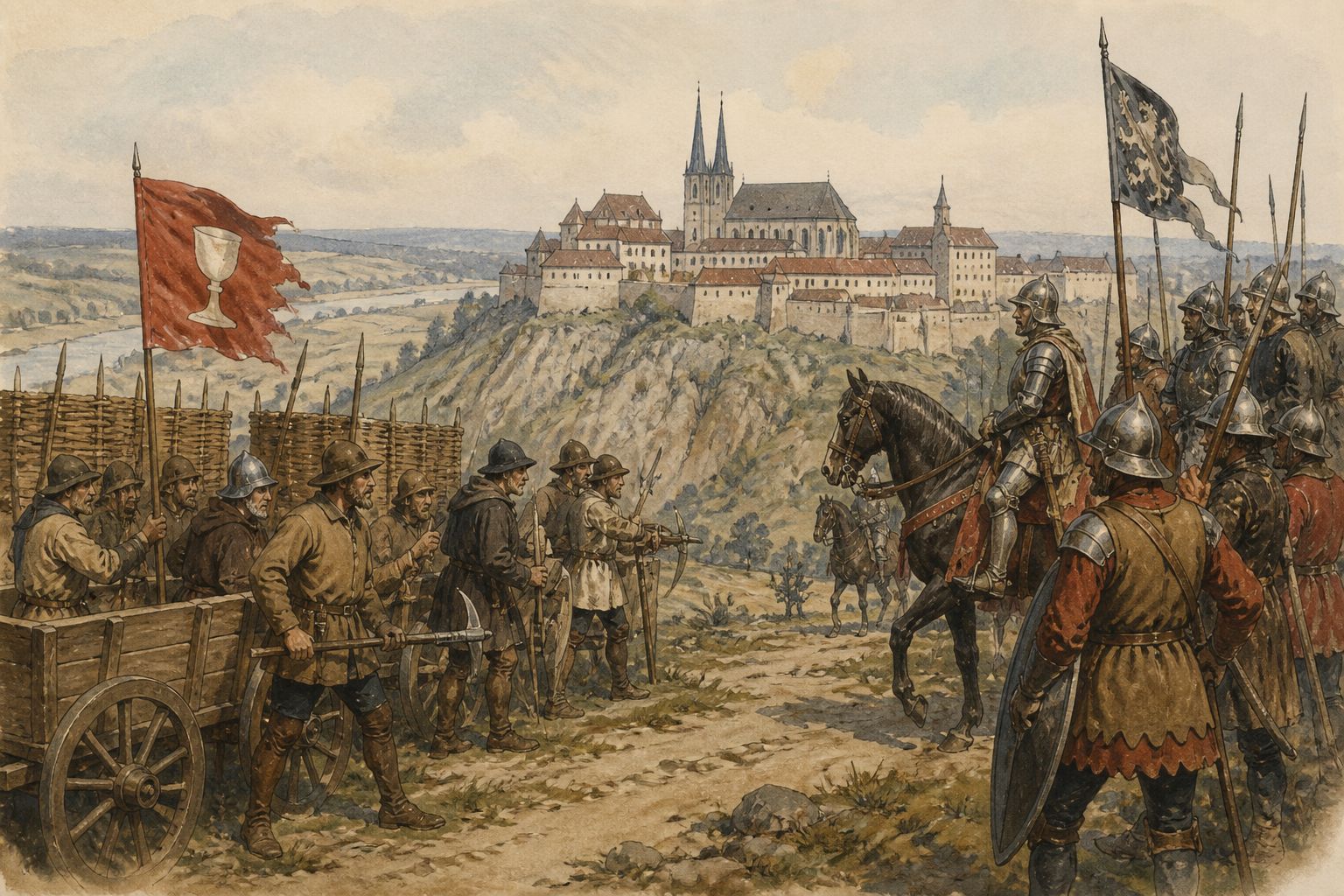
Turning point — Build-up: Radicals including the Taborites divided from moderates and used wagon forts and infantry to repel crusading armies.
1419–1434
Current phase
Current event
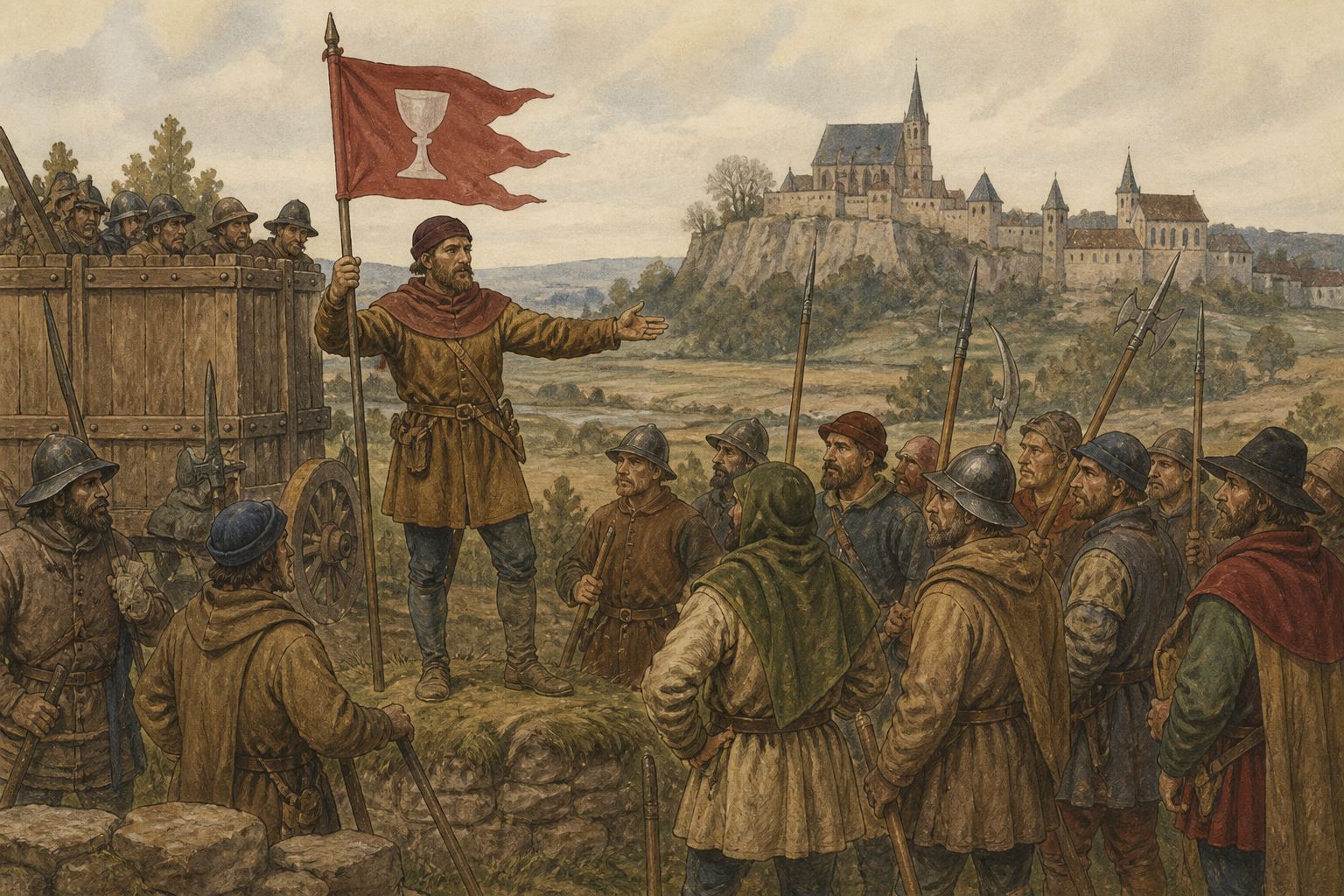
Current phase — Central transition: From 1419 to 1434, forces in Bohemia shaped by Jan Hus’s legacy and church reform fought imperial and papal coalitions.
c. 1435
Immediate aftermath
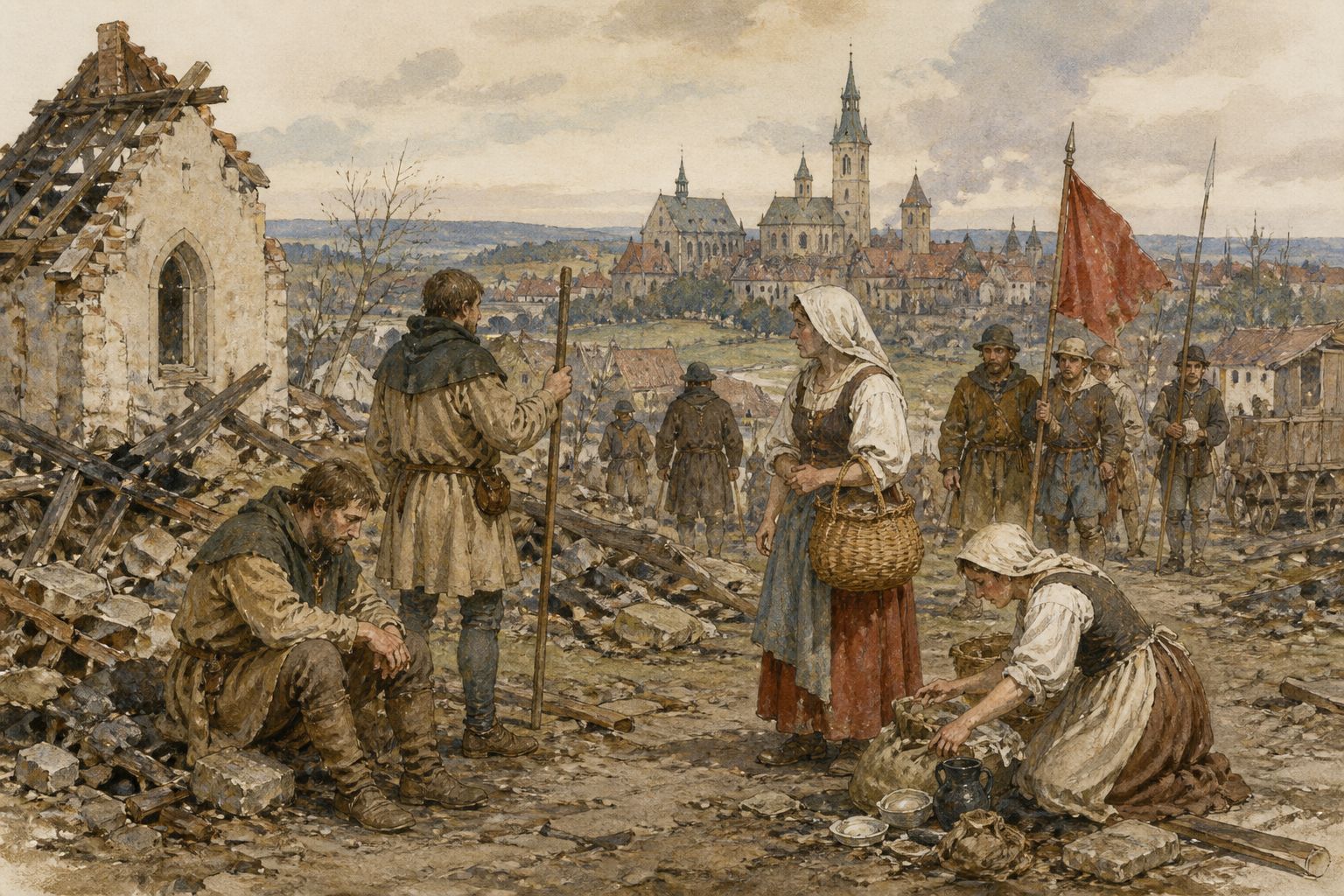
Immediate aftermath — Immediate result: The radicals were defeated at Lipany, while limited reform was recognized through the Compactata of Basel.
c. 1444
Long-term significance
Long-term significance — Long-term significance: The Hussite Wars joined reform, political identity, urban autonomy, and military innovation in a late medieval crisis.


Sources
- Hussite Wars — Hussite Wars (Encyclopaedia Britannica)britannica.comThis Encyclopaedia Britannica resource supports the chronology, setting, and course of Hussite Wars.
- Hussite Wars — Hussite Wars (Encyclopedia)encyclopedia.comThis Encyclopedia resource supports the chronology, setting, and course of Hussite Wars.
- Hussite Wars — 0F7D1BFA6E0A1A3AA1F442C0E3E0F6A3 (Cambridge University Press)cambridge.orgThis Cambridge University Press resource supports the chronology, setting, and course of Hussite Wars.