Islamic Conquest of Iberia
711–718
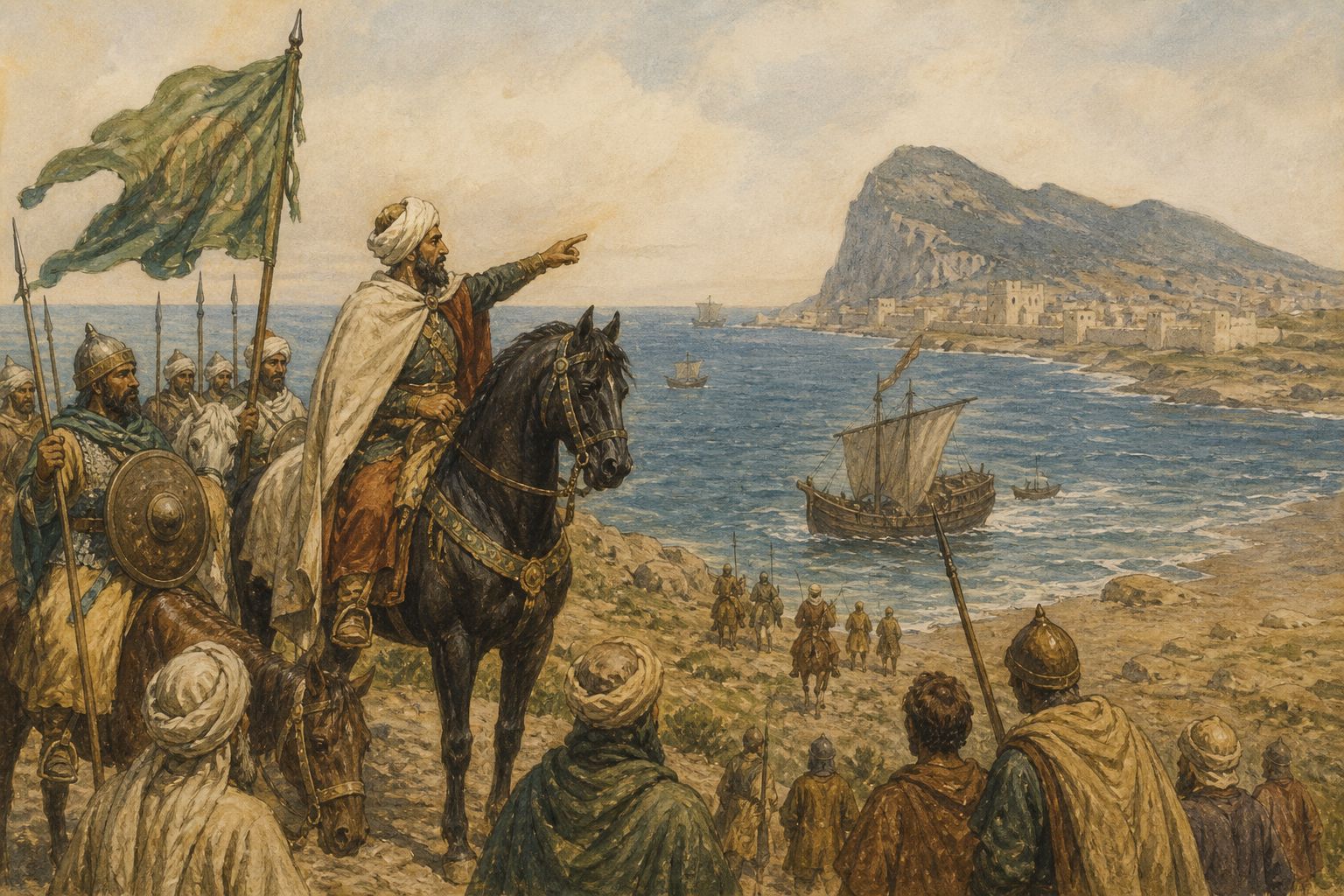
After 711, forces crossing from North Africa defeated the Visigothic kingdom and brought much of Iberia under Islamic rule.

- Period
- 711–718
- Kind
- Political event
- Regions
- Europe, Africa
- Keywords
- Islamic Conquest of Iberia · political event · medieval · europe · africa
Follow the story · Four stages
Background
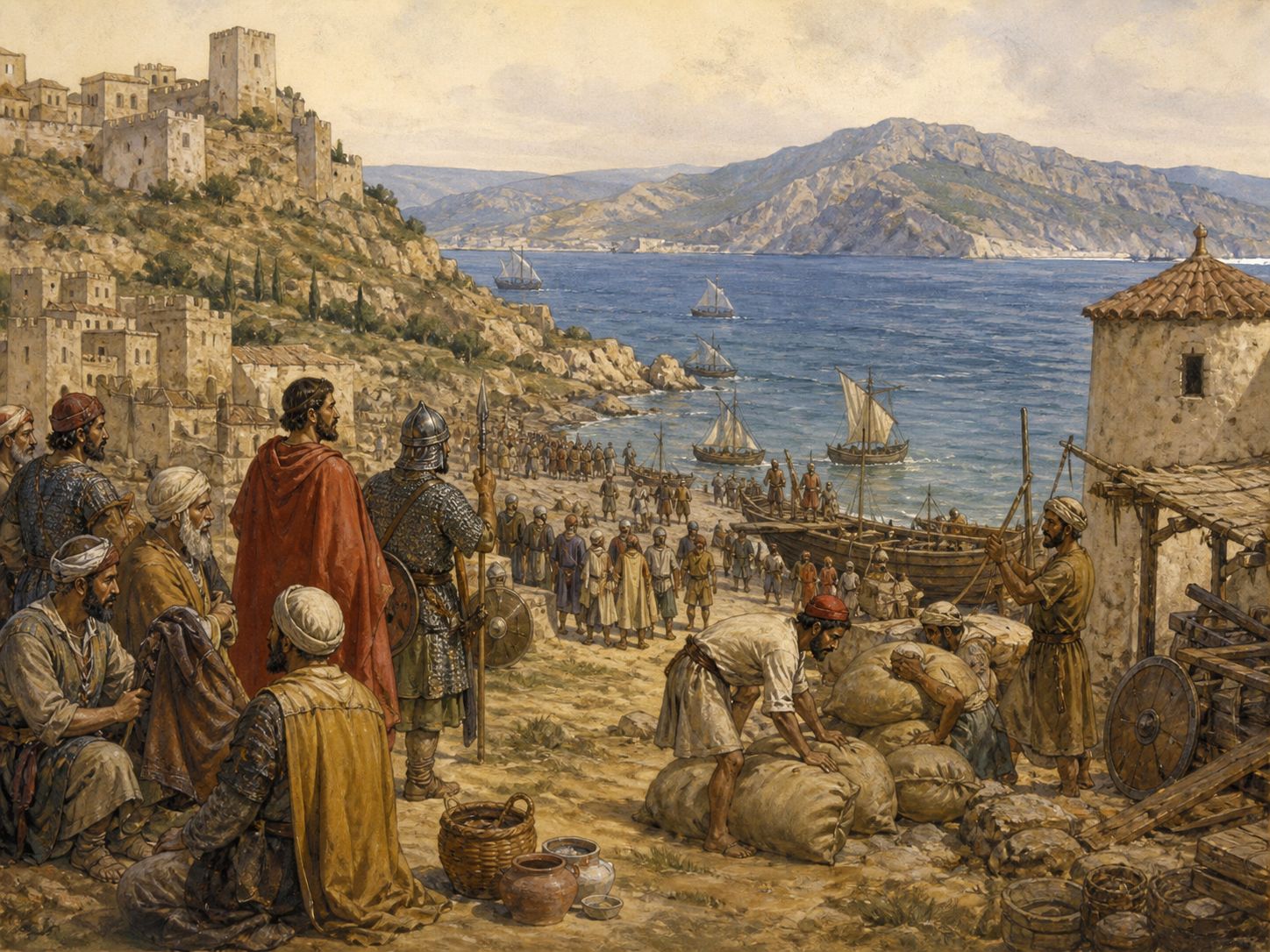
Visigothic succession conflict and the formation of a new governorship in North Africa shaped the context for a crossing of the strait.
- Visigothic succession conflict and the formation of a new governorship in North Africa shaped the context for a crossing of the strait.
- Core event: After 711, forces crossing from North Africa defeated the Visigothic kingdom and brought much of Iberia under Islamic rule.
- Connection to the next stage: Forces associated with Tariq ibn Ziyad advanced north, and after Guadalete incorporated cities and regional powers.
Course
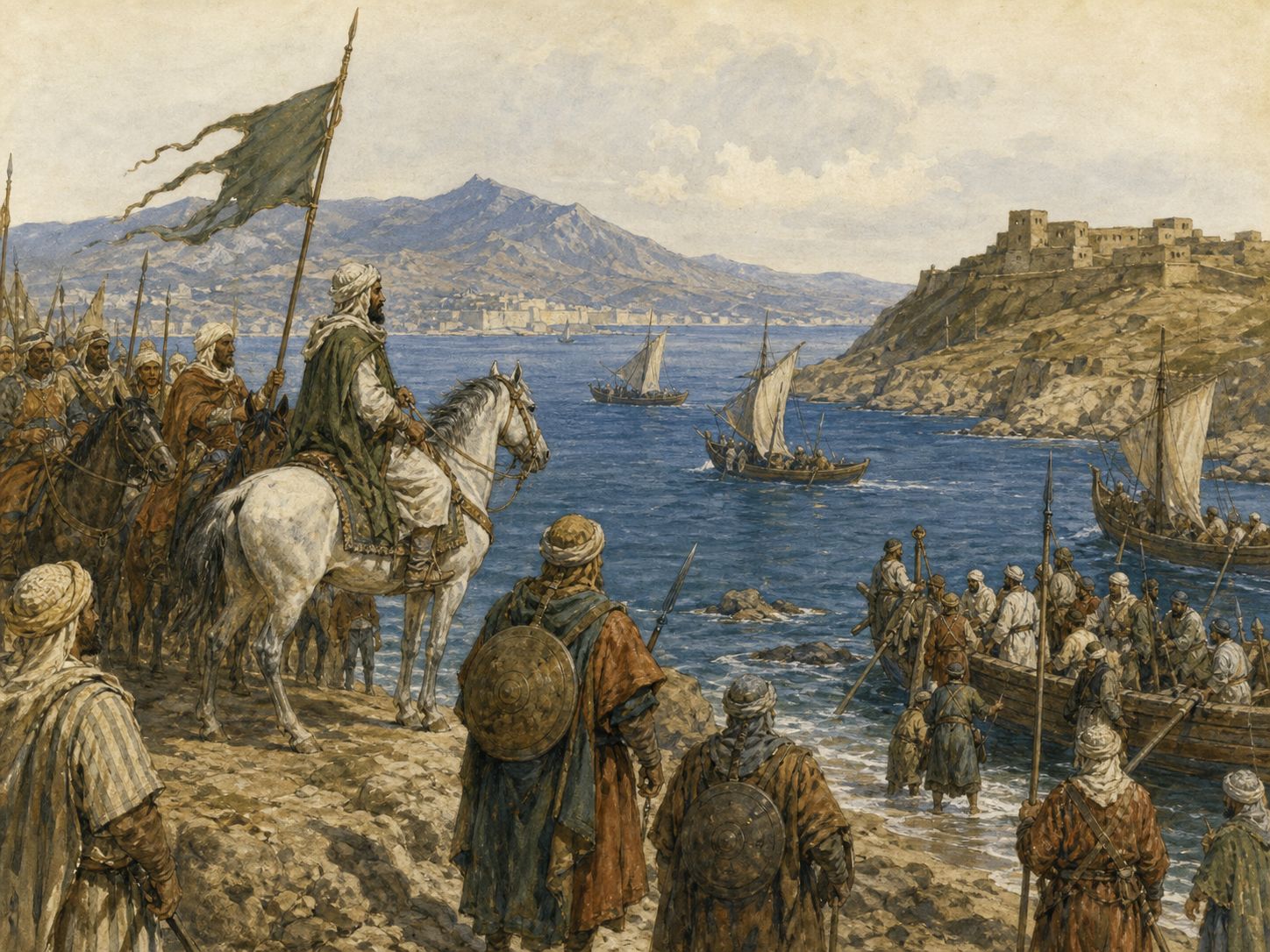
Forces associated with Tariq ibn Ziyad advanced north, and after Guadalete incorporated cities and regional powers.
- Forces associated with Tariq ibn Ziyad advanced north, and after Guadalete incorporated cities and regional powers.
- Conditions behind the action: Visigothic succession conflict and the formation of a new governorship in North Africa shaped the context for a crossing of the strait.
- Meaning of the turning point: After 711, forces crossing from North Africa defeated the Visigothic kingdom and brought much of Iberia under Islamic rule.
Outcome
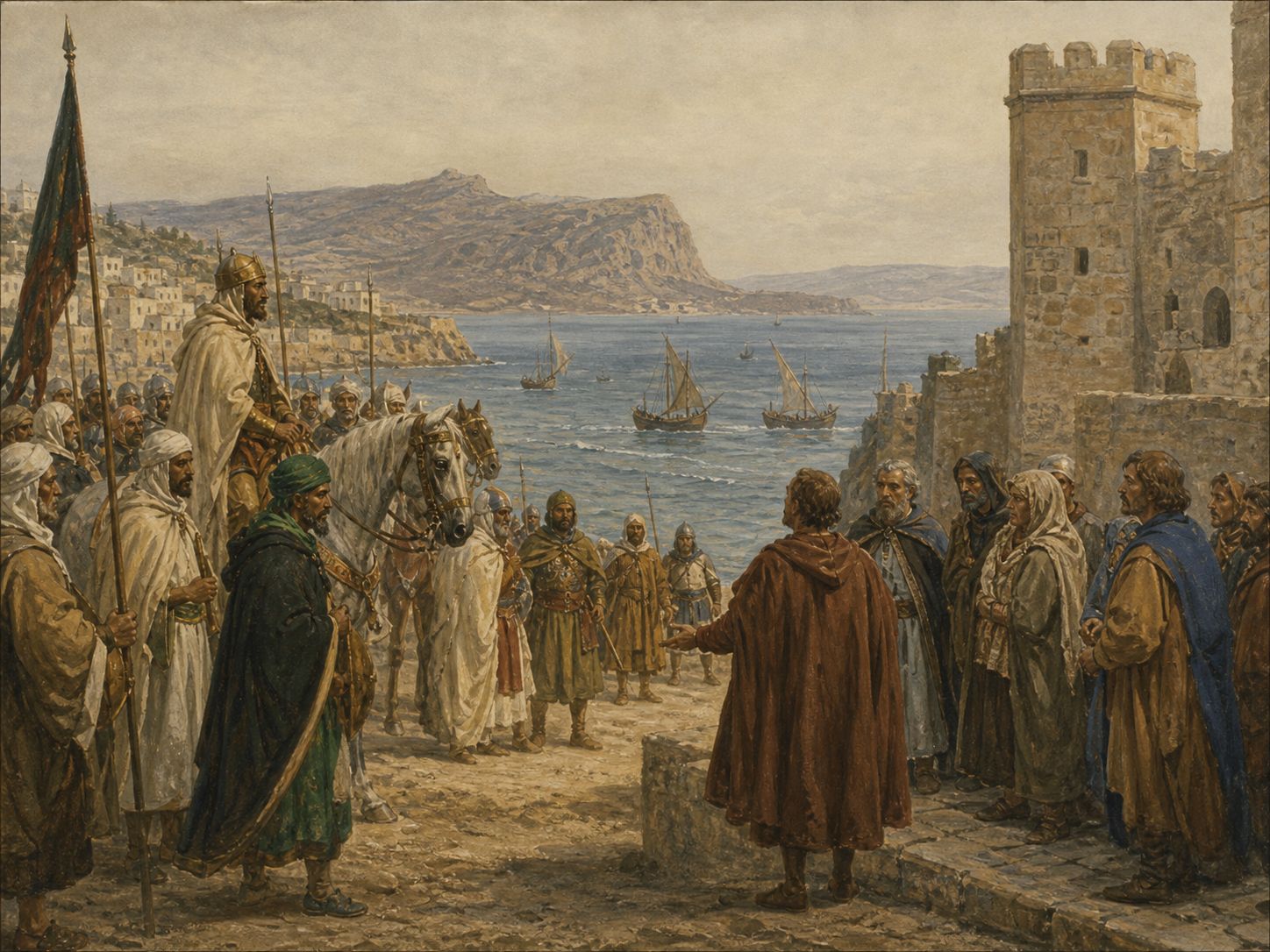
A political society known as al-Andalus developed around Córdoba, while Christian powers remained in the north.
- A political society known as al-Andalus developed around Córdoba, while Christian powers remained in the north.
- Process producing the result: Forces associated with Tariq ibn Ziyad advanced north, and after Guadalete incorporated cities and regional powers.
- Question carried forward: The conquest was not a uniform replacement but a long reorganization through treaties, conversion, migration, and local negotiation.
Historical significance
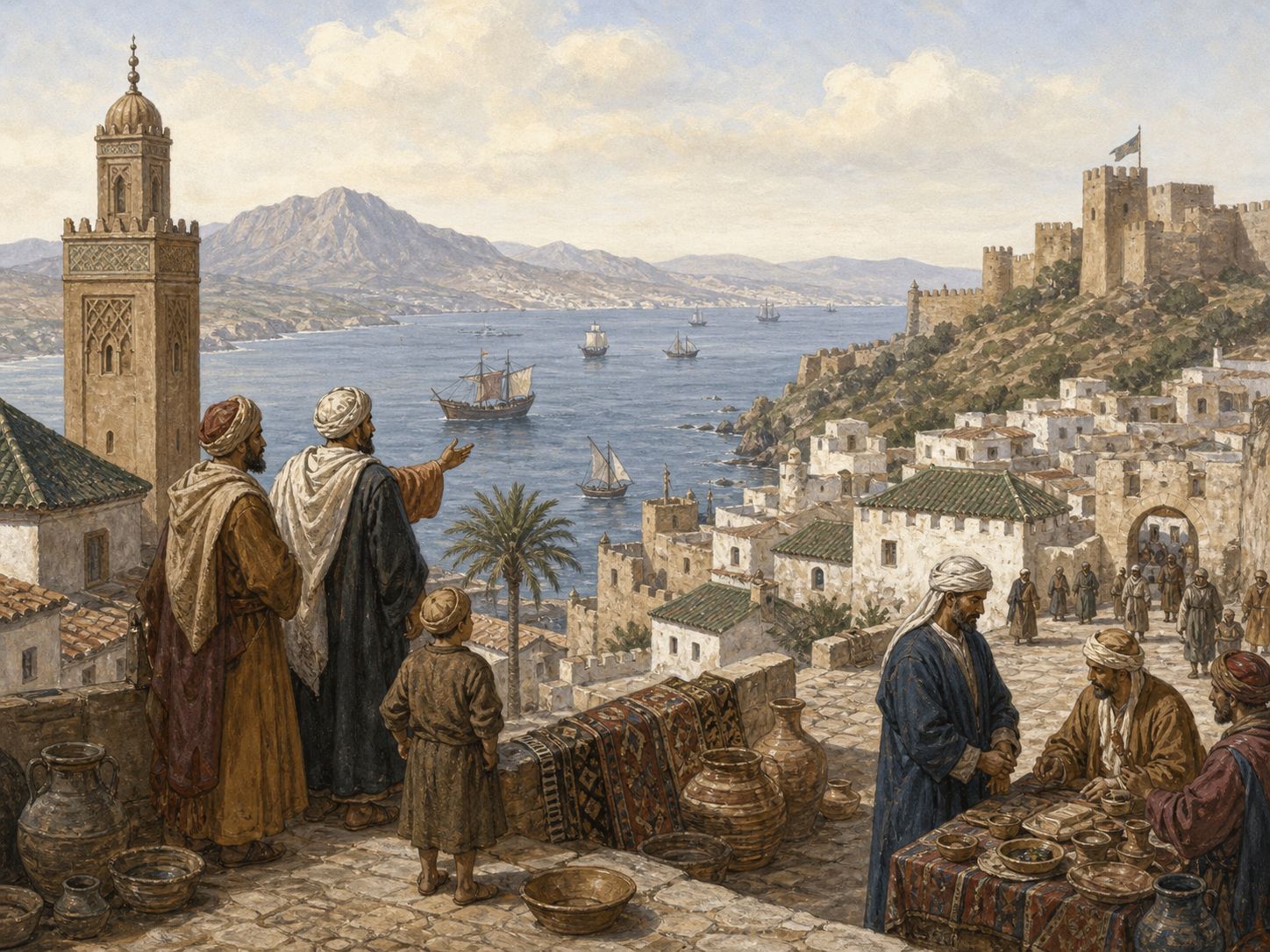
The conquest was not a uniform replacement but a long reorganization through treaties, conversion, migration, and local negotiation.
- The conquest was not a uniform replacement but a long reorganization through treaties, conversion, migration, and local negotiation.
- Immediate consequence: A political society known as al-Andalus developed around Córdoba, while Christian powers remained in the north.
- Historical turning point: After 711, forces crossing from North Africa defeated the Visigothic kingdom and brought much of Iberia under Islamic rule.


Related events
c. 708
Prelude
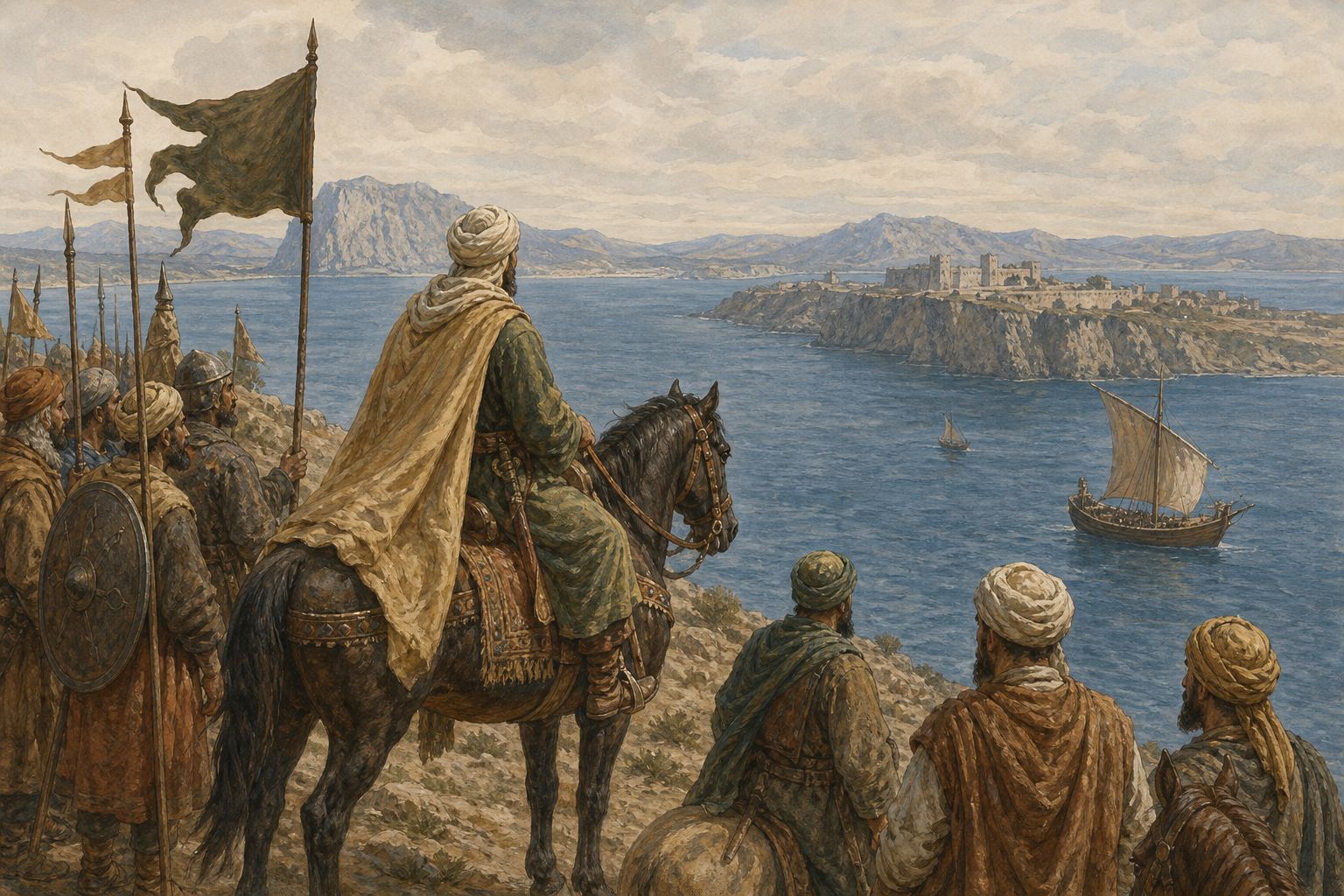
Prelude — Background: Visigothic succession conflict and the formation of a new governorship in North Africa shaped the context for a crossing of the strait.
c. 710
Turning point
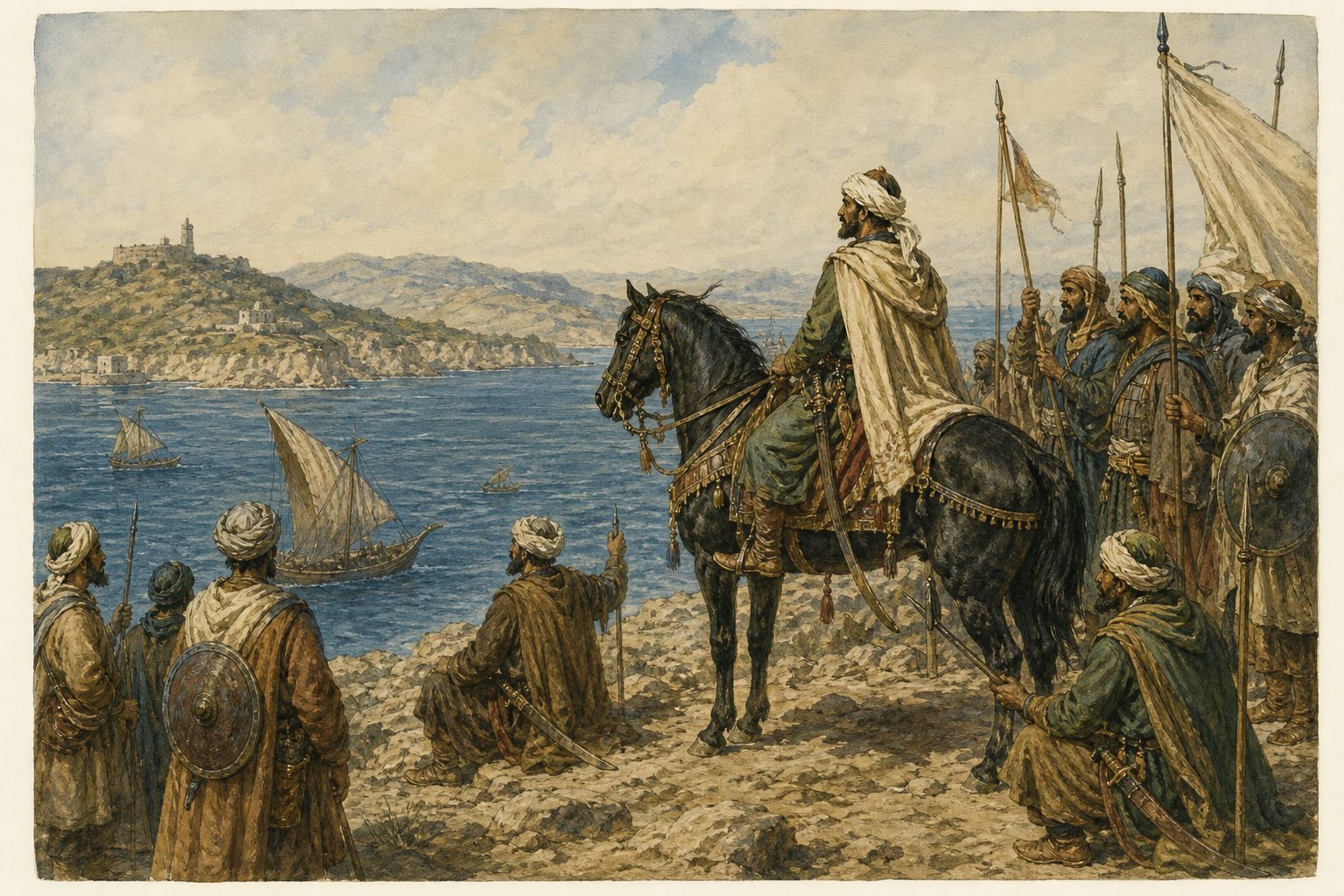
Turning point — Build-up: Forces associated with Tariq ibn Ziyad advanced north, and after Guadalete incorporated cities and regional powers.
711–718
Islamic Conquest of Iberia
Current event
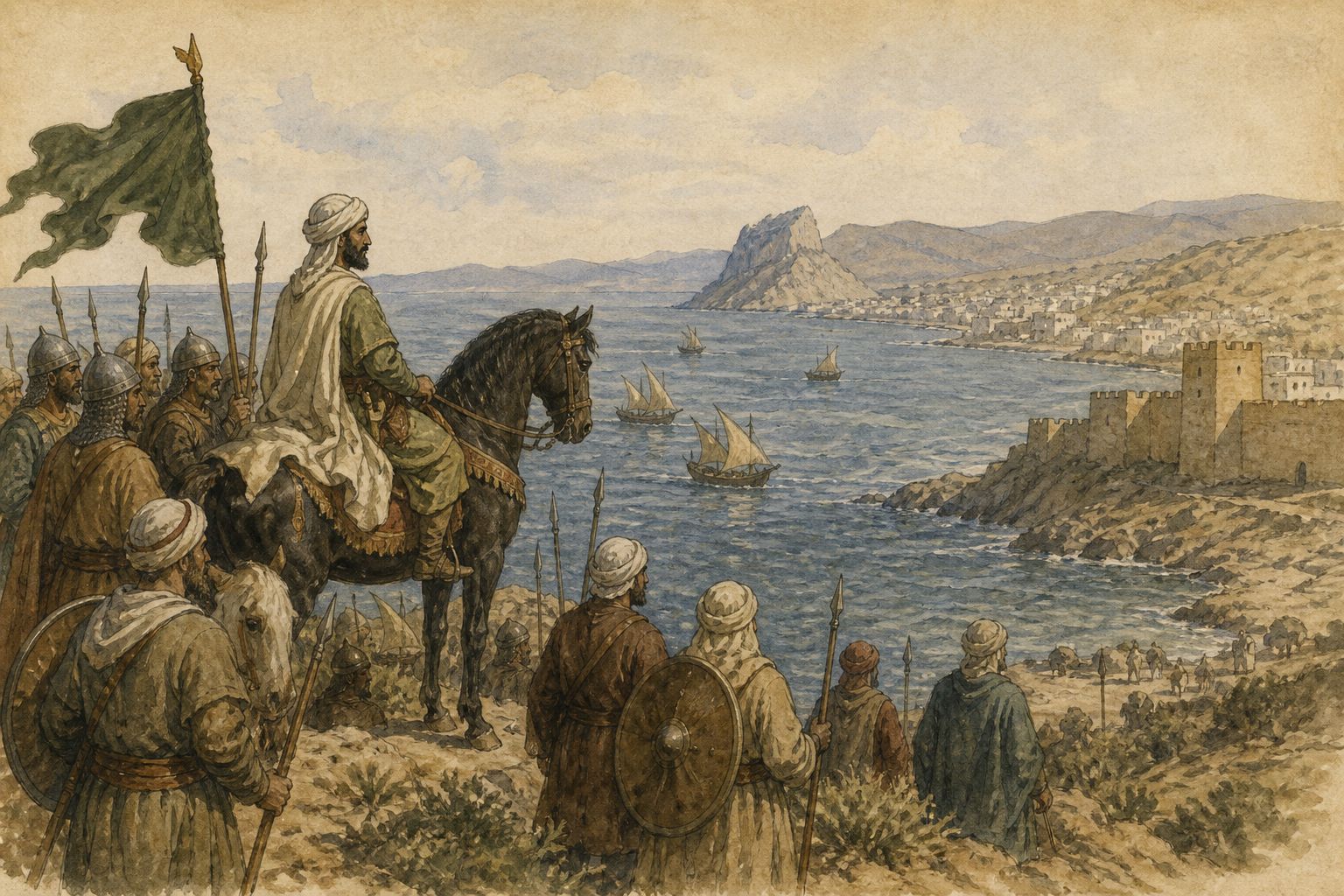
Islamic Conquest of Iberia — Central transition: After 711, forces crossing from North Africa defeated the Visigothic kingdom and brought much of Iberia under Islamic rule.
c. 721
Immediate aftermath
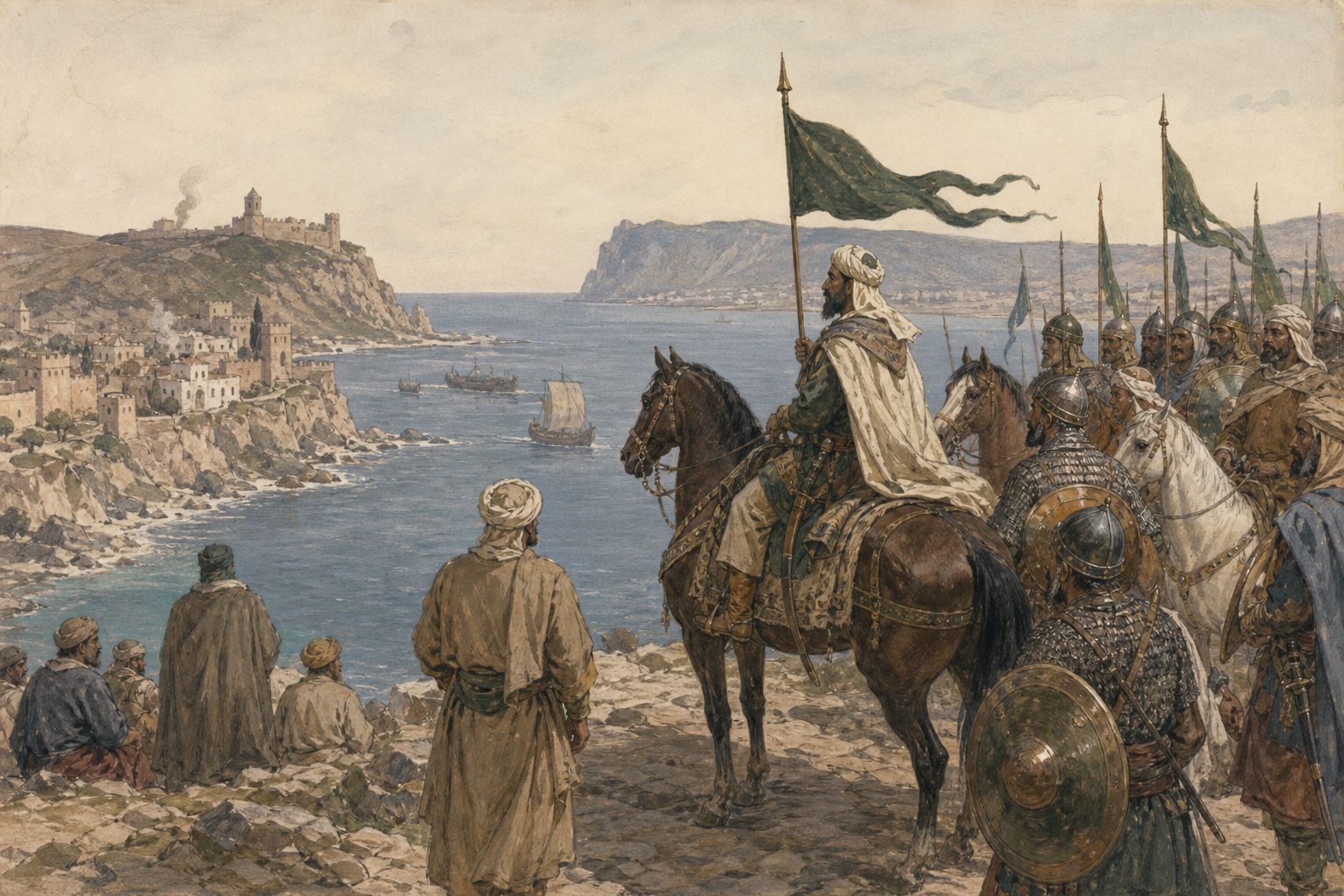
Immediate aftermath — Immediate result: A political society known as al-Andalus developed around Córdoba, while Christian powers remained in the north.
c. 729
Long-term significance
Long-term significance — Long-term significance: The conquest was not a uniform replacement but a long reorganization through treaties, conversion, migration, and local negotiation.


Sources
- Islamic Conquest of Iberia — The Muslim Invasion (Encyclopaedia Britannica)britannica.comThis Encyclopaedia Britannica resource supports the chronology, setting, and course of Islamic Conquest of Iberia.
- Islamic Conquest of Iberia — Hd Alai (The Metropolitan Museum of Art)metmuseum.orgThis The Metropolitan Museum of Art resource supports the chronology, setting, and course of Islamic Conquest of Iberia.
- Islamic Conquest of Iberia — Al Andalus (Encyclopaedia Britannica)britannica.comThis Encyclopaedia Britannica resource supports the chronology, setting, and course of Islamic Conquest of Iberia.