
Korean War
1950–1953
North Korea’s invasion of the South became an international war involving UN forces and Chinese volunteers, ending in an armistice that fixed the front line.

- Period
- 1950–1953
- Kind
- War
- Regions
- East Asia, North America
- Keywords
- Korean War · 38th parallel · United Nations Command · Chinese People's Volunteers · armistice · division
Follow the story · Four stages
Background
Political, social, and commercial changes around the Korean Peninsula formed the setting: North Korea’s invasion of the South became an international war involving UN forces and Chinese volunteers, ending in an armistice that fixed the front line.
- Liberation and the division at the 38th parallel
- Competing governments and Cold War tension
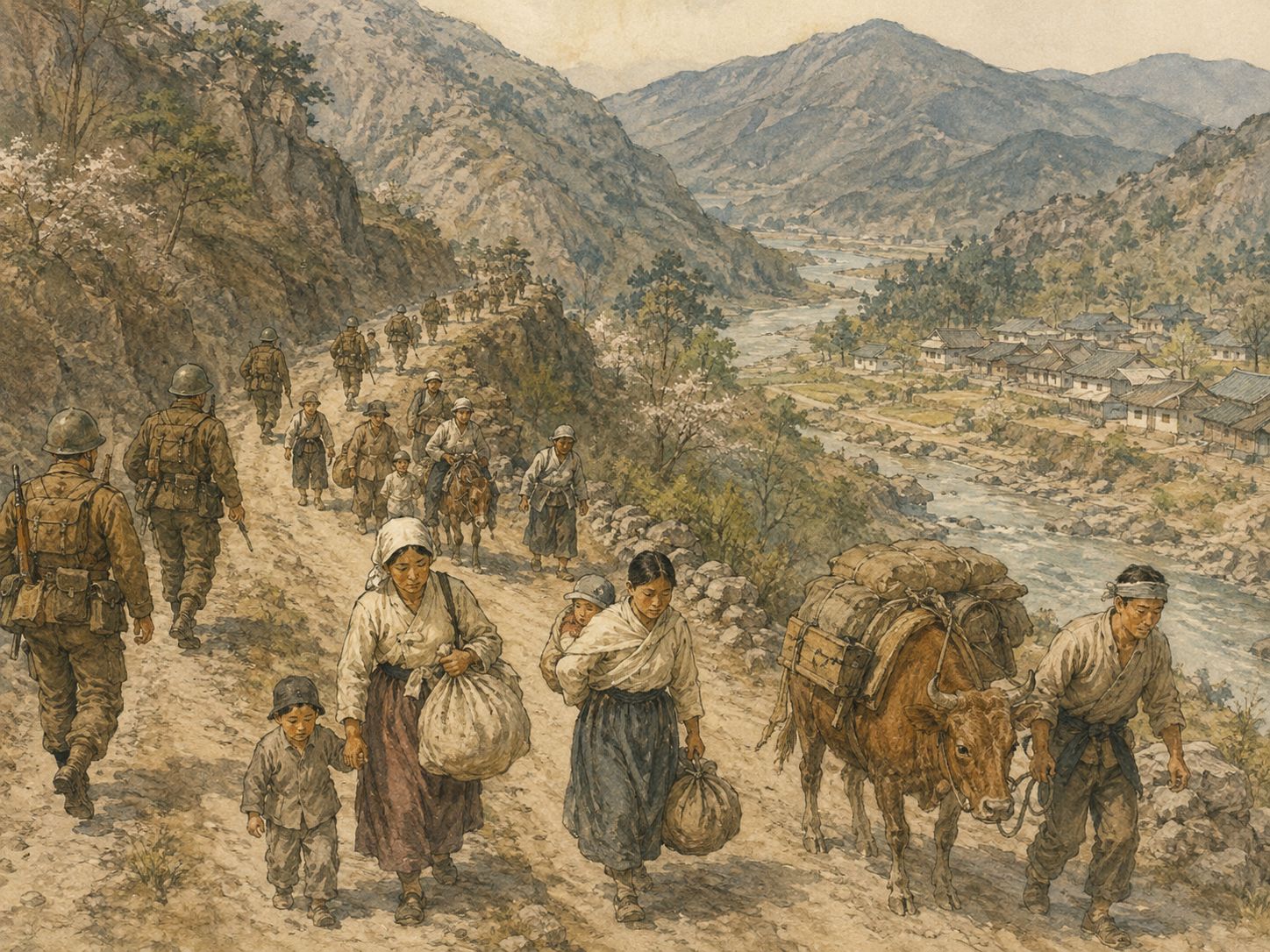
- Soldiers and civilians caught in the Korean landscape
Course
North Korea’s invasion of the South became an international war involving UN forces and Chinese volunteers, ending in an armistice that fixed the front line. The choices of the participating powers and responses of local communities shaped the course.
- North Korea's June 1950 invasion of the South
- The UN counteroffensive and intervention by Chinese People's Volunteers
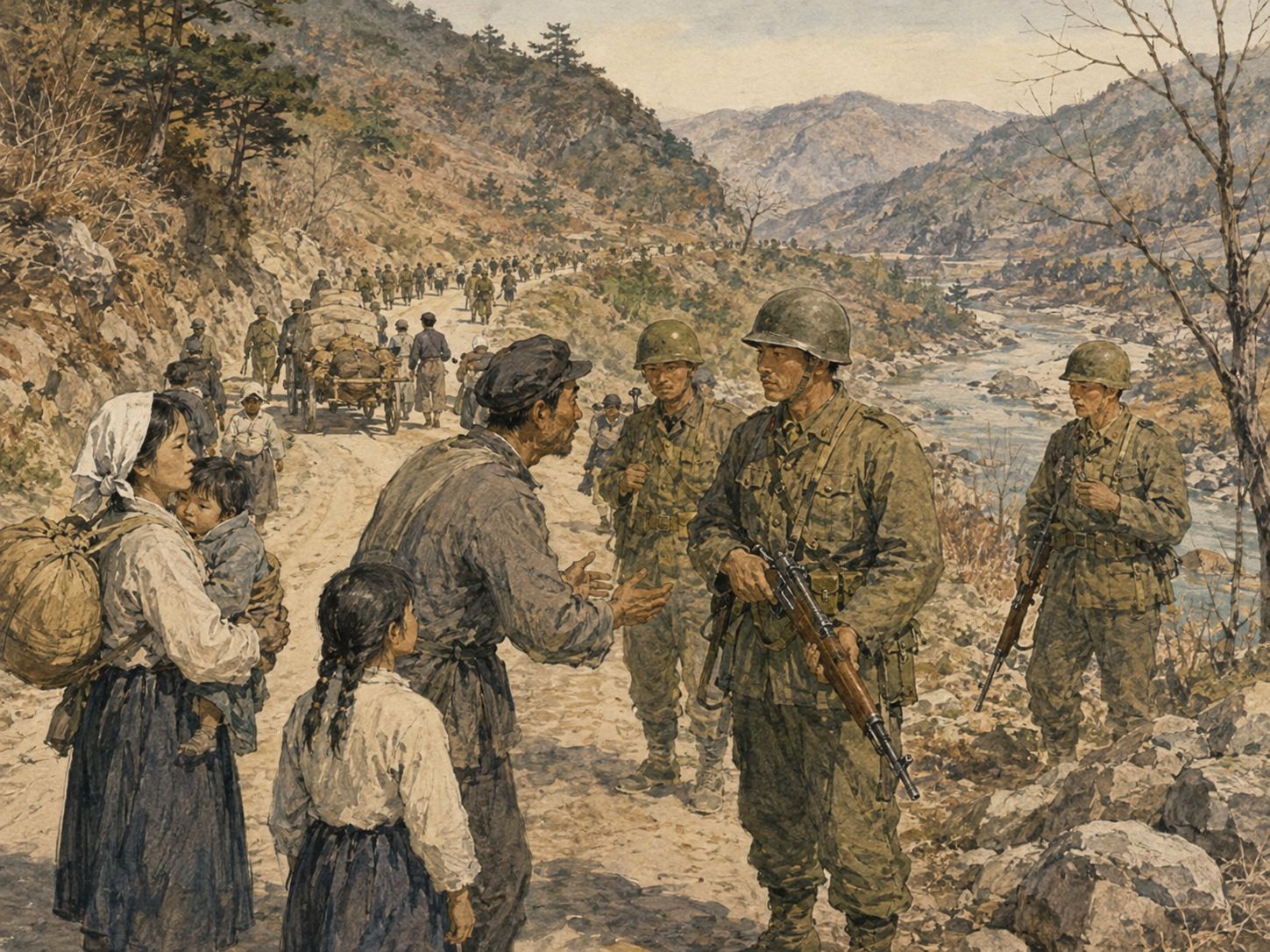
- A shifting front and mass displacement
Outcome
As a result, It solidified Korea’s division and transformed the militarization of the Cold War and security in East Asia.
- The 27 July 1953 armistice
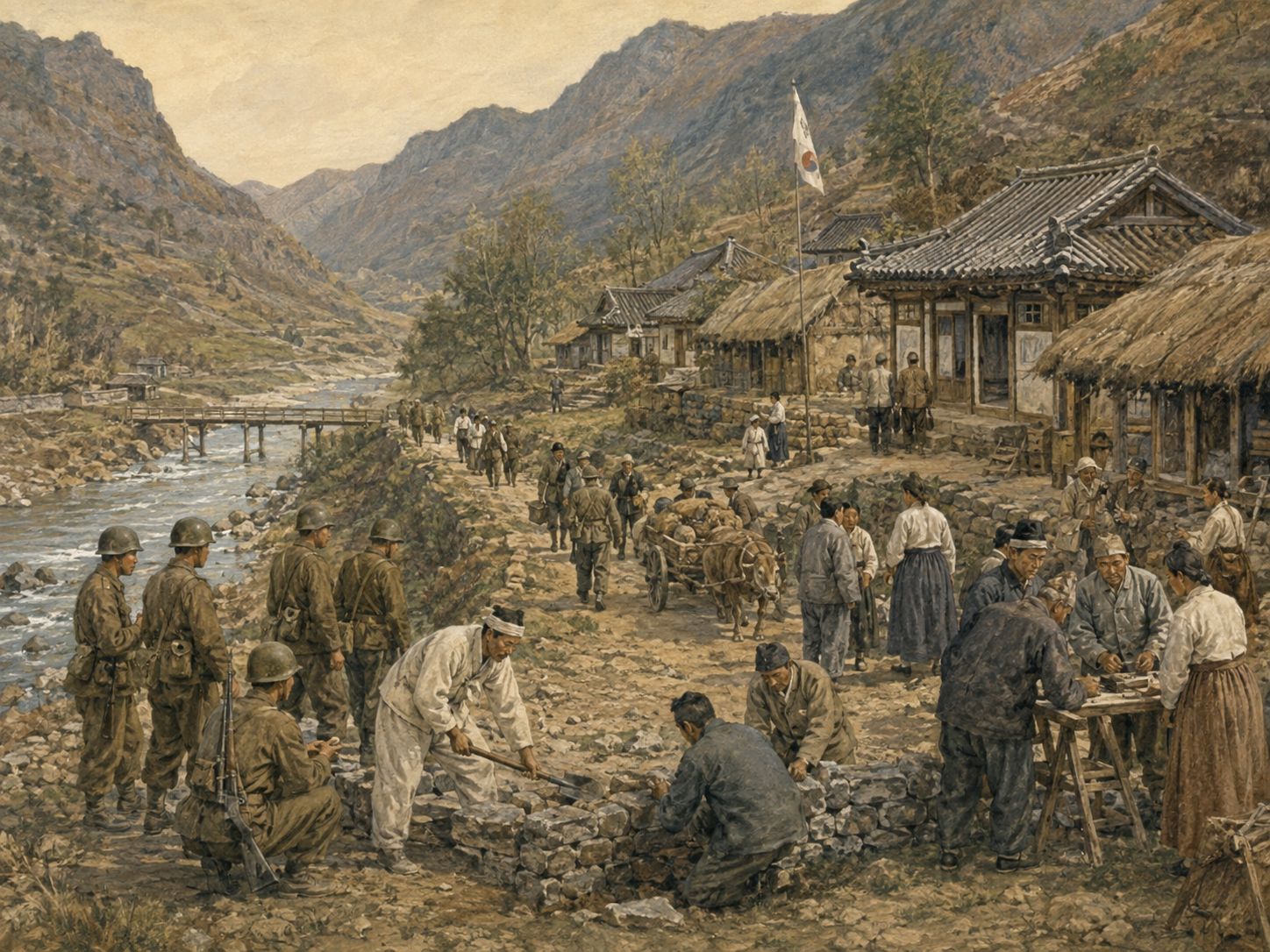
- A divided peninsula hardened by the Military Demarcation Line and DMZ
- Security systems built around South Korea, North Korea, and neighboring powers
Historical significance
The significance of this event lies in the fact that it solidified korea’s division and transformed the militarization of the cold war and security in east asia.
- The Cold War as a regional and international war
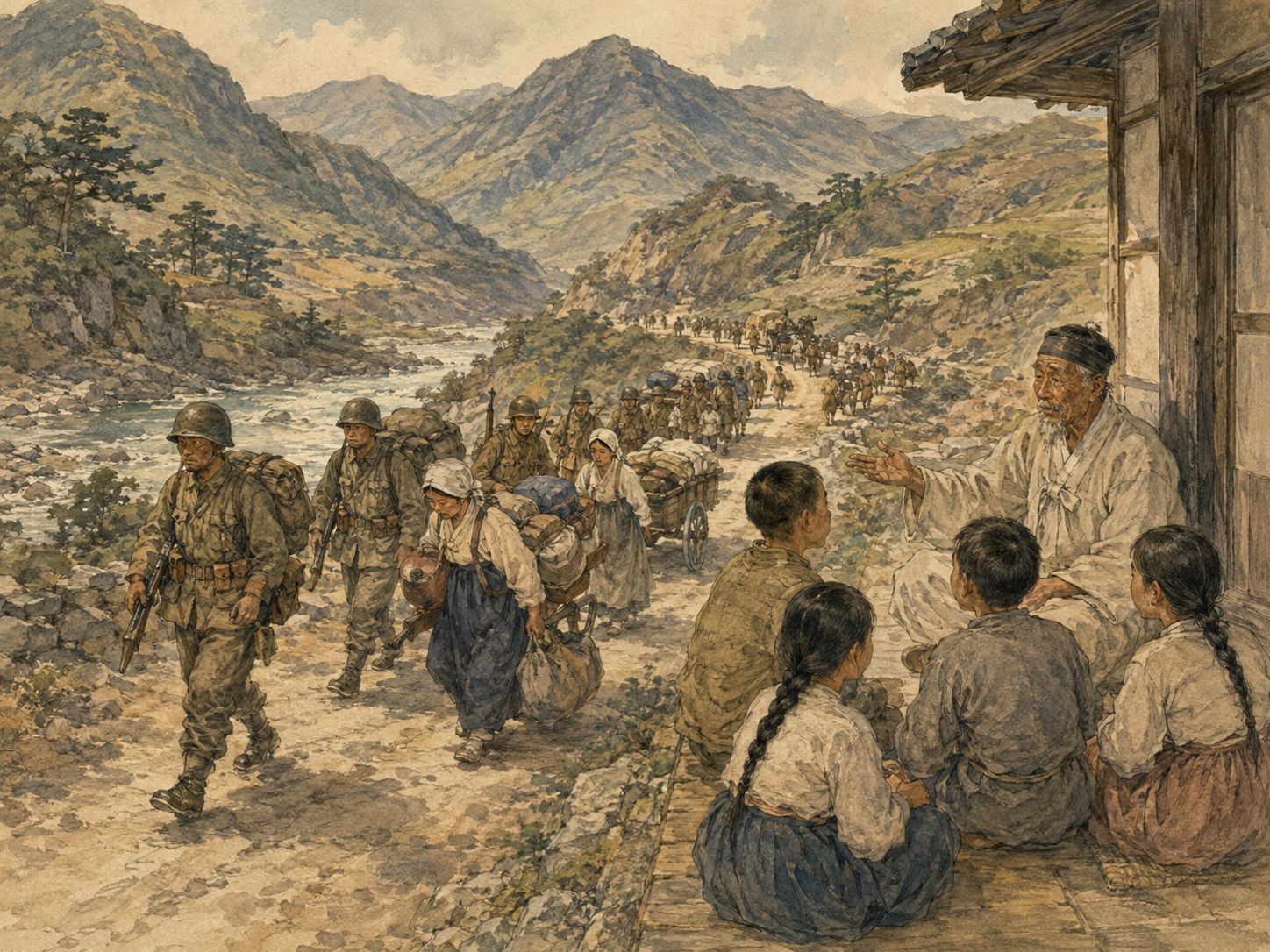
- Civilian suffering and the long consequences of division
- Political tension that still shapes the Korean Peninsula


Related figures
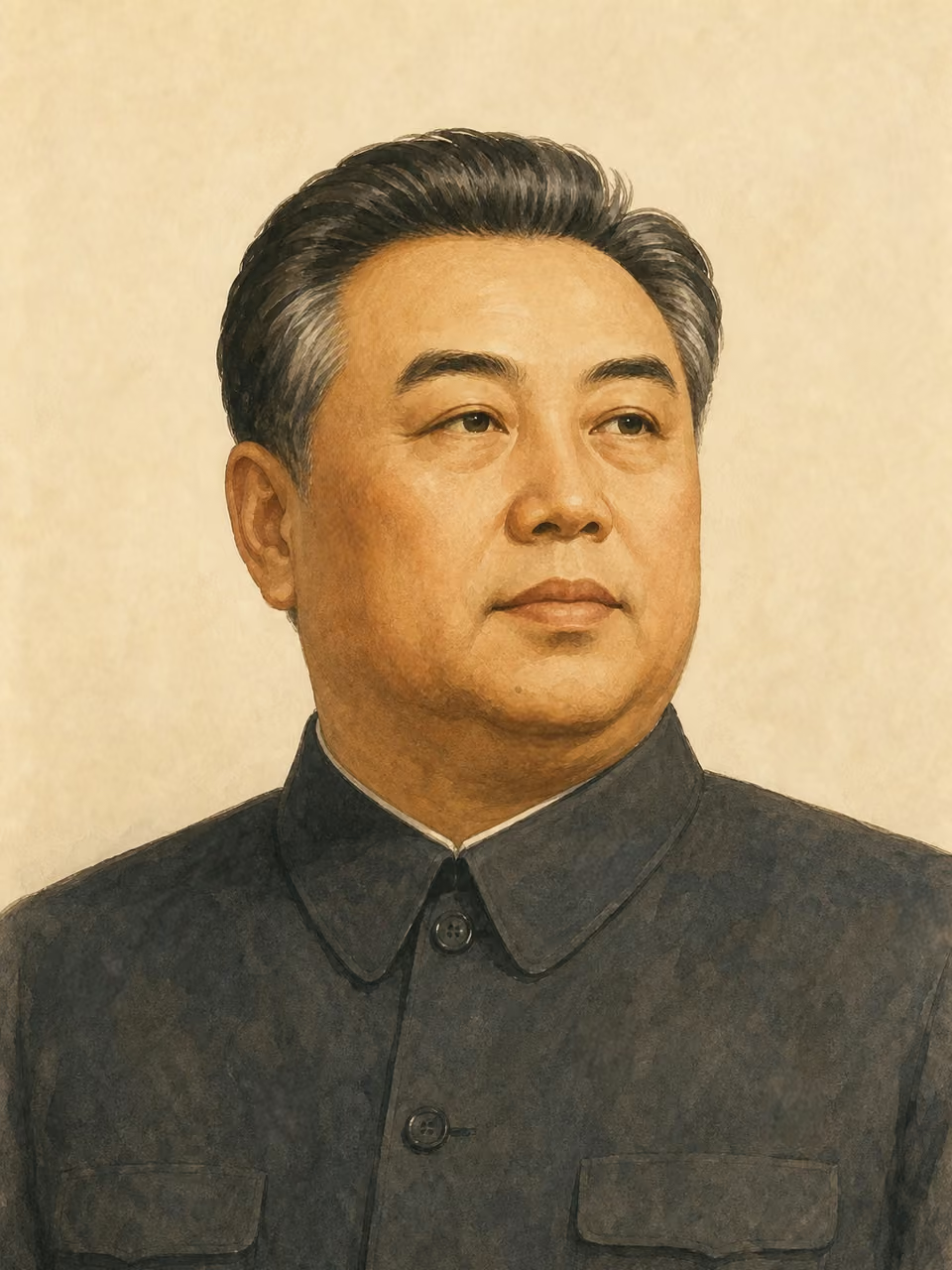
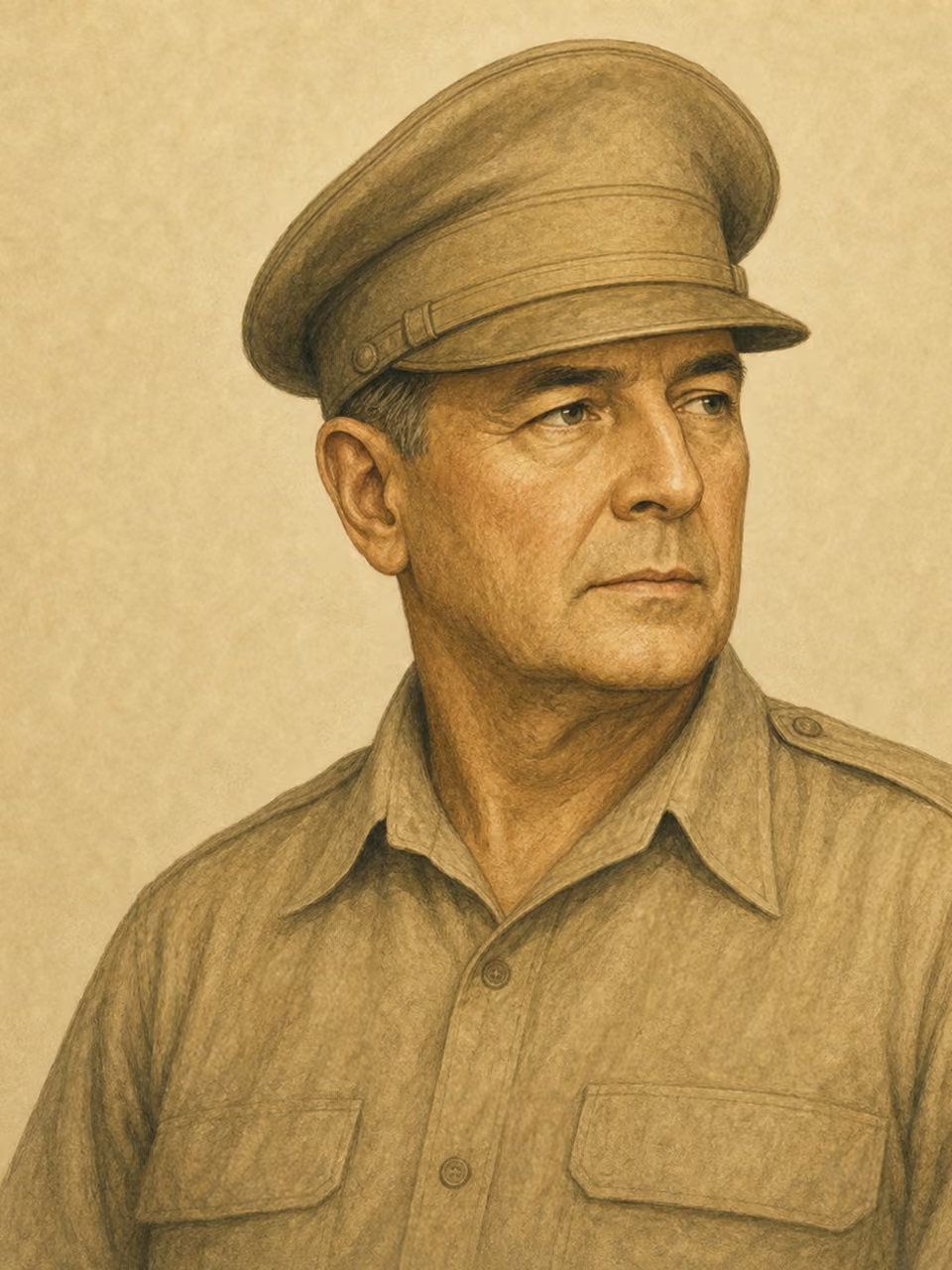
Related events
c. 1945
Liberation and division
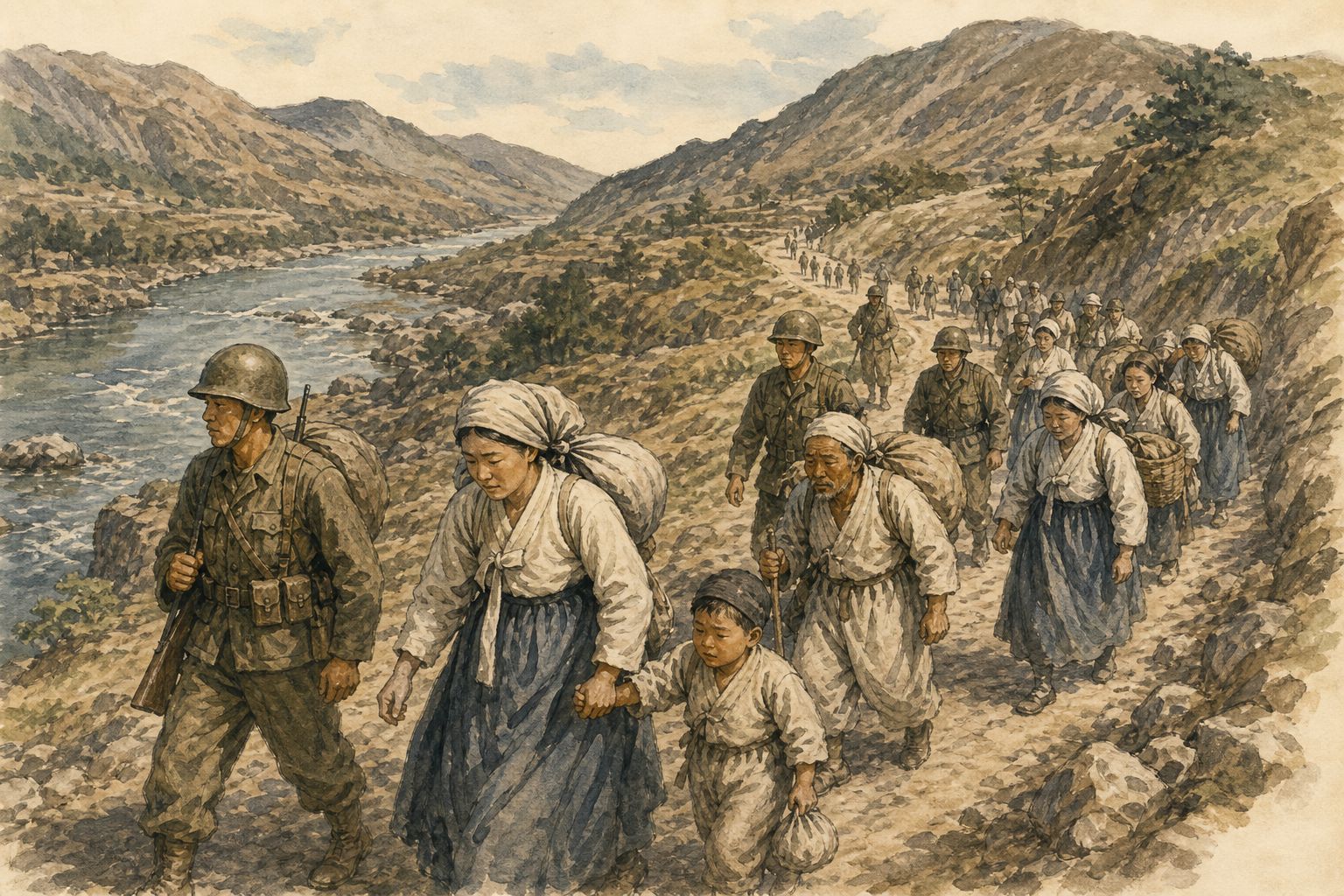
After Japan's defeat in 1945, the Korean Peninsula was divided into US and Soviet occupation zones along the 38th parallel.
c. 1950
Competing governments
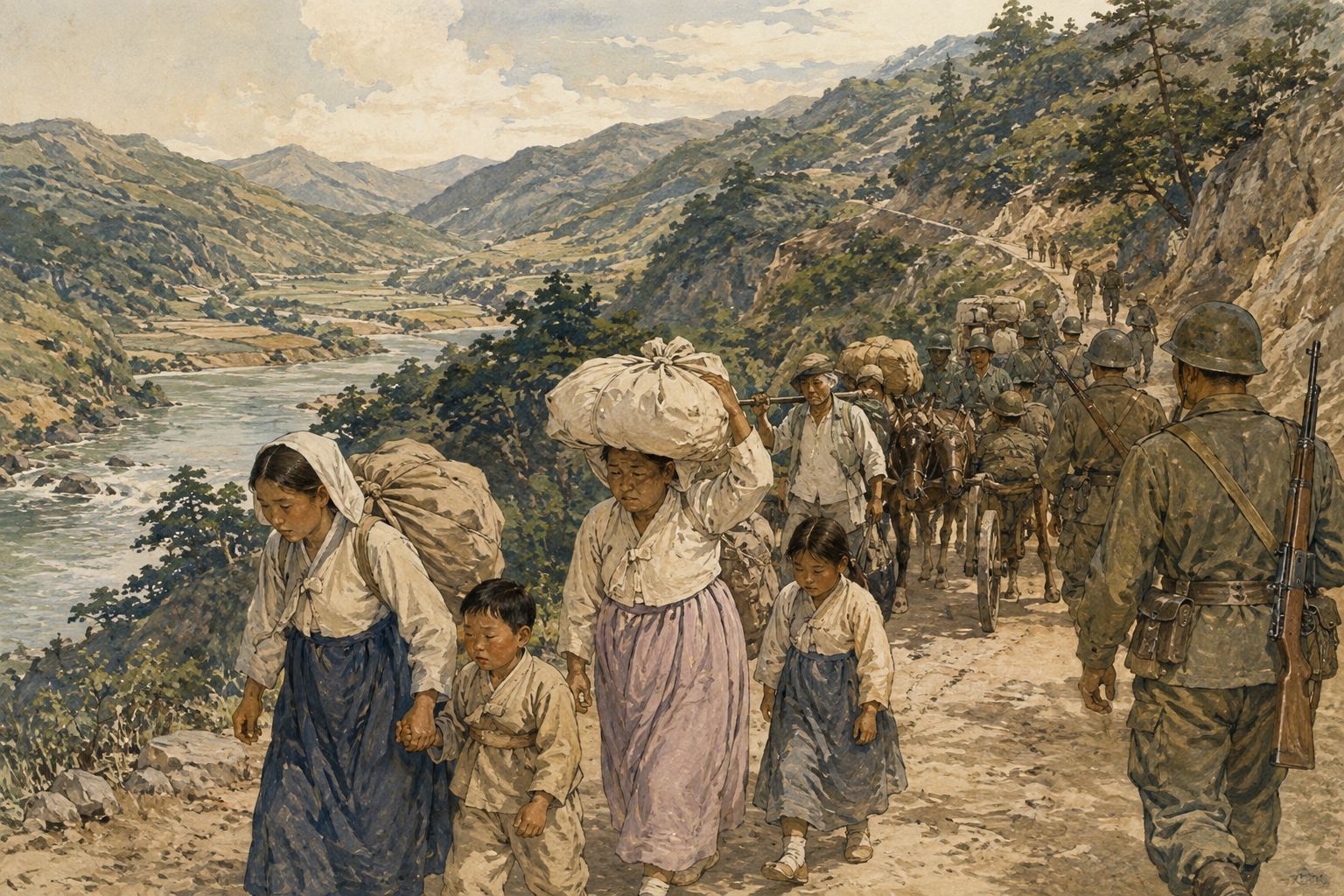
In 1948, the Republic of Korea and the Democratic People's Republic of Korea were established, and their rivalry became militarized.
1950–1953
Korean War
Current event
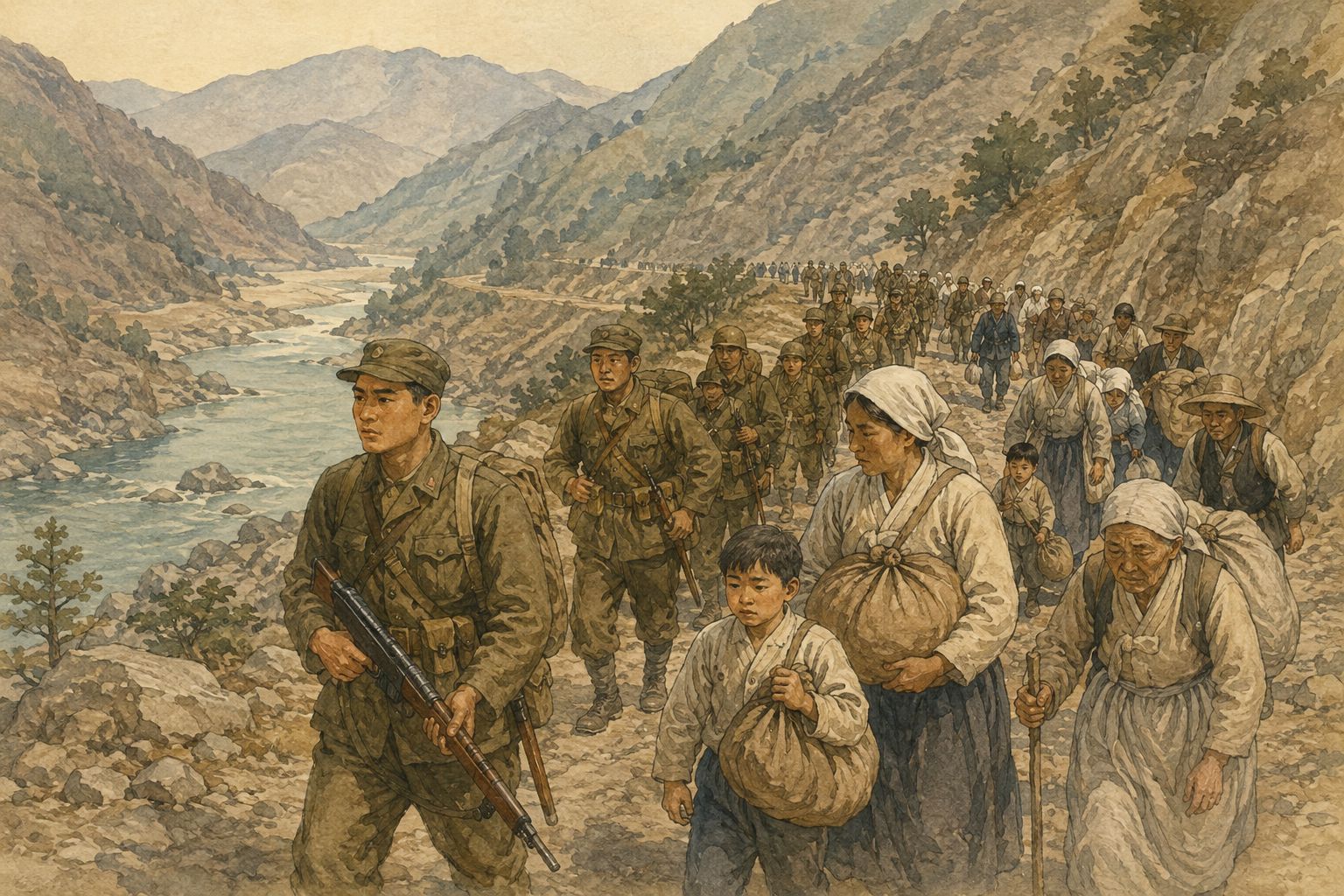
From 1950 to 1953, the North Korean invasion drew in UN forces and Chinese People's Volunteers, sending the front across the peninsula.
c. 1953
Armistice and division
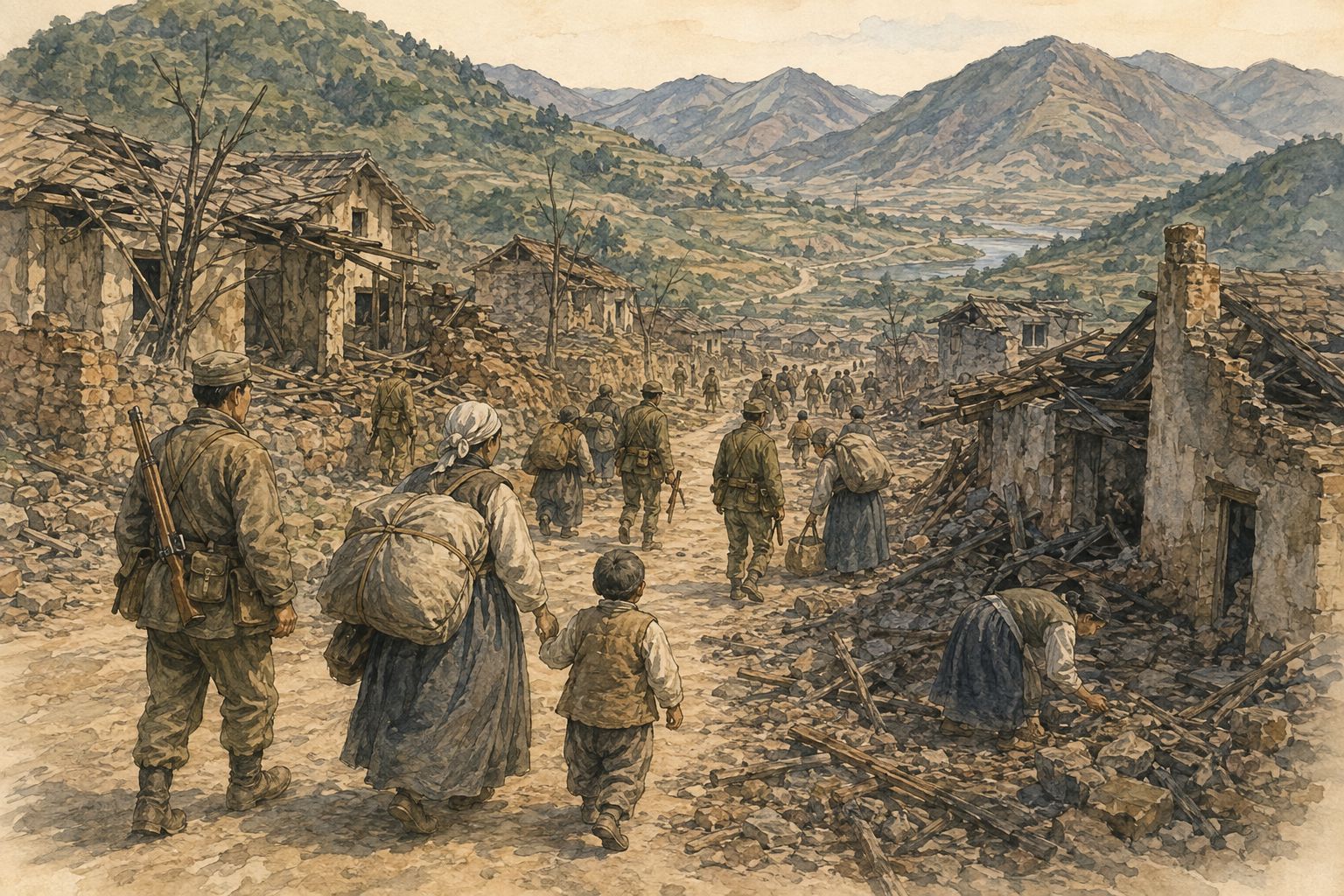
The 1953 armistice halted the fighting but was not a peace treaty; it left a Military Demarcation Line and the DMZ.
c. 1953
A continuing Cold War boundary
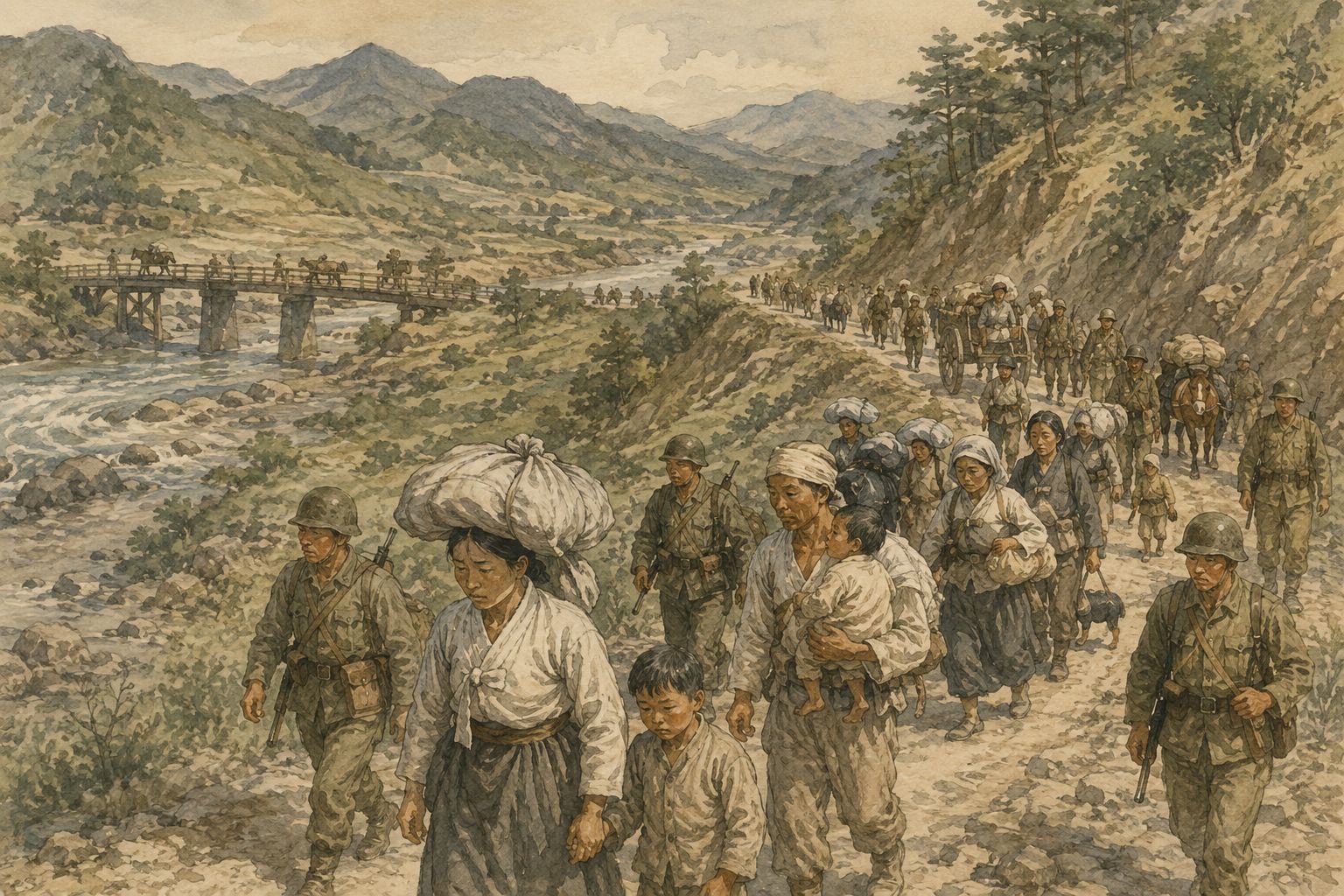
The Korean War hardened the division between North and South and left tensions over alliances, nuclear weapons, and security.


Sources
- Korean War: chronology and settingwww.daiichi-g.co.jpUsed to cross-check the chronology and geographical setting of Korean War.
- Korean War: historical backgroundwww.britannica.comUsed to verify the actors, course, and consequences associated with Korean War.
- Korean War: identifier and related recordswww.wikidata.orgUsed to cross-check the identifier and related records for Korean War.