
Maastricht Treaty
1992–1993
Signed in 1992 and effective in 1993, the Maastricht Treaty created the European Union's framework for monetary, political, foreign, and judicial cooperation.

- Period
- 1992–1993
- Kind
- Conference
- Regions
- Middle East
- Keywords
- European Union · economic and monetary union · Union citizenship · European integration · ratification
Follow the story · Four stages
Background
The European Communities' single market and the end of the Cold War created pressure for institutions that could coordinate economies, citizenship, and political action.
- The European Communities' single market and the end of the Cold War created pressure for deeper coordination
- Member states debated how economic convergence should connect to political cooperation
- Citizenship, external policy, and justice raised questions beyond the common market

Course
Member governments negotiated the treaty, set convergence rules for economic and monetary union, and defined cooperation beyond the existing common market.
- Governments negotiated economic and monetary union alongside political cooperation
- Convergence criteria and institutional roles were set through intergovernmental bargaining
- The treaty linked market integration to citizenship and external action
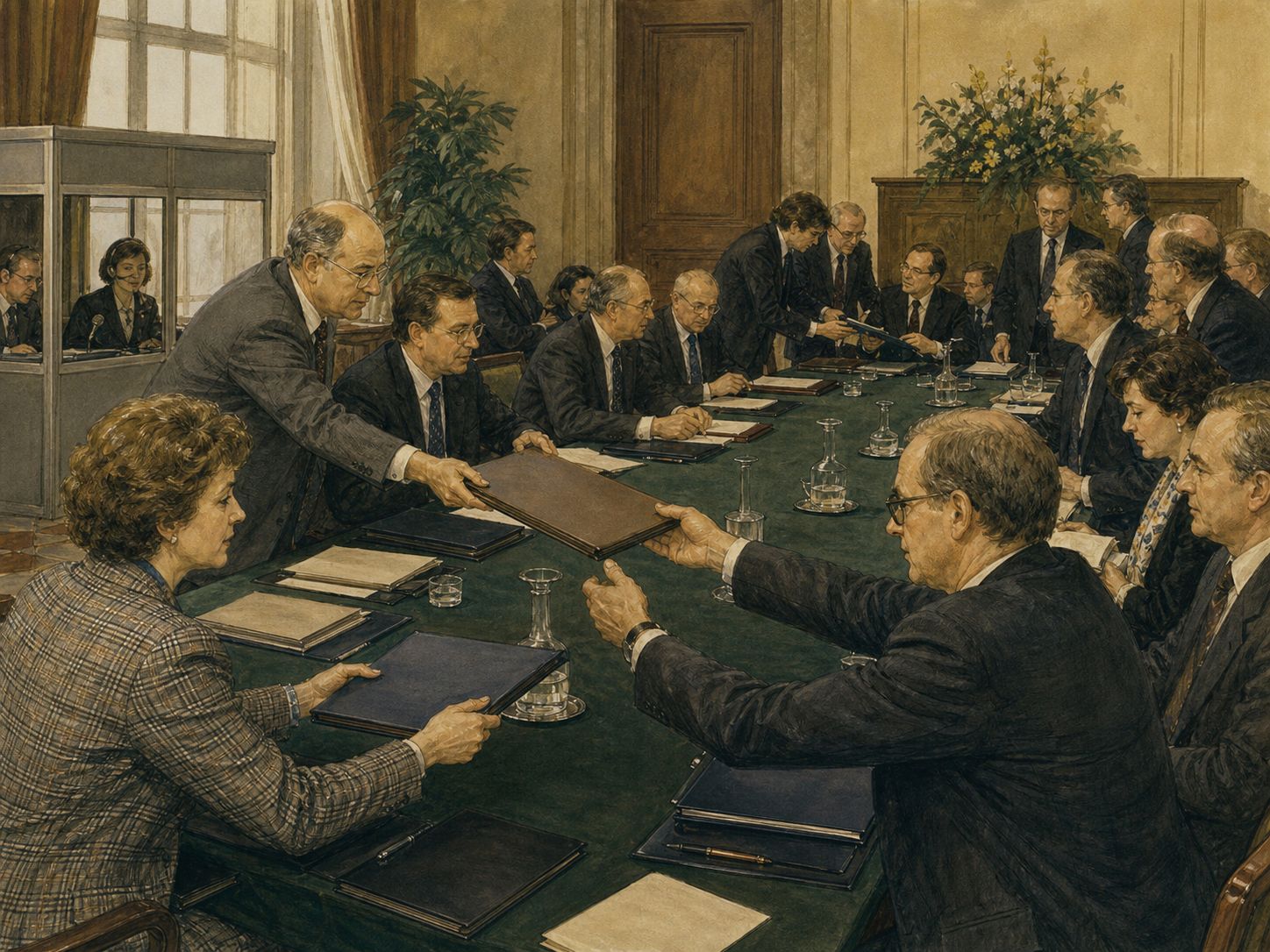
Outcome
The treaty established the European Union, introduced Union citizenship, and laid the institutional path toward the euro while retaining national ratification and political disputes.
- The Treaty on European Union was signed at Maastricht in February 1992
- It entered into force in November 1993 after national ratification
- Union citizenship and the institutional path toward the euro followed

Historical significance
Maastricht shifted European integration from a primarily economic project toward a multi-level political union whose legitimacy and distributional effects remained contested.
- Integration moved from an economic community toward a multi-level political union
- The treaty made mobility, citizenship, and shared institutions central to European governance
- Ratification disputes showed that integration remained politically contested



Related events
c. 1986–c. 1991
Single-market context

The single market and the end of the Cold War created pressure for deeper European coordination.
c. 1991
Political agreement

Governments debated how economic convergence should connect to political cooperation.
1992
Treaty signed
Current event
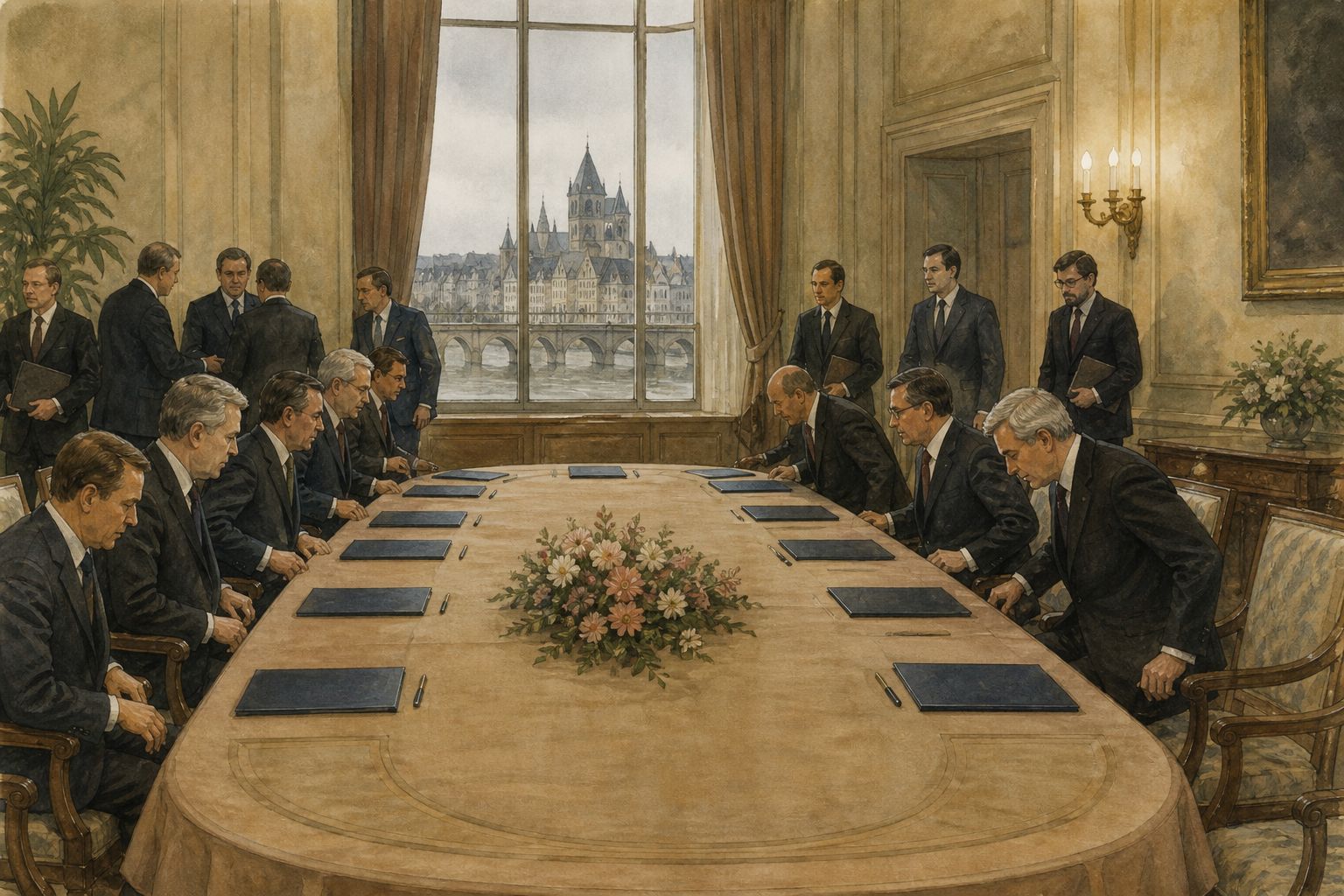
The Treaty on European Union was signed at Maastricht in February 1992.
c. 1992–c. 1993
Ratification and entry into force

National ratifications brought the treaty into force in November 1993.
c. 1993
Union citizenship and the euro path

Union citizenship and the institutional route toward the euro followed from the treaty framework.


Sources
- Maastricht TreatyEncyclopaedia BritannicaAn overview of the treaty's creation, Union institutions, economic and monetary union, and ratification.
- The Maastricht TreatyThe Metropolitan Museum of ArtContext for European integration and the political and visual culture of the treaty era.
- Maastricht TreatyWorld History EncyclopediaA chronological account of negotiation, signature, ratification, and the treaty's impact on the European Union.