Magna Carta
1215
The charter King John accepted at Runnymede in 1215 during his conflict with the barons, later remembered for placing royal authority within law and custom.

- Period
- 1215
- Kind
- Movement
- Regions
- Africa
- Keywords
- Magna Carta · Runnymede · kingship · barons · constitutionalism
Follow the story · Four stages
Background
The loss of French territories, royal financial strain, heavy taxation, and discontent with government deepened the conflict between King John and England’s leading barons.
- The loss of French territories, royal financial strain, heavy taxation, and discontent with government deepened the conflict between King John and England’s leading barons.
- Core event: The charter King John accepted at Runnymede in 1215 during his conflict with the barons, later remembered for placing royal authority within law and custom.
- Connection to the next stage: Rebel barons seized London and forced negotiations. John accepted the charter at Runnymede in June 1215; it was annulled soon afterward but reissued and reinterpreted later.
Course
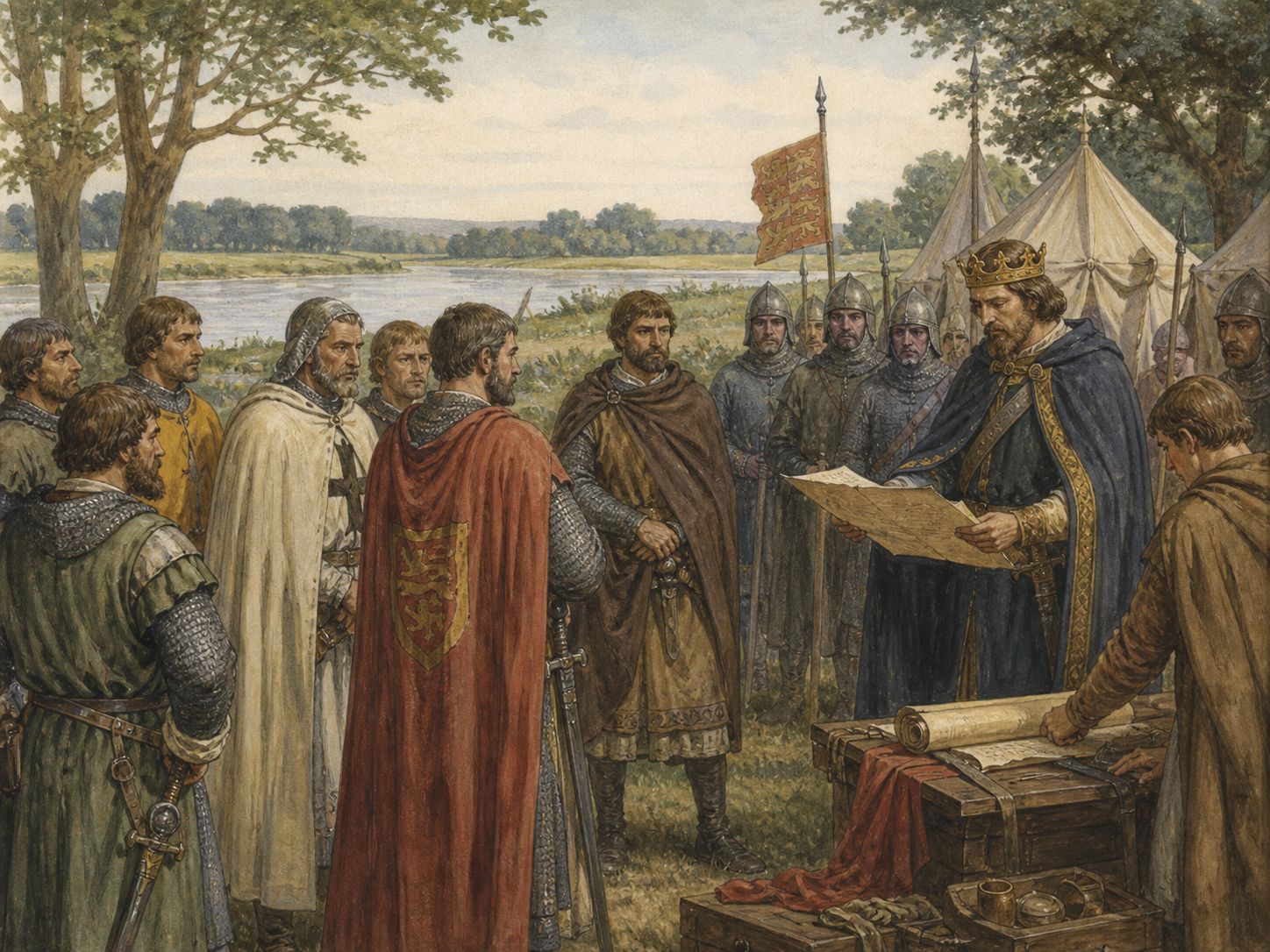
Rebel barons seized London and forced negotiations. John accepted the charter at Runnymede in June 1215; it was annulled soon afterward but reissued and reinterpreted later.
- Rebel barons seized London and forced negotiations.
- John accepted the charter at Runnymede in June 1215; it was annulled soon afterward but reissued and reinterpreted later.
- Conditions behind the action: The loss of French territories, royal financial strain, heavy taxation, and discontent with government deepened the conflict between King John and England’s leading barons.
Outcome
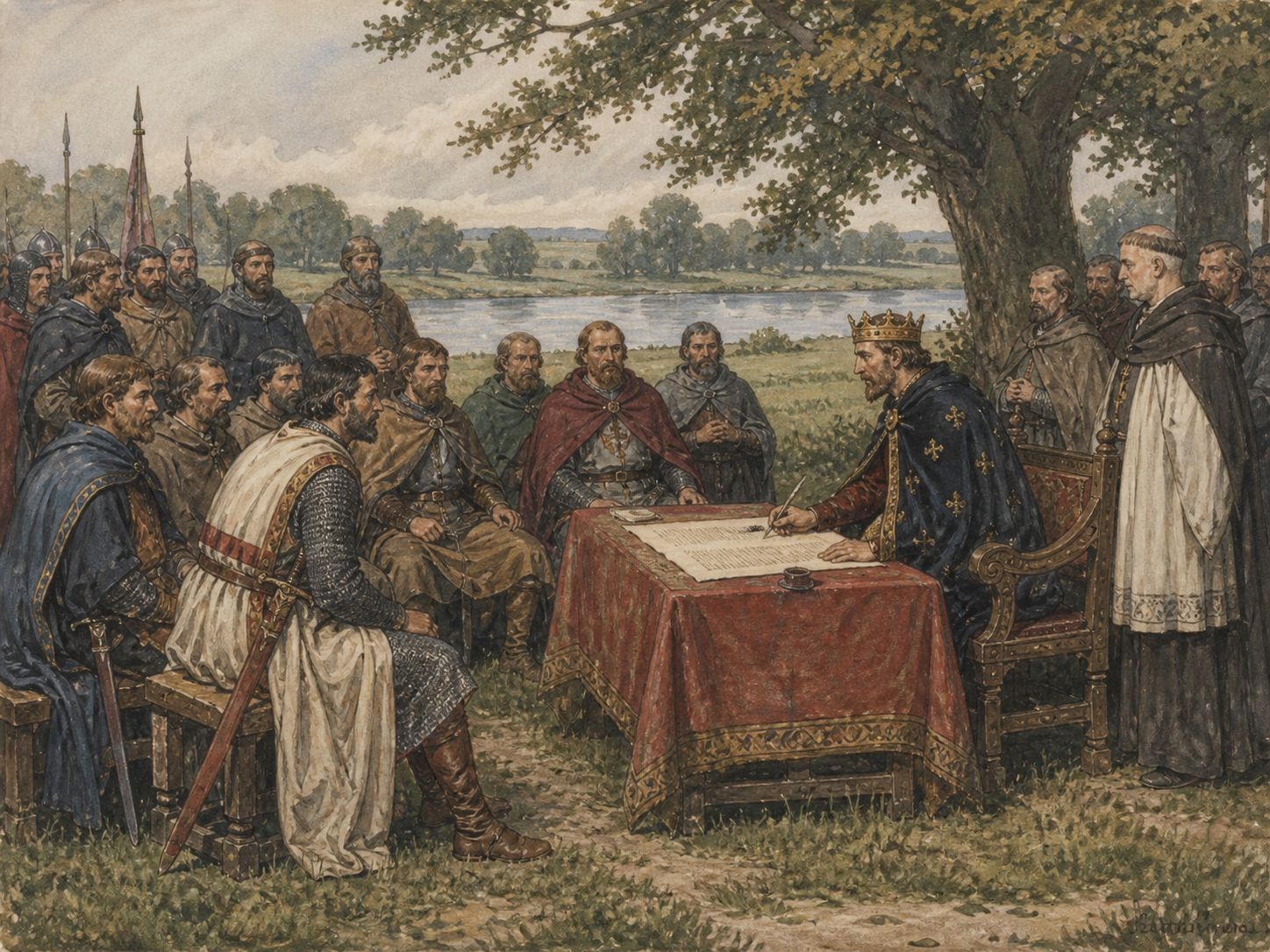
The 1215 charter did not prevent civil war, and a revised version was issued after John’s death. Its clauses on taxation, judgment, and legal protection remained politically resonant.
- The 1215 charter did not prevent civil war, and a revised version was issued after John’s death.
- Its clauses on taxation, judgment, and legal protection remained politically resonant.
- Process producing the result: Rebel barons seized London and forced negotiations. John accepted the charter at Runnymede in June 1215; it was annulled soon afterward but reissued and reinterpreted later.
Historical significance
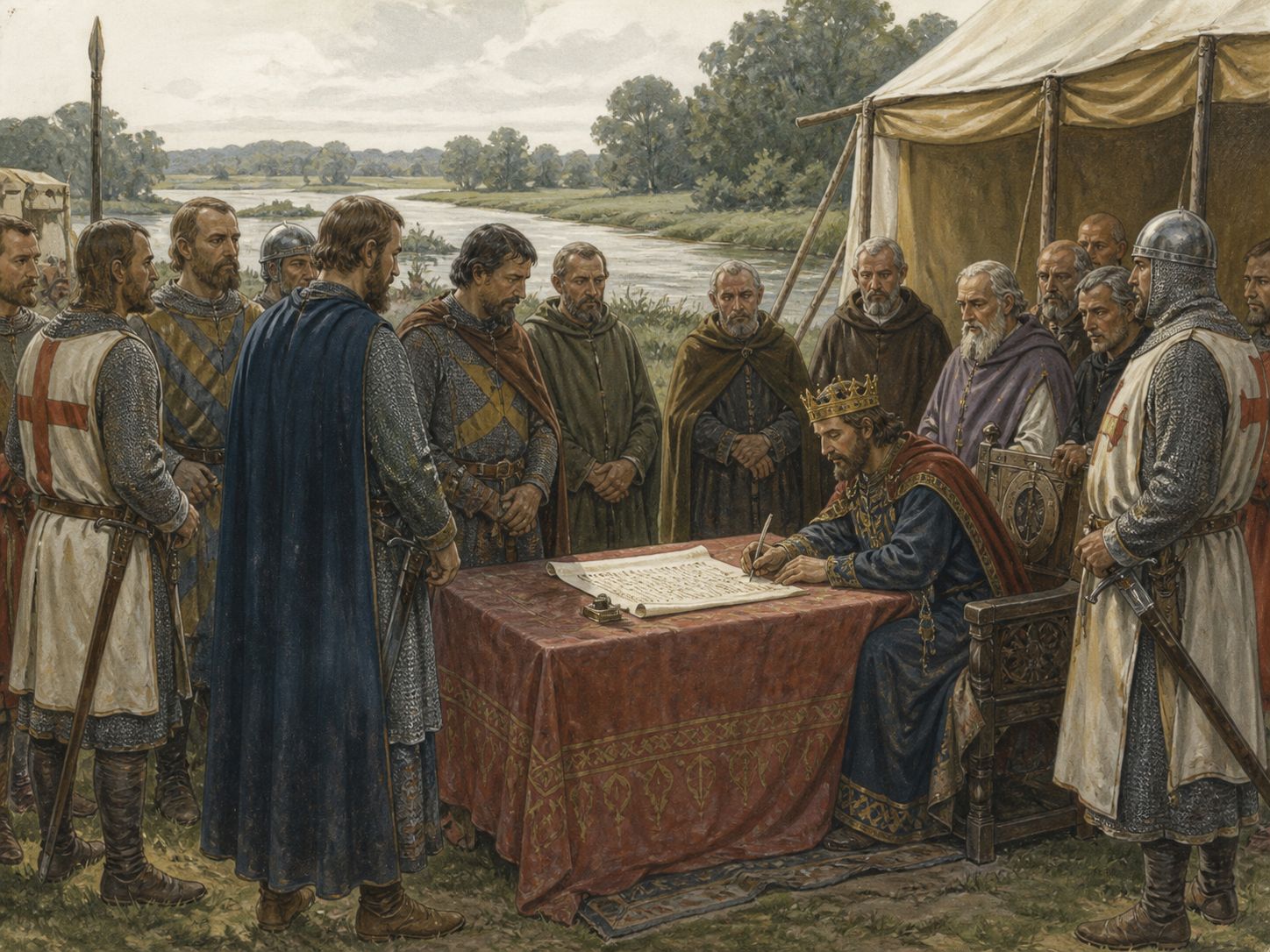
Magna Carta did not create modern democracy in a single act, but later arguments about a monarch bound by law made it an important source for constitutional history.
- Magna Carta did not create modern democracy in a single act, but later arguments about a monarch bound by law made it an important source for constitutional history.
- Immediate consequence: The 1215 charter did not prevent civil war, and a revised version was issued after John’s death. Its clauses on taxation, judgment, and legal protection remained politically resonant.
- Historical turning point: The charter King John accepted at Runnymede in 1215 during his conflict with the barons, later remembered for placing royal authority within law and custom.
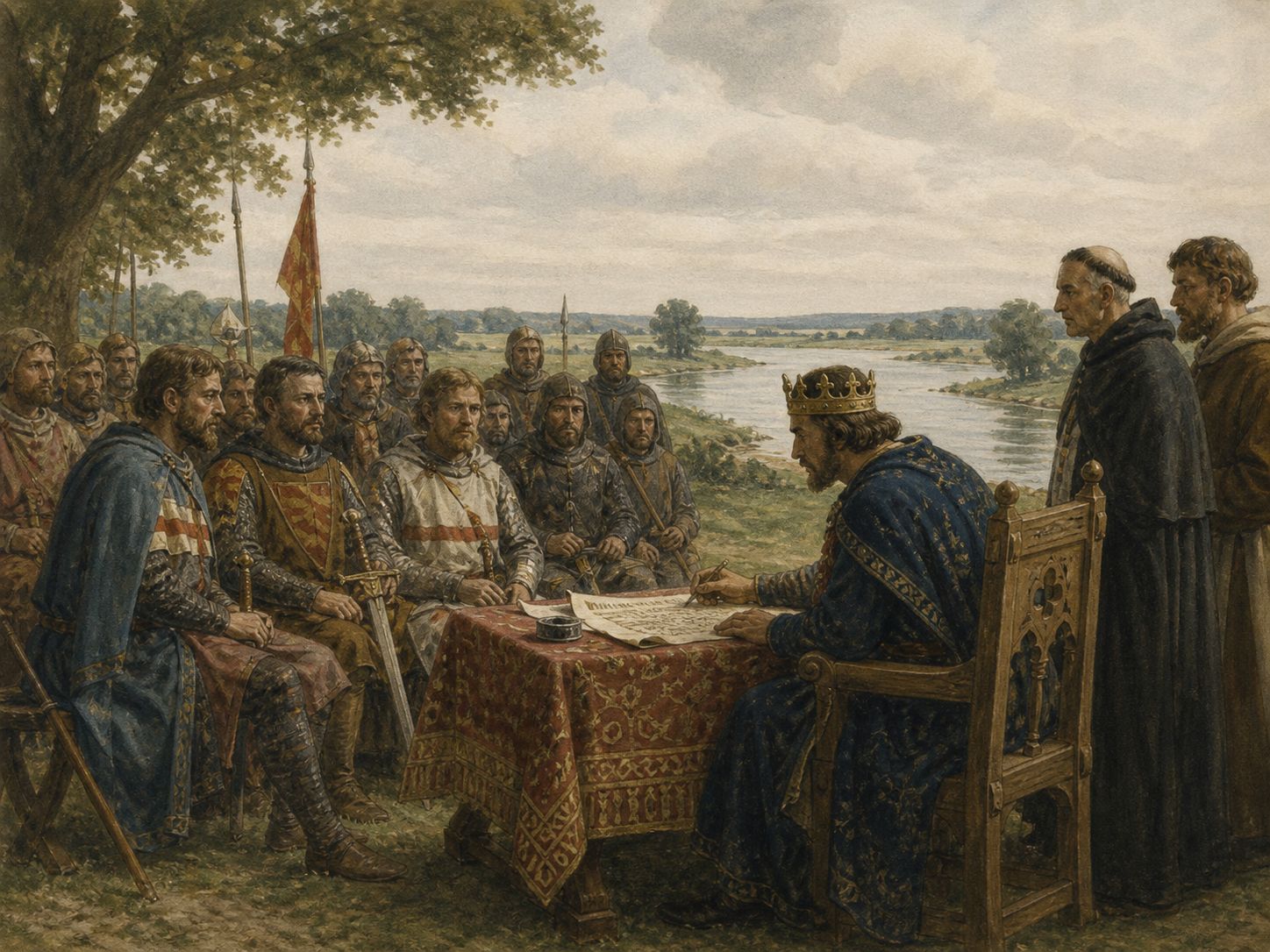


Related events
c. 1214
Baronial pressure
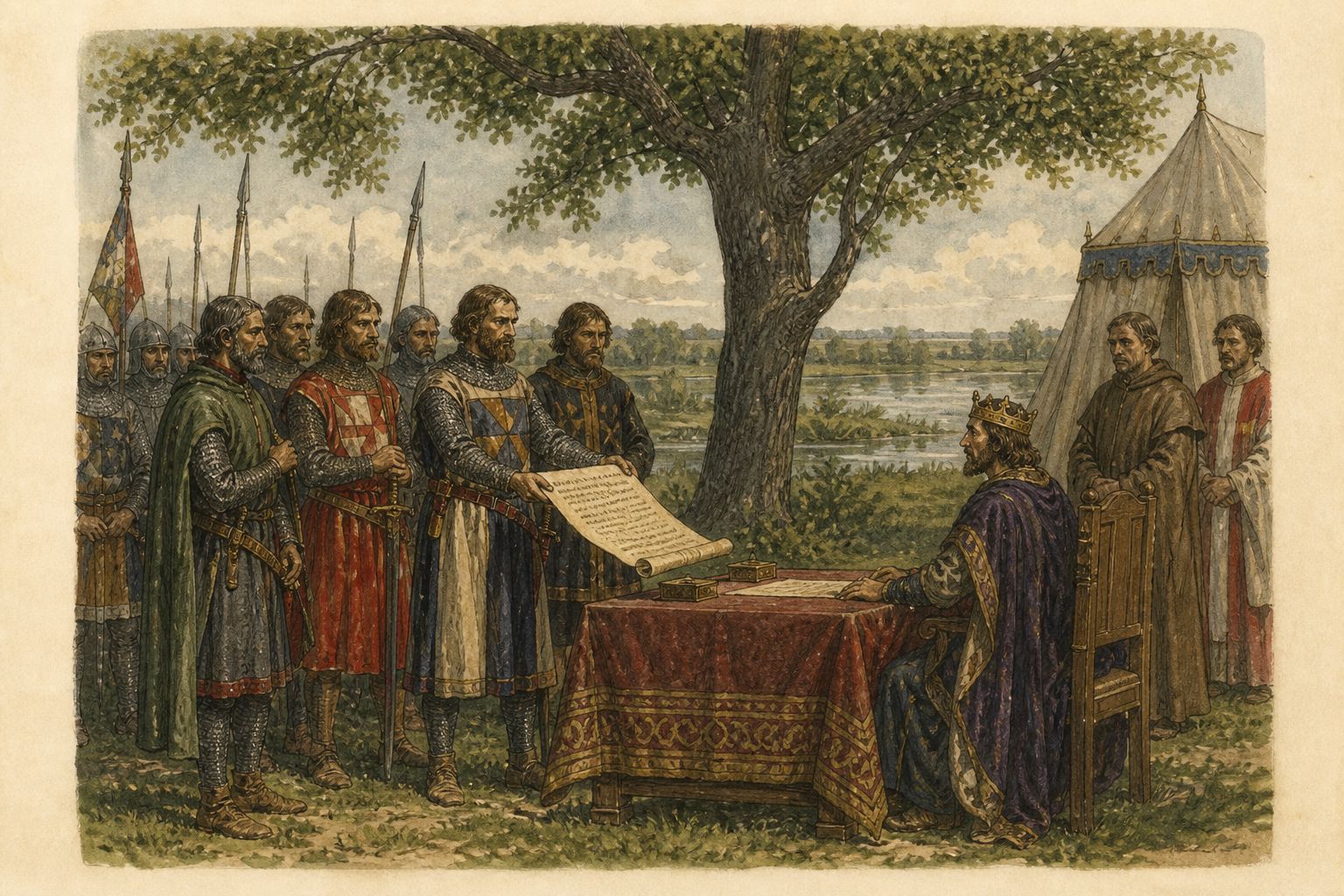
Baronial pressure — Build-up: Rebel barons seized London and forced negotiations. John accepted the charter at Runnymede in June 1215; it was annulled soon afterward but reissued and reinterpreted later.
1215
Negotiation at Runnymede
Current event
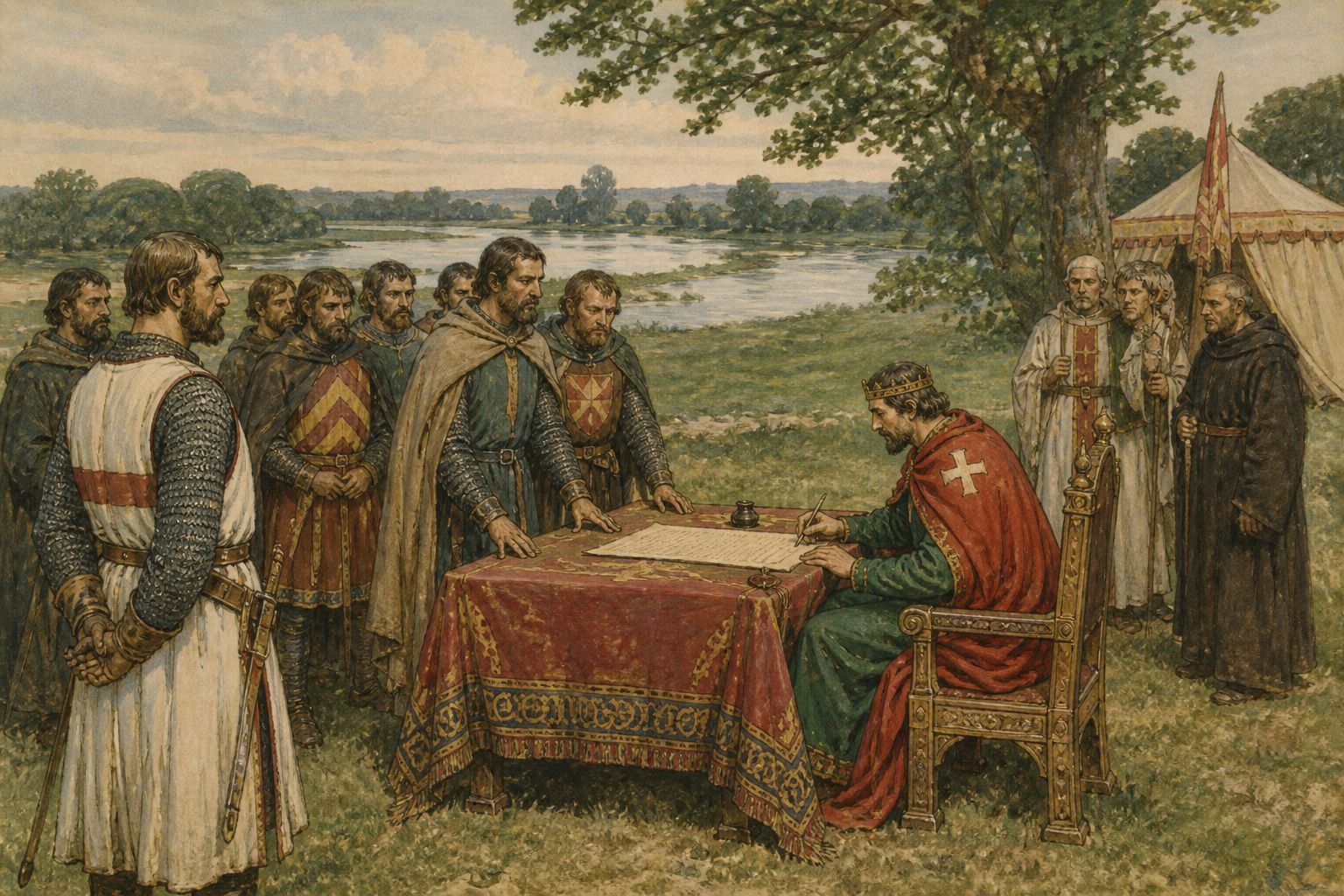
Negotiation at Runnymede — Central transition: The charter King John accepted at Runnymede in 1215 during his conflict with the barons, later remembered for placing royal authority within law and custom.
1215
Sealing the charter
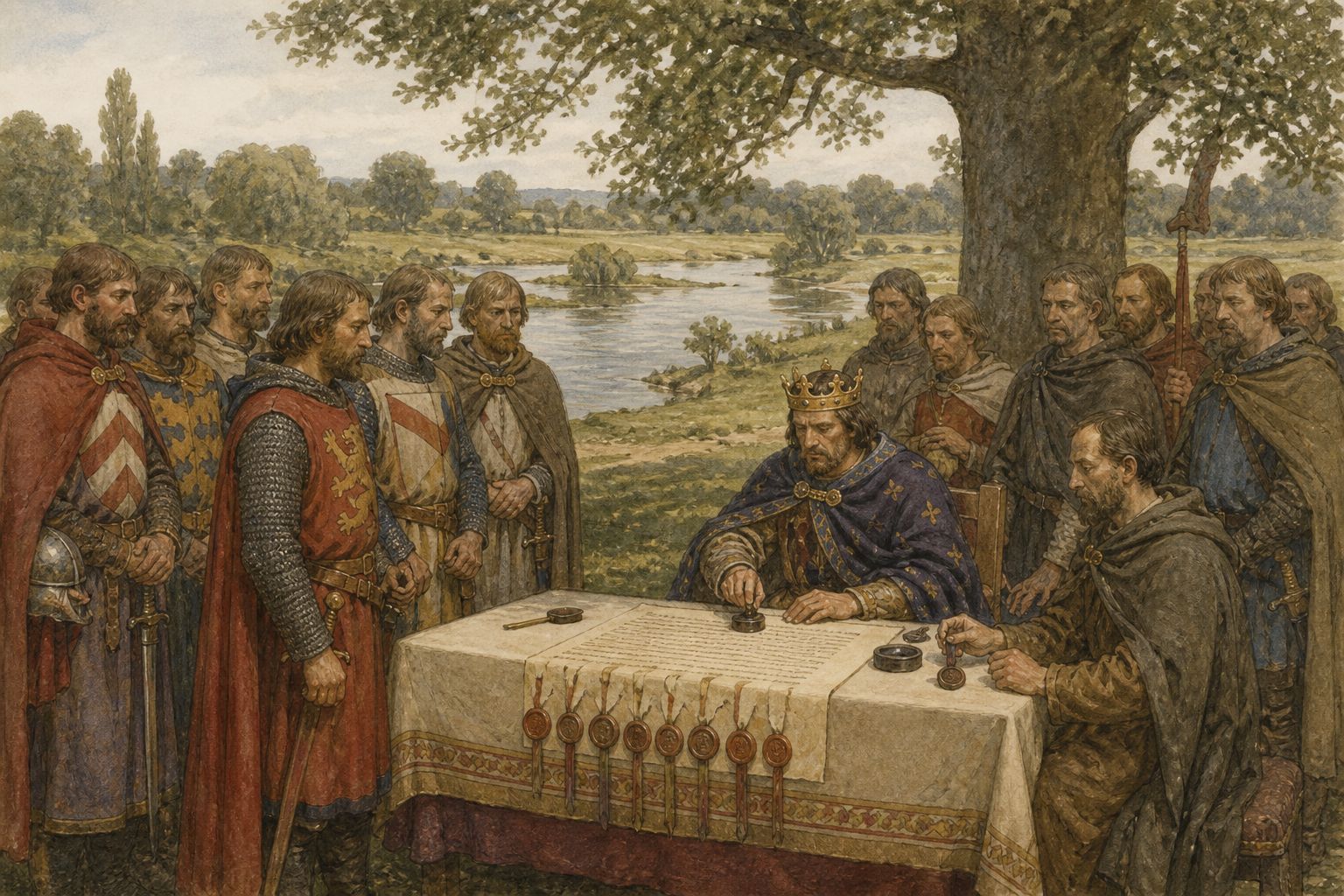
Sealing the charter — Immediate result: The 1215 charter did not prevent civil war, and a revised version was issued after John’s death. Its clauses on taxation, judgment, and legal protection remained politically resonant.
c. 1216–c. 1297
Reissue and legacy
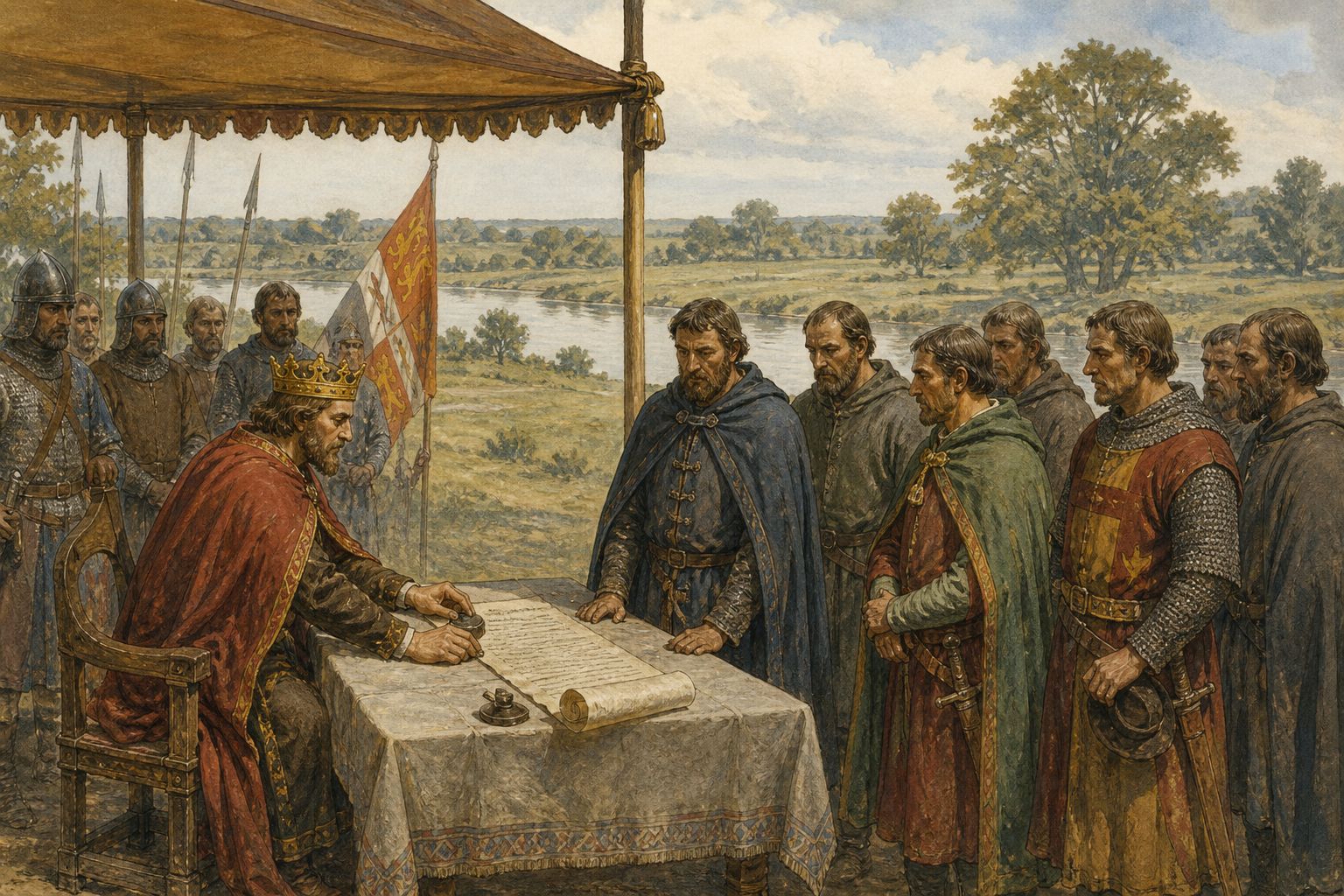
Reissue and legacy — Long-term significance: Magna Carta did not create modern democracy in a single act, but later arguments about a monarch bound by law made it an important source for constitutional history.
c. 1689
Constitutional memory
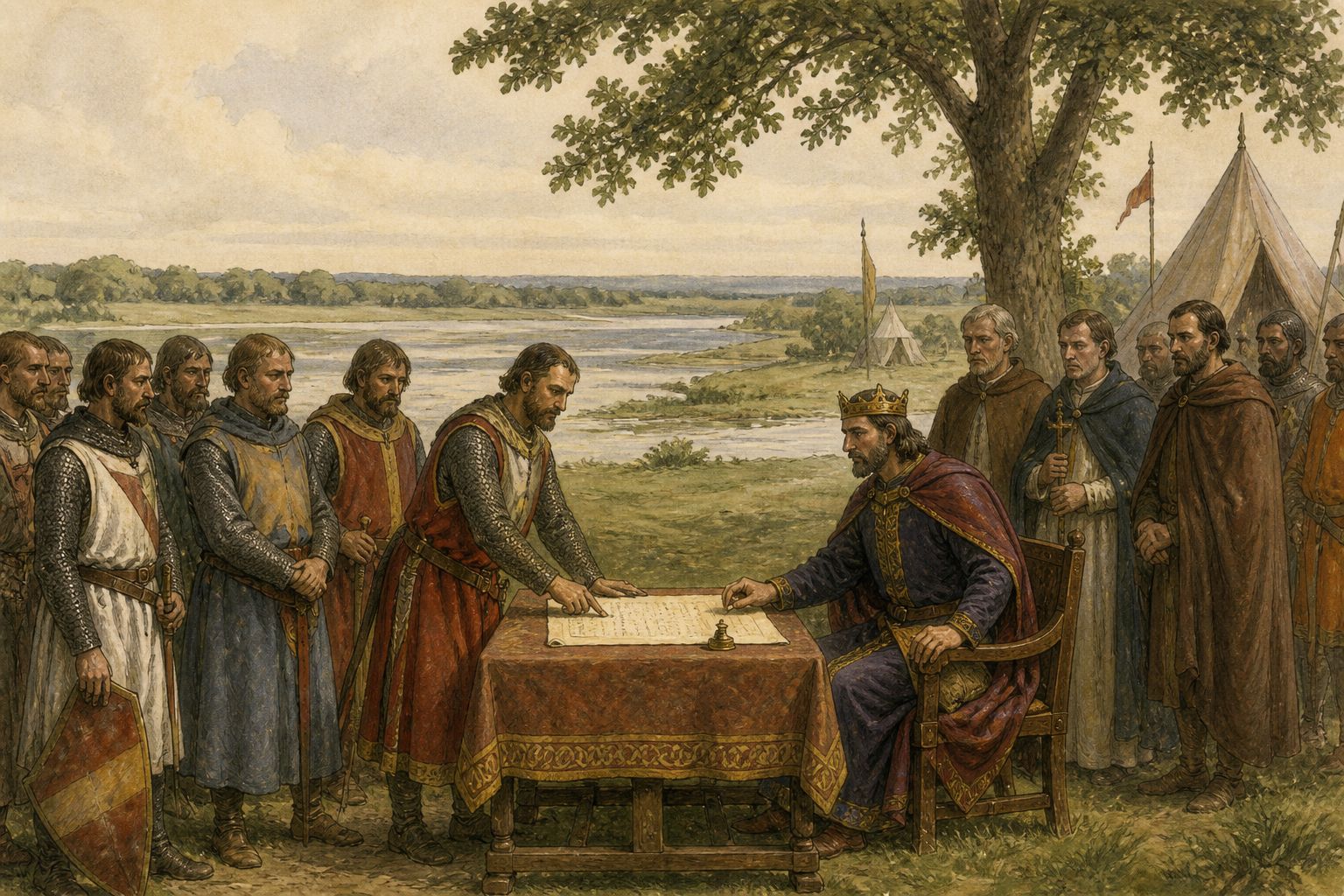
Constitutional memory — Long-term significance: Magna Carta did not create modern democracy in a single act, but later arguments about a monarch bound by law made it an important source for constitutional history.


Sources
- Magna Carta — Magna Carta (Encyclopaedia Britannica)www.britannica.comThis Encyclopaedia Britannica resource supports the chronology, setting, and course of Magna Carta.
- Magna Carta — Hd Magna Carta (The Metropolitan Museum of Art)www.metmuseum.orgThis The Metropolitan Museum of Art resource supports the chronology, setting, and course of Magna Carta.
- Magna Carta — Magna Carta (World History Encyclopedia)www.worldhistory.orgThis World History Encyclopedia resource supports the chronology, setting, and course of Magna Carta.