
Mahdist War
1881–1899
From 1881 to 1899, Muhammad Ahmad led a Sudanese revolt framed by religious reform and resistance to taxation, and war continued through the Anglo-Egyptian reconquest.

- Period
- 1881–1899
- Kind
- Rebellion
- Regions
- Africa
- Keywords
- Mahdist movement · Sudan · Nile River · Khartoum · Colonialism
Follow the story · Four stages
Background
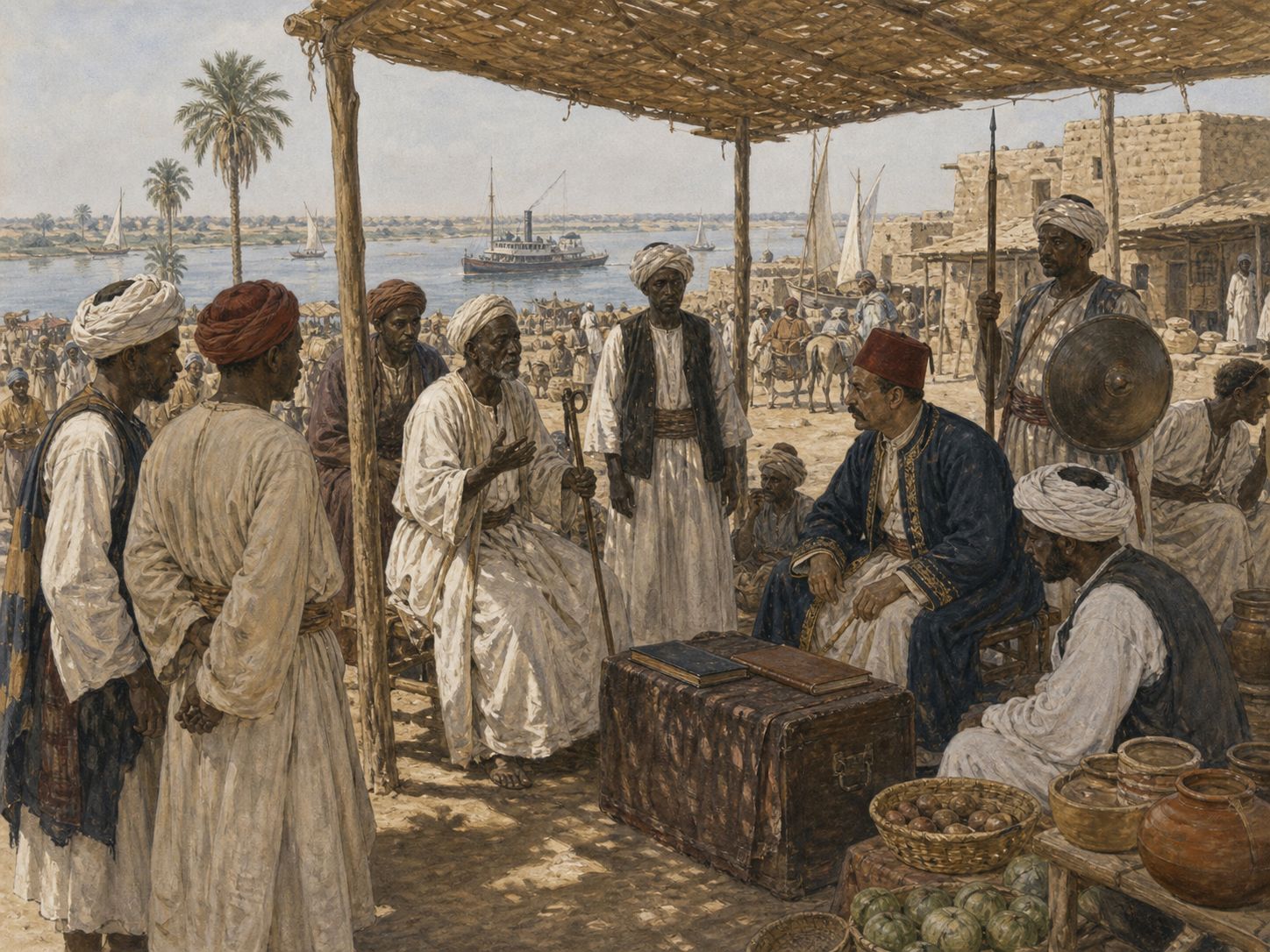
Egyptian-Ottoman rule unsettled local communities through taxation, campaigns, and the suppression of the slave trade. The religious leader Muhammad Ahmad gathered support on Aba Island.
- Taxation and administration under Egyptian-Ottoman rule deepened Nile Valley discontent
- Religious leaders and communities sought a new source of legitimacy
- British imperial policy widened the crisis in Sudan
Course
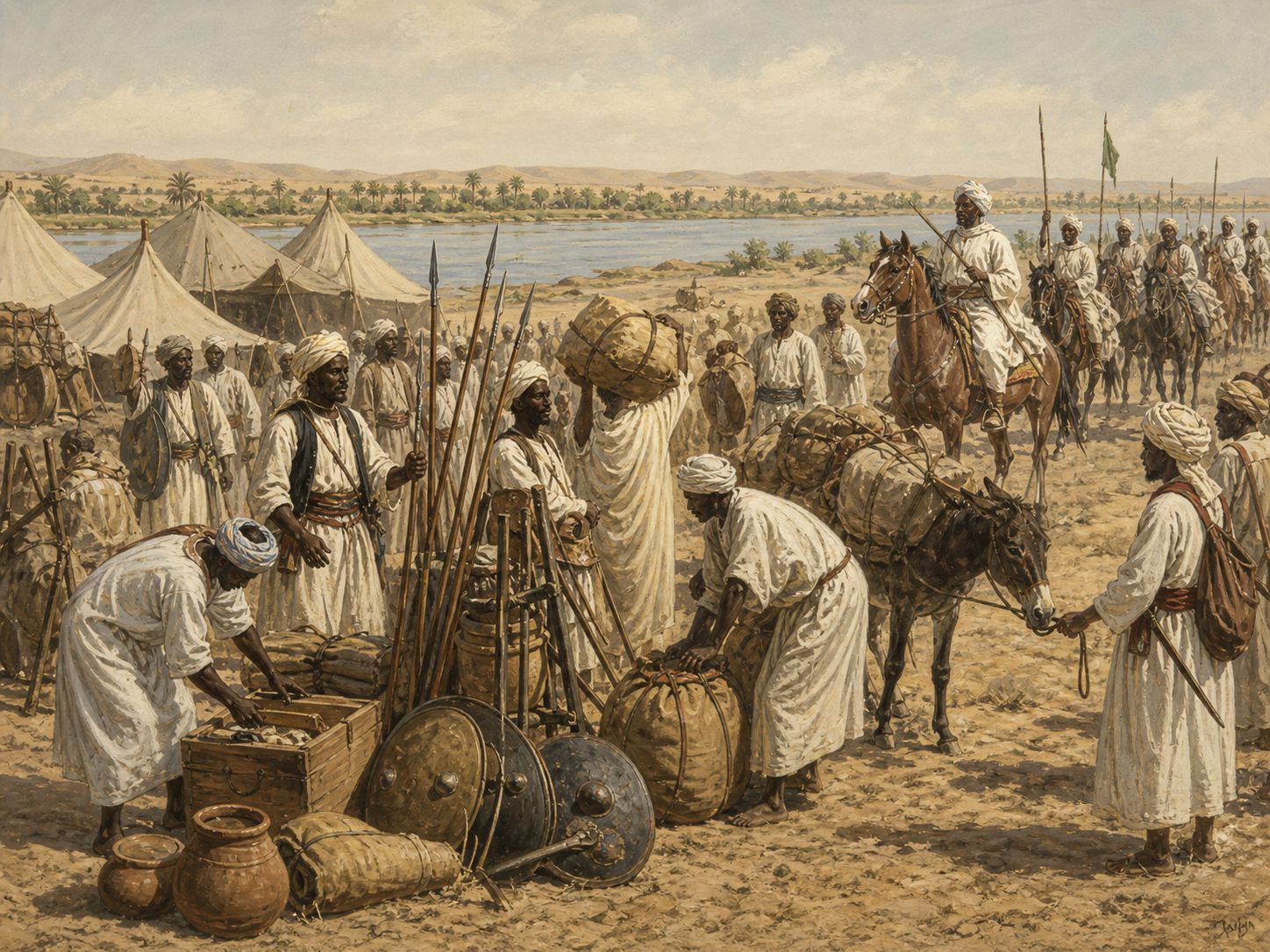
After the 1881 proclamation, Mahdist forces defeated government columns and captured Khartoum in 1885. After building a state, Anglo-Egyptian forces advanced down the Nile and defeated the main army at Omdurman in 1898.
- Muhammad Ahmad proclaimed himself the Mahdi
- Mahdist forces captured garrisons and Khartoum
- Anglo-Egyptian forces reconquered the country after Omdurman
Outcome
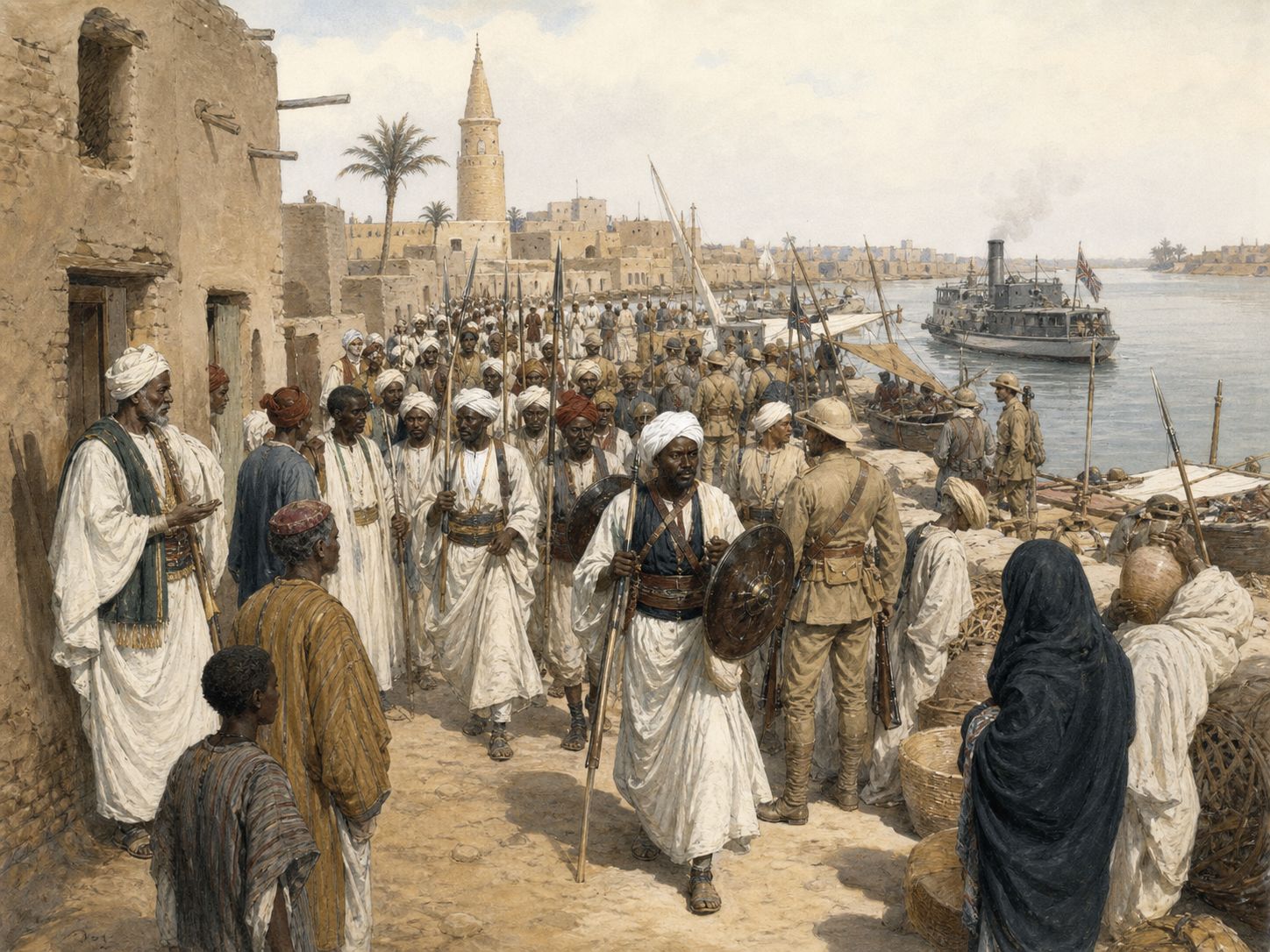
The Mahdist state survived its founder but was replaced by Anglo-Egyptian condominium rule after defeat in 1898 and the end of organized resistance in 1899. The war shaped Sudanese political memory.
- A Mahdist state governed the middle Nile
- Anglo-Egyptian rule returned to Sudan after 1898
- The revolt remained central to debates about colonial rule and religious politics
Historical significance
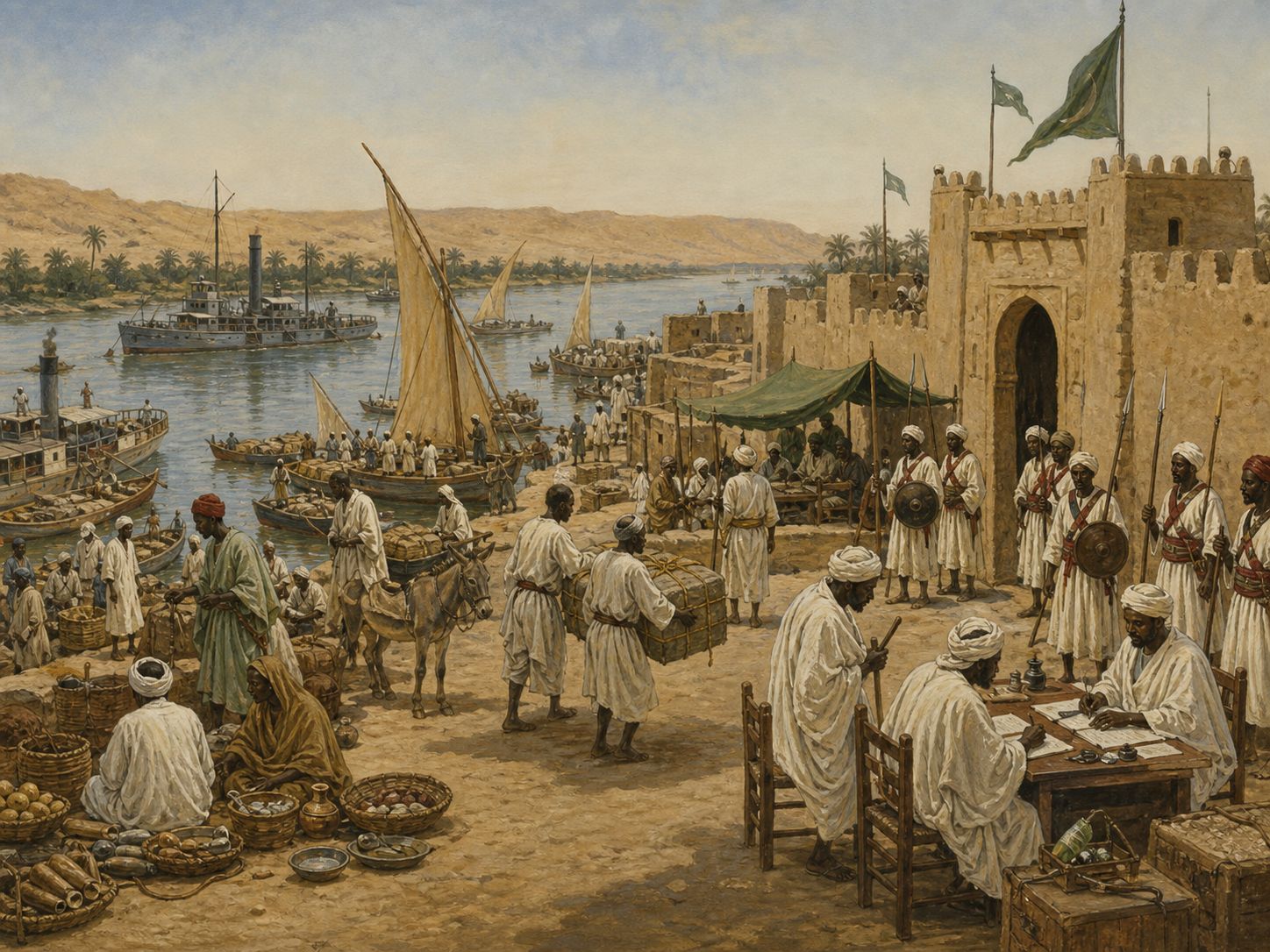
The war joined resistance to imperial rule, Islamic legitimacy, and regional military mobilization. Omdurman became a symbol of the asymmetry between modern firepower and mass mobilization.
- Religious legitimacy became bound up with resistance to colonial power
- River transport and supply determined the state’s survival
- The movement shaped Sudanese politics for decades


Related figures
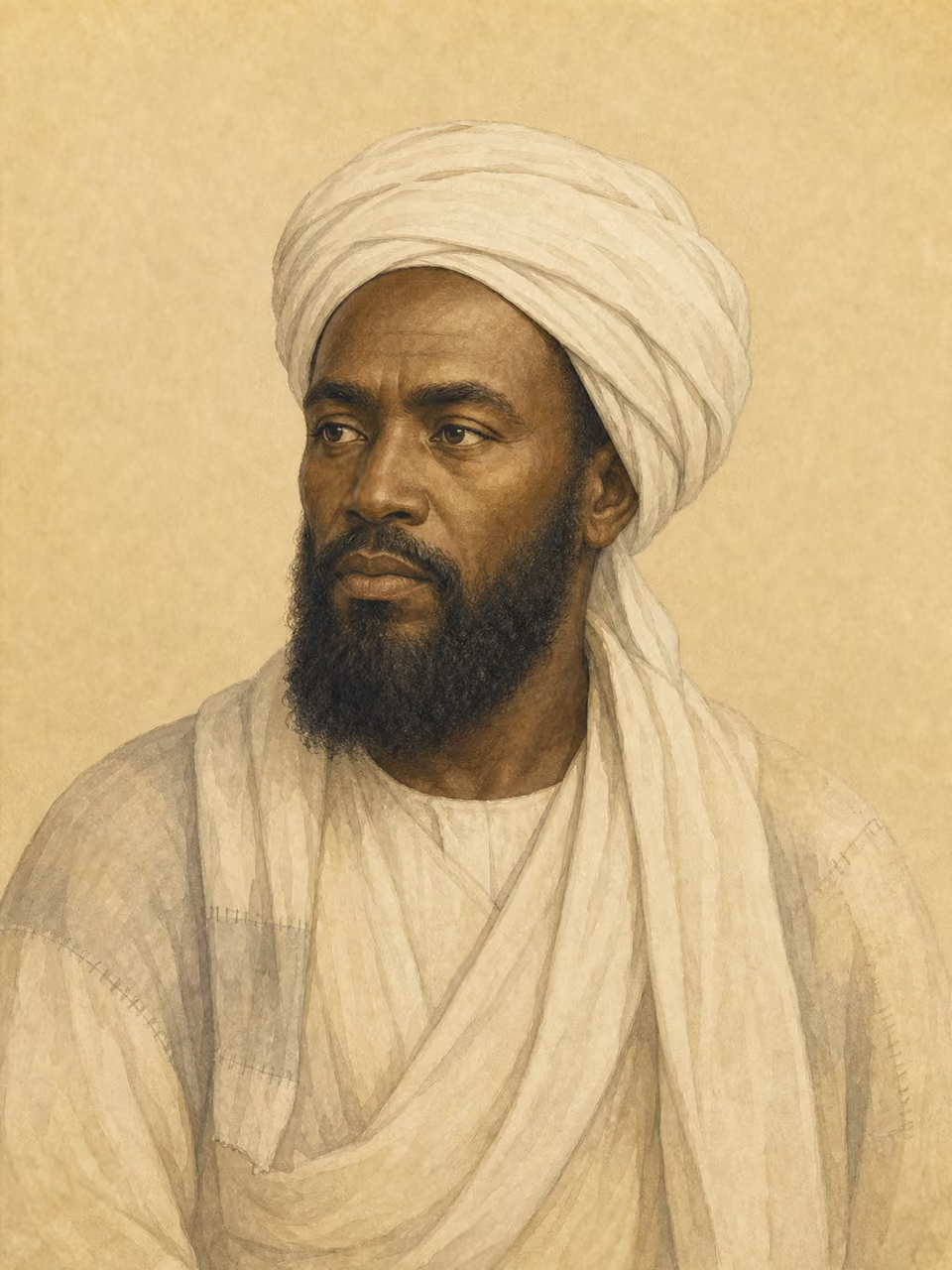
Related events
1881
Tax and authority
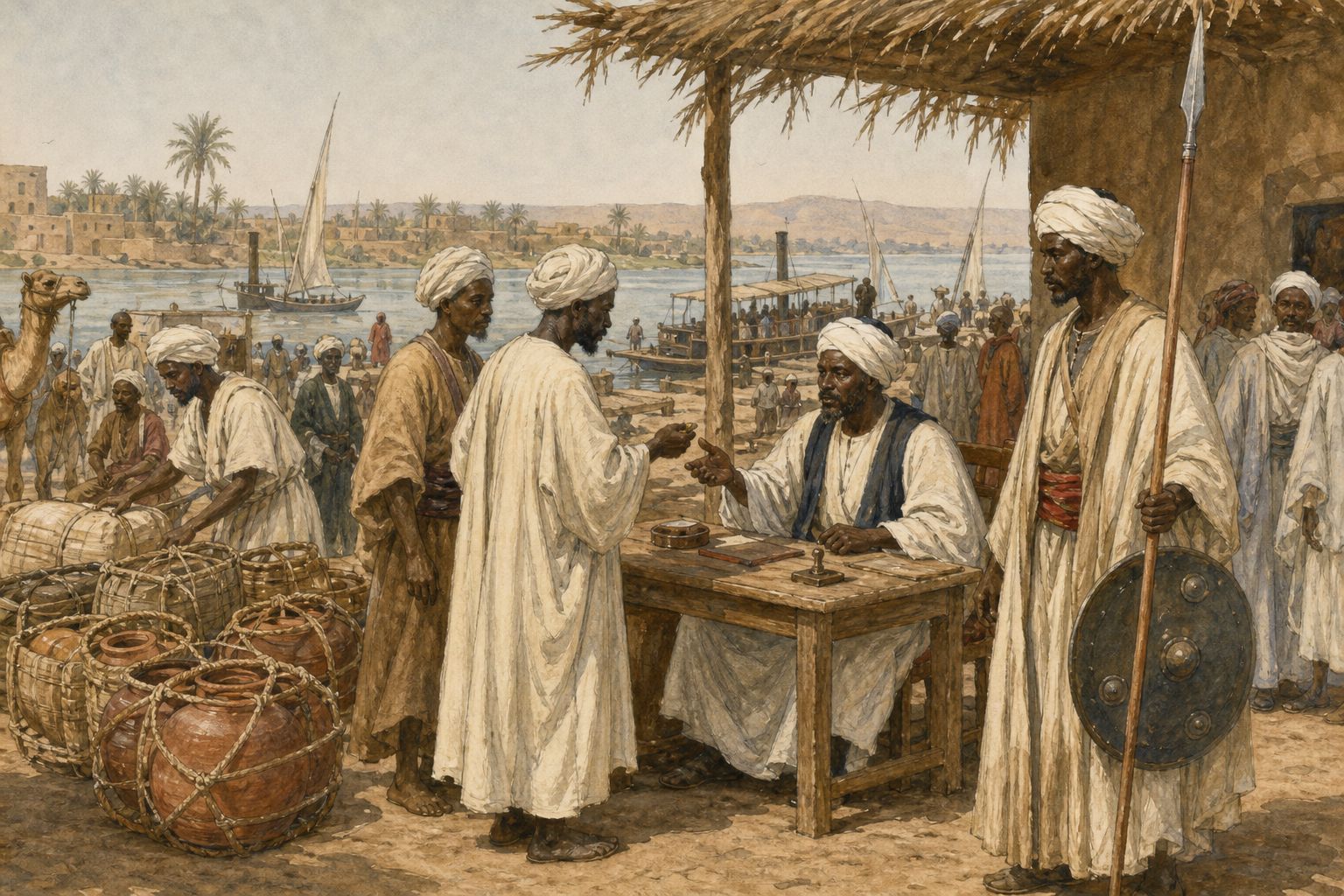
Fiscal and administrative pressure connected the grievances of merchants, farmers, and religious figures along the Nile.
1881
The Mahdi proclaimed
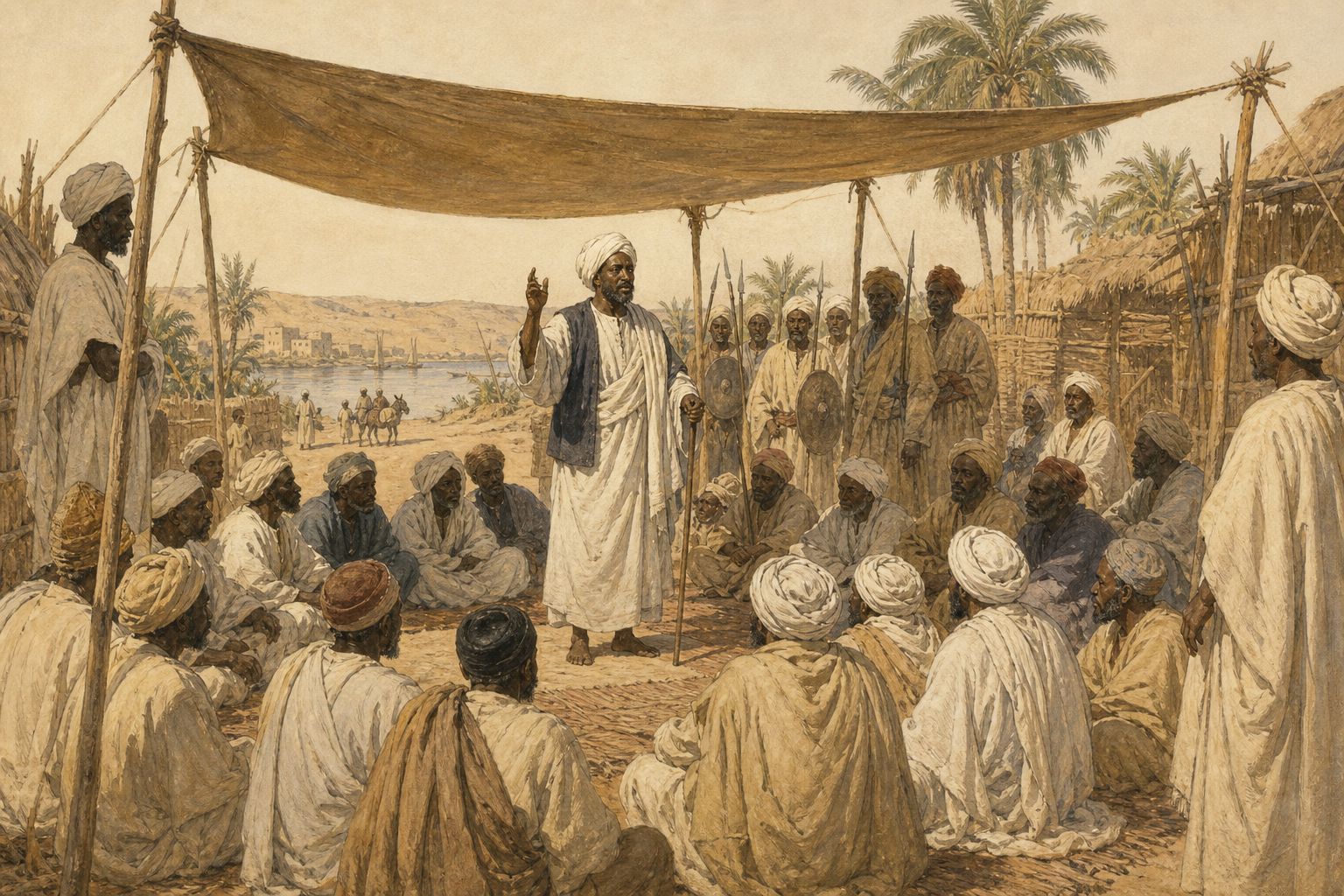
Muhammad Ahmad asserted religious legitimacy and gathered local support into a single movement.
1885
Khartoum falls
Current event
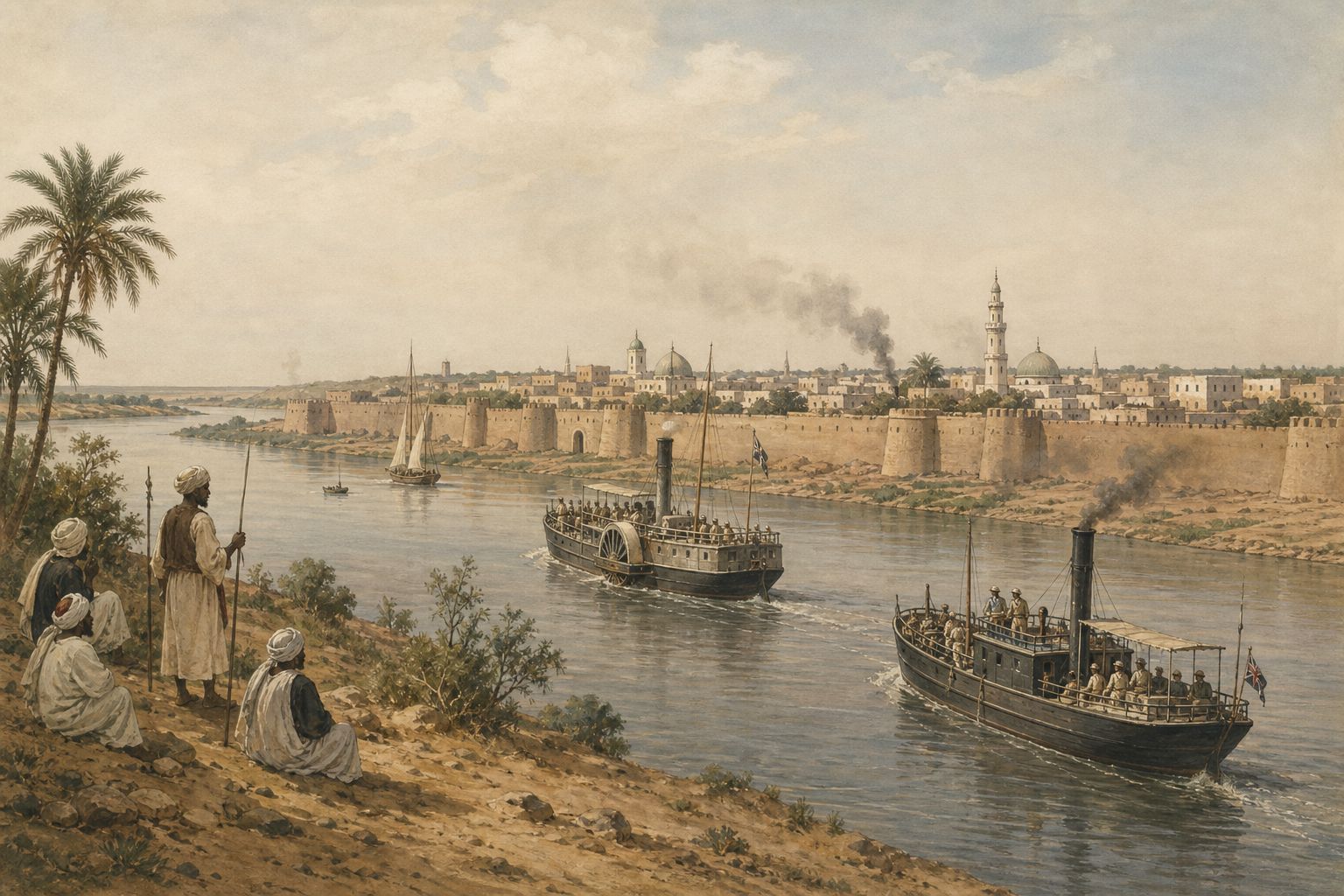
After siege and broken supply lines, Khartoum fell in 1885 and the rebel state reached its height.
1885–1898
The Mahdist state
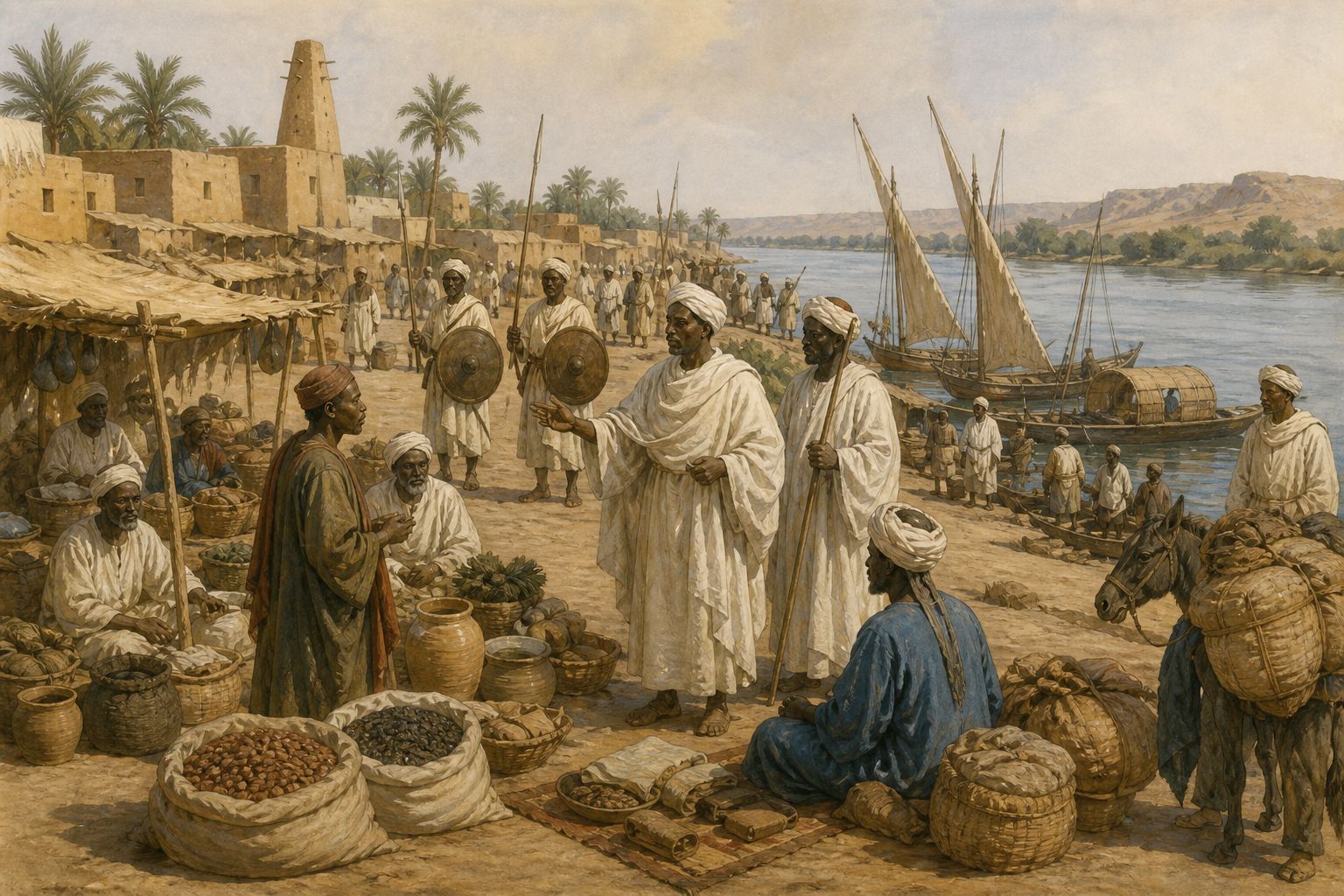
From Omdurman, officials organized administration and trade across a wide stretch of the Nile.
1898–1899
Reconquest
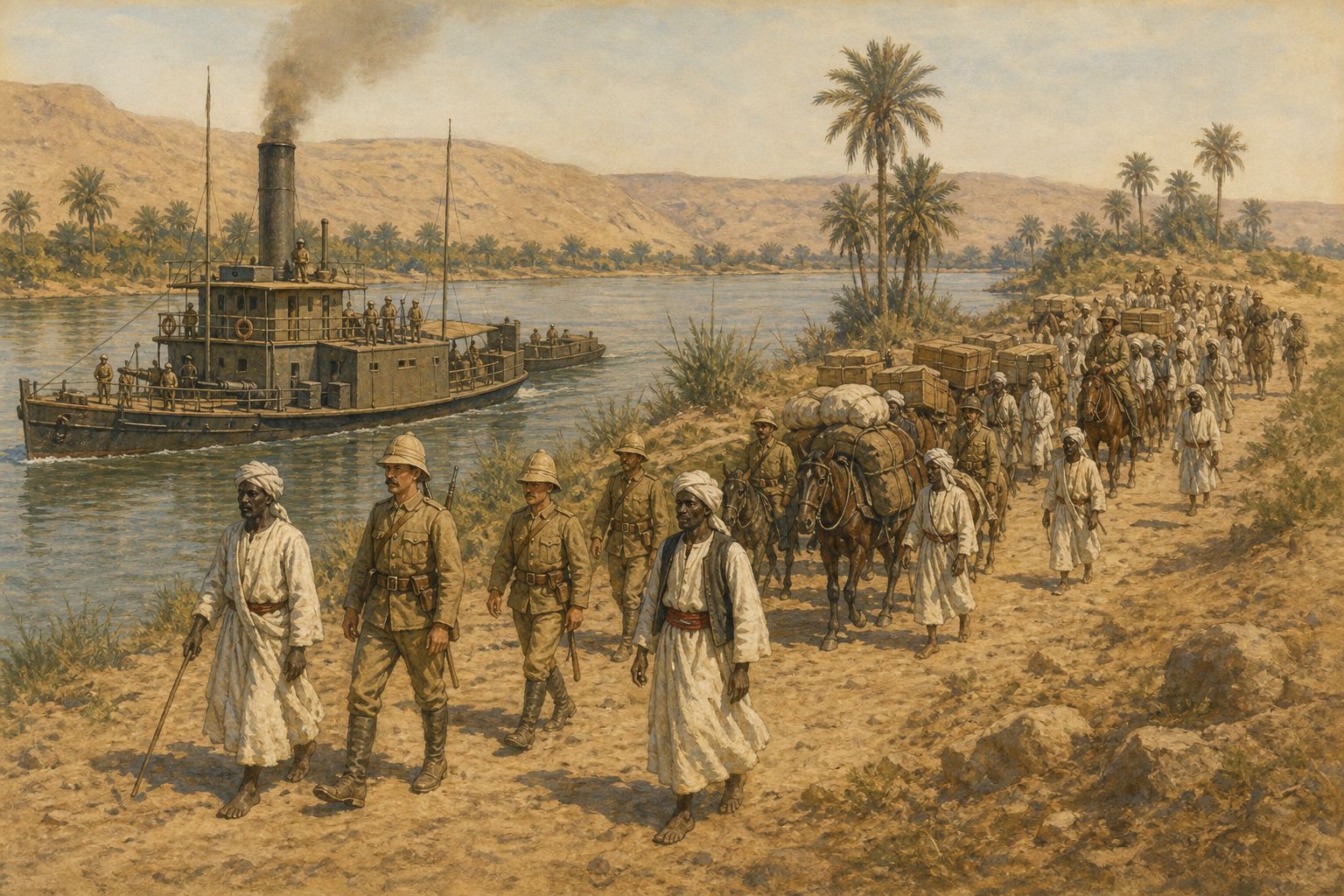
Anglo-Egyptian forces combined a river fleet with modern weapons to restore control from 1898.


Sources
- Mahdist WarWorld History EncyclopediaOverview of the war’s background, course, and state formation.
- Mahdist revoltEncyclopaedia BritannicaHistorical account of the revolt and its relationship to Egyptian and British rule.
- The Battle of OmdurmanImperial War MuseumsHistorical account of the reconquest phase and the Battle of Omdurman.