Foundation of the Mongol Empire
1206
In 1206, a kurultai acclaimed Temüjin as Chinggis Khan, turning the unification of Mongol tribes into the foundation of an empire.

- Period
- 1206
- Kind
- Movement
- Regions
- Southeast Asia
- Keywords
- kurultai · Chinggis Khan · steppe unification · relay stations · Eurasia
Follow the story · Four stages
Background
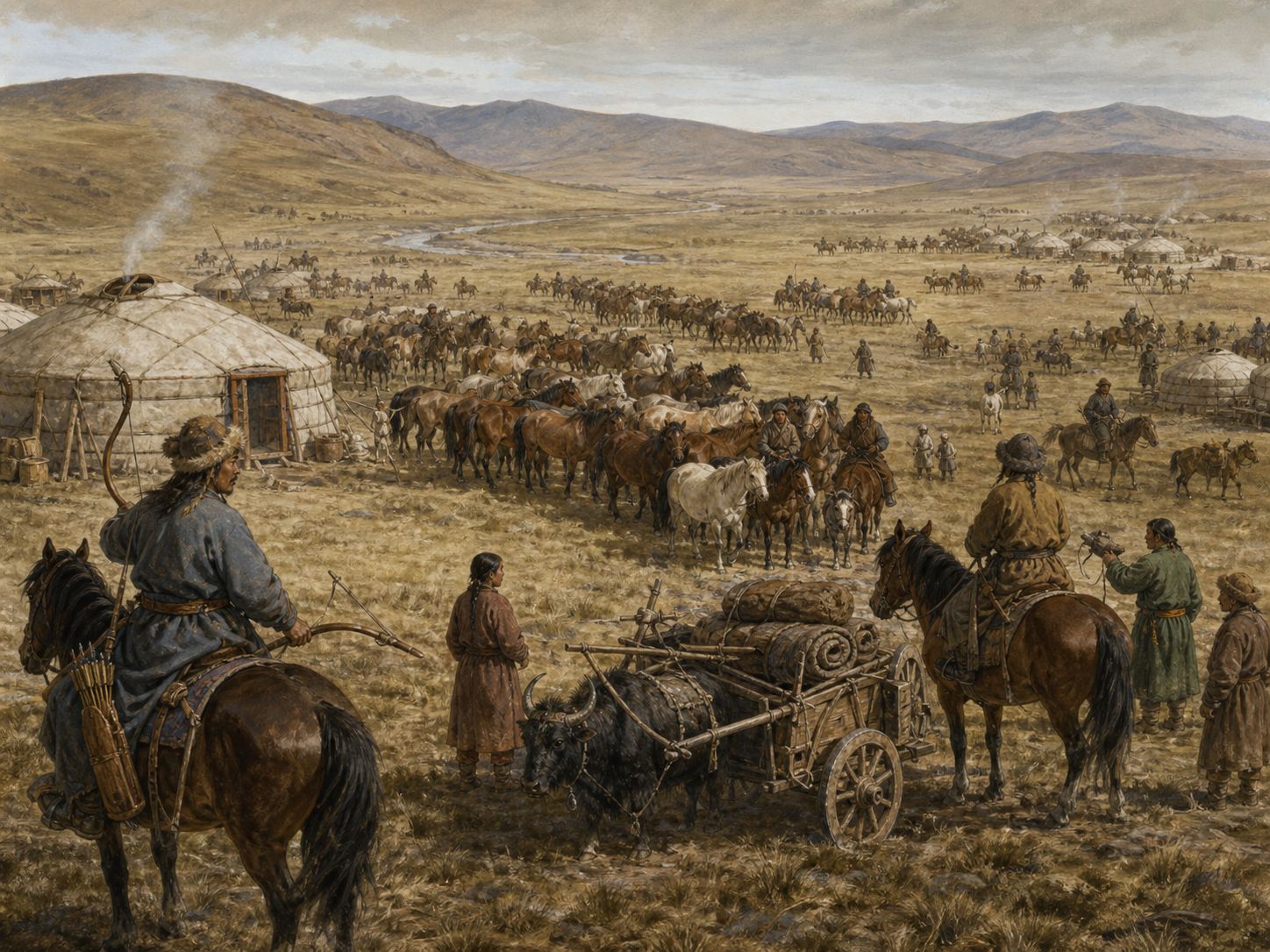
Steppe communities were divided by kinship, alliance, and rival followings, but Temüjin broadened support through marriage, diplomacy, warfare, and reorganization.
- Steppe communities were divided by competing kinship ties and alliances
- Pastoral mobility and herds supported the political and military economy
- Temüjin expanded support through marriage, diplomacy, and warfare
Course
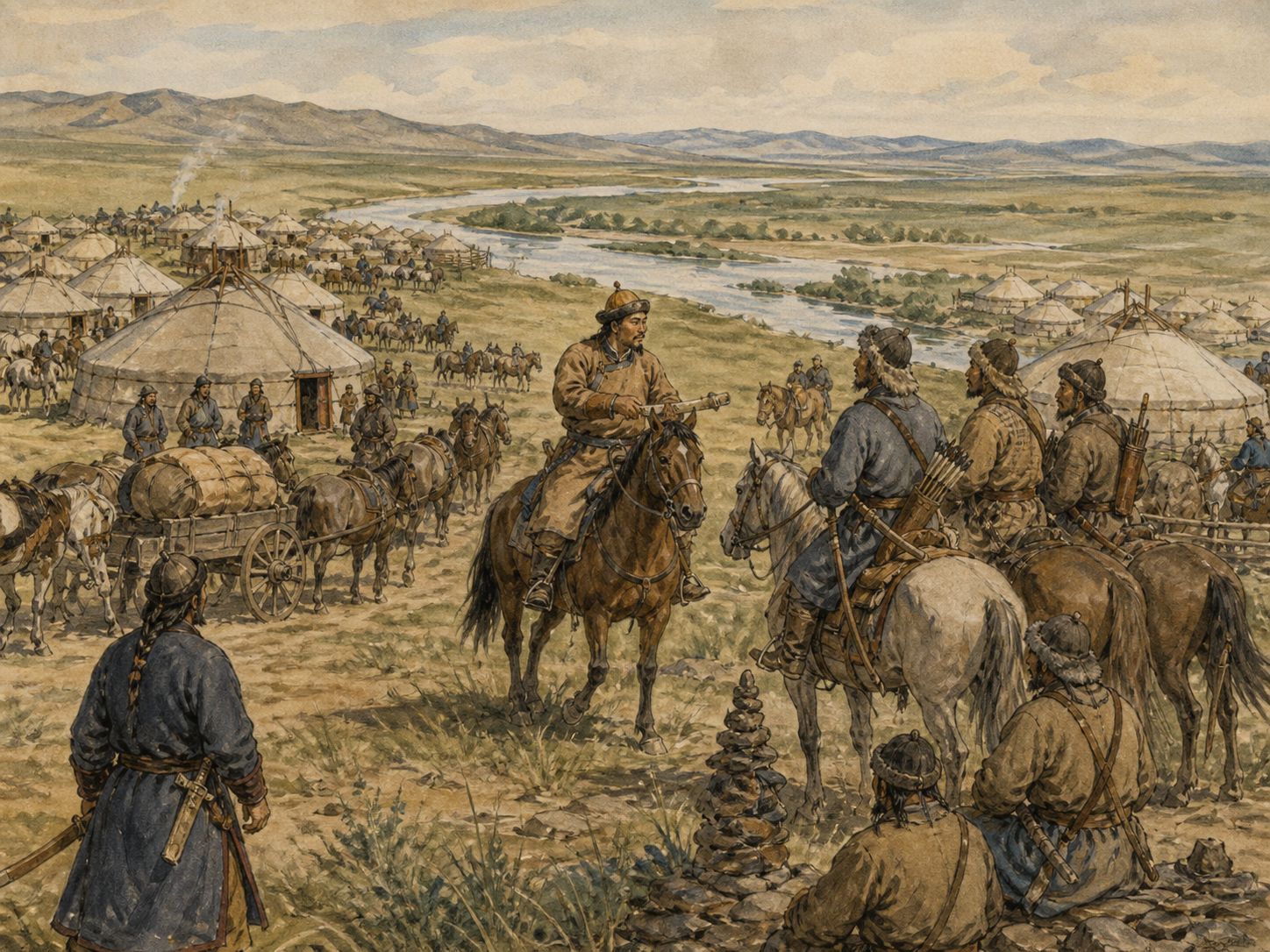
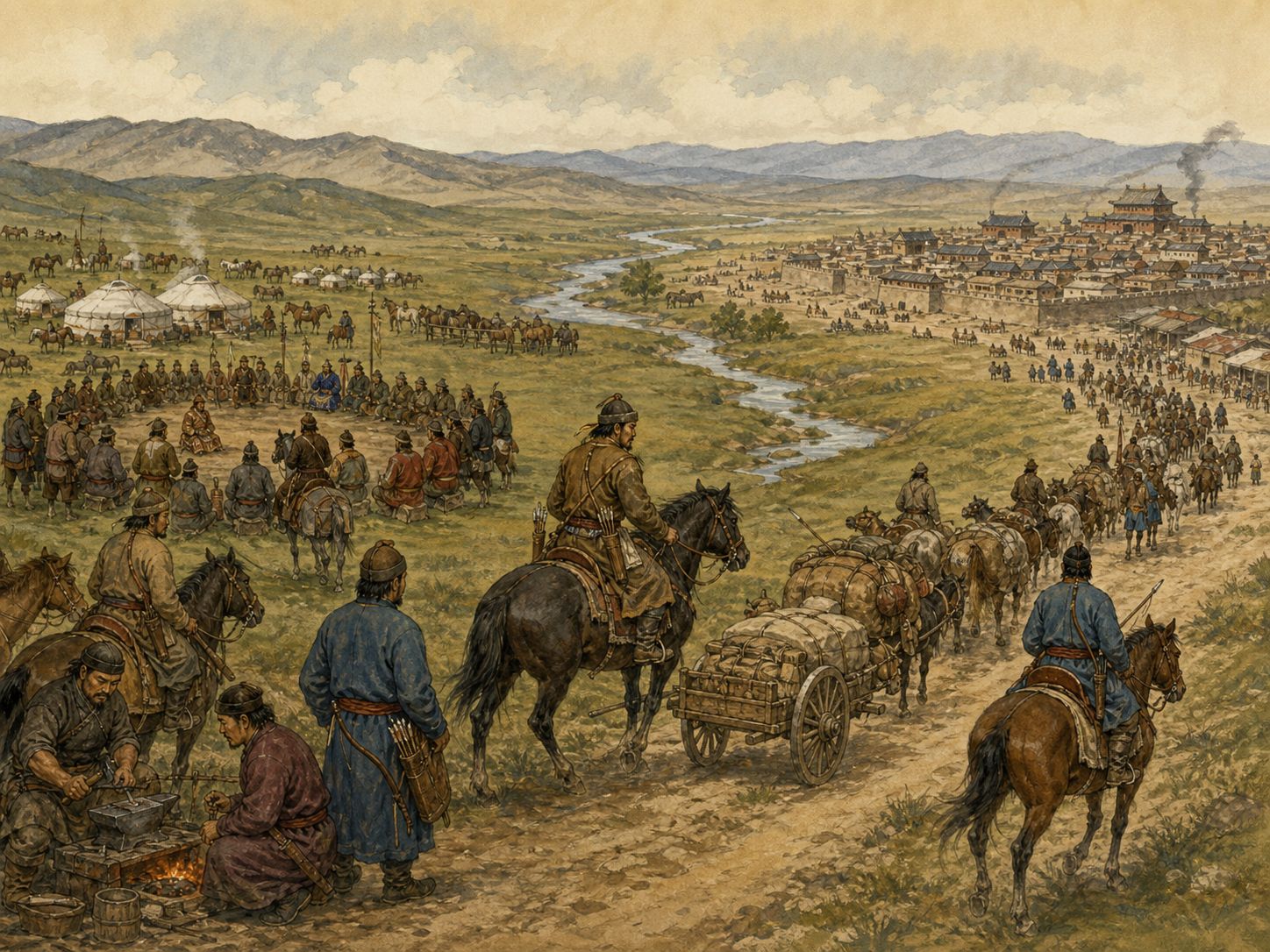
Temüjin brought Tatars, Kereyids, Naimans, and other groups into his coalition, reordered tribal ranks, and built systems for military mobilization and communication.
- Conflict and coalition with Tatars, Kereyids, Naimans, and others reshaped the steppe
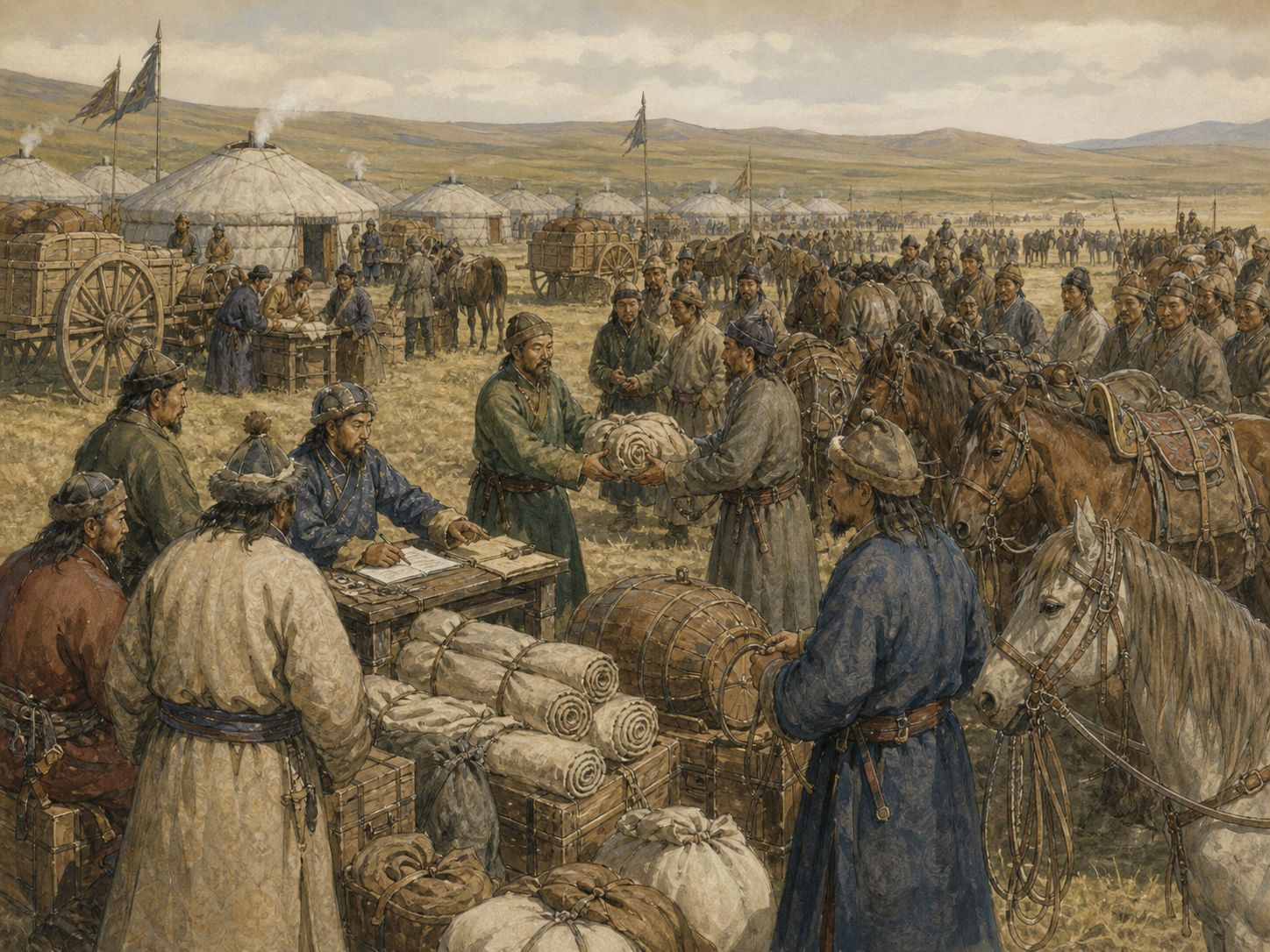
- Leaders and provisions gathered for a great kurultai
- Institutions for military organization and relay communication took shape
Outcome
Recognized as universal ruler at the 1206 assembly, the Mongol polity gained the base for expansion and governance across northern China and Central Asia.
- In 1206, Temüjin was acclaimed as Chinggis Khan
- A unified Mongol polity gained a base for expansion into northern China and Central Asia
- Military mobilization, household organization, and messenger routes became linked
Historical significance
The mobilization capacity of a pastoral society became a transcontinental network of conquest, relay stations, and exchange that reshaped movement across Eurasia.
- Steppe mobility became a political network spanning Eurasia
- Relay routes and trade corridors accelerated the movement of people, goods, and techniques
- The institutions of integration and rule mattered beyond the later conquests


Related events
c. 1162
A divided steppe
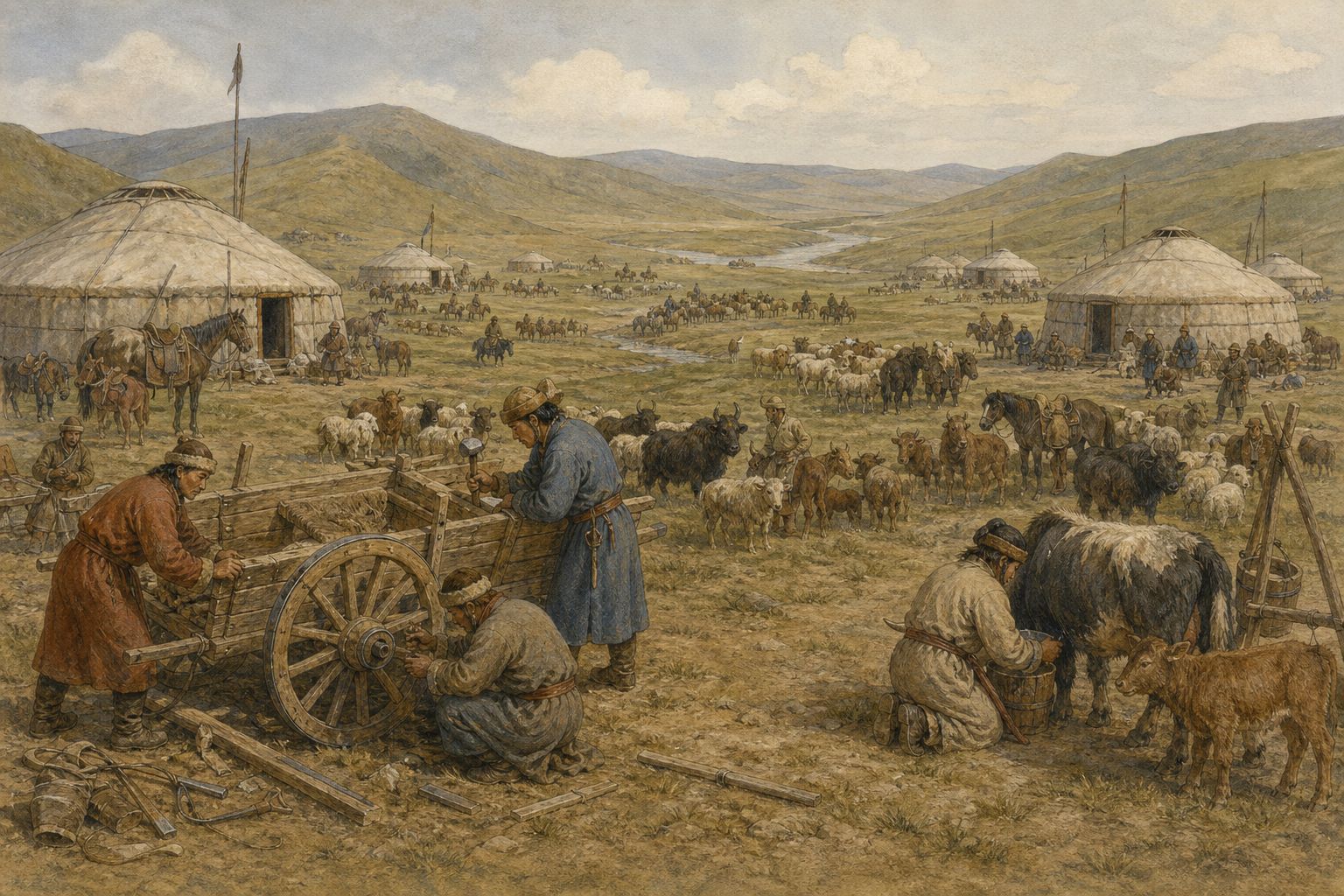
Competing tribal households relied on pastoral mobility and herds for daily life and political power.
c. 1178–c. 1201
Temüjin rises
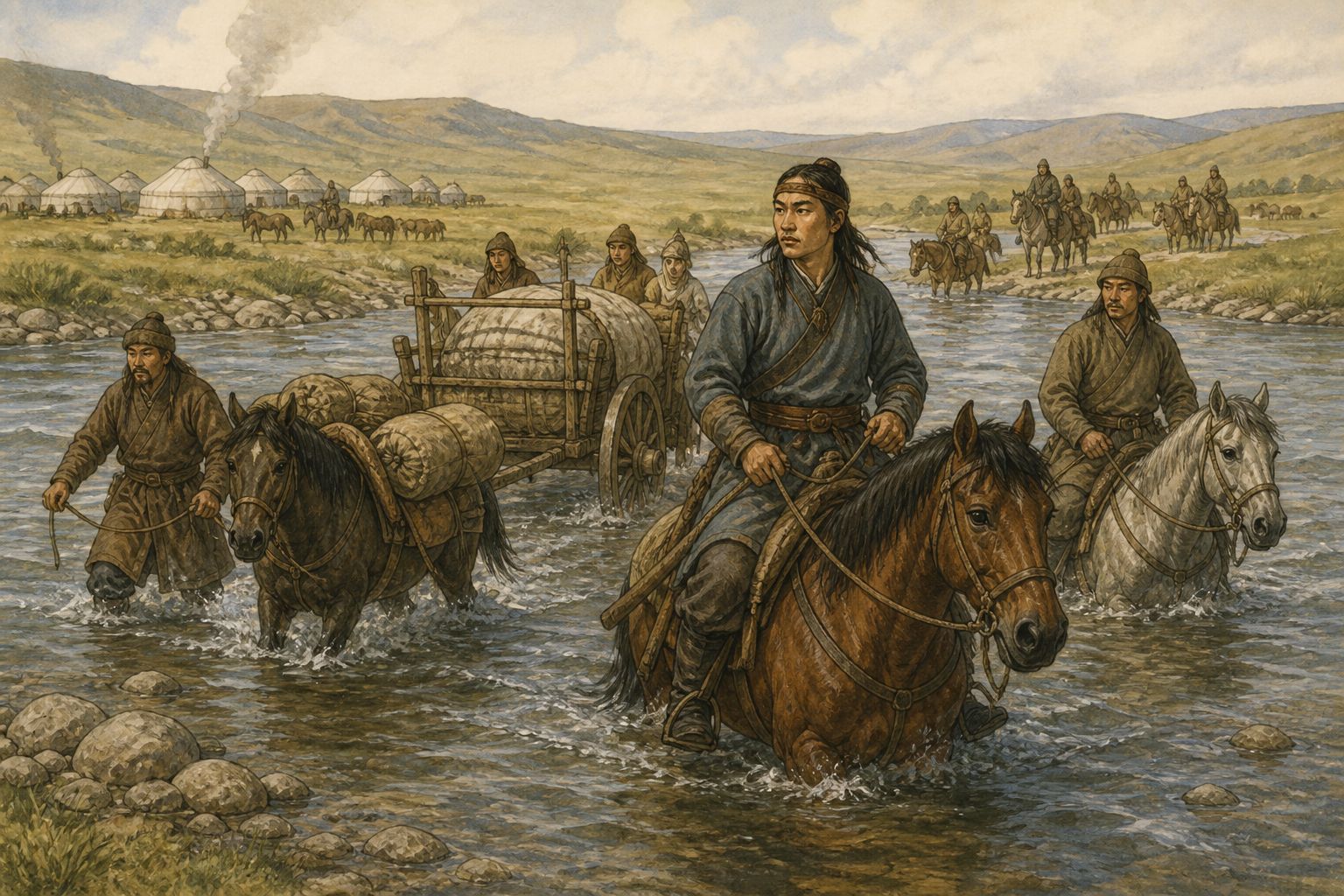
Through marriage, alliance, and warfare, Temüjin expanded support across the Onon and Kherlen grasslands.
1206
The 1206 kurultai
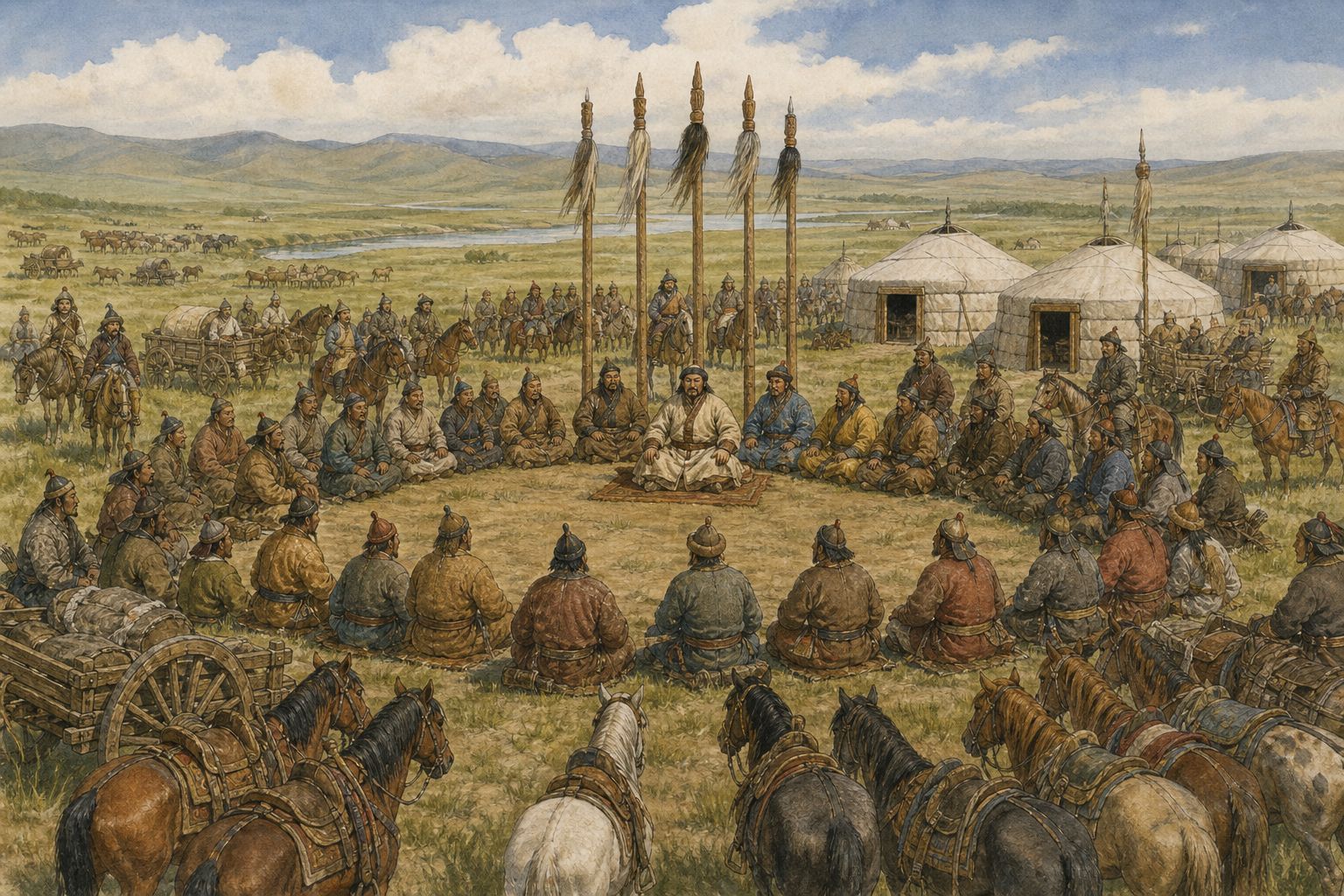
Steppe leaders gathered and acclaimed Temüjin as Chinggis Khan.
c. 1206–c. 1227
Relays and a new order
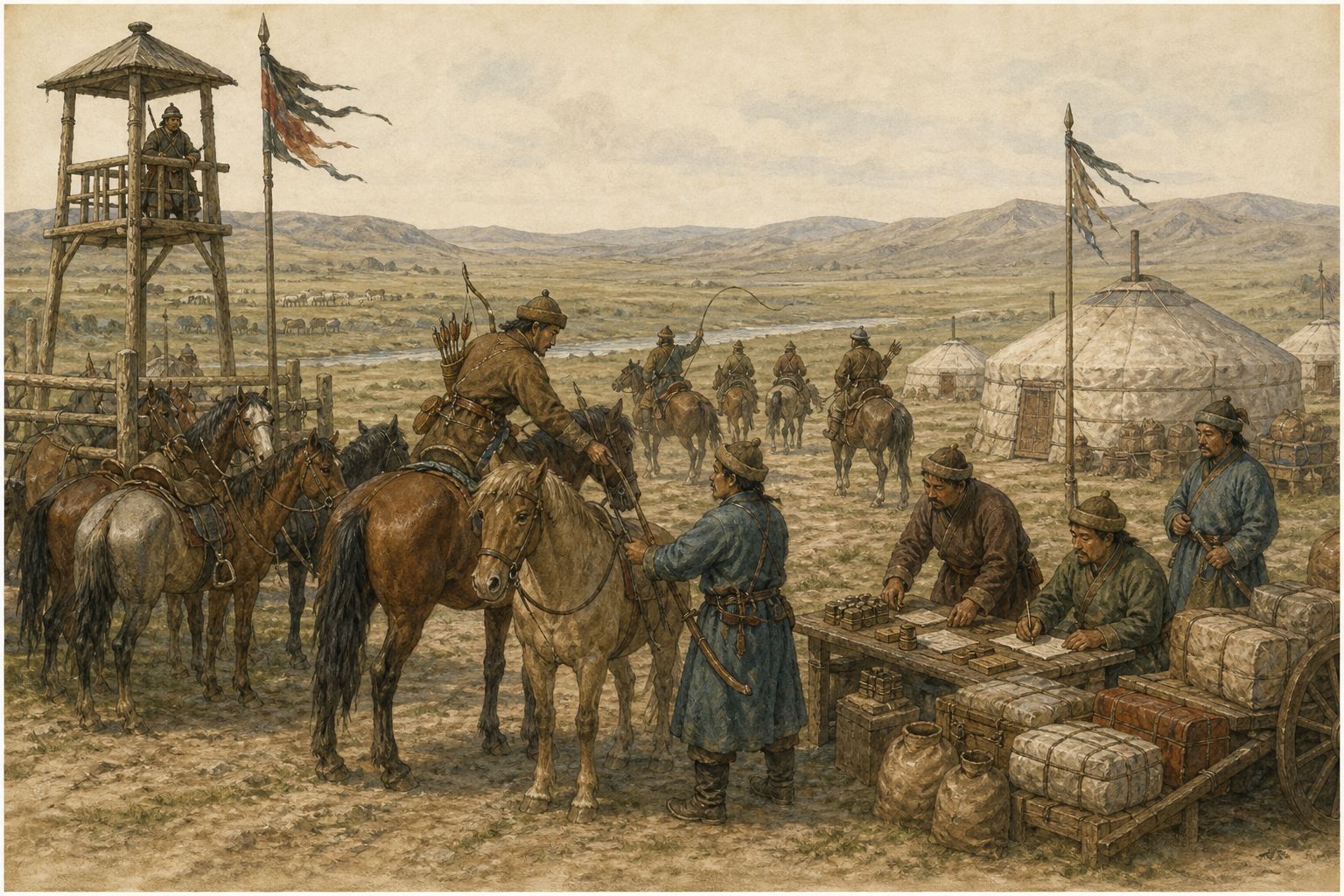
Mounted messengers, provisioning, and military organization supported mobilization and rule across distance.
c. 1206–c. 1294
Connecting Eurasia
Current event
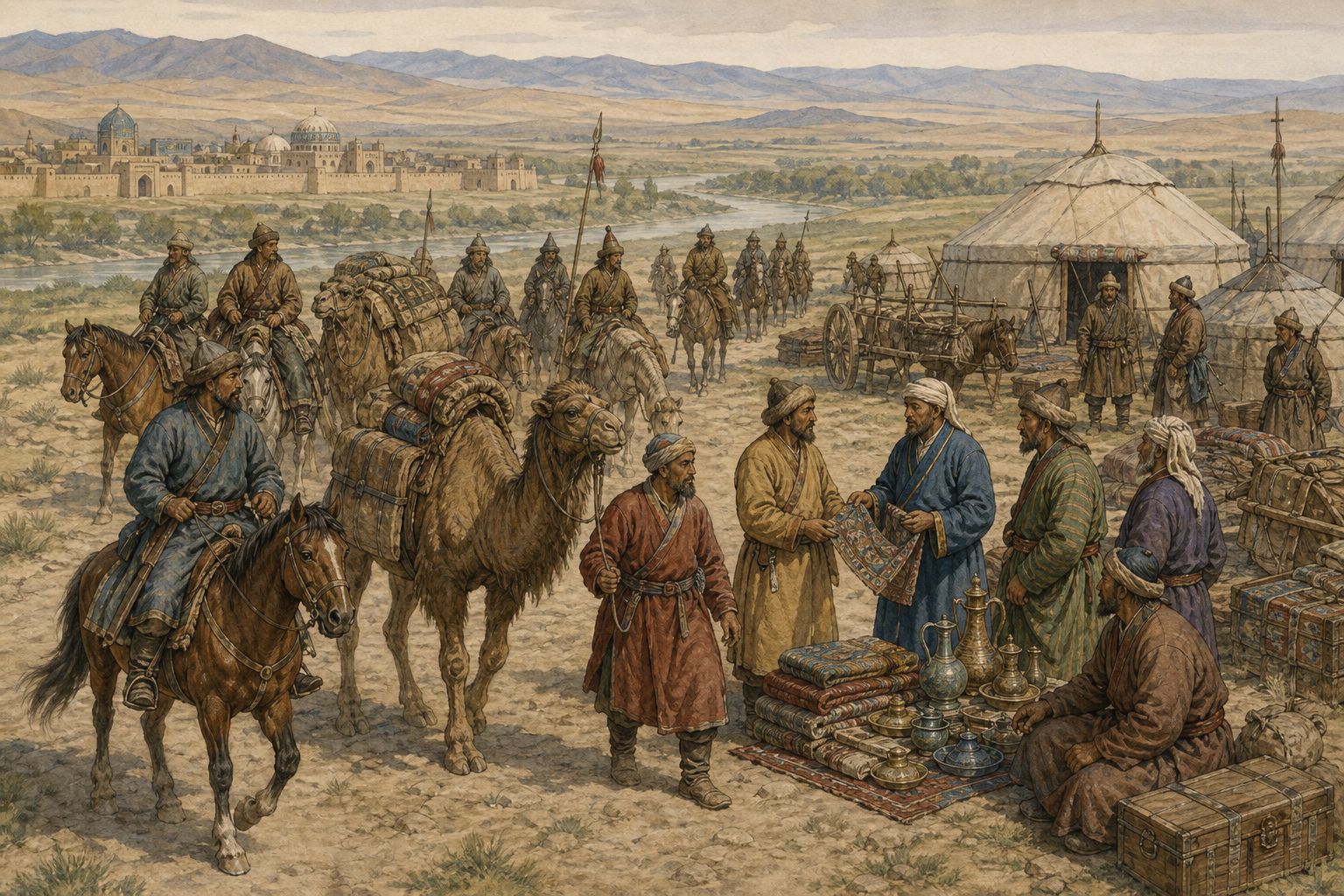
Routes linking pastoral and settled worlds changed the range of later exchange and political power.


Sources
- Foundation of the Mongol EmpireEncyclopaedia BritannicaA foundational account of Temüjin's consolidation, the 1206 acclamation, and the formation of the empire.
- Foundation of the Mongol EmpireThe Metropolitan Museum of ArtMaterial culture, steppe exchange, and the wider context of Mongol imperial history.
- Foundation of the Mongol EmpireWorld History EncyclopediaAn overview of tribal consolidation, the kurultai, relay systems, and Eurasian consequences.