
Founding of the Non-Aligned Movement
1961
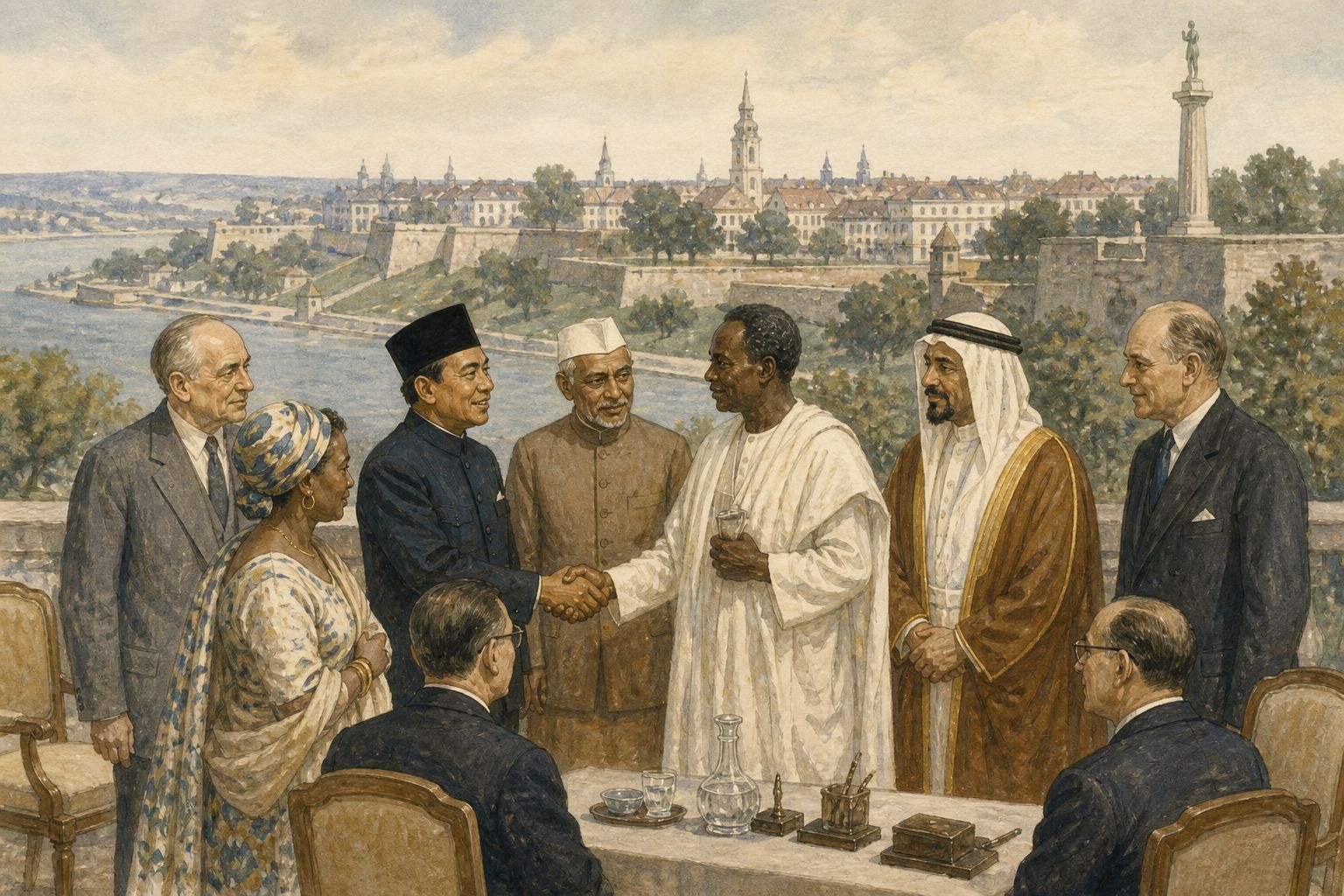
In 1961, newly independent and other states met in Belgrade for the first summit of the Non-Aligned Movement.

- Period
- 1961
- Kind
- Conference
- Regions
- Europe, Africa, East Asia
- Keywords
- Founding of the Non-Aligned Movement · conference · contemporary · europe · africa · east asia
Follow the story · Four stages
Background
As Cold War bipolarity overlapped with decolonization, states sought diplomatic space for sovereignty, anti-colonialism, and peaceful coexistence.
- As Cold War bipolarity overlapped with decolonization, states sought diplomatic space for sovereignty, anti-colonialism, and peaceful coexistence.
- Core event: In 1961, newly independent and other states met in Belgrade for the first summit of the Non-Aligned Movement.
- Connection to the next stage: Leaders from Yugoslavia, India, Egypt, Indonesia, Ghana, and other states met and articulated common principles.
Course
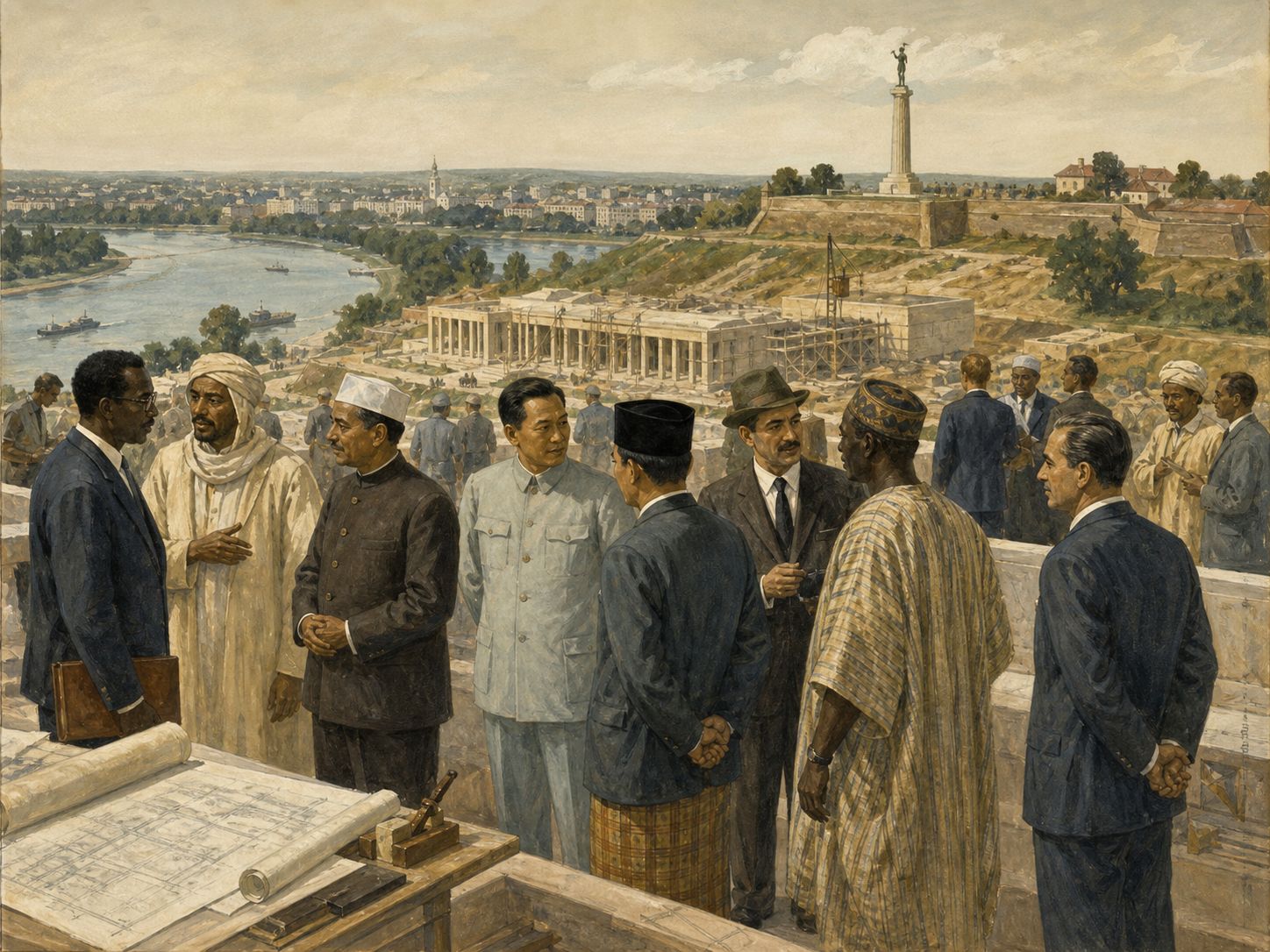
Leaders from Yugoslavia, India, Egypt, Indonesia, Ghana, and other states met and articulated common principles.
- Leaders from Yugoslavia, India, Egypt, Indonesia, Ghana, and other states met and articulated common principles.
- Conditions behind the action: As Cold War bipolarity overlapped with decolonization, states sought diplomatic space for sovereignty, anti-colonialism, and peaceful coexistence.
- Meaning of the turning point: In 1961, newly independent and other states met in Belgrade for the first summit of the Non-Aligned Movement.
Outcome
Non-alignment connected a refusal to join military blocs with debates at the United Nations and over the world economy.
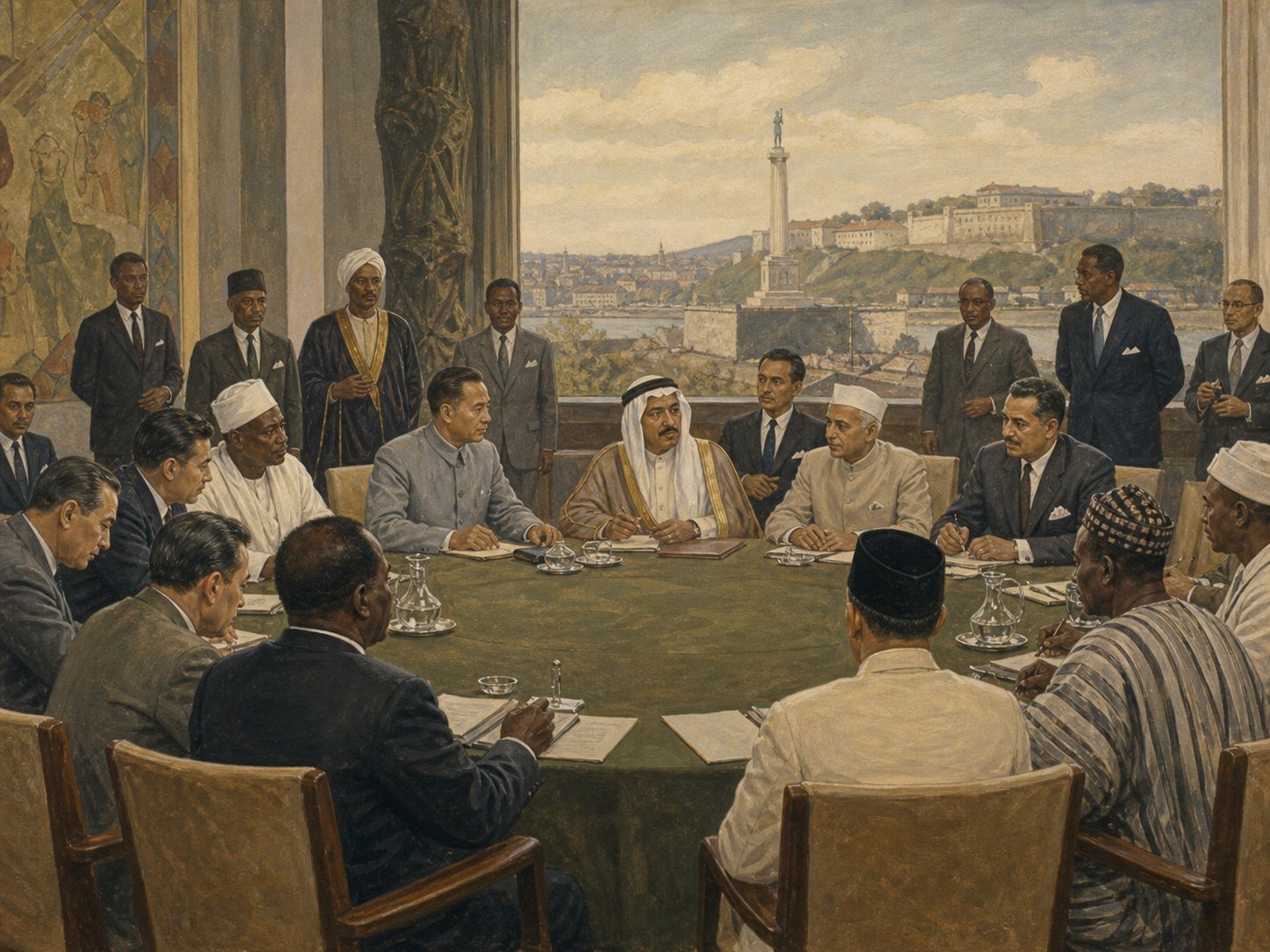
- Non-alignment connected a refusal to join military blocs with debates at the United Nations and over the world economy.
- Process producing the result: Leaders from Yugoslavia, India, Egypt, Indonesia, Ghana, and other states met and articulated common principles.
- Question carried forward: The movement was not monolithic but a site of negotiation among states with different security and development strategies.
Historical significance
The movement was not monolithic but a site of negotiation among states with different security and development strategies.
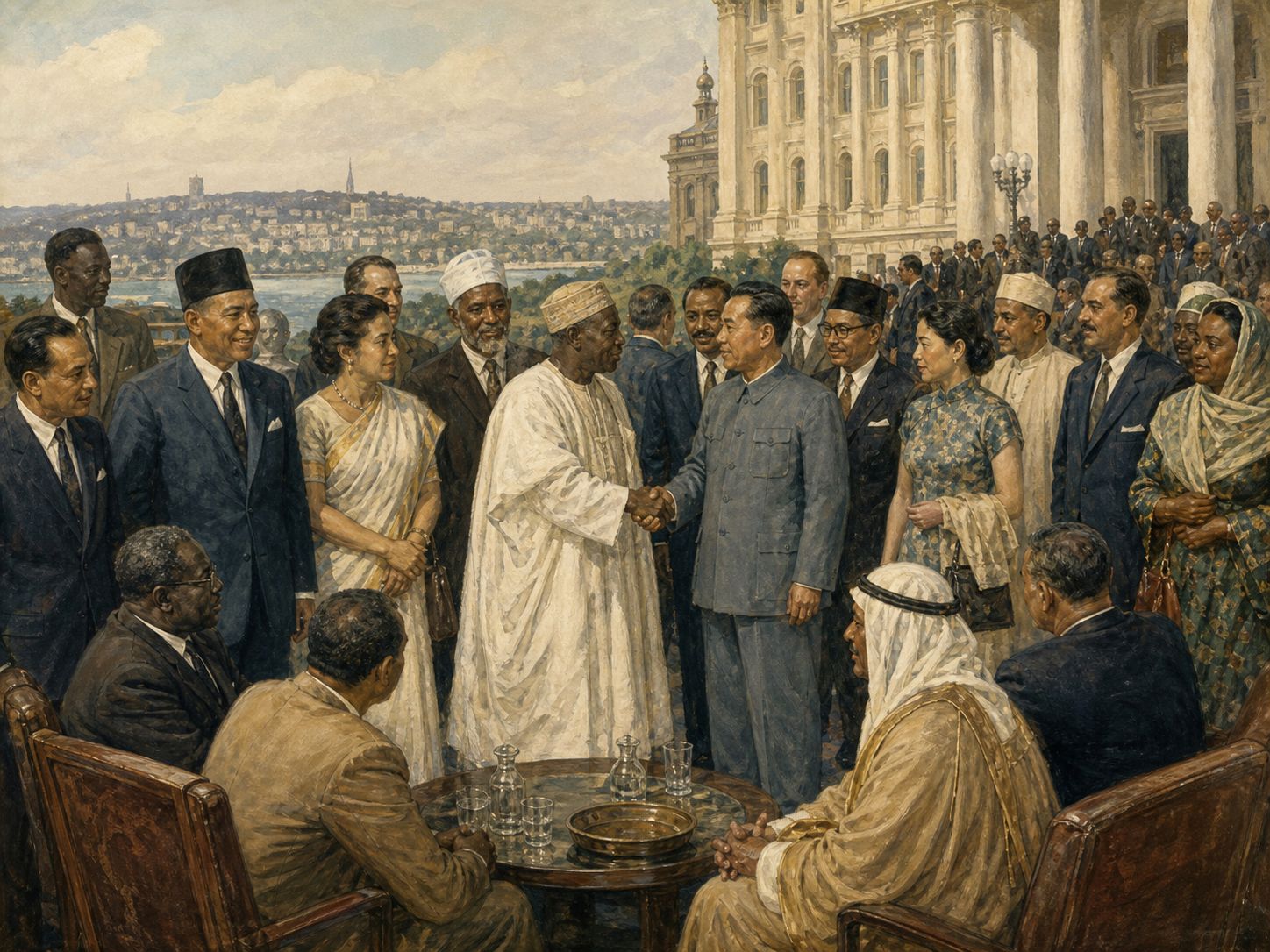
- The movement was not monolithic but a site of negotiation among states with different security and development strategies.
- Immediate consequence: Non-alignment connected a refusal to join military blocs with debates at the United Nations and over the world economy.
- Historical turning point: In 1961, newly independent and other states met in Belgrade for the first summit of the Non-Aligned Movement.


Related events
c. 1961
Prelude
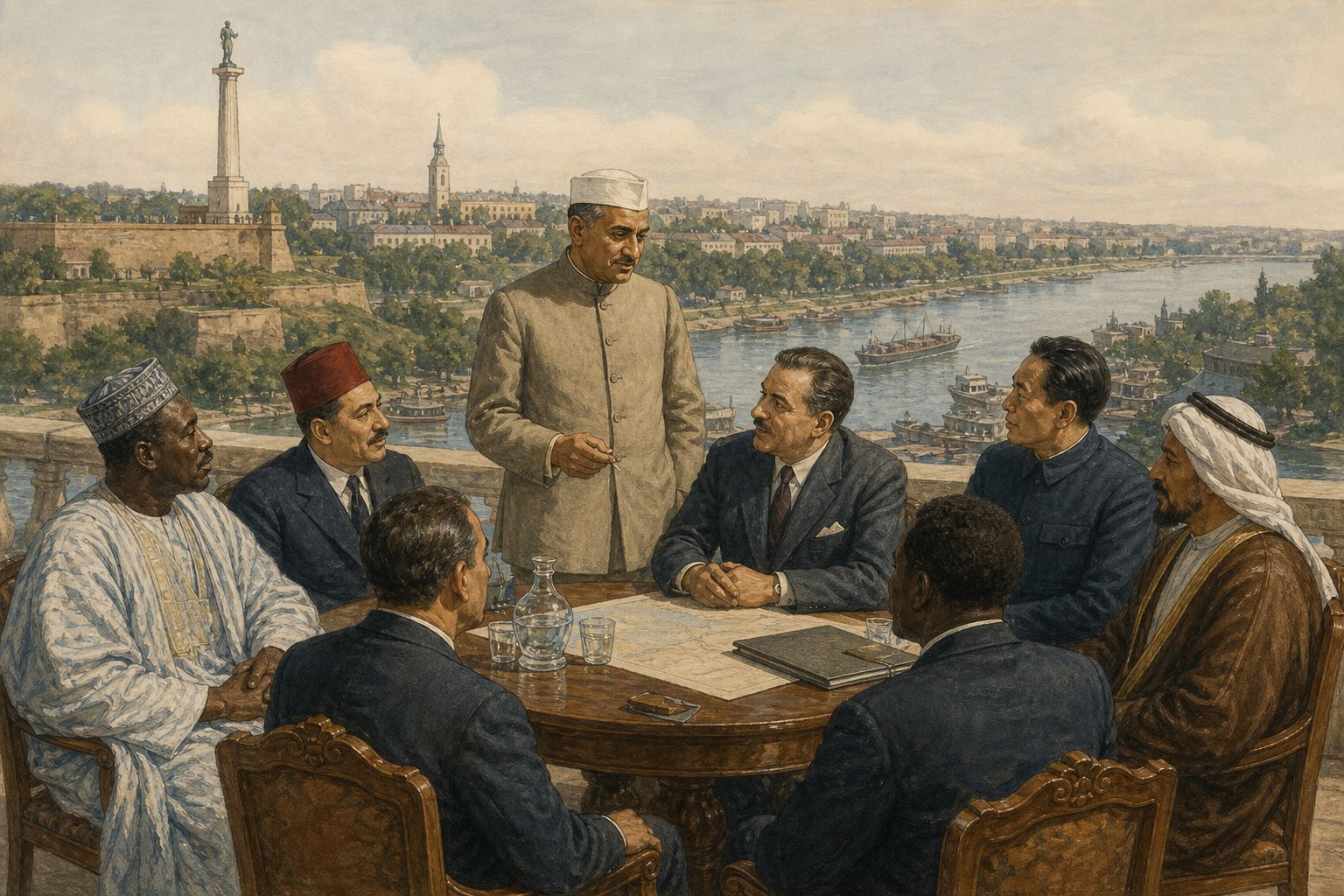
Prelude — Background: As Cold War bipolarity overlapped with decolonization, states sought diplomatic space for sovereignty, anti-colonialism, and peaceful coexistence.
c. 1961
Turning point
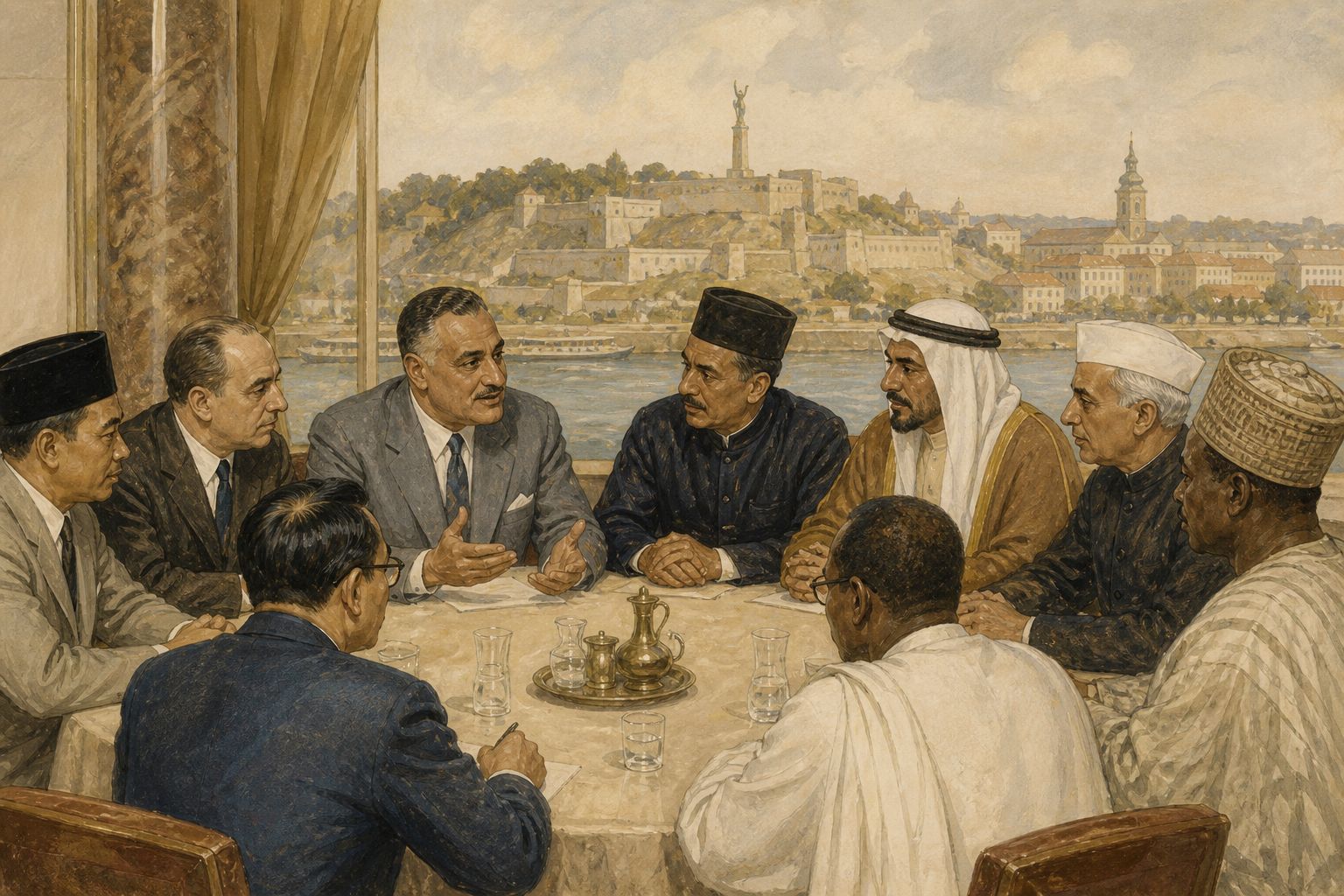
Turning point — Build-up: Leaders from Yugoslavia, India, Egypt, Indonesia, Ghana, and other states met and articulated common principles.
1961
Current phase
Current event
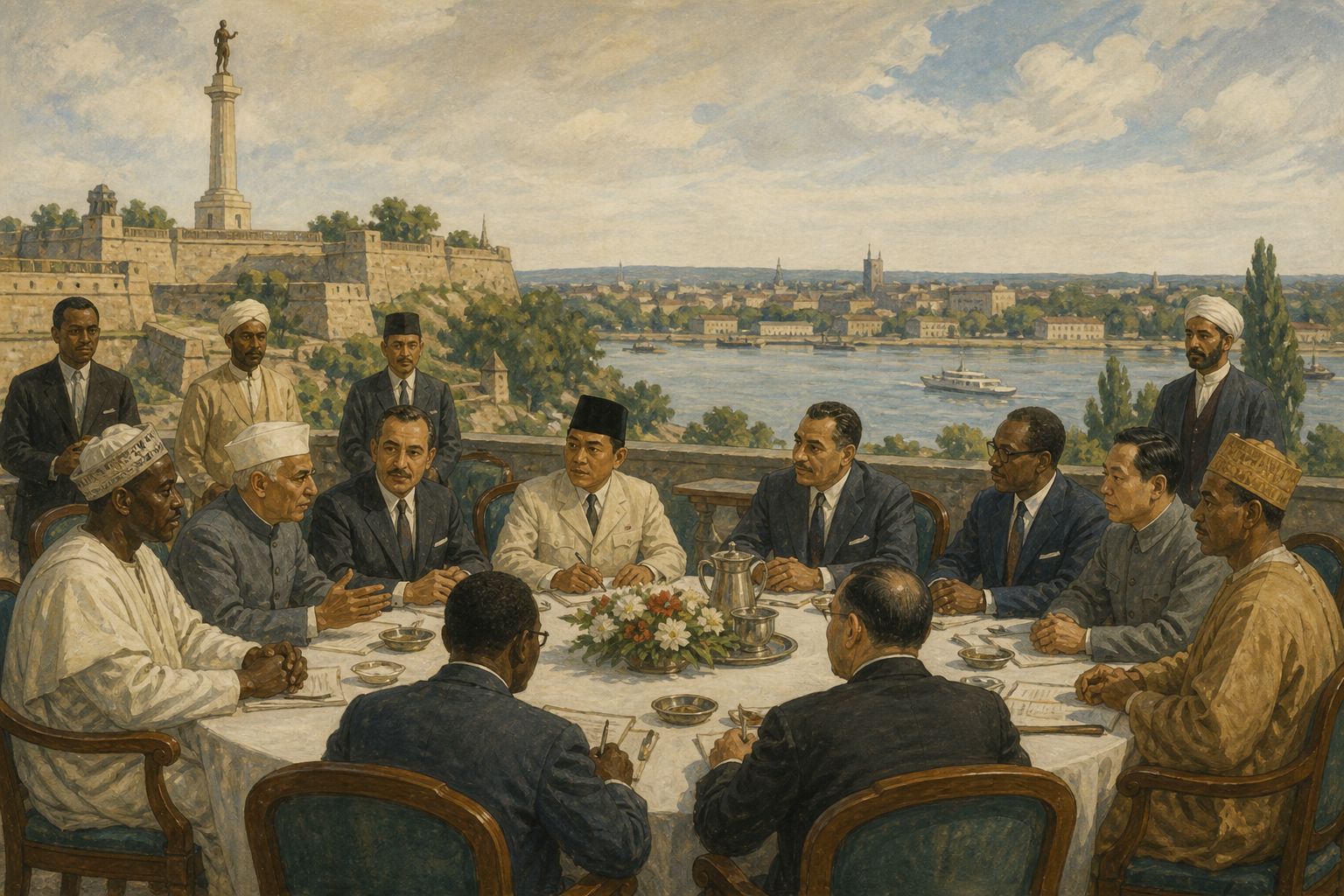
Current phase — Central transition: In 1961, newly independent and other states met in Belgrade for the first summit of the Non-Aligned Movement.
c. 1962
Immediate aftermath
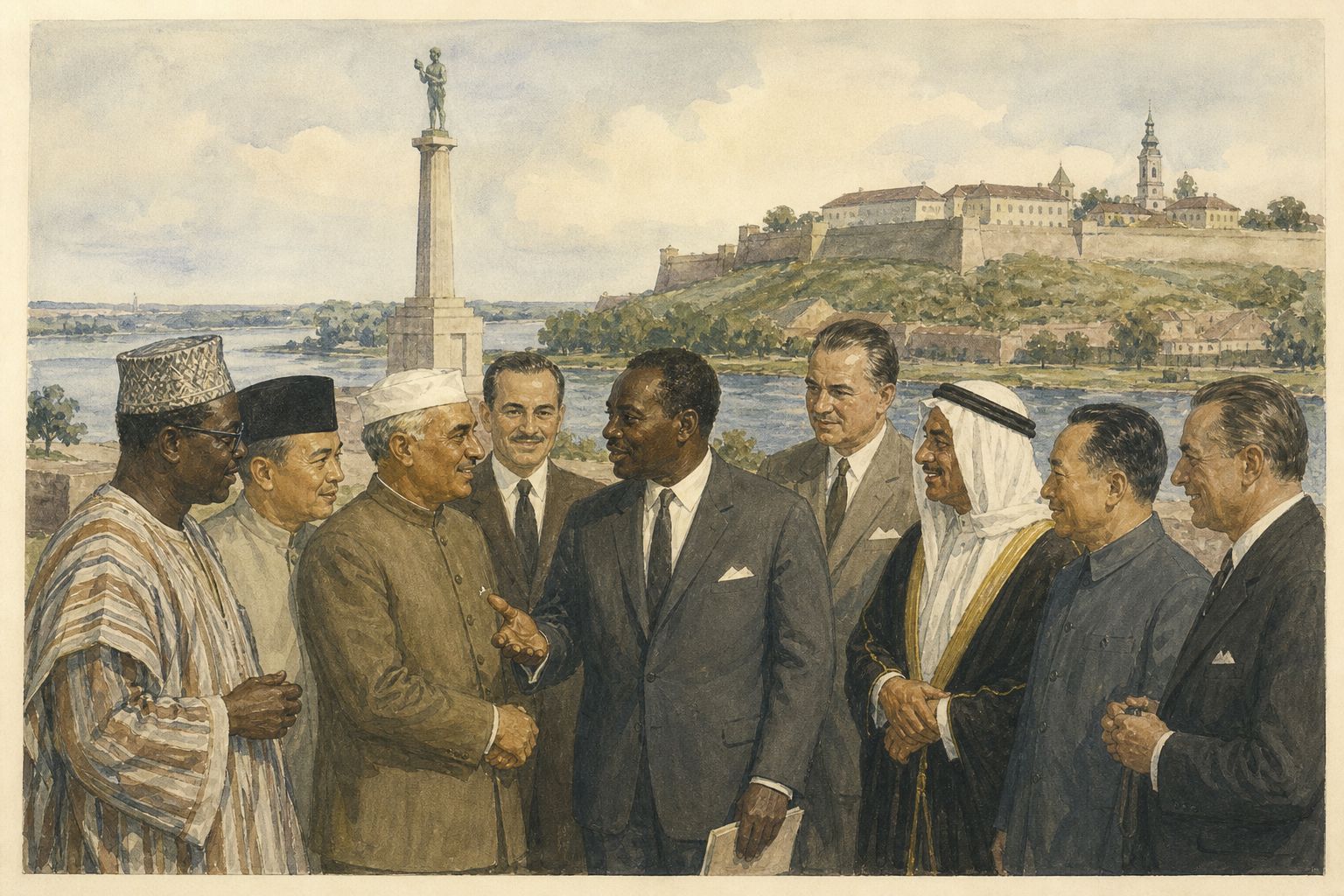
Immediate aftermath — Immediate result: Non-alignment connected a refusal to join military blocs with debates at the United Nations and over the world economy.
c. 1971
Long-term significance
Long-term significance — Long-term significance: The movement was not monolithic but a site of negotiation among states with different security and development strategies.


Sources
- Founding of the Non-Aligned Movement — Nonaligned Movement (Encyclopaedia Britannica)britannica.comThis Encyclopaedia Britannica resource supports the chronology, setting, and course of Founding of the Non-Aligned Movement.
- Founding of the Non-Aligned Movement — History (Nam)nam.gov.zaThis Nam resource supports the chronology, setting, and course of Founding of the Non-Aligned Movement.
- Founding of the Non-Aligned Movement — Non Aligned Movement And United Nations (United Nations)un.orgThis United Nations resource supports the chronology, setting, and course of Founding of the Non-Aligned Movement.