
Opening of the Suez Canal
1869
After excavation began in 1859, the Suez Canal linking the Mediterranean and Red Sea in Egypt opened on 17 November 1869.

- Period
- 1869
- Kind
- Treaty
- Regions
- Central Asia
- Keywords
- Opening of the Suez Canal · Suez Canal · 1869 inauguration · treaty · modern · central asia
Follow the story · Four stages
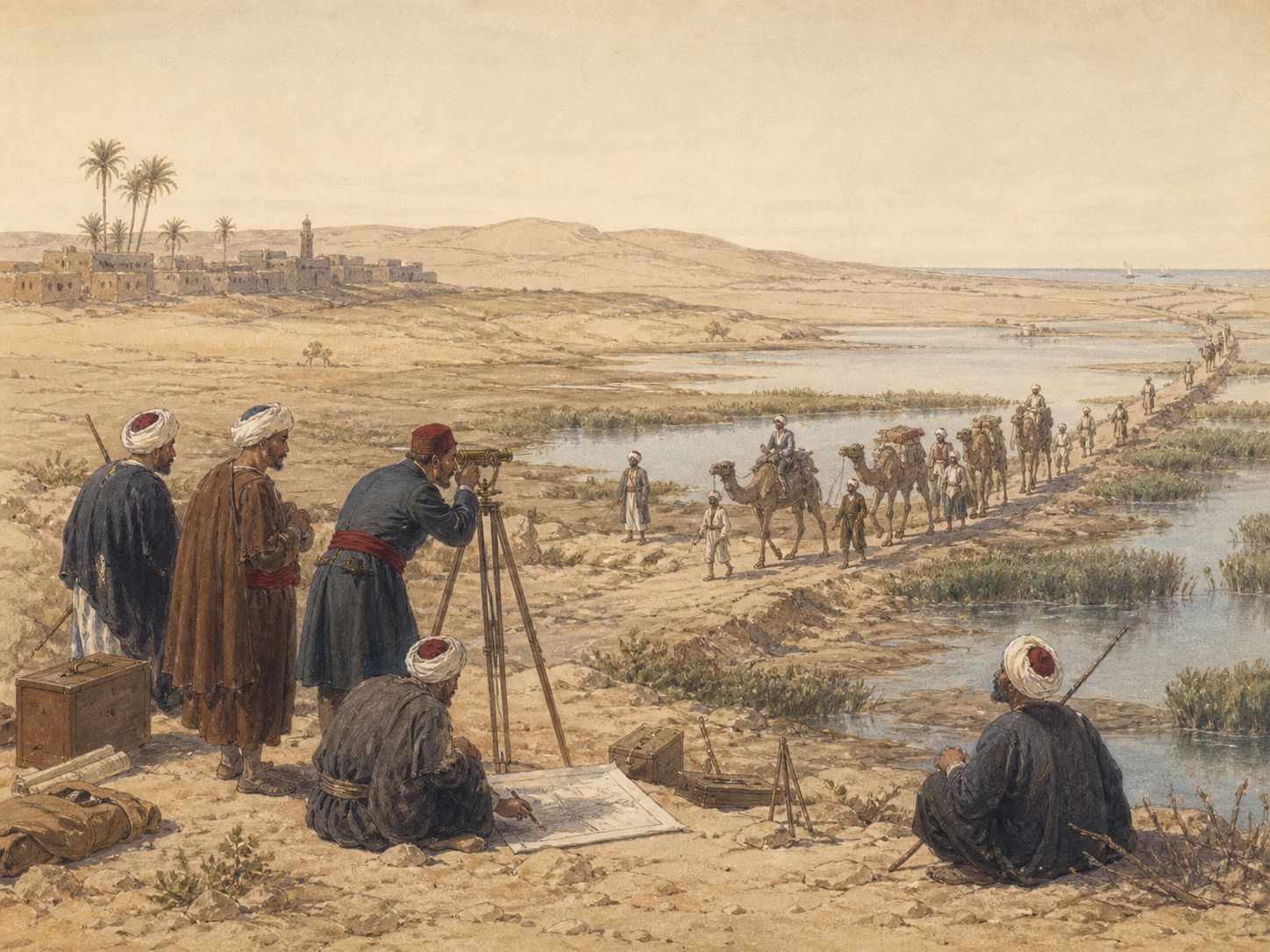
Background
Older plans to connect the Nile and Red Sea, interest in shortening Europe–Asia routes, Egyptian dynastic politics, and European capital supported the canal project.
- Older plans to connect the Nile and Red Sea, interest in shortening Europe–Asia routes, Egyptian dynastic politics, and European capital supported the canal project.
- Core event: After excavation began in 1859, the Suez Canal linking the Mediterranean and Red Sea in Egypt opened on 17 November 1869.
- Connection to the next stage: Following Said Pasha’s concession and Ferdinand de Lesseps’s company, Egyptian workers, engineers, and dredging machinery excavated the canal from 1859 to 1869.
Course
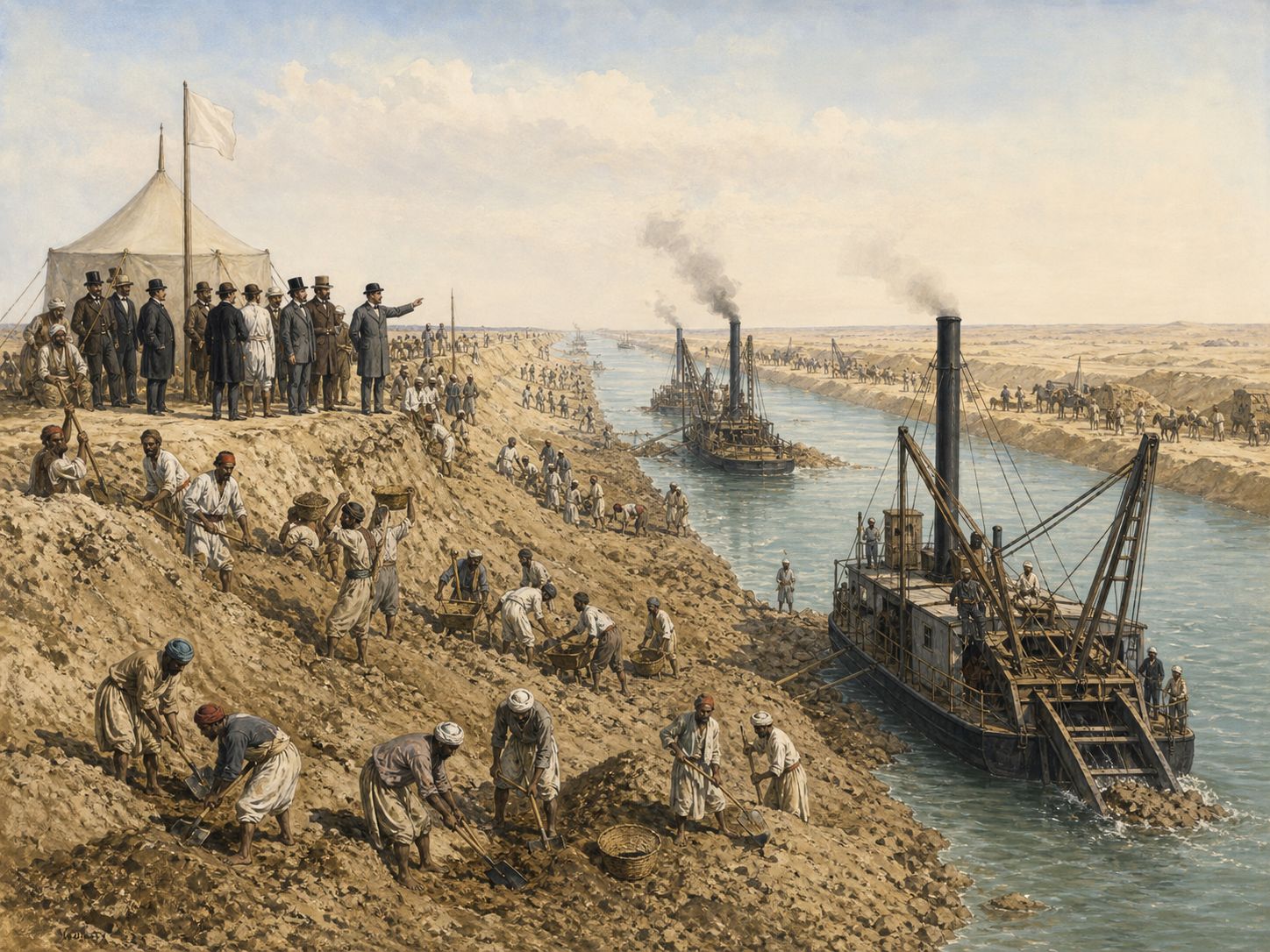
Following Said Pasha’s concession and Ferdinand de Lesseps’s company, Egyptian workers, engineers, and dredging machinery excavated the canal from 1859 to 1869.
- Following Said Pasha’s concession and Ferdinand de Lesseps’s company, Egyptian workers, engineers, and dredging machinery excavated the canal from 1859 to 1869.
- Conditions behind the action: Older plans to connect the Nile and Red Sea, interest in shortening Europe–Asia routes, Egyptian dynastic politics, and European capital supported the canal project.
- Meaning of the turning point: After excavation began in 1859, the Suez Canal linking the Mediterranean and Red Sea in Egypt opened on 17 November 1869.
Outcome
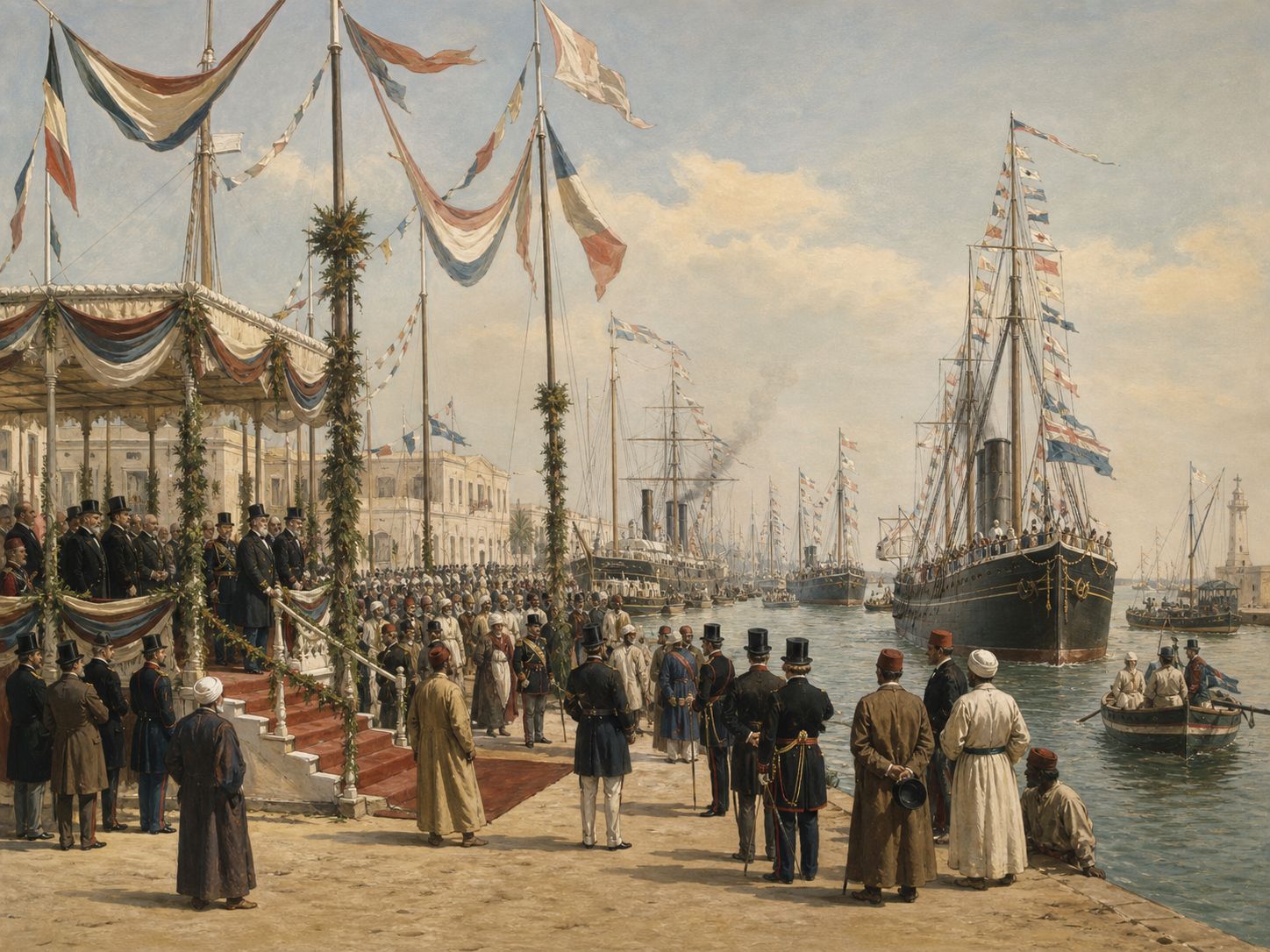
Ships passed through the canal during the 1869 inauguration, shortening maritime routes between Europe and Asia. International finance and strategic intervention grew, increasing pressure on Egyptian sovereignty.
- Ships passed through the canal during the 1869 inauguration, shortening maritime routes between Europe and Asia.
- International finance and strategic intervention grew, increasing pressure on Egyptian sovereignty.
- Process producing the result: Following Said Pasha’s concession and Ferdinand de Lesseps’s company, Egyptian workers, engineers, and dredging machinery excavated the canal from 1859 to 1869.
Historical significance
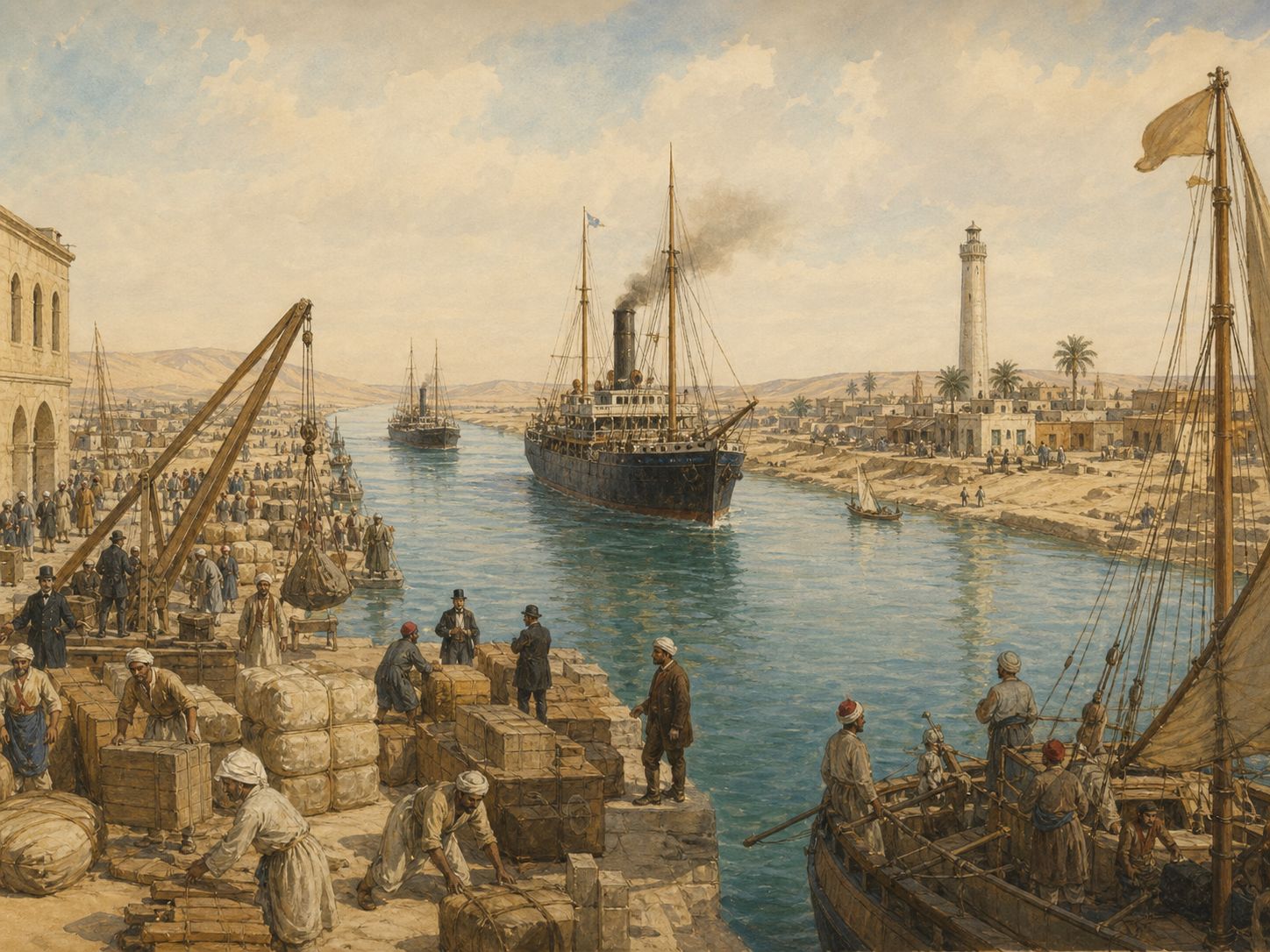
The canal was both a global trade corridor and infrastructure connecting labor, empire, finance, and Egyptian politics. Its modernizing image must be read alongside the unequal burdens of construction and control.
- The canal was both a global trade corridor and infrastructure connecting labor, empire, finance, and Egyptian politics.
- Its modernizing image must be read alongside the unequal burdens of construction and control.
- Immediate consequence: Ships passed through the canal during the 1869 inauguration, shortening maritime routes between Europe and Asia. International finance and strategic intervention grew, increasing pressure on Egyptian sovereignty.


Related events
c. 1798–c. 1854
Earlier Red Sea transit and canal schemes
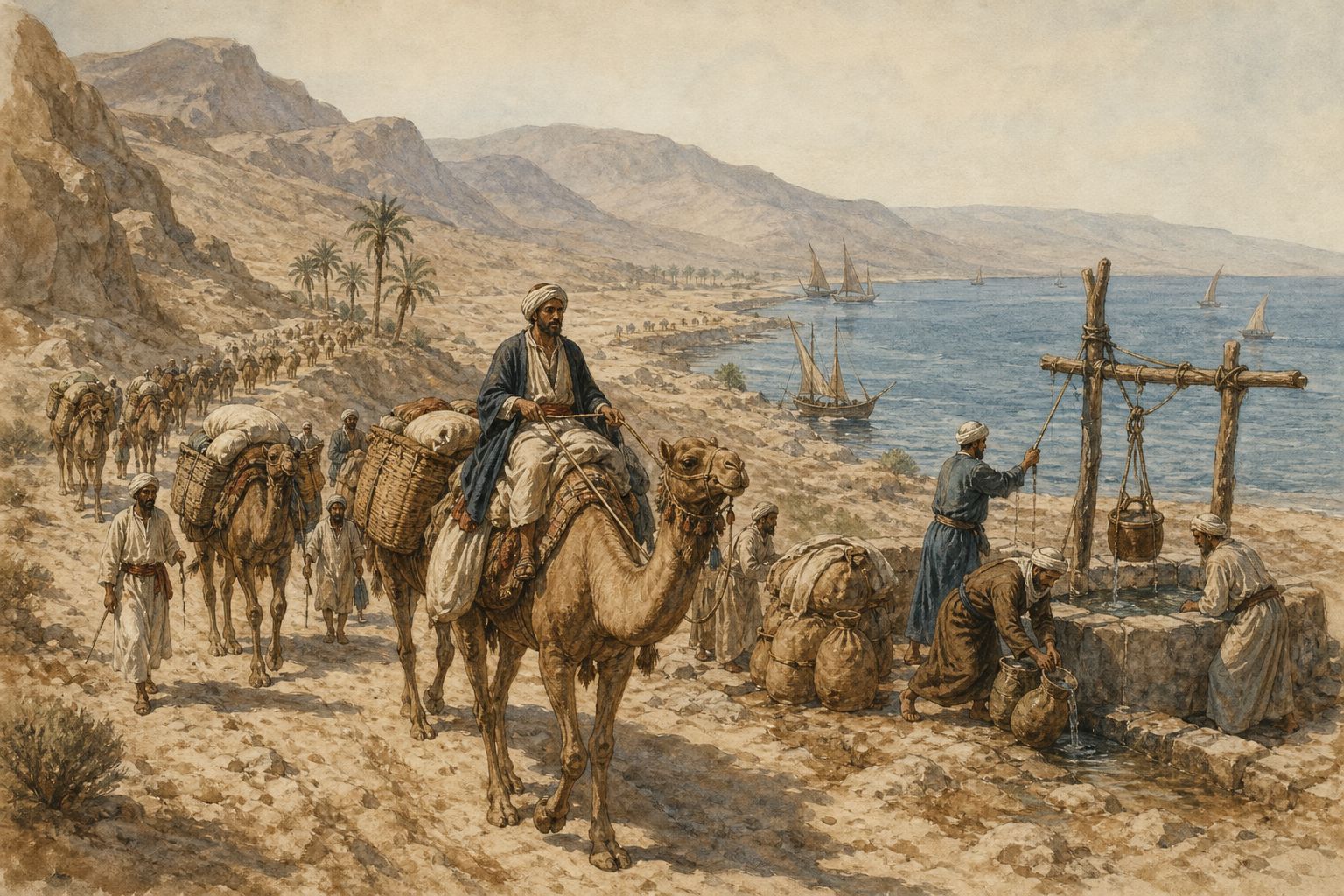
Earlier Red Sea transit and canal schemes — Background: Older plans to connect the Nile and Red Sea, interest in shortening Europe–Asia routes, Egyptian dynastic politics, and European capital supported the canal project.
1854–1856
Concession and company formation
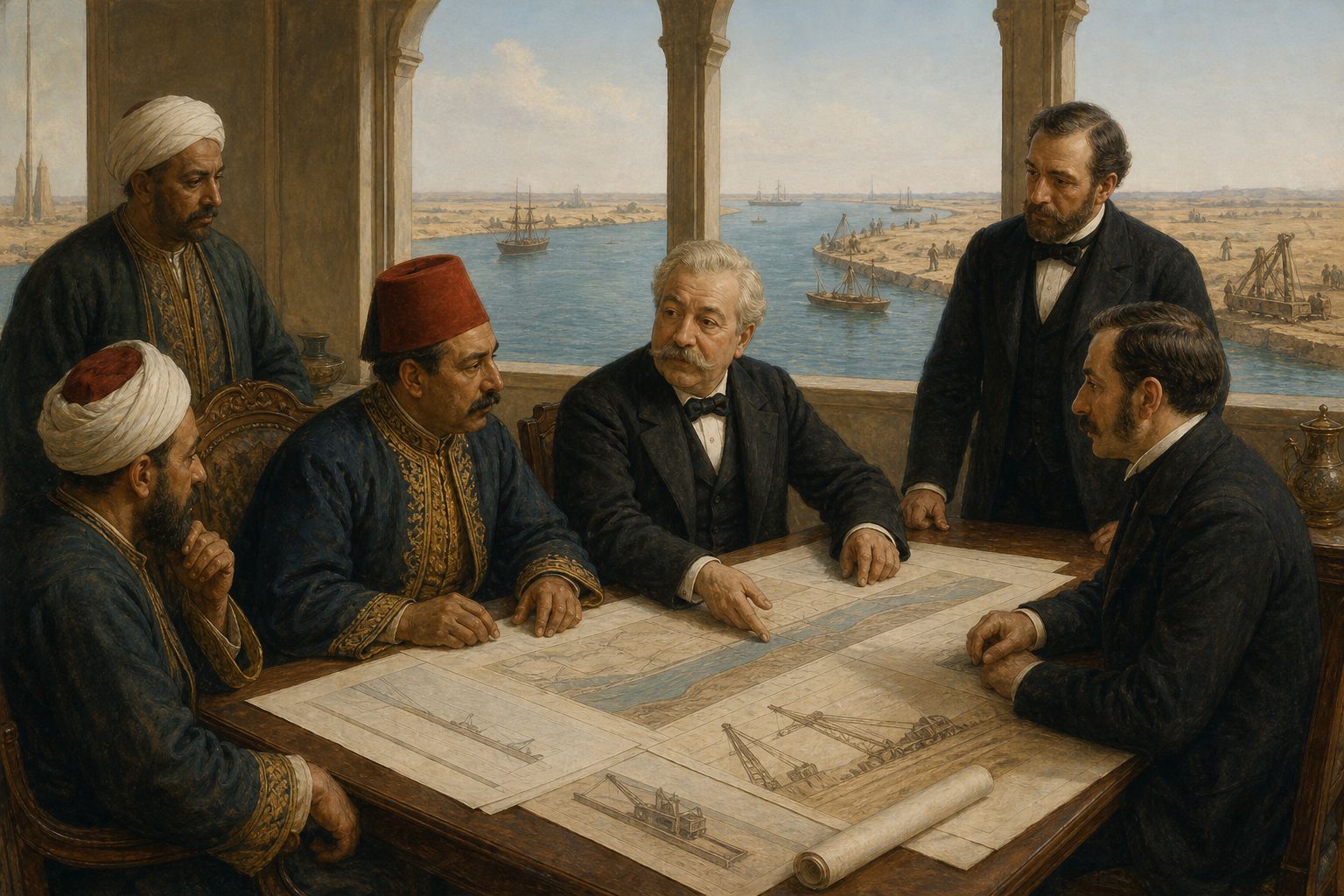
Concession and company formation — Build-up: Following Said Pasha’s concession and Ferdinand de Lesseps’s company, Egyptian workers, engineers, and dredging machinery excavated the canal from 1859 to 1869.
1859–1869
Construction across the isthmus
Current event
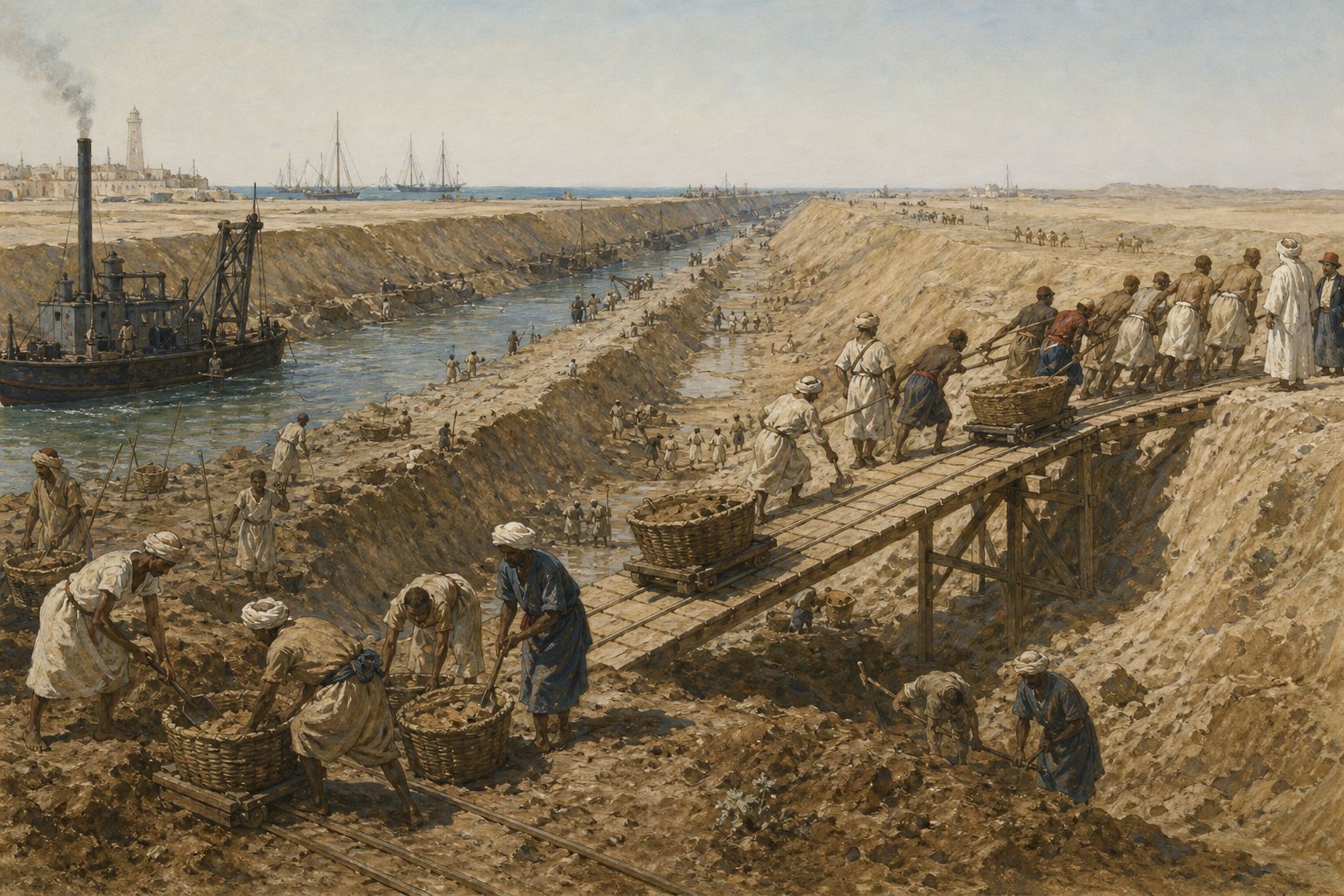
Construction across the isthmus — Central transition: After excavation began in 1859, the Suez Canal linking the Mediterranean and Red Sea in Egypt opened on 17 November 1869.
1869–1869
Opening ceremony at Port Said
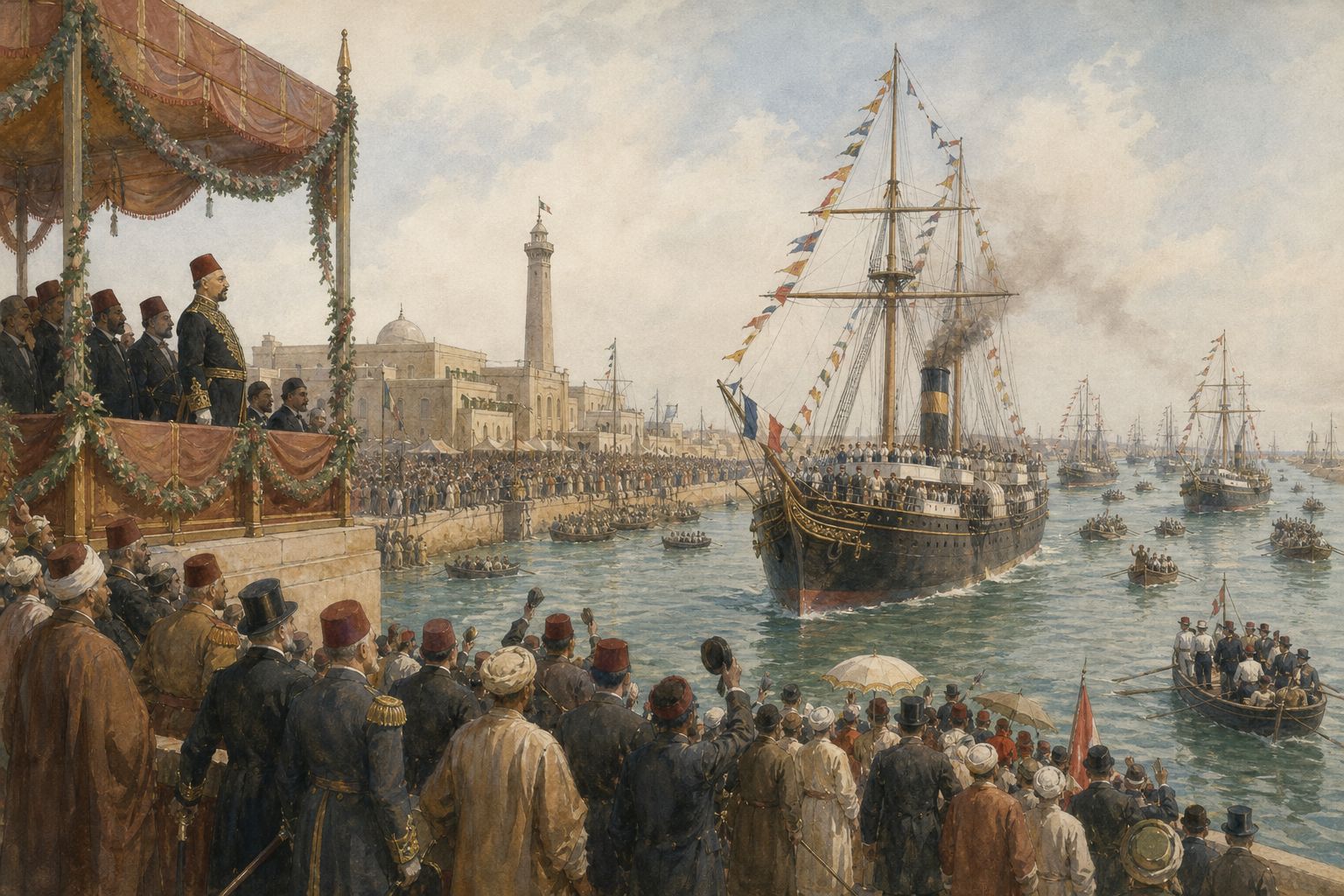
Opening ceremony at Port Said — Immediate result: Ships passed through the canal during the 1869 inauguration, shortening maritime routes between Europe and Asia. International finance and strategic intervention grew, increasing pressure on Egyptian sovereignty.
c. 1870–c. 1900
Global shipping and strategic change
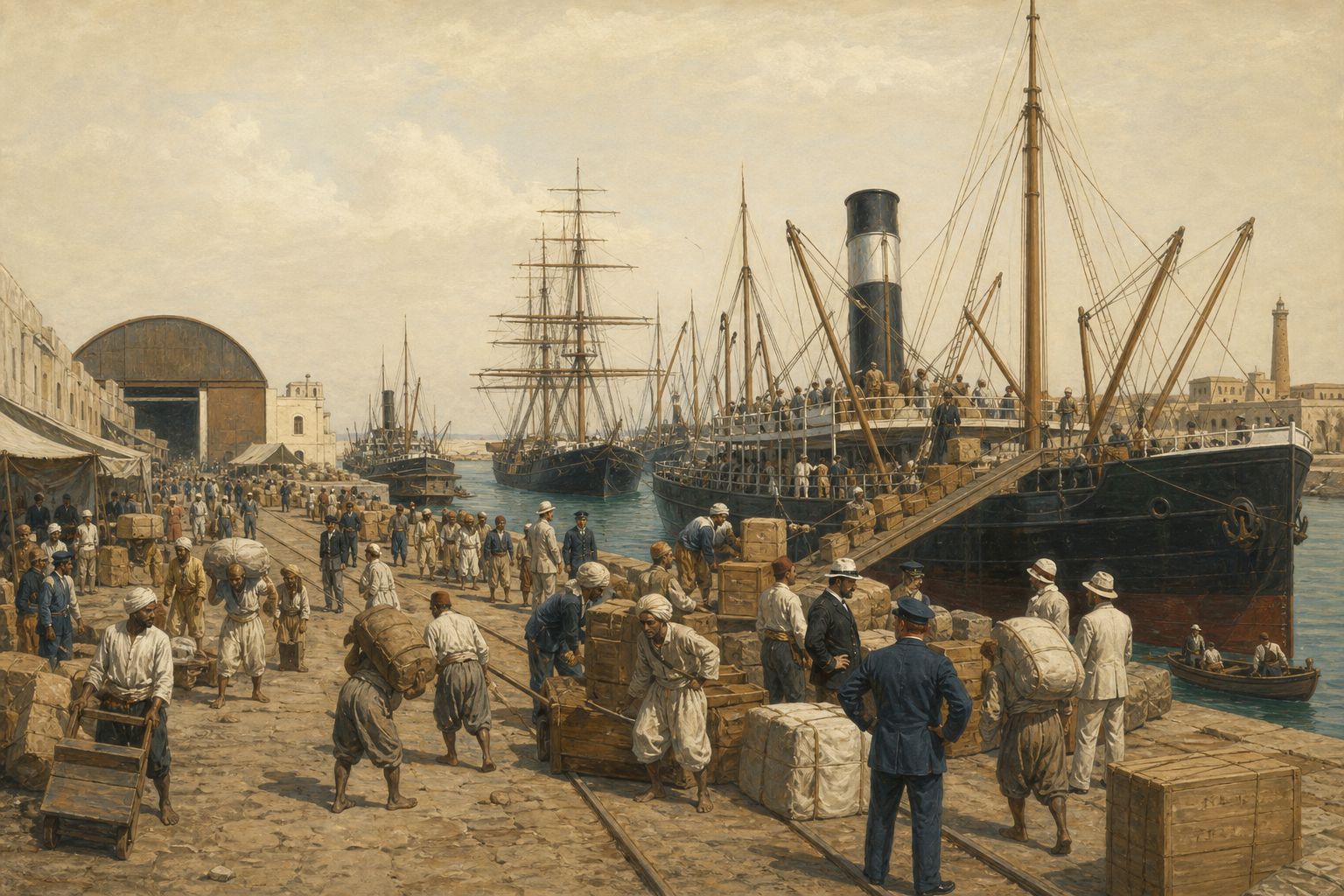
Global shipping and strategic change — Long-term significance: The canal was both a global trade corridor and infrastructure connecting labor, empire, finance, and Egyptian politics. Its modernizing image must be read alongside the unequal burdens of construction and control.


Sources
- Opening of the Suez Canal — Opening Of Suez Canal (Encyclopaedia Britannica)britannica.comThis Encyclopaedia Britannica resource supports the chronology, setting, and course of Opening of the Suez Canal.
- Opening of the Suez Canal — Hd Opening Of Suez Canal (The Metropolitan Museum of Art)metmuseum.orgThis The Metropolitan Museum of Art resource supports the chronology, setting, and course of Opening of the Suez Canal.
- Opening of the Suez Canal — Opening Of Suez Canal (World History Encyclopedia)worldhistory.orgThis World History Encyclopedia resource supports the chronology, setting, and course of Opening of the Suez Canal.