
Peace of Westphalia
1648
In October 1648, the Treaties of Münster and Osnabrück brought the Thirty Years’ War to a negotiated close.

- Period
- 1648
- Kind
- Political event
- Regions
- South Asia
- Keywords
- Thirty Years' War · Münster · Osnabrück · confessional peace · territorial rights
Follow the story · Four stages
Background
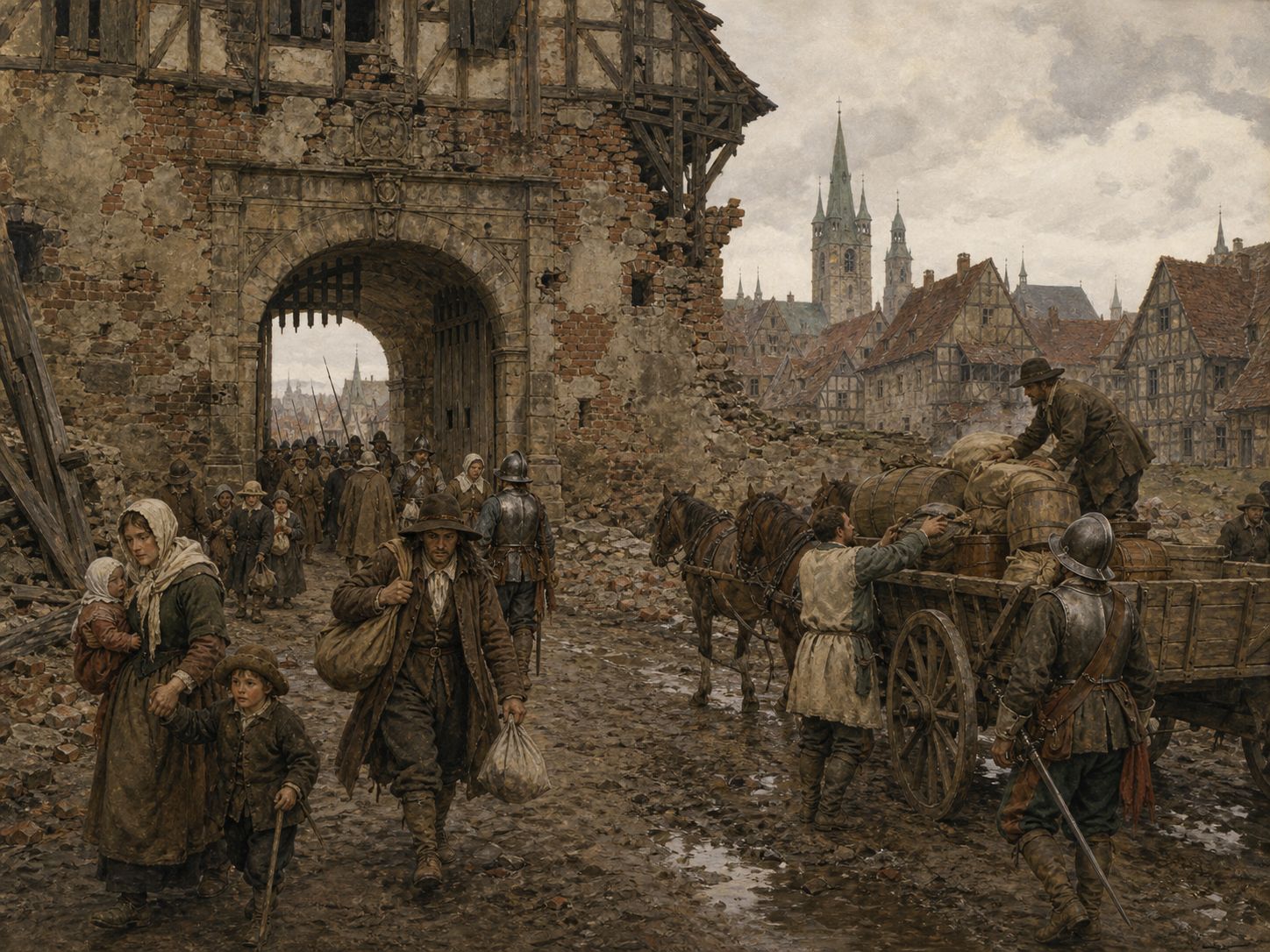
Confessional division inside the Holy Roman Empire overlapped with disputes over imperial rights and the rivalry of the Habsburgs, France, Sweden, and the princes.
- Confessional division became entangled with the political order of the Holy Roman Empire
- The Thirty Years' War grew into a prolonged conflict involving powers inside and beyond the Empire
- Displacement, hunger, and damaged towns increased pressure for a settlement
Course
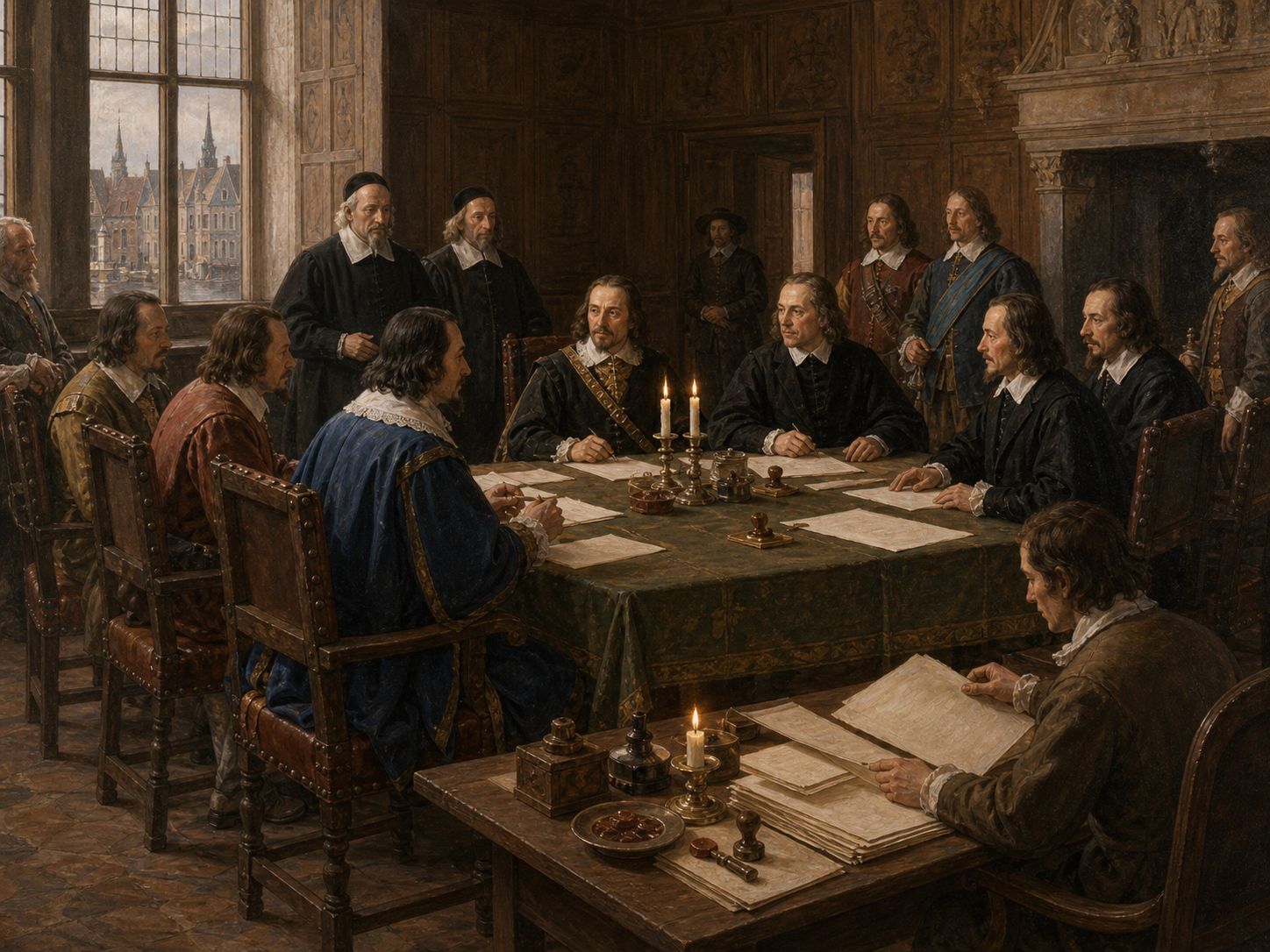
Representatives of the Empire, France, Sweden, and the German princes negotiated in Münster and Osnabrück, using separate venues while pursuing linked settlements.
- France, Sweden, the Emperor, and imperial princes brought competing interests to the talks
- Delegations negotiated in parallel at Münster and Osnabrück
- Religious guarantees and territorial rights were adjusted through text and practice
Outcome
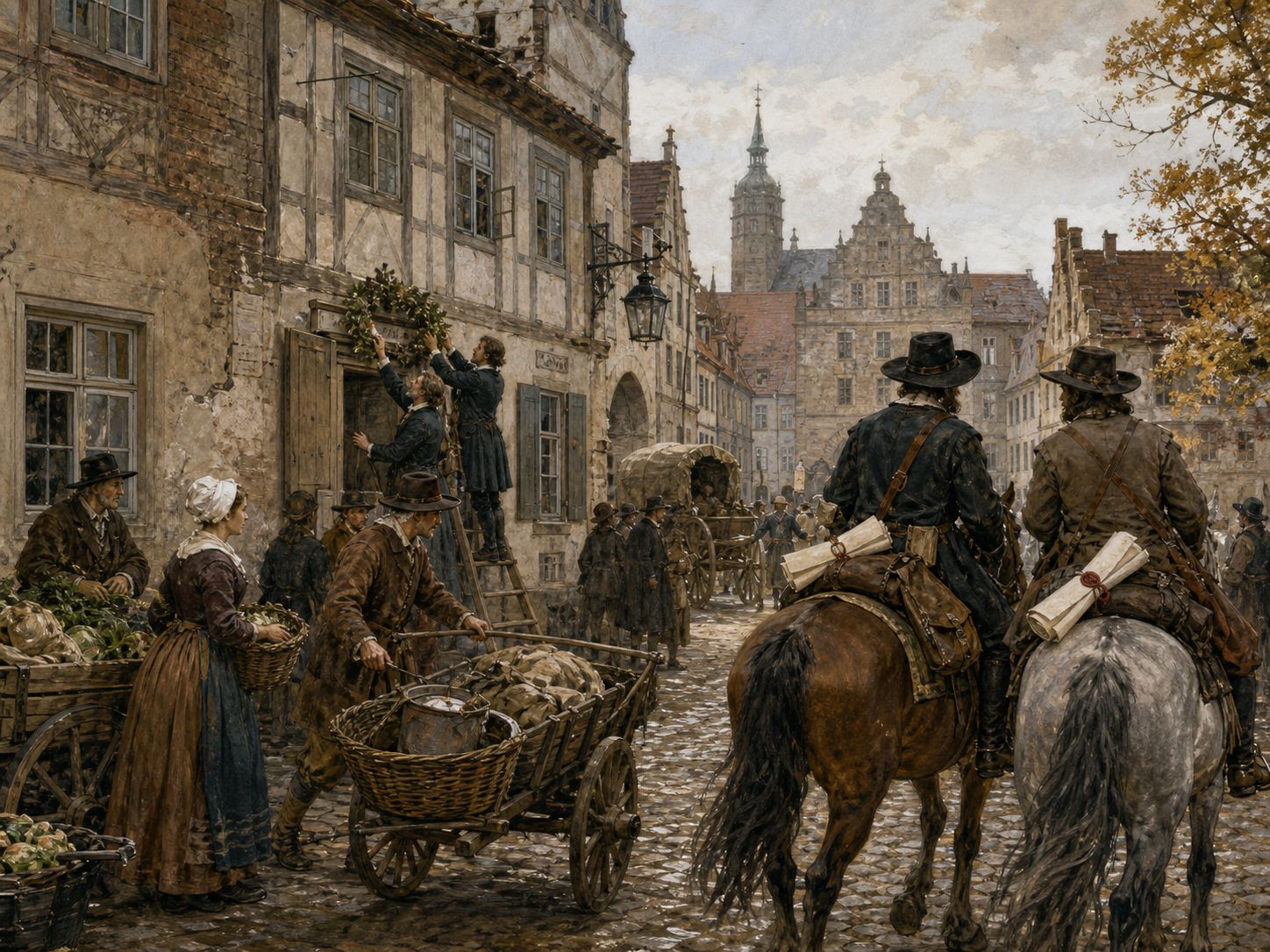
The two treaties of 24 October 1648 adjusted territorial and religious arrangements within the Empire and ended the wars with France and Sweden.
- The Treaties of Münster and Osnabrück were concluded on 24 October 1648
- The Thirty Years' War and linked conflicts moved toward a negotiated end
- Religious and territorial relations inside the Empire and the positions of France and Sweden were adjusted
Historical significance
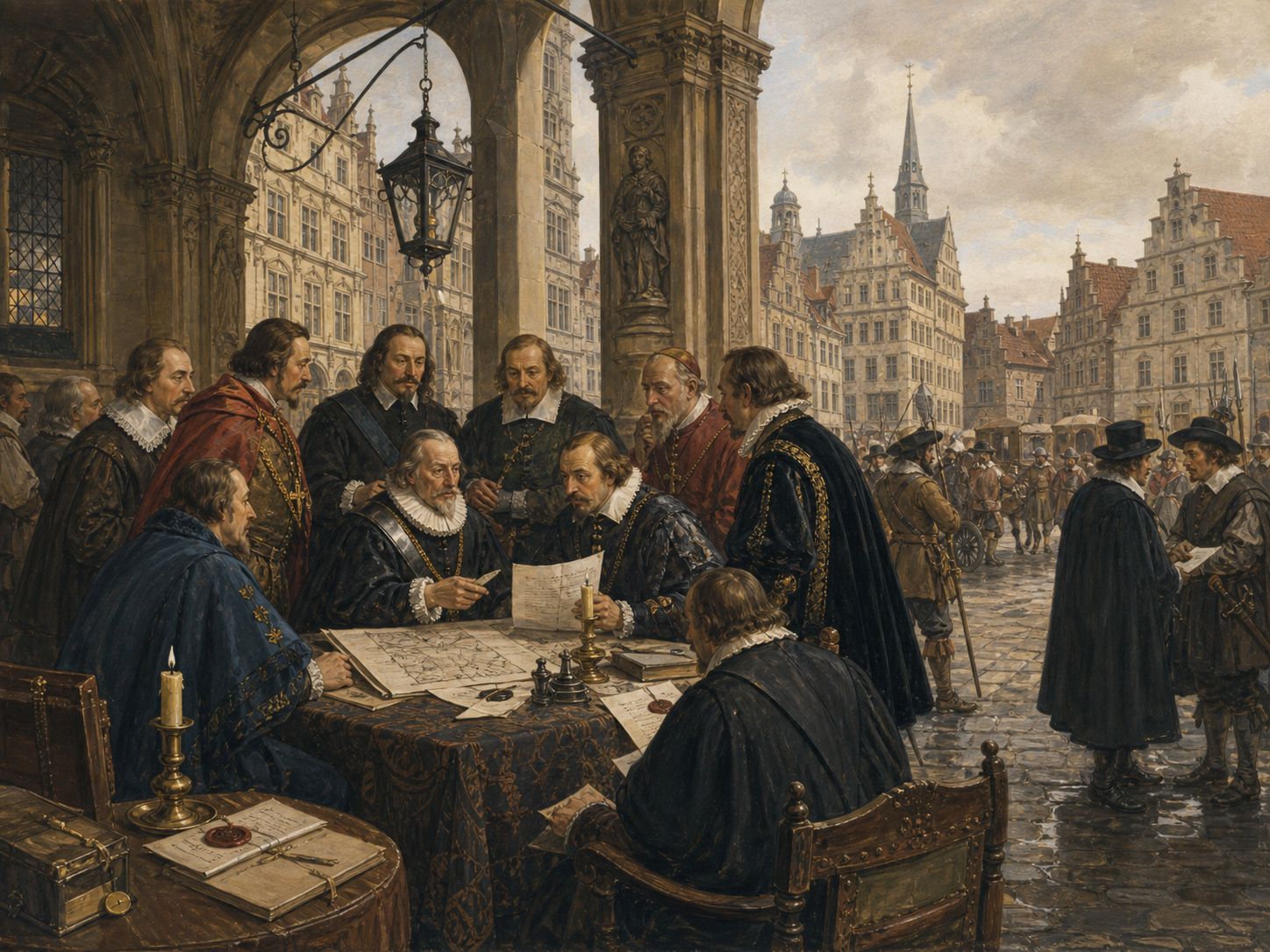
The settlement reorganized imperial politics and religious coexistence, but the idea that it instantly invented the modern sovereign state oversimplifies a layered negotiation.
- The settlement coordinated overlapping rights rather than establishing one simple sovereignty principle
- Cities, princes, imperial institutions, and foreign powers shaped the diplomatic order together
- The later story of Westphalian sovereignty simplifies the treaties' layered arrangements


Related events
c. 1517–c. 1555
Confessional conflict politicized
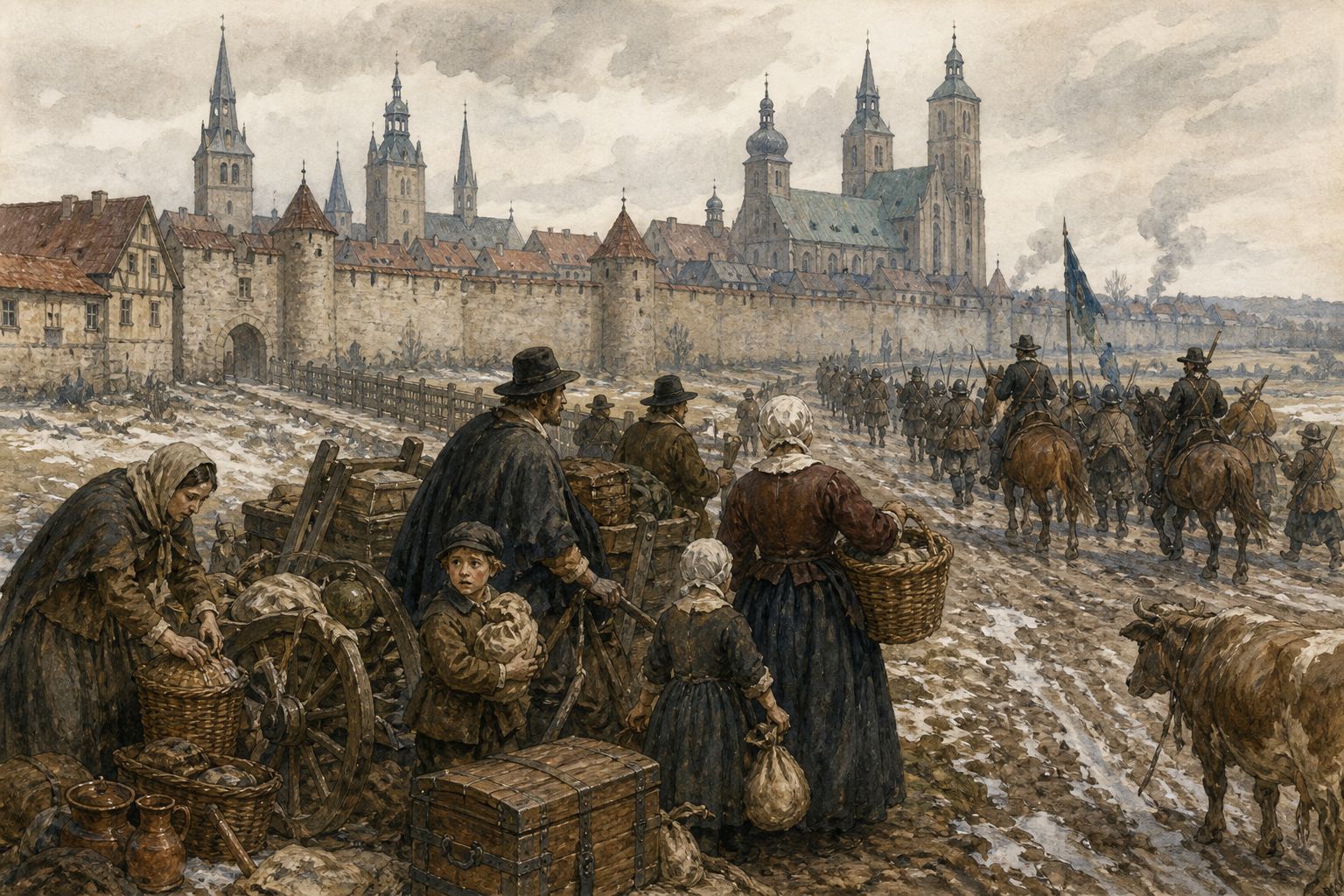
Catholic and Protestant tensions after the Reformation overlapped with struggles over imperial rights and force.
1618–1648
A long war and intervention
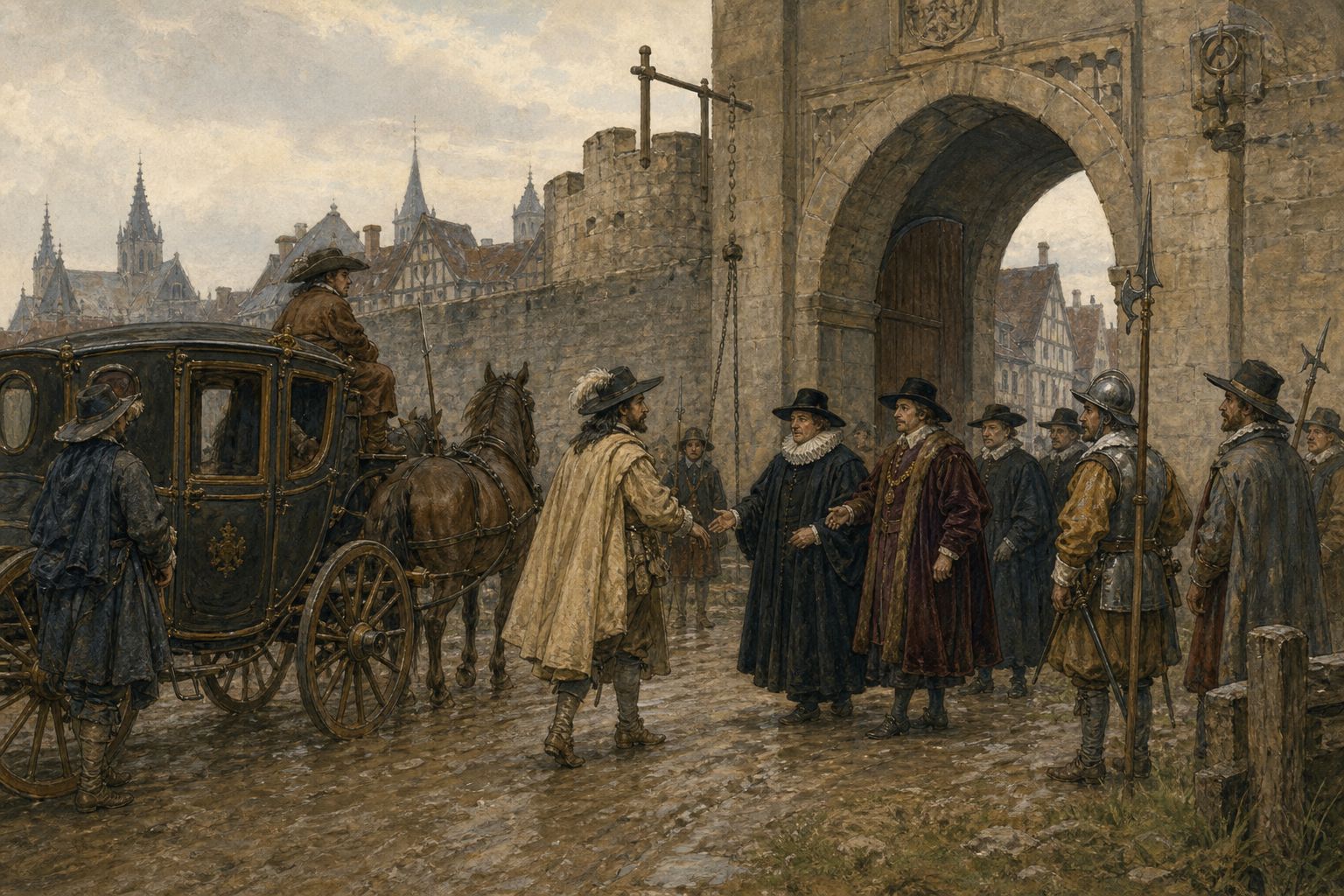
Foreign intervention widened the Thirty Years' War until battlefield victory alone could not settle the order.
1643–1648
Two cities negotiate

Many delegations adjusted their terms through messengers moving between Münster and Osnabrück.
1648
The treaties of 1648
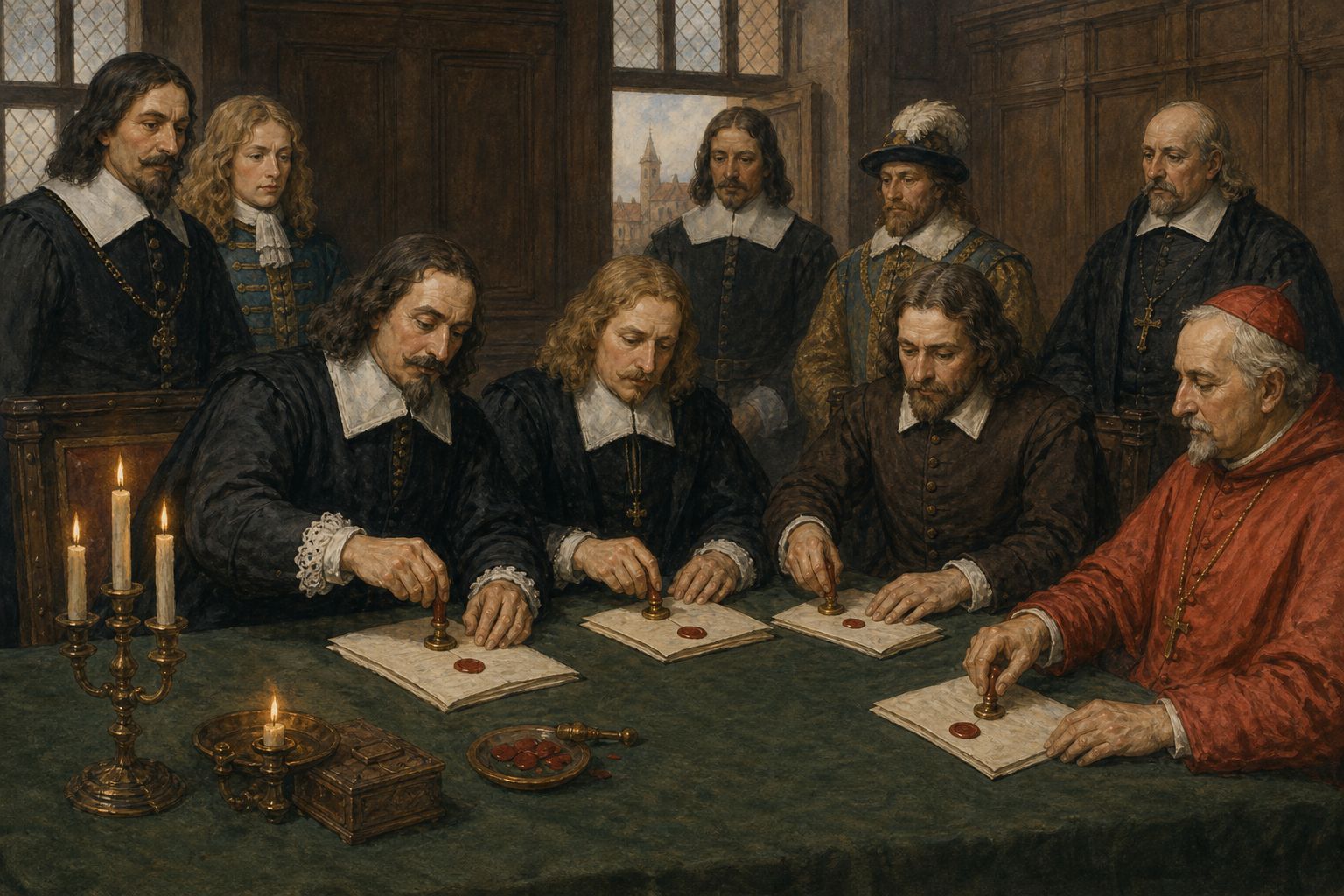
Delegates used seals and documents to confirm a settlement and turn linked wars toward peace.
c. 1648–c. 1700
A legacy of layered rights
Current event
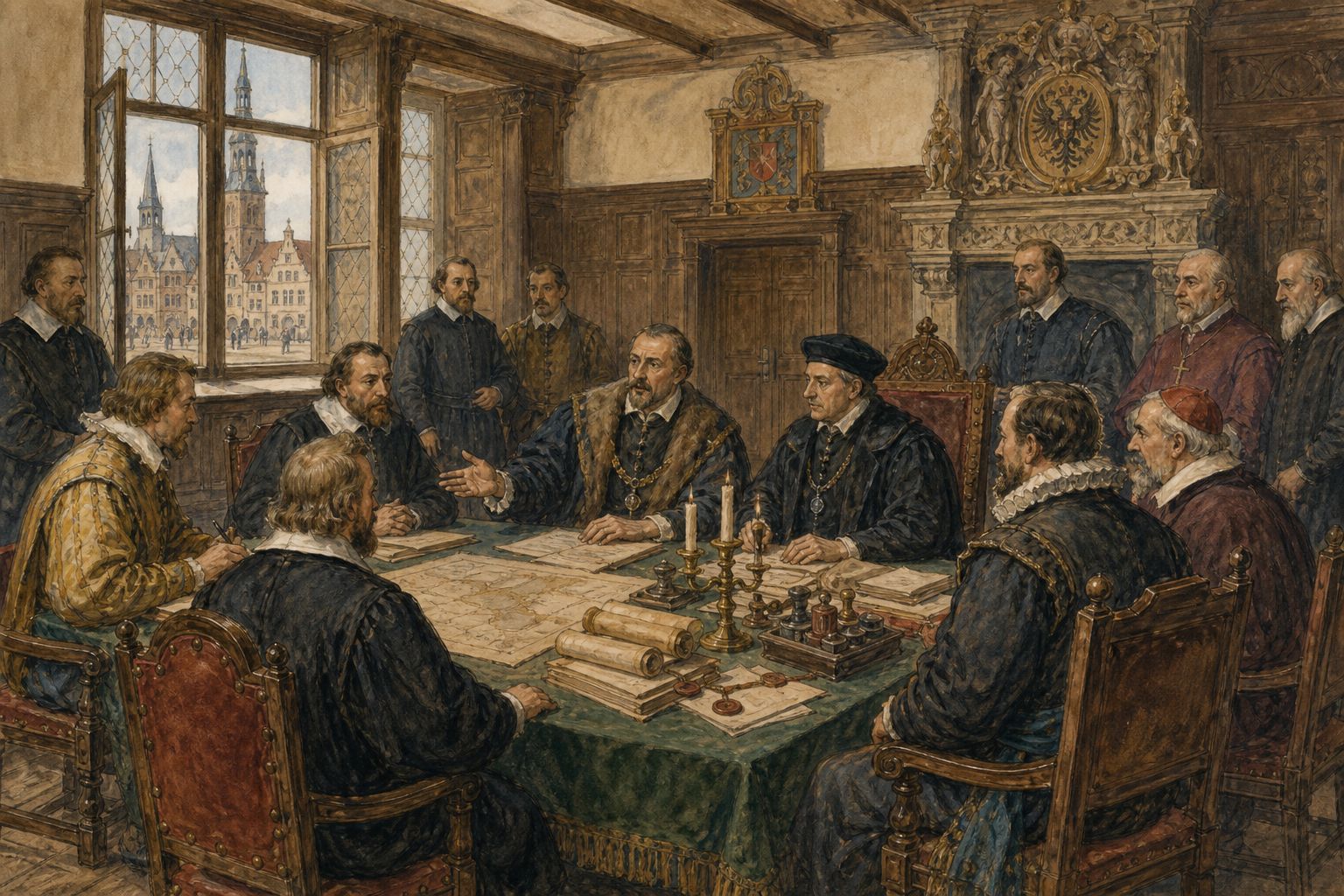
An order in which imperial, territorial, urban, and confessional rights overlapped does not fit a simple nation-state model.


Sources
- Peace of WestphaliaEncyclopaedia BritannicaA foundational account of the Thirty Years' War, the treaty date, and the Münster and Osnabrück settlement.
- Peace of WestphaliaThe Metropolitan Museum of ArtThe confessional, diplomatic, urban, and material context of seventeenth-century peace making.
- Peace of WestphaliaWorld History EncyclopediaAn overview of the negotiations, outcomes, and later interpretations of the settlement.