Portuguese Opening of the Sea Route to India
1488–1499
The process from Bartolomeu Dias's 1488 rounding of the Cape of Good Hope through Vasco da Gama's 1497–1499 voyage to Calicut and back, demonstrating a sea route from Europe to India. Later Estado da Índia conquest is outside the boundary.

- Period
- 1488–1499
- Kind
- Voyage
- Regions
- Europe, Africa, South Asia
- Keywords
- Cape of Good Hope · Vasco da Gama · Calicut · Indian Ocean · sea route
Follow the story · Four stages
Background
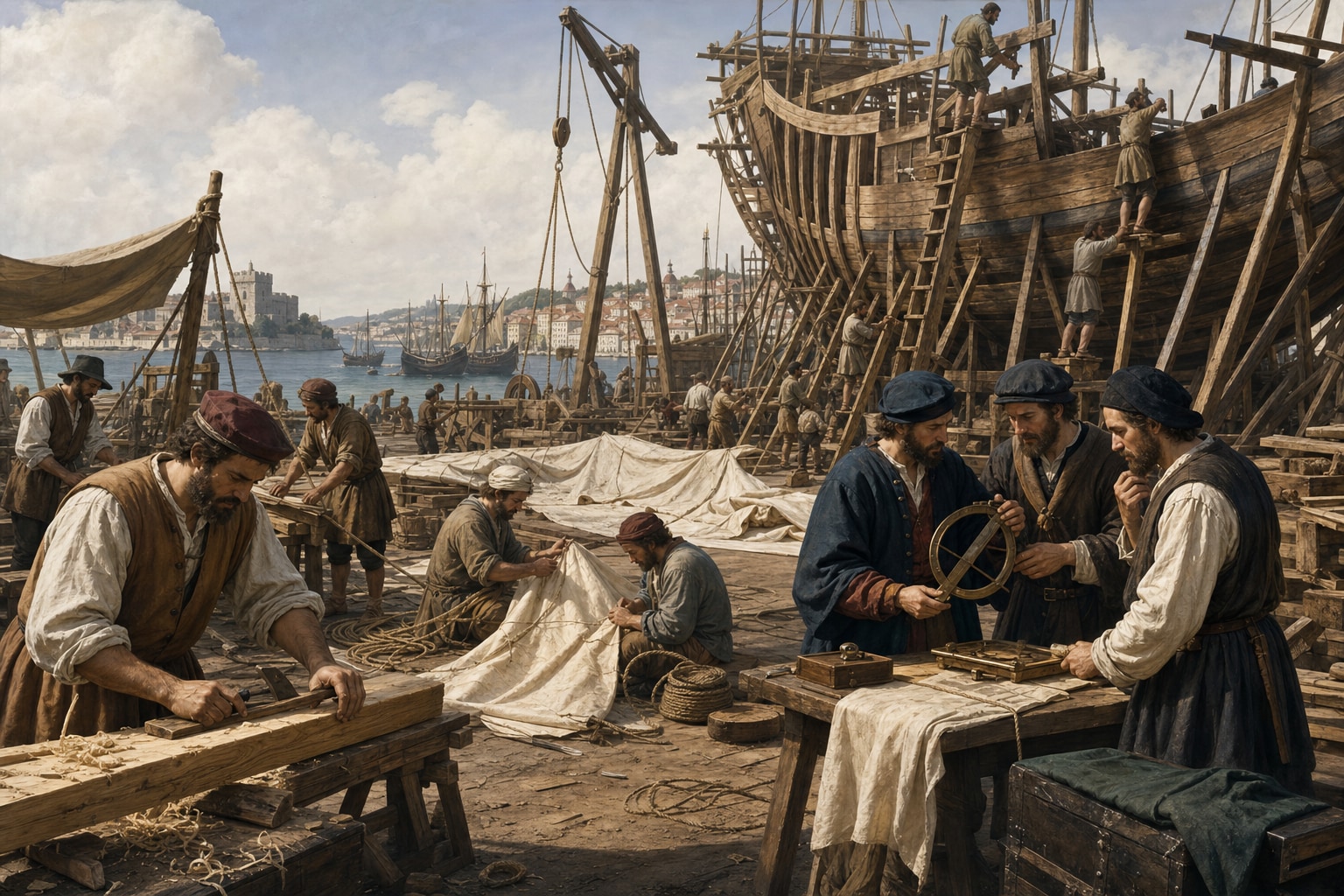
The Portuguese crown combined Atlantic experience, shipbuilding, and cartographic knowledge in pursuit of direct access to the spice trade. John II supported Dias and the wider search for an eastern route around southern Africa.
- The Portuguese monarchy connected Atlantic shipbuilding, navigation, and supply bases in a sustained search along the African coast.
- After the capture of Ceuta in 1415, projects to reach gold and spice trades by sea gained momentum.
- With John II's support, Bartolomeu Dias rounded the Cape in 1488 and demonstrated access to the Indian Ocean.
Course
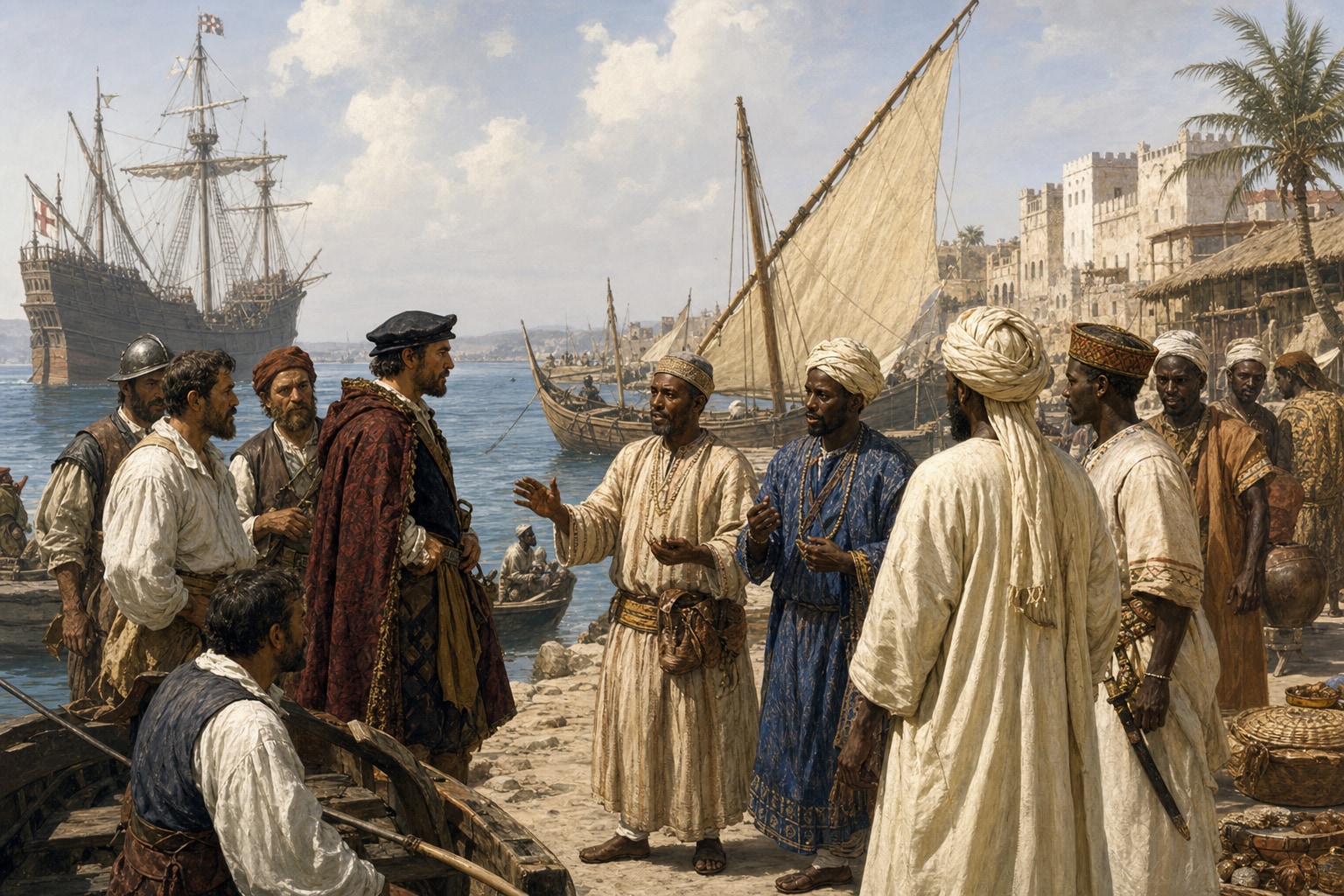
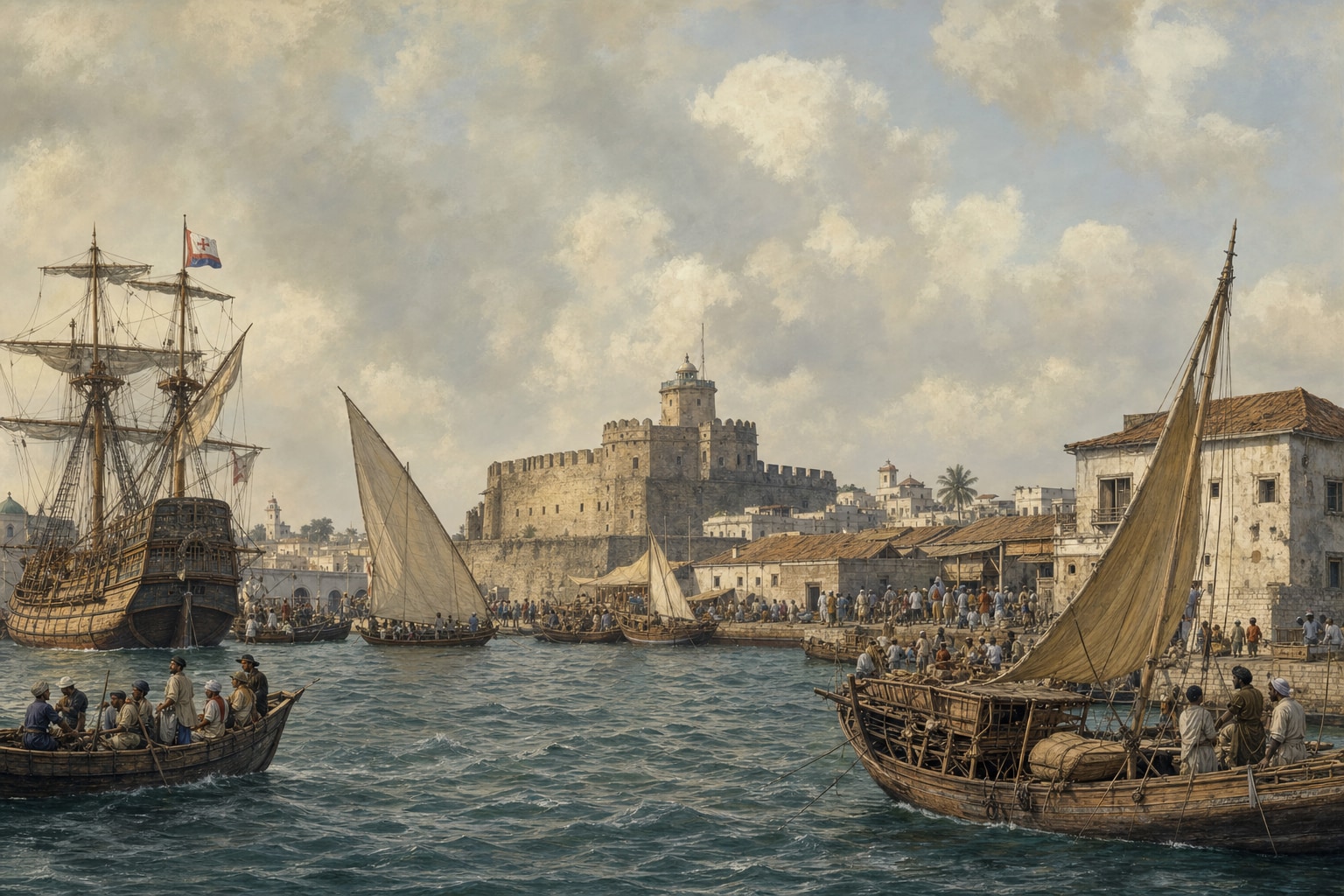
Dias rounded the Cape in 1488 and demonstrated access to the Indian Ocean. Under Manuel I, da Gama departed in 1497, sailed by East Africa, reached Calicut in 1498, and returned to Portugal in 1499.
- In 1497 Vasco da Gama's fleet left Lisbon, sailed south through the Atlantic, and passed the Cape of Good Hope.
- On the East African coast the expedition entered existing Swahili commercial networks and used local maritime knowledge to cross the Indian Ocean.
- It reached Calicut in 1498, but negotiations over gifts and trading terms proved difficult.
Outcome
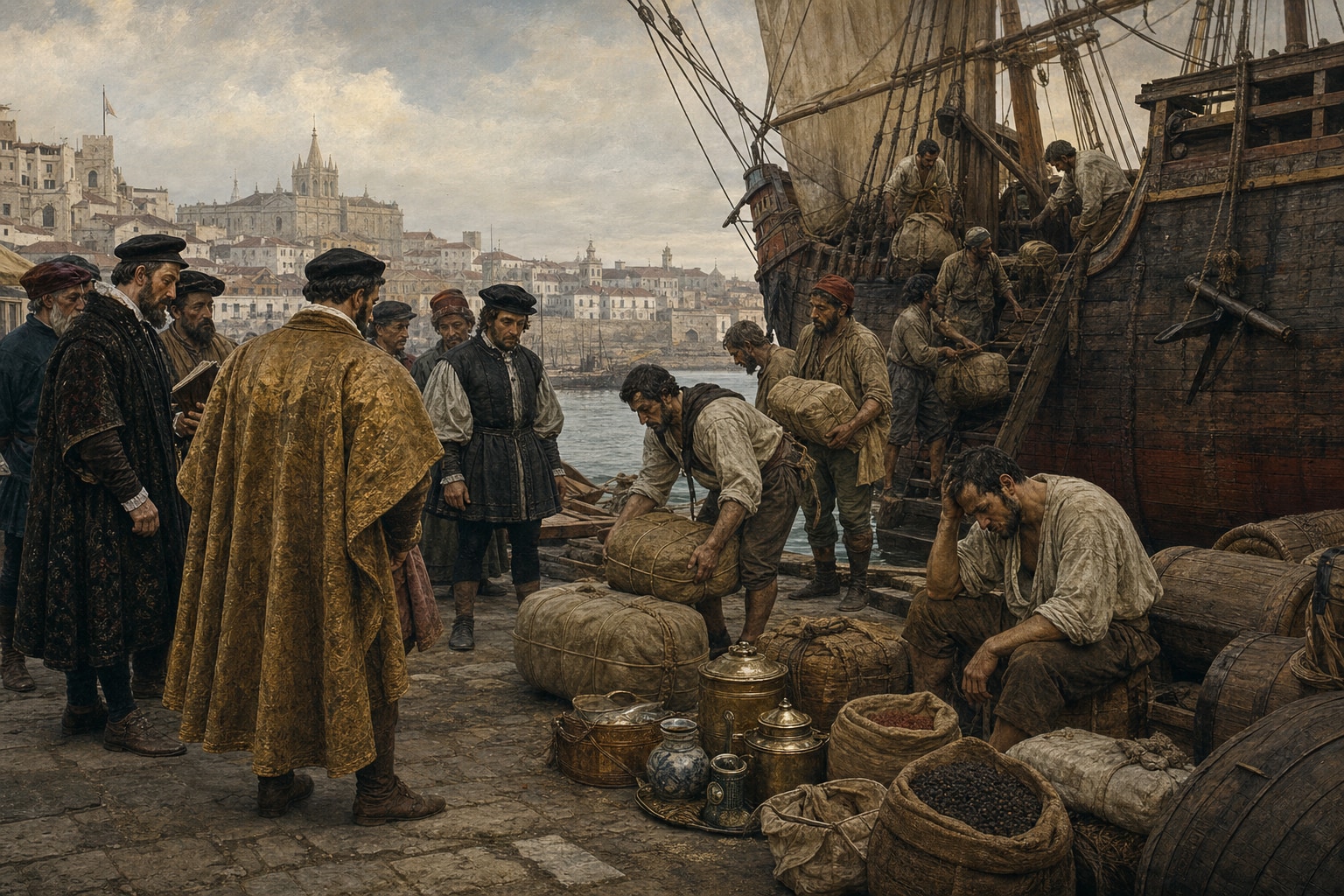
The voyage proved that ships could complete the Cape route between Europe and the Indian Ocean and encouraged recurring fleets. Negotiations brought friction, while the later use of armed force and fortified rule belonged to a subsequent imperial phase.
- Disease and the long passage killed many crew members, yet part of the fleet returned to Lisbon in 1499.
- The voyage demonstrated that Europe and India's west coast could be linked by a return route around the Cape.
- Knowledge of routes, monsoons, and ports mattered more for later expeditions than the modest cargo brought home.
Historical significance
The route directly connected Atlantic and Indian Ocean trading systems and altered global maritime exchange. It also enabled Portuguese armed commerce and empire, applying violent pressure to established Indian Ocean societies.
- Later fleets, including Cabral's, followed, and in 1505 Portugal created an administration for its Indian Ocean forces and bases.
- The fortified network that followed lies beyond this event's boundary, but the new route made that expansion possible.
- Portuguese armed fleets entered established Indian Ocean commerce, intensifying both exchange and violence.


Related figures
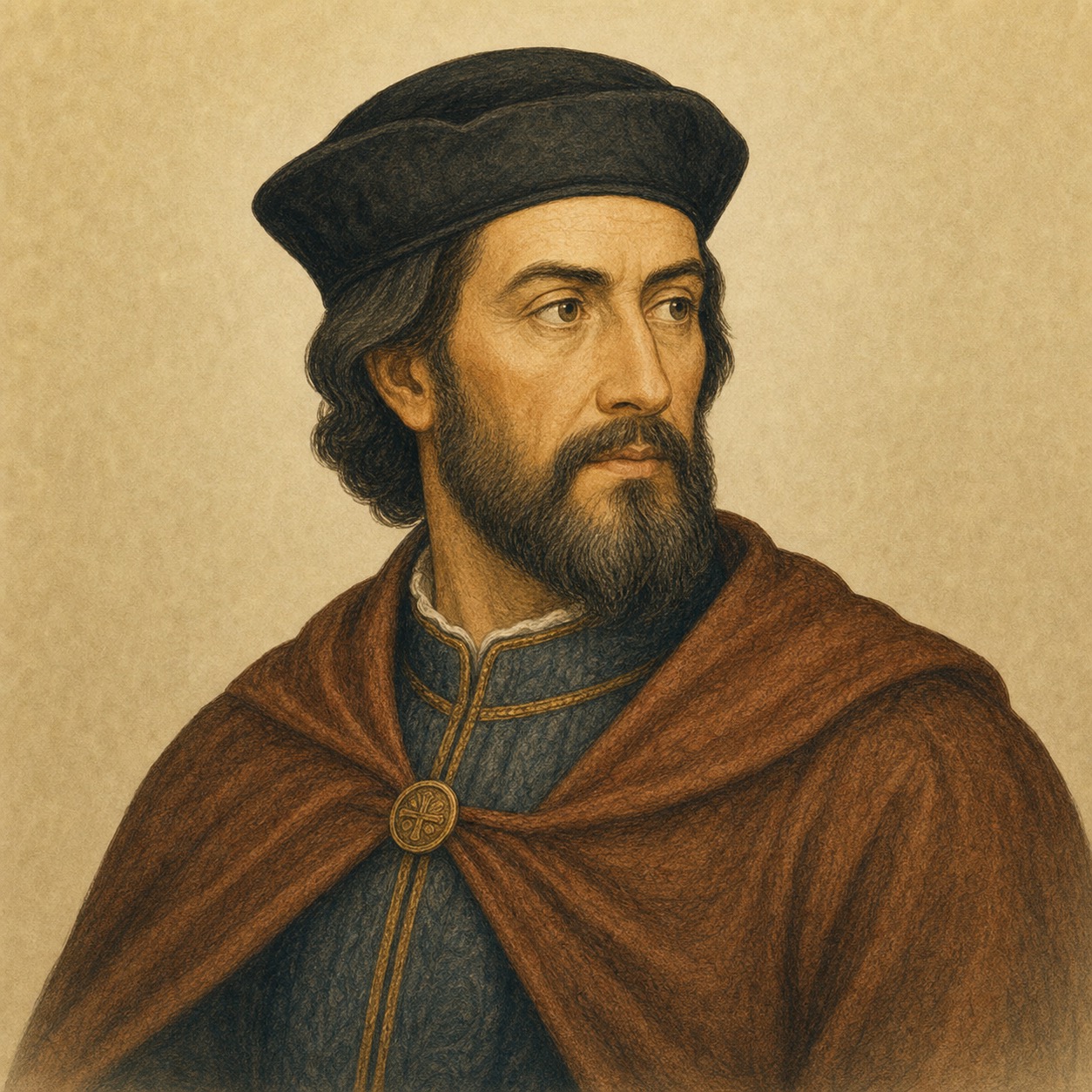
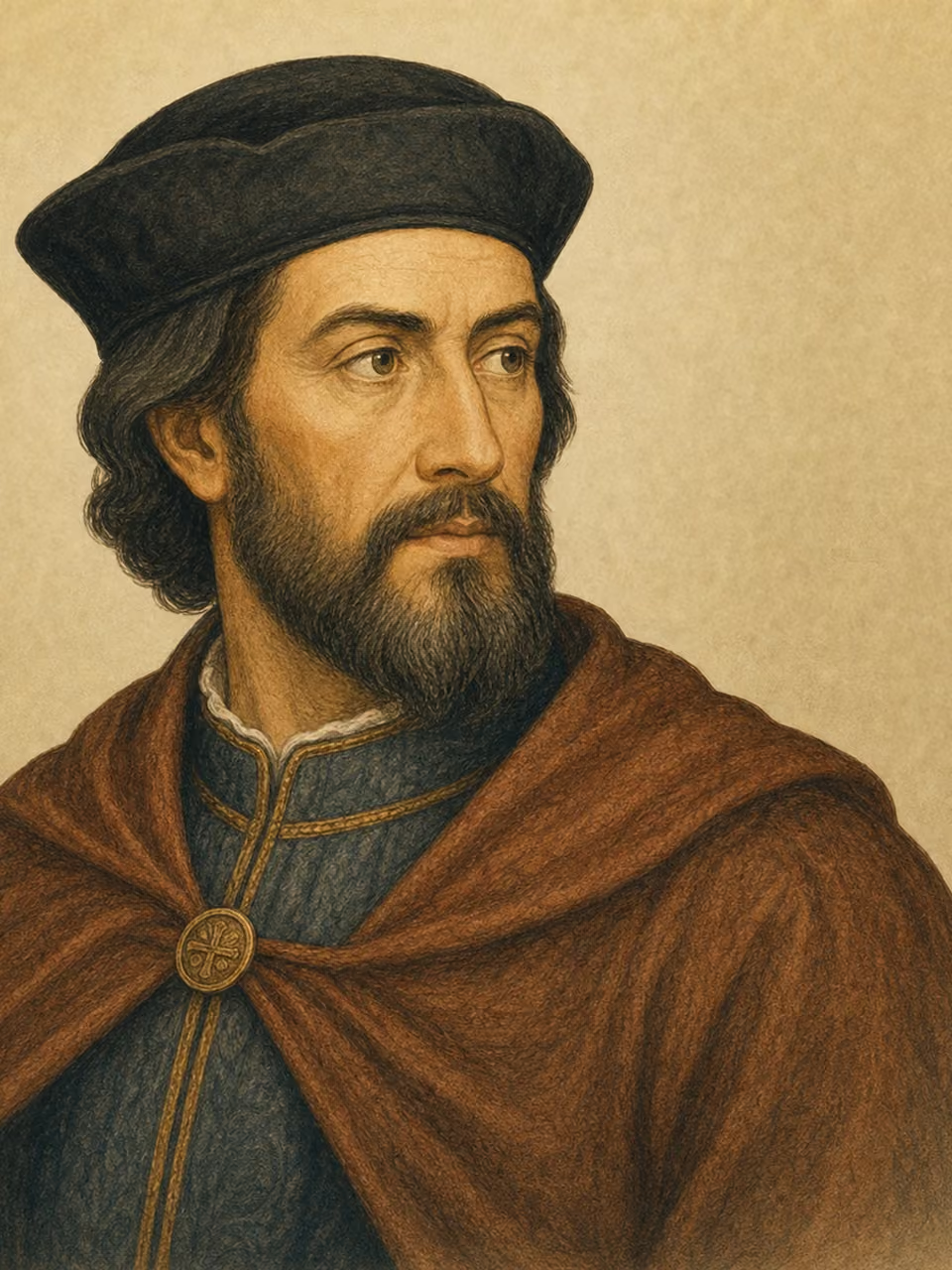
Bartolomeu Dias
Cape navigator
He rounded southern Africa in 1488 and demonstrated the route's access to the Indian Ocean.
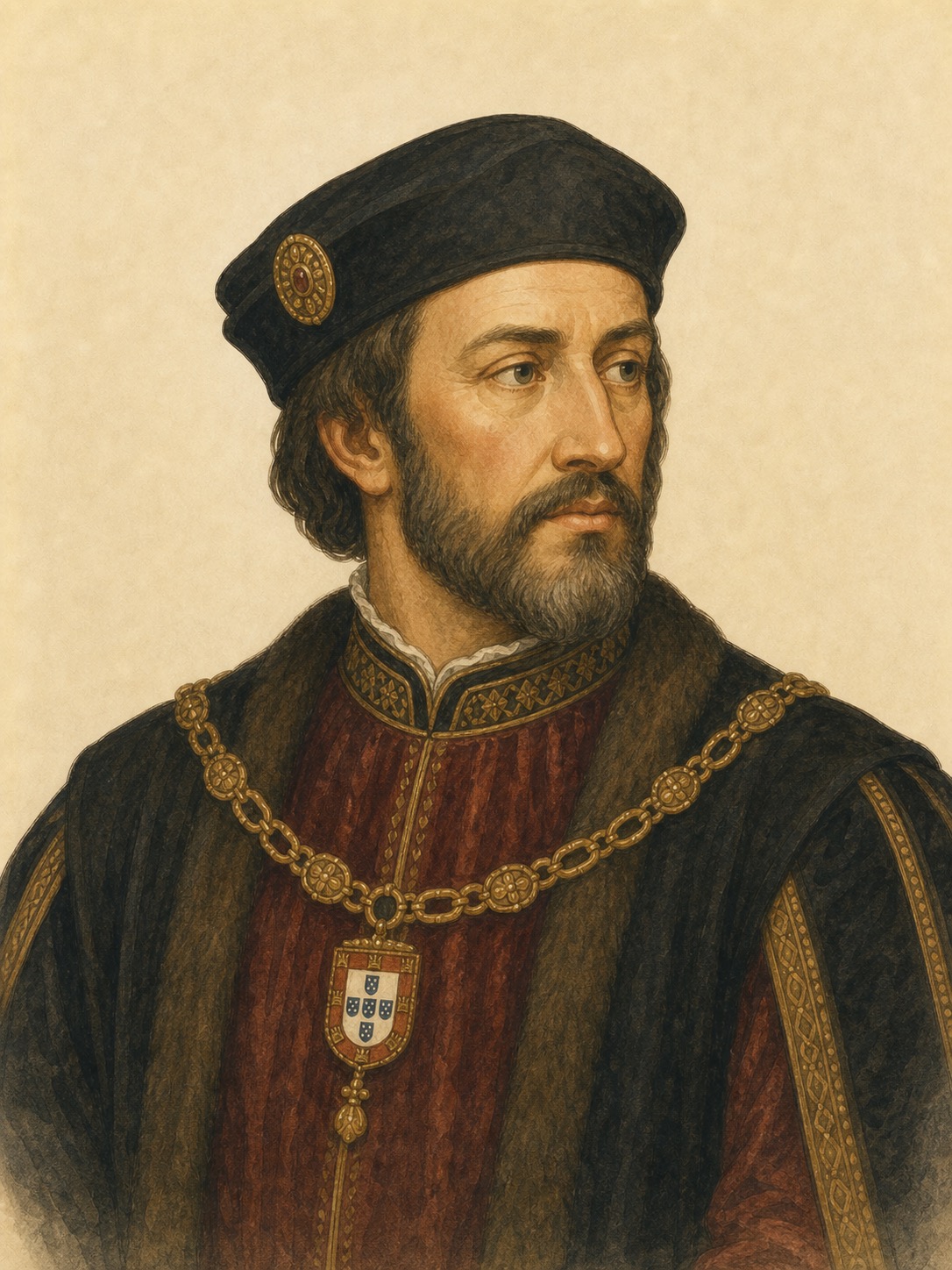
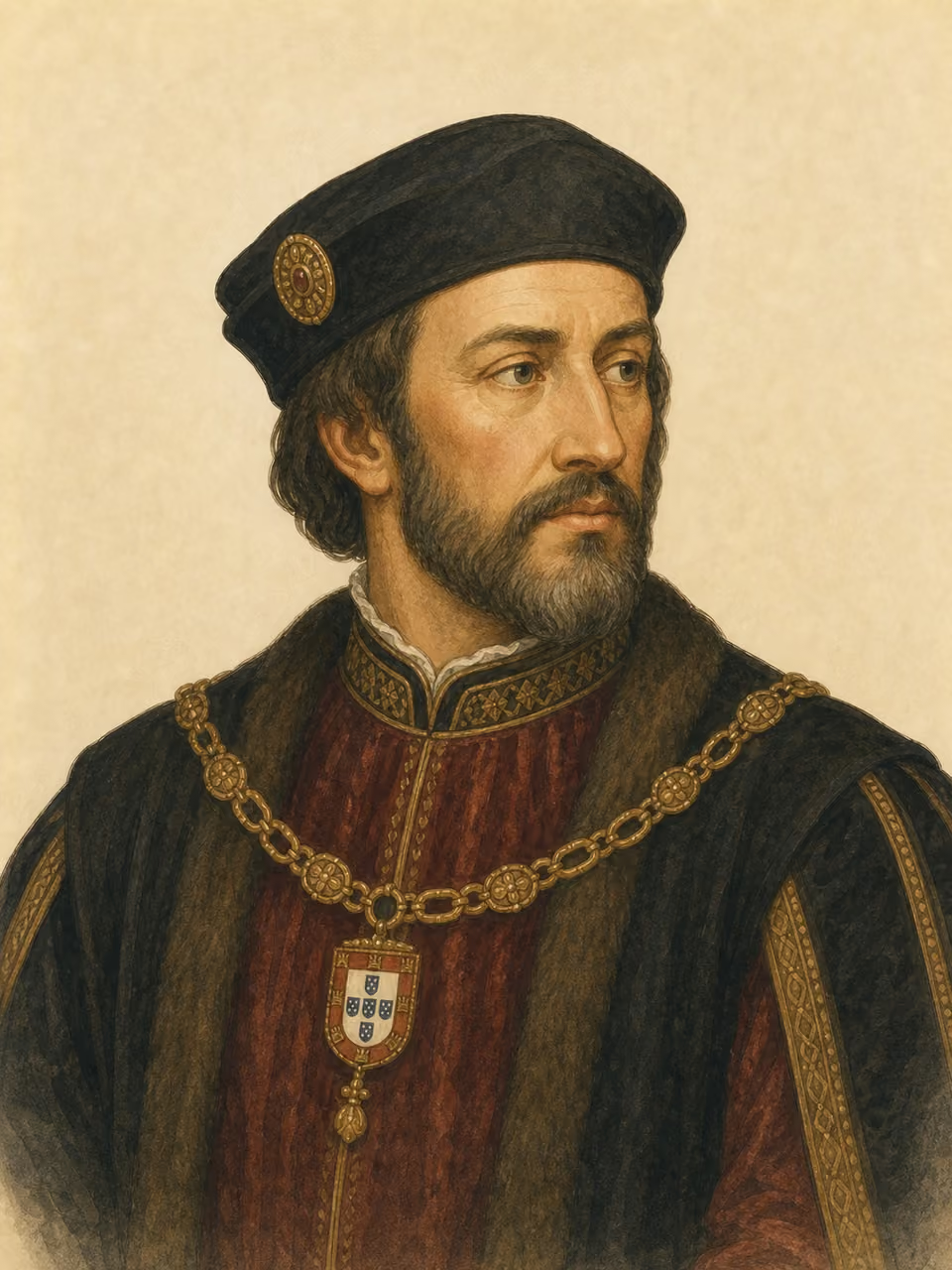
John II of Portugal
Royal sponsor
He sponsored Dias and advanced the crown's search for an eastern route around the Cape.
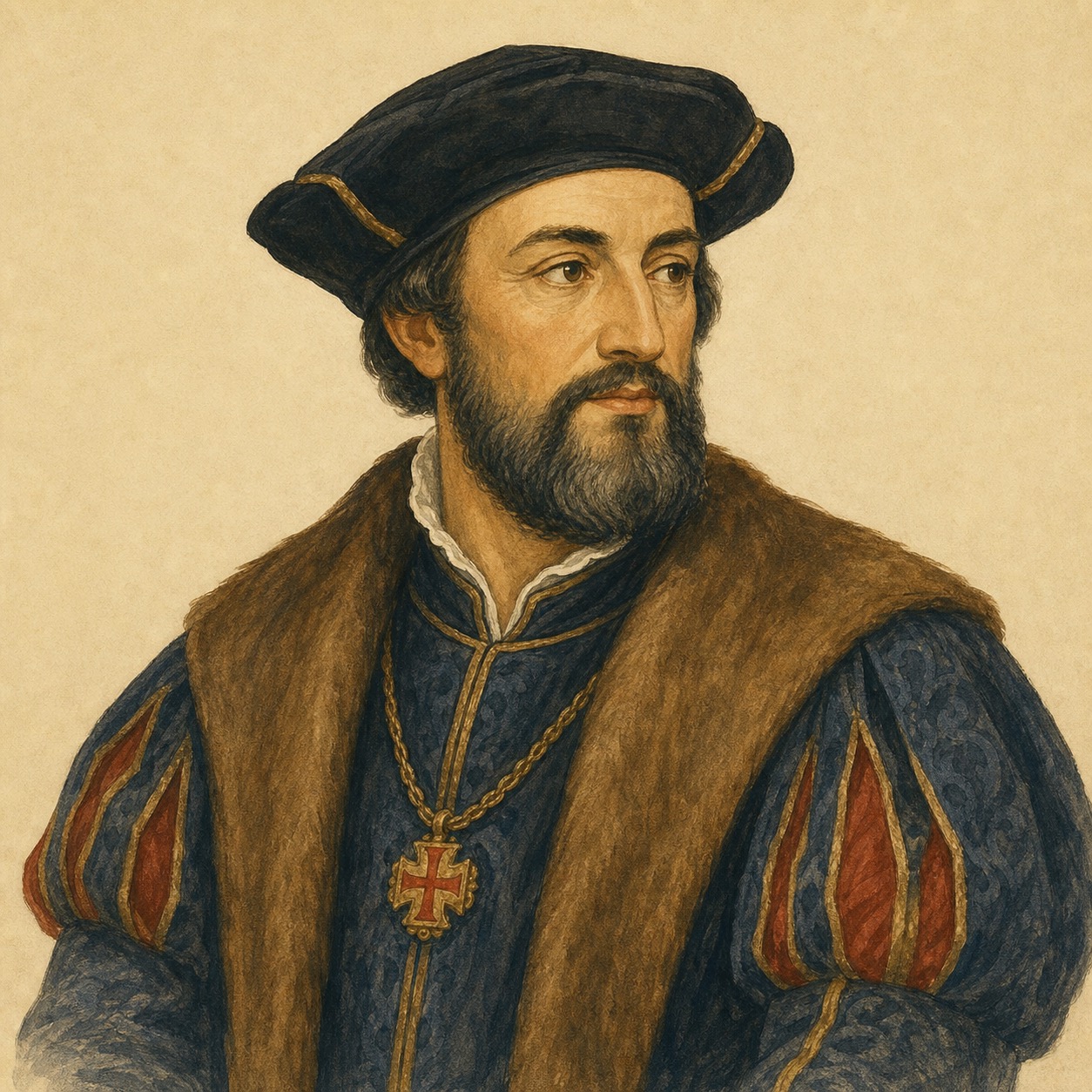
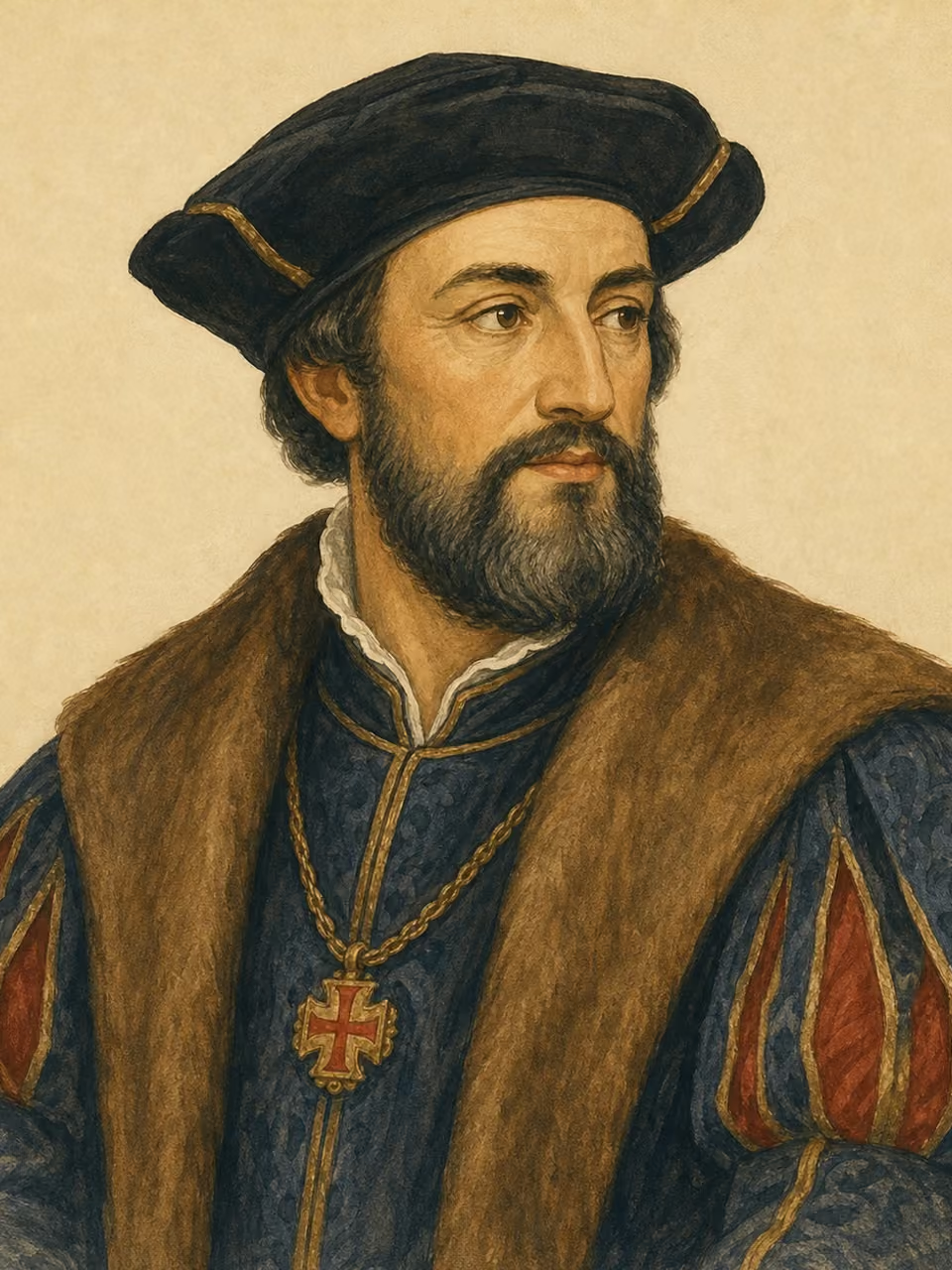
Vasco da Gama
Fleet commander
He led the 1497–1499 expedition that demonstrated a return sea route to Calicut.
Related events
1415
Capture of Ceuta
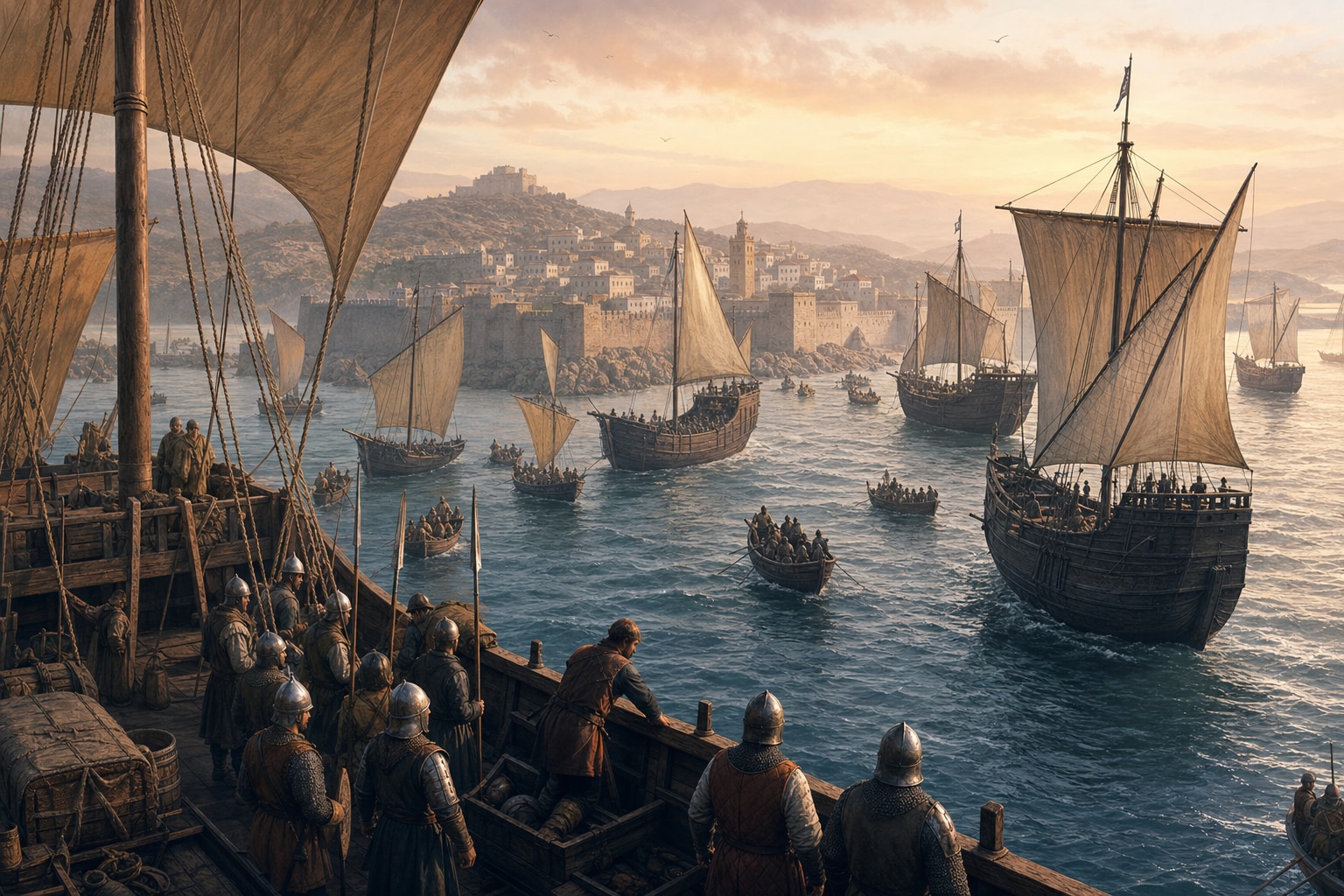
A Portuguese fleet seized the North African port, creating an early base for overseas expansion.
1488
Dias rounds the Cape
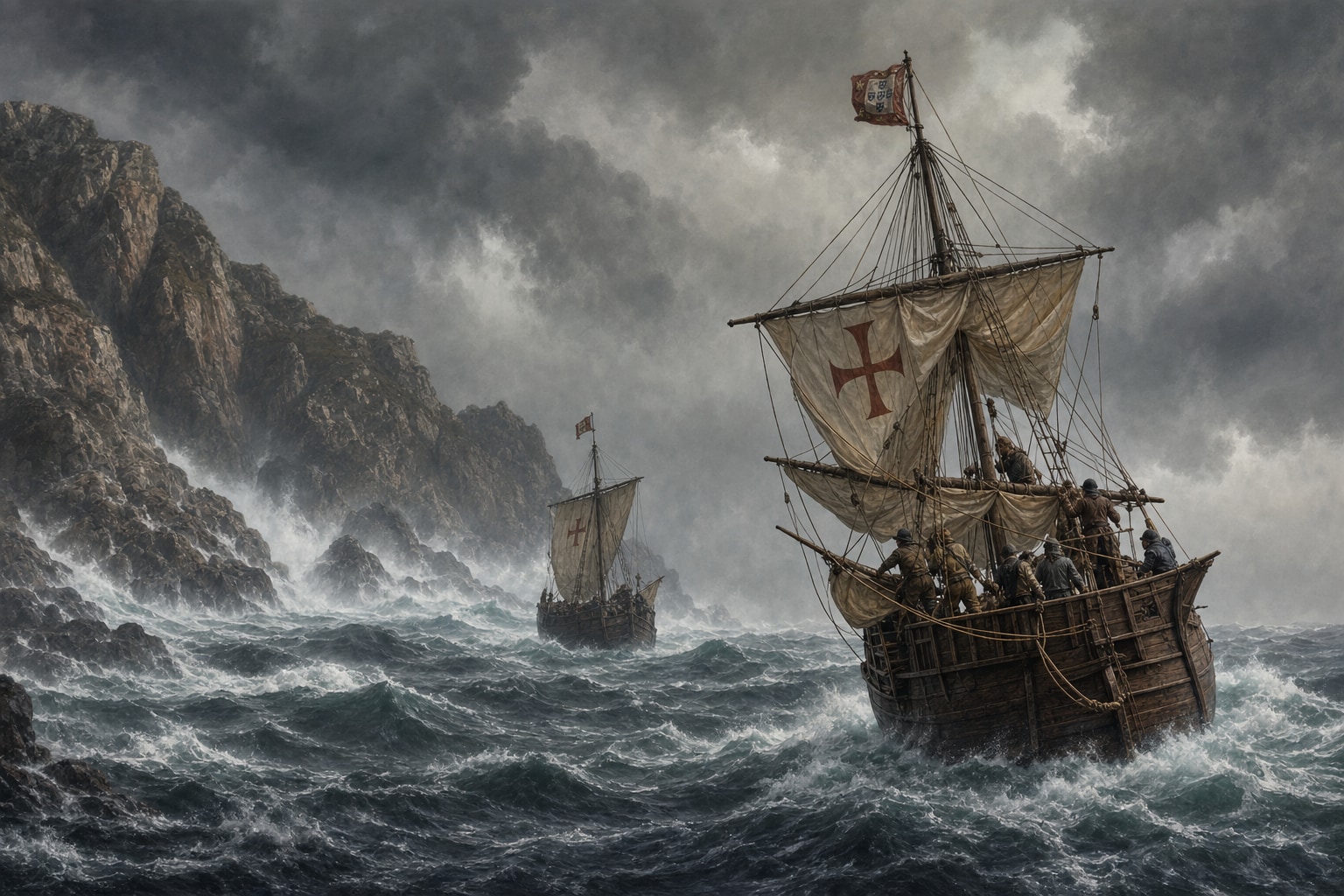
Dias passed the stormy southern end of Africa and showed that navigation could continue eastward.
1488–1499
Portuguese sea route to India
Current event
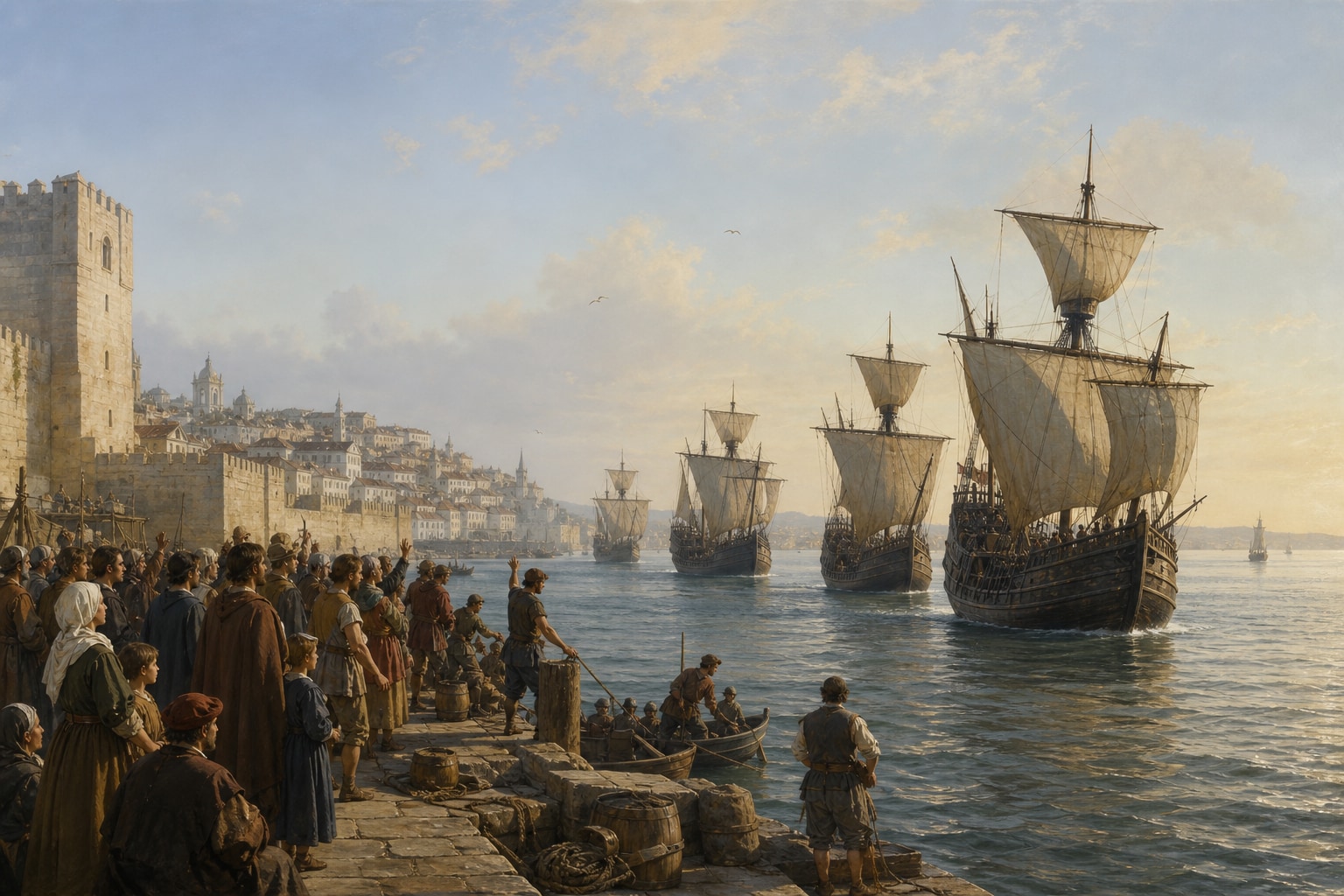
Between Dias's rounding and da Gama's return, a round-trip route around the Cape was established.
1500
Cabral reaches Brazil and India
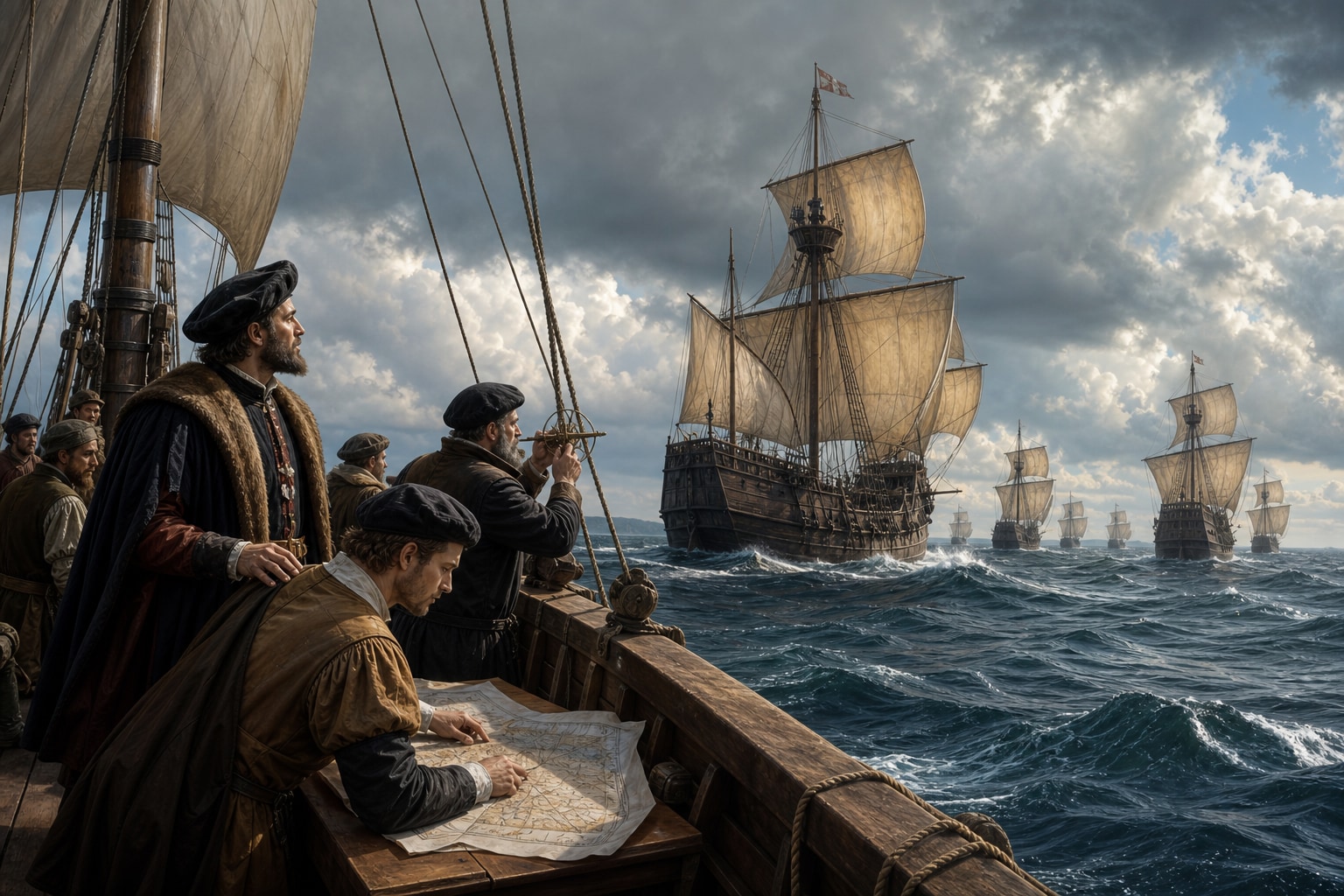
A large fleet swung west across the Atlantic, reached the Brazilian coast, and then continued to India.
1505
Estado da Índia established
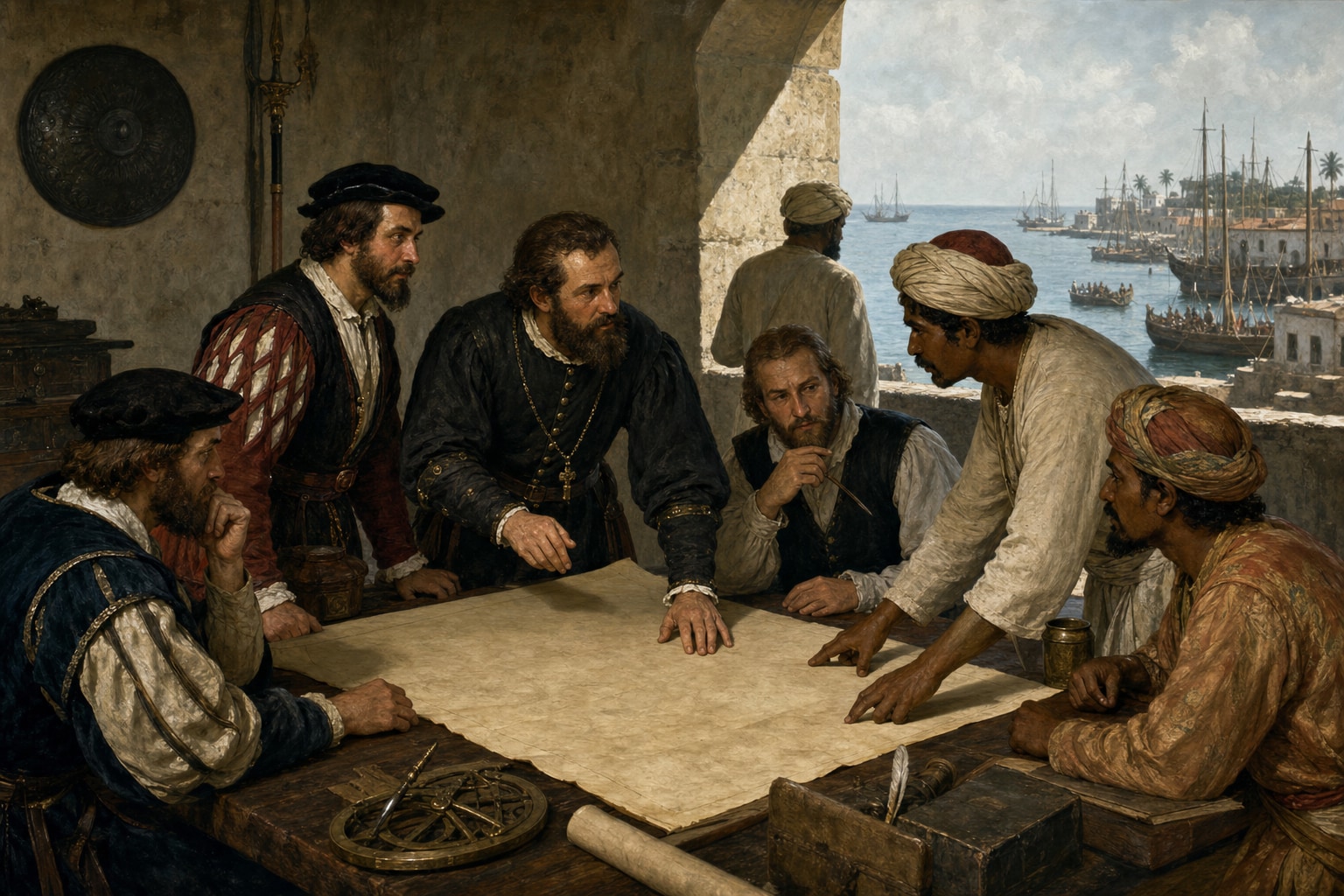
Portugal created a continuing administration for its fleets and bases in the Indian Ocean.


Sources
- Vasco da Gama: Round Africa to IndiaFordham University Modern History SourcebookA sourcebook account of the 1497–1499 route, encounters, and return.
- Vasco da GamaEncyclopaedia BritannicaA biographical overview of da Gama's voyages and historical position.
- Bartolomeu DiasWikipediaA reference for Dias's Cape voyage and participation in later expeditions.
- Serving PortugalPortuguese NavyAn official maritime history spanning Ceuta through the early Estado da Índia.