Creation of the Twelve Tables
451 BC
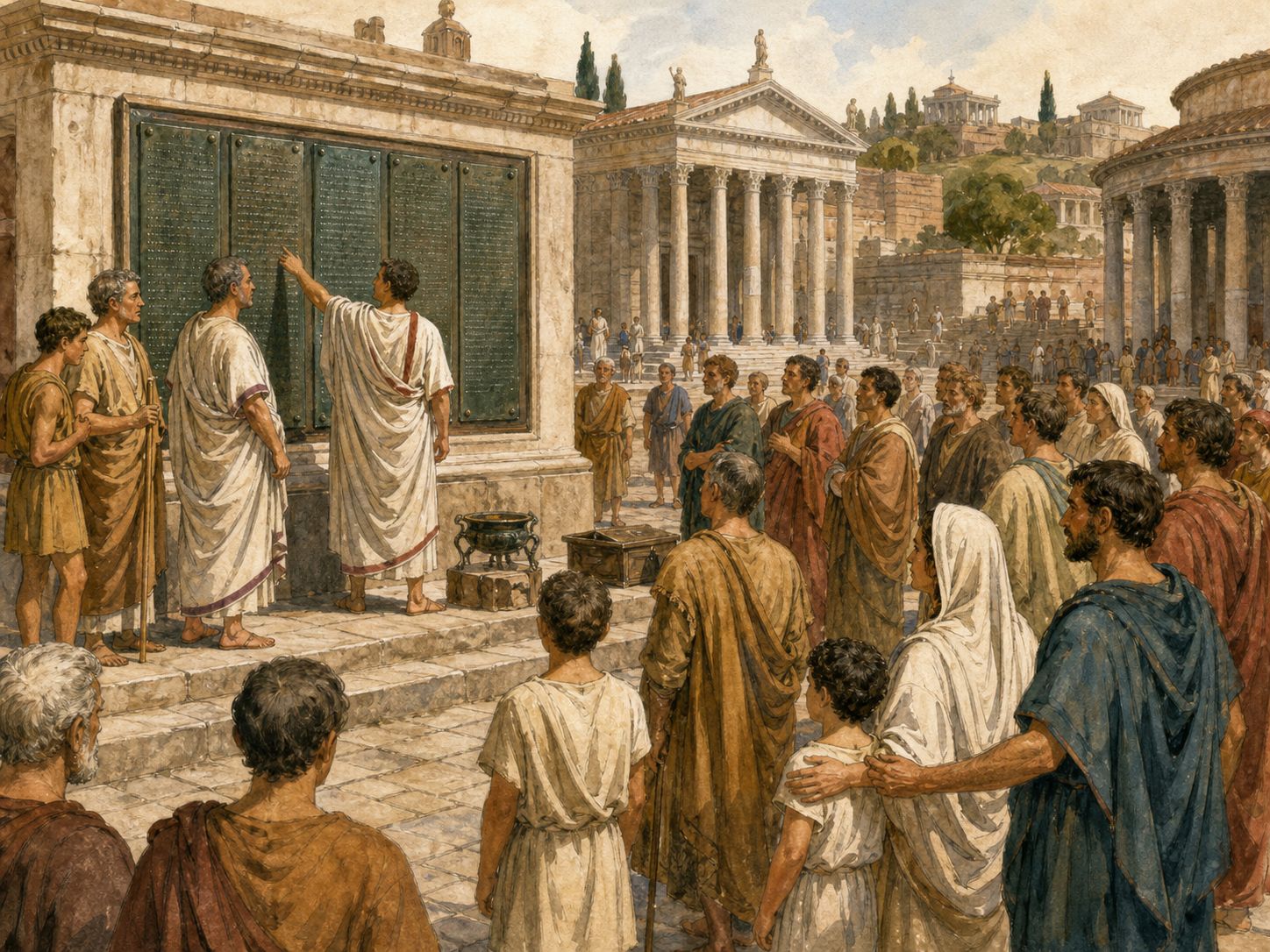
Roman customary law was displayed in twelve tables, becoming a focal point in negotiations between patricians and plebeians.

- Period
- 451 BC
- Kind
- Political event
- Regions
- Europe
- Keywords
- Creation of the Twelve Tables · the Roman Forum · ancient · background · turning point · impact
Follow the story · Four stages
Background
Political, social, and commercial changes around the Roman Forum formed the setting: Roman customary law was displayed in twelve tables, becoming a focal point in negotiations between patricians and plebeians.
- In and around the Roman Forum, the setting took shape as Roman customary law was displayed in twelve tables, becoming a focal point in negotiations between patricians and plebeians.
- Core event: Roman customary law was displayed in twelve tables, becoming a focal point in negotiations between patricians and plebeians.
- Connection to the next stage: Roman customary law was displayed in twelve tables, becoming a focal point in negotiations between patricians and plebeians. The change unfolded through decisions by rulers, institutions, and local communities.
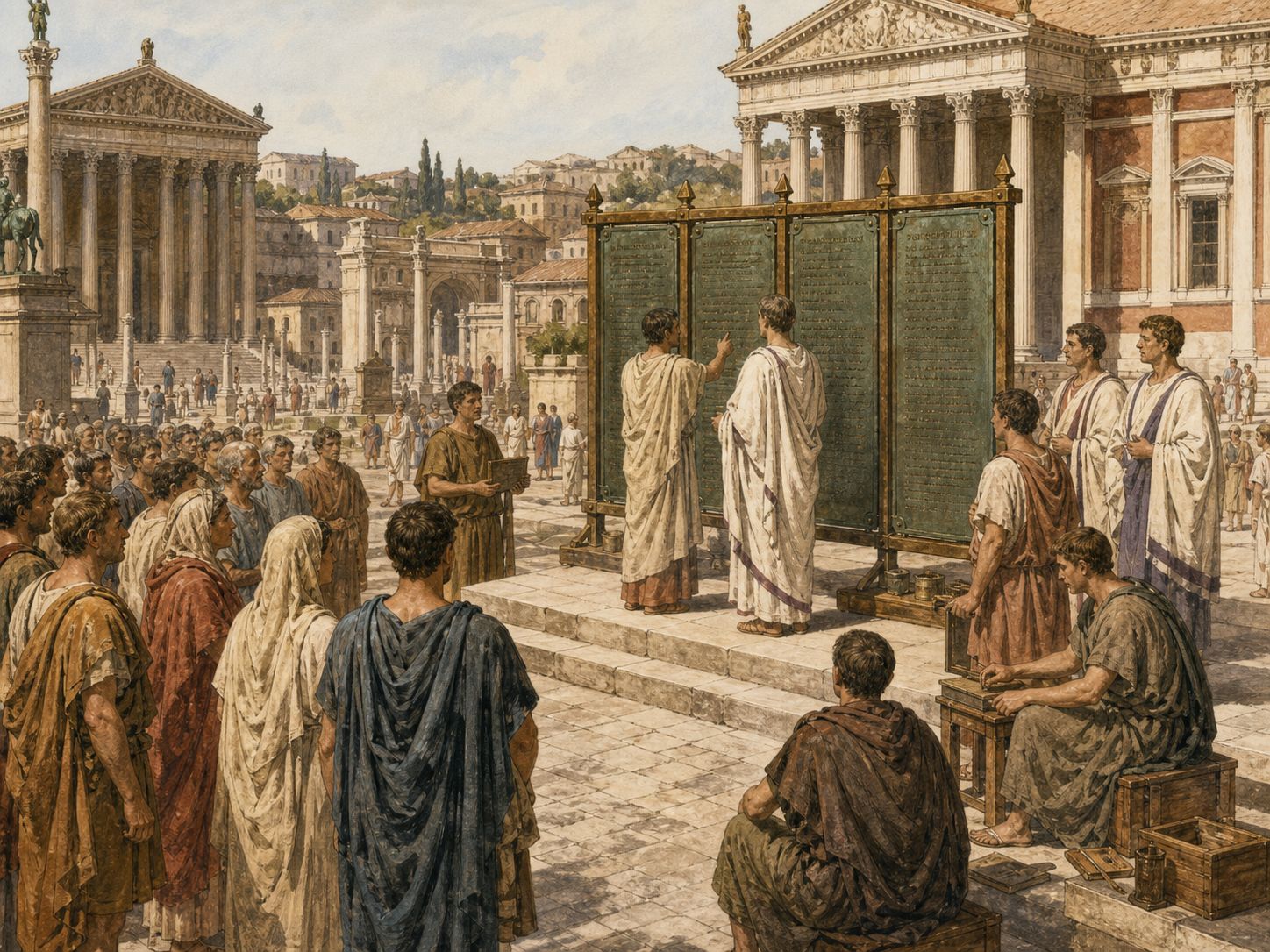
Course
Roman customary law was displayed in twelve tables, becoming a focal point in negotiations between patricians and plebeians. The choices of the participating powers and responses of local communities shaped the course.
- Roman customary law was displayed in twelve tables, becoming a focal point in negotiations between patricians and plebeians.
- The change unfolded through decisions by rulers, institutions, and local communities.
- Conditions behind the action: In and around the Roman Forum, the setting took shape as Roman customary law was displayed in twelve tables, becoming a focal point in negotiations between patricians and plebeians.
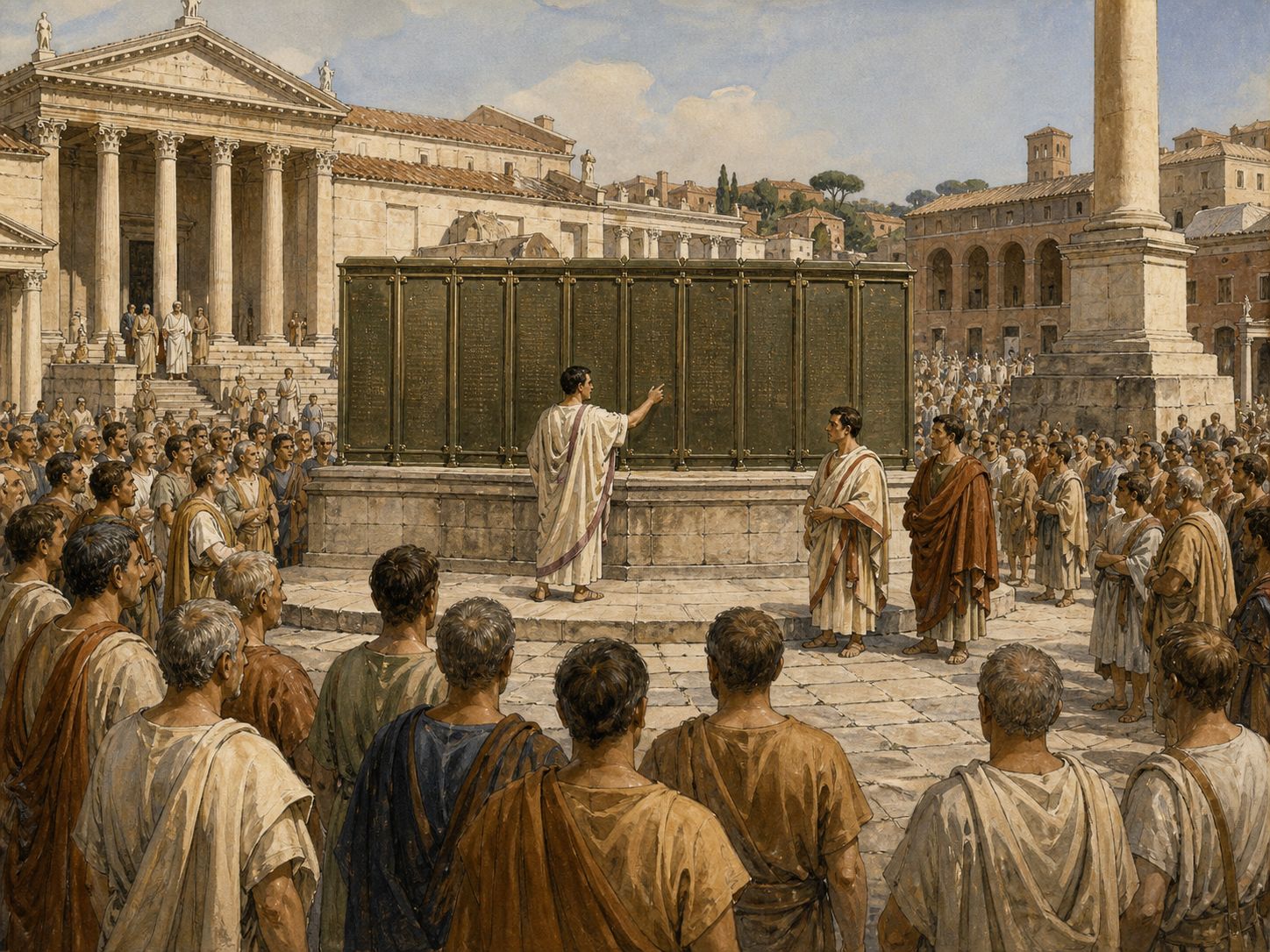
Outcome
As a result, The tables became a symbol of making law public and allowing citizens to refer to legal procedures.
- The tables became a symbol of making law public and allowing citizens to refer to legal procedures.
- Process producing the result: Roman customary law was displayed in twelve tables, becoming a focal point in negotiations between patricians and plebeians. The change unfolded through decisions by rulers, institutions, and local communities.
- Question carried forward: In the longer term, the tables became a symbol of making law public and allowing citizens to refer to legal procedures.
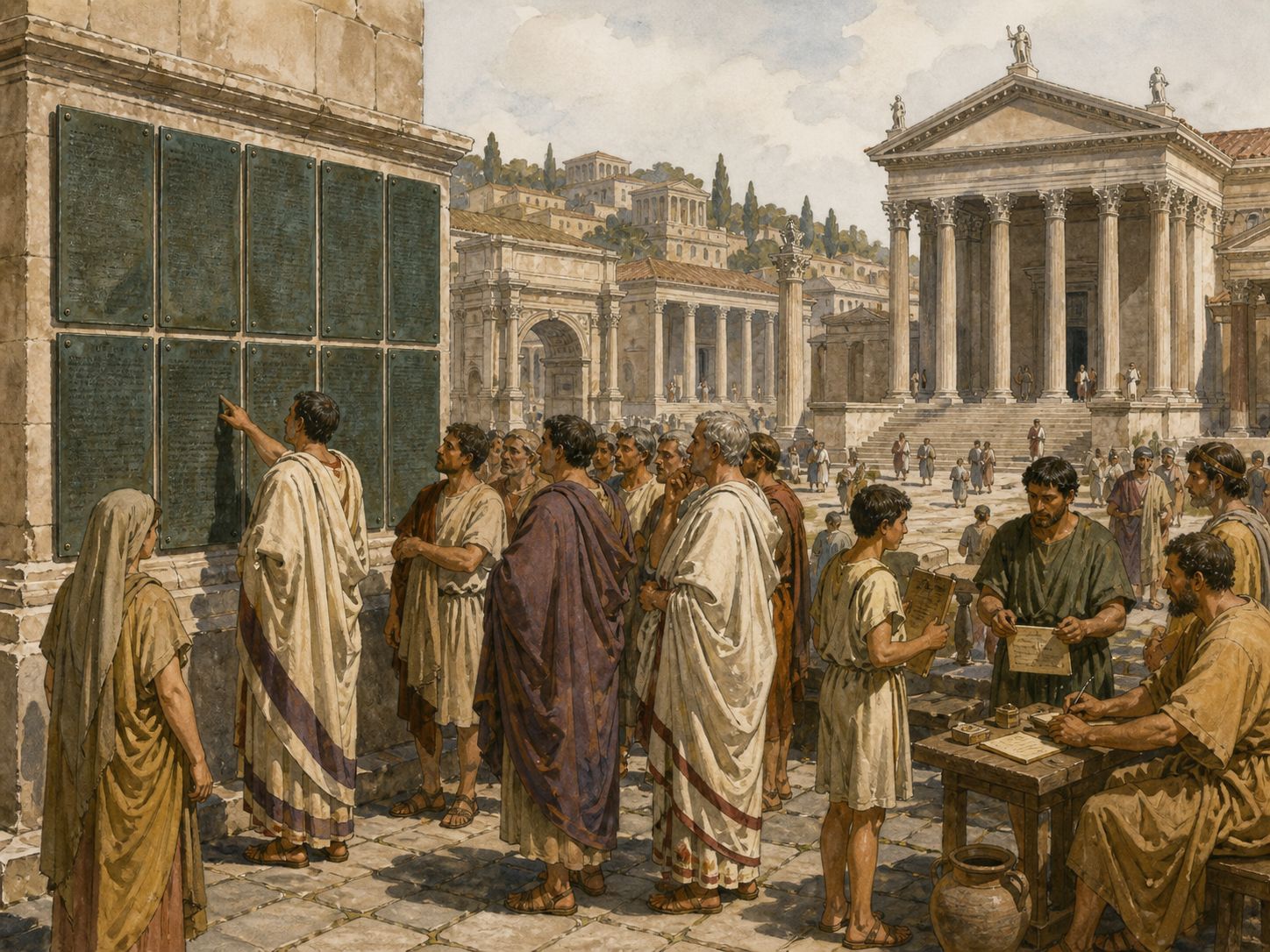
Historical significance
The significance of this event lies in the fact that the tables became a symbol of making law public and allowing citizens to refer to legal procedures.
- In the longer term, the tables became a symbol of making law public and allowing citizens to refer to legal procedures.
- Immediate consequence: The tables became a symbol of making law public and allowing citizens to refer to legal procedures.
- Historical turning point: Roman customary law was displayed in twelve tables, becoming a focal point in negotiations between patricians and plebeians.


Related events
c. 494 BC
Plebeians secure their tribunes
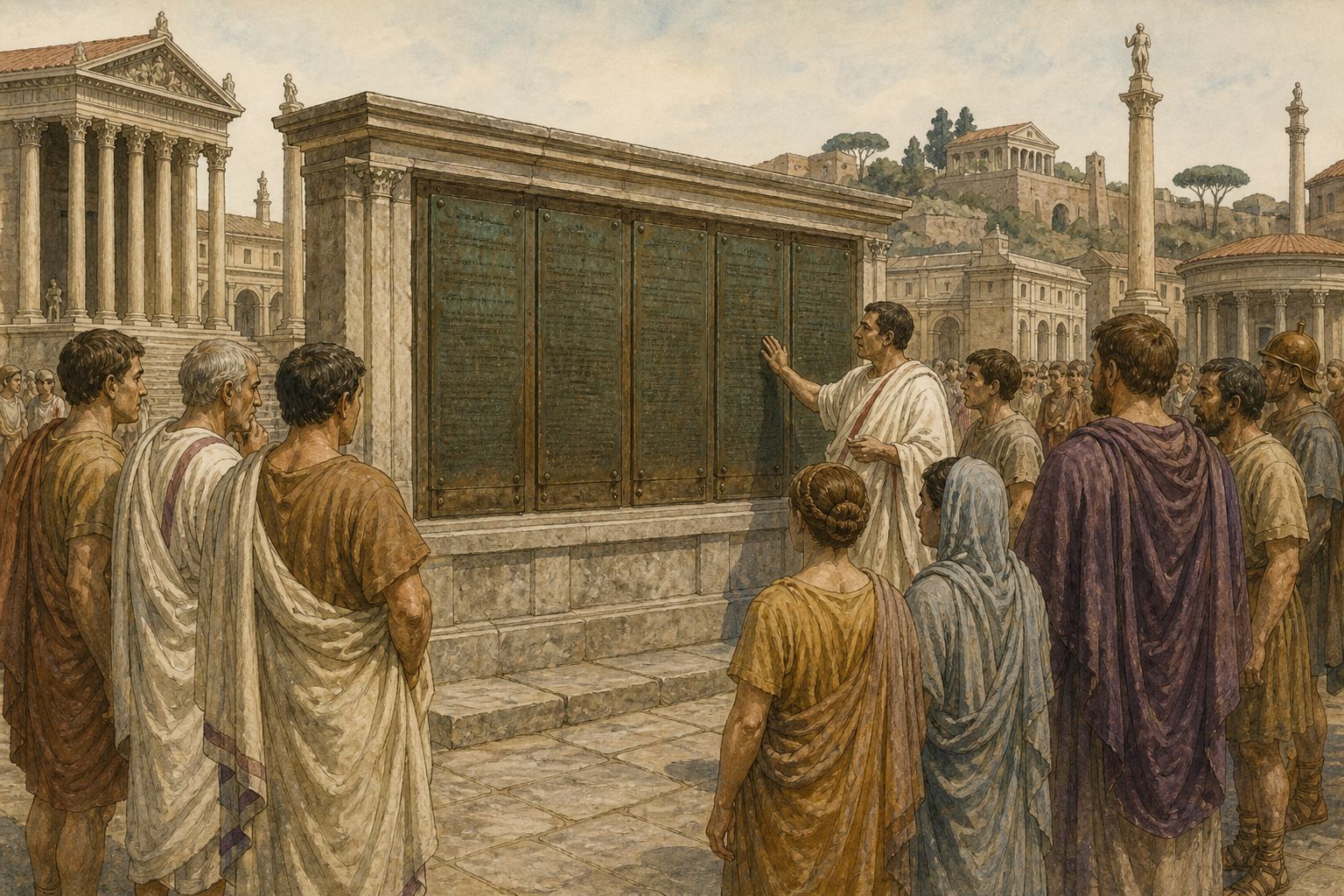
Plebeians secure their tribunes — In and around the Roman Forum, the setting took shape as Roman customary law was displayed in twelve tables, becoming a focal point in negotiations between patricians and plebeians.
c. 462 BC
Demand for a written law code
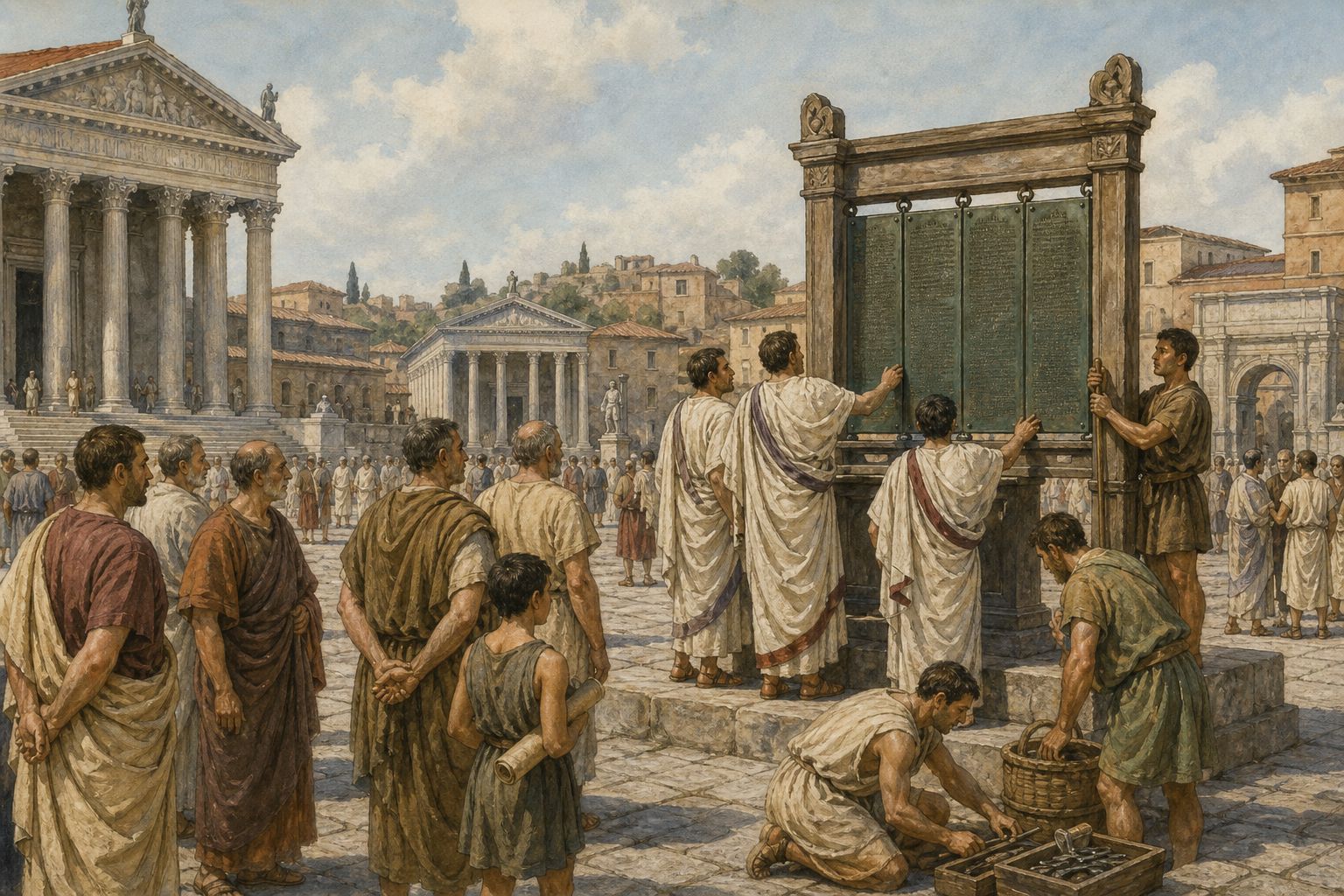
Demand for a written law code — Roman customary law was displayed in twelve tables, becoming a focal point in negotiations between patricians and plebeians. The change unfolded through decisions by rulers, institutions, and local communities.
c. 451 BC
First ten tables drafted
Current event
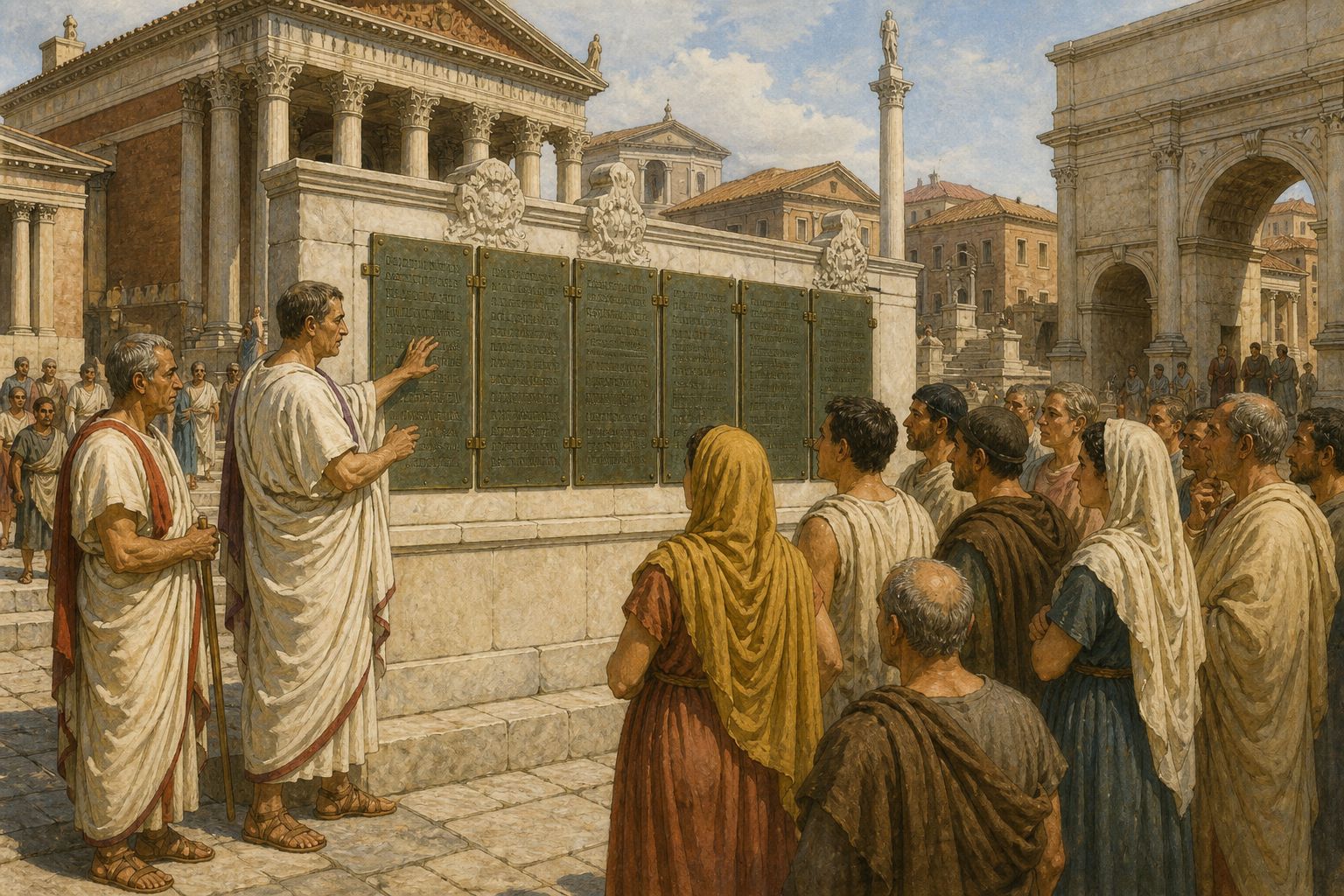
First ten tables drafted — Roman customary law was displayed in twelve tables, becoming a focal point in negotiations between patricians and plebeians.
c. 450 BC
Final two tables added
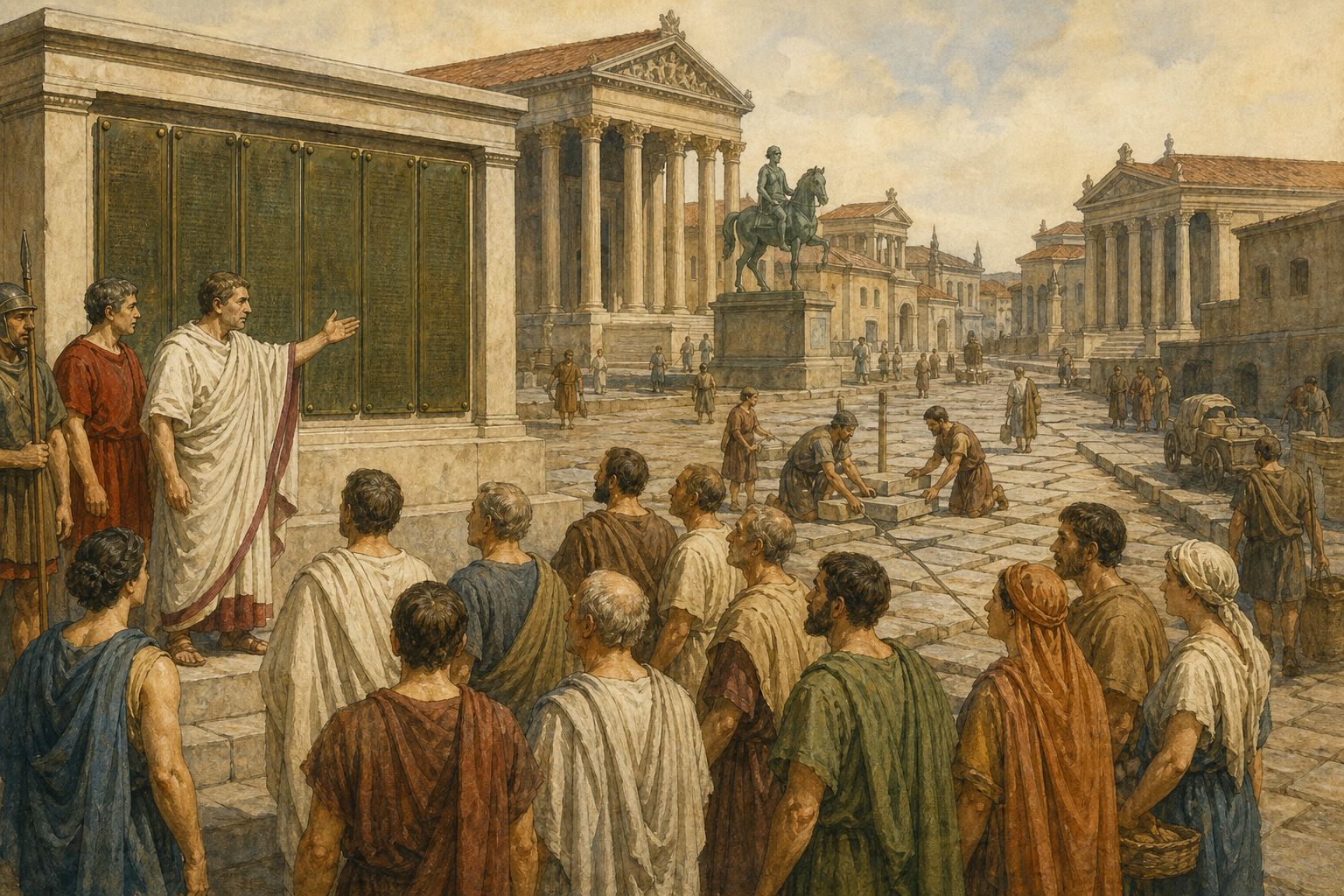
Final two tables added — The tables became a symbol of making law public and allowing citizens to refer to legal procedures.
c. 449 BC
Consular government restored
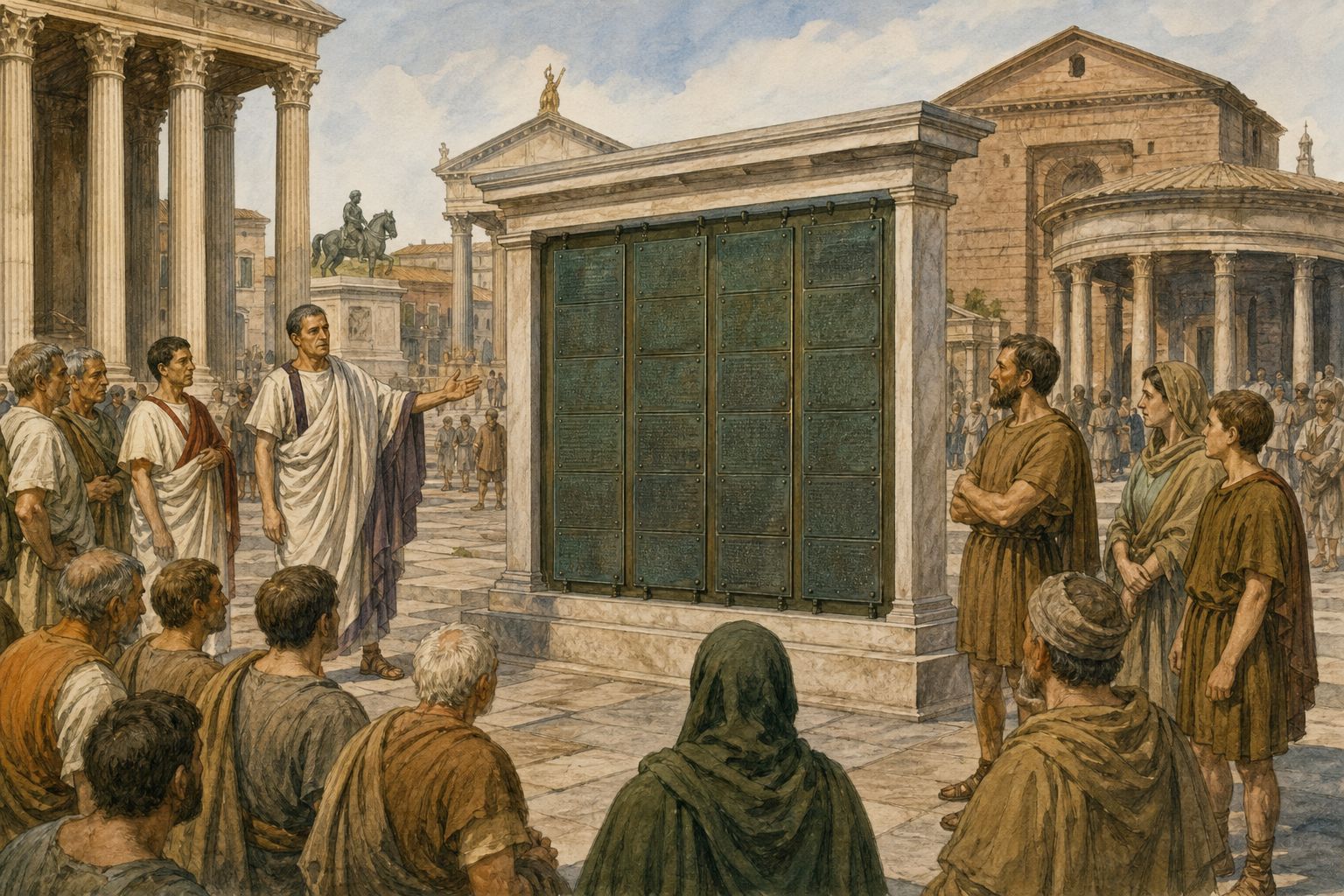
Consular government restored — In the longer term, the tables became a symbol of making law public and allowing citizens to refer to legal procedures.


Sources
- Creation of the Twelve Tables — Timeline (Daiichi Gakushusha)www.daiichi-g.co.jpThis Daiichi Gakushusha resource supports the chronology, setting, and course of Creation of the Twelve Tables.
- Creation of the Twelve Tables — Creation Of The Twelve Tables (Encyclopaedia Britannica)www.britannica.comThis Encyclopaedia Britannica resource supports the chronology, setting, and course of Creation of the Twelve Tables.
- Creation of the Twelve Tables — Creation Of The Twelve Tables (Wikidata)www.wikidata.orgThis Wikidata resource supports the chronology, setting, and course of Creation of the Twelve Tables.