Crisis of the Sea Peoples
c. 1200 BC–c. 1150 BC
Around 1200–1150 BCE, eastern Mediterranean states and communities experienced connected disruptions commonly associated with movements called the Sea Peoples.

- Period
- c. 1200 BC–c. 1150 BC
- Kind
- Cultural event
- Regions
- Europe
- Keywords
- Sea Peoples · Late Bronze Age · eastern Mediterranean · palace economy · Iron Age
Follow the story · Four stages
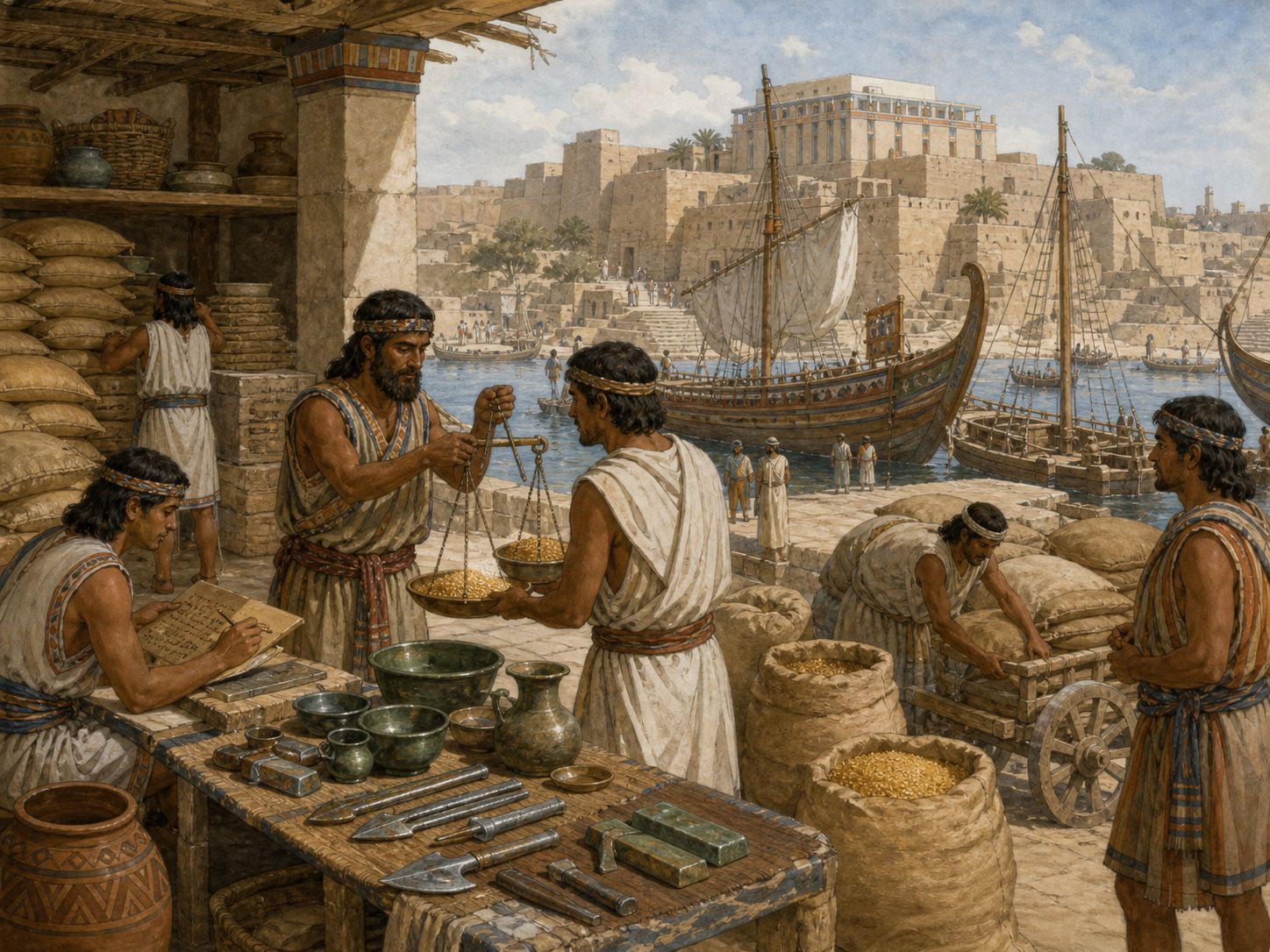
Background
Late Bronze Age palace economies depended on fragile trade, grain, diplomacy, and military networks linking Anatolia, the Levant, the Aegean, and Egypt.
- Late Bronze Age palace economies depended on fragile networks of trade, grain, diplomacy, and military power
- Ports and palaces linked Anatolia, the Levant, the Aegean, and Egypt through people and materials
- When coastal routes and supplies faltered, the foundations of state and community life became unstable
Course
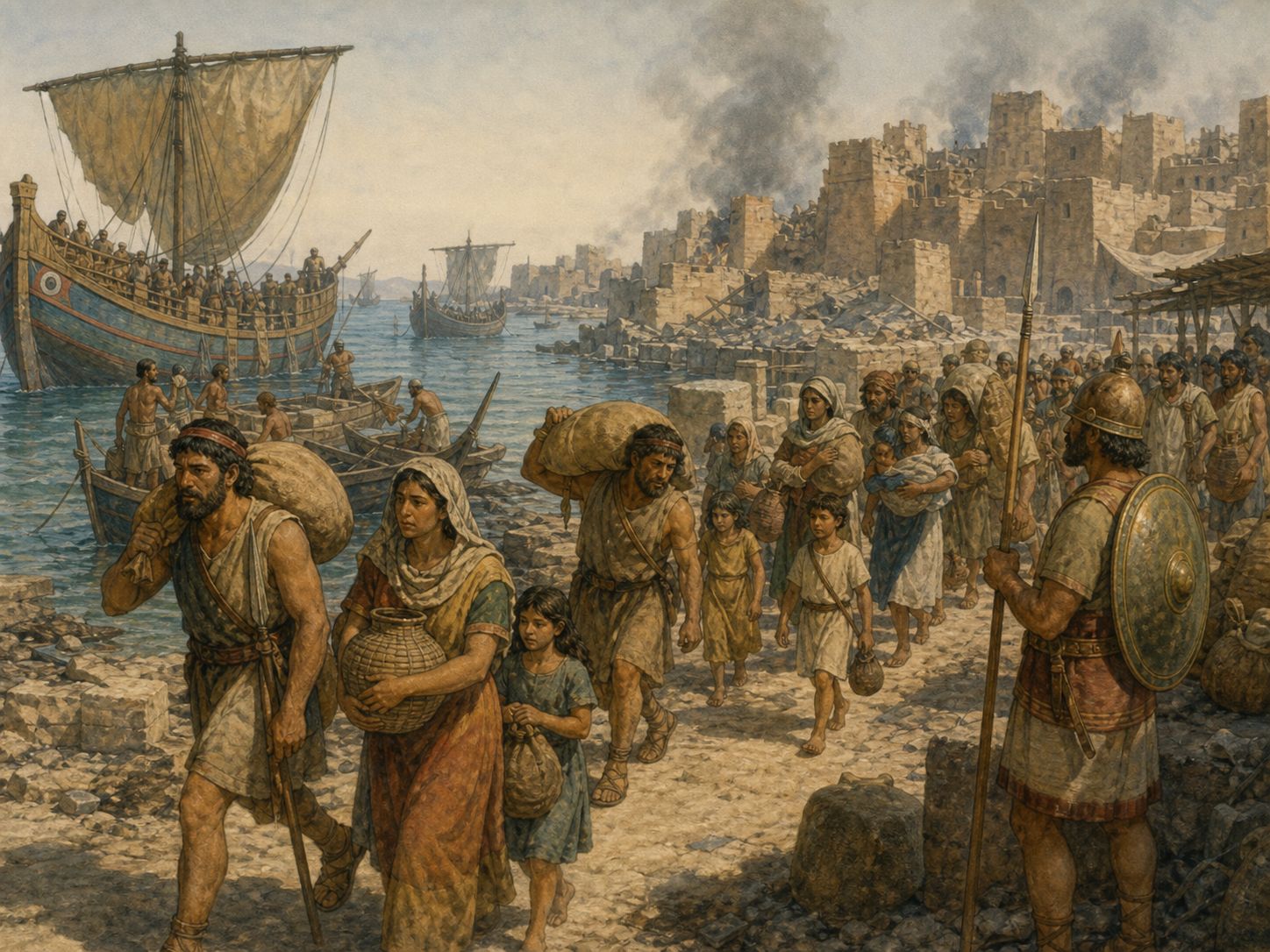
Raiding or migrating groups, local rebellions, destroyed ports, and pressure on states appear in archaeological remains and Egyptian records, though the sequence is incomplete.
- Raiding, migration, rebellion, and port destruction appeared across the eastern Mediterranean
- Residents, sailors, and guards moved families and cargo away from damaged quays
- Archaeology and Egyptian records show disruption, but cannot establish a complete sequence
Outcome
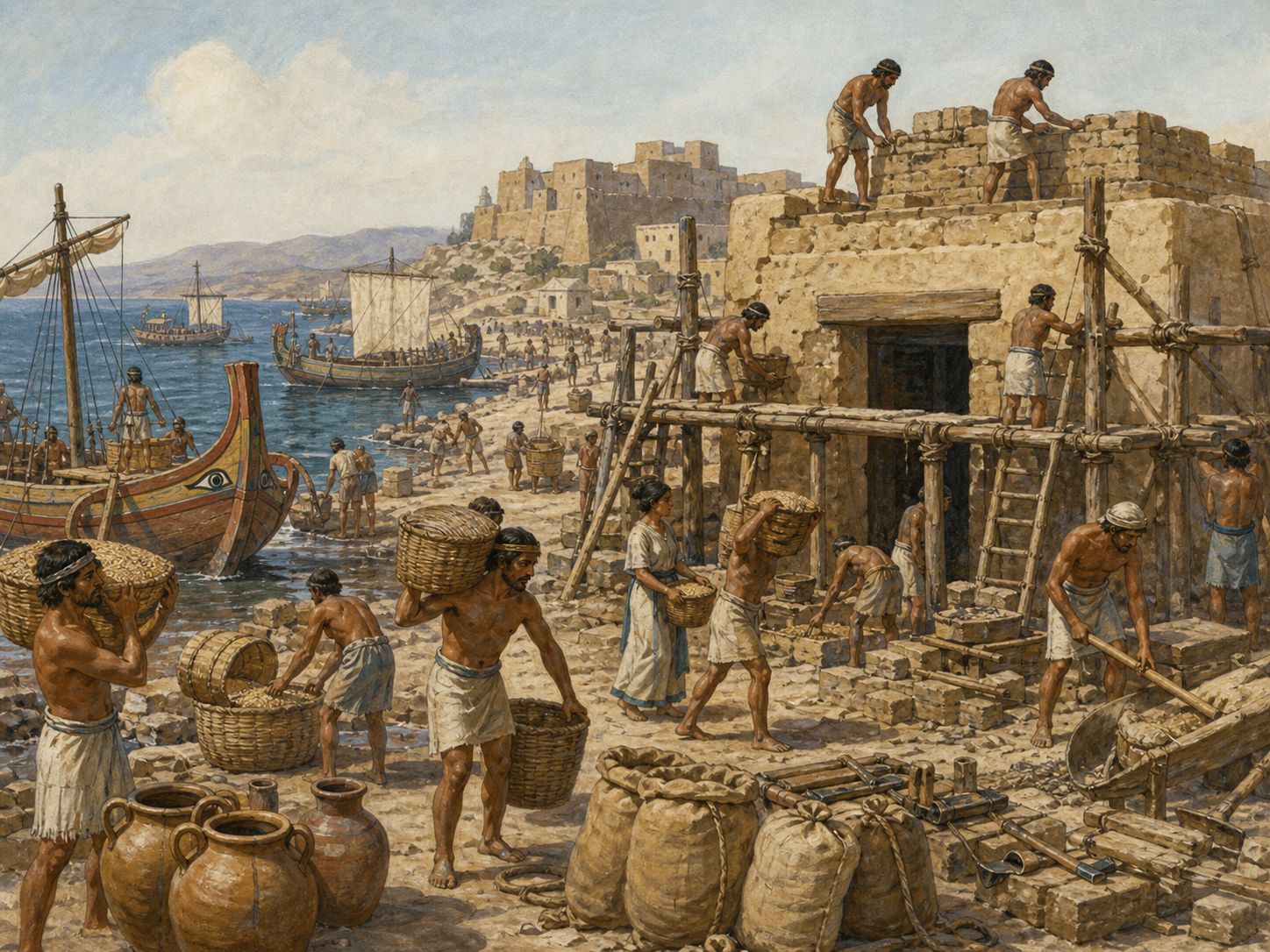
Several palaces and towns fell or changed, Egypt defended its sphere under Ramesses III, and new political and economic patterns emerged during the transition to the Iron Age.
- Some palaces and towns fell or changed, reshaping trade and political authority
- Egypt under Ramesses III defended its sphere through coastal and river-mouth defenses
- New settlements, workshops, and political relationships formed during the transition toward the Iron Age
Historical significance
The crisis is best treated as a debated systems transition rather than a single invasion or proven monocausal collapse.
- The crisis is better understood as a systems transition involving multiple pressures than as one invasion
- Fragmentary evidence warns against fixing an ancient collapse into a single story
- It opens a comparative history of trade networks, environment, politics, and mobile communities
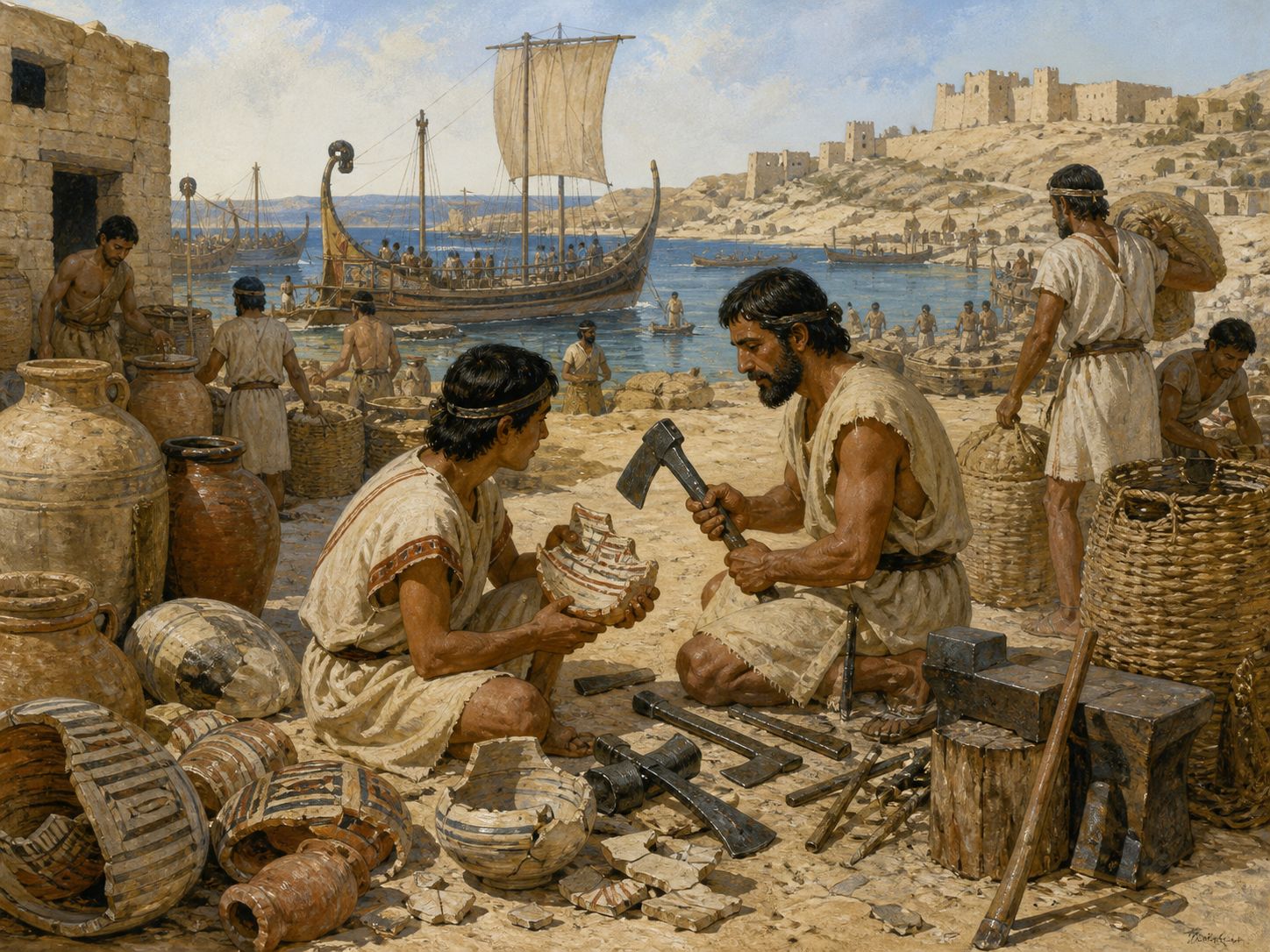


Related events
c. 1250 BC–c. 1201 BC
Palace and trade networks
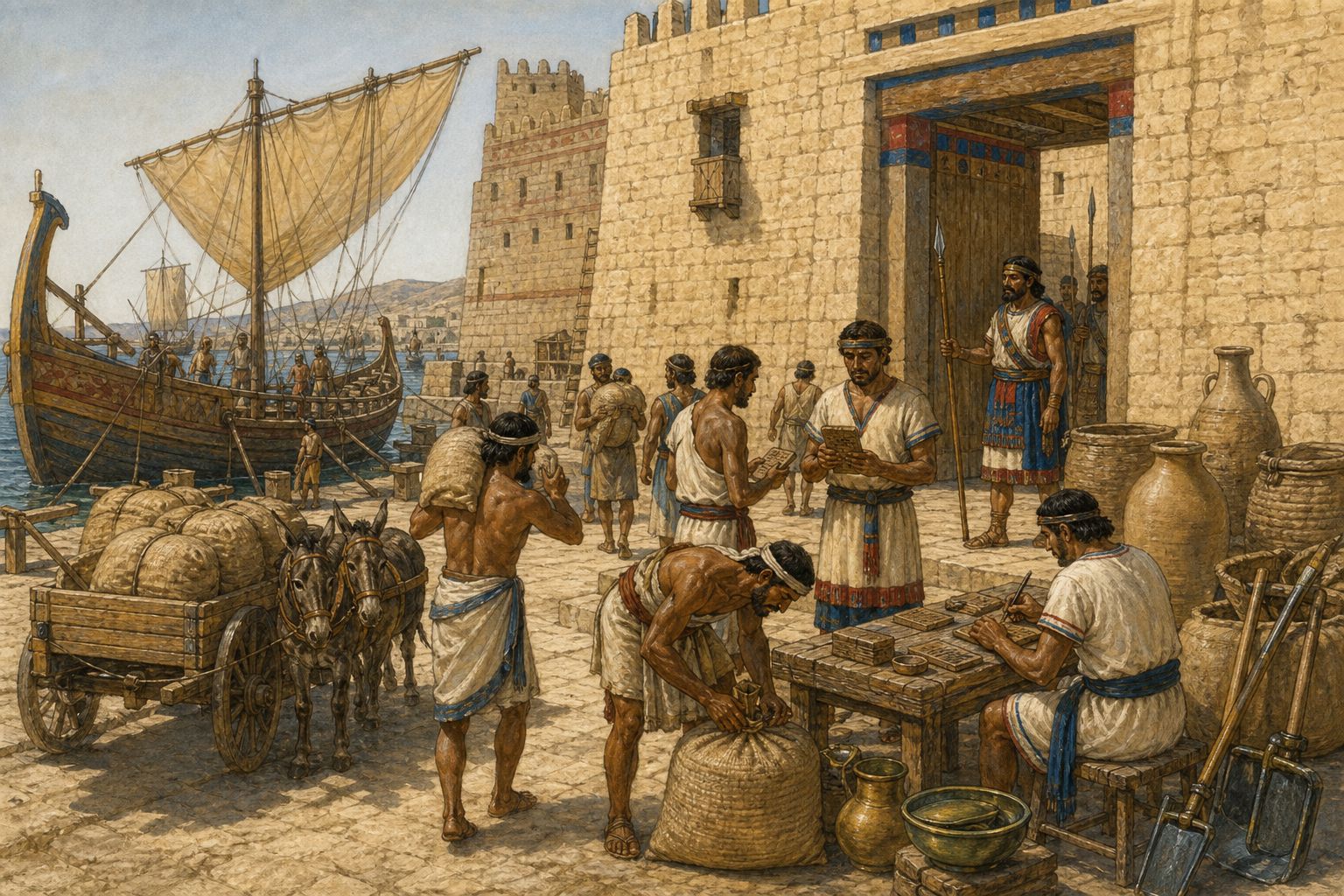
Late Bronze Age ports and palaces were connected by grain, metals, ships, and diplomacy.
c. 1200 BC–c. 1150 BC
Coastal disruption
Current event
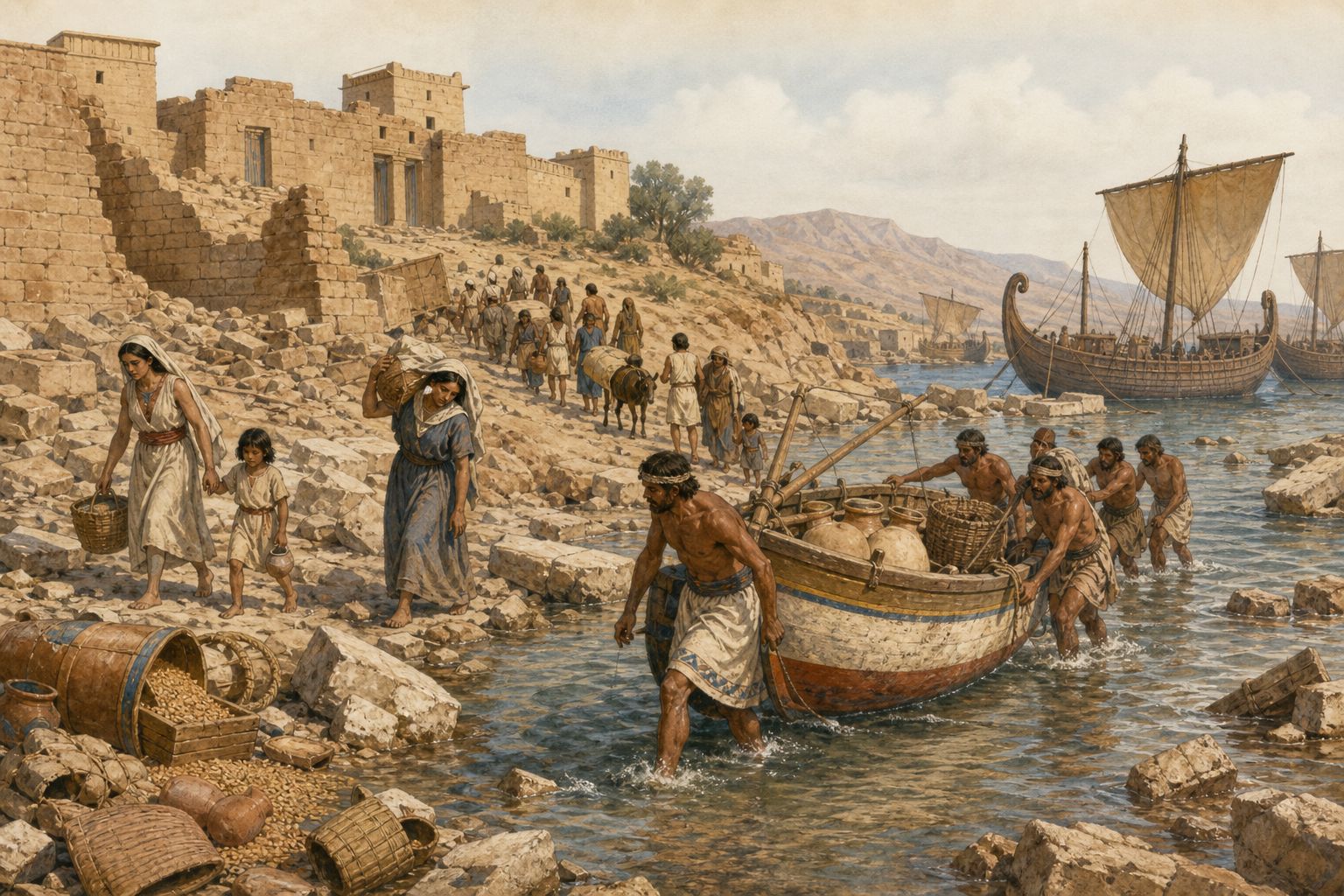
Port destruction and population movement unsettled communities and material flows around the eastern Mediterranean.
c. 1178 BC
Egyptian defense
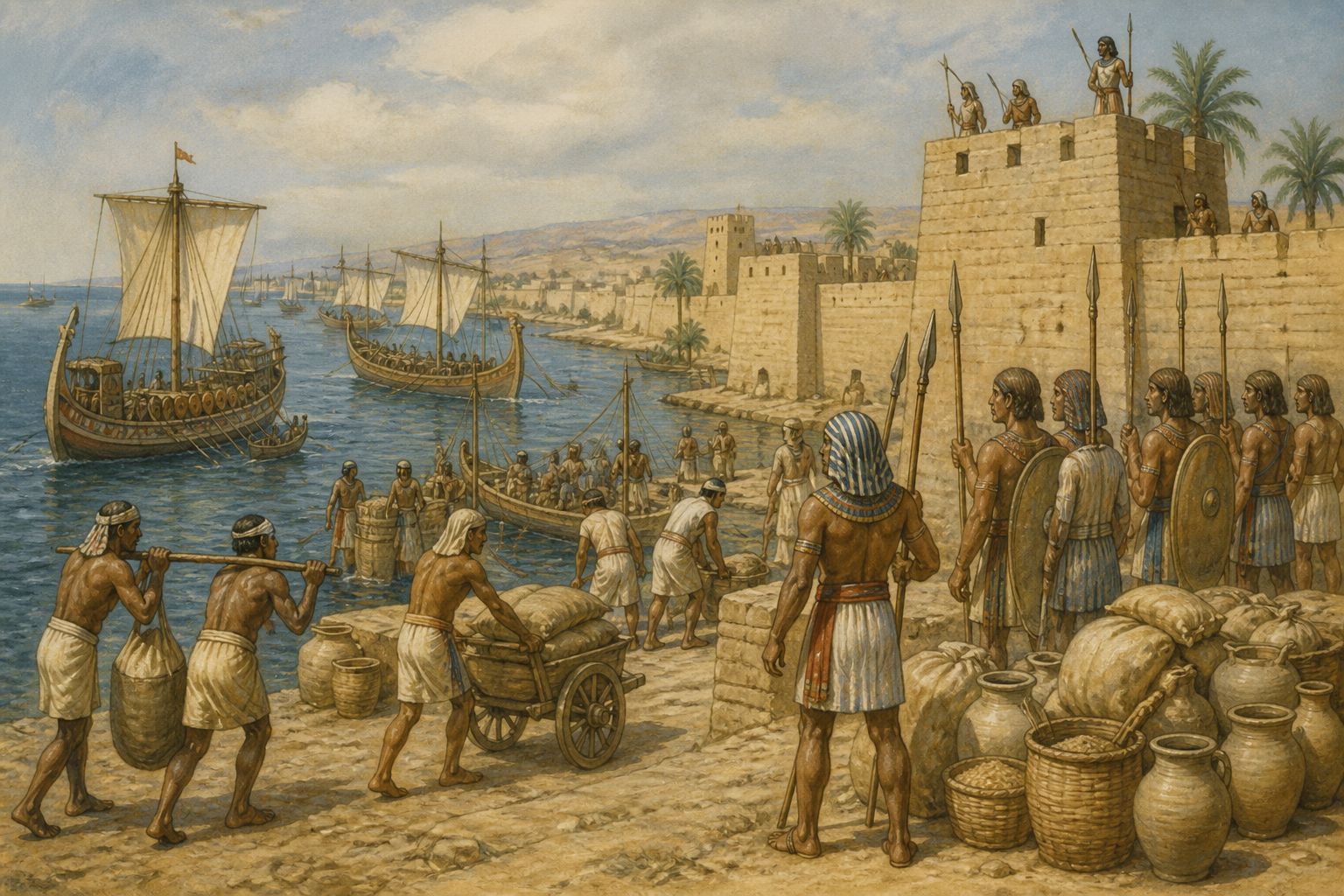
Under Ramesses III, Egypt defended its sphere through river-mouth and coastal defenses.
c. 1150 BC
Political reorganization
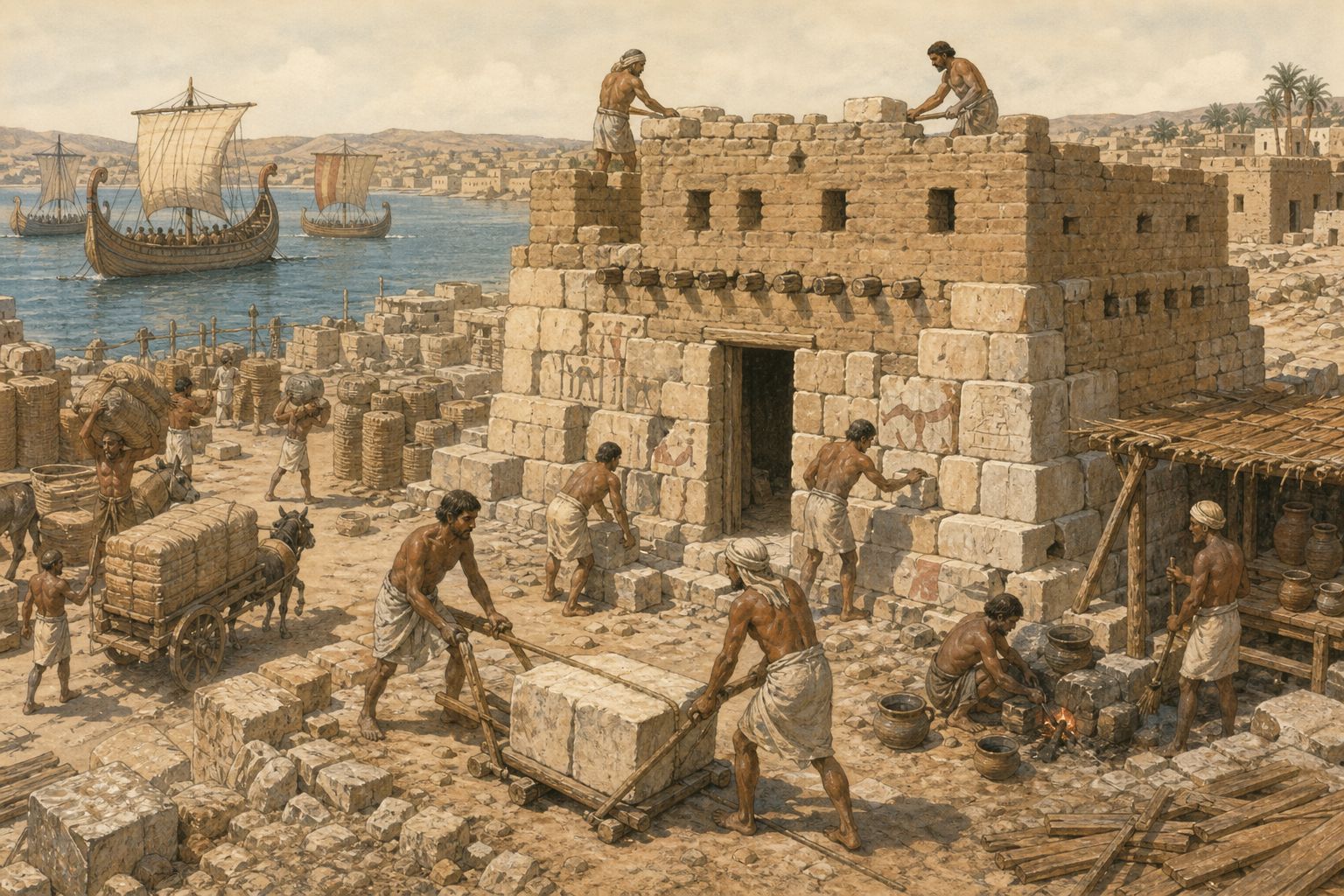
Reused palace stones, new settlements, and workshops point to changed political economies.
c. 1150 BC–c. 1000 BC
Transition toward the Iron Age
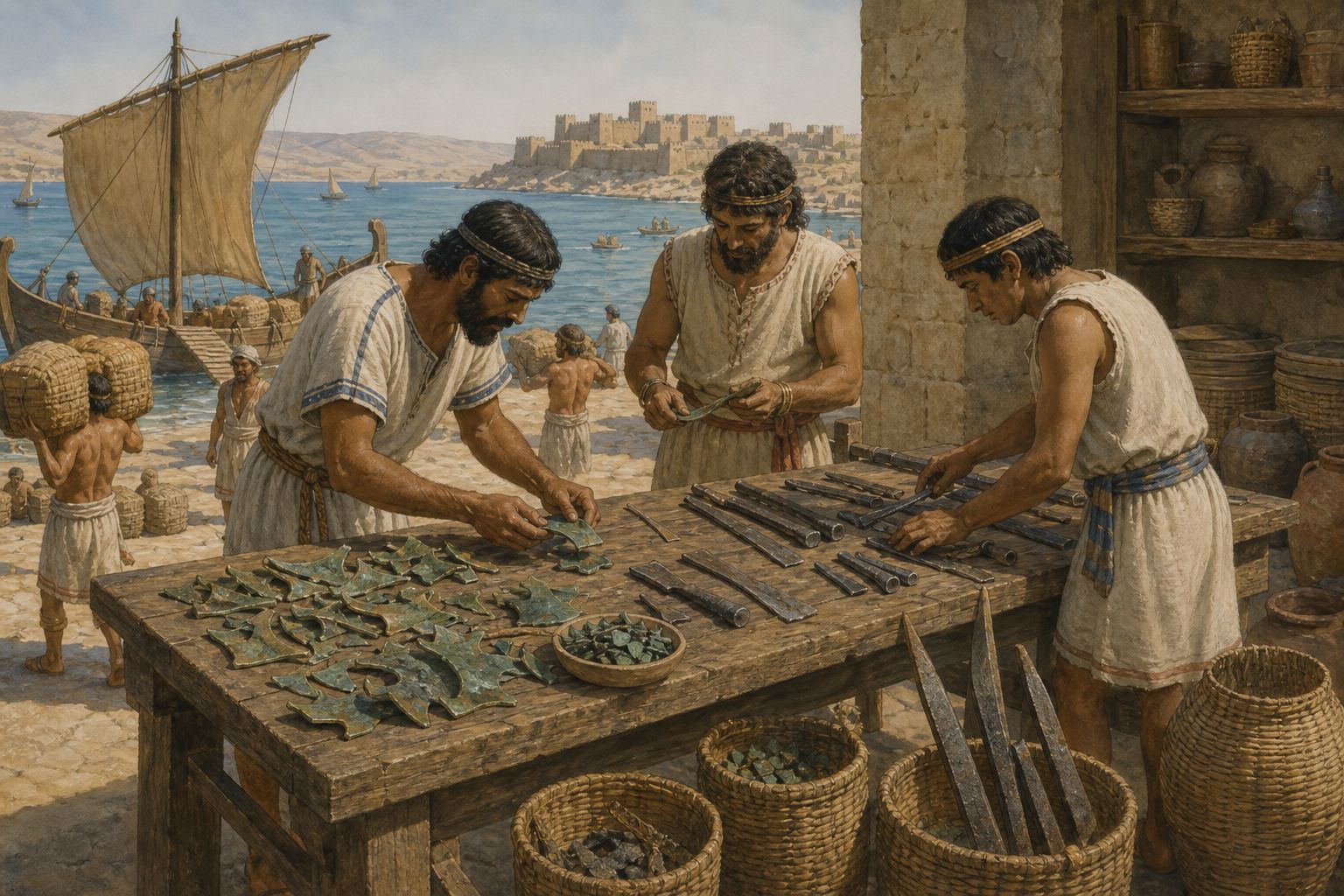
Bronze and early iron coexisted during a transition that was not a simple rupture.


Sources
- Sea PeoplesEncyclopaedia BritannicaAn overview of the Sea Peoples, Late Bronze Age disruption, and Egyptian defense.
- The Sea Peoples and the Late Bronze Age CollapseThe Metropolitan Museum of ArtContext for the crisis through eastern Mediterranean material culture, ports, palaces, and records.
- Sea PeoplesWorld History EncyclopediaA chronological account of movement, destruction, and political reorganization around 1200 BCE.