Formation and Spread of Buddhism
c. 563 BC–c. 483 BC
Buddhism, formed in the fifth century BCE, spread across South Asia through monastic communities, trade routes, and royal patronage.

- Period
- c. 563 BC–c. 483 BC
- Kind
- Movement
- Regions
- South Asia
- Keywords
- Formation and Spread of Buddhism · movement · ancient · south asia
Follow the story · Four stages
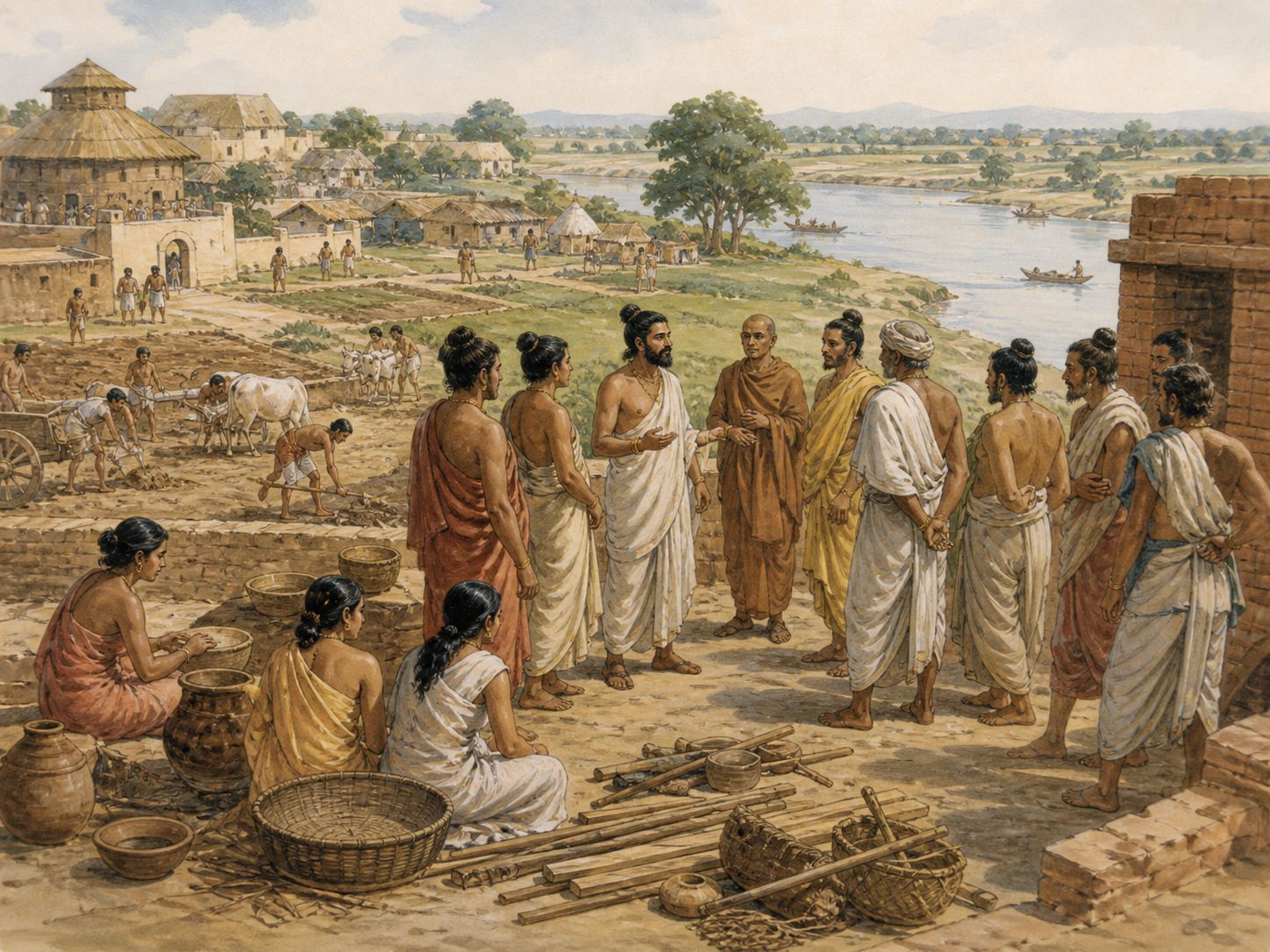
Background
In an urbanizing Gangetic world, diverse renunciant movements debated suffering, discipline, and liberation.
- In an urbanizing Gangetic world, diverse renunciant movements debated suffering, discipline, and liberation.
- Core event: Buddhism, formed in the fifth century BCE, spread across South Asia through monastic communities, trade routes, and royal patronage.
- Connection to the next stage: The Buddha’s teaching was preserved through disciplined communities and preaching, while Ashokan inscriptions and missions later supported wider transmission.
Course
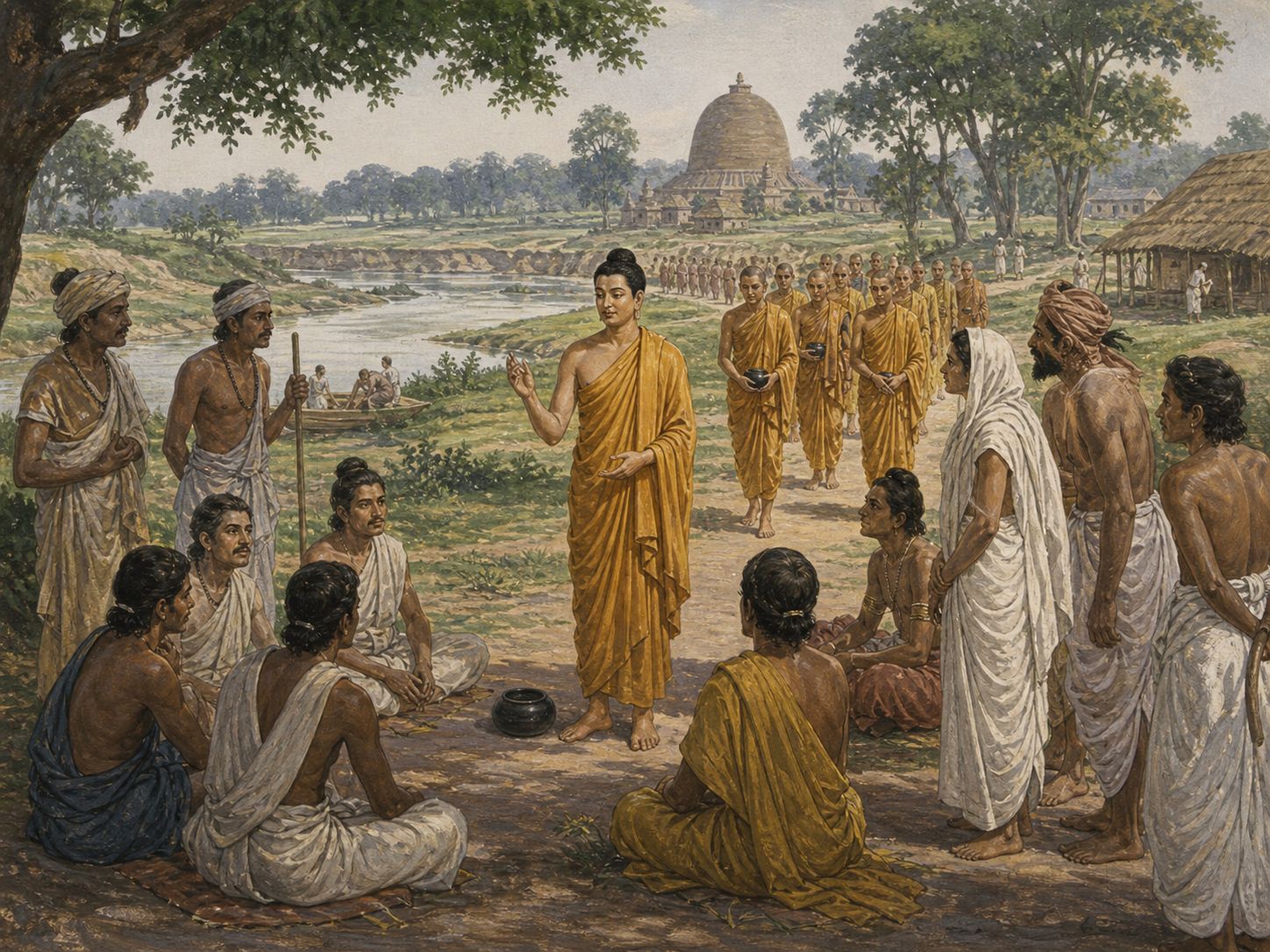
The Buddha’s teaching was preserved through disciplined communities and preaching, while Ashokan inscriptions and missions later supported wider transmission.
- The Buddha’s teaching was preserved through disciplined communities and preaching, while Ashokan inscriptions and missions later supported wider transmission.
- Conditions behind the action: In an urbanizing Gangetic world, diverse renunciant movements debated suffering, discipline, and liberation.
- Meaning of the turning point: Buddhism, formed in the fifth century BCE, spread across South Asia through monastic communities, trade routes, and royal patronage.
Outcome
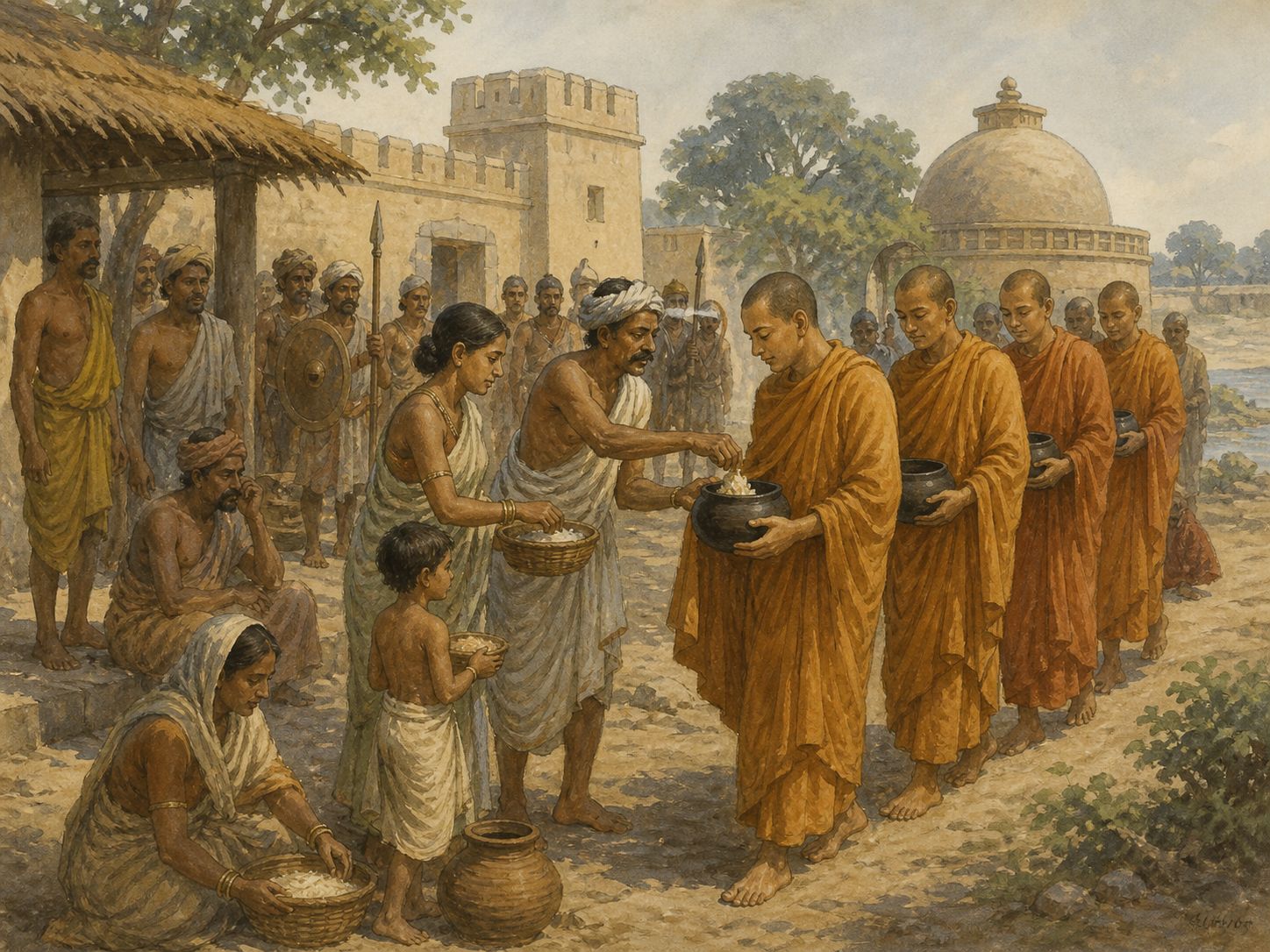
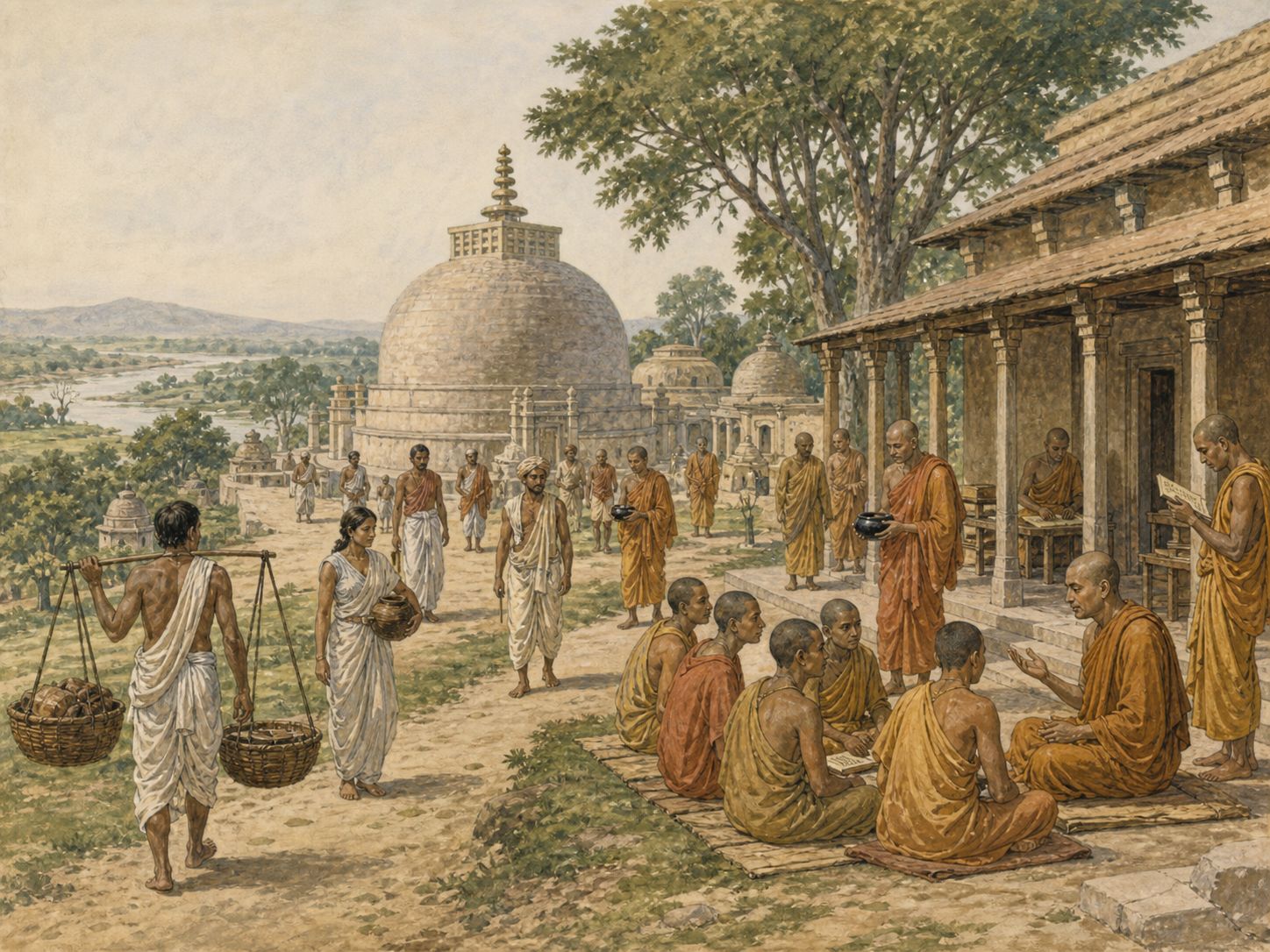
Relations between monastics and laypeople, monasteries, stories, and images developed differently across regions, creating multiple Buddhist traditions.
- Relations between monastics and laypeople, monasteries, stories, and images developed differently across regions, creating multiple Buddhist traditions.
- Process producing the result: The Buddha’s teaching was preserved through disciplined communities and preaching, while Ashokan inscriptions and missions later supported wider transmission.
- Question carried forward: The history of Buddhism was not a one-way diffusion but a process in which teachings and local societies changed one another.
Historical significance
The history of Buddhism was not a one-way diffusion but a process in which teachings and local societies changed one another.
- The history of Buddhism was not a one-way diffusion but a process in which teachings and local societies changed one another.
- Immediate consequence: Relations between monastics and laypeople, monasteries, stories, and images developed differently across regions, creating multiple Buddhist traditions.
- Historical turning point: Buddhism, formed in the fifth century BCE, spread across South Asia through monastic communities, trade routes, and royal patronage.


Related events
c. 587 BC
Prelude
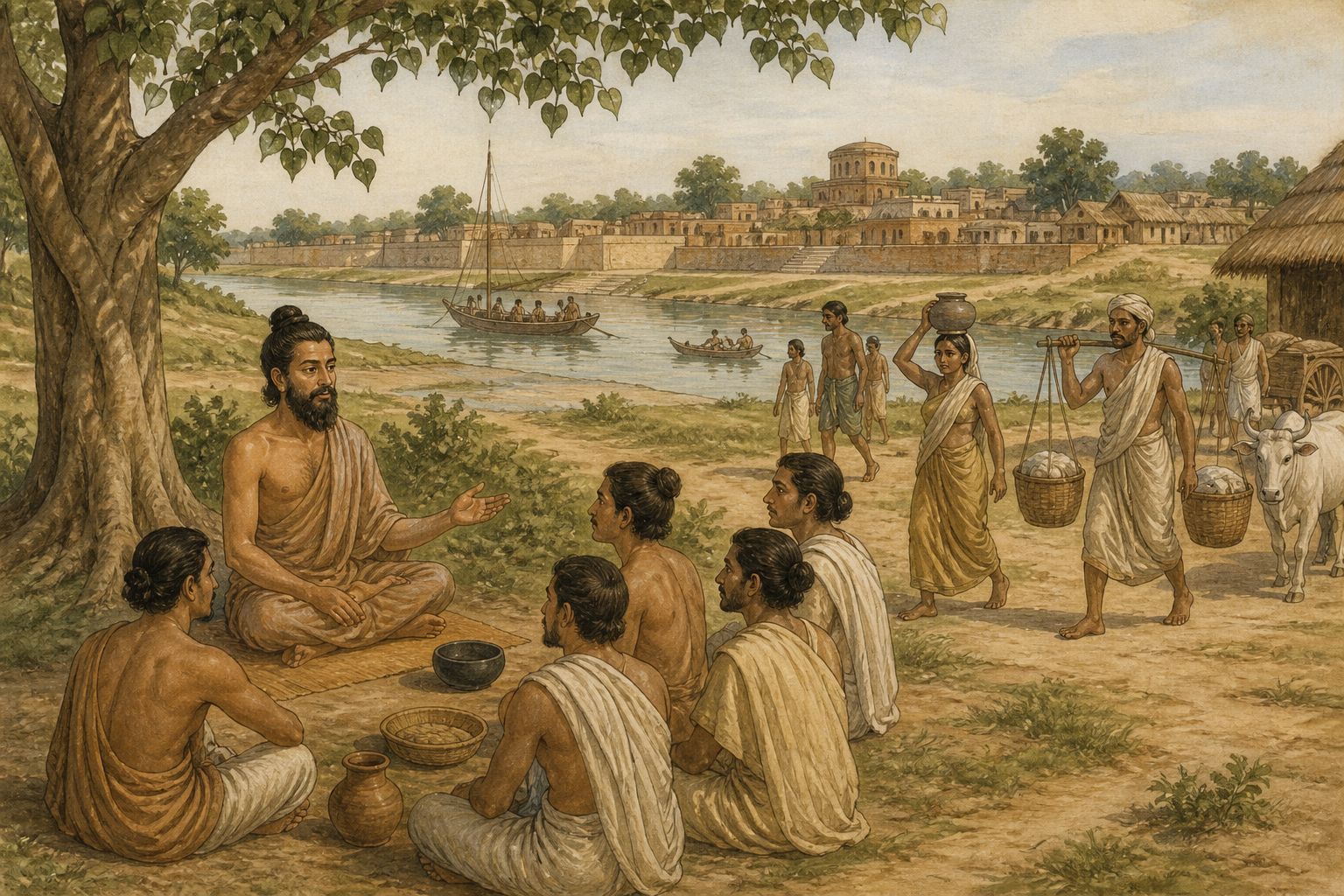
Prelude — Background: In an urbanizing Gangetic world, diverse renunciant movements debated suffering, discipline, and liberation.
c. 564 BC
Turning point
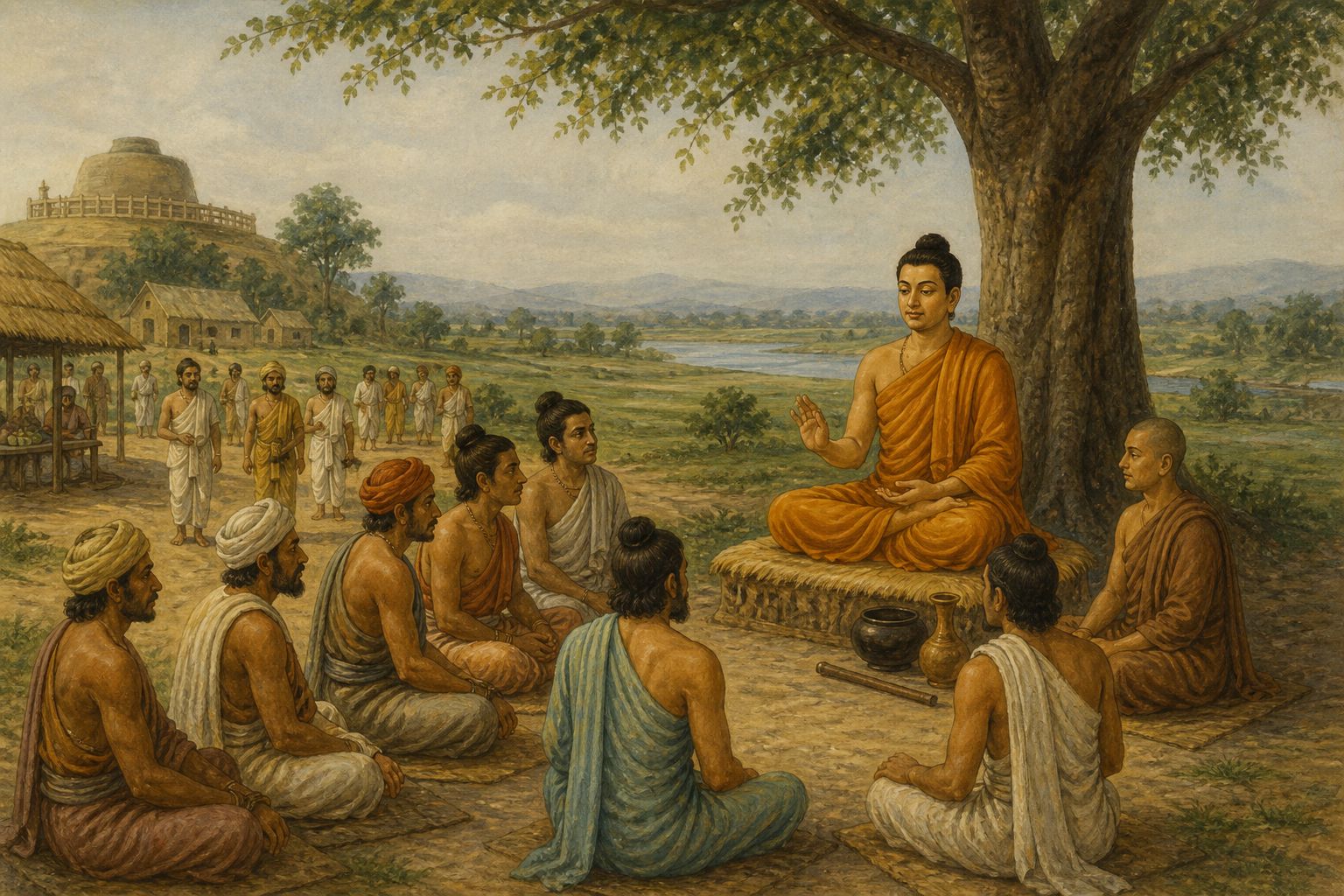
Turning point — Build-up: The Buddha’s teaching was preserved through disciplined communities and preaching, while Ashokan inscriptions and missions later supported wider transmission.
c. 563 BC–c. 483 BC
Formation and Spread of Buddhism
Current event
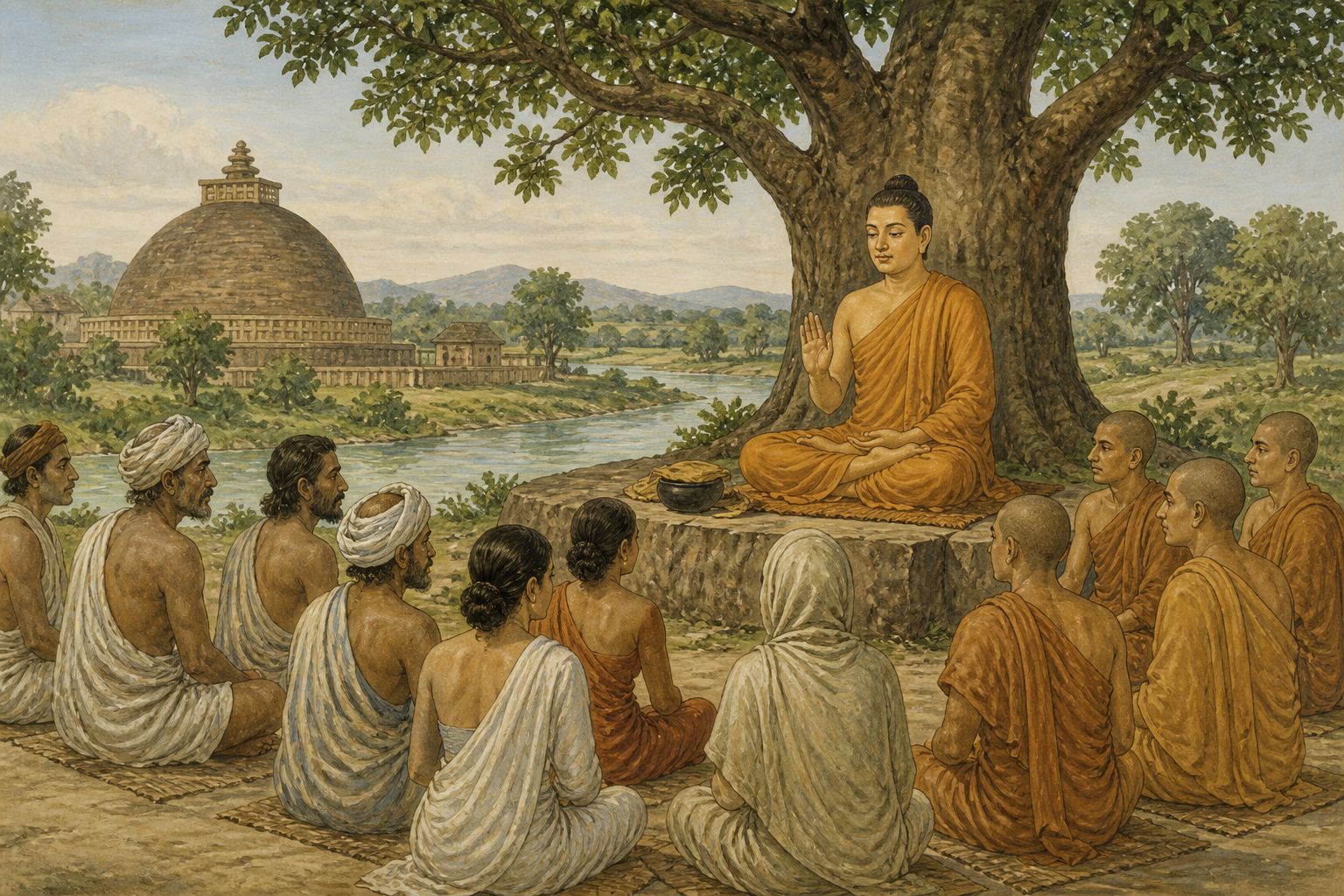
Formation and Spread of Buddhism — Central transition: Buddhism, formed in the fifth century BCE, spread across South Asia through monastic communities, trade routes, and royal patronage.
c. 455 BC
Immediate aftermath
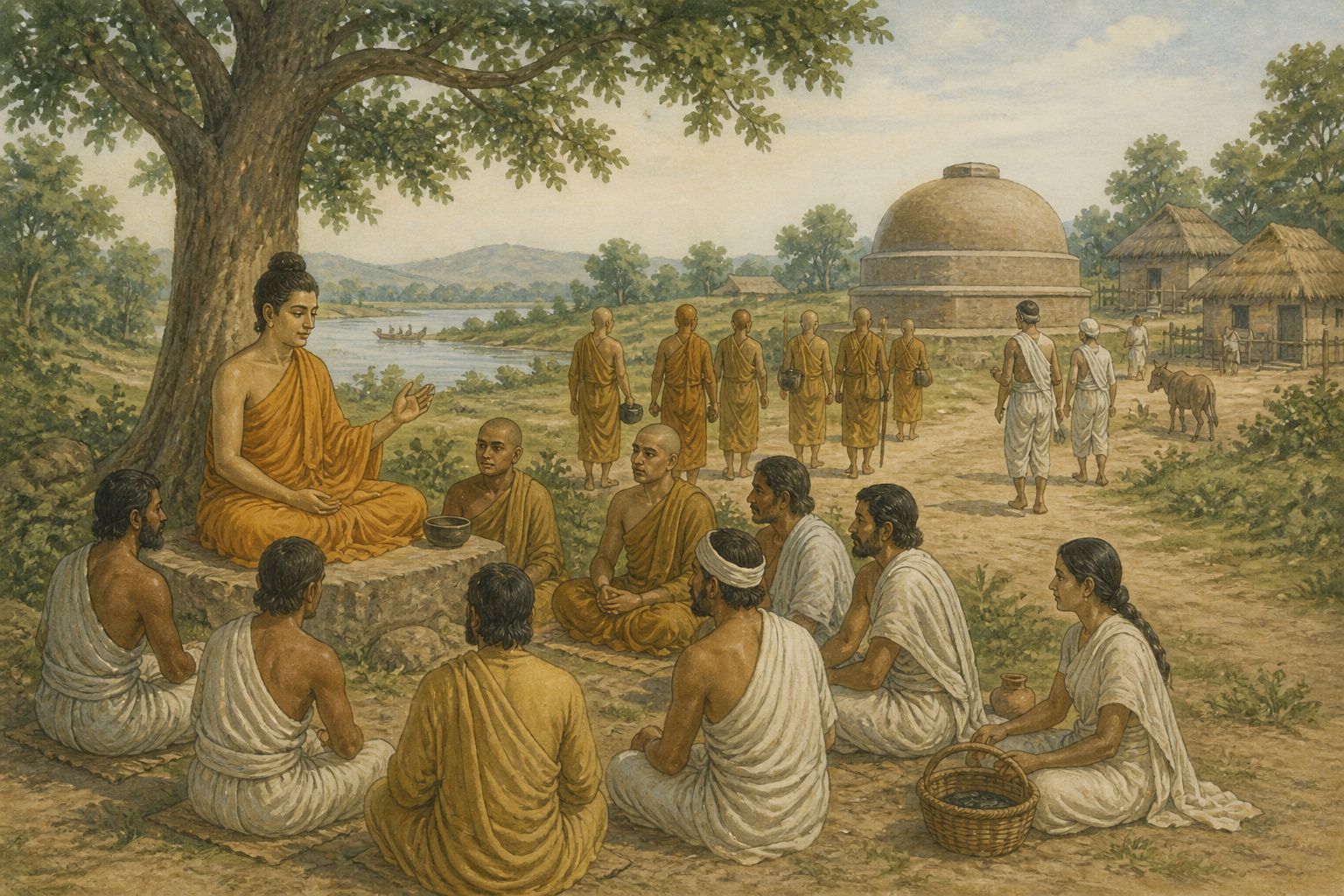
Immediate aftermath — Immediate result: Relations between monastics and laypeople, monasteries, stories, and images developed differently across regions, creating multiple Buddhist traditions.
c. 363 BC
Long-term significance
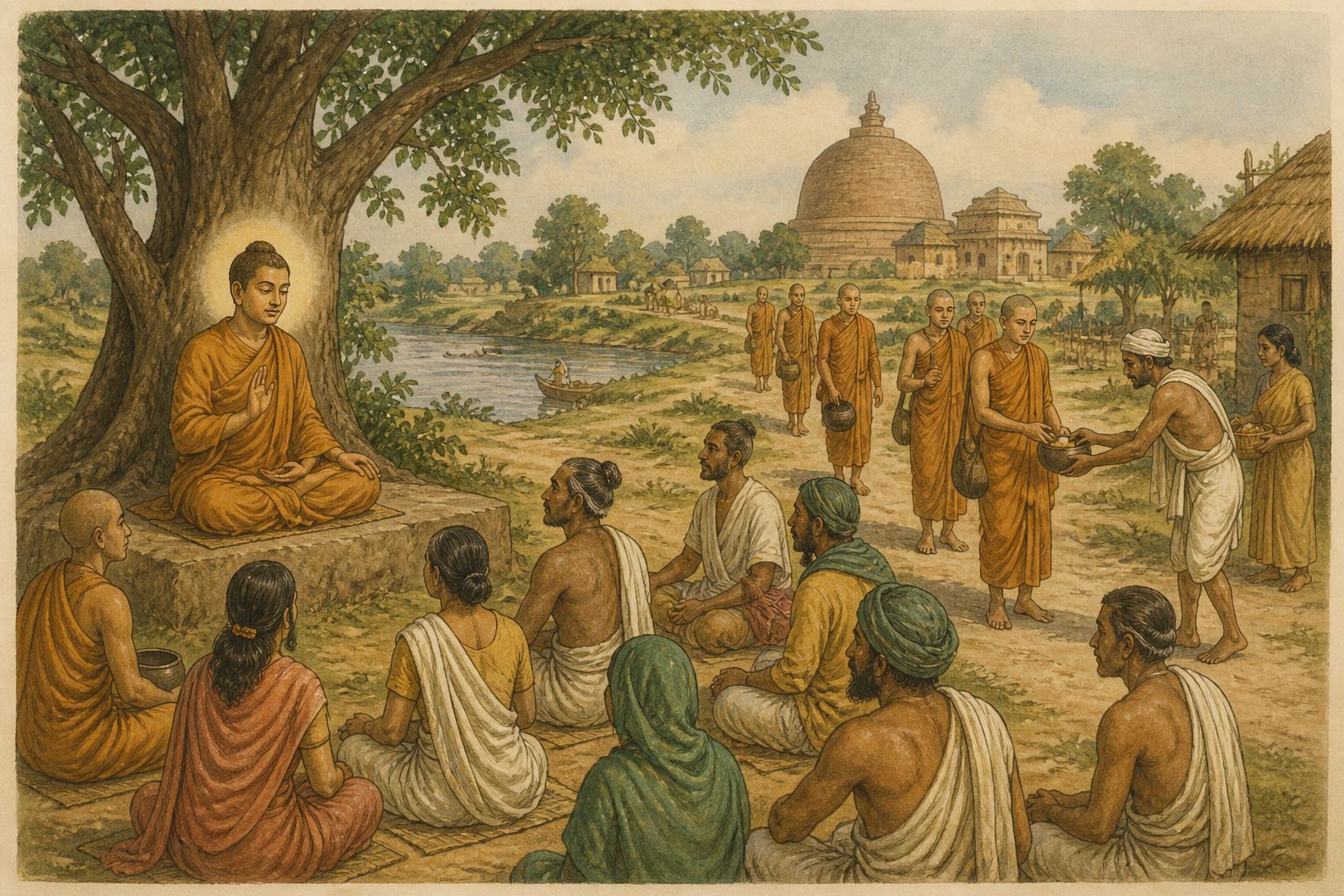
Long-term significance — Long-term significance: The history of Buddhism was not a one-way diffusion but a process in which teachings and local societies changed one another.


Sources
- Formation and Spread of Buddhism — Buddhism (Encyclopaedia Britannica)britannica.comThis Encyclopaedia Britannica resource supports the chronology, setting, and course of Formation and Spread of Buddhism.
- Formation and Spread of Buddhism — Hd Budd (The Metropolitan Museum of Art)metmuseum.orgThis The Metropolitan Museum of Art resource supports the chronology, setting, and course of Formation and Spread of Buddhism.
- Formation and Spread of Buddhism — Buddha (Plato)plato.stanford.eduThis Plato resource supports the chronology, setting, and course of Formation and Spread of Buddhism.