
Foundation of the Tokugawa Shogunate
1603–1615
From 1603 to 1615, Tokugawa Ieyasu’s appointment as shogun, the hereditary succession of the office, and the Osaka campaigns established the military government based at Edo.

- Period
- 1603–1615
- Kind
- Political event
- Regions
- East Asia
- Keywords
- Foundation of the Tokugawa Shogunate · Tokugawa shogunate · bakuhan system · political event · early modern · east asia
Follow the story · Four stages
Background
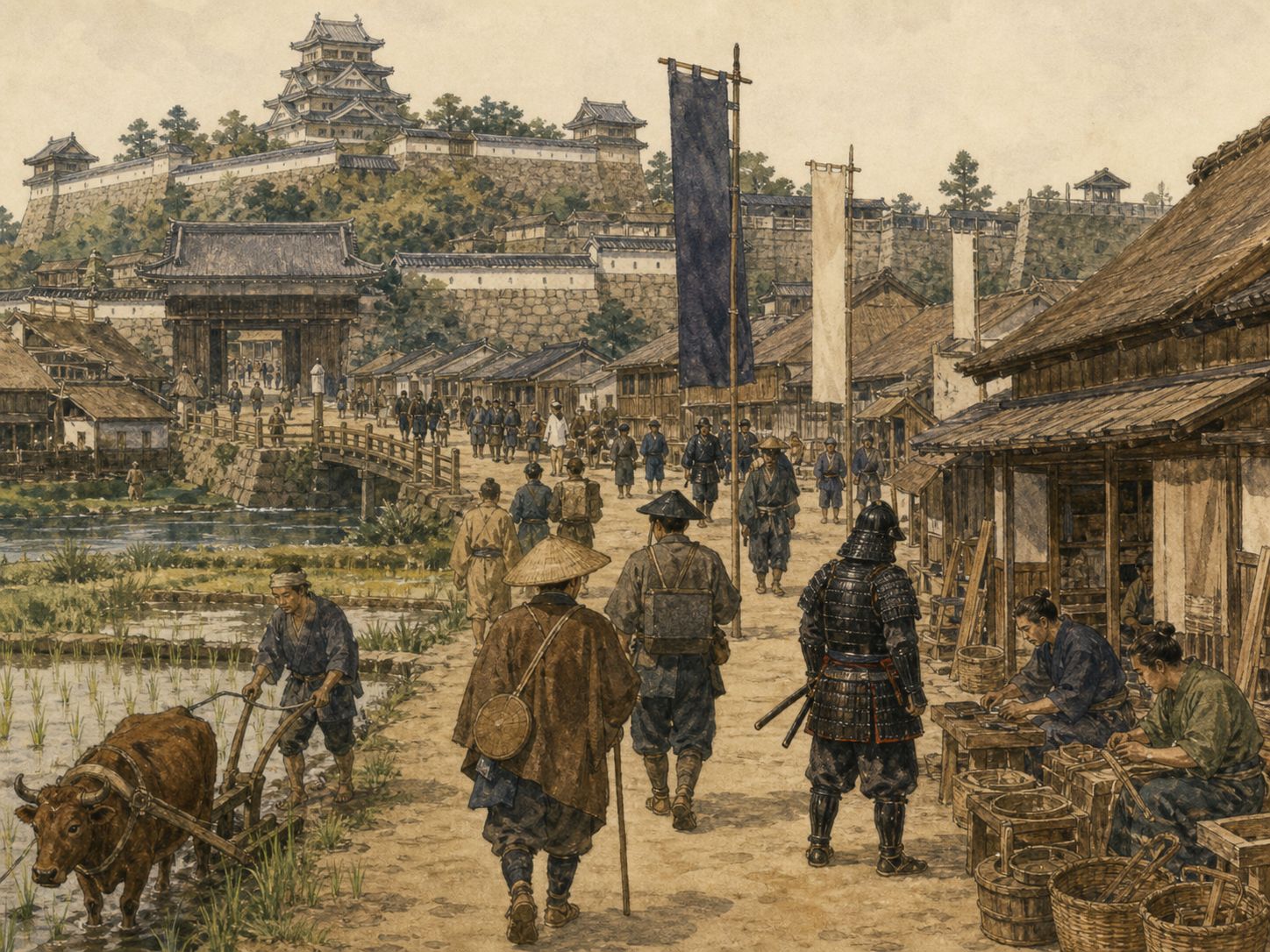
Tokugawa victory at Sekigahara created the need to reorganize relations with daimyo and the Toyotomi house through a new political order built on military authority, law, and negotiated status.
- Regional fragmentation in the Sengoku era
- Growth of castle towns and roads
- A society of farmers, artisans, and samurai
Course
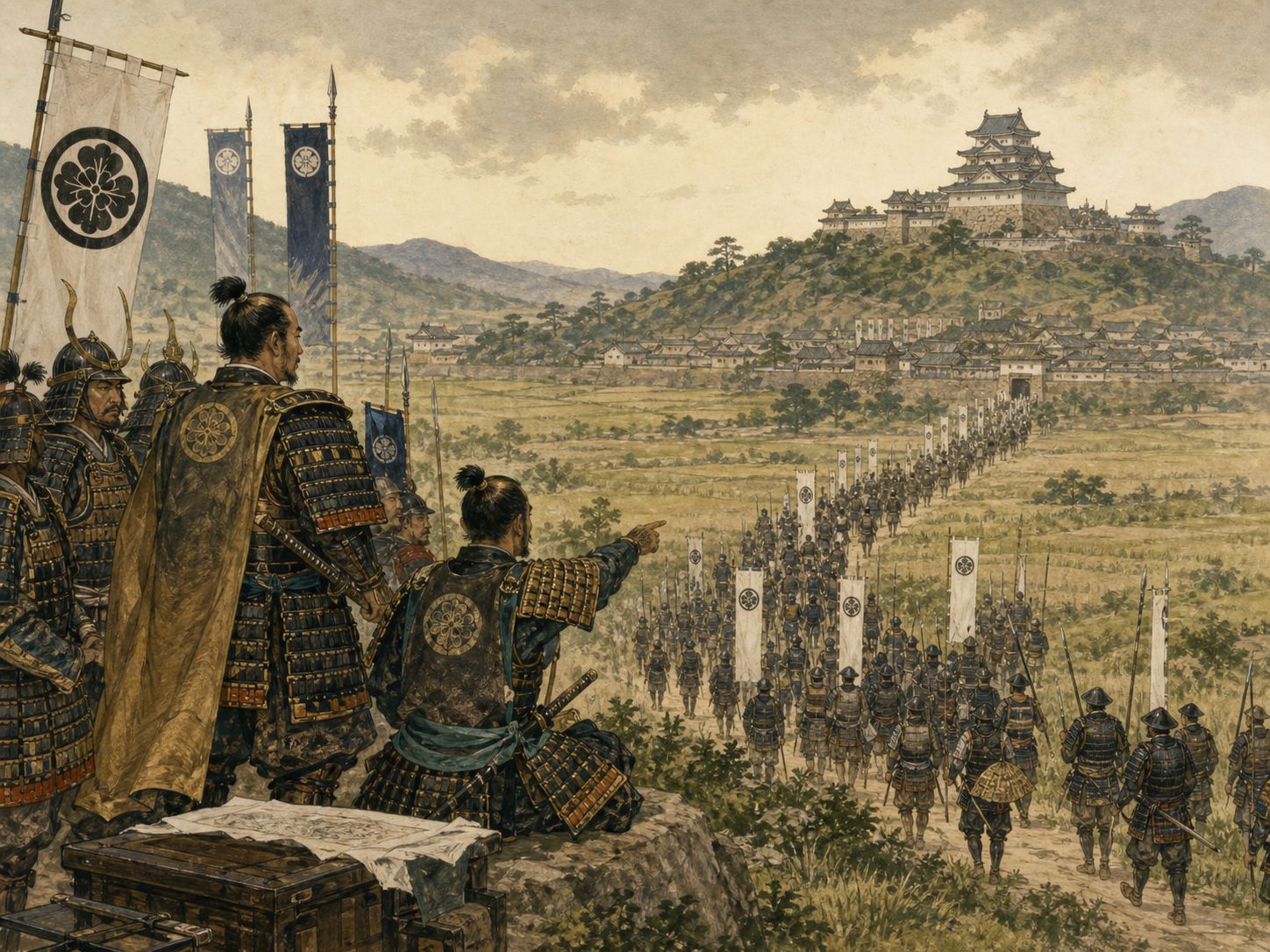
Ieyasu became shogun in 1603 and passed the office to Hidetada. The 1615 Osaka Summer Campaign ended the Toyotomi house’s political challenge, while laws and domain arrangements disciplined the daimyo.
- The decisive balance at Sekigahara
- A bakufu based in Edo
- Final dominance after Osaka
Outcome
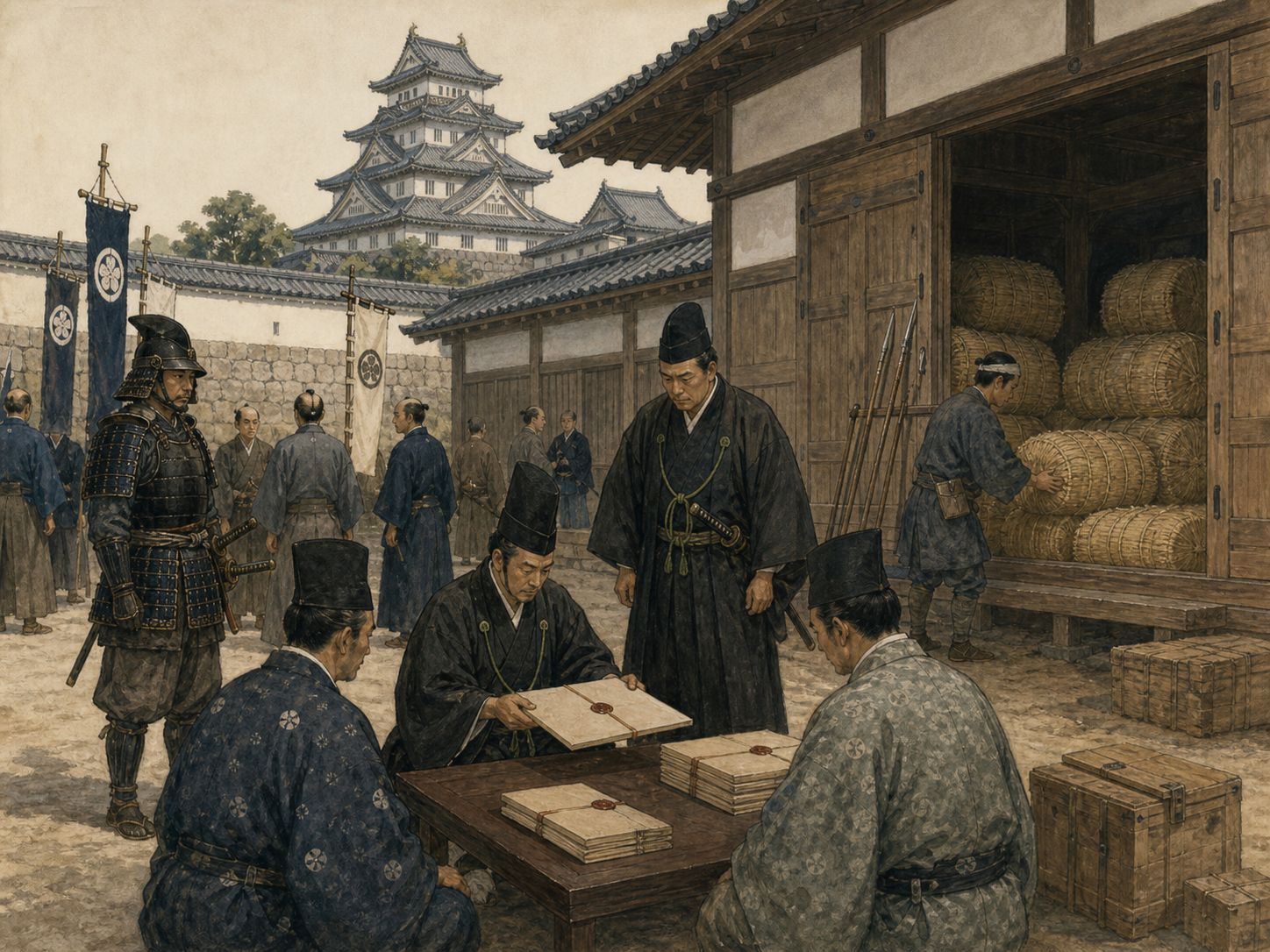
A hereditary Tokugawa shogunate and the foundations of the bakuhan system took shape, supporting a long period of relative peace. Control over daimyo, status groups, and local communities remained varied in practice.
- A political order incorporating domains
- Institutionalized castle towns and roads
- Administrative foundations for long rule
Historical significance
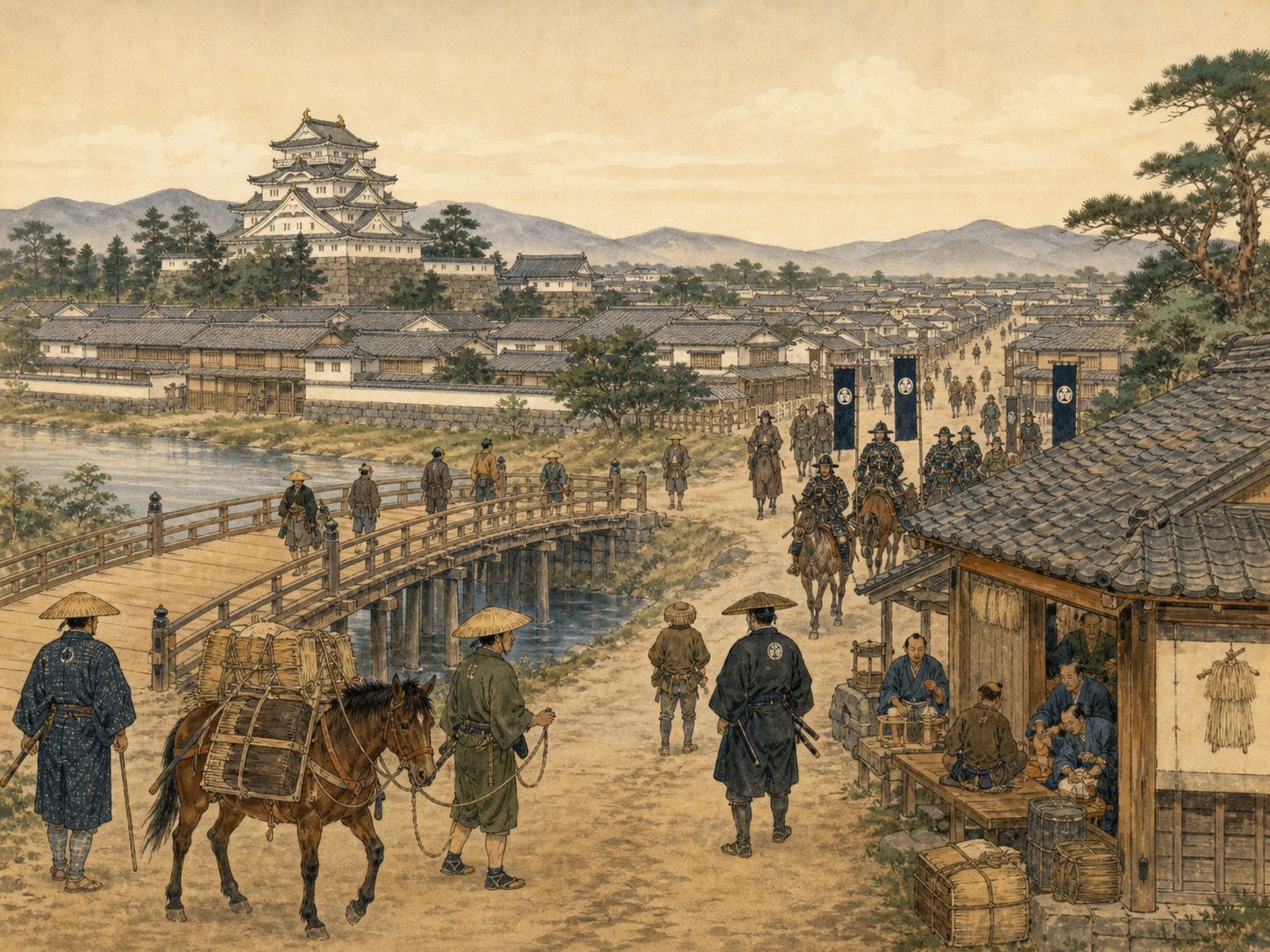
The shogunate’s foundation was not simply a family victory: it converted the military competition of the Warring States era into institutions and diplomacy. It supported urban, rural, maritime, and cultural development while hardening status hierarchies.
- A political structure of early modern Japan
- Stability built through force and institutions
- Reorganization of cities, transport, and status


Related events
1568
Sengoku fragmentation
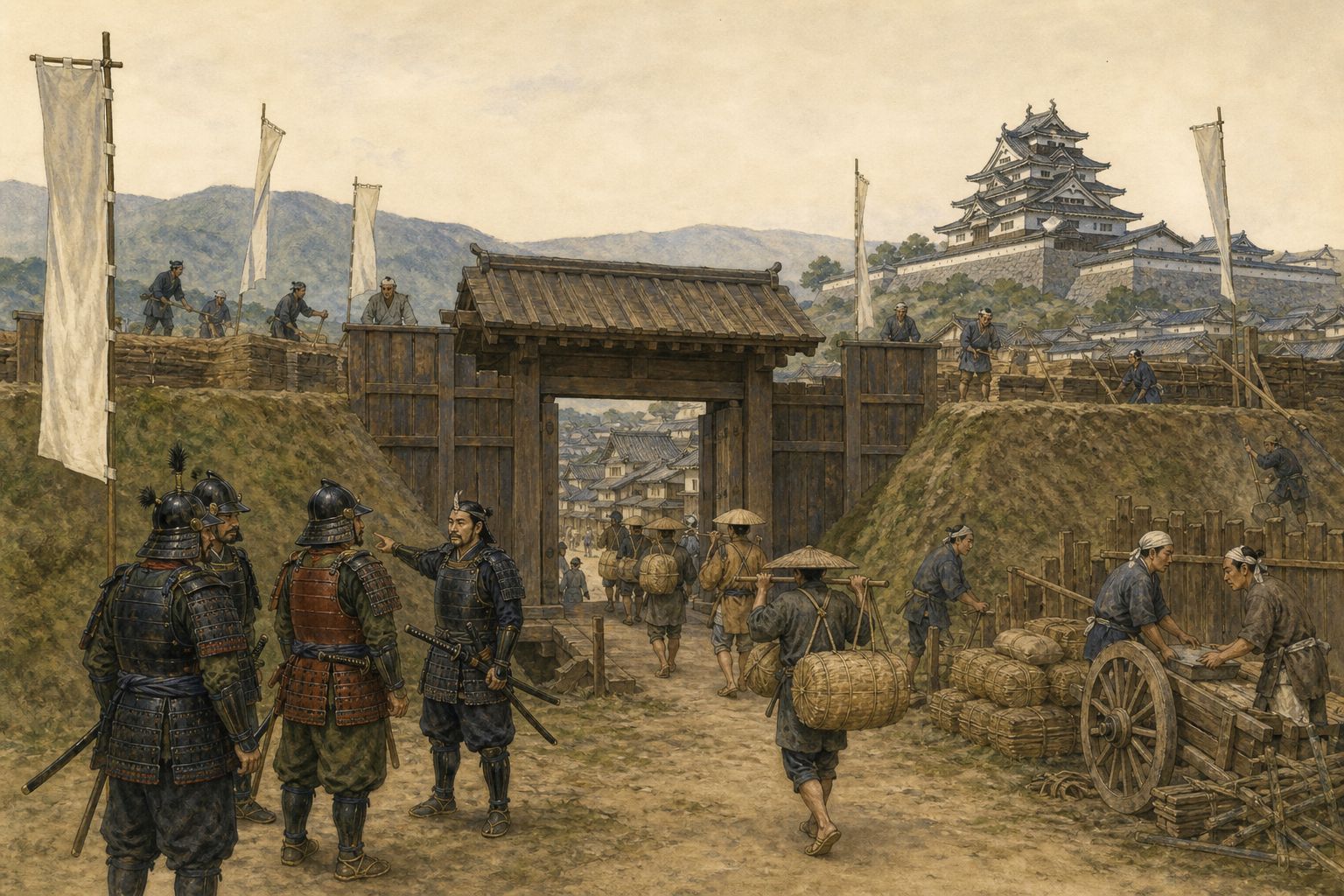
During the Sengoku period, competing lords reshaped castle towns, military alliances, and regional administration.
1600
Victory at Sekigahara
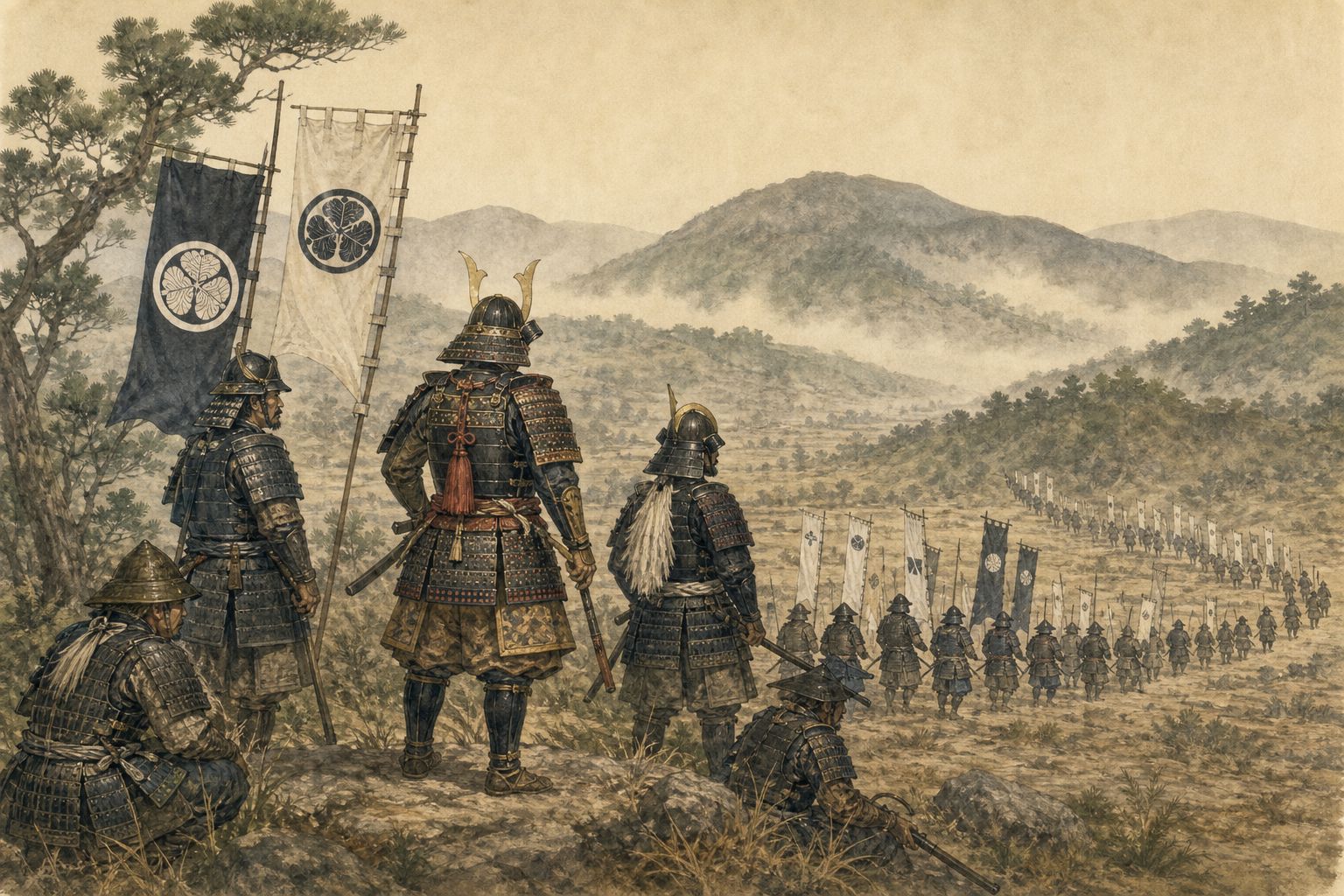
Tokugawa Ieyasu’s victory at Sekigahara opened the way to a nationwide reordering of power.
1603
The Edo bakufu is established
Current event
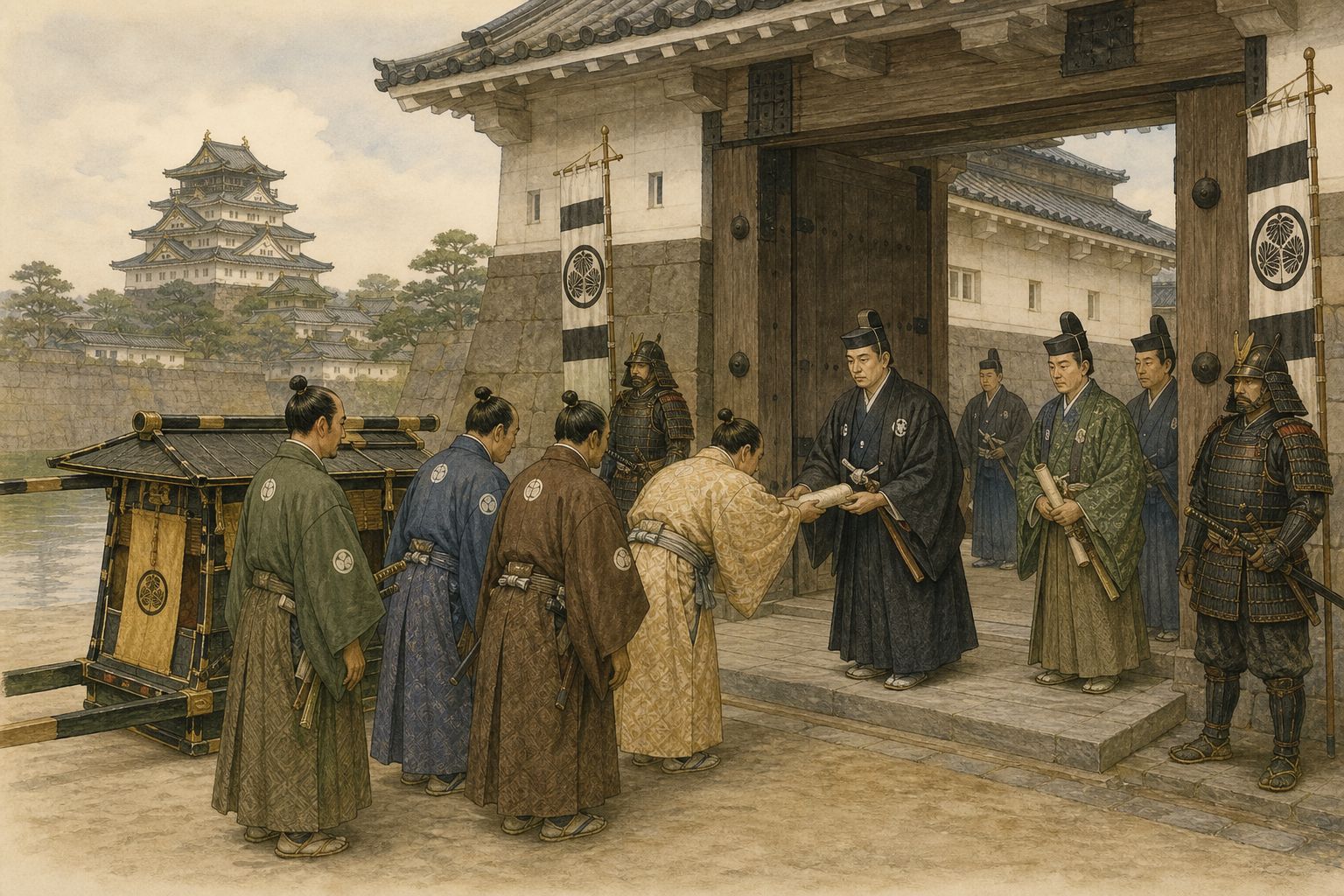
In 1603, Ieyasu became shogun and established a bakufu based in Edo.
1615
The Siege of Osaka
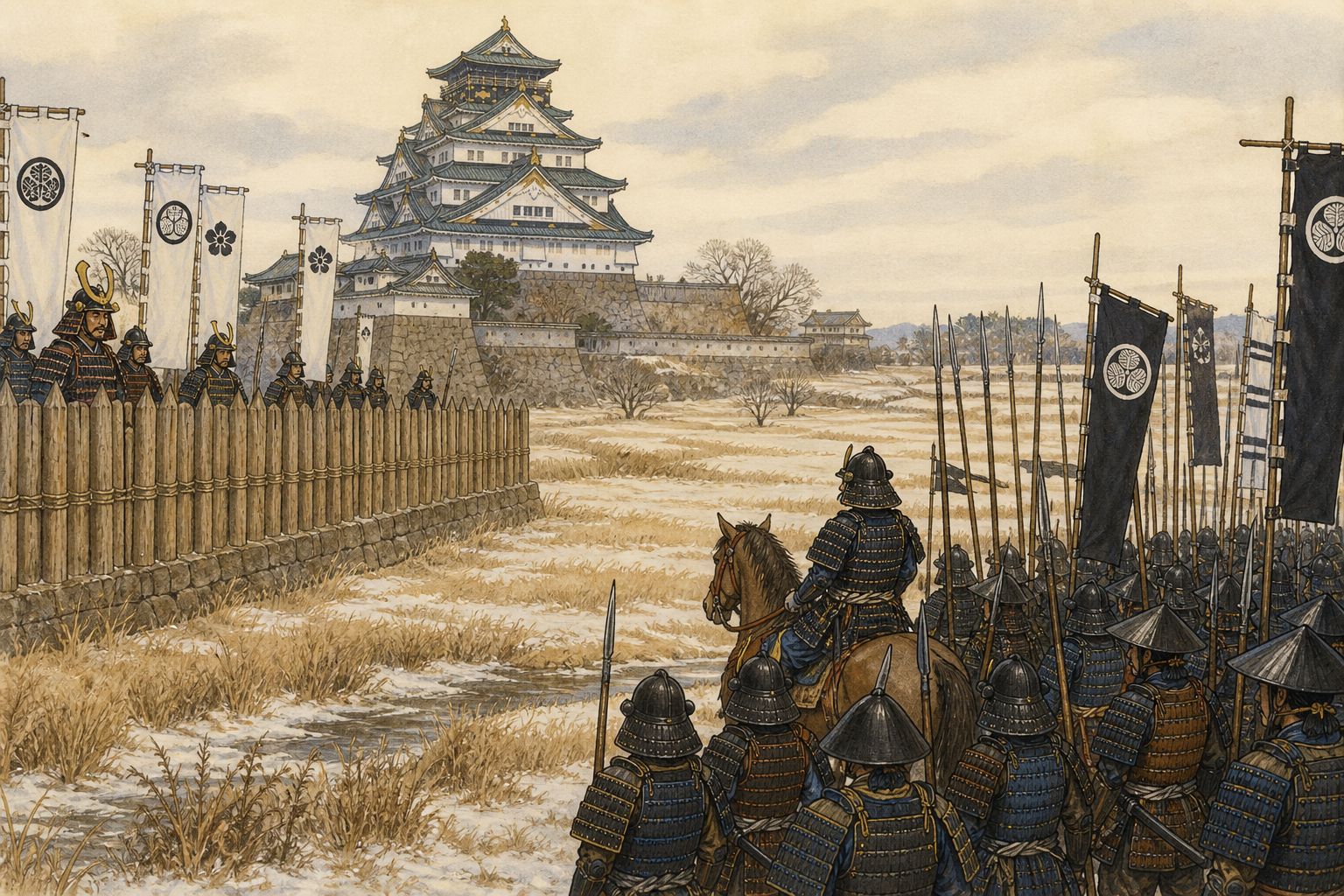
The Siege of Osaka ended the Toyotomi line and made Tokugawa military dominance decisive.
1615
The Tokugawa order
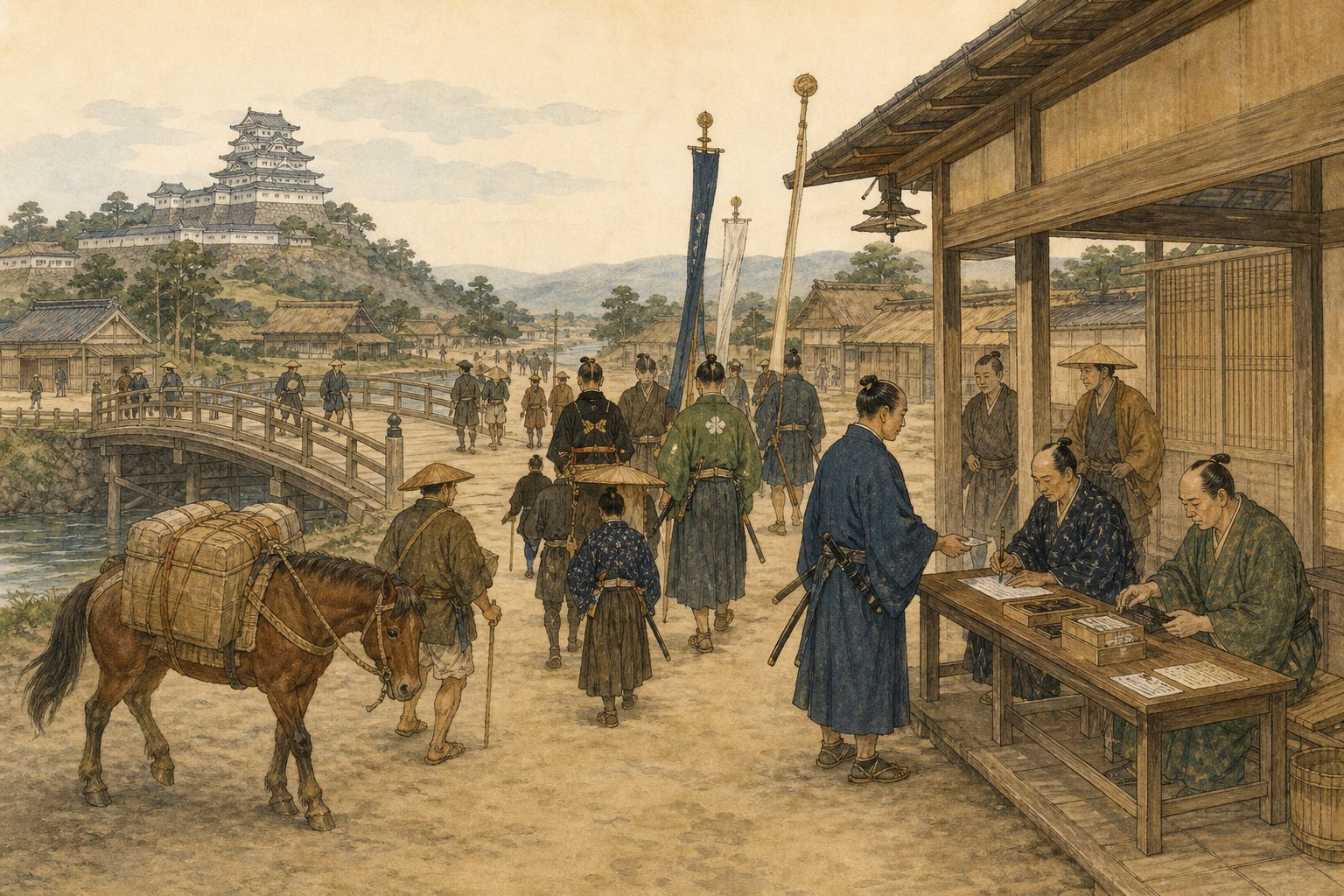
The bakufu organized long-term rule through domains, castle towns, roads, and status order.


Sources
- Tokugawa Ieyasu and the Toshogu MuseumNikko Toshogu ShrineThis Toshogu resource supports the chronology, setting, and course of Foundation of the Tokugawa Shogunate.
- The House of TokugawaEdo-Tokyo MuseumThis Edo Tokyo Museum resource supports the chronology, setting, and course of Foundation of the Tokugawa Shogunate.
- The Tokugawa ShogunateGovernment of JapanThis Gov Online resource supports the chronology, setting, and course of Foundation of the Tokugawa Shogunate.