
Wars of the Roses
1455–1485
From 1455 to 1485, competition for the English throne between the houses of Lancaster and York drew in royal, noble, urban, and regional alliances and ended in a dynastic change.

- Period
- 1455–1485
- Kind
- War
- Regions
- Europe
- Keywords
- Wars of the Roses · Lancaster and York · English dynastic wars · Battle of Bosworth · war
Follow the story · Four stages
Background
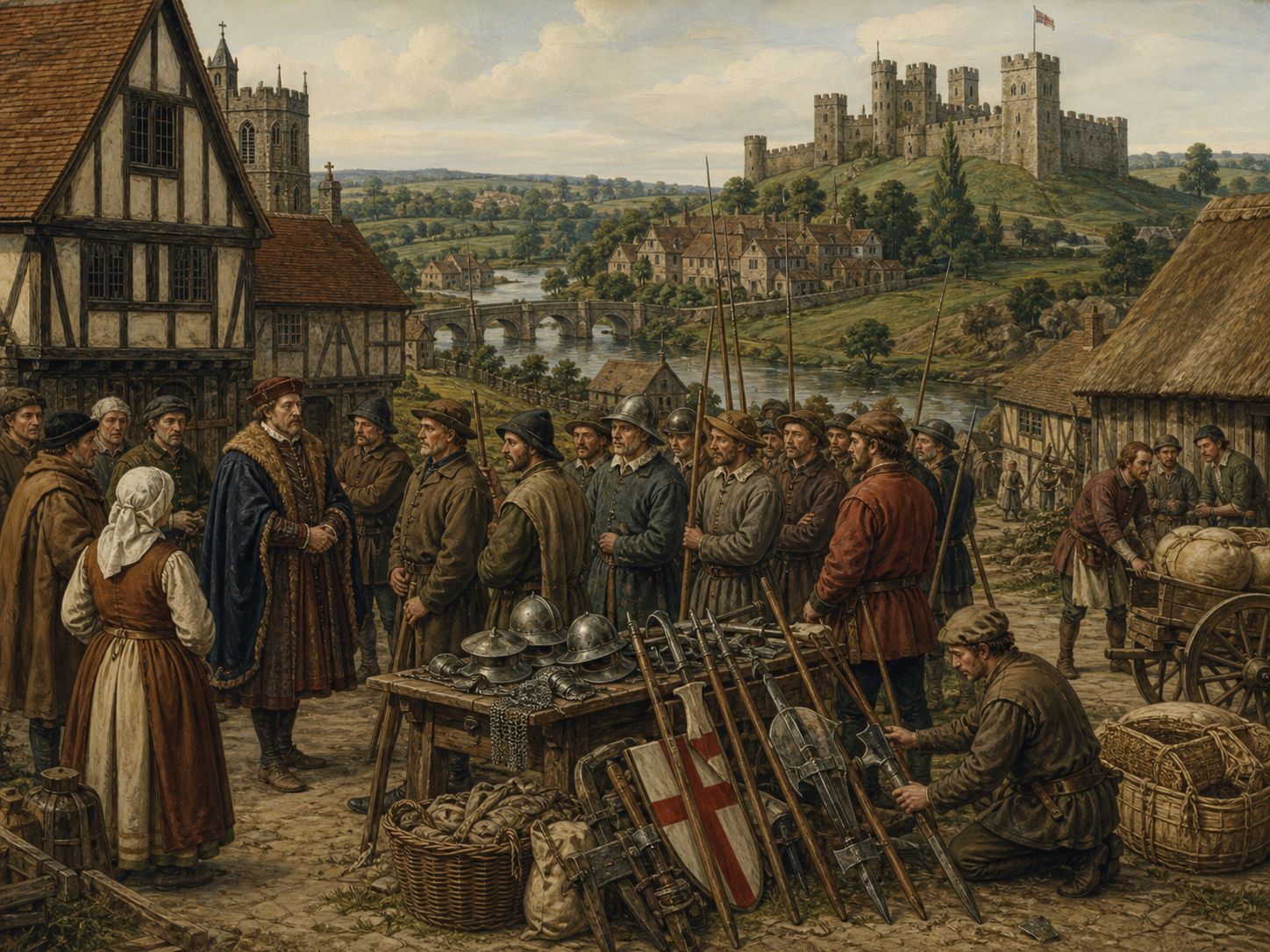
The monarchy faced financial and military pressures after the Hundred Years’ War, while Henry VI’s rule and the succession question intensified noble conflict. The struggle was not a simple nationwide war between two coherent parties; loyalties shifted.
- The monarchy faced financial and military pressures after the Hundred Years’ War, while Henry VI’s rule and the succession question intensified noble conflict.
- The struggle was not a simple nationwide war between two coherent parties; loyalties shifted.
- Core event: From 1455 to 1485, competition for the English throne between the houses of Lancaster and York drew in royal, noble, urban, and regional alliances and ended in a dynastic change.
Course
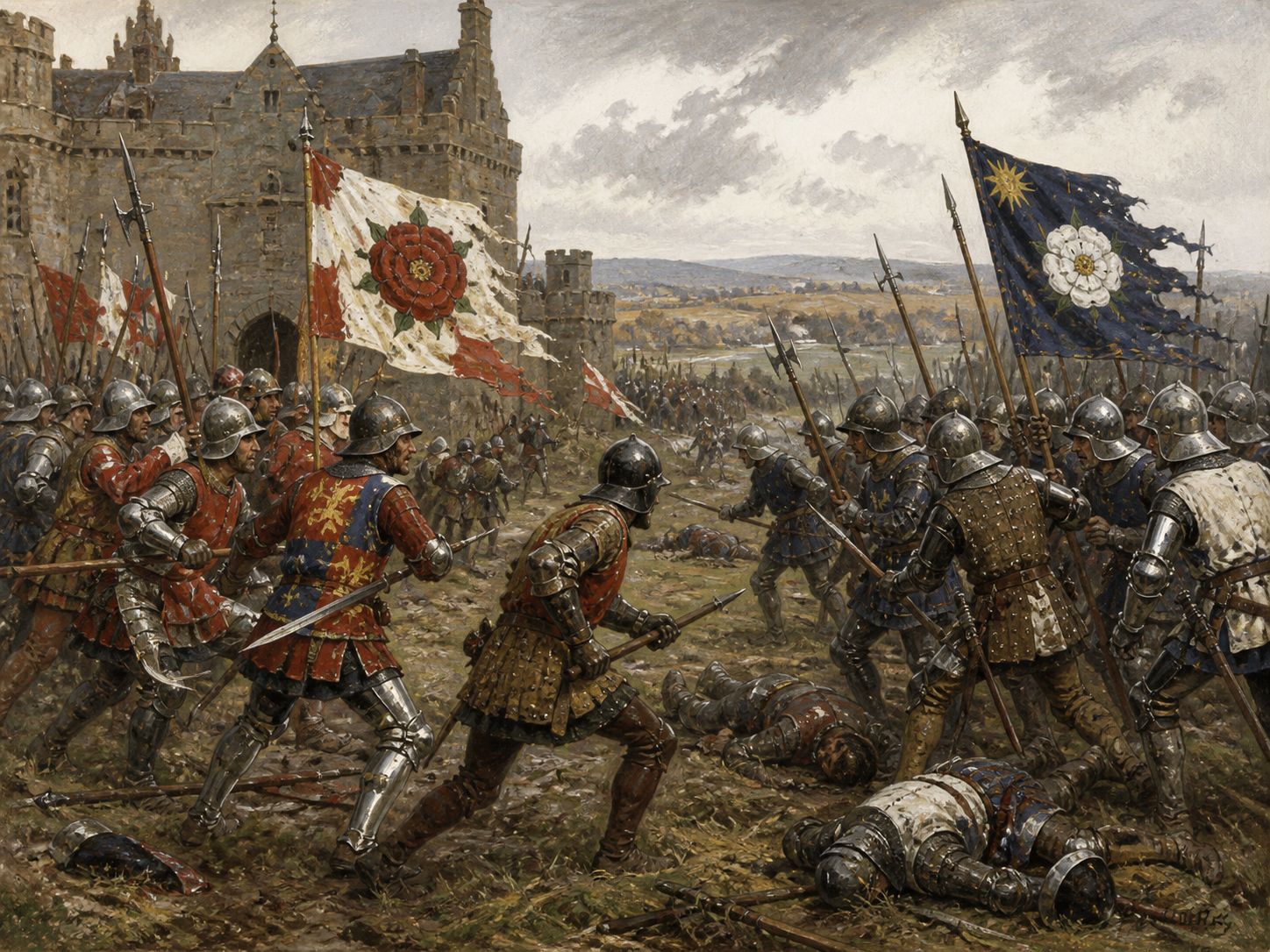
Fighting at St Albans, Towton, Barnet, and elsewhere accompanied changes between Edward IV, Henry VI, and Richard III. In 1485 Henry Tudor defeated Richard III at Bosworth and claimed the throne.
- Fighting at St Albans, Towton, Barnet, and elsewhere accompanied changes between Edward IV, Henry VI, and Richard III.
- In 1485 Henry Tudor defeated Richard III at Bosworth and claimed the throne.
- Conditions behind the action: The monarchy faced financial and military pressures after the Hundred Years’ War, while Henry VI’s rule and the succession question intensified noble conflict. The struggle was not a simple nationwide war between two coherent parties; loyalties shifted.
Outcome
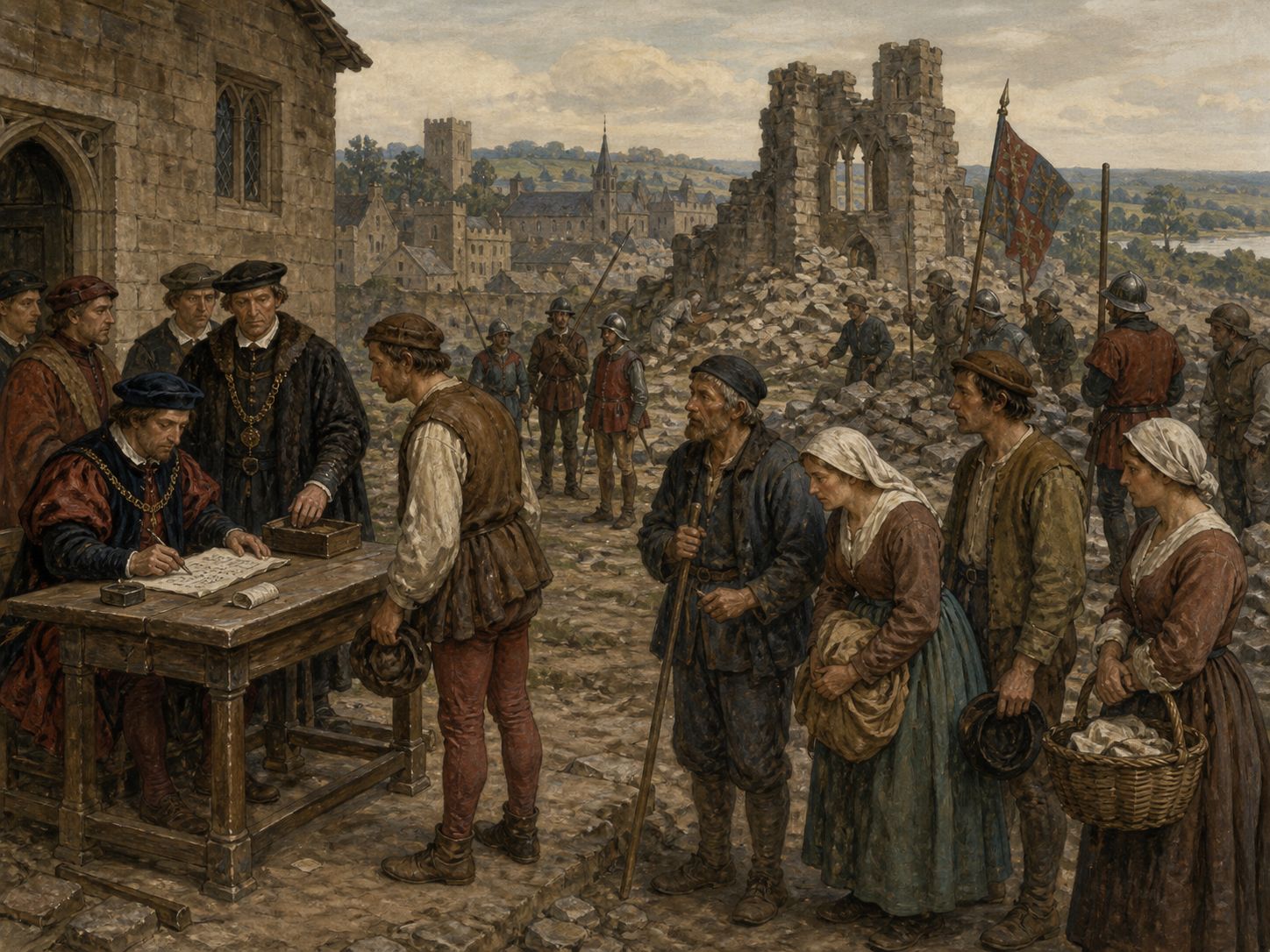
Henry VII used marriage with the Yorkist line and stronger royal finances and courts to constrain rival magnates. Warfare did not continuously engulf every community, but memories of contested legitimacy remained powerful.
- Henry VII used marriage with the Yorkist line and stronger royal finances and courts to constrain rival magnates.
- Warfare did not continuously engulf every community, but memories of contested legitimacy remained powerful.
- Process producing the result: Fighting at St Albans, Towton, Barnet, and elsewhere accompanied changes between Edward IV, Henry VI, and Richard III. In 1485 Henry Tudor defeated Richard III at Bosworth and claimed the throne.
Historical significance
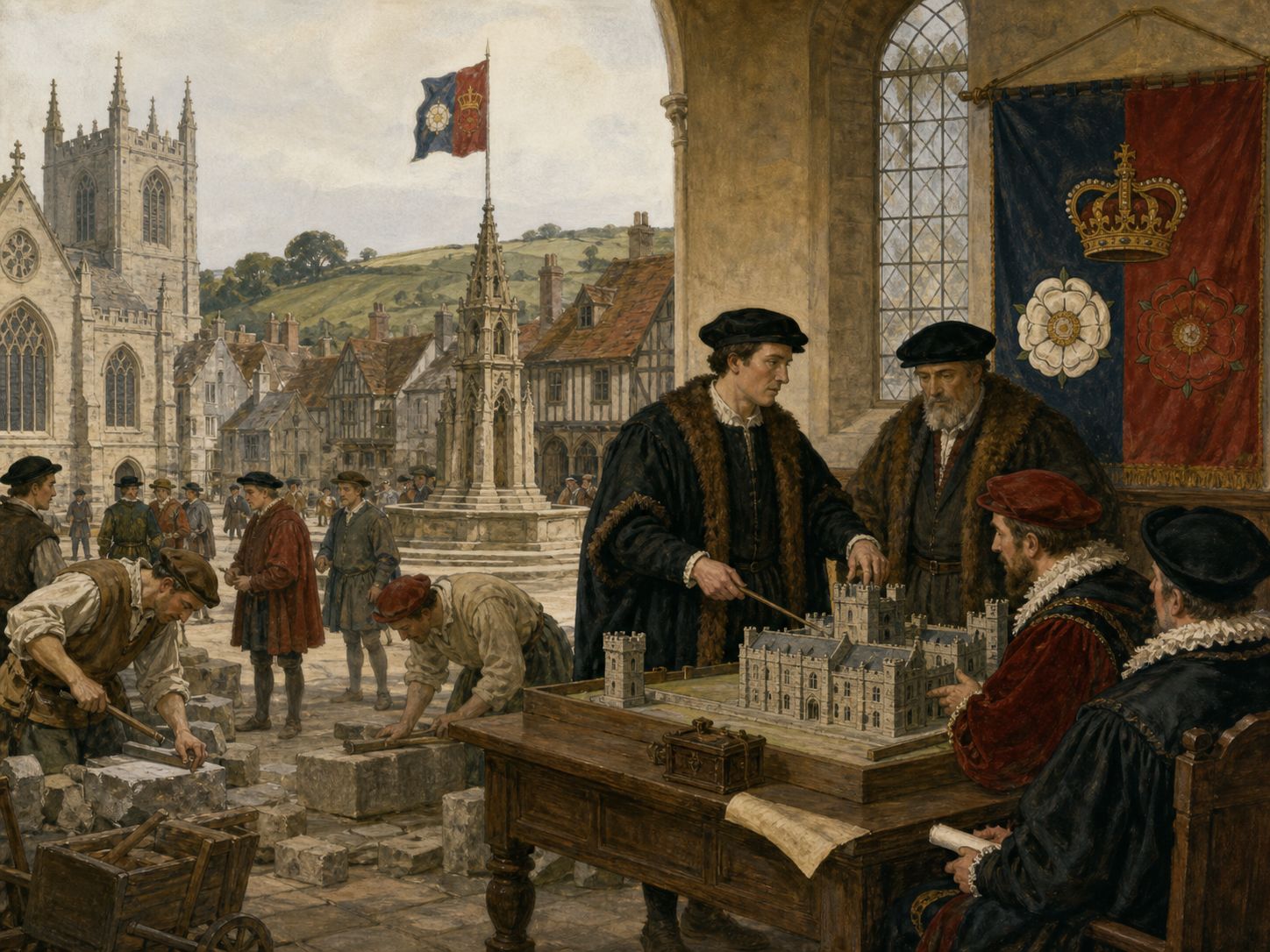
The wars were a reordering of relationships among crown, nobility, parliament, and local society rather than a clean break between medieval and early modern England. The later rose imagery simplified shifting loyalties and local conflicts into a memorable dynastic story.
- The wars were a reordering of relationships among crown, nobility, parliament, and local society rather than a clean break between medieval and early modern England.
- The later rose imagery simplified shifting loyalties and local conflicts into a memorable dynastic story.
- Immediate consequence: Henry VII used marriage with the Yorkist line and stronger royal finances and courts to constrain rival magnates. Warfare did not continuously engulf every community, but memories of contested legitimacy remained powerful.


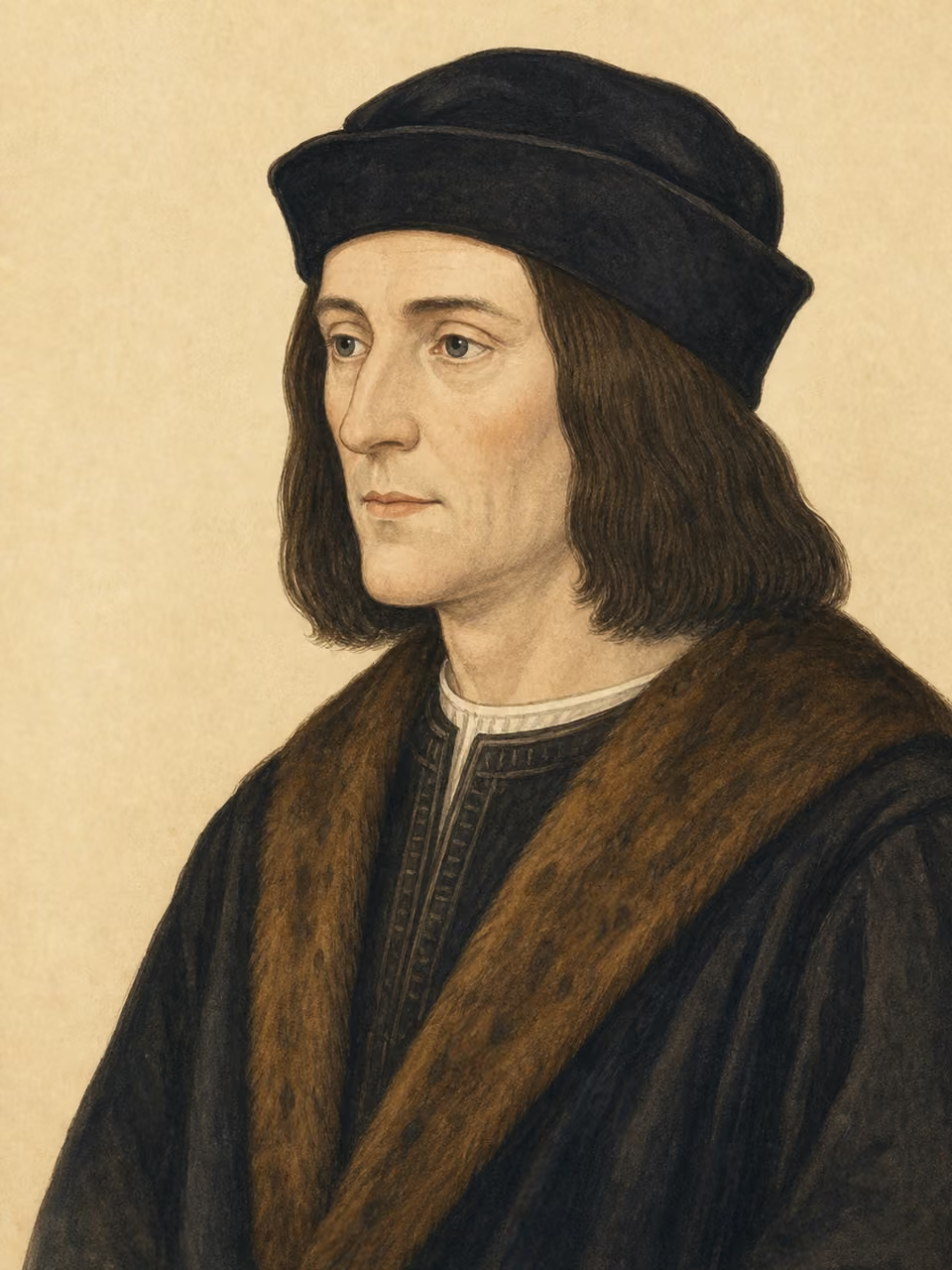
Related figures
Related events
c. 1446
Prelude
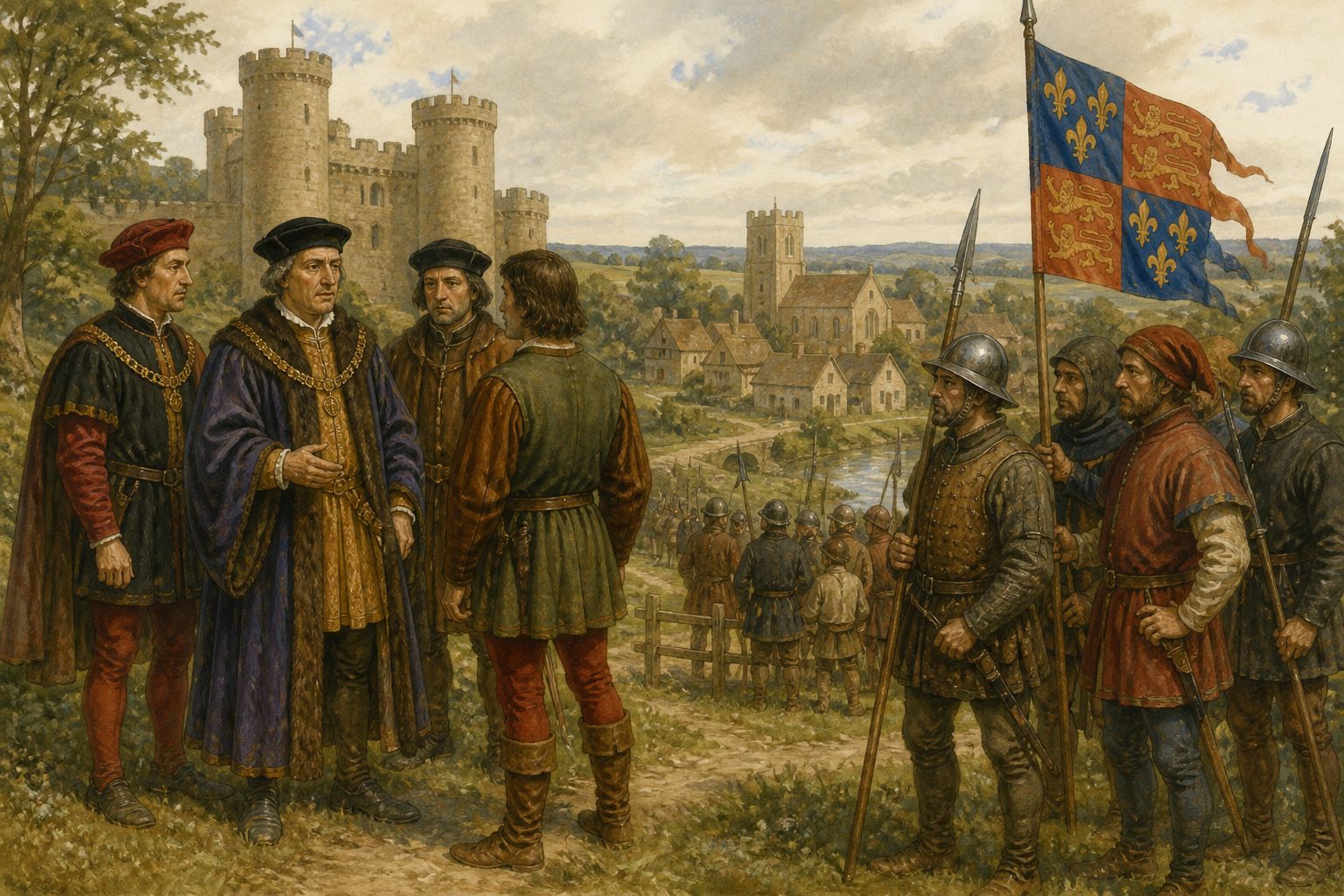
Prelude — Background: The monarchy faced financial and military pressures after the Hundred Years’ War, while Henry VI’s rule and the succession question intensified noble conflict. The struggle was not a simple nationwide war between two coherent parties; loyalties shifted.
c. 1454
Turning point
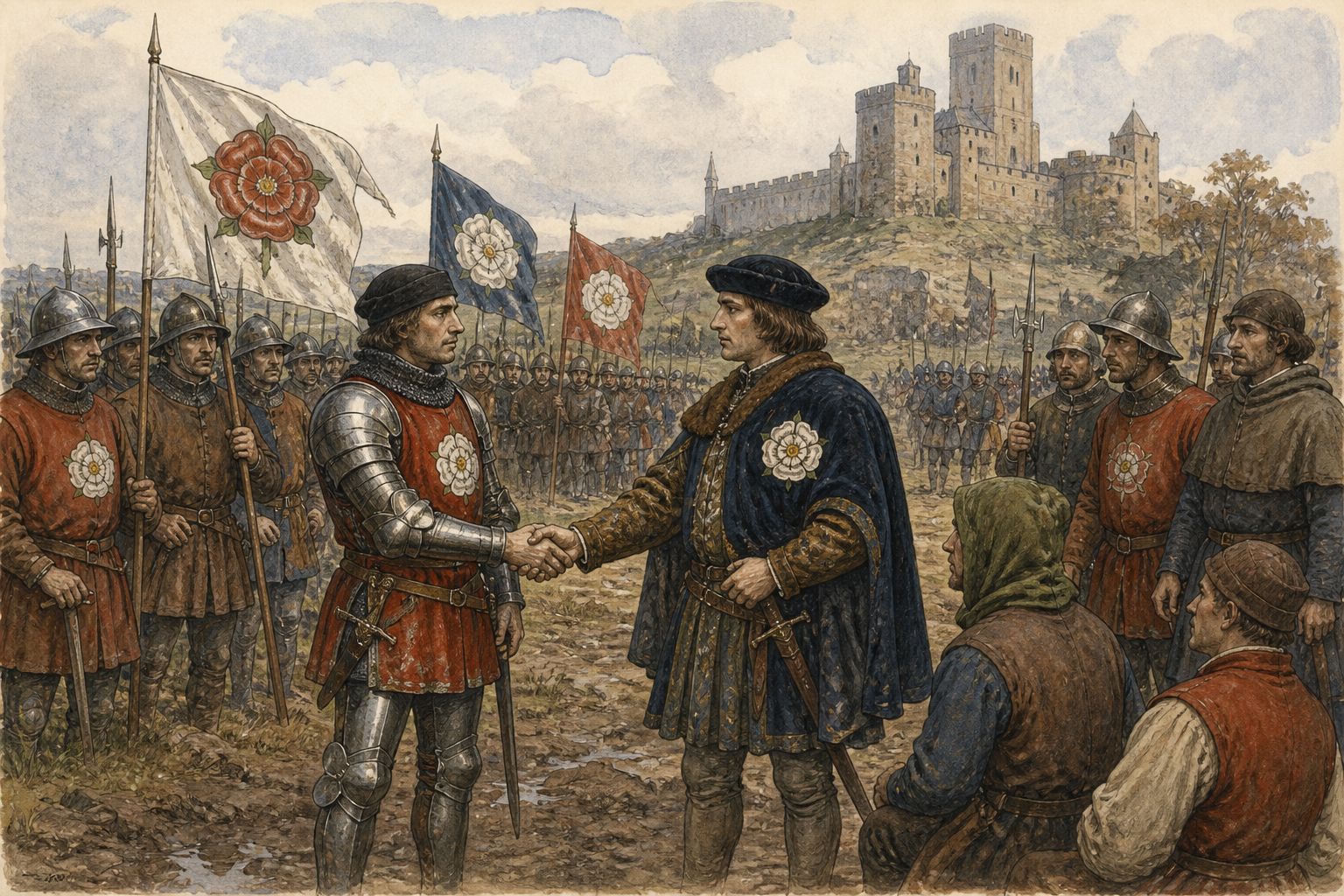
Turning point — Build-up: Fighting at St Albans, Towton, Barnet, and elsewhere accompanied changes between Edward IV, Henry VI, and Richard III. In 1485 Henry Tudor defeated Richard III at Bosworth and claimed the throne.
1455–1485
Wars of the Roses
Current event
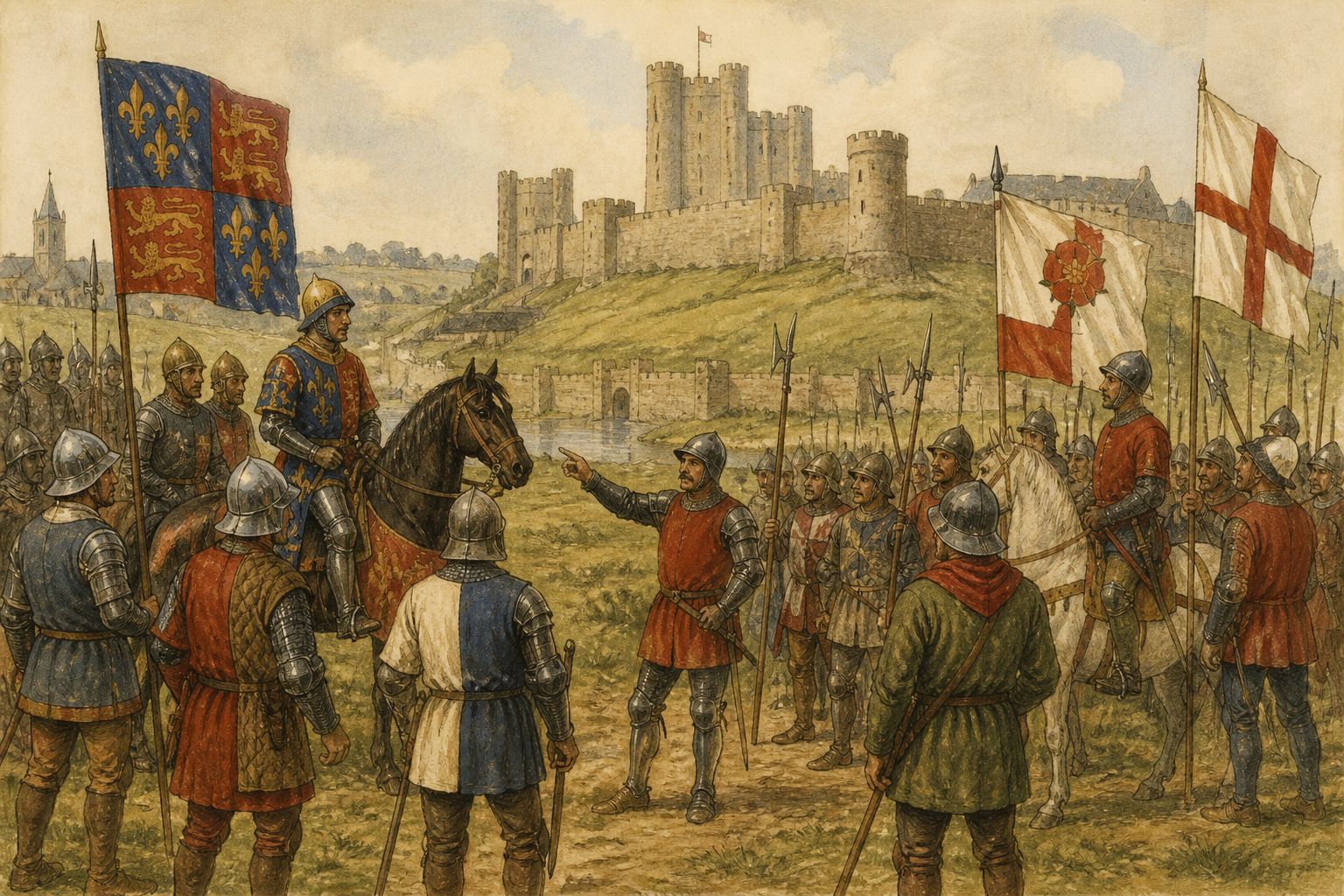
Wars of the Roses — Central transition: From 1455 to 1485, competition for the English throne between the houses of Lancaster and York drew in royal, noble, urban, and regional alliances and ended in a dynastic change.
c. 1496
Immediate aftermath
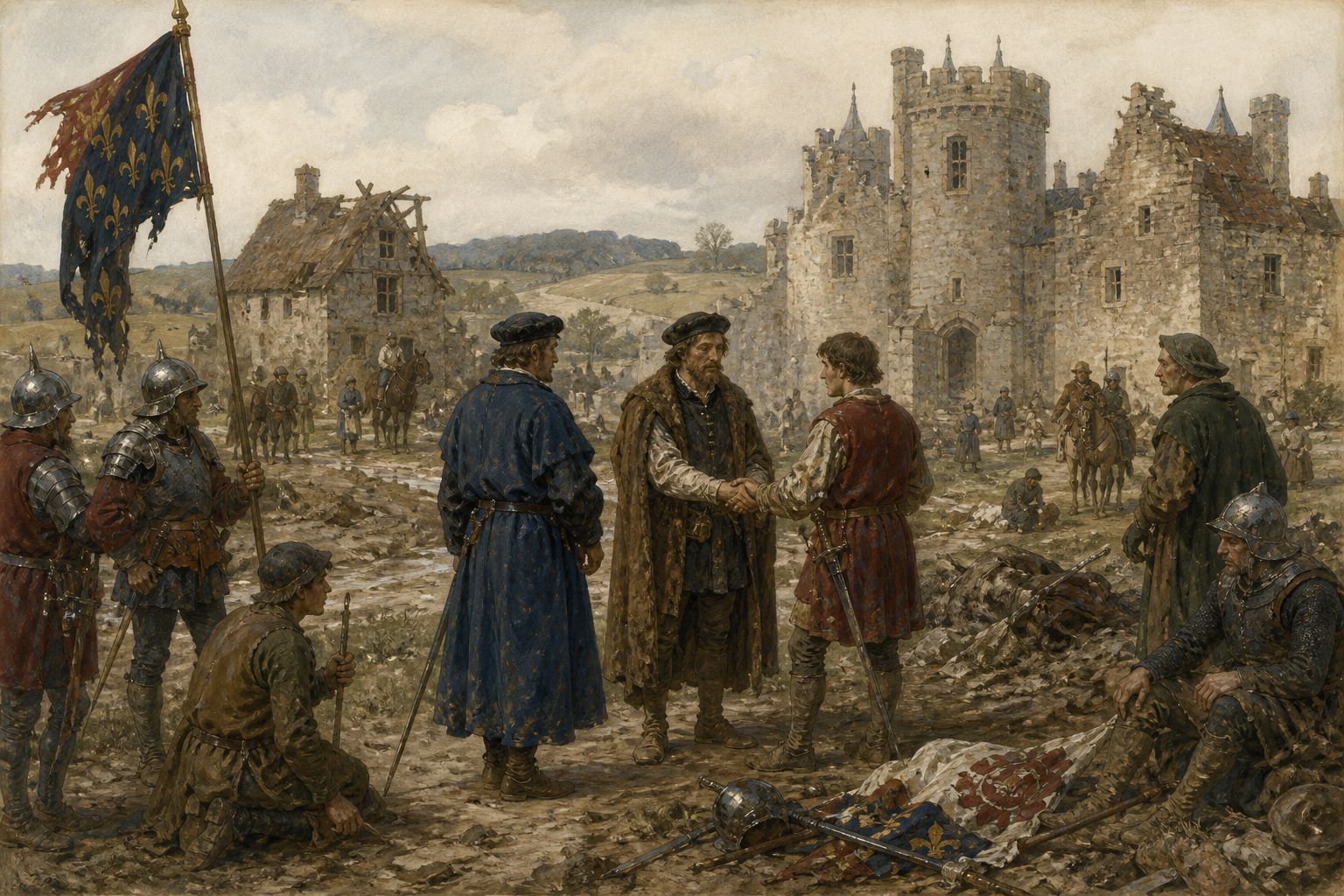
Immediate aftermath — Immediate result: Henry VII used marriage with the Yorkist line and stronger royal finances and courts to constrain rival magnates. Warfare did not continuously engulf every community, but memories of contested legitimacy remained powerful.
c. 1530
Long-term significance
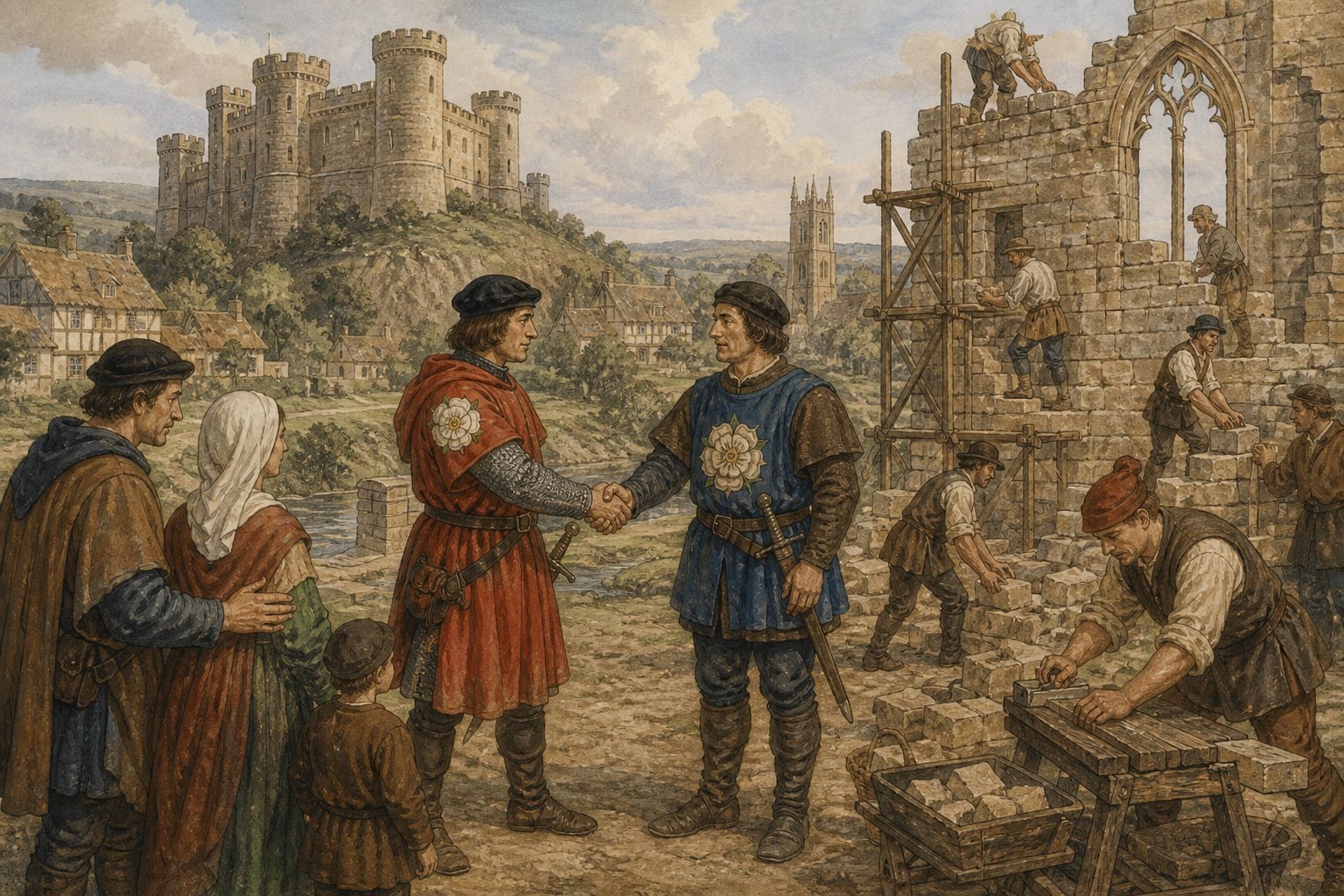
Long-term significance — Long-term significance: The wars were a reordering of relationships among crown, nobility, parliament, and local society rather than a clean break between medieval and early modern England. The later rose imagery simplified shifting loyalties and local conflicts into a memorable dynastic story.


Sources
- Wars of the Roses — Wars Of The Roses (Encyclopaedia Britannica)britannica.comThis Encyclopaedia Britannica resource supports the chronology, setting, and course of Wars of the Roses.
- Wars of the Roses — Warsoftheroses (Battlefieldstrust)battlefieldstrust.comThis Battlefieldstrust resource supports the chronology, setting, and course of Wars of the Roses.
- Wars of the Roses — Warsoftheroses (UK Parliament)parliament.ukThis UK Parliament resource supports the chronology, setting, and course of Wars of the Roses.