
Washington Naval Conference
1921–1922
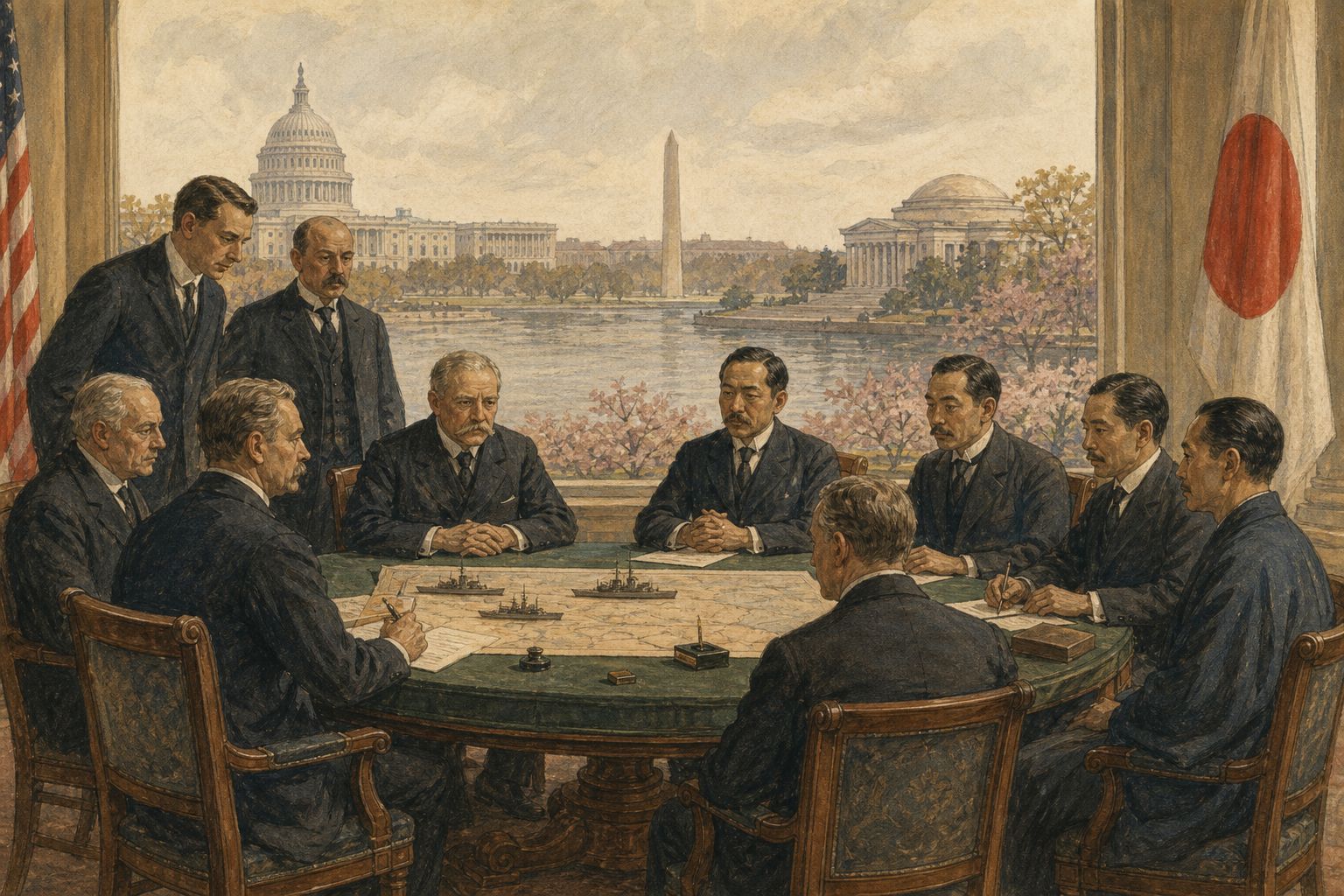
From November 1921 to February 1922, states met in Washington to negotiate naval limitation and the postwar order in the Pacific and East Asia, producing several treaties.

- Period
- 1921–1922
- Kind
- Conference
- Regions
- North America, East Asia
- Keywords
- Washington Naval Conference · Washington Naval Disarmament Conference · Washington system · Five-Power Treaty · conference
Follow the story · Four stages
Background
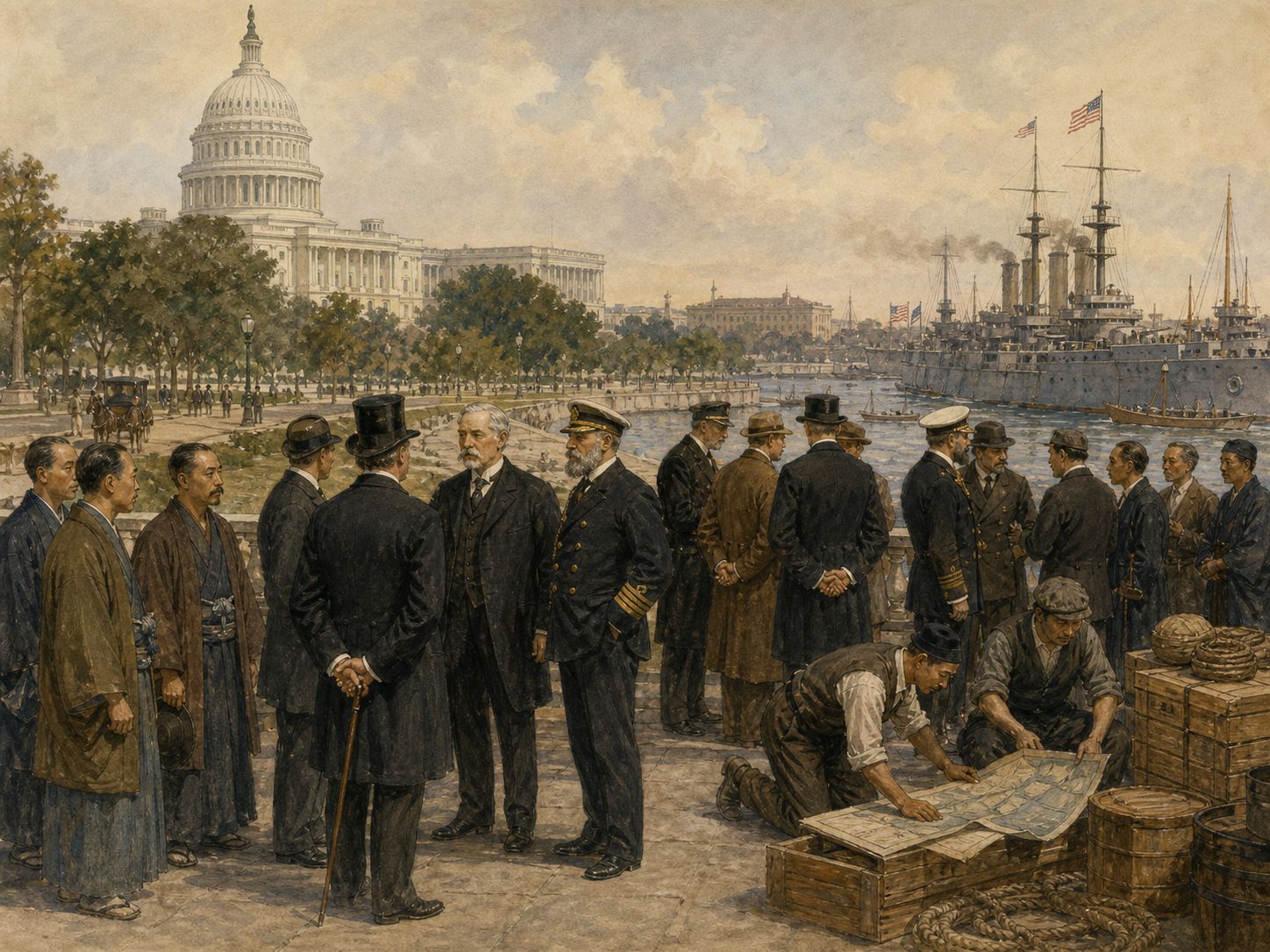
After the First World War, naval competition, war debts, Pacific security, and questions of sovereignty in China had become connected. The United States, Britain, Japan, France, and Italy negotiated both military capacity and diplomatic standing.
- After the First World War, naval competition, war debts, Pacific security, and questions of sovereignty in China had become connected.
- The United States, Britain, Japan, France, and Italy negotiated both military capacity and diplomatic standing.
- Core event: From November 1921 to February 1922, states met in Washington to negotiate naval limitation and the postwar order in the Pacific and East Asia, producing several treaties.
Course
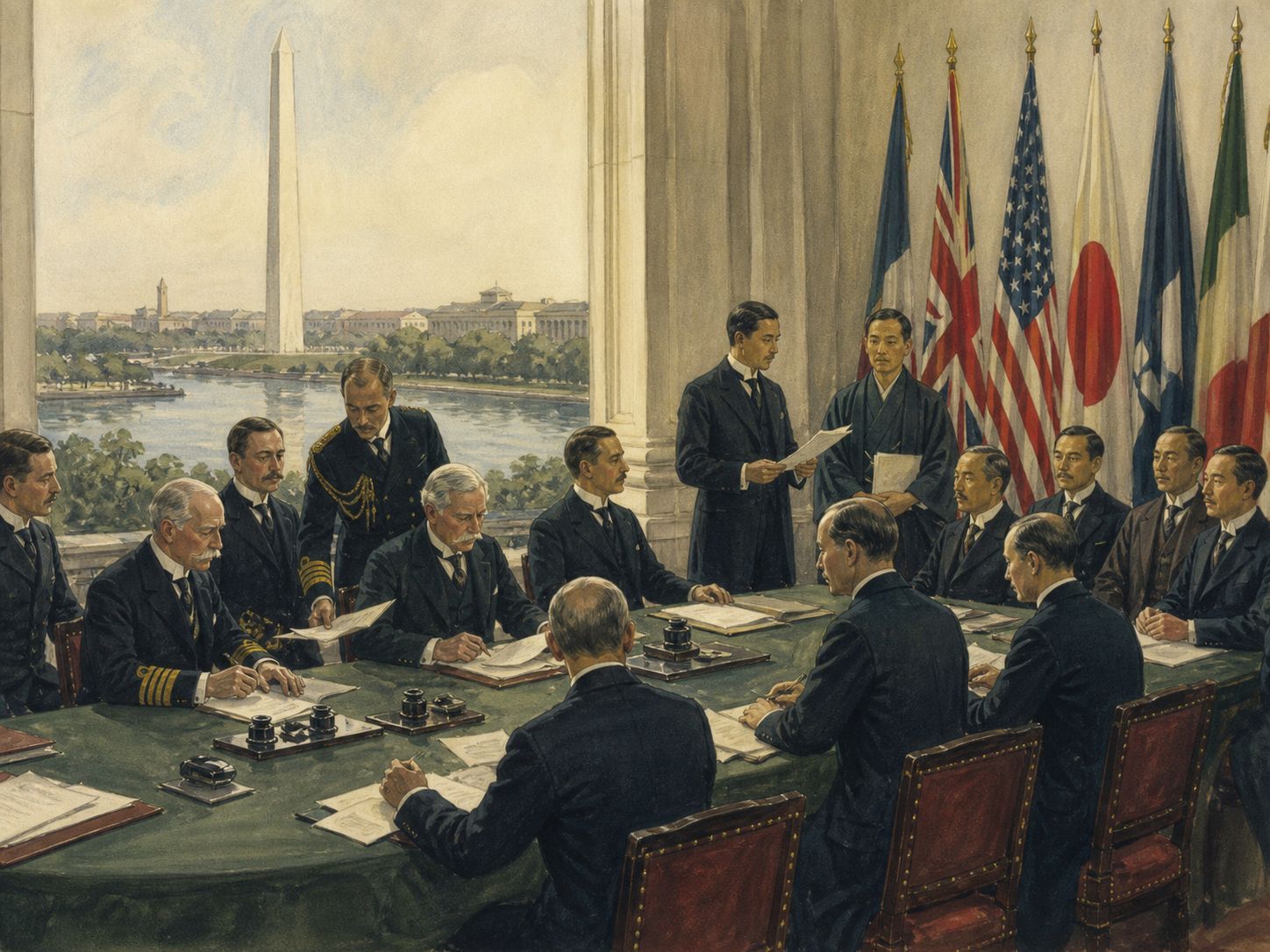
The Five-Power Treaty set capital-ship ratios and construction limits, while the Four-Power Treaty addressed consultation over Pacific possessions. The Nine-Power Treaty affirmed China’s territorial integrity and the Open Door, but left enforcement and interpretation contested.
- The Five-Power Treaty set capital-ship ratios and construction limits, while the Four-Power Treaty addressed consultation over Pacific possessions.
- The Nine-Power Treaty affirmed China’s territorial integrity and the Open Door, but left enforcement and interpretation contested.
- Conditions behind the action: After the First World War, naval competition, war debts, Pacific security, and questions of sovereignty in China had become connected. The United States, Britain, Japan, France, and Italy negotiated both military capacity and diplomatic standing.
Outcome
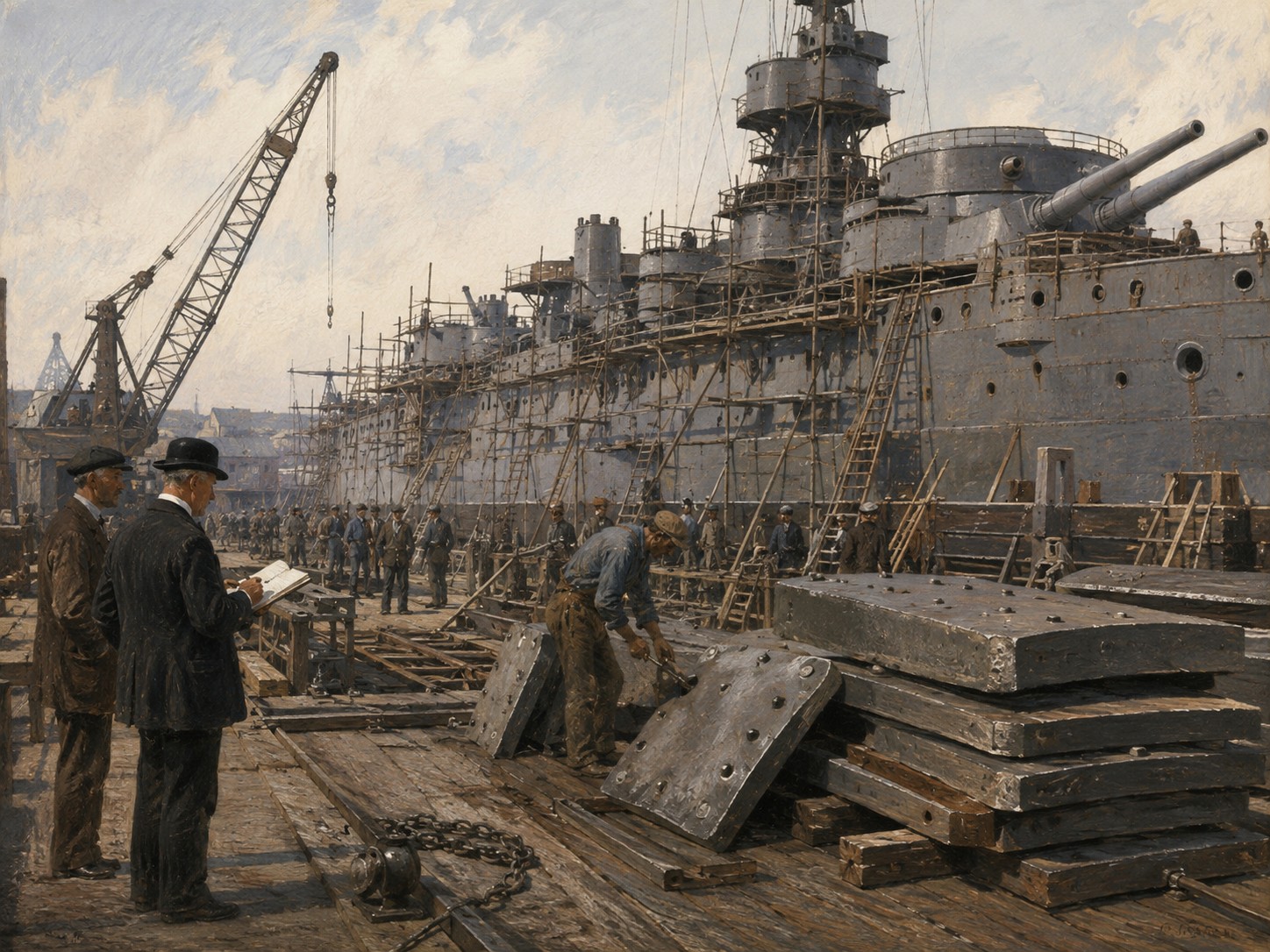
The agreements temporarily restrained naval construction and projected postwar cooperation. They regulated ships and regional principles in detail without resolving the sovereignty questions in China or the strategic distrust among the powers.
- The agreements temporarily restrained naval construction and projected postwar cooperation.
- They regulated ships and regional principles in detail without resolving the sovereignty questions in China or the strategic distrust among the powers.
- Process producing the result: The Five-Power Treaty set capital-ship ratios and construction limits, while the Four-Power Treaty addressed consultation over Pacific possessions. The Nine-Power Treaty affirmed China’s territorial integrity and the Open Door, but left enforcement and interpretation contested.
Historical significance
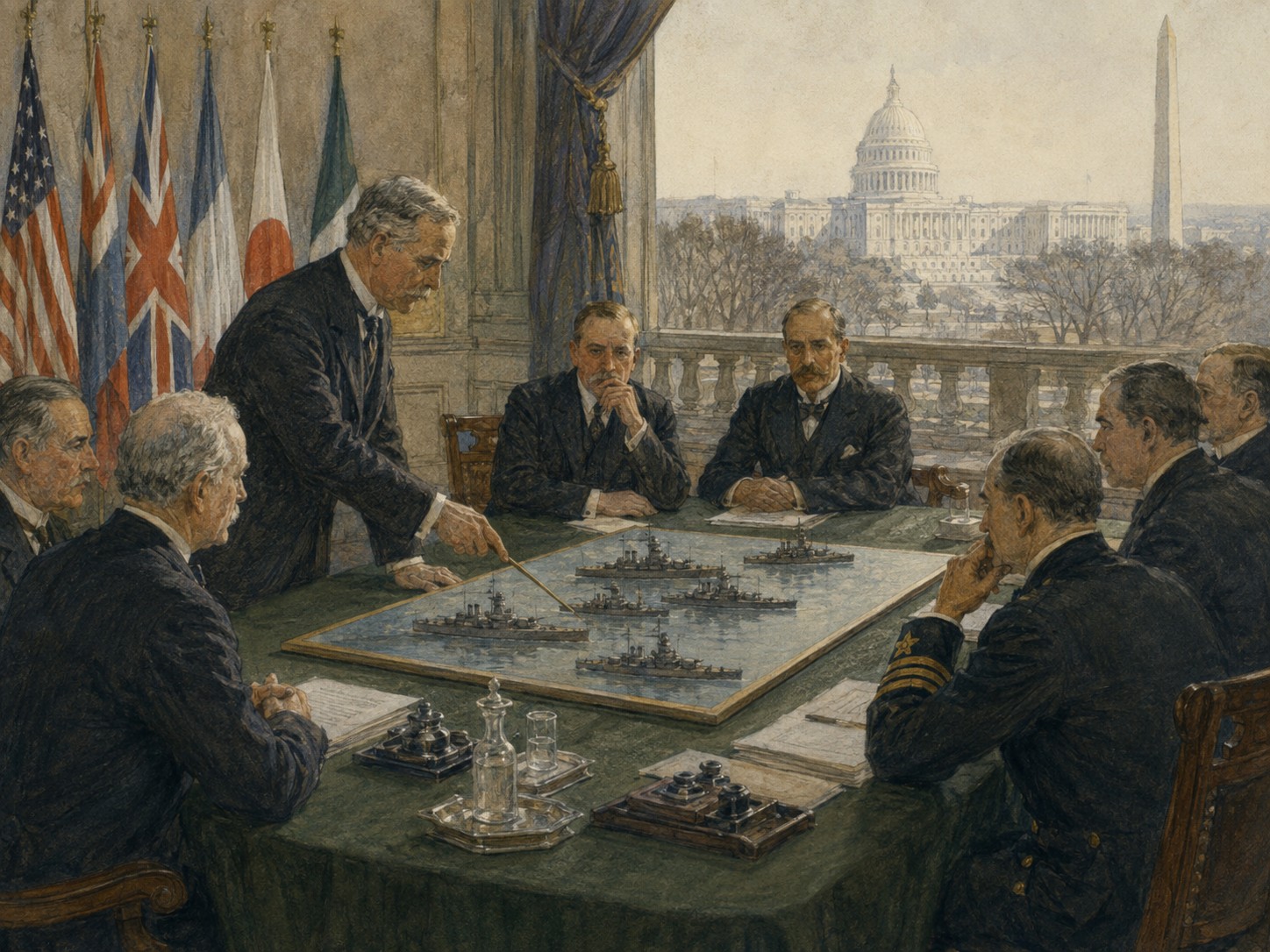
The Washington system was an attempt to manage disarmament through great-power treaties and numerical ratios. It should not be reduced either to a simple success of cooperation or to a direct cause of the Second World War; domestic politics, economics, and empire mattered too.
- The Washington system was an attempt to manage disarmament through great-power treaties and numerical ratios.
- It should not be reduced either to a simple success of cooperation or to a direct cause of the Second World War; domestic politics, economics, and empire mattered too.
- Immediate consequence: The agreements temporarily restrained naval construction and projected postwar cooperation. They regulated ships and regional principles in detail without resolving the sovereignty questions in China or the strategic distrust among the powers.


Related events
c. 1920
Prelude
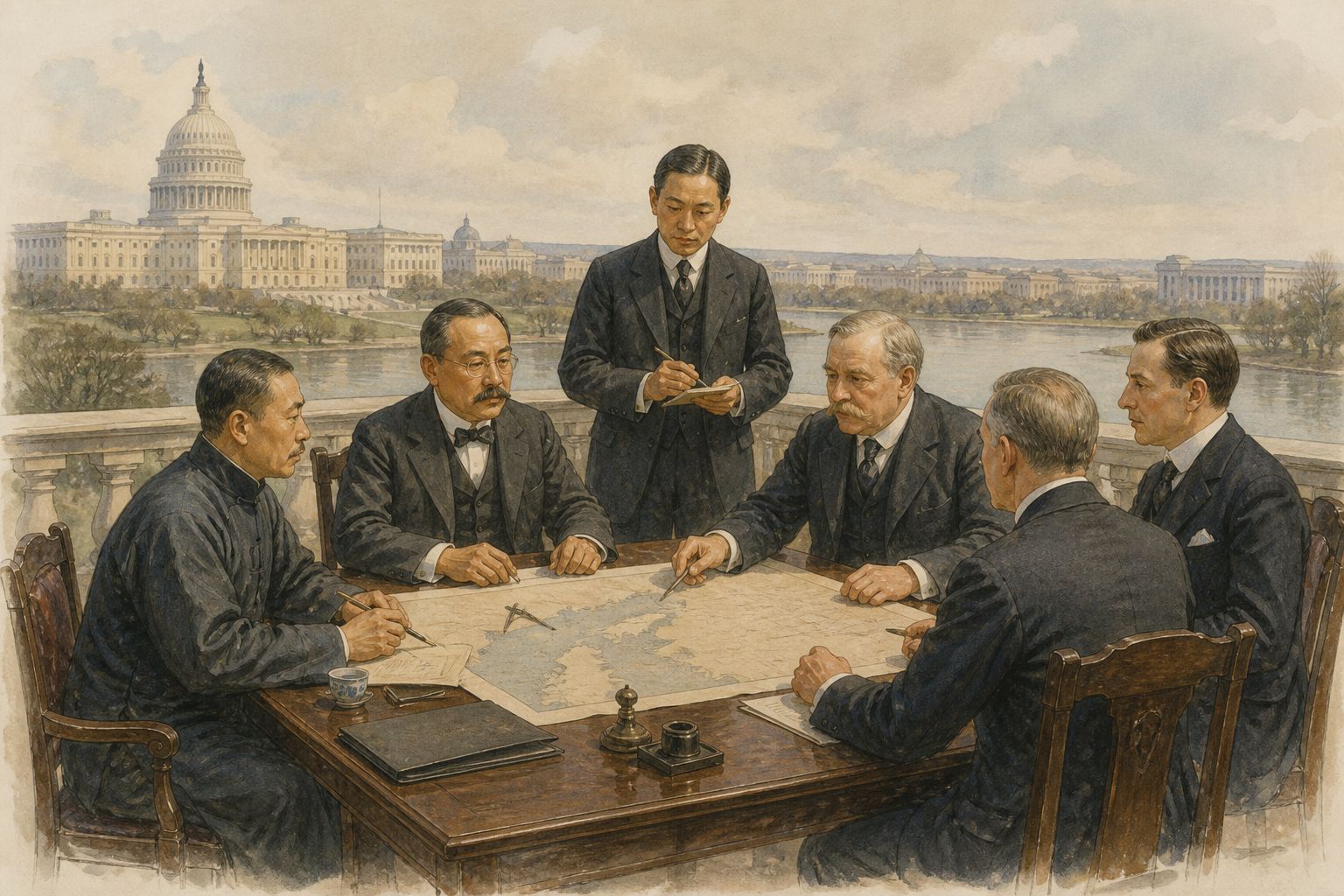
Prelude — Background: After the First World War, naval competition, war debts, Pacific security, and questions of sovereignty in China had become connected. The United States, Britain, Japan, France, and Italy negotiated both military capacity and diplomatic standing.
c. 1920
Turning point
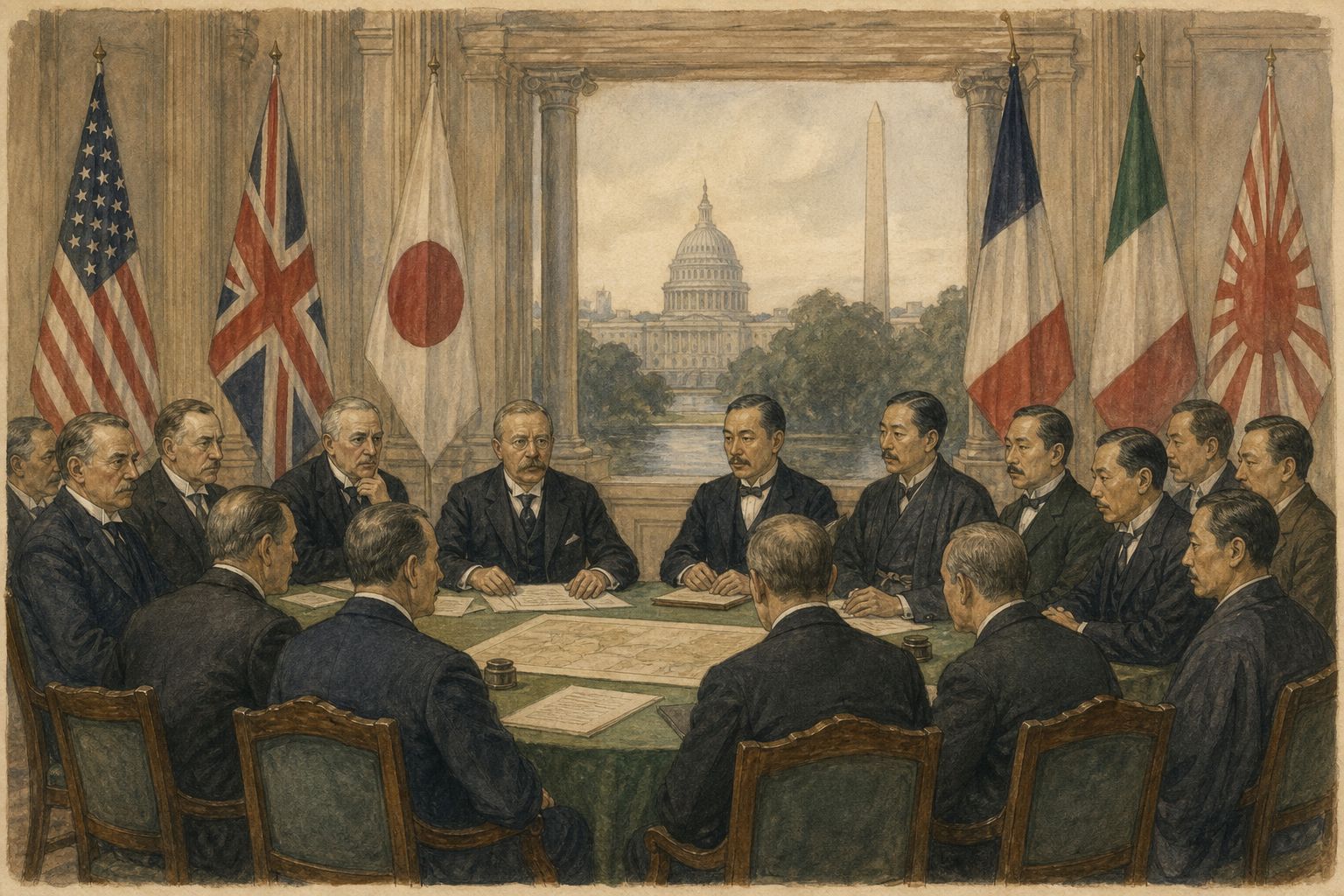
Turning point — Build-up: The Five-Power Treaty set capital-ship ratios and construction limits, while the Four-Power Treaty addressed consultation over Pacific possessions. The Nine-Power Treaty affirmed China’s territorial integrity and the Open Door, but left enforcement and interpretation contested.
1921–1922
Washington Naval Conference
Current event
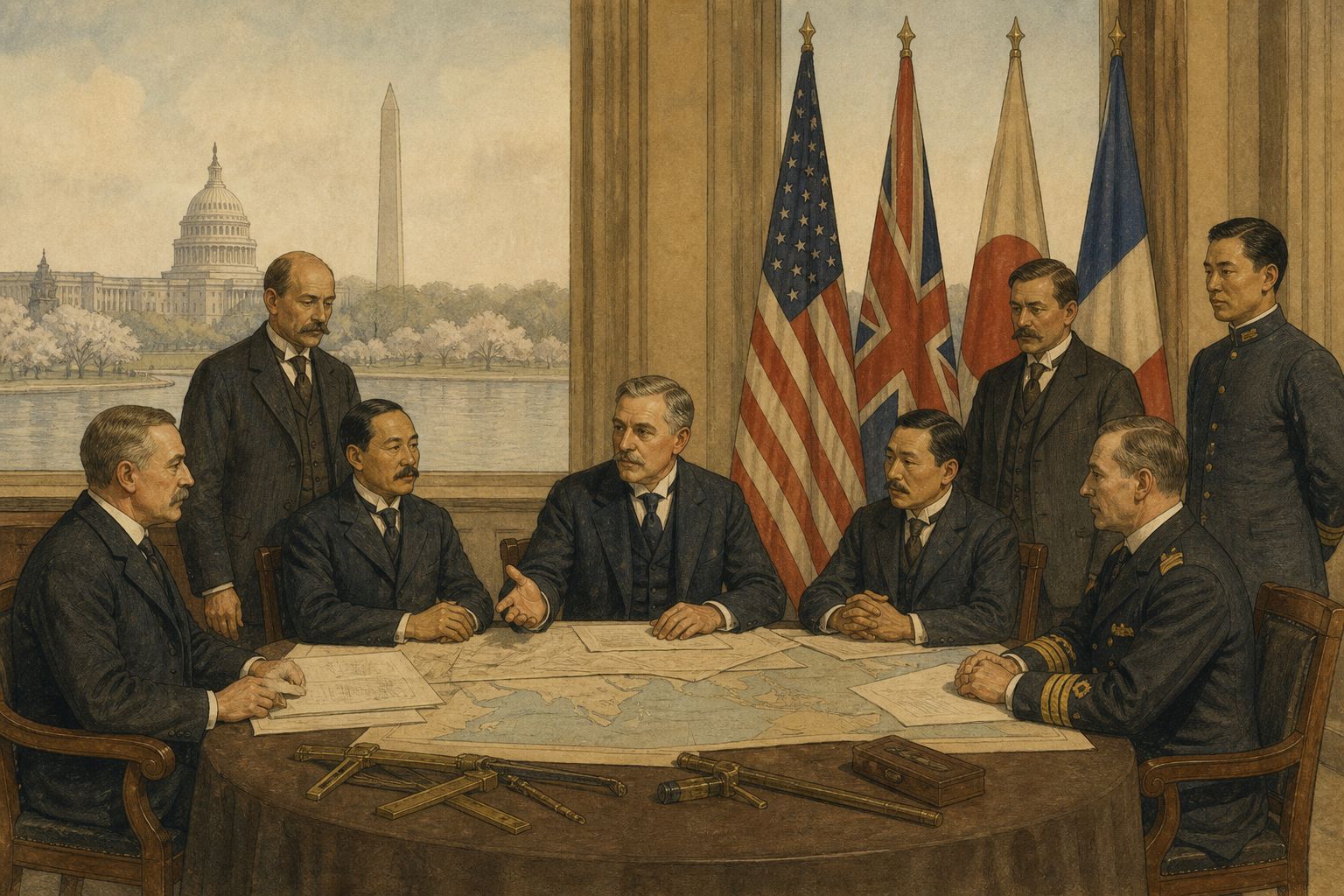
Washington Naval Conference — Central transition: From November 1921 to February 1922, states met in Washington to negotiate naval limitation and the postwar order in the Pacific and East Asia, producing several treaties.
c. 1923
Immediate aftermath
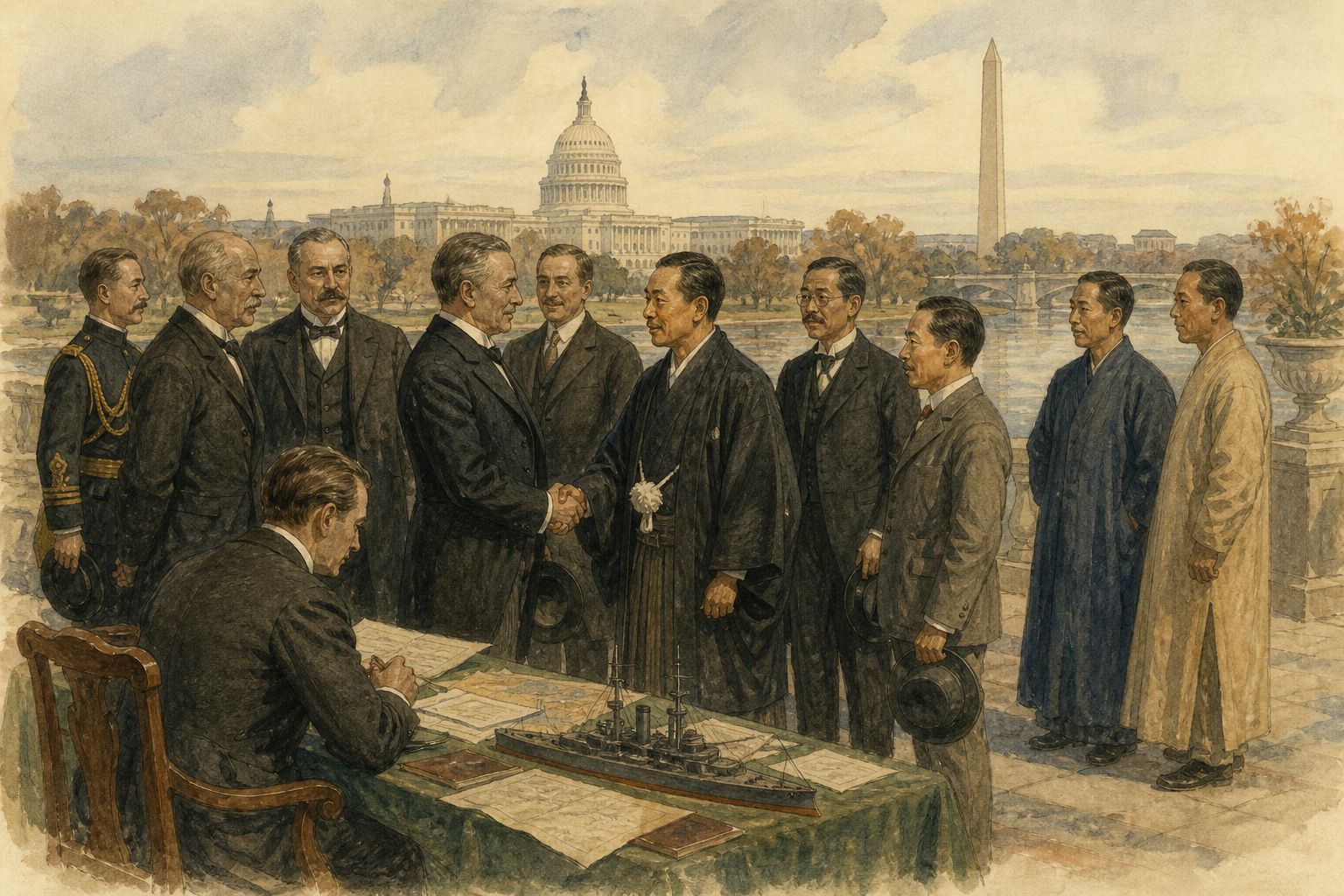
Immediate aftermath — Immediate result: The agreements temporarily restrained naval construction and projected postwar cooperation. They regulated ships and regional principles in detail without resolving the sovereignty questions in China or the strategic distrust among the powers.
c. 1932
Long-term significance
Long-term significance — Long-term significance: The Washington system was an attempt to manage disarmament through great-power treaties and numerical ratios. It should not be reduced either to a simple success of cooperation or to a direct cause of the Second World War; domestic politics, economics, and empire mattered too.


Sources
- Washington Naval Conference — Naval Conference (U.S. Office of the Historian)history.state.govThis U.S. Office of the Historian resource supports the chronology, setting, and course of Washington Naval Conference.
- Washington Naval Conference — 043 (U.S. National Archives)archives.govThis U.S. National Archives resource supports the chronology, setting, and course of Washington Naval Conference.
- Washington Naval Conference — 2016886511 (Library of Congress)loc.govThis Library of Congress resource supports the chronology, setting, and course of Washington Naval Conference.