
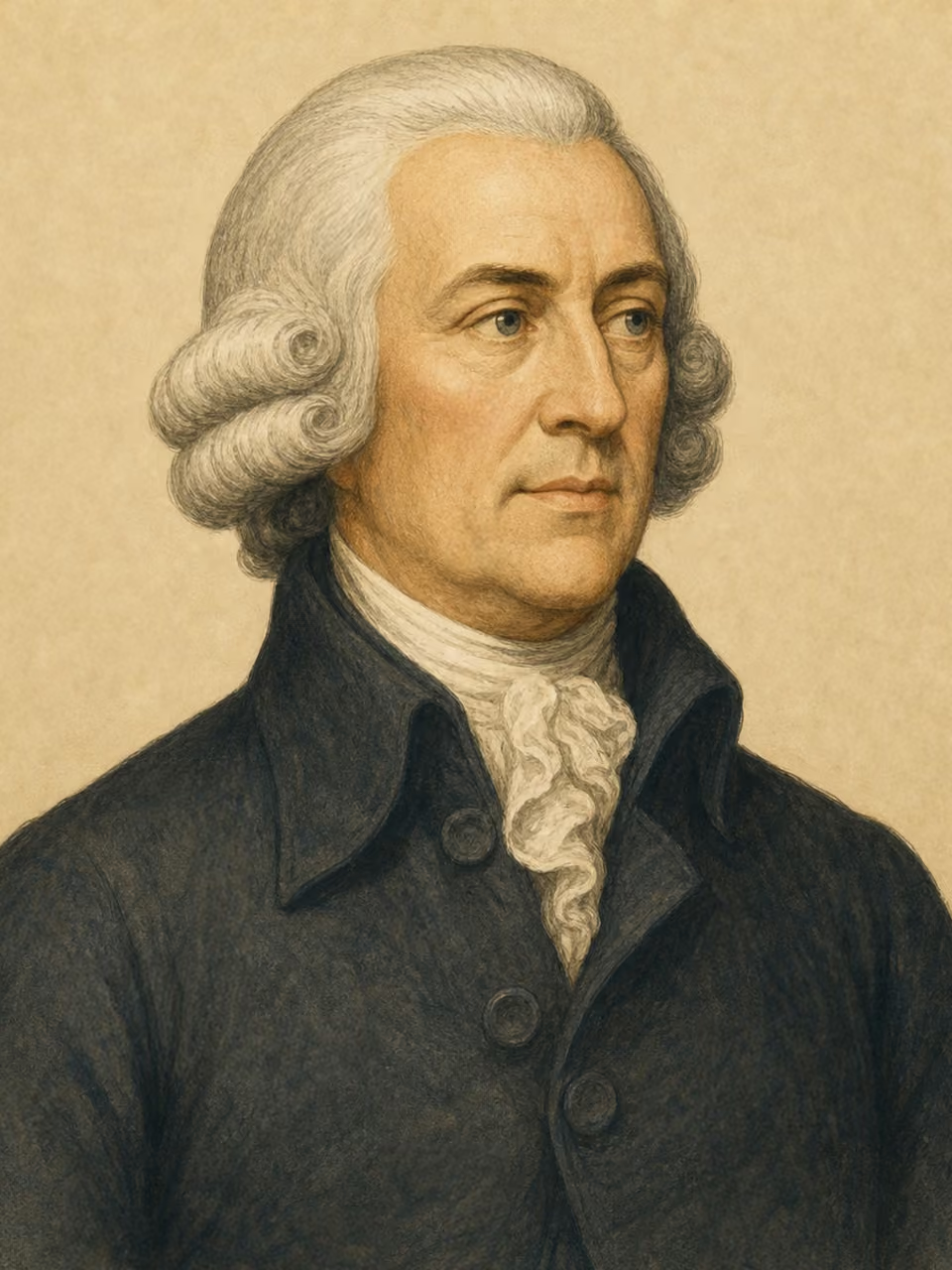
Adam Smith

Portrait: AI-generated imagined likeness

Adam Smith

Philosopher · Writer · Teacher

Years
1723–1790
Birthplace
United Kingdom
Birth polity
Kingdom of Great Britain
Era
Early modern
Field
Philosophy
Occupations
Philosopher · Writer · Teacher

Scottish Enlightenment thinker. In The Wealth of Nations, he discussed the division of labor, markets, and free competition, creating the starting point for modern economics. He is a person who thinks about the structure of modern society.

View in catalog

Historical context

Places

  • Glasgow

    Work

Works & achievements

  • The Wealth of Nations

    1776

    Book

Events

  • Scottish Enlightenment

    1740–1790

    Movement · Participant

Origins

Origins map
Birth country
Birth country
United Kingdom

Map: Natural Earth (PD)

Biography

Early life

Born in Scotland, he studied at the University of Glasgow and Oxford. While teaching moral philosophy, he began to think about the relationship between human emotions, order, and commercial society.

Achievements

In 1776, he published The Wealth of Nations, criticizing mercantilism and explaining the division of labor and the workings of the market. Economic activity was reconsidered as a system of production and exchange, not just a nation's possession of gold and silver.

Character & anecdotes

The ``invisible hand'' is often used as a simple slogan for laissez-faire, but Smith also discussed the importance of moral sentiment and the legal system. He was a thinker who considered not only economics but also social order.

Historical Impact

Adam Smith's arguments became the basis of economic thought and liberalism during the Industrial Revolution. Studying him reveals that the market is not something that exists naturally, but has been understood within the context of institutions, morality, and relationships with the state.