
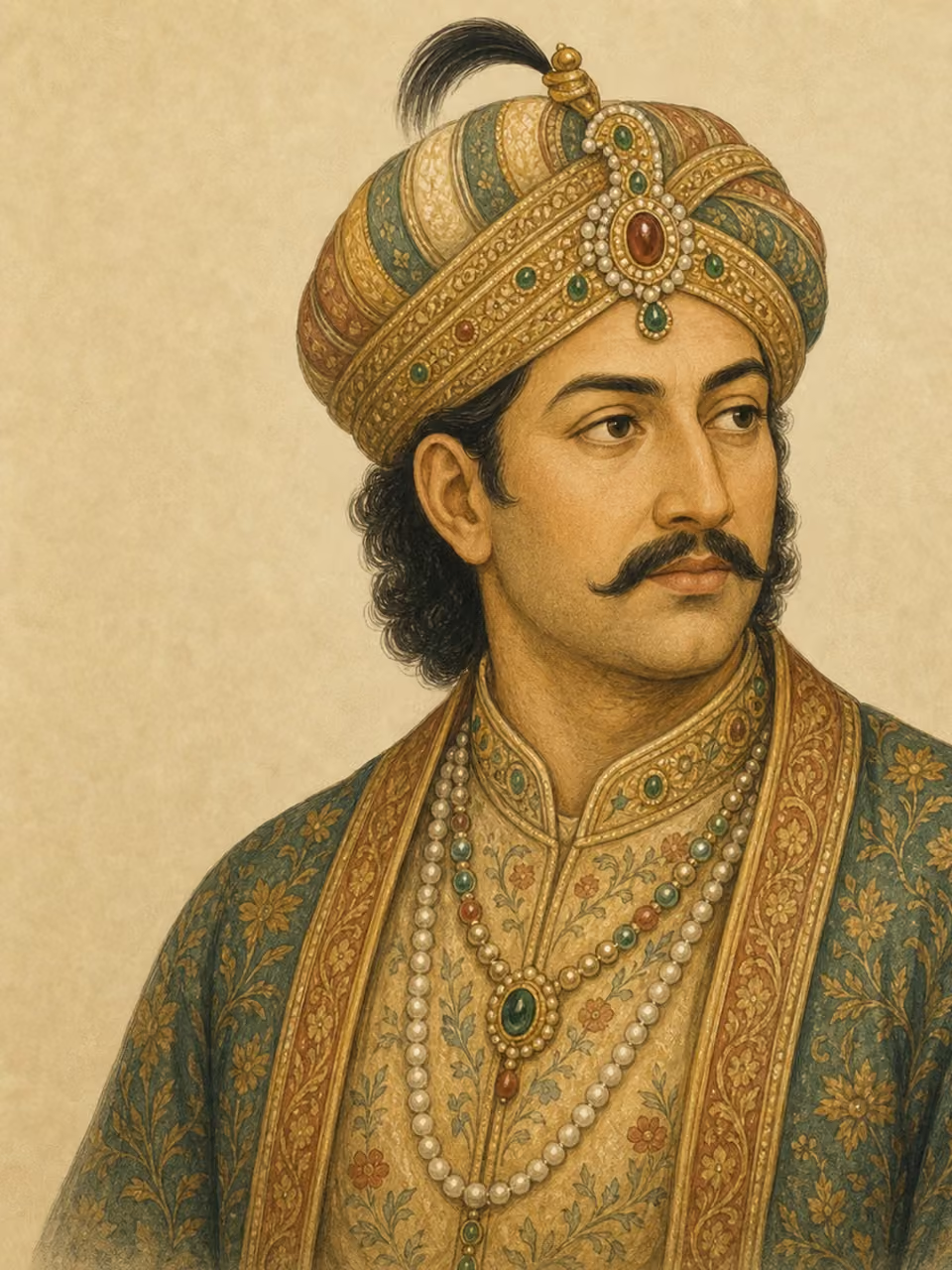
Akbar

Portrait: AI-generated imagined likeness

Akbar

Emperor · Monarch · Politician

Years
1542–1605
Birthplace
Pakistan
Birth polity
Mughal Empire
Era
Early modern
Field
Politics
Occupations
Emperor · Monarch · Politician

Emperor of the Mughal Empire. He expanded his empire mainly in northern India, and promoted religious tolerance and the establishment of a governing system. He is a central figure in early modern South Asian history.

View in catalog

Historical context

Places

  • Fatehpur Sikri

    Work

Events

  • Akbar's religious policy

    1575–1605

    Political event · Leader

Origins

Origins map
Birth countryAssociated countries
Birth country
Pakistan
Associated countries
India

Map: Natural Earth (PD)

Biography

Early life

He was born into the imperial family of the Mughal Empire and ascended to the throne at a young age amidst turmoil. With the support of the regent Bairam Khan, he gradually assumed power himself.

Achievements

He expanded his empire through military conquest and alliances, incorporating Rajput princes into his ruling order. They sought ways to govern a multi-religious society through religious debate and the abolition of jizya.

Character & anecdotes

Akbar's court attracted a wide variety of people, including Muslims, Hindus, Jains, and Christians. This was not only idealism, but also politics for imperial integration.

Historical Impact

Akbar's reign shows that the Mughal Empire was not just a conquering dynasty, but a system that integrated a multi-ethnic and multi-religious society. Studying him reveals how tolerance and power were intertwined in early modern empires.