
Aleksandr Solzhenitsyn

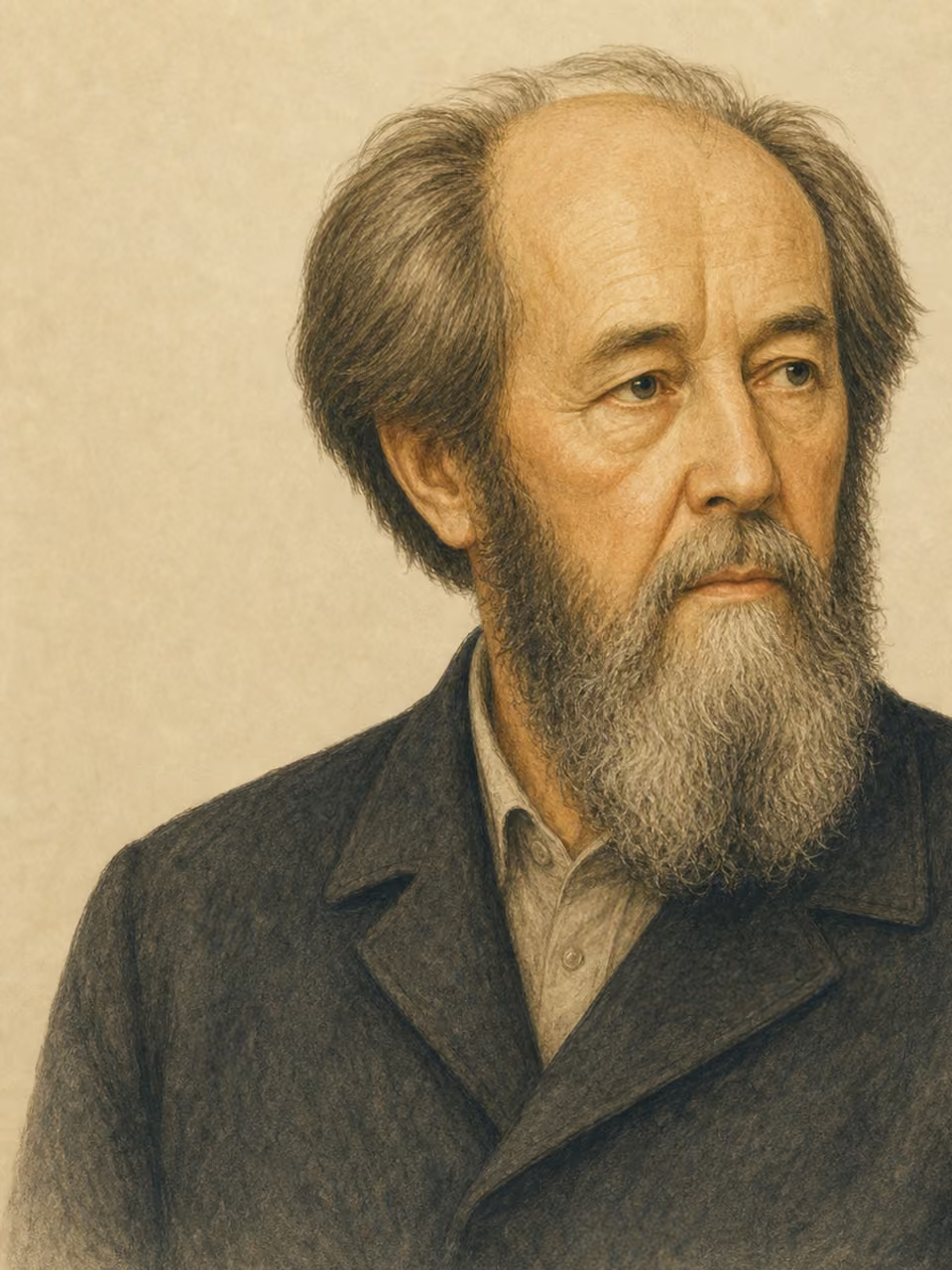
Portrait: AI-generated imagined likeness

Aleksandr Solzhenitsyn

Writer · Novelist · historian

Years
1918–2008
Birthplace
Russia
Birth polity
Russian SFSR
Era
Contemporary
Field
Literature
Occupations
Writer · Novelist · historian

Soviet writer. Based on his experiences in concentration camps, he denounced the oppression of the Stalinist regime and shocked the world. He is a person who thinks about speech and human rights during the Cold War.

View in catalog

Historical context

Places

  • Gulag camps and exile

    Exile

Works & achievements

  • The Gulag Archipelago

    1973

    Book

Events

  • Soviet dissident movement

    1960–1980

    Movement · Participant

Origins

Origins map
Birth country
Birth country
Russia

Map: Natural Earth (PD)

Biography

Early life

Born in Russia, he became interested in literature while studying mathematics. He served in World War II, but was arrested for writing private letters that included criticism of Stalin, and experienced life in a concentration camp.

Achievements

In ``A Day in the Life of Ivan Denisovich'' and ``The Gulag Archipelago,'' he wrote about Soviet concentration camps and state violence. Although he won the Nobel Prize for Literature, he was expelled from the Soviet Union.

Character & anecdotes

The works had the power to testify to experiences hidden by official history. While he was seen as a symbol of anti-communism in the West, his thoughts were complex and cannot be understood simply as liberalism.

Historical Impact

Solzhenitsyn showed that literature can be a testimony that reveals the secrets and violence of the state. Studying him allows us to understand the Cold War not only as a military conflict, but also as an issue of memory, censorship, asylum, and ethics. It also provides clues for thinking about the relationship between institutions and people.