
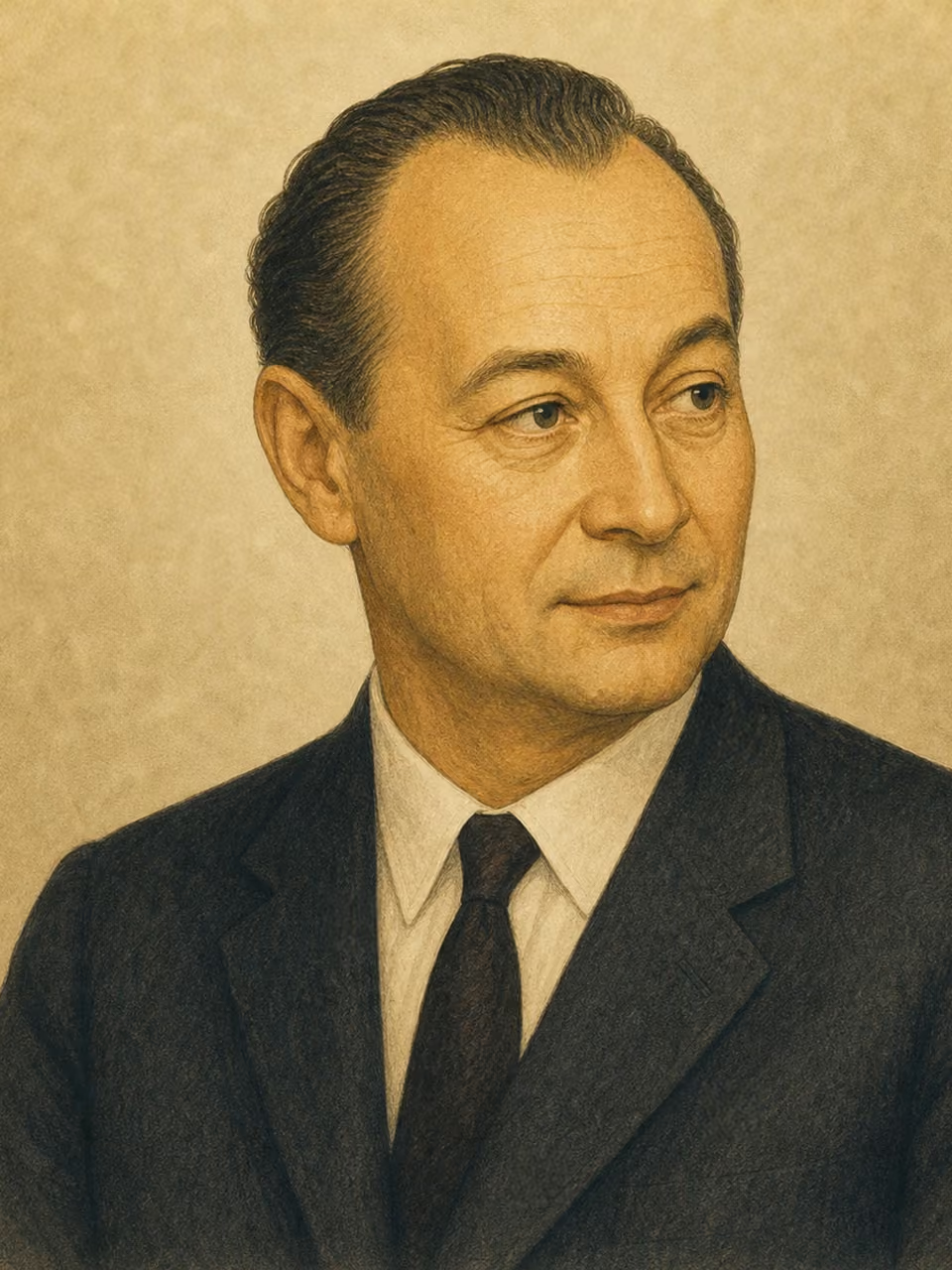
Alexander Dubček

Portrait: AI-generated imagined likeness

Alexander Dubček

Politician · Political activist

Years
1921–1992
Birthplace
Slovakia
Birth polity
First Czechoslovak Republic
Era
Contemporary
Field
Politics
Occupations
Politician · Political activist

Czechoslovak politician. During the Prague Spring of 1968, he advocated ``socialism with a human face'' and attempted to reform Soviet-style socialism. He is a person who thinks about the reform of Eastern Europe during the Cold War.

View in catalog

Historical context

Places

  • Bratislava

    Work

  • Prague

    Work

Events

  • Prague Spring

    1968

    Movement · Leader

  • Warsaw Pact invasion of Czechoslovakia

    1968

    Political event · Subject

Origins

Origins map
Birth countryAssociated countries
Birth country
Slovakia
Associated countries
Czechia

Map: Natural Earth (PD)

Biography

Early life

Born in what is now Slovakia, he became involved in the communist movement from a young age. After World War II, Czechoslovakia was incorporated into the Soviet bloc, and party bureaucracy and censorship were strengthened.

Achievements

After becoming the first secretary of the party, he promoted freedom of speech and economic reform, and tried to change the rigid socialist system from within. Although the reforms were short-lived, they created great expectations in Eastern European society.

Character & anecdotes

Although the Prague Spring was crushed by a military invasion, Dubček's name continued to be spoken of as a symbol of liberalization. After the regime change in 1989, he returned to public politics.

Historical Impact

Studying Dobczek, we learn that Eastern Europe during the Cold War was not only subordinated to the Soviet Union, but also had movements calling for reform from within socialism. The Prague Spring is a prerequisite for understanding the Eastern European revolutions.