
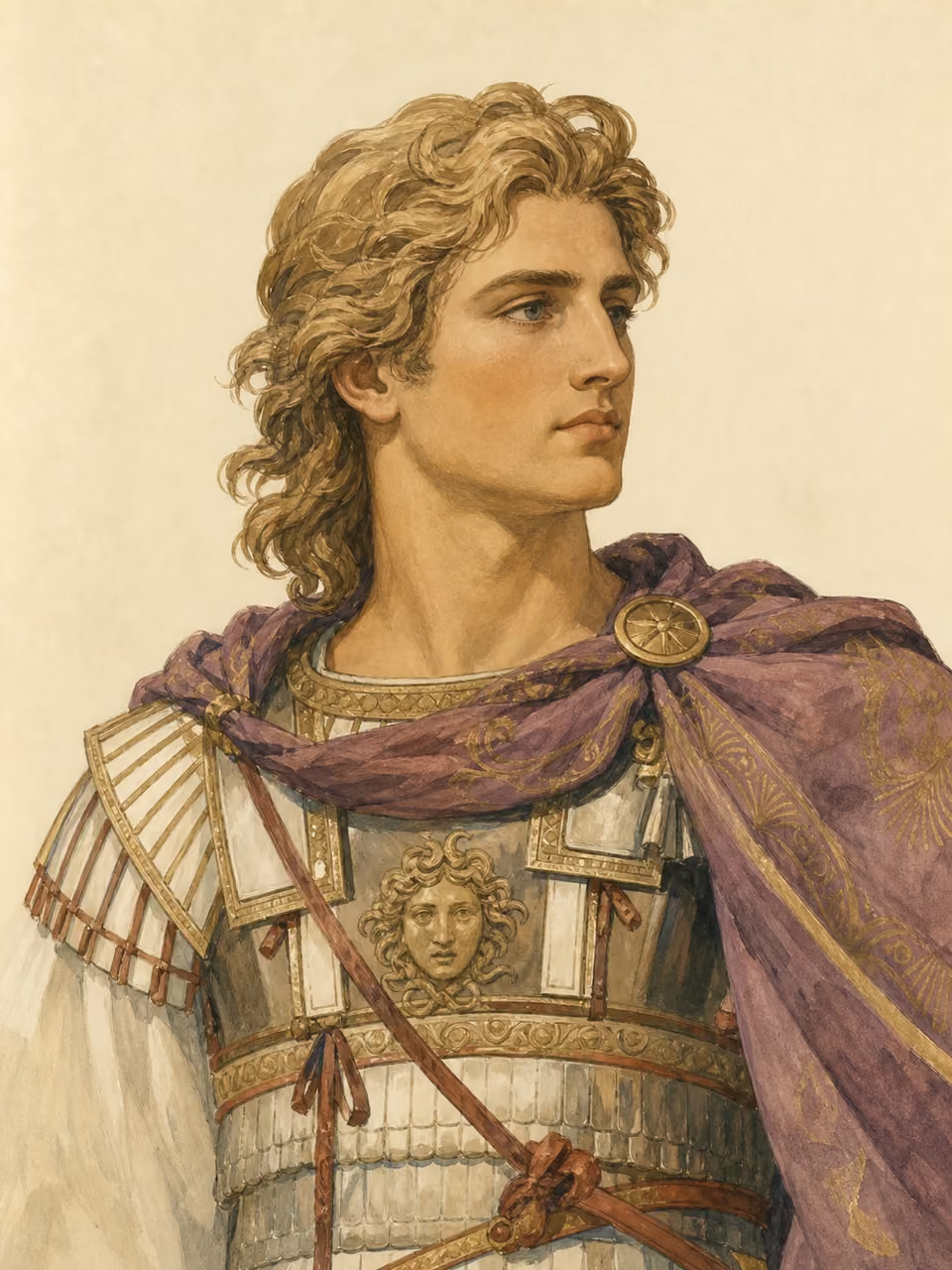
Alexander the Great

Portrait: AI-generated imagined likeness

Alexander the Great

Monarch · Military leader

Years
356 BC–323 BC
Birthplace
Greece
Birth polity
Kingdom of Macedon
Era
Ancient
Field
Military
Occupations
Monarch · Military leader

As the young king of Macedon, Alexander led Greek and Macedonian forces against the Achaemenid Empire and built a realm stretching toward the Indus. His conquests were brief but transformative, opening the Hellenistic age in which Greek and Near Eastern cultures interacted across a vast zone.

View in catalog

Historical context

Places

  • Pella

    Birth

  • Babylon

    Death

Events

  • Wars of Alexander the Great

    336 BC–323 BC

    War · Commander

  • Battle of Gaugamela

    331 BC

    Battle · Commander

Origins

Origins map
Birth countryAssociated countries
Birth country
Greece
Associated countries
North Macedonia · Egypt · Iran · Iraq

Map: Natural Earth (PD)

Biography

Early life

Alexander was born in 356 BCE at Pella, the son of Philip II of Macedon and Olympias. Educated in part by Aristotle, he grew up inside a court focused on war, diplomacy, and control over the Greek poleis. After Philip was assassinated, Alexander inherited the throne at about twenty and quickly secured his authority.

Achievements

His campaigns moved through Asia Minor, Syria, Egypt, Mesopotamia, and Iran. At Gaugamela he defeated Darius III and broke the effective power of the Persian Empire. He founded cities, installed Macedonian and Greek officers, and also adopted some local elites and royal practices into his rule.

Character & anecdotes

Alexander inspired soldiers with personal courage and charisma, but the long eastern campaign also strained loyalty. His adoption of Persian court customs angered some Macedonians, and the army finally forced a return after the push toward India exhausted their willingness to continue.

Historical Impact

His empire split after his death, yet the successor kingdoms spread Greek language, urban culture, and new forms of monarchy across the eastern Mediterranean and western Asia. Alexander became a lasting symbol of conquest, cultural exchange, and the unstable power of personal empire.

Notes

He is also known as Alexander III of Macedon.