
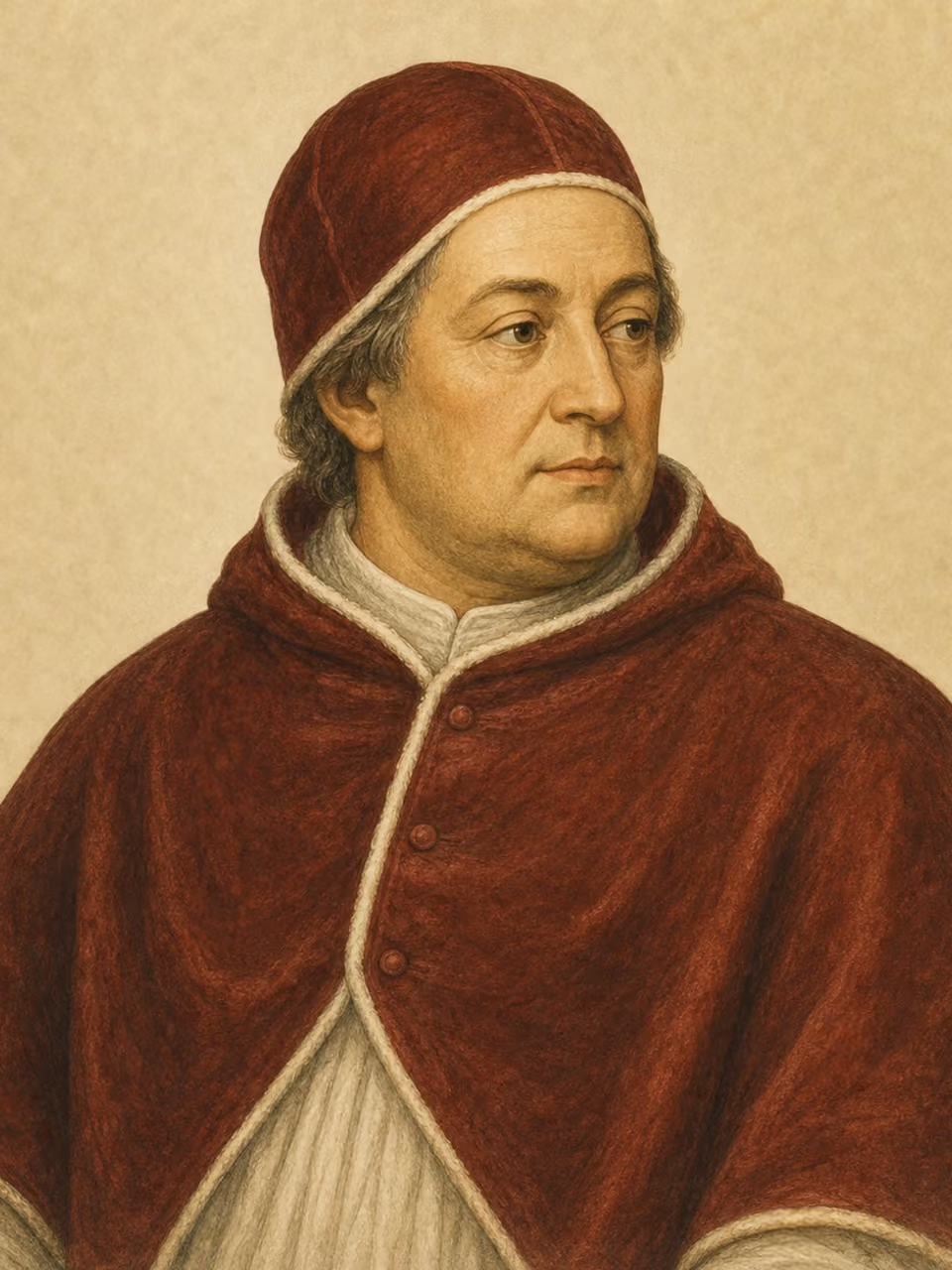
Alexander VI

Portrait: AI-generated imagined likeness

Alexander VI

Religious leader · Politician

Years
1431–1503
Birthplace
Spain
Birth polity
Crown of Aragon
Era
Early modern
Field
Religion
Occupations
Religious leader · Politician

Pope during the Renaissance. A member of the Borgia family, he was deeply involved in papal politics and conflicts between various Italian powers. He is a person who considers the connection between religious authority and secular politics.

View in catalog

Historical context

Places

  • Rome

    Work

Events

  • Papal election of 1492

    1492

    Political event · Subject

  • Treaty of Tordesillas

    1494

    Political event · Context

Origins

Origins map
Birth countryAssociated countries
Birth country
Spain
Associated countries
Italy

Map: Natural Earth (PD)

Biography

Early life

Born in the Valencia region of Spain, he rose to prominence within the church under the patronage of his uncle, Callistus III. The Roman Curia was the center of faith, as well as the stage for diplomacy and family politics.

Achievements

He became pope in 1492 and influenced Italian politics and the division of the Atlantic world. He used the papacy to expand the power of the Borgia family and symbolized the political nature of the Renaissance papacy.

Character & anecdotes

Although Alexander VI was a religious leader, he was also known for his family policy regarding his children Cesare and Lucrezia. This reputation was associated with criticism of the church on the eve of the Reformation.

Historical Impact

Learning about Alexander VI, we can see that the Papacy during the Renaissance was not just an organization of the clergy, but a political power where diplomatic, territorial, and family interests intersected. His era also serves as a prerequisite for understanding later religious reforms.