
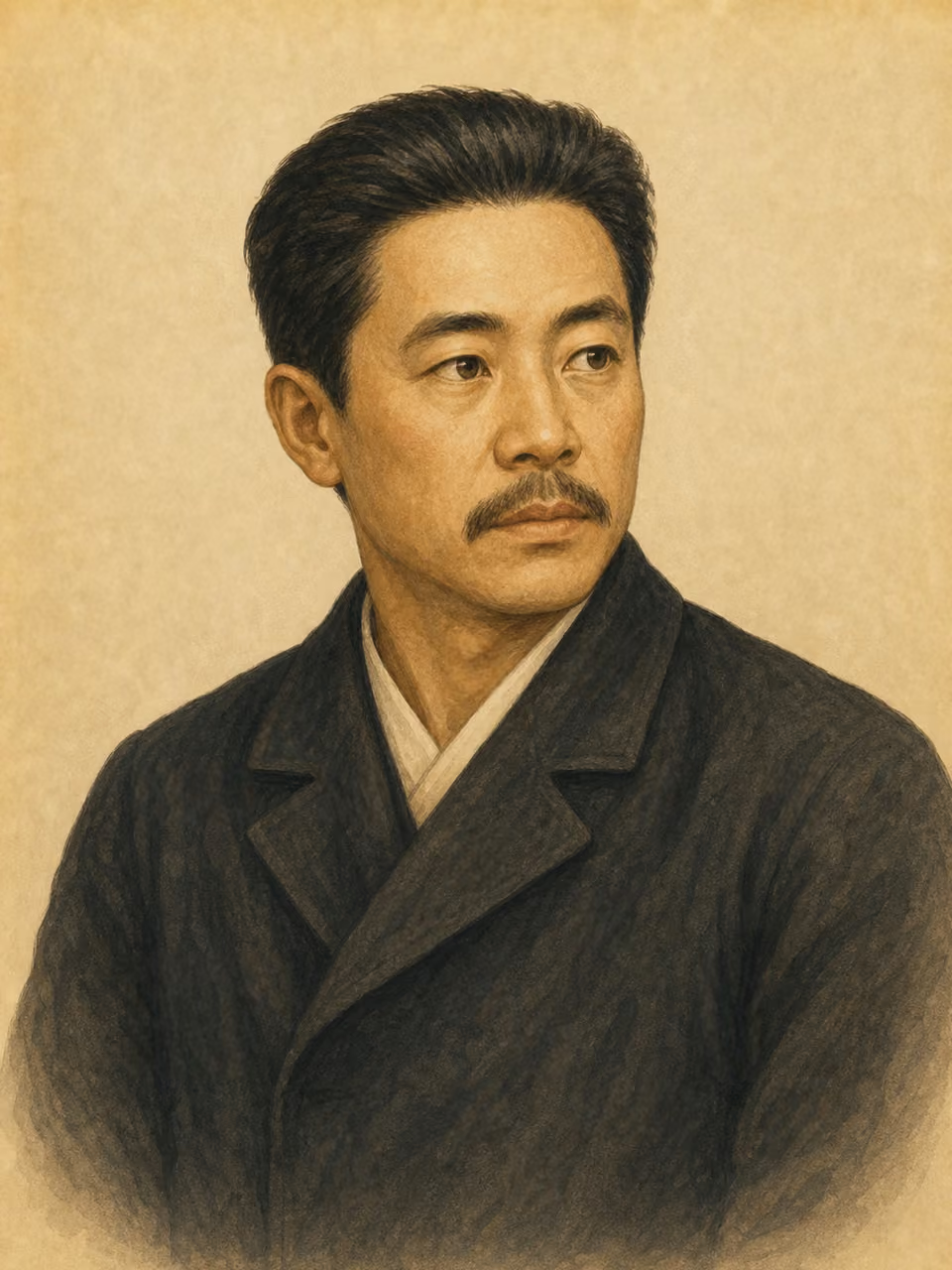
An Jung-geun

Portrait: AI-generated imagined likeness

An Jung-geun

Political activist

Years
1879–1910
Birthplace
South Korea
Birth polity
Joseon
Era
Modern
Field
Social reform
Occupations
Political activist

Korean independence activist. In 1909, he assassinated Hirobumi Ito in Harbin, and while in prison he conceived the idea of ​​Oriental Peace. He is a person who reads the eve of Japan's annexation of Korea and the East Asian order.

View in catalog

Historical context

Places

  • Haeju

    Birth

  • Harbin

    1909

    Work

  • Lushun

    1910

    Death

Works & achievements

  • On Peace in East Asia

    1910

    Essay

Events

  • Assassination of Ito Hirobumi in Harbin

    1909

    Political event · Participant

  • Korean independence movement

    1905–1910

    Movement · Participant

Origins

Origins map
Birth countryAssociated countries
Birth country
South Korea
Associated countries
North Korea · China

Map: Natural Earth (PD)

Biography

Early life

Born in Haeju, Hwanghae-do, he experienced the changes from the end of the Joseon Dynasty to the period of the Korean Empire. As Japan became a protectorate after the Russo-Japanese War, he became involved in the volunteer movement and independence movement.

Achievements

In 1909, he shot Hirobumi Ito at Harbin Station and was tried and executed in Port Arthur. While in prison, he wrote about his vision for peace through cooperation among Japan, China, and Korea, and left behind a statement that went beyond mere anti-Japanese sentiment.

Character & anecdotes

Ahn Jung-geun is also known for leaving handprints and calligraphy with his cut fingers. In South Korea, he is remembered as a righteous man of the independence movement, and in Japan, the evaluation of the incident has become a point of contention in historical understanding.

Historical Impact

Studying Ahn Jung-geun reveals that the process leading up to the annexation of Korea involved not only diplomatic treaties, but also issues surrounding resistance movements, imperialism, and the concept of peace in East Asia. He is an important figure in modern Japanese and Korean history. It can also be used for comparison with surrounding areas from the same era.