
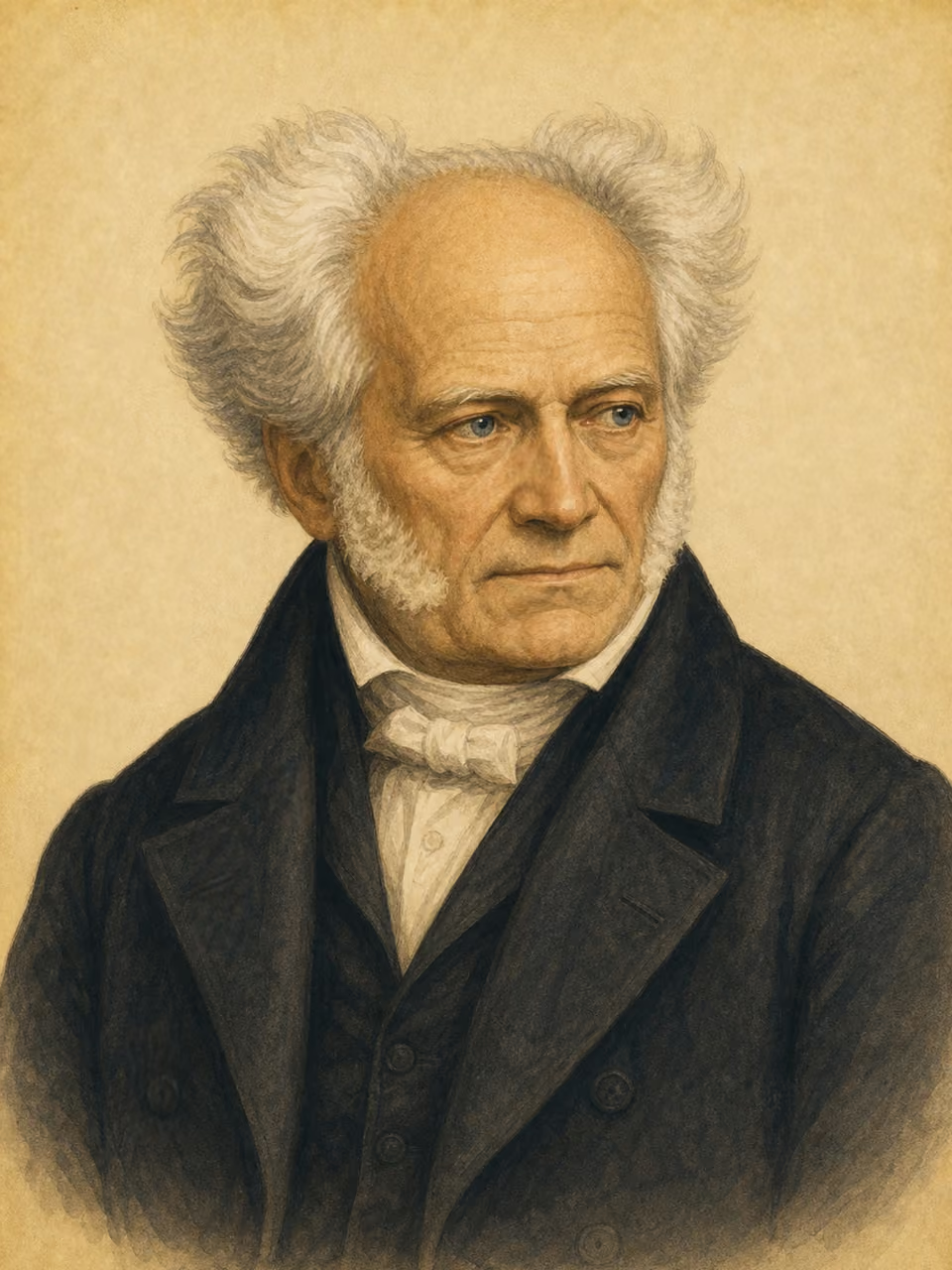
Arthur Schopenhauer

Portrait: AI-generated imagined likeness

Arthur Schopenhauer

Philosopher · Writer · translator

Years
1788–1860
Birthplace
Germany
Birth polity
Free City of Danzig
Era
Modern
Field
Philosophy
Occupations
Philosopher · Writer · translator

German philosopher. He viewed the world as a blind will, and his pessimistic ideas influenced philosophy and literature from the 19th century onwards. He is a person who understands another current of modern thought.

View in catalog

Historical context

Places

  • Danzig

    Birth

  • Frankfurt

    Work

Works & achievements

  • The World as Will and Representation

    1818

    Book

Events

  • Nineteenth-century European pessimism

    1818–1860

    Movement · Participant

Origins

Origins map
Birth countryAssociated countries
Birth country
Germany
Associated countries
Poland

Map: Natural Earth (PD)

Biography

Early life

Born in Danzig, he grew up in an international merchant family. He studied at a time when Kant's philosophy, Indian thought, and Romanticism were spreading, and created his own unique metaphysics.

Achievements

In ``The World as Will and Representation,'' he considered the will, which is more fundamental than reason, to be the essence of the world. He positioned art and asceticism as temporary relief from suffering, and influenced later thinkers.

Character & anecdotes

Schopenhauer is known for his fierce criticism of Hegel's philosophy. Although it received limited recognition during his lifetime, it was widely read by literary scholars and artists in the late 19th century.

Historical Impact

Studying Schopenhauer reveals that modern European thought deepened not only a belief in progress and reason, but also an interest in suffering, desire, and the unconscious. It also resonated in literature. It can also be used for comparison with surrounding areas from the same era.