
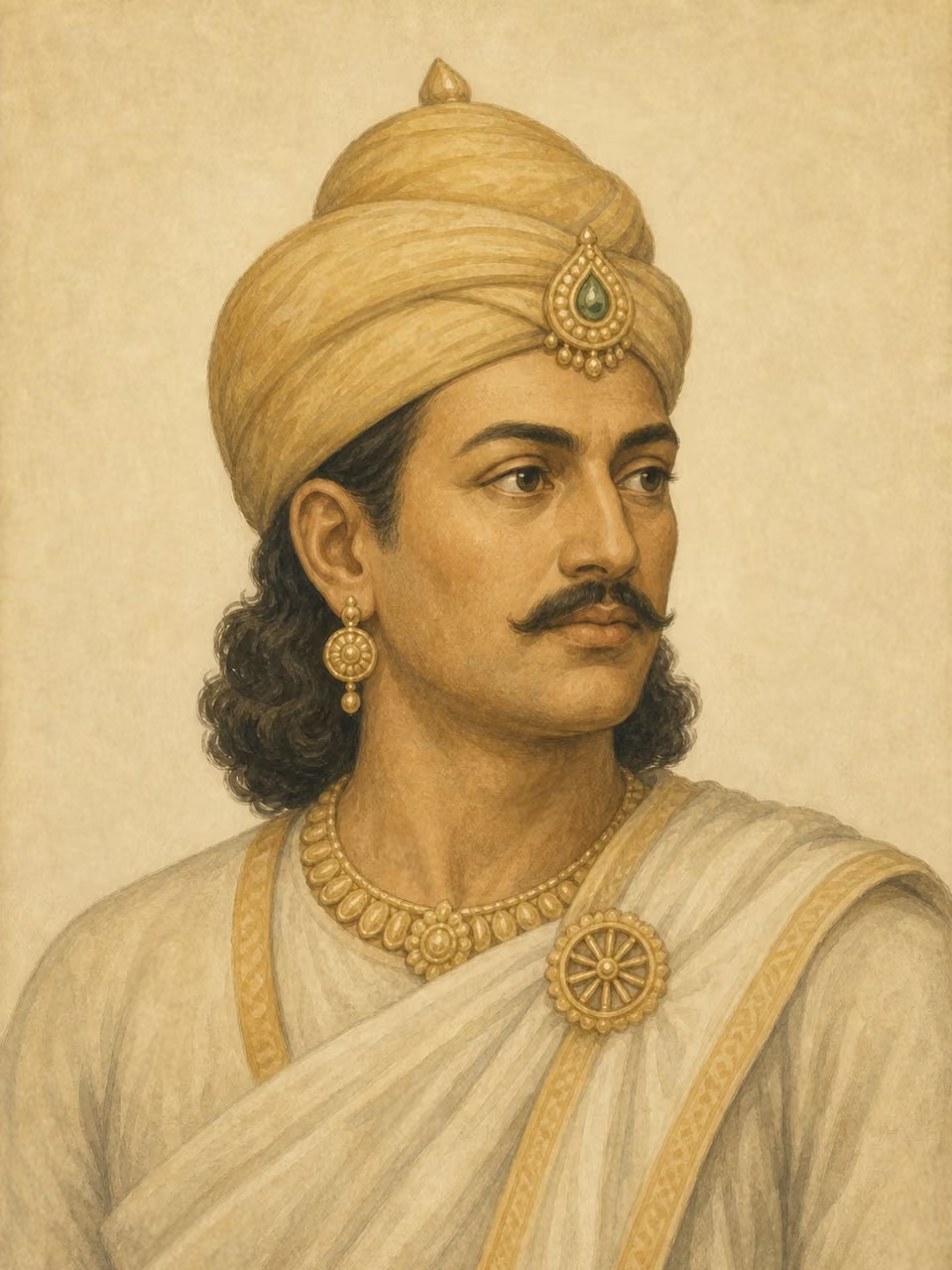
Ashoka

Portrait: AI-generated imagined likeness

Ashoka

Emperor · Politician

Years
c. 304 BC–232 BC
Birthplace
India
Birth polity
Maurya Empire
Era
Ancient
Field
Politics
Occupations
Emperor · Politician

Ashoka stands out because the violence of the Kalinga campaign was later reframed in his own inscriptions as a reason to speak publicly about restraint, welfare, and moral rule. In those edicts, imperial administration, diplomacy, and care for subjects are presented as part of a wider attempt to govern a vast realm through dhamma as well as force.

View in catalog

Historical context

Places

  • Pataliputra

    Residence

Works & achievements

  • Edicts of Ashoka

    Law

Events

  • Kalinga War

    c. 262 BC–c. 261 BC

    War · Commander

Origins

Origins map
Birth country
Birth country
India

Map: Natural Earth (PD)

Biography

Early life

Ashoka was born into the Mauryan dynasty as a grandson of Chandragupta and a son of Bindusara. Ancient narratives describe a contested succession, though the best evidence for his reign comes from inscriptions rather than from court chronicles.

Achievements

His inscriptions present the conquest of Kalinga as a turning point that led him to emphasize dhamma, restraint, and care for subjects. He sponsored administrative, welfare, and diplomatic initiatives across a large imperial space, and his rock and pillar edicts remain unusually direct evidence for ancient kingship in South Asia.

Character & anecdotes

Later Buddhist traditions magnified Ashoka into an exemplary righteous ruler, but the edicts themselves show a more complex sovereign concerned with discipline, persuasion, and imperial management. He addressed officials, neighboring peoples, and his own subjects in a strikingly personal register.

Historical Impact

His rock and pillar edicts are among the most direct sources for how an ancient South Asian empire described its own ideals, which gives Ashoka unusual importance in both political and religious history. Later Buddhist memory made him an exemplary ruler, and modern India adopted the lion capital and wheel associated with his monuments as national symbols.

Notes

Because the inscriptions are the strongest evidence, many details outside them are treated with care by historians.