
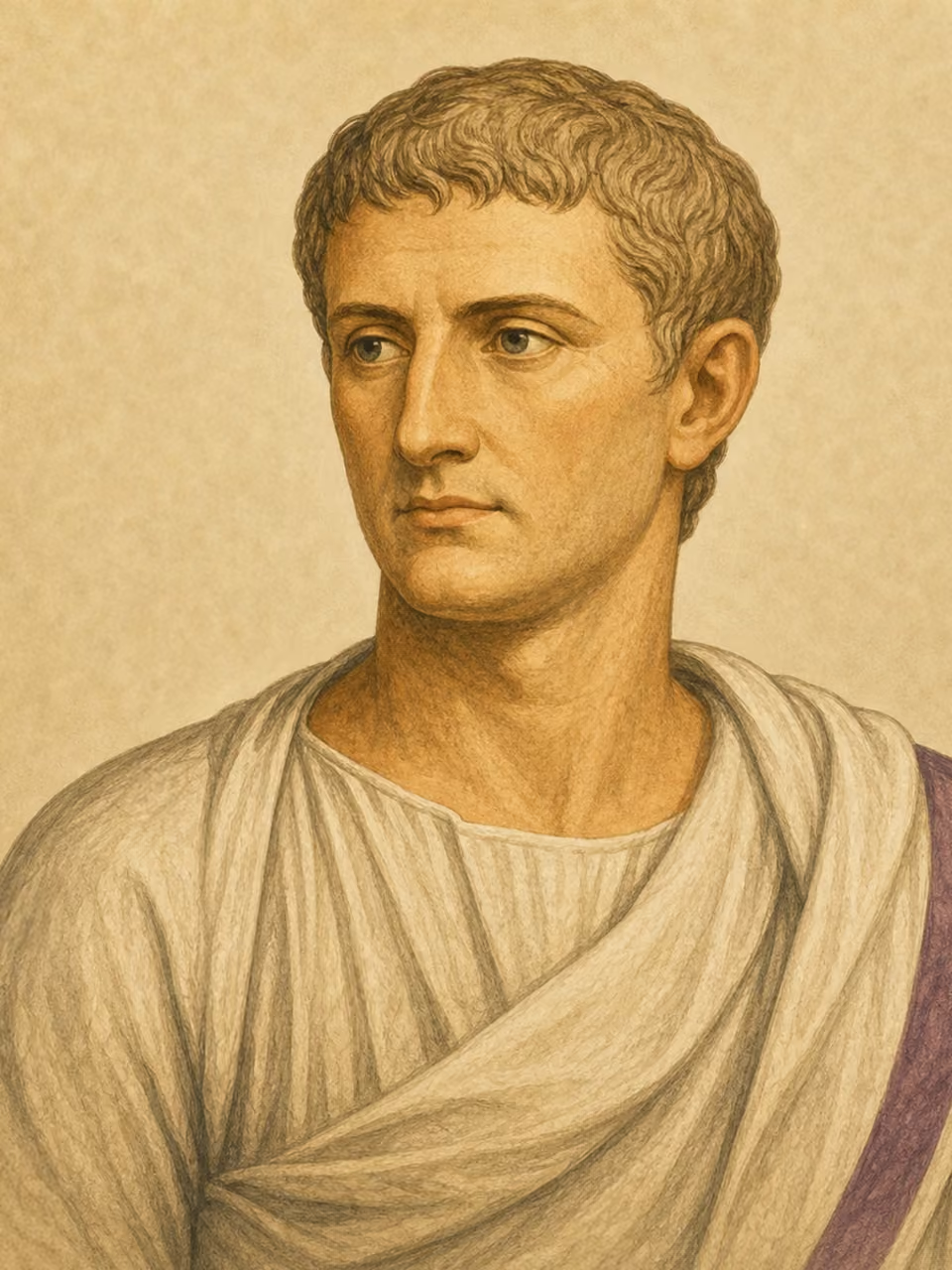
Augustus

Portrait: AI-generated imagined likeness

Augustus

Emperor · Politician · Military leader

Years
63 BC–14
Birthplace
Italy
Birth polity
Roman Republic
Era
Ancient
Field
Politics
Occupations
Emperor · Politician · Military leader

The first emperor of the Roman Empire. As Octavian, he survived the civil war and established a government while preserving the form of a republic. He is a person who thinks about political changes in the ancient Mediterranean world.

View in catalog

Historical context

Places

  • Rome

    Work

Events

  • Battle of Actium

    31 BC

    Battle · Commander

  • Establishment of the Principate

    27 BC

    Political event · Leader

Origins

Origins map
Birth country
Birth country
Italy

Map: Natural Earth (PD)

Biography

Early life

Born into an influential family in Rome, he entered the center of politics as Caesar's adopted son and successor. During the civil war that followed Caesar's assassination, he consolidated his power through alliances and war.

Achievements

He defeated Antony and Cleopatra at the Battle of Actium and took the title Augustus in 27 BC. The military, provincial governance, and relations with the Senate were reorganized to create long-term stability.

Character & anecdotes

He did not call himself a king, but took the reins of power while demonstrating respect for the republican system. The production, which avoided blatant dictatorship, forced Roman society to accept the new rule.

Historical Impact

Augustus represents the turning point in Rome's transition from republic to empire. If you study him, you will understand that even if the name of the system does not change, the combination of military power, finance, and personal authority can significantly change the political system.