
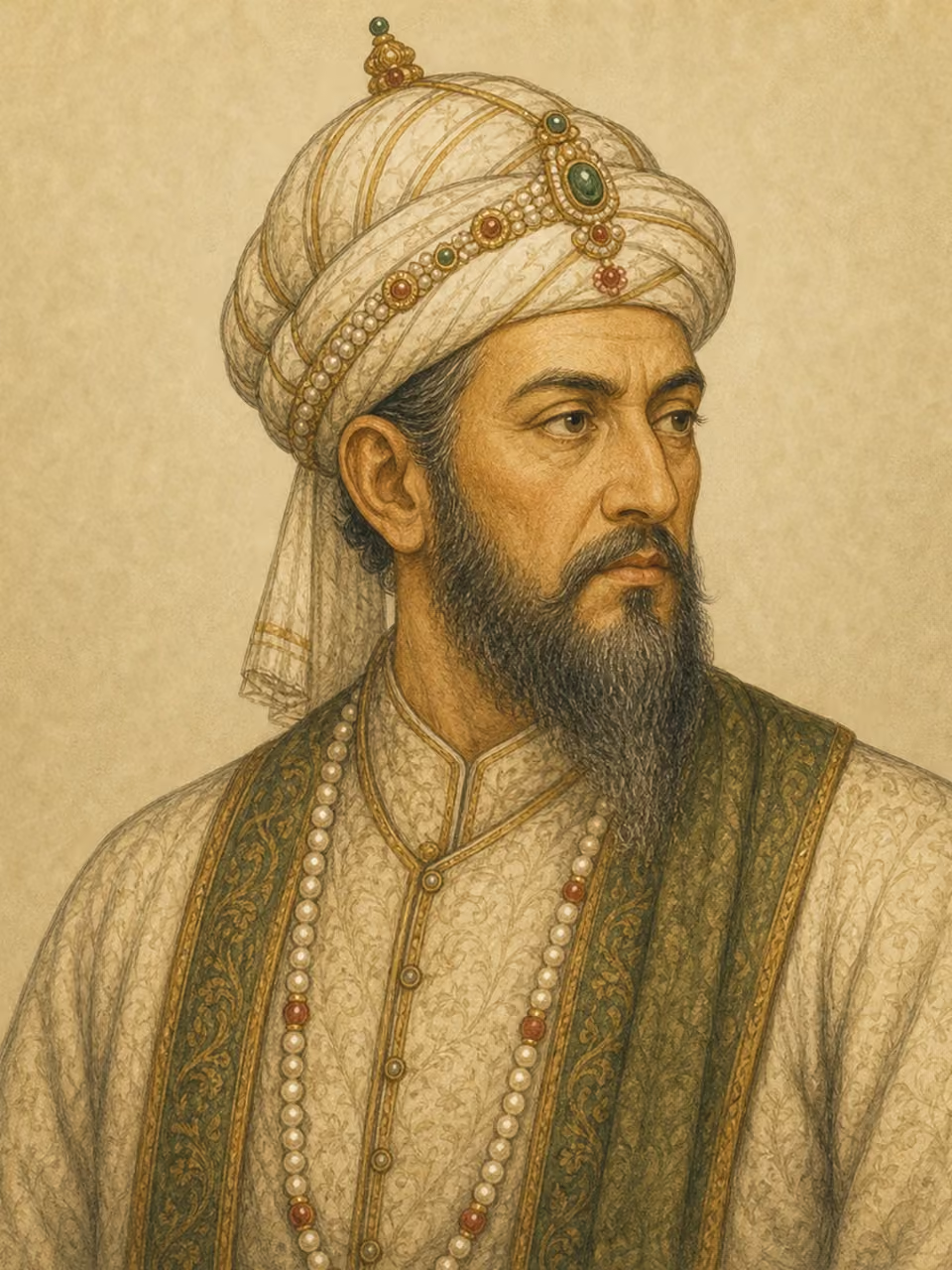
Aurangzeb

Portrait: AI-generated imagined likeness

Aurangzeb

Monarch · Politician

Years
1618–1707
Birthplace
India
Birth polity
Mughal Empire
Era
Early modern
Field
Politics
Occupations
Monarch · Politician

The 6th emperor of the Mughal Empire. While it expanded its territory to the greatest extent possible, religious policies and long wars increased the burden on the empire. He is a person who considers the nations and religions of early modern South Asia.

View in catalog

Historical context

Places

  • Delhi

    Work

  • Deccan

    Campaign

Events

  • Mughal war of succession

    1657–1658

    War · Leader

  • Deccan campaigns

    1680–1707

    Expedition · Commander

Origins

Origins map
Birth country
Birth country
India

Map: Natural Earth (PD)

Biography

Early life

Born as the son of Shah Jahan, he gained military and administrative experience as a prince. He won the war of succession between his brothers, imprisoned his father, and secured the throne.

Achievements

He conducted long expeditions into the Deccan and greatly expanded the territory of the Mughal Empire. He promoted policies that emphasized Islamic law and changed the relationship between religion and government through measures such as the revival of Jizya.

Character & anecdotes

While Aurangzeb is described as a pious and frugal ruler, he is also known for his conflicts with his brothers and the imprisonment of his father. He is a man whose personal faith and imperial politics cannot be simply separated.

Historical Impact

When we study Aurangzeb, we understand that the expansion of the Mughal Empire also created financial burdens, opposition from local powers, and tensions in religious policy. His reign is important material for thinking about the difficulties of maintaining a large empire in early modern South Asia.