
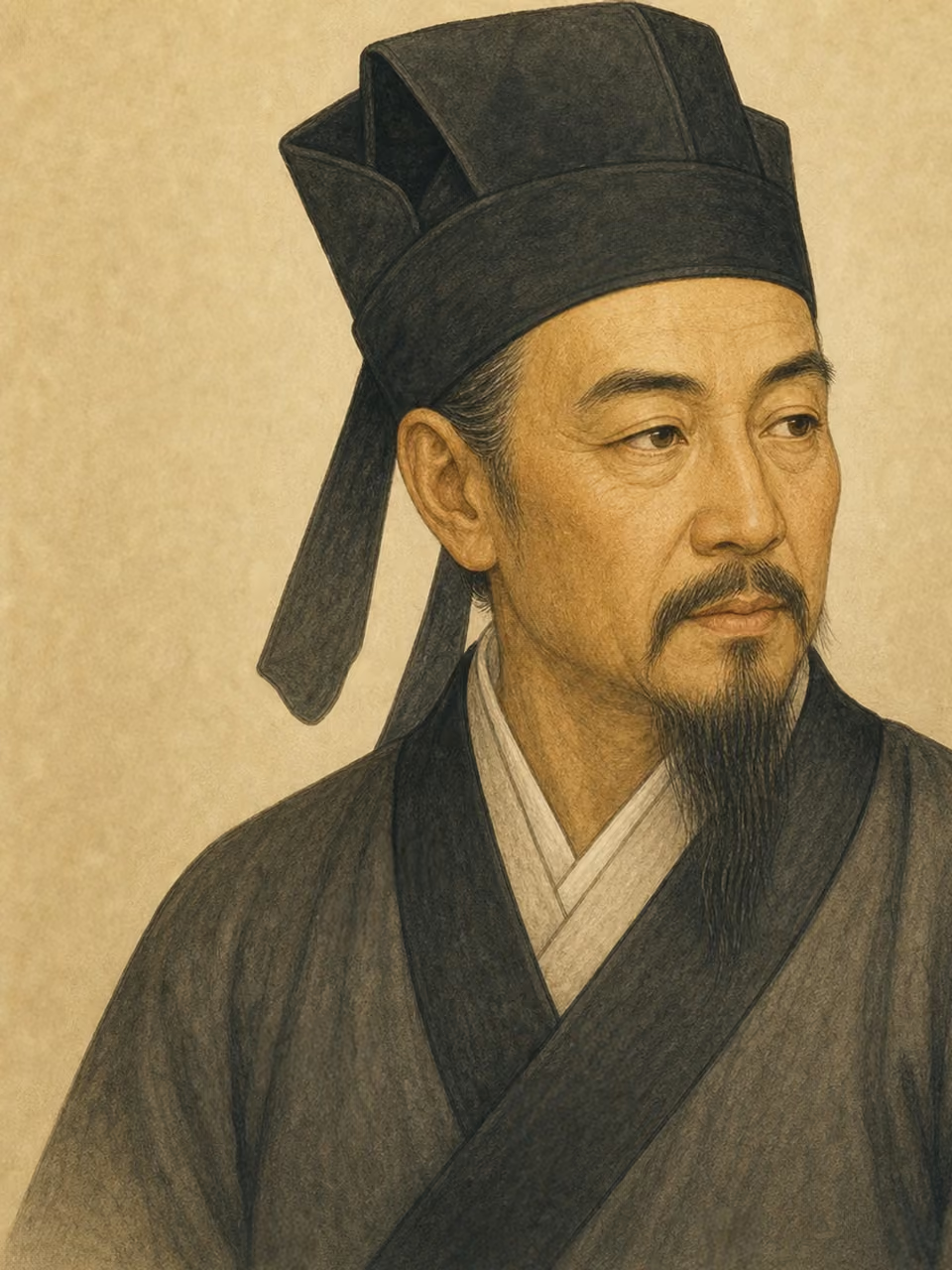
Bai Juyi

Portrait: AI-generated imagined likeness

Bai Juyi

Poet · Writer · Politician

Years
772–846
Birthplace
China
Birth polity
Tang dynasty
Era
Medieval
Field
Literature
Occupations
Poet · Writer · Politician

Poet and bureaucrat of the Tang Dynasty. Also known as Hakurakuten, he wrote poems about society and life in easy-to-understand language, and had a strong influence on Japanese literature. He is a person who thinks about the East Asian cultural sphere.

View in catalog

Historical context

Places

  • Chang'an

    Work

  • Luoyang

    Residence

Works & achievements

  • Song of Everlasting Regret

    c. 806

    Poem

  • Pipa Xing

    c. 816

    Poem

Events

  • Middle Tang literary culture

    800–846

    Cultural event · Participant

Origins

Origins map
Birth country
Birth country
China

Map: Natural Earth (PD)

Biography

Early life

Born into a family of samurai who aspired to become a bureaucrat in the Tang Dynasty, he became a bureaucrat through the imperial examinations. He was involved in both politics and literature in Chang'an and other provinces, and used poetry to criticize society and express personal feelings.

Achievements

He left behind works such as ``Choganga'' and ``Biwagyo,'' and spread a simple style of poetry that was easy to reach readers. He also composed New Rakufu poems that included political criticism, demonstrating the role of literati and bureaucrats in speaking about society.

Character & anecdotes

Bai Juyi's poems were loved not only in China but also in Japan's aristocratic society, and influenced works such as The Tale of Genji. This is an example of a poet's work transcending national borders and becoming a cultural lingua franca.

Historical Impact

Bai Juyi is a figure who shows that Tang literature became the basis of education and expression throughout East Asia. By studying him, you can understand the process by which poetry, bureaucracy, diplomacy, and aristocratic culture were linked in the kanji-cultured area, and his works were passed down as literary norms for future generations.