
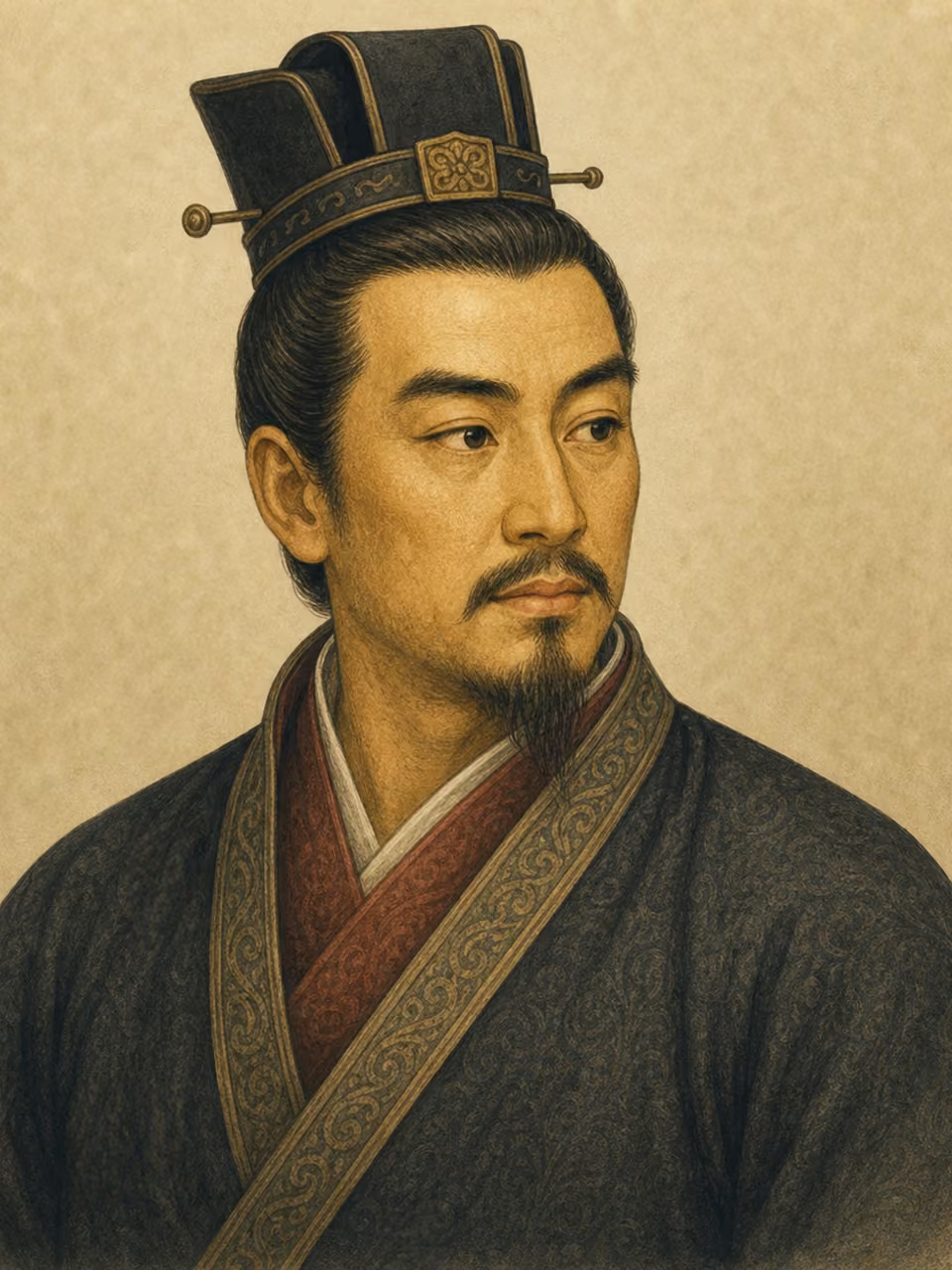
Cao Pi

Portrait: AI-generated imagined likeness

Cao Pi

Emperor · Politician · Poet

Years
187–226
Birthplace
China
Birth polity
Eastern Han dynasty
Era
Ancient
Field
Politics
Occupations
Emperor · Politician · Poet

The first emperor of Wei during the Three Kingdoms period. As a son of Cao Cao, he received Zen from the Emperor of Later Han and established the Wei Dynasty. He is a person who thinks about the change of dynasties in ancient China.

View in catalog

Historical context

Places

  • Luoyang

    Work

Works & achievements

  • Discourse on Literature

    c. 220

    Essay

Events

  • Founding of Cao Wei

    220

    Political event · Leader

Origins

Origins map
Birth country
Birth country
China

Map: Natural Earth (PD)

Biography

Early life

As the son of Cao Cao, he grew up in the center of politics and military affairs at the end of the Later Han Dynasty. During the era of military rule, he inherited both the power and literary education of his family.

Achievements

In 220, he received the transfer from Emperor Xian of the Later Han Dynasty, established Wei, and became emperor. Politically, he institutionalized the foundations laid down by Cao Cao, and in literature, he was involved in literati culture through works such as ``Dianron.''

Character & anecdotes

Cao Pi is also known for his succession dispute with his younger brother Cao Zhi. The characteristics of the aristocratic culture of the Three Kingdoms period can be seen in the fact that political succession disputes and poetic talent competed within the same court.

Historical Impact

If you study Cao Pi, you will see that the transition from the Later Han to the Three Kingdoms period was justified not only through military force but also through the ritual of Zen-yoshi. His accession to the throne provides material for thinking about the relationship between the form of Chinese dynastic change and the actual power.