
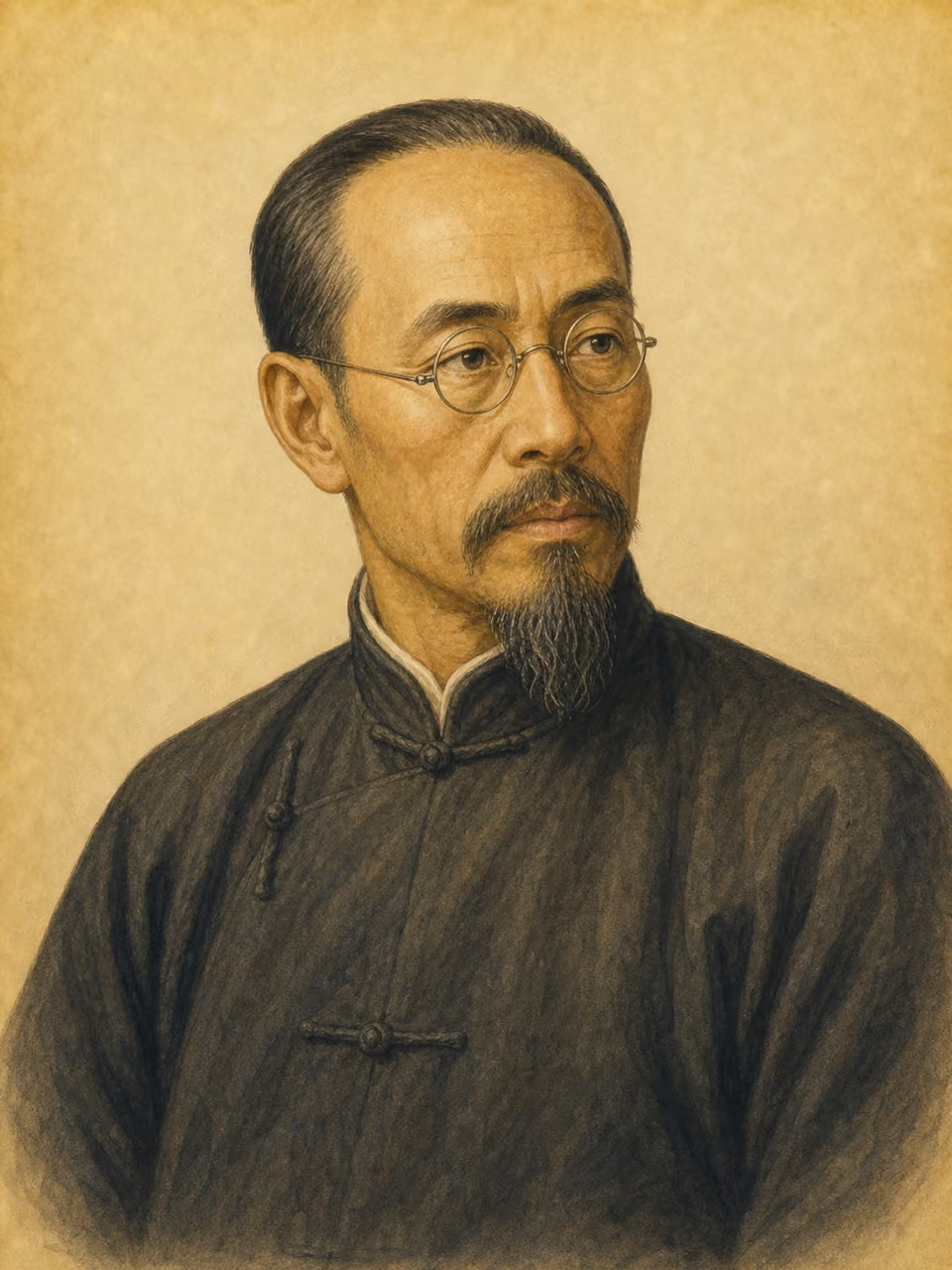
Chang Ping-lin

Portrait: AI-generated imagined likeness

Chang Ping-lin

Writer · Politician · revolutionary · Philosopher

Years
1868–1936
Birthplace
China
Birth polity
Qing dynasty
Era
Modern
Field
Politics
Occupations
Writer · Politician · revolutionary · Philosopher

The first thinker and revolutionary of the late Qing Dynasty. Also known as Zhang Taiyan, he was known for his anti-Qing revolution and research on national studies. He is a person who has read Chinese nationalism before and after the Xinhai Revolution.

View in catalog

Historical context

Places

  • Yuhang

    Birth

  • Tokyo

    Exile

Works & achievements

  • Qiu shu

    Book

Events

  • Xinhai Revolution

    1911

    Revolution · Supporter

Origins

Origins map
Birth countryAssociated countries
Birth country
China
Associated countries
Japan

Map: Natural Earth (PD)

Biography

Early life

Born in Zhejiang, he studied classics and letters, and became increasingly critical of the Qing Dynasty's rule. He grew up as an intellectual in an era when pressure from the great powers intersected with debates about reform and revolution.

Achievements

He spread anti-Qing ideology through nationalist editorials and became associated with revolutionary groups. In his research on Japanese studies, he connected Chinese classics with modern national consciousness, which also influenced political thought.

Character & anecdotes

Even though Cho Byeong-rin experienced exile and imprisonment in Tokyo, he continued to argue with sharp writings. It clearly shows the late Qing intellectuals, when academics and revolutionary movements were not separated.

Historical Impact

When we study Zhang Binglin, we understand that the Xinhai Revolution was not only a military uprising, but also an ideological movement through classical studies, national consciousness, and publishing media. This is important when considering the formation of a nation-state in modern China. It can also be used for comparison with surrounding areas from the same era.