
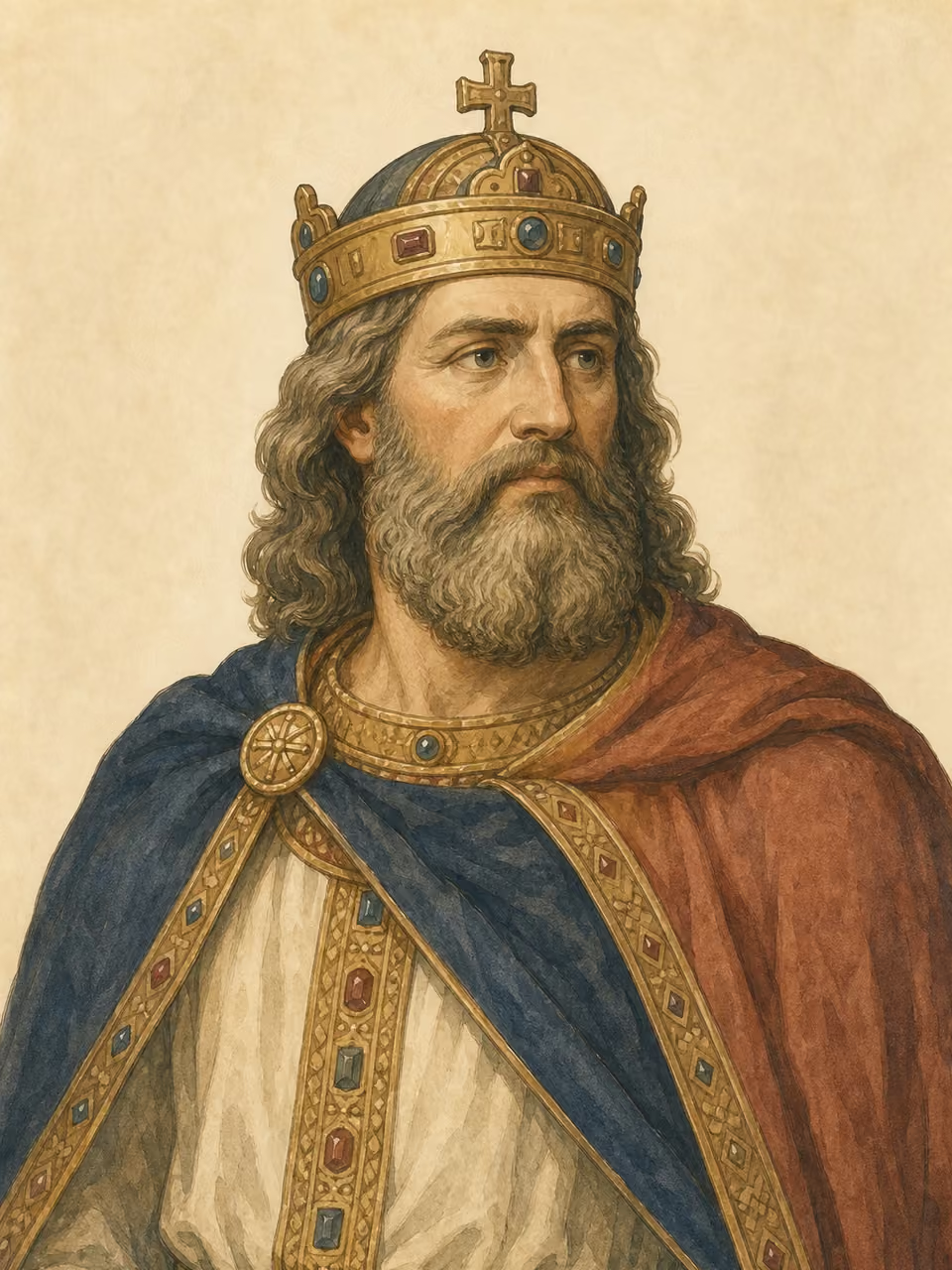
Charlemagne

Portrait: AI-generated imagined likeness

Charlemagne

Monarch · Military leader

Years
c. 742–814
Birthplace
France
Birth polity
Frankish Kingdom
Era
Medieval
Field
Politics
Occupations
Monarch · Military leader

Charlemagne expanded the Frankish kingdom and brought much of western and central Europe under one ruler. His imperial coronation in Rome in 800 symbolized a revived western emperorship and tied Frankish power closely to the Latin Christian church.

View in catalog

Historical context

Places

  • Aachen

    Residence

  • Rome

    800

    Work

Events

  • Coronation of Charlemagne

    800

    Political event · Subject

  • Carolingian Empire

    800–814

    Political event · Leader

Origins

Origins map
Birth countryAssociated countries
Birth country
France
Associated countries
Germany · Italy

Map: Natural Earth (PD)

Biography

Early life

Charlemagne was born in the first half of the eighth century into the Carolingian family of Pepin the Short. After his father died, he initially shared rule with his brother Carloman; Carloman’s death left him sole king of the Franks. He then used warfare, alliances, and church support to consolidate authority.

Achievements

He conquered the Lombard kingdom, fought long wars against the Saxons, and extended Frankish influence across much of western Europe. He used counts and royal envoys to supervise local government and supported learning at court, helping inspire what historians call the Carolingian Renaissance.

Character & anecdotes

Aachen became one of his main royal centers, and scholars such as Alcuin were drawn to his court. The Christmas Day coronation by Pope Leo III in 800 became one of the most memorable scenes in medieval political history.

Historical Impact

Although his empire was later divided among his heirs, that division shaped the historical frameworks of France, Germany, and Italy. Charlemagne remained a reference point for medieval kingship, Christian rulership, and the recovery of learning in western Europe.

Notes

His name appears as Karl der Große in German and Charles the Great in English translation.