
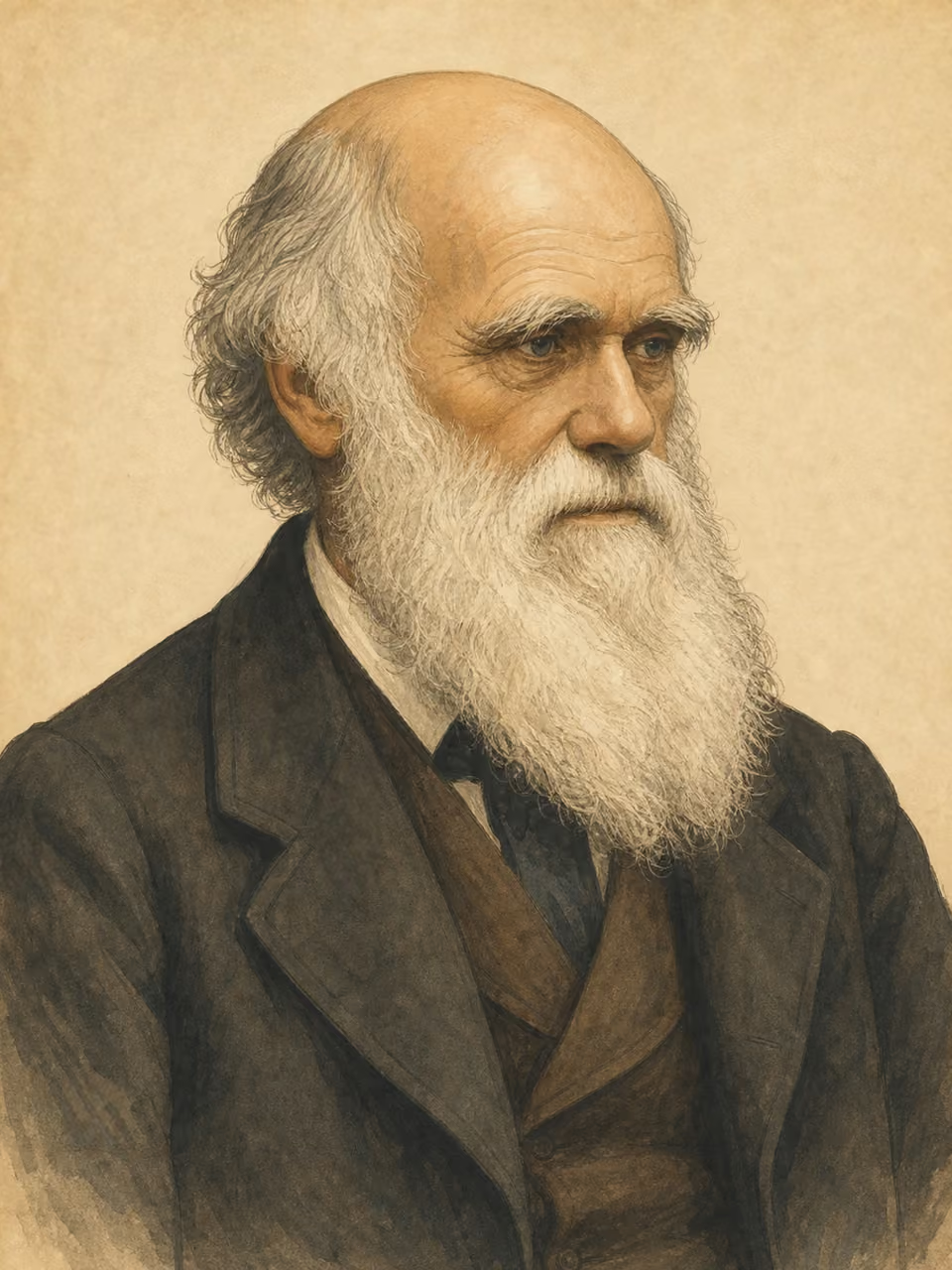
Charles Darwin

Portrait: AI-generated imagined likeness

Charles Darwin

Naturalist

Years
1809–1882
Birthplace
United Kingdom
Birth polity
United Kingdom of Great Britain and Ireland
Era
Modern
Field
Science
Occupations
Naturalist

The Beagle voyage gave Darwin a long sequence of episodes in which geology, fossils, island life, and comparison across species accumulated into a new way of seeing nature. After years of sorting evidence from specimens, breeding, and biogeography, the arrival of Wallace's similar insight pushed him to publish On the Origin of Species and turn private investigation into public argument.

View in catalog

Historical context

Places

  • Shrewsbury

    Birth

  • Galapagos Islands

    Work

  • Down House

    Residence

Works & achievements

  • On the Origin of Species

    1859

    Book

Events

  • Second voyage of HMS Beagle

    1831–1836

    Voyage · Participant

Origins

Origins map
Birth countryAssociated countries
Birth country
United Kingdom
Associated countries
Ecuador

Map: Natural Earth (PD)

Biography

Early life

Charles Darwin was born in 1809 and moved from an unsuccessful encounter with medical study toward natural history at Cambridge. His voyage on HMS Beagle from 1831 gave him the observational range, geological experience, and habit of comparison that later made his mature theory possible.

Achievements

In On the Origin of Species he argued that species change over long periods through variation and natural selection rather than remaining fixed kinds. He drew together evidence from breeding, biogeography, fossils, comparative anatomy, and geology to make descent with modification intellectually compelling.

Character & anecdotes

Darwin delayed publication for years while gathering evidence and anticipating objections, which gave his work unusual depth but also made the moment of release more dramatic. Alfred Russel Wallace's parallel insight helped push the theory into public view, reminding readers that scientific change is often both individual and collective.

Historical Impact

Darwin changed modern knowledge by making biological diversity intelligible as a historical process rather than a static arrangement of kinds. Later genetics and evolutionary theory revised his original framework, and social misuses of Darwinian language caused immense damage, but the sciences of life still operate within explanatory horizons he helped open.