
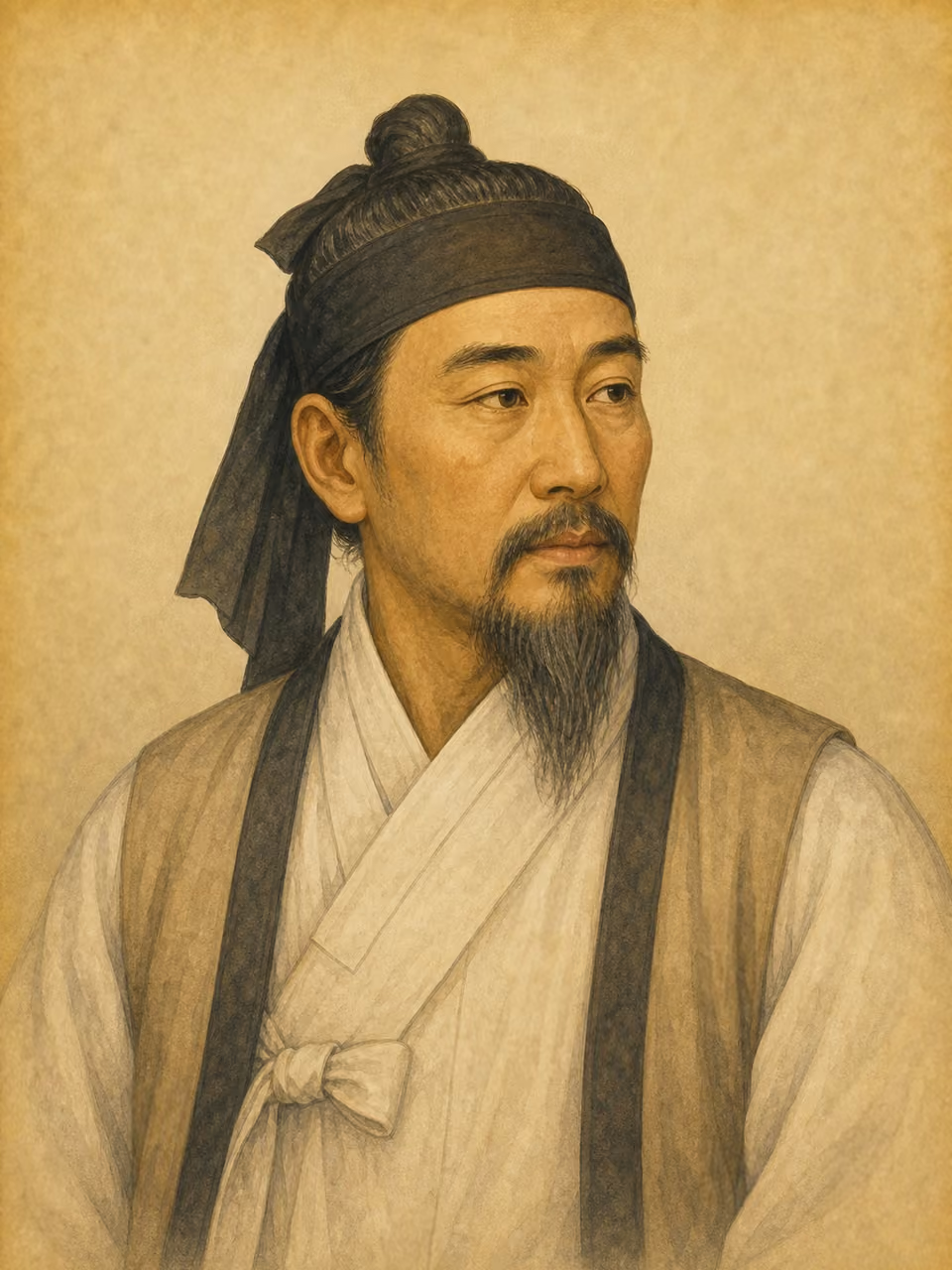
Choe Je-u

Portrait: AI-generated imagined likeness

Choe Je-u

Religious leader · Philosopher

Years
1824–1864
Birthplace
South Korea
Birth polity
Joseon Korea
Era
Modern
Field
Religion
Occupations
Religious leader · Philosopher

A thinker who founded Donghak at the end of the Joseon Dynasty. He preached the salvation of the people while opposing Western studies, and was a figure who reflected the anxiety and demands for reform in 19th century Korean society. It connects local history and world history and provides clues for deciphering changes during the same era.

View in catalog

Historical context

Places

  • Gyeongju

    Birth

  • Korea under Joseon

    Work

Works & achievements

  • Donggyeong Daejeon

    Book

Events

  • Formation of Donghak

    1860–1864

    Movement · Leader

Origins

Origins map
Birth country
Birth country
South Korea

Map: Natural Earth (PD)

Biography

Early life

Born into a declining yangban class in Gyeongju, he grew up witnessing poverty and the fluctuation of the social order in local society. He studied Confucianism, Buddhism, and folk beliefs, and developed his own unique religious philosophy.

Achievements

He preached Eastern studies based on the idea that ``man has heaven within,'' and was widely accepted by the local people. Even after his execution, his teachings were passed down and became the spiritual background of the Donghak peasant movement.

Character & anecdotes

The name Donghak implied the idea of rebuilding the people from within Korea, as opposed to Western learning, which refers to Christianity derived from the West. Although it was a religious movement, it also had the characteristics of a social movement.

Historical Impact

When we study Choi Jae-gu, we understand that responses to modernity were born not only from the approach of Western powers, but also from within Korean society. This will provide clues for thinking about popular movements in East Asia. When you look at the people's activities and works together, it becomes easier to understand the terms in textbooks as concrete historical trends.