
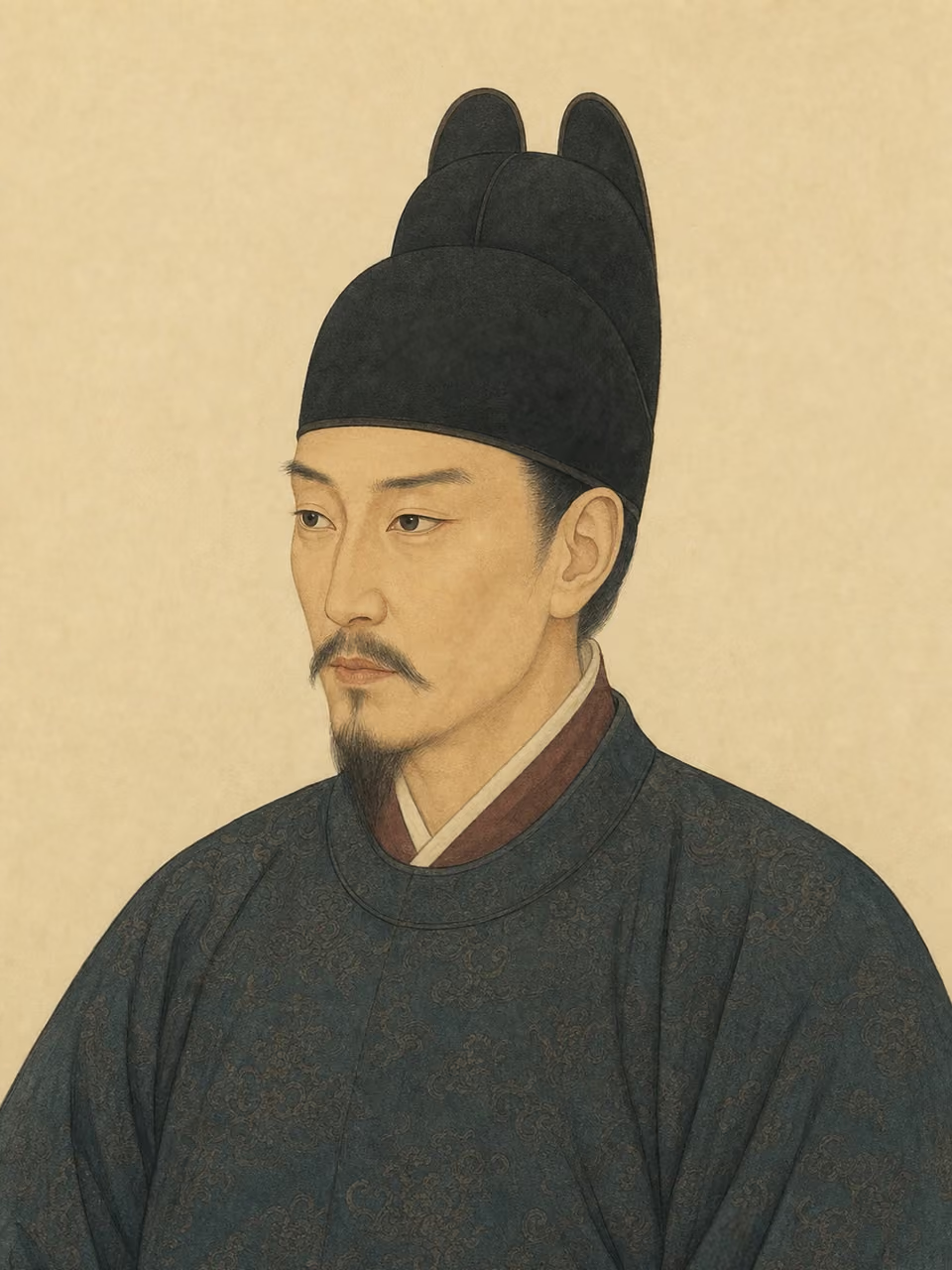
Chongzhen Emperor

Portrait: AI-generated imagined likeness

Chongzhen Emperor

Monarch · Emperor

Years
1611–1644
Birthplace
China
Birth polity
Ming dynasty
Era
Early modern
Field
Politics
Occupations
Monarch · Emperor

He was the last emperor of the Ming Dynasty and committed suicide when Li Zicheng's rebel army captured Beijing. They faced financial difficulties, peasant revolts, and pressure from Manchu powers. It is indispensable when considering the Ming-Qing alternation.

View in catalog

Historical context

Places

  • Beijing

    Birth

  • Forbidden City

    Work

Events

  • Fall of the Ming dynasty

    1644

    Political event · Subject

Origins

Origins map
Birth country
Birth country
China

Map: Natural Earth (PD)

Biography

Early life

He was born in Beijing as a member of the Ming Dynasty and ascended the throne after the death of his older brother, Emperor Tiankei. At the time of his accession to the throne, the dynasty's ability to govern had been severely weakened due to a combination of eunuch rule, increased military spending, disasters and famine.

Achievements

Emperor Chongzhen tried to rebuild the government and eliminated the power of the eunuch Wei Zhongxian. However, it was unable to overcome its financial and military crises, and was cornered by both civil war and external pressure.

Character & anecdotes

It is said that Emperor Chongzhen committed suicide on the Soot Mountain when Beijing fell. This scene has been retold repeatedly in Chinese history as a dramatic event symbolizing the fall of the Ming Dynasty.

Historical Impact

If you study Emperor Chongzhen, you will realize that the fall of the dynasty was not due to the mismanagement of the emperor alone, but was the result of a combination of financial systems, military burdens, unfavorable climate, local rebellions, and the expansion of northern powers. You can understand the Ming-Qing alternation structurally.