
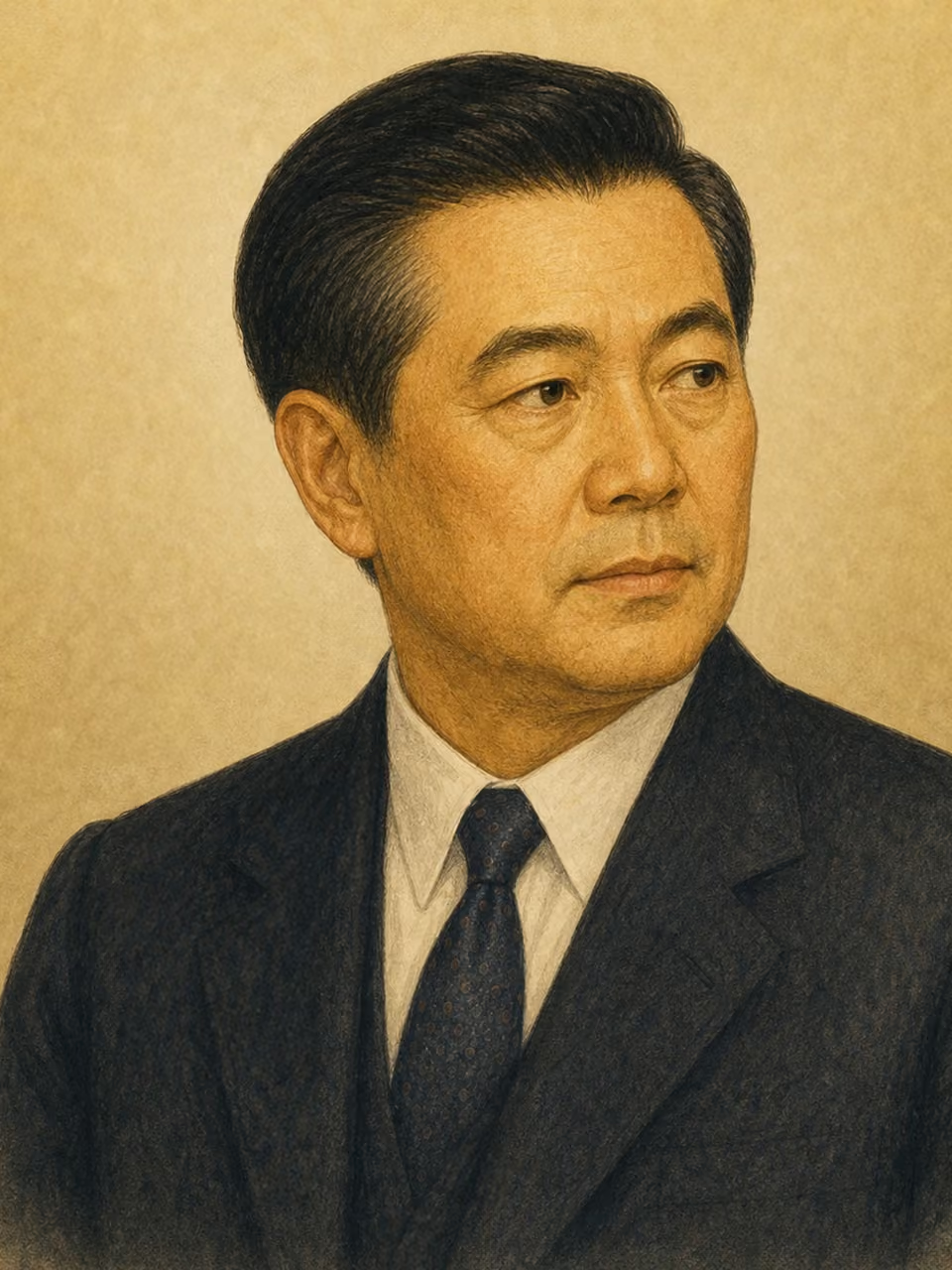
Chun Doo-hwan

Portrait: AI-generated imagined likeness

Chun Doo-hwan

Politician · Military leader

Years
1931–2021
Birthplace
South Korea
Birth polity
Korea under Japanese rule
Era
Contemporary
Field
Politics
Occupations
Politician · Military leader

Korean military officer and politician. He seized power after a military coup in 1979 and suppressed the Gwangju democracy movement. He is a person who thinks about authoritarianism and democratization in South Korea during the Cold War.

View in catalog

Historical context

Places

  • Seoul

    Work

  • Gwangju

    Work

Events

  • December Twelfth coup

    1979

    Political event · Leader

  • Gwangju Uprising

    1980

    Movement · Opponent

Origins

Origins map
Birth country
Birth country
South Korea

Map: Natural Earth (PD)

Biography

Early life

Born in Korea under Japanese rule, he rose through the ranks in the South Korean military. In South Korea after the Korean War, anti-communist regimes, military political intervention, and economic growth were strongly linked.

Achievements

In the chaos that followed Park Chung Hee's assassination, he took control of the military and established the Fifth Republic. While maintaining economic development, it restricted political freedom and severely suppressed democratic movements.

Character & anecdotes

The crackdown in Gwangju in 1980 is remembered as a deep scar in modern Korean history. In later years, Chun Doo-hwan was held accountable in court, and the eradication of the military regime's past became a political issue.

Historical Impact

Studying Chun Doo-hwan reveals that South Korea's democratization was not a natural result of economic growth, but progressed through repeated sacrifices and resistance to the military regime. He was an important figure in thinking about the Cold War and democratization in East Asia, and also influenced the memory of regional politics.