
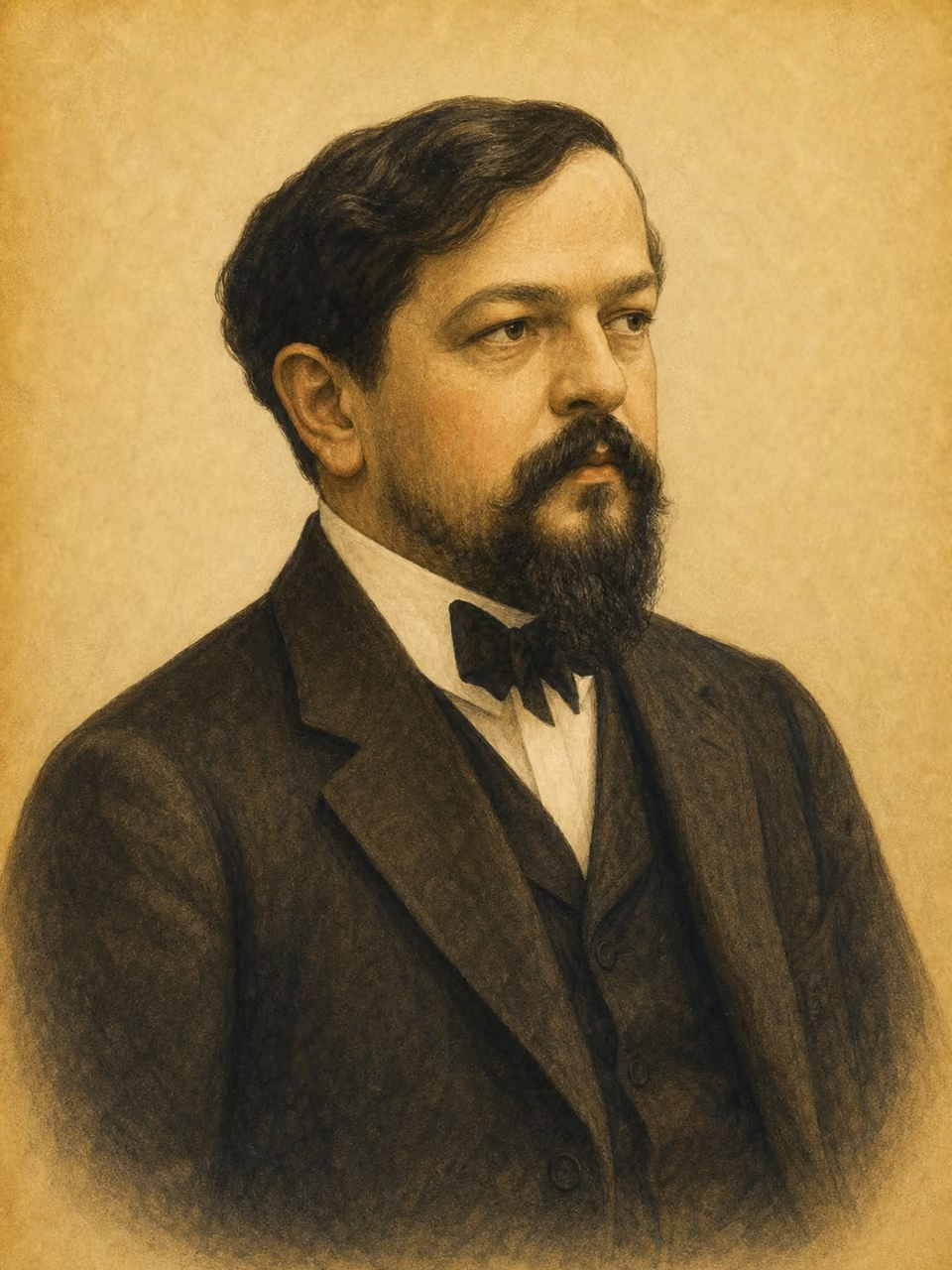
Claude Debussy

Portrait: AI-generated imagined likeness

Claude Debussy

Composer

Years
1862–1918
Birthplace
France
Birth polity
Second French Empire
Era
Modern
Field
Music
Occupations
Composer

Composer representing modern French music. He renewed the treatment of harmony and timbre, and used music to show the changes in art from the end of the 19th century to the beginning of the 20th century. It connects local history and world history and provides clues for deciphering changes during the same era.

View in catalog

Historical context

Places

  • Saint-Germain-en-Laye

    Birth

  • Paris

    Work

Works & achievements

  • Prelude to the Afternoon of a Faun

    1894

    Music

  • Pelleas et Melisande

    1902

    Music

Events

  • Development of musical modernism

    1890–1918

    Cultural event · Participant

Origins

Origins map
Birth country
Birth country
France

Map: Natural Earth (PD)

Biography

Early life

He studied at the Paris Conservatory and received a traditional composition education. From a young age, he pursued sounds that were not bound by established harmonic rules, and also turned his attention to symbolist literature and Oriental tastes.

Achievements

In Prelude to the Afternoon of the Faun and the opera Pelleas et Mélisande, he developed ambiguous tonality, delicate orchestration, and colorful acoustics. It is considered one of the starting points of modern music.

Character & anecdotes

The Javanese gamelan music he heard at the 1889 Paris Universal Exhibition strongly inspired Debussy. It was also an opportunity for European music to turn its attention to the sounds of the world.

Historical Impact

When you study Debussy, you can see that modern culture has moved away from realism and romanticism, and has moved in the direction of emphasizing feelings and impressions. It is easy to compare it with the art of Impressionism and Symbolism. When you look at the people's activities and works together, it becomes easier to understand the terms in textbooks as concrete historical trends.