
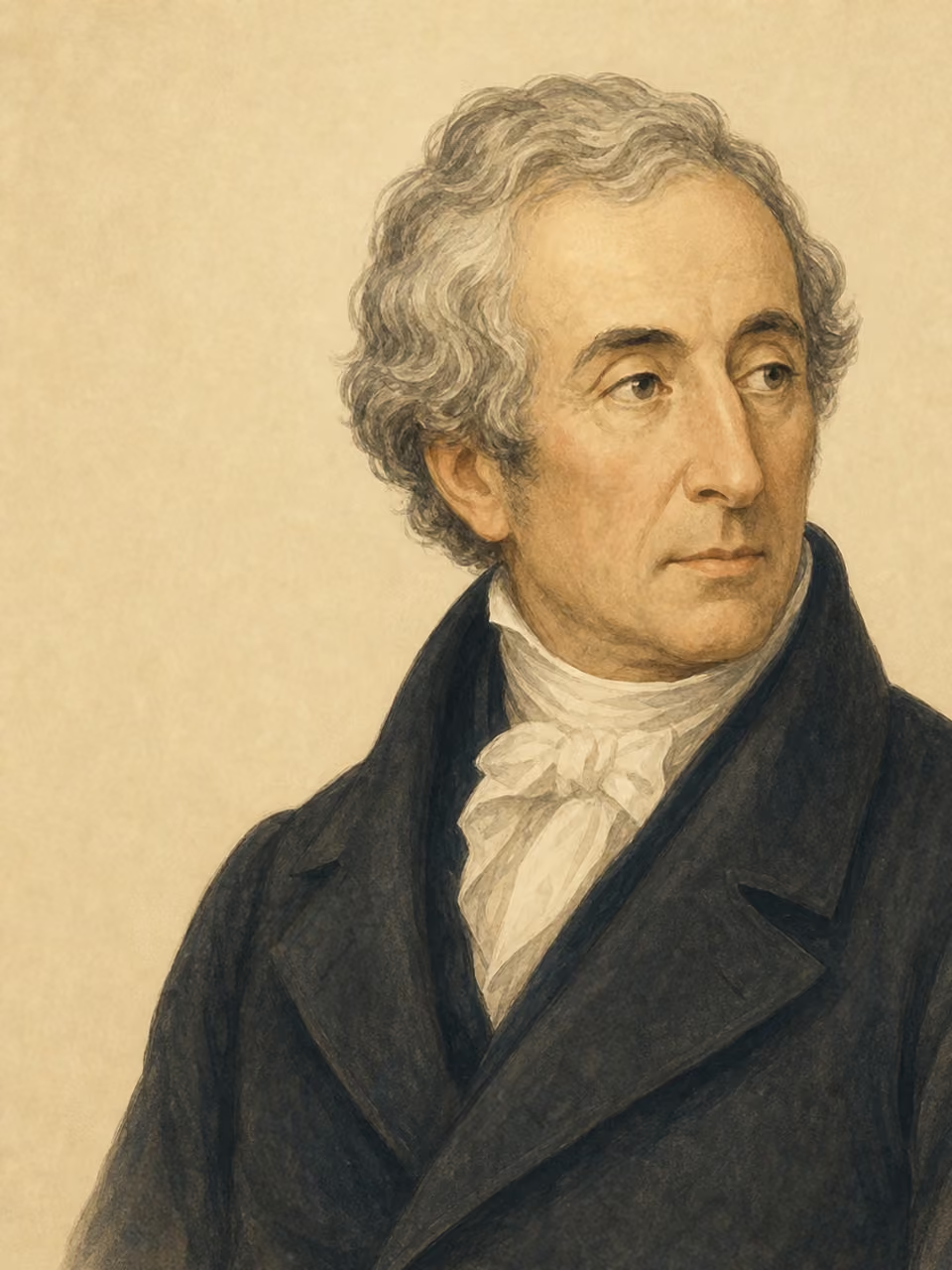
Henri de Saint-Simon

Portrait: AI-generated imagined likeness

Henri de Saint-Simon

Philosopher · Writer · Politician

Years
1760–1825
Birthplace
France
Birth polity
Kingdom of France
Era
Modern
Field
Social reform
Occupations
Philosopher · Writer · Politician

A French thinker who advocated a social reform theory that placed emphasis on producers and scientists who were responsible for industrial society. It influenced later socialist ideas. This is important when considering the new social order after the French Revolution.

View in catalog

Historical context

Places

  • Paris

    Birth

Works & achievements

  • Nouveau Christianisme

    1825

    Book

Events

  • Saint-Simonianism

    1825–

    Movement · Influenced by

Origins

Origins map
Birth country
Birth country
France

Map: Natural Earth (PD)

Biography

Early life

Born into a French aristocratic family, he was involved in the American Revolutionary War. While experiencing the Revolution and the Napoleonic era, he envisioned an order based on industry and science to replace the class-based society.

Achievements

He believed that industrialists, scientists, and engineers should lead society, and developed ideas that are considered to be the forerunners of utopian socialism. In his late ``New Christianity,'' he expressed social solidarity in religious terms.

Character & anecdotes

After Saint-Simon's own death, his disciples spread Saint-Simonism and became involved in railways, banking, and women's liberation. This is an example of an idea that transcends the author's writings and becomes a social movement.

Historical Impact

When we study Saint-Simon, we learn that in Europe after the Industrial Revolution, a new social concept was born to address poverty and labor problems that could not be solved by liberalism alone. The origins of socialism, techno-bureaucracy, and modernization theory can be considered.