
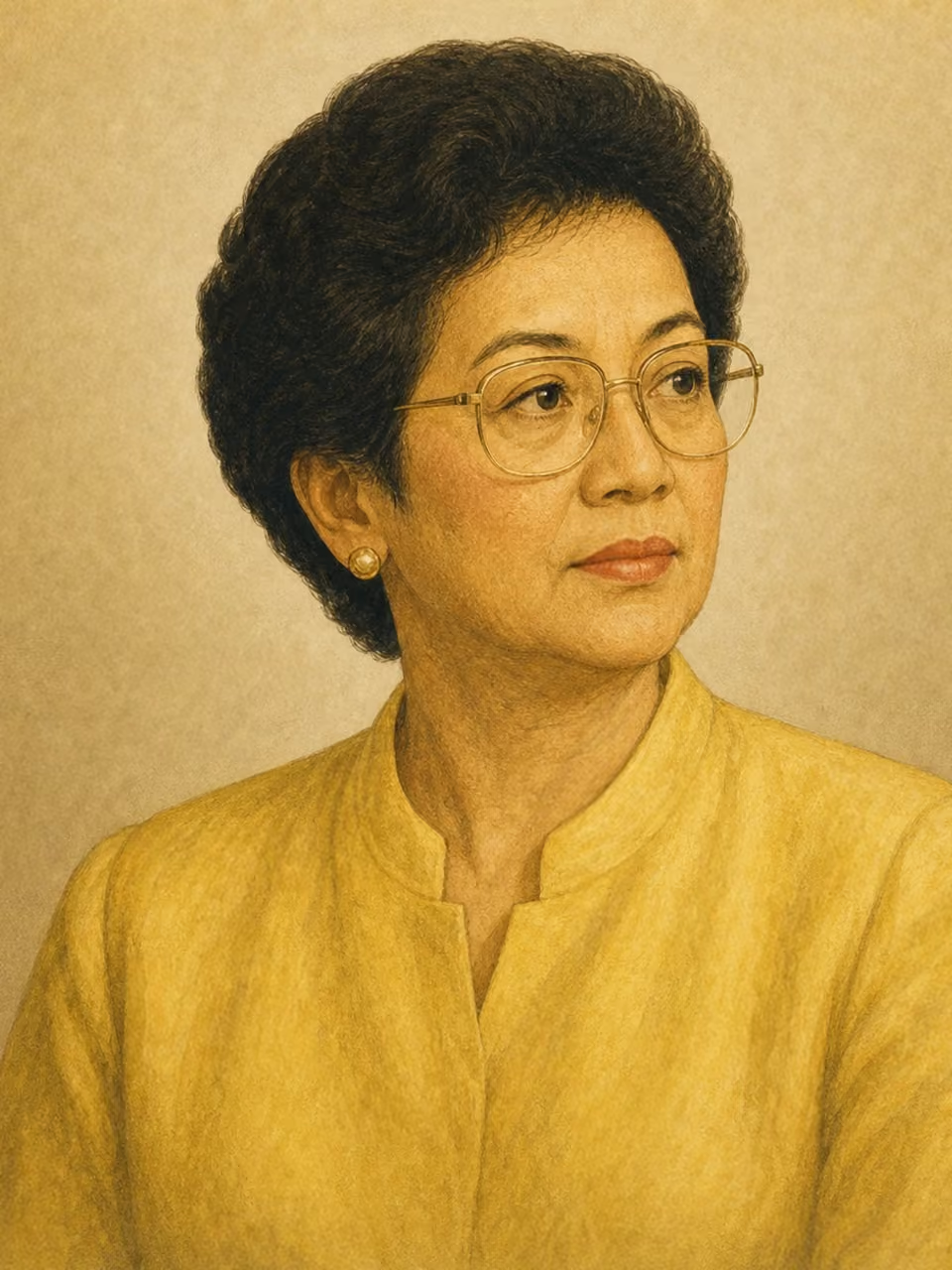
Corazon Aquino

Portrait: AI-generated imagined likeness

Corazon Aquino

Politician · Political activist

Years
1933–2009
Birthplace
Philippines
Birth polity
Commonwealth of the Philippines
Era
Contemporary
Field
Politics
Occupations
Politician · Political activist

Filipino politician. He became president after the People Power Revolution that overthrew the Marcos dictatorship and became a symbol of democracy. He is a person who thinks about the democratization of Southeast Asia.

View in catalog

Historical context

Places

  • Manila

    Work

Events

  • People Power Revolution

    1986

    Movement · Leader

  • Philippine democratic transition

    1986

    Political event · Leader

Origins

Origins map
Birth country
Birth country
Philippines

Map: Natural Earth (PD)

Biography

Early life

Born into a powerful family in the Philippines, she experienced political persecution as the wife of Benigno Aquino. Under the Marcos administration, martial law and oppression of opposition continued, and calls for democratization were increasing.

Achievements

After her husband's assassination, she became a central figure in the anti-Marcos movement, and in 1986, the People Power Revolution brought about a change in government. As president, he enacted a new constitution and promoted the restoration of civilian government.

Character & anecdotes

Corazon Aquino did not start out as a career politician, but became a symbolic leader in the resistance to dictatorship. The yellow ribbon became widely known as a symbol of the democracy movement.

Historical Impact

Studying Corazon-Aquino shows how a combination of elections, street movements, the Catholic Church, and military defections overthrew dictatorships in Southeast Asia during the Cold War. He is an important example of nonviolent democratization and a link between popular movements and political transition.