
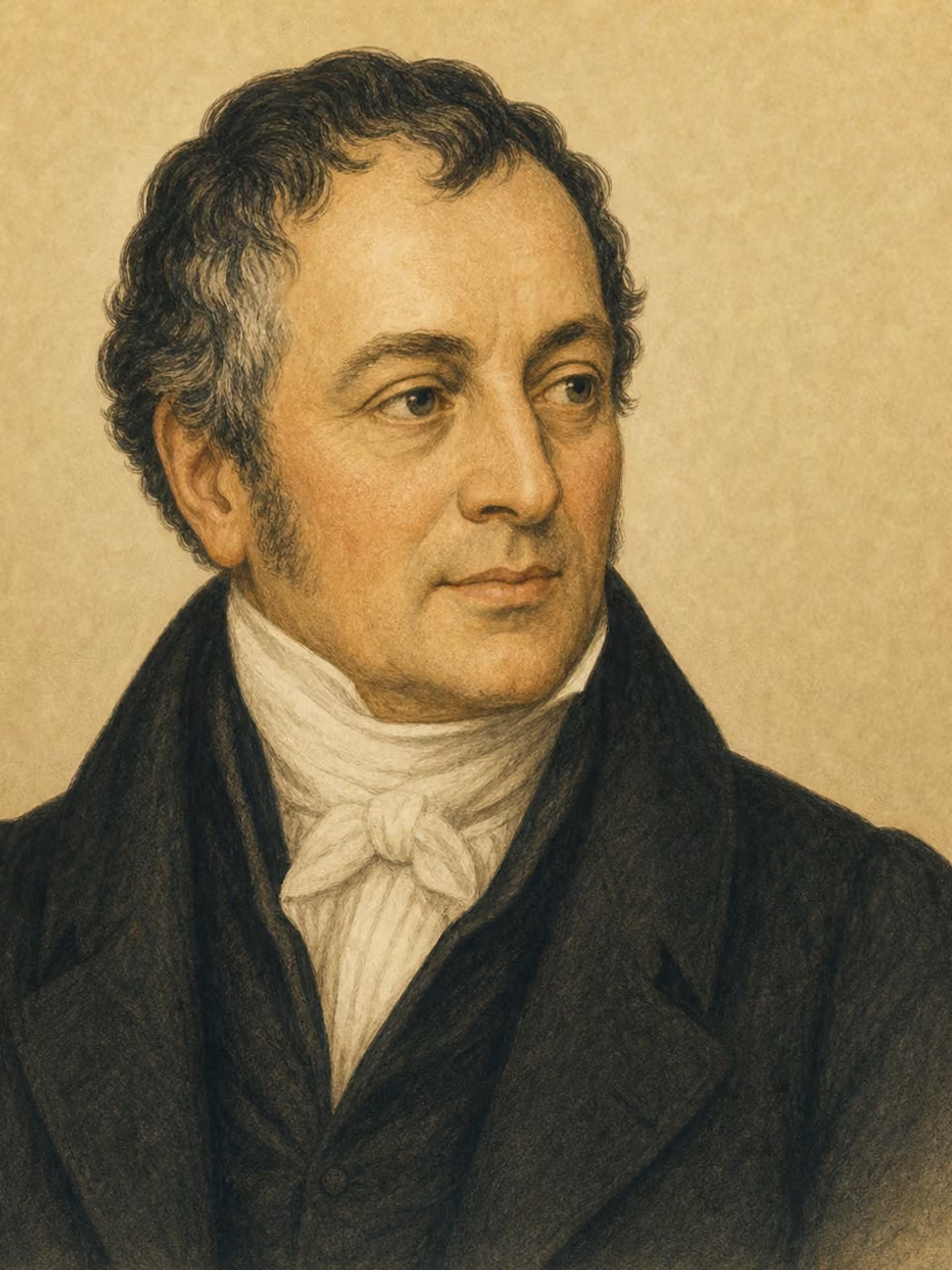
David Ricardo

Portrait: AI-generated imagined likeness

David Ricardo

Writer · Politician · Banker · Philosopher

Years
1772–1823
Birthplace
United Kingdom
Birth polity
Kingdom of Great Britain
Era
Early modern
Field
Business
Occupations
Writer · Politician · Banker · Philosopher

British economist and politician. Known for his theory of comparative production costs and rent, he developed classical economics. He is a person who thinks about free trade theory during the industrial revolution.

View in catalog

Historical context

Places

  • London

    Work

Works & achievements

  • On the Principles of Political Economy and Taxation

    1817

    Book

Events

  • Development of classical political economy

    1817–1823

    Movement · Participant

Origins

Origins map
Birth country
Birth country
United Kingdom

Map: Natural Earth (PD)

Biography

Early life

Born into a Jewish merchant family in London, he made his fortune through financial transactions. Corn laws, trade, wages, profits, and the interests of the landed class were political issues in England during the Industrial Revolution.

Achievements

In 1817, he wrote ``Principles of Economics and Taxation,'' in which he explained the benefits of international division of labor and free trade using the theory of comparative production costs. The theory of rent and distribution also became the core of classical economics.

Character & anecdotes

Ricardo was a theoretician with experience in business and parliamentary politics. Although he used abstract economic models, he was unique in that he was directly involved in the corn law debate and trade policy of the time.

Historical Impact

If you study Ricardo, you will see that the economic ideas of the Industrial Revolution were born out of actual class interests and policy debates. The concept of comparative advantage is a fundamental concept for understanding the modern world economy and free trade. We can also see the process by which economic theory is used to explain world order.